
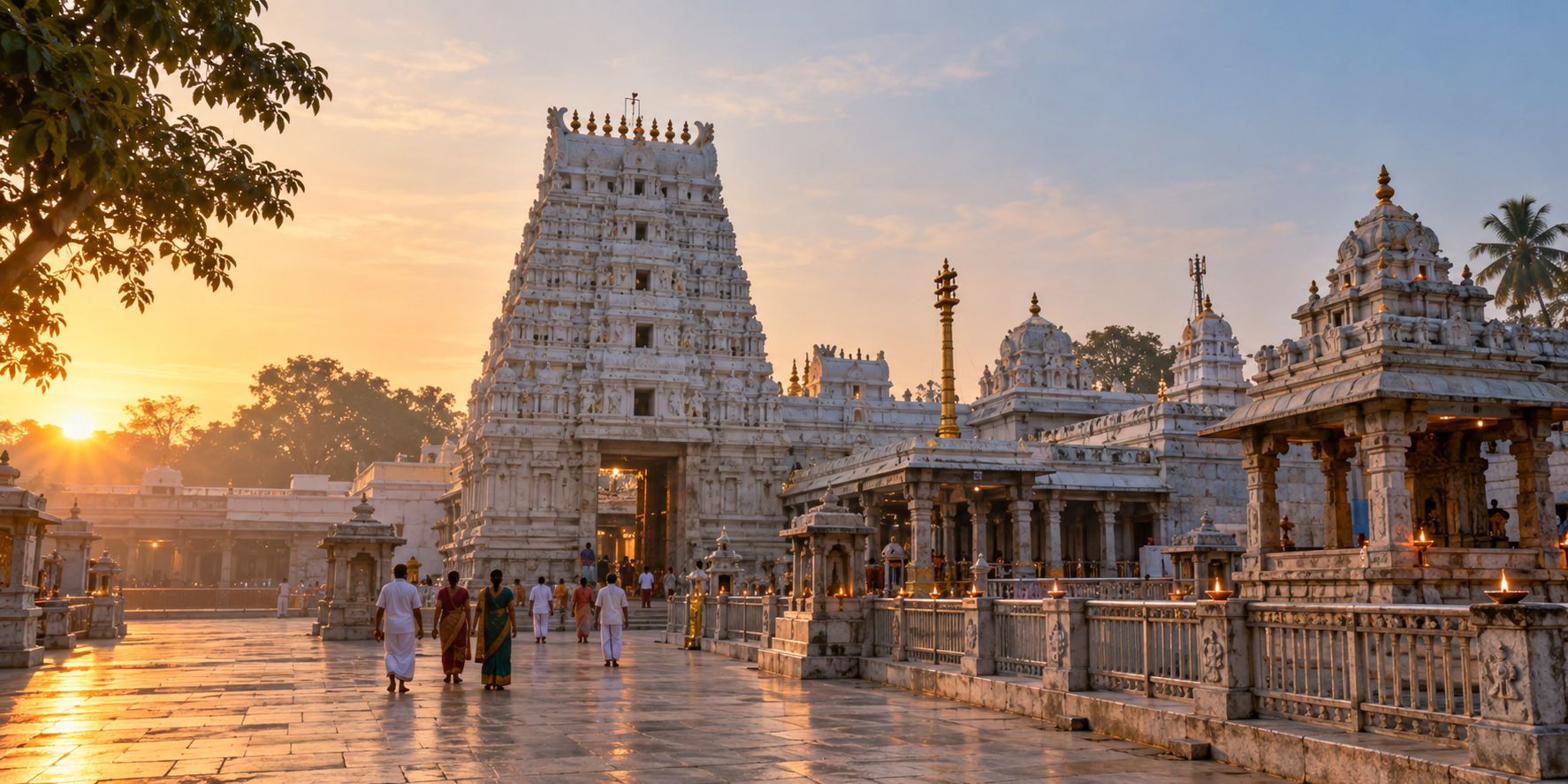
You may know Vemulawada as a Shiva pilgrimage centre, yet encounter another name for it: Bhaskara Kshetram, a sacred place associated with Surya. That is not a contradiction. It is the key to understanding what makes this kshetra distinctive.
Before you visit, learn the tradition’s clear core and resist filling its silences with rituals borrowed from somewhere else. You will approach Rajarajeshwara Swamy with greater attention, and you will be better able to distinguish the temple’s sacred memory from assumptions circulating around it.
Why a Shiva temple is called Bhaskara Kshetram
The presiding form at Vemulawada is Rajarajeshwara Swamy, a form of Shiva. Its solar epithet comes from the sthala purana: Surya Bhagavan is said to have recovered from a disability after praying at the shrine. This association gives Vemulawada the name Bhaskara Kshetram.
Bhaskara is a name of the Sun, while kshetra can denote a sacred place or field. The title therefore remembers Vemulawada as a place where Surya received Shiva’s grace. It does not turn the shrine into something other than a Shiva temple. It identifies one of the relationships through which the sanctity of the place is understood.
This is a familiar feature of Dharmic sacred geography. A temple can be centred on one devata while preserving the memory of another devata, rishi, king or devotee who sought refuge there. The presiding deity tells you whom the shrine principally honours. The sthala purana tells you why this particular place matters.
What Surya’s recovery means within the tradition
The Bhavishyothara Purana is named in connection with the story of Surya’s recovery. No verse number, chapter or detailed sequence is supplied here, so it would be careless to manufacture dialogue, vows, offerings or ritual instructions. The sound approach is to retain what the tradition actually gives us: Surya suffered an impairment, prayed at Vemulawada and recovered.
Read first at the theological level. Surya is himself a luminous deva, yet even he turns toward Shiva in a condition of limitation. The movement is from power to humility, from affliction to prayer, and from prayer to restoration. The story therefore presents divine greatness and devotion as compatible. Possessing radiance does not place anyone beyond the need for grace.
For a pilgrim, the useful question is not whether you can reproduce Surya’s experience as a transaction. Ask instead what limitation you need to acknowledge truthfully before Rajarajeshwara Swamy. It may be bodily suffering, fear, pride, grief or confusion. The legend gives you a posture for prayer: name the condition without pretending to control the result.
Do not turn the sacred narrative into a medical guarantee. If you or someone in your care has a disability or illness, obtain appropriate professional care. Prayer can accompany treatment and give suffering a spiritual context; it should not be used to postpone diagnosis, discontinue treatment or blame a person when recovery does not occur.
How to make your visit faithful to the kshetra
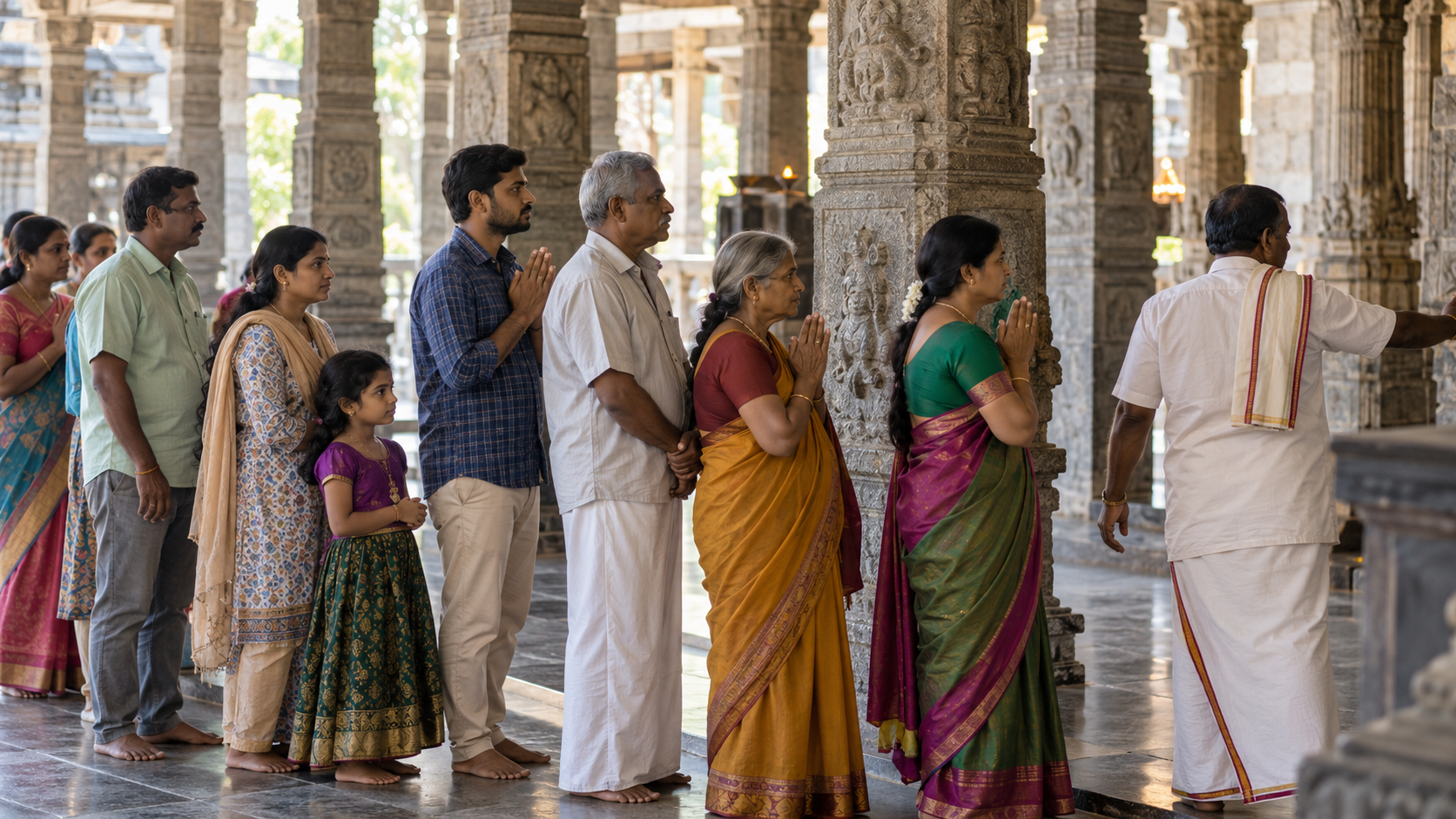
A meaningful pilgrimage does not require you to invent an elaborate observance. Use the sthala purana to shape your attention, then follow the temple’s current instructions for practical details.
- Form a brief sankalpa before entering. State whom or what you are praying for in one honest sentence. If your concern is recovery, ask for healing together with clarity, endurance and right action.
- Remember the sequence of the sacred story: limitation, turning toward Shiva, prayer and restoration. This keeps the visit centred on surrender rather than bargaining.
- Confirm local practice at the temple. Ask what worship is presently available and which offerings are accepted. Do not assume that a custom followed at another Shiva temple belongs to Vemulawada.
- Keep the distinction between deity and devotee clear. Rajarajeshwara Swamy is the presiding form; Surya is remembered as one who prayed and received grace at the kshetra.
- Carry one discipline home. Let the pilgrimage lead to a concrete act such as keeping a regular prayer time, attending responsibly to treatment, repairing a neglected duty or reducing an attachment that feeds pride.
The fifth step matters because a pilgrimage should alter conduct, not merely produce a memory. If Surya’s story is reduced to a request for relief, its inner movement is lost. Restoration in a Dharmic setting calls for renewed alignment with dharma.
Keep local tradition separate from attractive invention
Temple traditions often reach pilgrims in fragments. A short legend may acquire precise promises, compulsory offerings or guaranteed outcomes as it is repeated. Specificity can sound authoritative even when it has no stated basis.
Use a simple test whenever you hear a claim about Vemulawada. Ask whether it concerns the shrine’s identity, its sthala purana or its present ritual administration. These are different kinds of knowledge. The identity of Rajarajeshwara Swamy and the association with Surya belong to sacred memory. Darshan arrangements and accepted offerings belong to present temple practice. A private interpretation belongs to the person offering it.
That distinction protects tradition. It allows you to honour the puranic narrative without presenting an interpretation as scripture or turning a local custom into a universal rule. When the evidence does not establish a named rite, mantra, offering or promised result, leave the detail open and follow the living temple’s guidance.
Preserving uncertainty is not scepticism toward the sacred. It is a form of respect. A tradition remains strong when devotees transmit what they have received accurately and do not decorate it merely to make it sound more impressive.
Questions pilgrims commonly ask
Is Vemulawada a Shiva temple or a Surya temple?
It is identified as the Rajarajeshwara Swamy Shiva Temple. The name Bhaskara Kshetram preserves Surya’s relationship with the shrine: he is remembered as having prayed there and recovered from a disability.
Why is the Surya legend important to a Shiva pilgrim?
It teaches a mode of approach. Even a radiant deva turns toward Shiva when afflicted. You can therefore bring vulnerability into worship without treating it as spiritual failure.
Does the legend prescribe a particular healing ritual?
No particular rite can be established from the legend alone. Do not invent one from the reference to Surya’s recovery. Ask the temple about current worship and accepted offerings if you want to make a specific seva.
Does worship at Vemulawada guarantee a cure?
The puranic event is a sacred narrative, not a clinical promise for every pilgrim. Approach it as testimony to Shiva’s grace while continuing any medical evaluation, treatment or practical support that your condition requires.
Go to Vemulawada with one truthful prayer rather than a catalogue of imagined rules. Remember Surya’s humility, receive the darshan of Rajarajeshwara Swamy, verify local practice at the temple and bring one dharmic commitment back into your daily life.
References

Leave a Reply
You must be logged in to post a comment.