
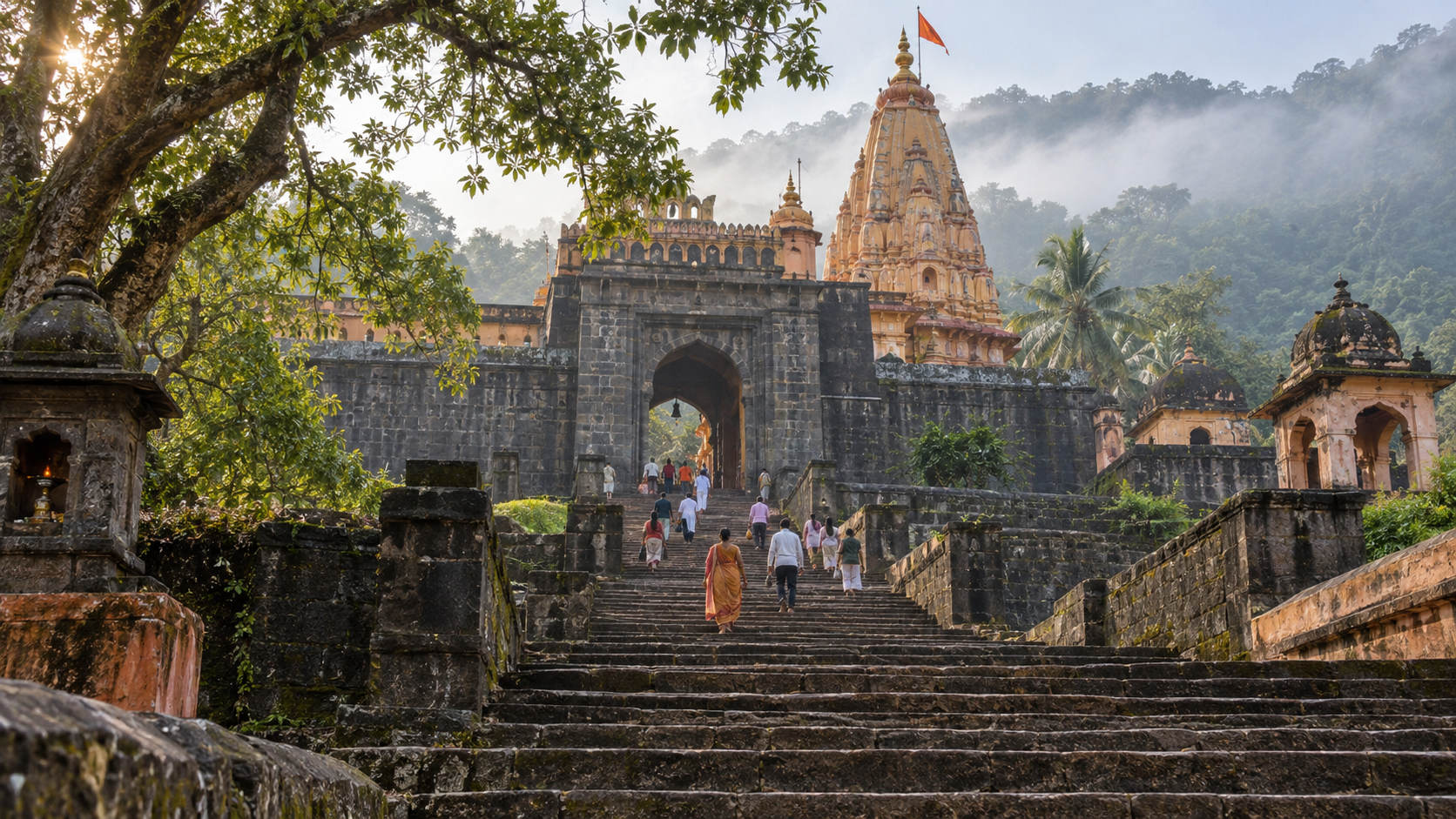
If you are planning darshan, or trying to understand why the names Vajreshwari, Vajrabai and Vajrayogini appear in the same conversation, do not begin by forcing them into a single label. Begin with what the tradition clearly affirms: Vajreshwari Devi, also known as Vajrabai, is revered as a powerful manifestation of Parvati and Adi Shakti.
That foundation gives you a sound way to approach both the Devi and her Maharashtra temple. You can honour the local form without isolating her from the wider Shakta understanding of the Divine Mother, and you can explore her connection with Vajrayogini without claiming more than the tradition in front of you establishes.
Begin with the identity the tradition gives the Devi
Three different kinds of identification are involved here, and keeping them separate prevents most confusion:
- Local names: Vajreshwari Devi and Vajrabai refer to the same revered goddess.
- Theological identity: she is understood as a manifestation of Parvati and Adi Shakti.
- Related sacred figure: she is closely associated with Vajrayogini.
In a Shakta understanding, calling a local Devi a manifestation of Adi Shakti does not make her temple interchangeable with every other Shakti shrine. The same supreme divine power is approached through a particular name, place, sacred memory and devotional relationship. The local form matters precisely because the universal is encountered through the particular.
The distinction between identity and association matters just as much. Vajreshwari is identified with Parvati and Adi Shakti, while Vajrayogini is described as closely associated with her. Association does not automatically mean that two names are exact synonyms in every ritual, philosophical or historical context. Unless a local lineage explicitly teaches that equivalence, retain the more precise wording.
Use the full location, not merely the temple name
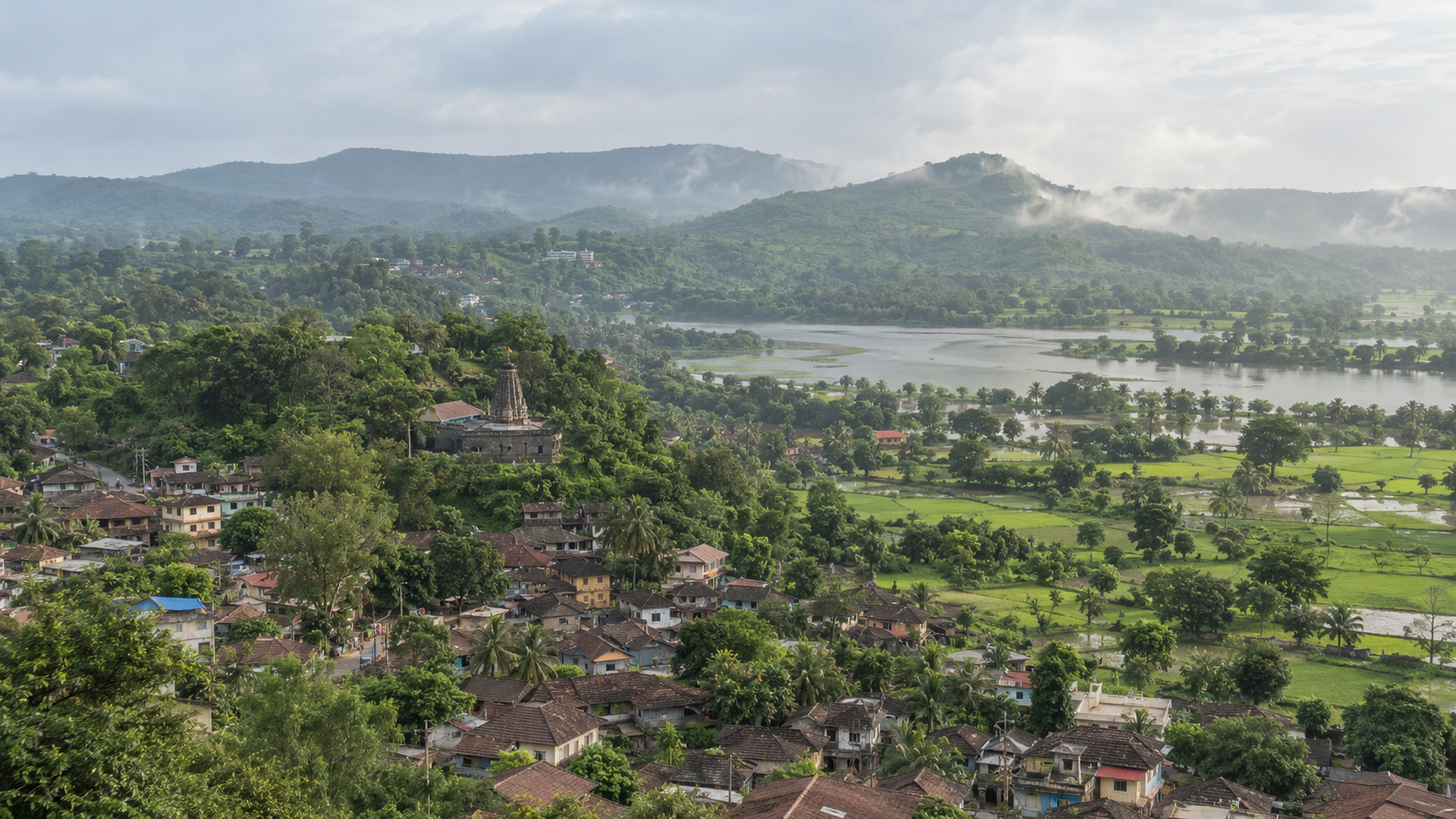
The Devi’s principal shrine is in Vajreshwari town, on the banks of the Tansa River, within Bhiwandi taluka of Maharashtra’s Thane district. Keep that complete location chain in your travel notes:
- Vajreshwari town
- Tansa River
- Bhiwandi taluka
- Thane district
- Maharashtra
This phrasing also prevents a common geographical error. The temple is in Vajreshwari town within Bhiwandi taluka; saying only that it is “in Bhiwandi” loses the more precise local setting. Likewise, describing it only as a Maharashtra temple strips away the connection between the shrine, the town that bears the Devi’s name and the river landscape.
Before travelling, separately confirm the practical information that can change: the day’s opening windows, any festival-related access restrictions, the accepted forms of offering, photography rules and arrangements for anyone with limited mobility. Do not infer these details from customs at another Shakti temple. Local instructions should decide what you carry and what you do after entering.
Read the Vajrayogini connection without flattening it

The close association between Vajreshwari Devi and Vajrayogini deserves attention, but it also calls for disciplined language. A similarity or relationship between sacred names can open a serious inquiry; by itself, it cannot prove identical iconography, identical worship, a single historical lineage or a particular direction of influence.
If you want to investigate the relationship, ask three different questions rather than looking for one sweeping answer:
- What does the local katha say? This reveals how devotees remember and interpret the relationship.
- What does present ritual practice express? The names used in worship, the sequence of observances and the explanations given by those serving the shrine may clarify how the association functions devotionally.
- What can historical evidence establish? Dated inscriptions, texts and records answer a different question from sacred narrative and current practice.
Do not make one layer perform the work of another. A temple katha can preserve sacred meaning without being a modern chronological record. A current ritual can embody a long inheritance without, on its own, dating the beginning of that inheritance. Historical documentation can establish dates or names while still failing to capture what the Devi means to worshippers.
This distinction is especially valuable when discussing intersections among Dharmic traditions. Respectful inquiry neither erases genuine connections nor manufactures certainty. It lets Shakta devotion, tantric vocabulary, local memory and documentary history speak in their proper registers.
Make darshan an encounter with the living tradition
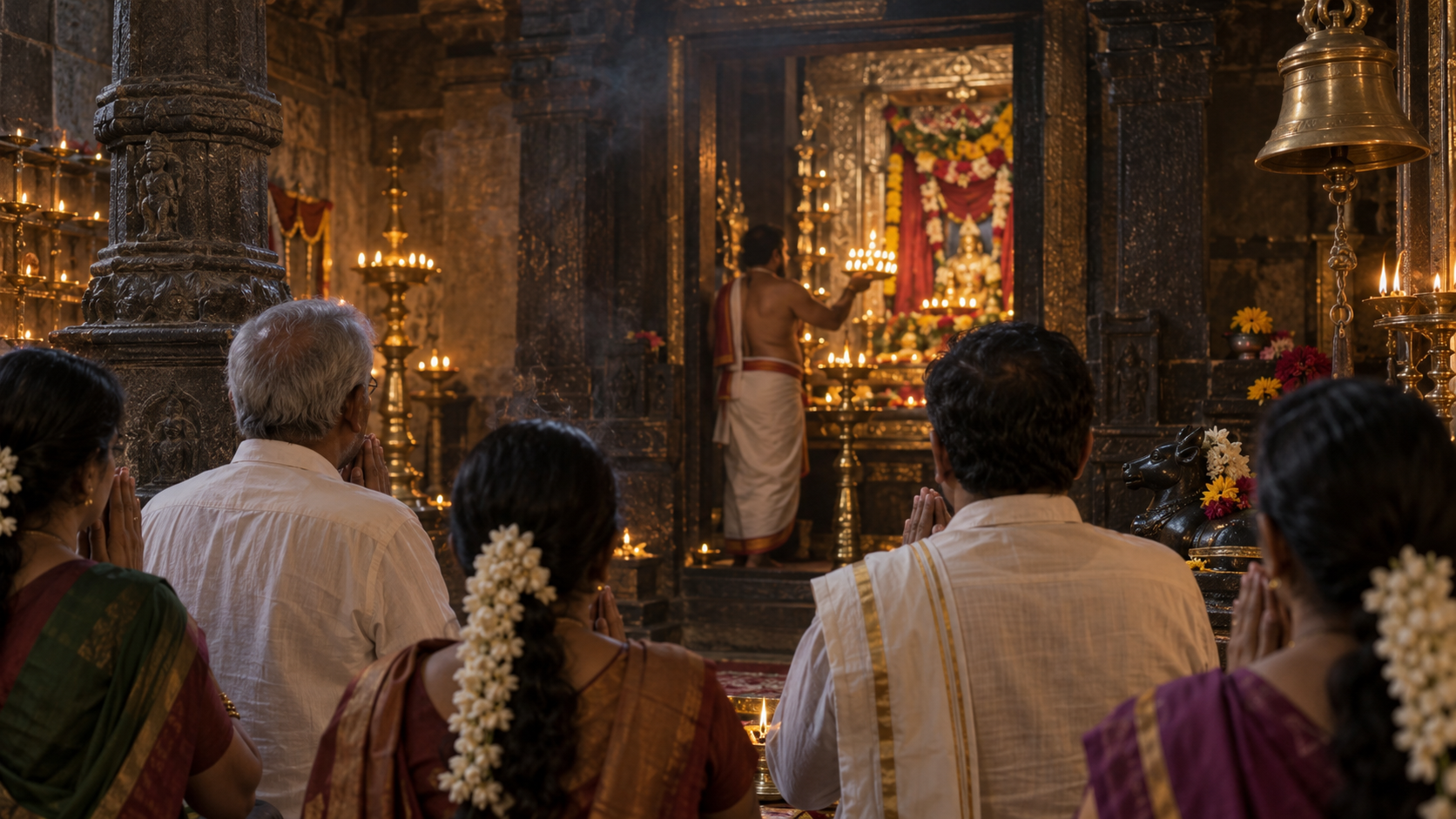
You do not need an elaborate personal ritual to approach Vajreshwari Devi sincerely. You do need attentiveness. A simple sequence will keep your visit devotional while helping you understand the temple on its own terms:
- Form a clear sankalpa before entering. Decide whether you are coming to offer gratitude, seek strength, pray for guidance or simply receive darshan with an undistracted mind.
- Read the temple’s instructions first. Observe signs, queues and the conduct of local devotees before assuming that a practice from another shrine belongs here.
- Let local rules govern offerings. Purchase or carry only what the temple permits, and follow the sequence indicated by priests or temple attendants.
- Ask one precise question at an appropriate moment. For example: “How is the relationship between Vajreshwari Devi and Vajrayogini explained in this temple tradition?” A concise question is more respectful than pressing someone for a long explanation during active worship.
- Separate observation from interpretation. After darshan, note what you personally saw, what someone at the temple told you and what you inferred. Those are three different kinds of knowledge.
Photography deserves the same care. A visually striking shrine is still first a place of worship. Do not photograph the sanctum, rituals, priests or other devotees unless permission is clear. The absence of a visible prohibition is not the same as consent.
Retell the tradition with precision
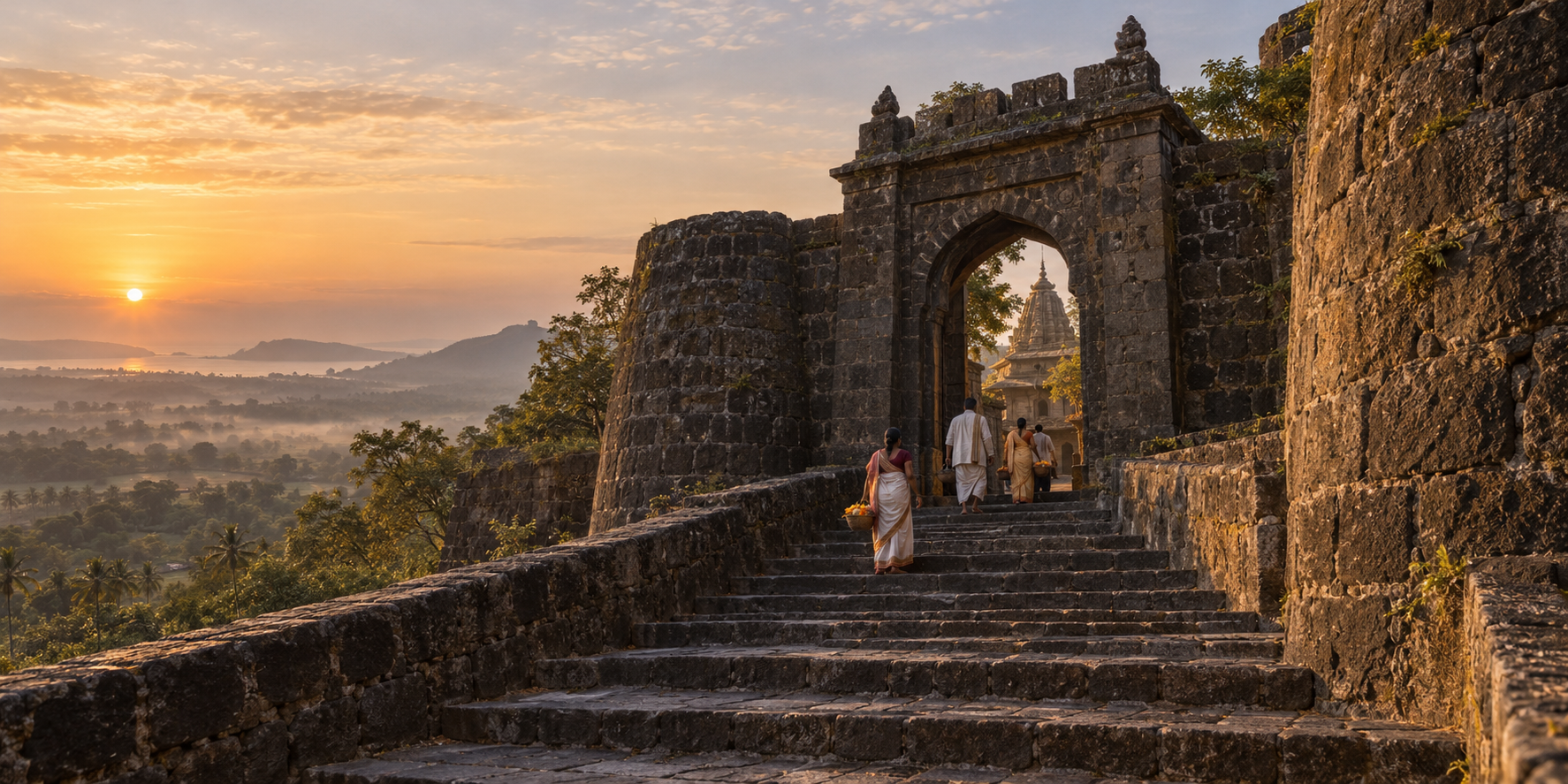
If you are describing the temple to family, writing about it or posting after a visit, a reliable capsule description is enough:
Vajreshwari Devi, also called Vajrabai, is revered as a manifestation of Parvati and Adi Shakti. Her principal temple stands in Vajreshwari town, beside the Tansa River in Bhiwandi taluka of Thane district, Maharashtra. The temple tradition also closely associates her with Vajrayogini.
That wording preserves the important distinctions. It identifies the Devi, locates the shrine and acknowledges the Vajrayogini connection without turning an association into an unsupported claim of complete identity.
Avoid four common errors:
- Do not present Vajrabai as a separate goddess when using the name in this context.
- Do not relocate the shrine vaguely to Bhiwandi when Vajreshwari town is the more precise location.
- Do not replace “closely associated with Vajrayogini” with “the same as Vajrayogini” unless the particular local teaching you are citing explicitly makes that claim.
- Do not add dramatic details to a temple legend when you have not verified the actual local account.
Precision is not a reduction of faith. It protects a living tradition from being dissolved into a generic goddess story or reshaped for a striking social-media caption.
Key takeaways
- Approach Vajreshwari Devi, or Vajrabai, as a manifestation of Parvati and Adi Shakti.
- Locate her principal temple in Vajreshwari town, on the Tansa River in Bhiwandi taluka, Thane district, Maharashtra.
- Describe Vajrayogini as closely associated with Vajreshwari Devi unless a specific tradition establishes a stronger identification.
- Confirm current opening, offering, access and photography rules locally before your visit.
- Keep sacred narrative, present ritual practice and historical documentation distinct when investigating the tradition.
If you visit, carry the complete location and one patient question: how does this temple itself tell the Devi’s story? Listen before interpreting. That is the surest way to receive darshan while allowing Maharashtra’s Vajreshwari tradition to speak in its own voice.
References

Leave a Reply
You must be logged in to post a comment.