
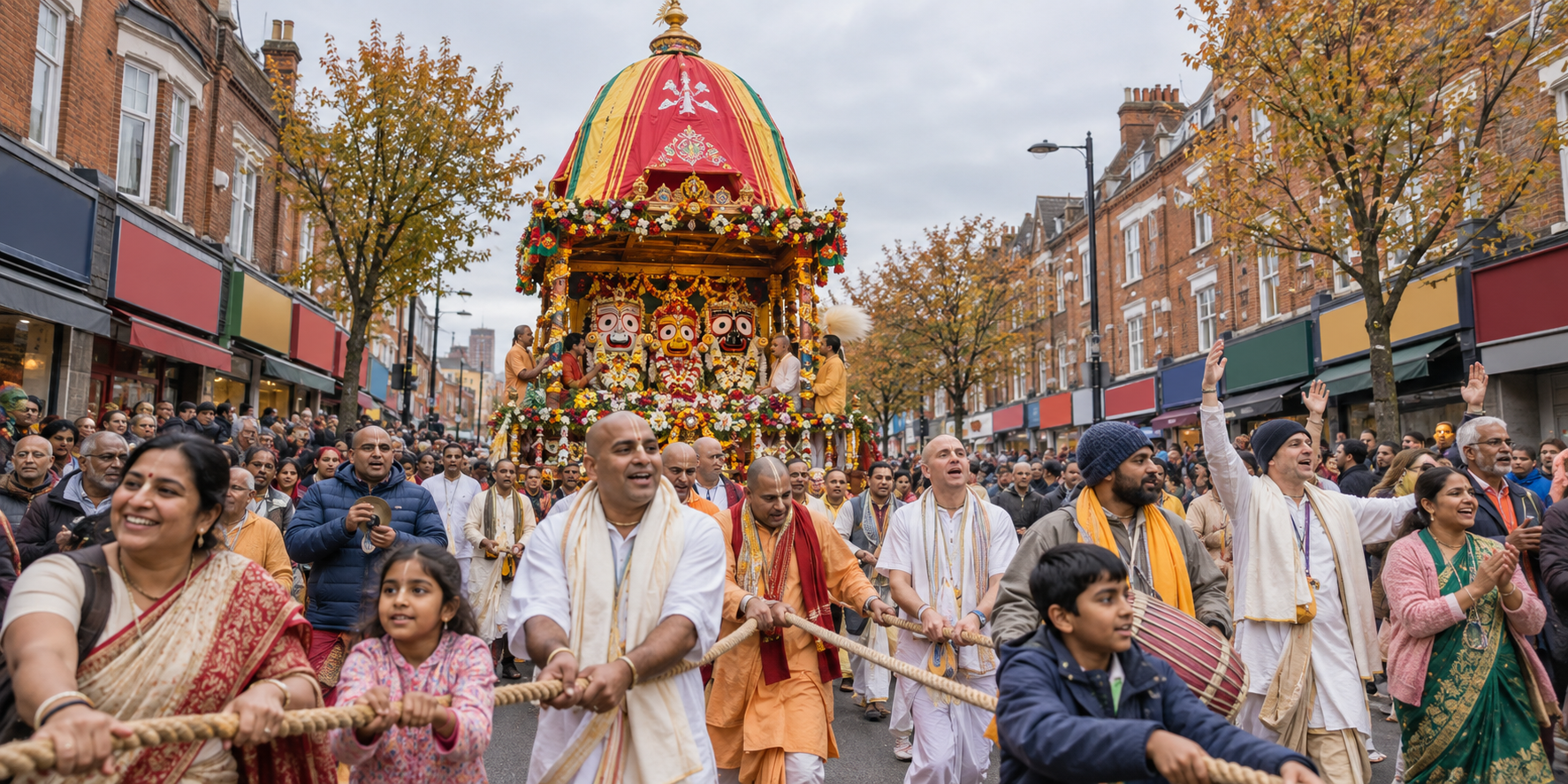
If you are searching for Ilford Ratha Yatra 2026 because you saw the chariot, heard the chanting or missed the gathering, the first thing to know is that the event took place on Sunday, 4 October 2026. Approximately 3,500 people gathered in Ilford for the Ratha Yatra of Their Lordships Sri Jagannatha, Sri Baladeva and Srimati Subhadra Maharani.
It was not simply a parade with a religious theme. The procession joined darshan, kirtan, classical dance, chariot-pulling, devotional teaching, children’s activities, cultural performance and prasadam. If you want to understand what the day meant, look at how each of those elements gave people a way to move from watching to participating.
Key takeaways from Ilford Ratha Yatra 2026
- The chariot travelled from Valentines Park towards Ilford High Street, passing through Ilford Station.
- Devotees led the Hare Krishna Mahamantra and recited the Jagannathastakam as the procession moved through Ilford.
- Visitors could pull the chariot, receive darshan, join the chanting, explore devotional teaching and take part in family activities.
- The High Street programme included children’s crafts and games, book distribution, dance, drama and opportunities to meet the East London bhakti community.
- The celebration concluded its public service on a substantial scale, with 3,500 plates of prasadam distributed.
A public route with a devotional purpose
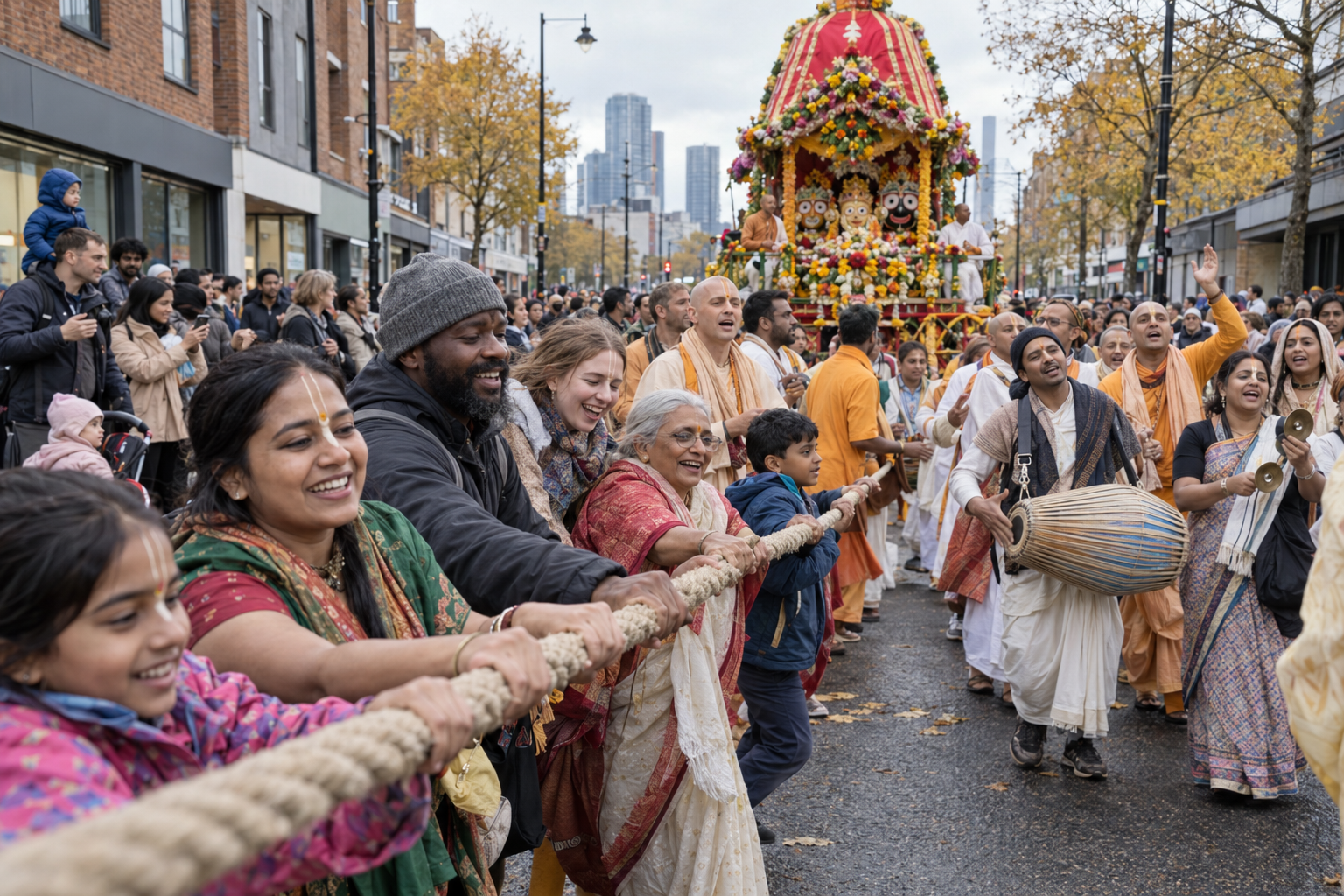
The decorated Ratha set out from Valentines Park and travelled towards Ilford High Street via Ilford Station. A classical dance was performed before the chariot at the beginning of the procession. Devotees then led the Hare Krishna Mahamantra, followed by the Jagannathastakam.
Those forms should not be separated too sharply into religion on one side and culture on the other. The dance welcomed the Deities, the chanting directed attention towards the Divine Names, and the movement of the chariot carried darshan beyond a dedicated place of worship. Each element helped turn an ordinary urban route into a temporary space of devotion.
Within the devotional understanding of Ratha Yatra, Lord Jagannatha comes into the streets so that people can receive His darshan and mercy without first having to cross a temple threshold. Darshan is therefore more than looking at a sacred image. It is an encounter in which the devotee sees the Deity and understands that the Deity also sees the devotee. That is why the chariot’s movement through Ilford mattered as much as its decoration.
The public was not kept at the edge of that encounter. People of different ages and backgrounds took turns pulling the Ratha. Taking the rope transformed the route from something to observe into an act of seva. No elaborate preparation was required before a person could help move the chariot, chant with the procession or walk respectfully alongside it.
If you attend a future Ratha Yatra, you do not need to master every prayer before participating. Begin with one clear act: pause for darshan, listen to the Mahamantra, join the response when you are comfortable, or pull the chariot when stewards invite you to do so. Follow the directions given around the cart and make room for children, elderly visitors and others approaching the rope. The point is not to perform devotion for the crowd but to direct your attention towards Jagannatha.
The High Street programme offered several doors into bhakti
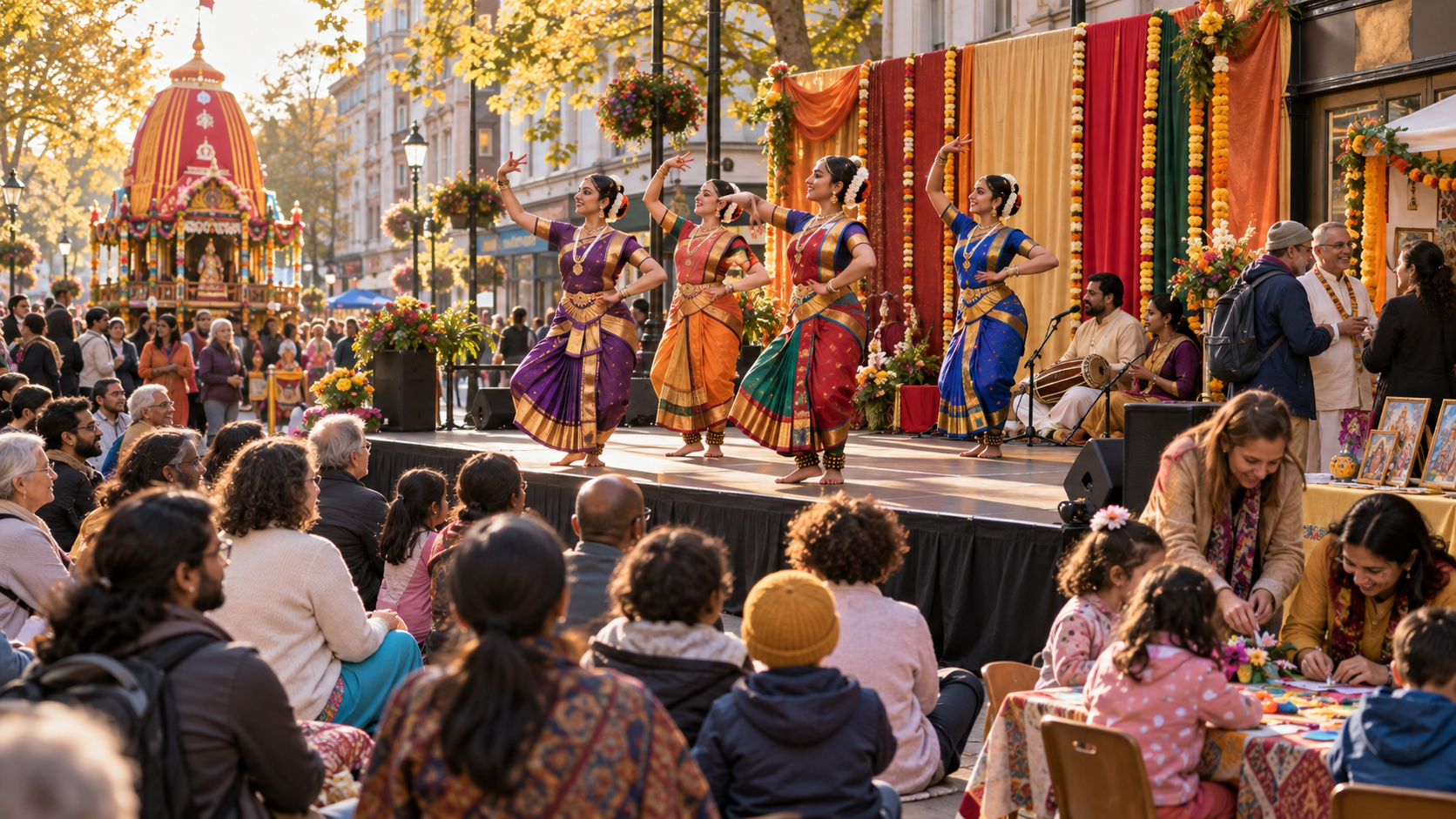
When the procession reached Ilford High Street, the festival widened rather than ending. The programme was arranged so that a newcomer, a family with young children and a practising devotee did not all have to enter through the same door.
- Bhakti Corner: Visitors could meet members of the East London community and learn about devotional activities.
- Kids Corner: Crafts and games gave children an age-appropriate way to remain involved in the festival.
- Sankirtan: The team distributed books by His Divine Grace A.C. Bhaktivedanta Swami Prabhupada, allowing the encounter to continue through study after the public programme.
- Main Tent: Cultural and devotional performances included a dance by toddlers and a drama presented by Pandava Sena.
This range matters. A public Dharmic celebration becomes accessible when it offers participation without reducing its devotional centre to generic entertainment. Children could make and play, adults could ask questions, readers could take home teachings, and the wider audience could encounter bhakti through dance and drama. None of these required the chariot procession itself to become less explicitly Vaishnava.
The gathering also brought devotional and civic communities into the same public space. Mayor of Redbridge Cllr Bert Jones, Cabinet Secretary for Policing Cllr Sunny Brar and Cllr Yogesh Saini attended. Senior ISKCON representatives included HG Dayal Mora Dasa, Temple President of ISKCON London; HG Parusuram Dasa, Director of Food for All; and HG Tribhangananda Dasa.
The presence of civic representatives should be read carefully. It does not need to be inflated into a governmental judgement about theology. Its immediate value was simpler and more concrete: elected representatives stood alongside devotees and residents at a visible Hindu festival in East London. Public engagement of that kind helps Dharmic life appear as what it already is for many families: a living part of the local community, not a private inheritance that must remain hidden indoors.
Prasadam and Damodar Puja carried the day beyond the procession
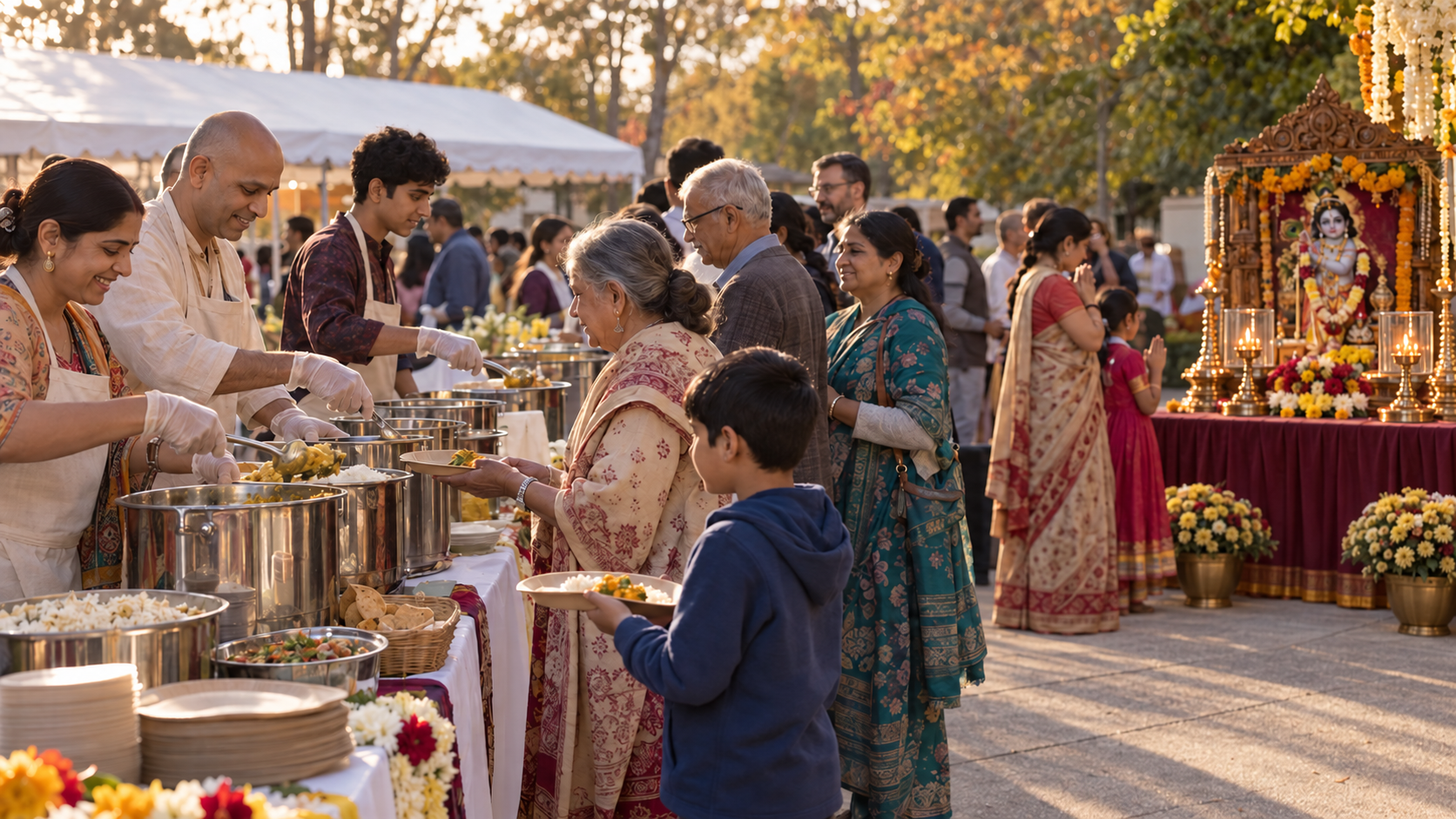
The service did not stop when the performances ended. Organisers distributed 3,500 plates of prasadam. That total roughly matches the estimated attendance, although the two figures do not establish that every attendee received exactly one plate.
Prasadam is not merely event catering. It is food prepared and offered in devotion before being shared. Distribution therefore joins hospitality with spiritual practice: someone cooks, someone offers, someone serves and someone receives. At a public festival, this is one of the most immediate ways a visitor can encounter seva without needing prior knowledge of ritual or philosophy.
If you receive prasadam at a future event, accept only what you expect to finish and treat it respectfully. If you have allergies or dietary restrictions, ask the serving team about ingredients rather than assuming that every preparation is suitable for you. Reverence and practical care belong together.
A further bridge into continuing practice came through the launch of Damodar Puja by the attending dignitaries. The launch introduced the wider community to devotional observances associated with the Damodara season. This gave the gathering a horizon beyond one afternoon: public darshan could lead into a season of worship, learning and personal practice.
If Damodar Puja was new to you, the useful next step is not to improvise a ritual from fragments seen in passing. Learn its meaning and procedure from an established devotional community. That keeps the practice connected to teaching, prayer and discipline rather than treating it as a decorative custom.
Turn one day of celebration into one continuing practice
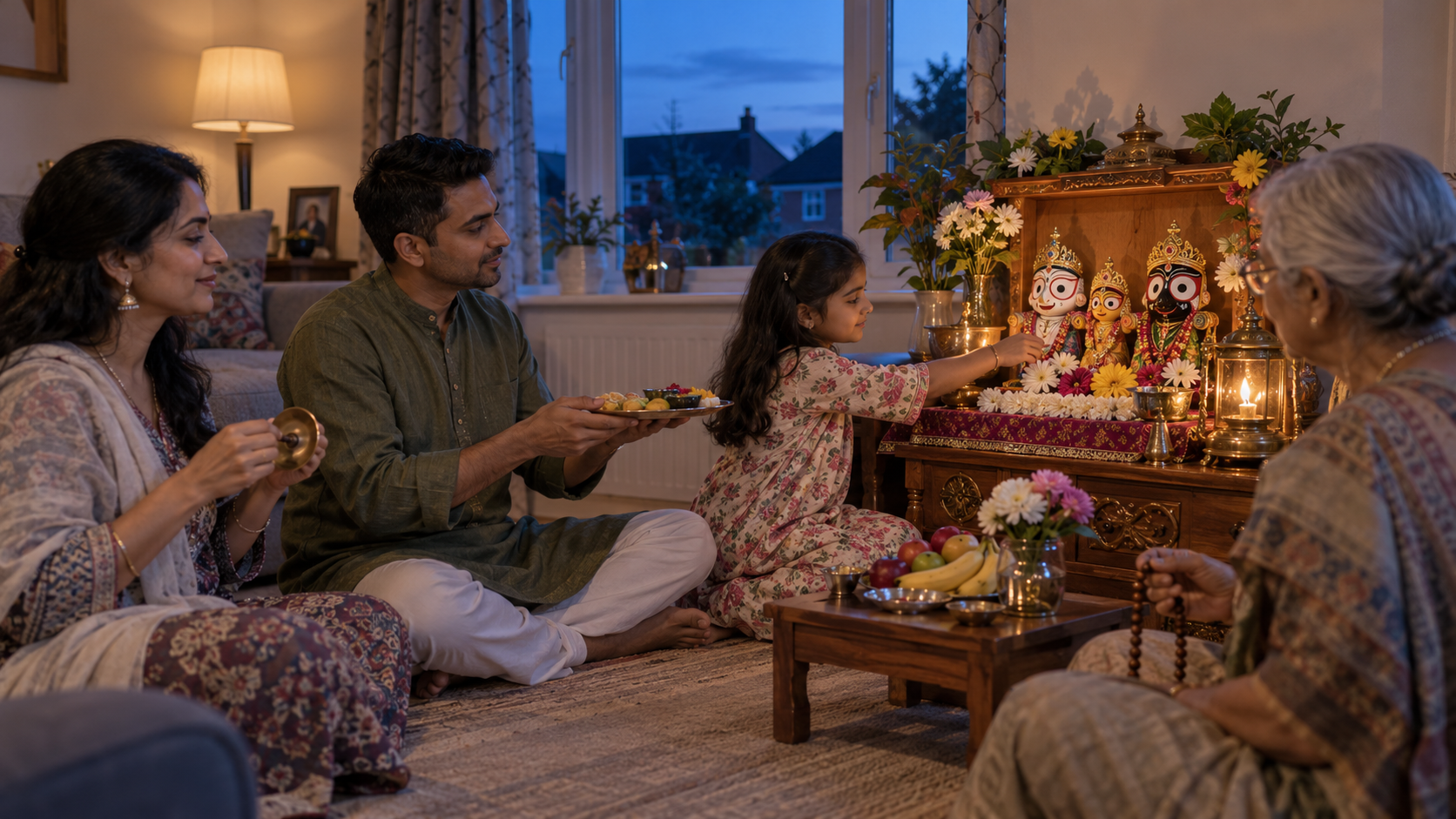
The most practical question after Ratha Yatra is not whether you saw every performance. It is whether one encounter from the day can become part of your life. Choose one of these paths rather than trying to reproduce the entire festival at home:
<!– wp:list {
Leave a Reply
You must be logged in to post a comment.