
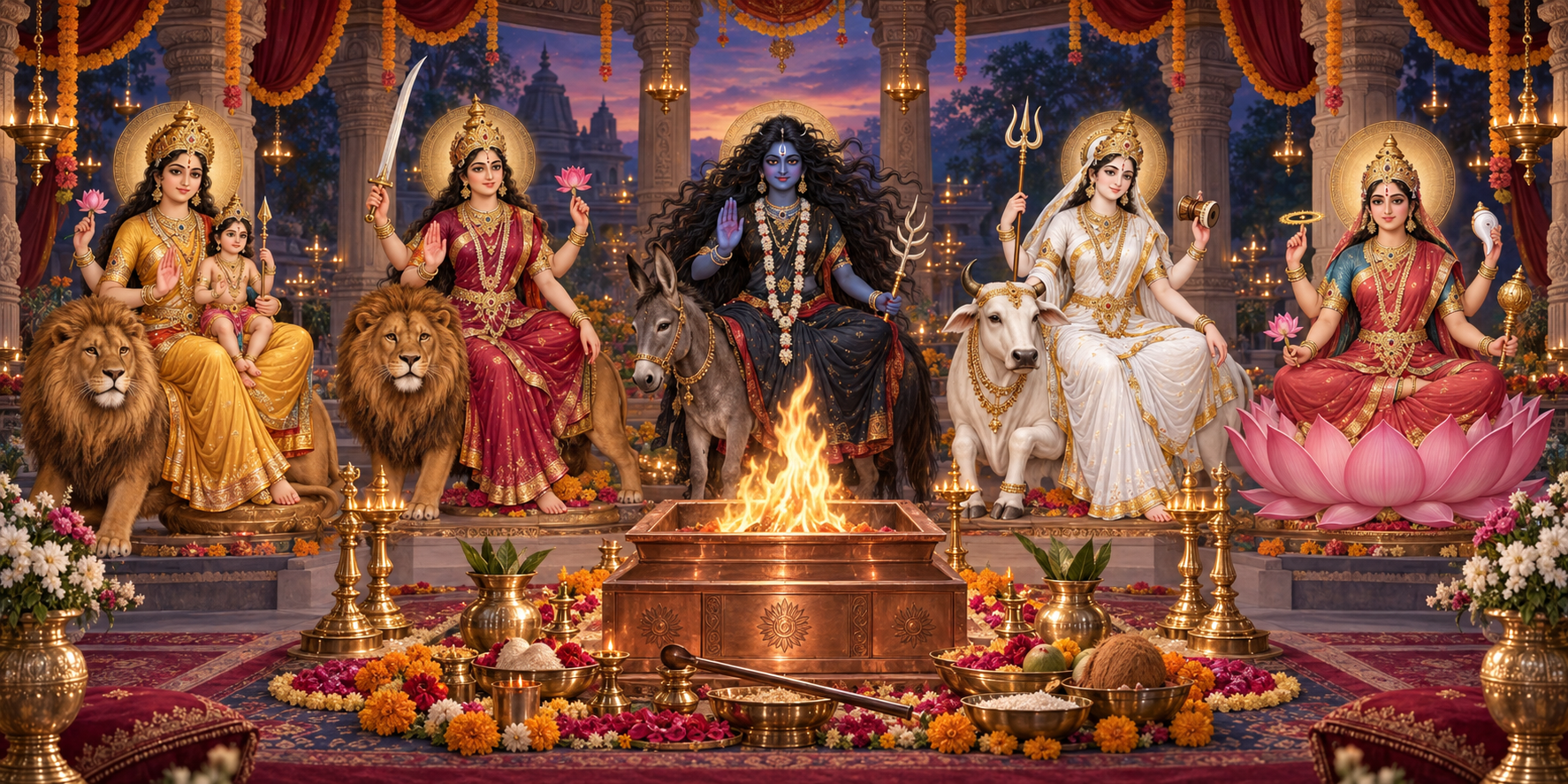
If you have reached Panchami and are wondering how the remaining Navratri homams differ, the essential distinction is not the size of the fire or the length of the ritual. It is the form of Devi being approached, the inner quality that form awakens, and the sankalpa you carry into worship.
The five observances from Skandamata to Siddhidatri can be approached as one coherent movement: care for what is vulnerable, act with courage, face fear, purify what remains, and dedicate the resulting strength to dharmic fulfilment. That frame will help you choose an observance without treating the Navadurga forms as interchangeable solutions to a wish list.
The five homams form a practical spiritual arc
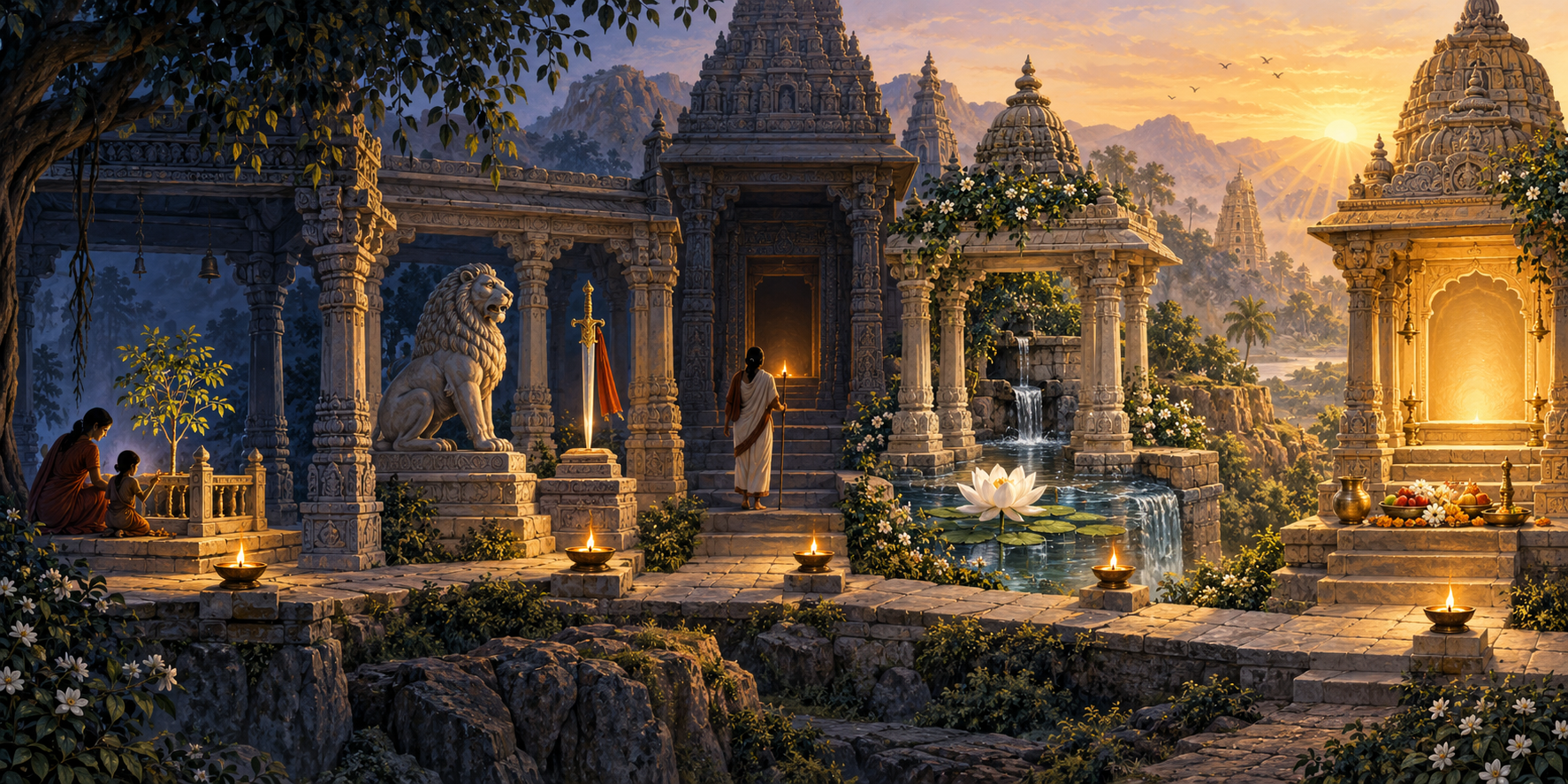
Each day has its own devotional centre. The life concerns commonly associated with it can guide your sankalpa, but they should not be read as guaranteed outcomes.
| Navratri day | Form of Devi | Devotional centre | Concerns to bring into prayer |
|---|---|---|---|
| Panchami, the fifth day | Skandamata | Maternal care, protection and clarity | Children, family harmony and the ability to nurture wisely |
| Shashti, the sixth day | Katyayani | Courageous and disciplined action | Marriage, harmony between spouses and success pursued through dharma |
| Saptami, the seventh day | Kalaratri | Fearlessness and protection in the presence of darkness | Fear, evil-eye concerns, hostile influences and the strain of legal conflict |
| Ashtami, the eighth day | Mahagauri | Purification, peace and renewal | Marital peace, remorse, past karma and the desire for a clean beginning |
| Maha Navami, the ninth day | Siddhidatri | Completion, fulfilment and spiritual maturation | Stability, prosperity and spiritual growth |
This progression gives the later half of Navratri its discipline. Skandamata asks what must be protected. Katyayani asks what action must be taken. Kalaratri asks what fear must be faced. Mahagauri asks what must be cleansed. Siddhidatri asks how any attainment will be used. You do not have to force every personal concern into every day.
Choose a sankalpa without turning worship into a transaction
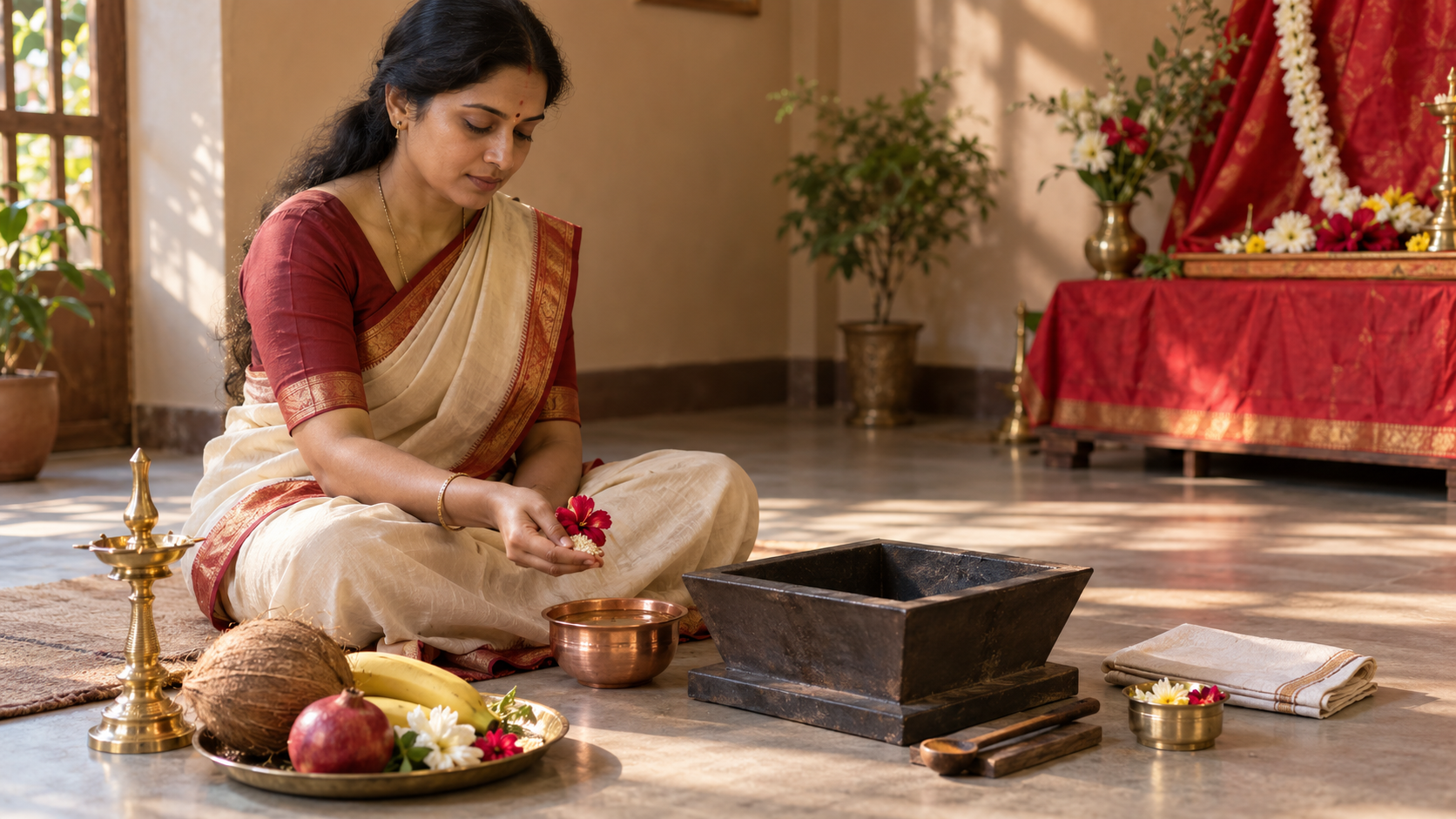
A sankalpa is more useful when it joins a sincere prayer to a dharmic responsibility. Asking only for an outcome can make worship feel like a bargain: perform a rite, receive a result. The Navadurga sequence points toward transformation in the devotee as well as change in circumstances.
- Name the real concern in one sentence. Avoid loading the homam with every unresolved problem in your life.
- Name the quality you need in order to meet that concern: patience, courage, clarity, restraint, truthfulness or steadiness.
- Name the duty that remains yours after the flames are extinguished. Prayer for family harmony still requires honest conversation. Prayer for success still requires competent work. Prayer for purification still requires changed conduct.
You might therefore approach Skandamata with a prayer to become capable of patient care, not only a demand for a child. You might approach Katyayani seeking discernment and courage for a dharmic marriage, not merely a wedding date. Before Kalaratri, you can name the fear that has begun to govern your decisions. Before Mahagauri, identify the apology, restitution or habit change that purification requires. Before Siddhidatri, decide how greater stability would serve your family, community and spiritual life.
These are prompts for preparing your intention, not substitute mantras or a universal ritual formula. Give the concern to your purohita or acharya in advance and let the sankalpa be expressed according to your sampradaya, family practice and circumstances.
It is also important to keep the claims proportionate. A homam is a sacred act of worship; it is not evidence that pregnancy, marriage, victory in court or financial gain has been guaranteed. Continue appropriate medical care, legal representation and financial planning. The worldly action and the spiritual observance need not compete.
How to approach each day from Panchami to Navami
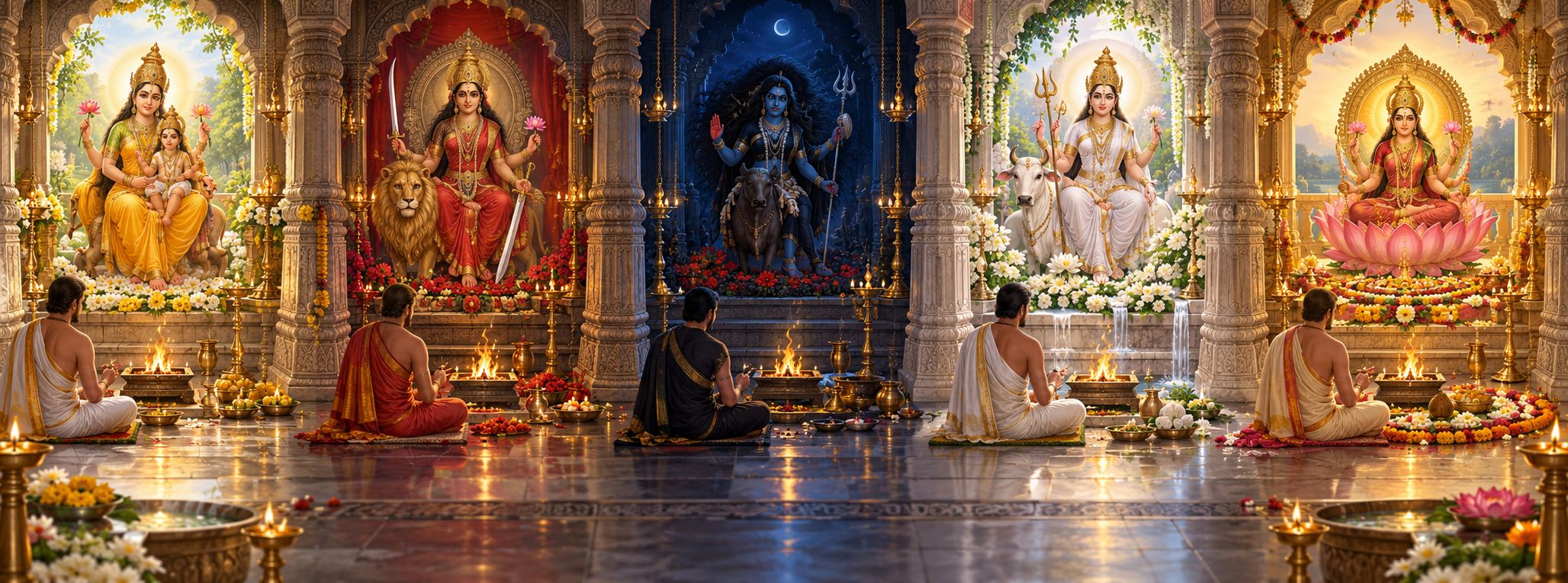
Panchami: let Skandamata correct the meaning of care
Skandamata is portrayed seated on a lion with the infant Skanda, also known as Kartikeya or Murugan, in her lap. The image holds tenderness and strength together. Maternal care is not helplessness; protection is not control.
Before the homam, notice where concern for your family has become anxiety, possessiveness or constant interference. If your prayer concerns santana prapti, carry the desire honestly while also asking for the maturity to nurture a life. If it concerns an existing child or a divided household, choose one act of patient attention that you will undertake after Panchami. Medical questions about fertility or pregnancy still belong with an appropriate healthcare professional.
Shashti: ask Katyayani for courage governed by dharma
Katyayani is the warrior form born as the daughter of Sage Katyayana from the combined fiery radiance of Brahma, Vishnu and Shiva. Her day is associated with vivaha prapti, harmony in marriage and success. The warrior image matters because worthwhile aims demand discernment, boundaries and action.
If you seek marriage, do not translate urgency into carelessness. Consent, character, compatibility and shared values remain more important than pressure to complete a match. If you are already married, define the conflict that needs courageous truth rather than praying vaguely for bliss. If your concern is success, ask which difficult but ethical action you have been postponing. Katyayani’s fierceness is most useful when directed first toward indecision, self-deception and conduct that departs from dharma.
Saptami: meet Kalaratri without feeding suspicion
Kalaratri appears with a dark complexion, unbound hair and three radiant eyes, riding a donkey. This formidable form is approached for protection and for relief from fear associated with the evil eye, hostile forces, occult influence and legal disputes.
The safest spiritual response to such fear is not to accuse another person on the basis of suspicion. Let the homam become a place to recover steadiness, discrimination and truthful action. If a legal dispute is involved, preserve documents, meet deadlines and rely on qualified legal counsel; ritual cannot replace evidence or representation. If fear of occult harm is consuming daily life, seek grounded support from trusted family, a responsible spiritual teacher and, when anxiety is persistent or disabling, a mental-health professional. Protection should restore clarity, not deepen obsession.
Ashtami: make Mahagauri’s purification concrete
Mahagauri represents purification, peace and spiritual rebirth. Her appearance after Kalaratri creates an important transition: after darkness has been faced, the next task is not endless combat but cleansing and renewal.
Do not confuse purification with pretending that harm never occurred. If you regret an action, identify what can be acknowledged, repaired or discontinued. If you pray for peace in marriage, ask whether your own speech and habits support safety and respect. No spiritual observance obliges someone to remain in an abusive or dangerous situation; immediate safety and competent local help take priority. Mahagauri’s peace becomes meaningful when it is joined to truthful repair rather than silence imposed for appearances.
Maha Navami: place attainment before Siddhidatri
Siddhidatri is seated on a lotus, rides a lion, and bears the chakra, mace, conch and lotus. Her homam on Maha Navami completes the sequence of nine Navadurga fire observances and is associated with stability, prosperity and spiritual growth.
Completion is not the same as acquisition. If your sankalpa concerns money, distinguish stability from a sudden windfall and prosperity from display. Decide what responsible stewardship would look like: reviewing spending, addressing debt through a realistic plan, meeting obligations or setting aside a portion for generosity. Seek qualified financial advice where the consequences are substantial. If your aim is spiritual growth, choose the discipline that will continue after Navami. A culmination that produces no continuing practice soon becomes only a memory of the ceremony.
Plan the rites so tradition and safety stay aligned
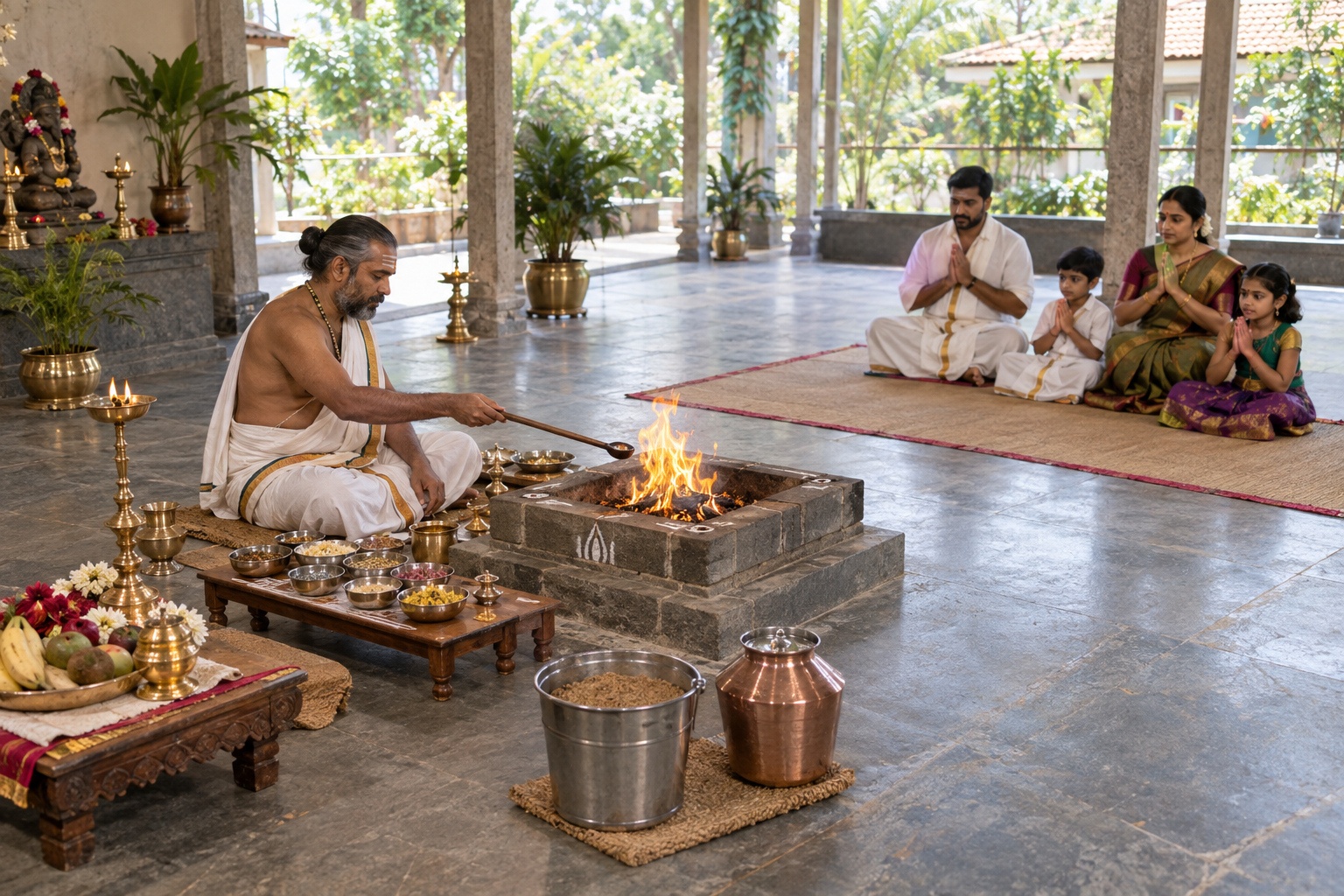
The exact mantras, offerings, altar arrangements and sequence of oblations can differ among traditions. A generic list gathered from unrelated instructions may produce a ceremony that belongs to no coherent lineage. Settle the following points before Panchami:
- Confirm the relevant tithi and local timing with your temple, purohita or the panchanga followed by your family. Do not rely only on a civil date copied from another location.
- State clearly whether you are arranging one homam or the full Panchami-to-Navami sequence. Ask whether the same procedure continues each day and what changes with the invoked form.
- Give the officiant your principal sankalpa beforehand. Ask what personal details are required rather than improvising them during the rite.
- Obtain the mantra and samagri list from the person conducting the homam. Follow one recognised method instead of combining instructions from several traditions.
- Clarify which preparations belong to the household: fasting or dietary observance, bathing, altar preparation, attendance, dakshina and the handling of prasada or ritual remains.
- Treat the homa fire as an open flame. Use a stable, approved space with ventilation, keep children and loose fabric at a safe distance, have venue-appropriate fire-control equipment ready, and never leave the flame unattended.
- If you cannot observe all five days, ask which single-day or temple observance fits your tradition. Do not assume that several distinct rites can simply be compressed into one procedure.
After each homam, write down one sentence: what quality did this form of Devi ask you to practise? By Navami you will have a five-part discipline rather than five disconnected requests.
Key takeaways
- Panchami through Navami can be approached as a movement from nurturing and courageous action through fearlessness and purification to fulfilled, responsible spiritual life.
- Choose one clear sankalpa for each observance and connect it to a duty you will perform after the ritual.
- Devotional associations such as santana prapti, marriage, protection, legal success and prosperity are intentions for worship, not guaranteed material results.
- Let a qualified practitioner from your tradition determine the mantras, offerings and ritual sequence.
- Keep medical, legal, financial and personal-safety decisions in the hands of the appropriate professionals while allowing worship to strengthen clarity and dharmic resolve.
Before Panchami arrives, write your central concern in one line and the corresponding duty in a second. Take those two lines to your purohita. That small preparation will help the five homams become a sustained encounter with Devi rather than a hurried series of ceremonies.
References
- Hindu Pad – Skandamata Havan: Navratri Homam for Santana Prapti, Family Harmony, Clarity in Life
- Hindu Pad – Maa Katyayani Havan: Navratri Homam for Vivaha Prapti, Marital Bliss, Success in Life
- Hindu Pad – Maa Kalaratri Havan: Navratri Homam for Evil-Eye Removal, Legal Disputes and Occult Influences
- Hindu Pad – Maa Mahagauri Havan: Navratri Homam for Marital Bliss, Peace of Mind, Cleansing Past Karmas
- Hindu Pad – Maa Siddhidatri Havan: Navratri Homam for Financial Stability, Prosperity, Spiritual Growth

Leave a Reply
You must be logged in to post a comment.