
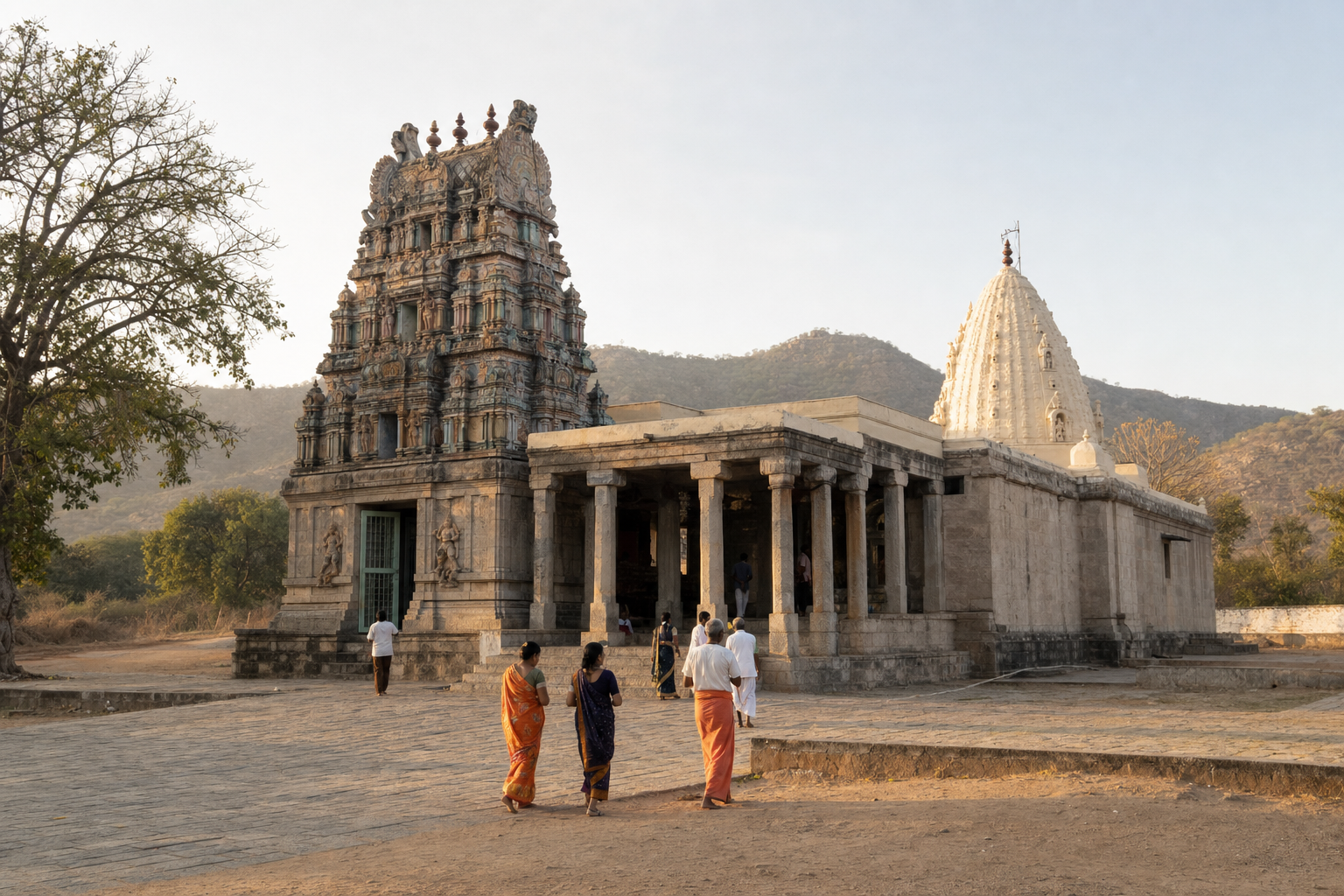
If you are travelling toward Srisailam and wondering whether Tripurantakam deserves a place in your pilgrimage, decide by purpose rather than by the number of temples you can fit into a day. Make time for it if you want a focused Devi-Shiva darshan in a quieter setting; do not reduce it to whatever minutes remain after the rest of the journey.
The shrine stands in Tripurantakam village in Andhra Pradesh’s Prakasam district, about 100 kilometres from Srisailam Temple. That makes it a natural companion to a Srisailam yatra, but the distance is substantial enough to plan as a real road journey. The choices below will help you decide when to visit, how much space to give the temple, and how to approach its worship without rushing.
Begin with the temple’s actual sacred centre
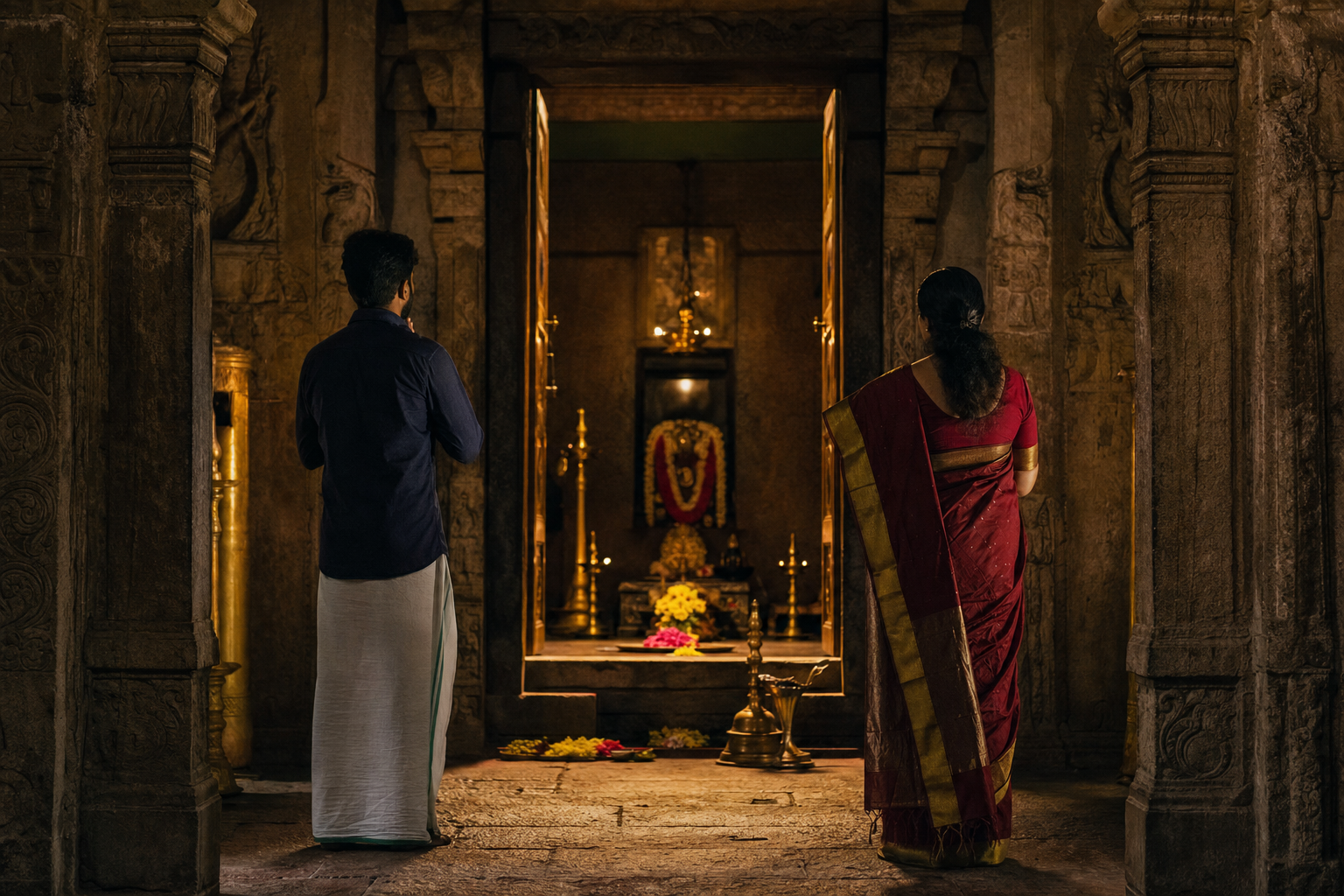
The shrine is locally revered as Sri Bala Tripurasundari Ammavari Sametha Sri Bala Sivan Temple. The important word is sametha: Bala Tripurasundari is worshipped alongside Bala Siva. You are therefore entering a shared sacred space centred on Devi and Shiva, not merely visiting one deity before moving to another.
Let that relationship shape your darshan. Offer your attention to both presences, even if devotion to the Divine Mother first brought you there. The temple’s local identity holds Devi’s grace and Shiva’s protecting presence together. Treating one sanctum as the destination and the other as an afterthought misses the devotional grammar expressed in the temple’s own name.
Tripurantakam is sometimes associated with the spiritual atmosphere of Srisailam, but the comparison should not turn it into a substitute or a miniature version of the larger pilgrimage centre. Its architecture is modest beside major urban temple complexes. Sculpted gateways, an inward-facing sanctum and circumambulatory paths serve worship rather than spectacle. Notice the structure, but allow mantra, lamps, bells and darshan to remain the centre of the visit.
This distinction also protects you from a common pilgrimage mistake: measuring a temple by its size, crowds or fame. Tripurantakam asks for a different measure. Ask whether the place helps you become attentive, restrained and receptive. If it does, the visit has already done more than another hurried stop on an itinerary.
Plan the road journey before fixing your worship schedule
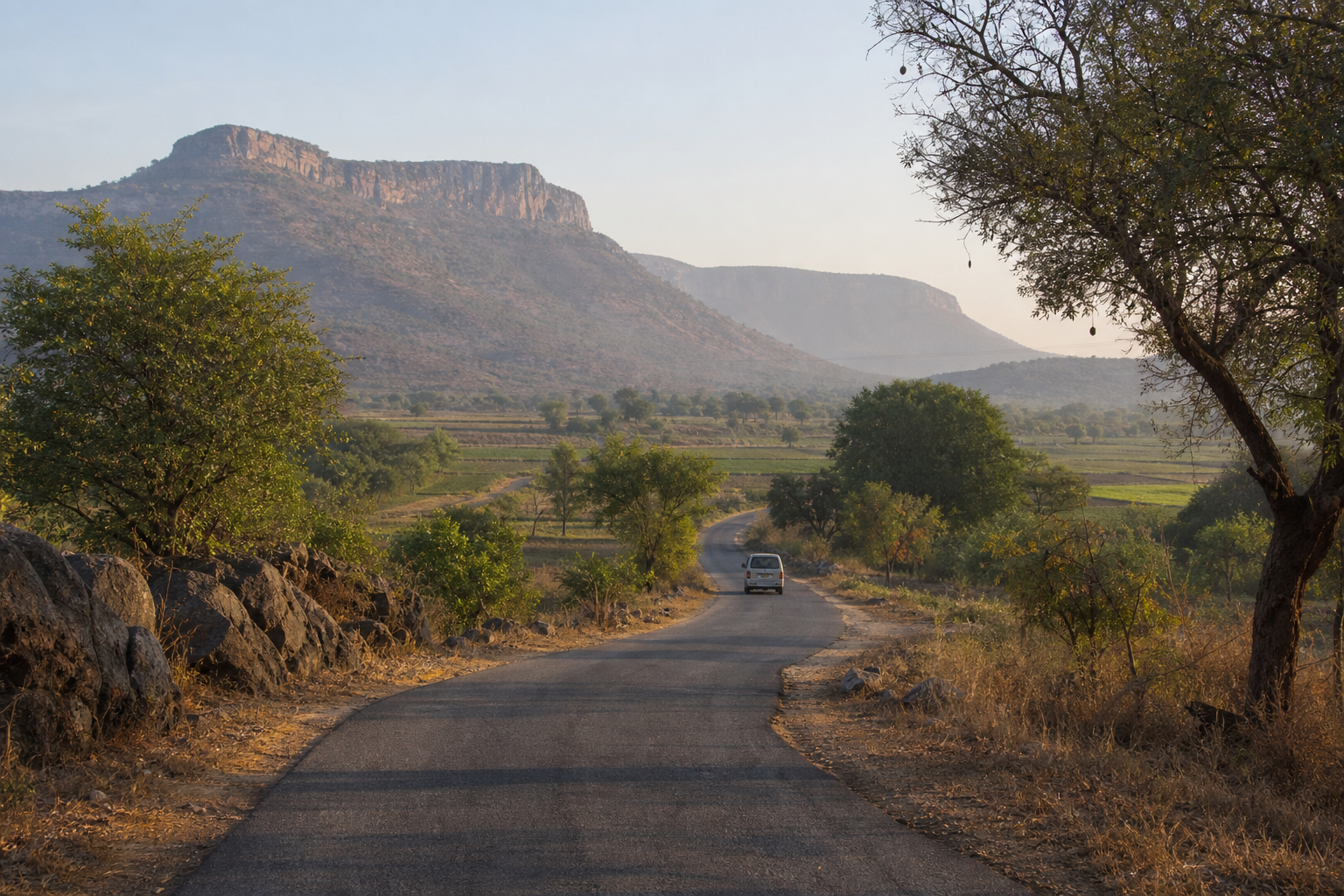
Tripurantakam is accessible by road from Ongole and Markapur. You may also encounter the spelling Tripuranthakam, so use the full temple name when searching a map or confirming directions. Matching the village, district and shrine name is safer than relying on a short search for Bala Tripurasundari, a name associated with worship beyond this one location.
Do not calculate the day from distance alone. A road journey includes the approach to the village, a possible pause before worship, darshan itself and the onward journey. If Srisailam is your main destination on the same day, protect a separate window for Tripurantakam instead of assuming it will behave like a roadside halt. A delayed departure should shorten the rest of your itinerary, not force you to rush through the sanctum.
- Decide whether Tripurantakam is a principal act of worship or an addition to your Srisailam yatra. Give it the better part of the day if Bala Tripurasundari is your principal devotional focus.
- Confirm the current opening hours, puja schedule and local road conditions before leaving. Do not build a tight connection around an unverified temple time.
- Search using both Tripurantakam and Tripuranthakam if necessary, then verify that the result is in Prakasam district and carries the full Devi-Shiva temple name.
- Leave an unscheduled buffer after darshan. That keeps a queue, ritual or quiet period of prayer from becoming a source of impatience.
- If your group includes older people, young children or anyone with limited mobility, ask locally about the final approach and available facilities rather than assuming that every part of the route will suit them.
October through March generally offers more comfortable travel conditions. Early morning and evening are the preferred periods for a serene darshan. These are planning tendencies, not promises about opening hours, weather or crowd levels on your chosen date, so current local confirmation still matters.
Give darshan a deliberate sequence
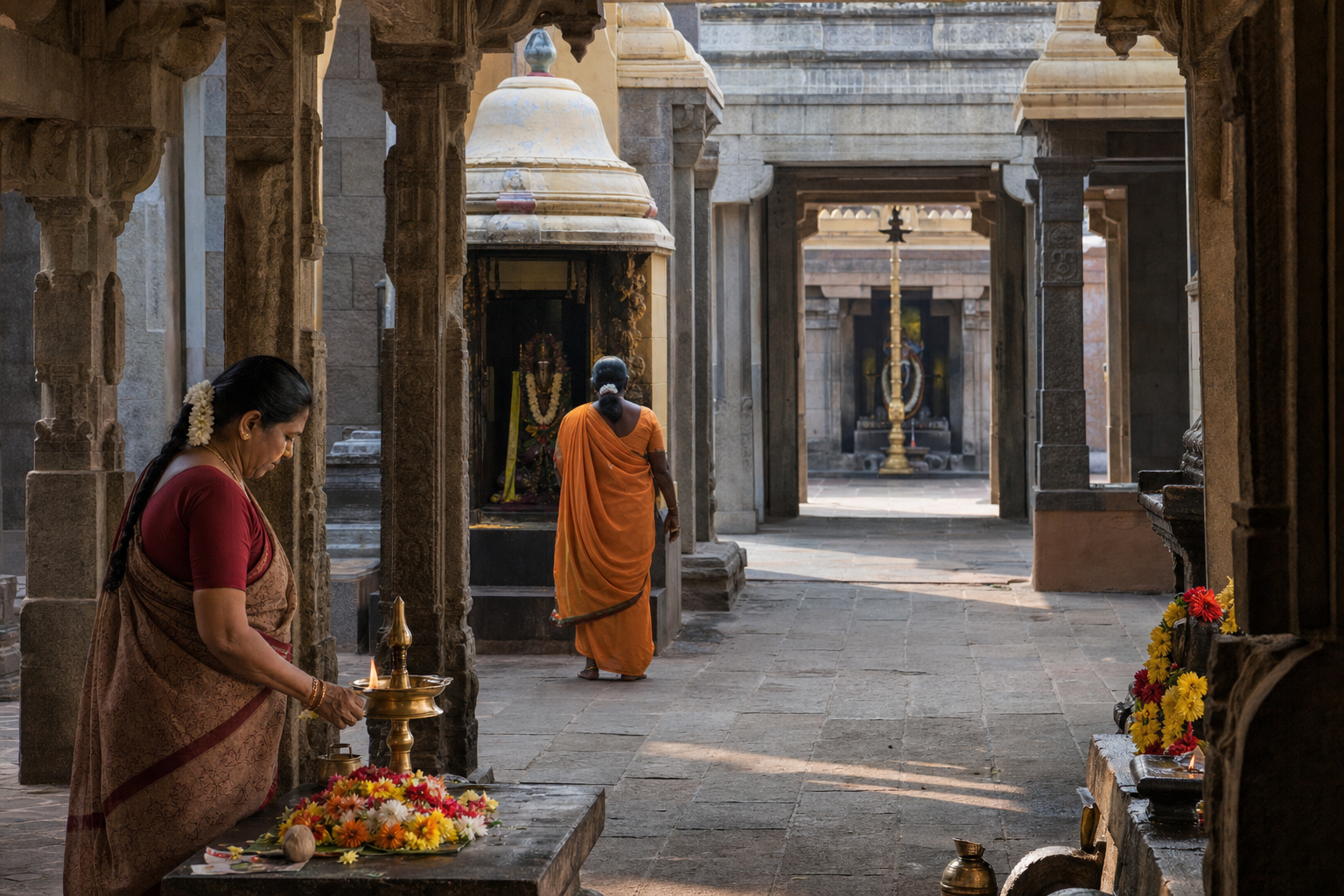
You do not need to invent an elaborate private ritual to make the visit meaningful. A simple sequence prevents travel fatigue, conversation and photography from taking over the sacred encounter. It is a personal discipline, not a claim that the temple requires every visitor to follow the same steps.
- Pause before entering. Finish travel calls, silence your phone and settle your breath. Enter when you can give the shrine your full attention.
- Observe before acting. Watch the local order of worship and follow the directions of priests or temple attendants. If you are uncertain about offerings, queues or access, ask quietly instead of copying a gesture you do not understand.
- Hold Devi and Shiva together in your intention. Remember the temple’s sametha identity. Make pranam with awareness of the conjoined reverence expressed by Bala Tripurasundari and Bala Siva.
- Keep prayer proportionate. If you have received a mantra through your own tradition, use it quietly and without obstructing others. Otherwise, attentive silence and a sincere pranam are sufficient; a temple visit does not become deeper merely because the visitor performs more visible actions.
- Use the circumambulatory path mindfully. Follow local custom, the movement of devotees and any restrictions in force. Walk without turning the path into another race around the itinerary.
- Remain still for a few moments after darshan. Let the visual encounter settle before returning to travel planning. This short pause often marks the difference between seeing a shrine and receiving the visit as sadhana.
The setting naturally supports this pace. Temple bells, Sanskrit mantras and oil lamps form its devotional rhythm. Instead of trying to capture every element, notice how they gather the senses toward the sanctum. The purpose is not aesthetic consumption. It is collected attention.
Wear modest clothing, maintain respectful silence near the sanctum and follow local practice. These courtesies are not decorative etiquette. They prevent your personal preferences from disturbing another devotee’s worship. If a rule concerning footwear, offerings, photography or movement is unclear, the safe response is to ask before acting.
Choose between festival energy and contemplative space
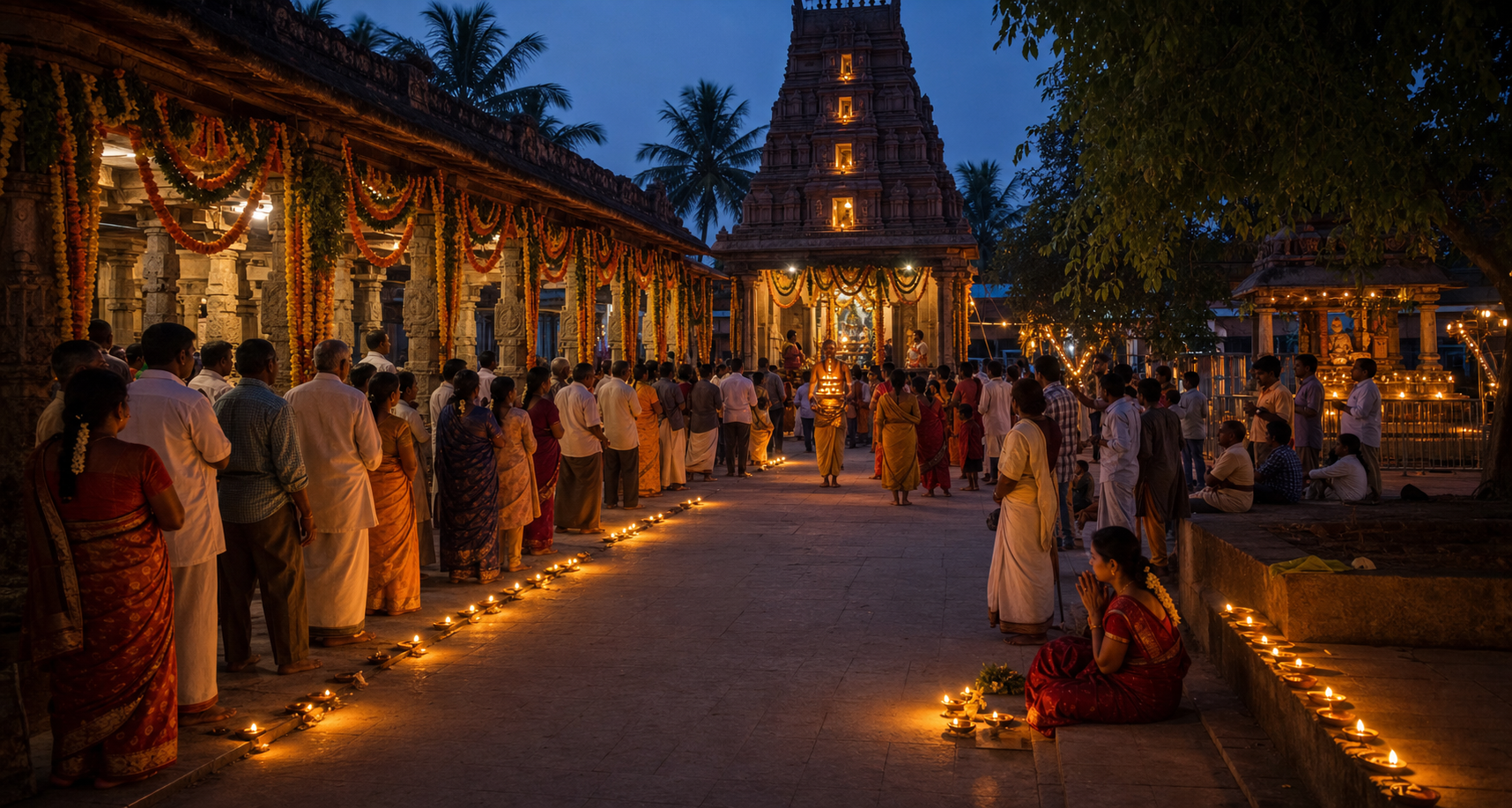
The best day depends on what you are seeking. Navaratri brings special observances and larger gatherings around Devi worship. Choose that period when shared celebration, intensified ritual activity and the presence of many devotees are part of your sankalpa. Accept that the visit may offer less stillness and require more patience.
Fridays, traditionally auspicious for worship of the Divine Mother, also tend to bring heightened devotional activity. A Friday visit therefore suits someone who wants to participate in that living weekly rhythm. It is a less suitable choice if your principal aim is an unhurried, lightly attended encounter.
For contemplation, choose an ordinary non-festival day and favour an early morning or evening visit, subject to confirmed temple hours. Do not assume, however, that a quieter day is spiritually superior. Festival worship teaches patience, shared devotion and participation; a quieter visit supports inward attention. Choose the discipline you actually need.
The temple sustains daily puja as well as seasonal observances. That continuity matters. Tripurantakam is not sacred only when a festival fills it with activity. If crowds are not part of your purpose, an ordinary day can place the shrine’s essential practice more clearly before you.
Whichever atmosphere you choose, arrive with one concrete intention: a prayer, a vow of self-discipline, gratitude, or a request for clarity. Keep it simple enough to remember at the sanctum. After you leave, translate it into one action you can maintain. Devotion becomes part of dharmic life when the quality cultivated before the deity changes how you speak, decide or serve afterward.
Key takeaways
- Tripurantakam’s sacred identity joins Bala Tripurasundari with Bala Siva; approach the visit as conjoined Devi-Shiva worship.
- The temple is in Prakasam district, about 100 kilometres from Srisailam, with road access from Ongole and Markapur. Treat that distance as a planned journey, not a casual detour.
- October through March is generally more comfortable for travel, while early morning and evening favour a calmer darshan. Confirm current hours before departure.
- Navaratri and Fridays suit pilgrims seeking a stronger collective Devi-worship atmosphere; an ordinary day is usually the better choice when quiet contemplation is the priority.
- Use the full temple name and both spellings, Tripurantakam and Tripuranthakam, when confirming the location.
- Modest dress, silence near the sanctum and attention to local instructions are part of the worship, not merely visitor formalities.
Before fixing your date, choose the kind of darshan you want, confirm the live temple details and reserve enough time to arrive without haste. Then carry one clear sankalpa into the shrine and one corresponding act of discipline back into daily life. That is how Tripurantakam becomes part of your pilgrimage rather than another name on its route.
References
