
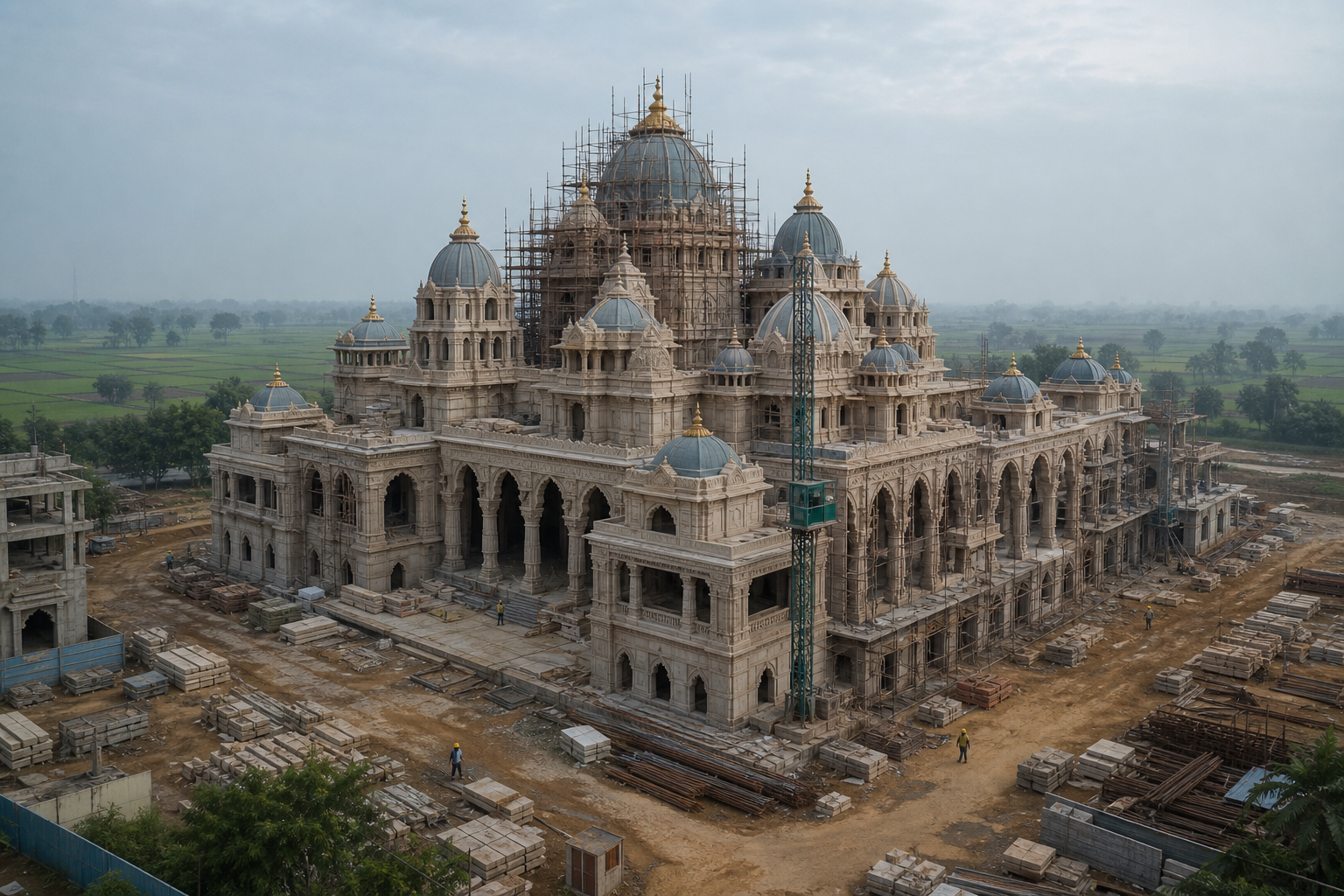
If you came here to learn whether the Temple of the Vedic Planetarium Main Wing is nearly finished, the sound answer is narrower: meaningful work was advancing in November 2025, but those milestones do not establish a completion or opening date.
You can get a much clearer picture by separating three ideas that are often blurred together: work is active, a defined work package is complete, or a building is ready for use. The Main Wing had active work across several fronts. That matters, but it is not the same as full completion.
What the November 2025 progress proves – and what it does not
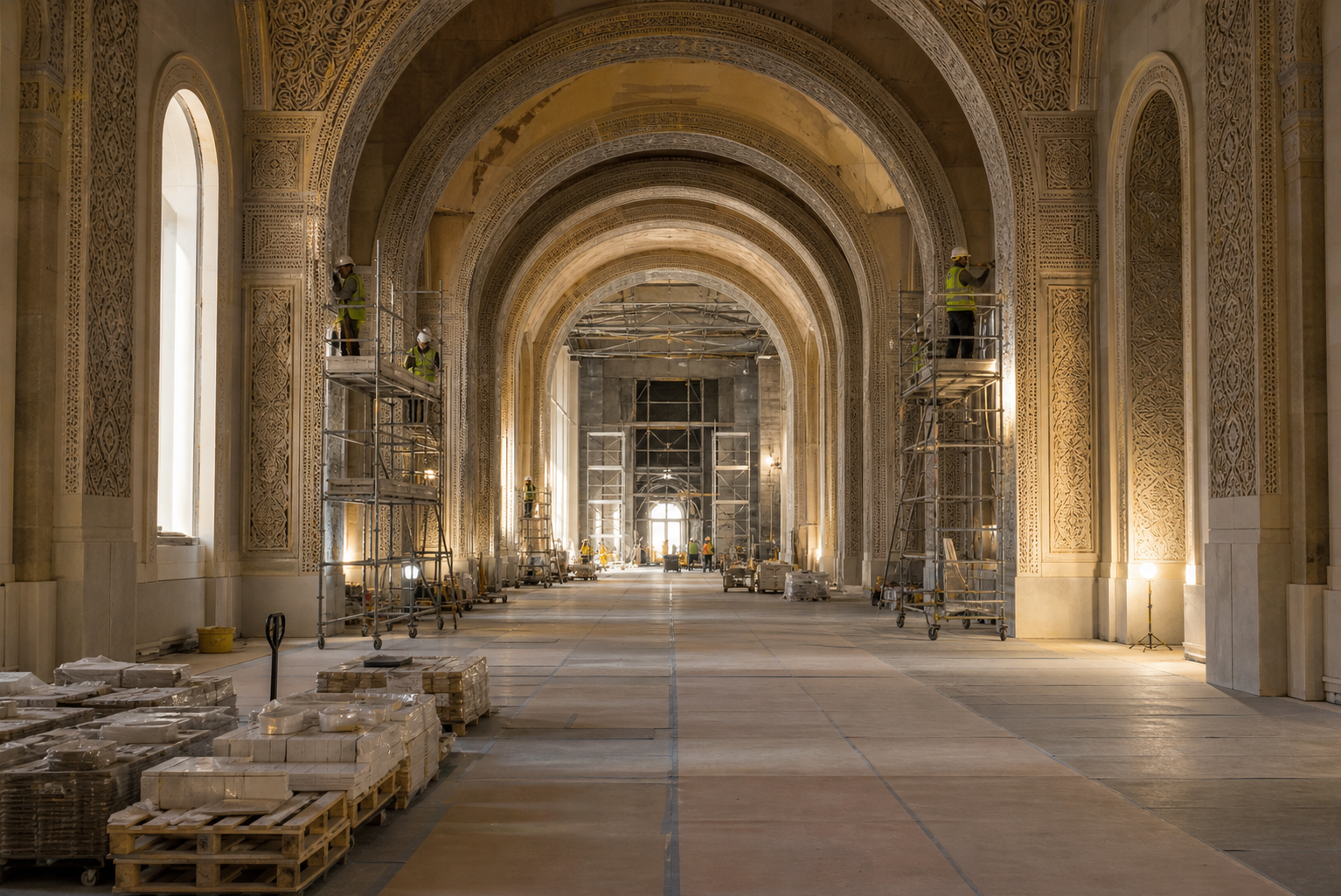
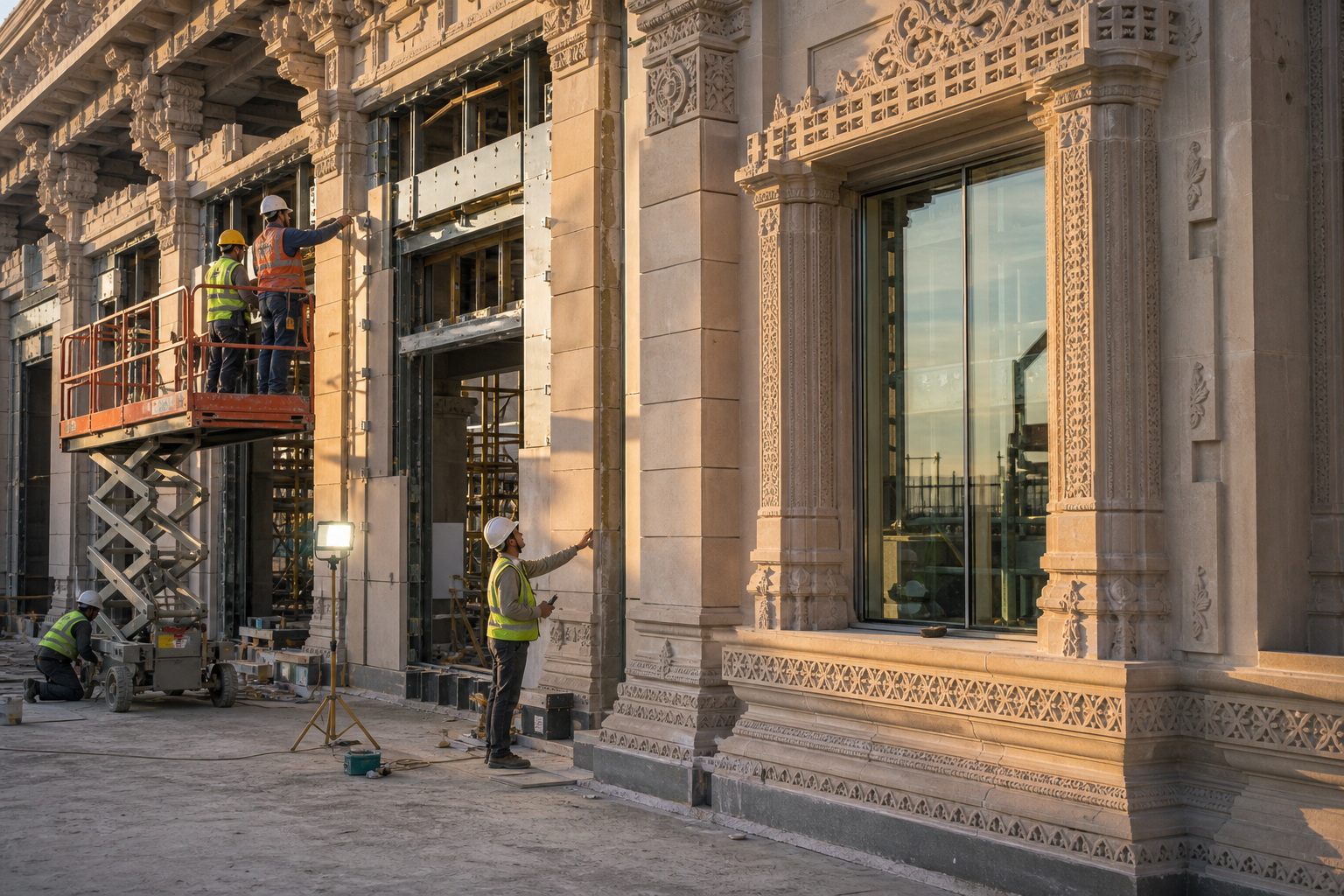
As of November 2025, the Main Wing had core structural work, evolving fit-outs, and coordinated quality assurance underway. Engineering teams and artisans were working within a process that emphasized durability, precision, and fidelity to the temple’s architectural vision.
That combination is important. It shows that construction was not confined to a single visible task or a cosmetic campaign. Several kinds of work were progressing within the same wing, with technical and artistic requirements being managed together.
It does not tell you that every area of the Main Wing had reached the same stage. Large buildings are normally divided into zones and work packages. One area may be receiving interior elements while another still needs structural attention, inspection, correction, or preparation for the next trade.
Use these three status labels whenever you assess a TOVP milestone:
- Active: A named kind of work is underway in a defined area.
- Complete and accepted: A defined work package has been finished and has passed the required checks.
- Operational: The connected systems, spaces, safety provisions, and remaining dependencies are ready for their intended use.
The November 2025 facts justify the first label for the Main Wing. They do not, by themselves, justify applying the second label to the entire wing or the third label to the building. If you are deciding what to tell family, fellow devotees, or a community group, say that construction is advancing. Do not turn that statement into an opening forecast.
Read the construction sequence, not just the visible activity
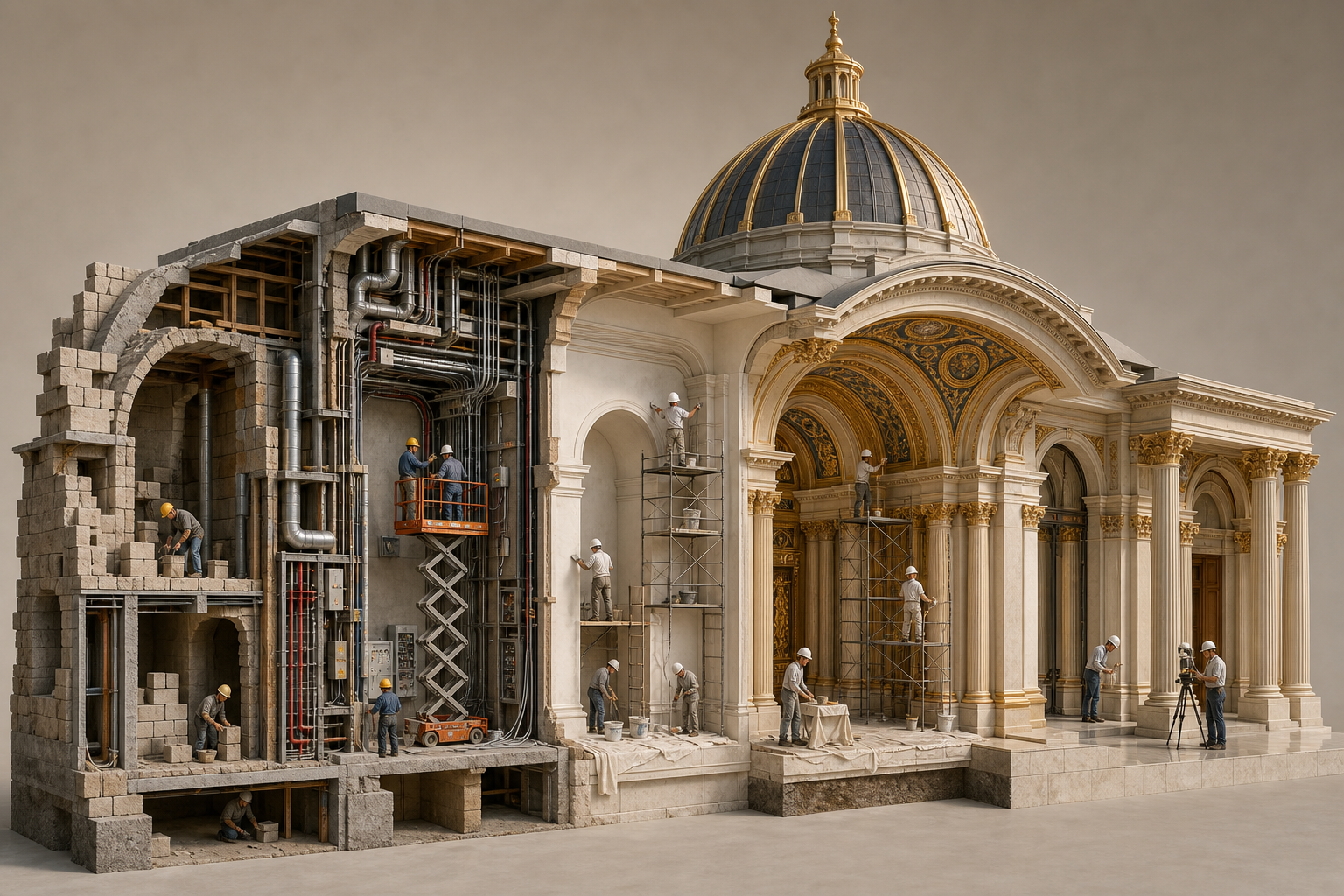
A busy site can look close to completion, while a quiet site can be resolving essential technical dependencies. Photographs and walkthroughs are therefore most useful when you ask what kind of work you are seeing and what it enables next.
Structural work establishes what later layers depend on
Core structural work concerns the permanent supporting fabric on which later construction depends. A structural milestone may release a particular zone for follow-on work without meaning that the whole wing has crossed the same threshold.
When structural progress is announced, look for the named element or area. The useful question is not simply whether structure is progressing. Ask whether a particular structural package is underway, completed, inspected, or ready to hand over to the next team. Those verbs represent very different states.
Fit-out activity can be substantial without being building-wide
Fit-out work brings spaces closer to their intended form and use. It can include multiple interior trades and crafted elements, depending on the area. Because fit-outs are visually legible, they often create the strongest impression that completion is near.
Resist that shortcut. Fit-outs can begin in released zones while other zones remain at an earlier stage. A better question is whether the fit-out applies to a sample area, one room, one level, a defined section, or the whole wing. Unless the scope is stated, treat the image as evidence about the area shown, not about every space beyond the frame.
Quality assurance is a continuing process, not a final ribbon
Quality assurance can occur throughout construction. It checks whether materials, dimensions, installation, workmanship, and finished results meet the relevant requirements. Its presence is a positive sign of project discipline, but it should not be mistaken for final acceptance of the entire Main Wing.
Checks may confirm that work can proceed, or they may identify corrections before the next layer is installed. That is why an inspection is not automatically a completion event. The decisive information is the outcome: accepted, corrected, awaiting reinspection, or released for the next work package.
Coordination is the milestone behind the visible milestones
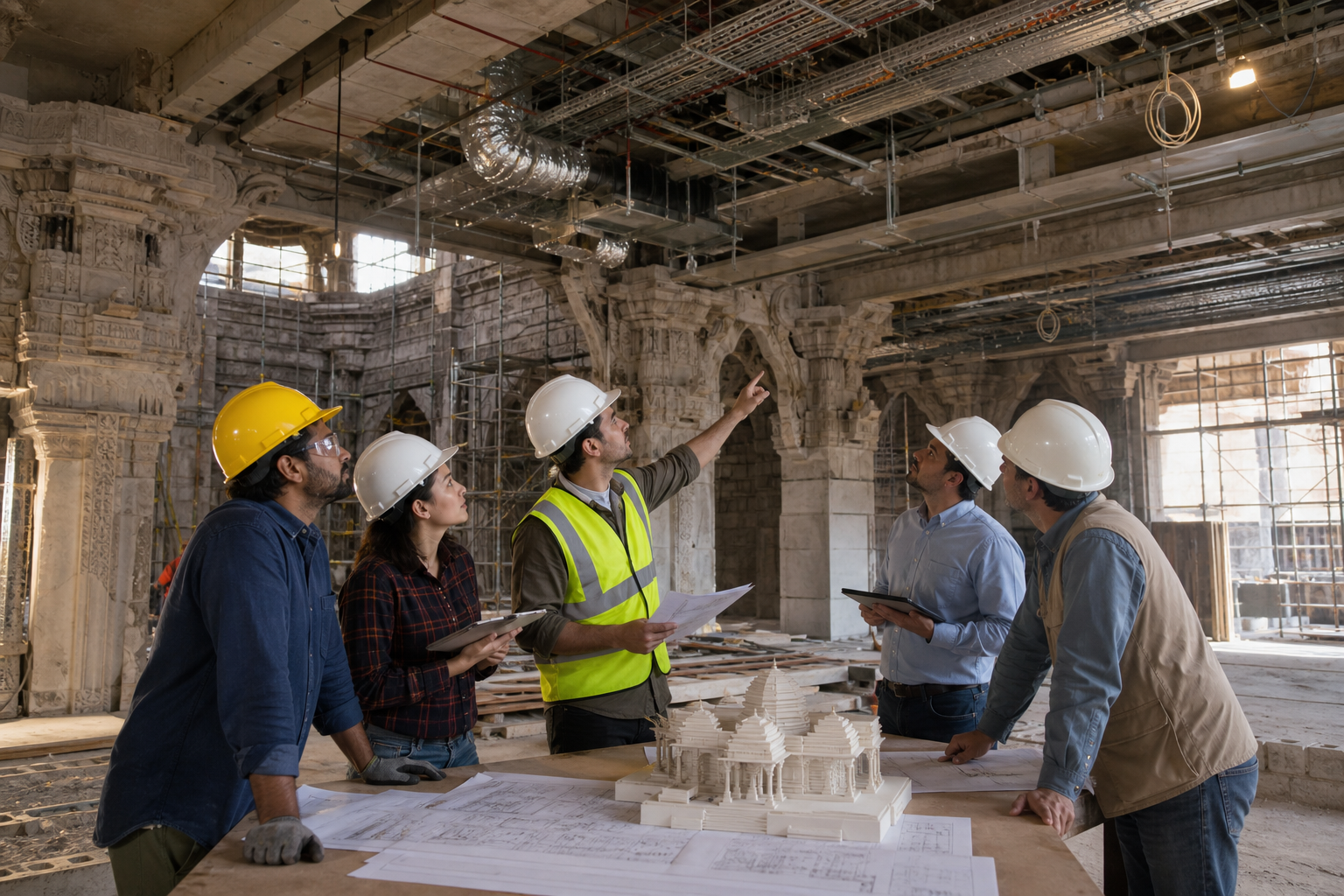
In November 2025, engineers, artisans, and quality personnel were being coordinated around technical rigor and heritage standards. This is one of the most consequential parts of sacred construction because each group manages a different kind of risk.
Engineering protects structural integrity and durability. Artisans translate the architectural and iconographic vision into physical form. Quality assurance checks whether execution matches the intended requirements. If these streams are treated as isolated tasks, a technically adequate solution can compromise sacred expression, or a beautiful element can conflict with the conditions needed for dependable installation and long-term service.
The strongest milestone therefore has five parts: a clearly named area, a clearly named work package, an unambiguous status verb, an inspection or acceptance result, and the next dependency that has been released. A dramatic visual without those details may still inspire you, but it cannot carry the same project-management meaning.
This is also where seva and accountability belong together. Patient, sustained service is appropriate to a large sacred undertaking. Patience, however, does not require vague language. Precise reporting protects trust, honors the work of every team, and prevents sincere enthusiasm from becoming an unsupported promise.
Key takeaways
- In November 2025, TOVP’s Main Wing had active structural work, fit-outs, and quality assurance moving forward.
- Parallel workstreams usually indicate staged progress across zones; they do not mean that every part of the wing is at the same stage.
- The disclosed milestones do not establish a completion date, an opening date, or operational readiness.
- A useful future milestone will identify the exact area, the completed work package, its acceptance status, and the next activity it enables.
- For sacred architecture, success must include durability, functional discipline, craftsmanship, and fidelity to the intended cultural expression.
What you should watch for in the next TOVP milestone
You do not need technical drawings or access to internal schedules to follow the Main Wing responsibly. Keep a simple milestone ledger and record only what has been stated clearly:
- Date: When was the status current?
- Area: Does it concern the entire Main Wing or a smaller zone?
- Work package: Is the activity structural, fit-out, artistic, inspection-related, or another defined scope?
- Status verb: Is the work planned, started, advancing, installed, completed, inspected, or accepted?
- Quality result: Has the work merely been checked, or has it been accepted and released?
- Next dependency: What work can now begin because this milestone has been reached?
- Schedule claim: Was a date explicitly announced, or are readers inferring one from visible progress?
This method also improves how you discuss the project. The statement that Main Wing fit-outs are advancing is precise when that is the disclosed status. The statement that the temple is about to open is not justified unless an explicit schedule accompanies it. That distinction may sound cautious, but it is how confidence is preserved over a long construction effort.
The Main Wing is being developed as a manifestation of Vedic culture shaped by learning, contemplation, service, and sacred craftsmanship. Those values can resonate across Hindu, Buddhist, Jain, and Sikh communities without pretending that their theologies, rituals, or architectural traditions are interchangeable. The shared civilizational principle is disciplined stewardship: build carefully, preserve meaning, and hand something durable to the next generation.
When the next TOVP milestone appears, look first for the smallest clearly completed and accepted work package. Track what it releases next, and share only the status that the facts support. That will tell you more about real progress than the most spectacular image, while leaving any opening schedule to an explicit announcement.
References
