
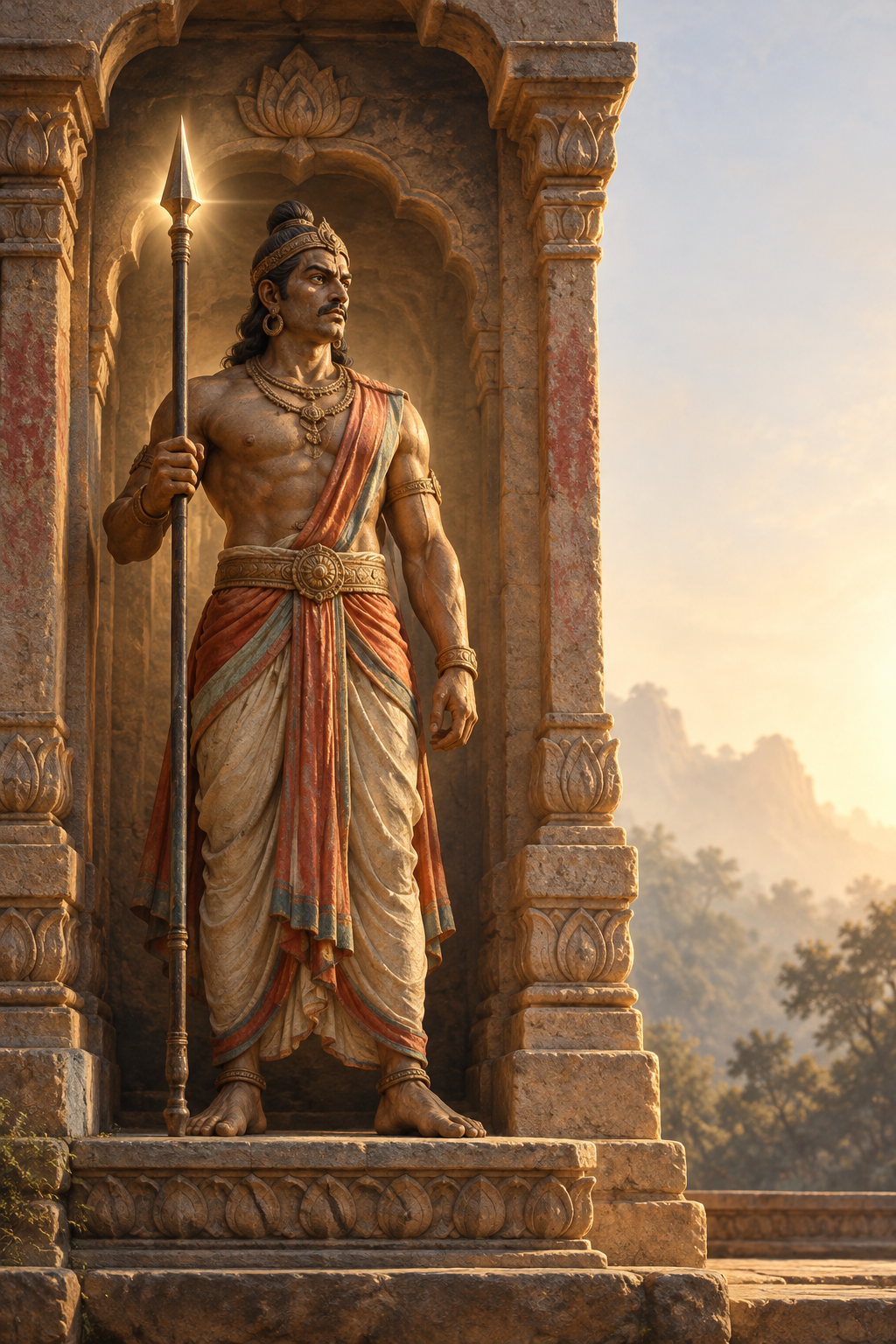
You have noticed a slim, pointed weapon in the hand of a deity or guardian figure. It looks like a spear, but the label is missing, damaged, or too vague to help. Is it a tomara, and what are you meant to understand from it?
The reliable answer comes from reading more than the point of the weapon. The tomara is a spear-type sacred weapon, but its meaning emerges from three things together: its form, the figure carrying it, and the visual setting in which it appears.
What the name tomara tells you
In Hindu iconography, the tomara belongs to the family of ayudhas: weapons represented as divine or sacred attributes. It is classified among piercing and projectile weapons, so its basic visual logic is direct force delivered through a pointed head and shaft. It may evoke either thrusting or projection, although a static image does not necessarily tell you which action the sculptor had in mind.
The tomara is also treated as a primary ayudha in the Shilpa Shastras and Agamas associated with temple sculpture and bronze casting. Here, “primary” is a technical classification, not a claim that the tomara outranks every other divine weapon or has one supreme meaning in every tradition.
This distinction matters when you read an image. Iconographic texts establish recognizable conventions, but a surviving sculpture is also shaped by region, period, material, workshop practice, available space, damage, and restoration. Use the textual name as a disciplined starting point, not as permission to force every pointed object into the same category.
How to identify a possible tomara
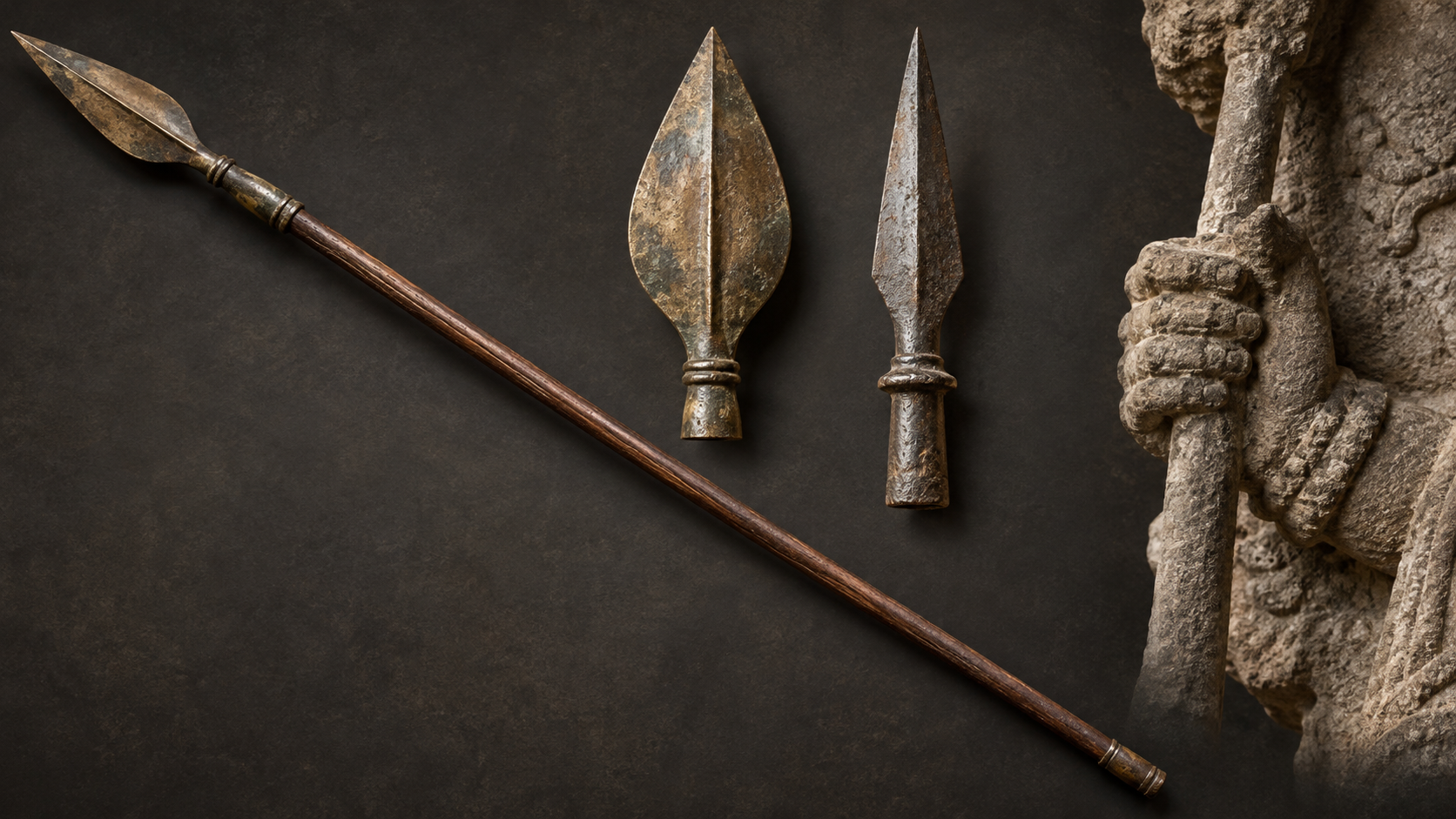
Begin with what you can actually see. Do not start by deciding which weapon “should” be present and then making the object fit that expectation. A narrow shaft ending in a single piercing point is consistent with a tomara, but that feature alone is not always conclusive.
- Trace the whole object. Follow it from the figure’s hand to both ends. A broken shaft, an eroded point, or an overlapping arm can change the apparent shape.
- Count the surviving points. A single spear-like point supports identification as a tomara. Three distinct prongs indicate a trishula instead. If two outer prongs have broken away, however, a damaged trishula may misleadingly resemble a spear.
- Examine the head-to-shaft relationship. A gada normally culminates in a substantial striking head, while a danda reads as a staff without a piercing point. A khadga has the visual structure of a sword: blade, grip, and usually a clearer division between them.
- Notice how the object is held. A vertical weapon may function as a formal attribute, while an angled weapon may communicate readiness or action. Pose helps you interpret the presentation, but it does not determine the technical name by itself.
- Cross-check the bearer. Look at the other hands, mudras, ornaments, crown, posture, vahana, attendant figures, and placement within the temple program. A weapon should confirm the wider identification rather than carry the entire burden alone.
- Record uncertainty honestly. If the head is missing or the carving is too worn to distinguish one spear form from another, “spear-type ayudha, possibly a tomara” is more accurate than a confident but unsupported label.
For a relief, change your viewing angle before settling on the outline; shadows and adjacent carving can create a false edge. For a bronze, view the object from more than one side when the display permits it. If photography is allowed, take one image of the entire figure and another of the weapon. A close-up without the bearer removes much of the evidence you need.
The sacred meaning is vigilance, not indiscriminate violence

An ordinary spear belongs to an arsenal. A tomara in a sacred image belongs to an iconographic language. Its martial function remains visible, but the image is not merely documenting battlefield equipment. The weapon communicates a capacity: alertness, readiness, directed force, and the power to confront a threat rather than remain passive before it.
Vigilance is therefore the safest central key. The tomara concentrates force into a point. Iconographically, that form lends itself to the idea of attention that is neither scattered nor asleep. Its straight, purposeful direction also makes disciplined action a more fitting interpretation than uncontrolled aggression.
Do not turn that baseline into a universal one-line allegory. A tomara does not automatically mean that the figure is angry, that a historical battle is being shown, or that every obstacle has the same theological meaning. Nor should “piercing” be casually expanded into a specific claim about destroying ego, ignorance, or a named demon unless the identity, narrative, inscription, or tradition surrounding the image supports that reading.
The distinction is especially useful in a temple. A serene face and a weapon are not necessarily contradictory. Serenity can show mastery; the weapon can show that protective or corrective power remains available. Read the expression and the ayudha together. One tells you about the quality of the presence, while the other tells you something about its capacity to act.
Use a three-pass method when reading the image
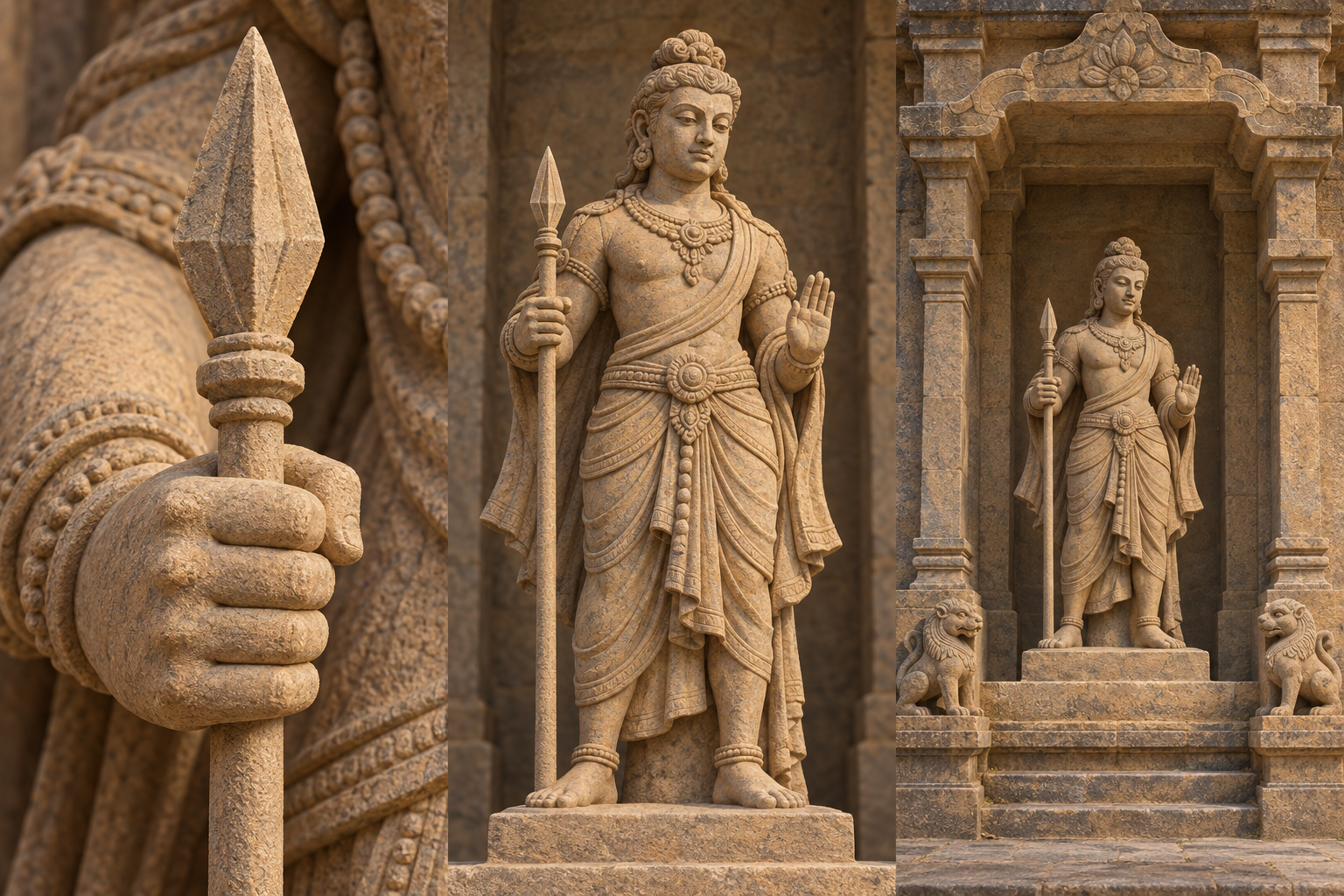
If you are standing before a murti, studying a museum photograph, or checking a catalogue entry, use three passes. This keeps observation separate from interpretation and makes it easier to notice where certainty ends.
Pass one: describe
Write down only visible facts: “long shaft,” “single surviving point,” “held in the upper right hand,” “weapon vertical,” or “tip damaged.” Avoid naming the object during this pass. Plain description prevents your first guess from controlling everything you see afterward.
Pass two: classify
Ask which family best fits the visible form: piercing weapon, striking weapon, sword, staff, bow, or another class. If the object is a pointed shaft, tomara becomes a candidate. Then test that candidate against nearby attributes, the identity of the bearer, and any trustworthy label or catalogue record.
Pass three: interpret
Only now ask what the attribute contributes to the complete image. A tomara can direct your attention toward vigilance, readiness, concentration, and protective force. Modify that reading when the surrounding narrative or sectarian context provides stronger evidence. If it does not, keep the interpretation at this defensible level.
This method also helps when two references disagree. Compare the visible evidence behind each label. One description may rely on the object’s present shape; another may rely on the established iconographic identity of the figure. If damage prevents resolution, preserve both possibilities instead of hiding the ambiguity.
Key takeaways
- The tomara is a spear-type ayudha belonging to the piercing and projectile class of sacred weapons.
- A single pointed shaft is consistent with a tomara, but shape alone may not settle the identification.
- Check the bearer, other attributes, pose, setting, damage, and available documentation before assigning a firm name.
- Vigilance, readiness, directed force, and protective capacity provide a sound symbolic baseline.
- Do not impose a specific theological allegory unless the image’s narrative or tradition supports it.
- When evidence is incomplete, a qualified identification is more useful than false certainty.
The next time you encounter a pointed divine weapon, pause before naming it. Describe the form, test the classification, and then read what it adds to the whole image. That small discipline turns the tomara from an overlooked piece of sculpted weaponry into what it was meant to be: a precise part of sacred visual language.
References

Leave a Reply
You must be logged in to post a comment.