If you are building a Kaveri-delta pilgrimage, the difficult part is not finding another temple. It is deciding how to approach each shrine without turning darshan into a hurried stop between larger monuments. Tiruloki deserves time because its central teaching is carried by a pair: Shiva as Sundareswara and the Goddess as Akhilandeswari.
The most useful plan is simple. Confirm the current puja time locally, arrive before it begins, worship Shiva and Shakti as one theological whole, and leave enough space for silence after the lamps are offered. This guide shows you how to do that without claiming historical or architectural details that have not yet been firmly documented.
Key takeaways for your Tiruloki visit
- Search for both Tiruloki and Thiruloki when arranging transport. The shrine may also appear under the name Sundaresvarar Temple.
- Plan for the paired darshan of Sundareswara and Akhilandeswari. The temple’s spiritual logic is incomplete if you treat the Goddess as an optional side visit.
- Daily worship generally follows morning, midday, and evening rhythms, but these are patterns rather than guaranteed opening hours. Confirm the day’s schedule locally.
- If you are new to Shaiva worship, a quiet sankalpa, a permitted bilva offering, the Mahamrityunjaya mantra, and a concluding pranam before Akhilandeswari form a sufficient practice.
- Do not call the temple a Chola monument merely because it shares the architectural vocabulary of the Kaveri delta. Detailed Tiruloki epigraphy has not been systematically published.
- Thanjavur and Kumbakonam are the principal railheads for the wider temple circuit; Tiruchirappalli is the nearest major airport. Arrange the last road segment and return transport in advance.
The paired darshan gives the pilgrimage its direction
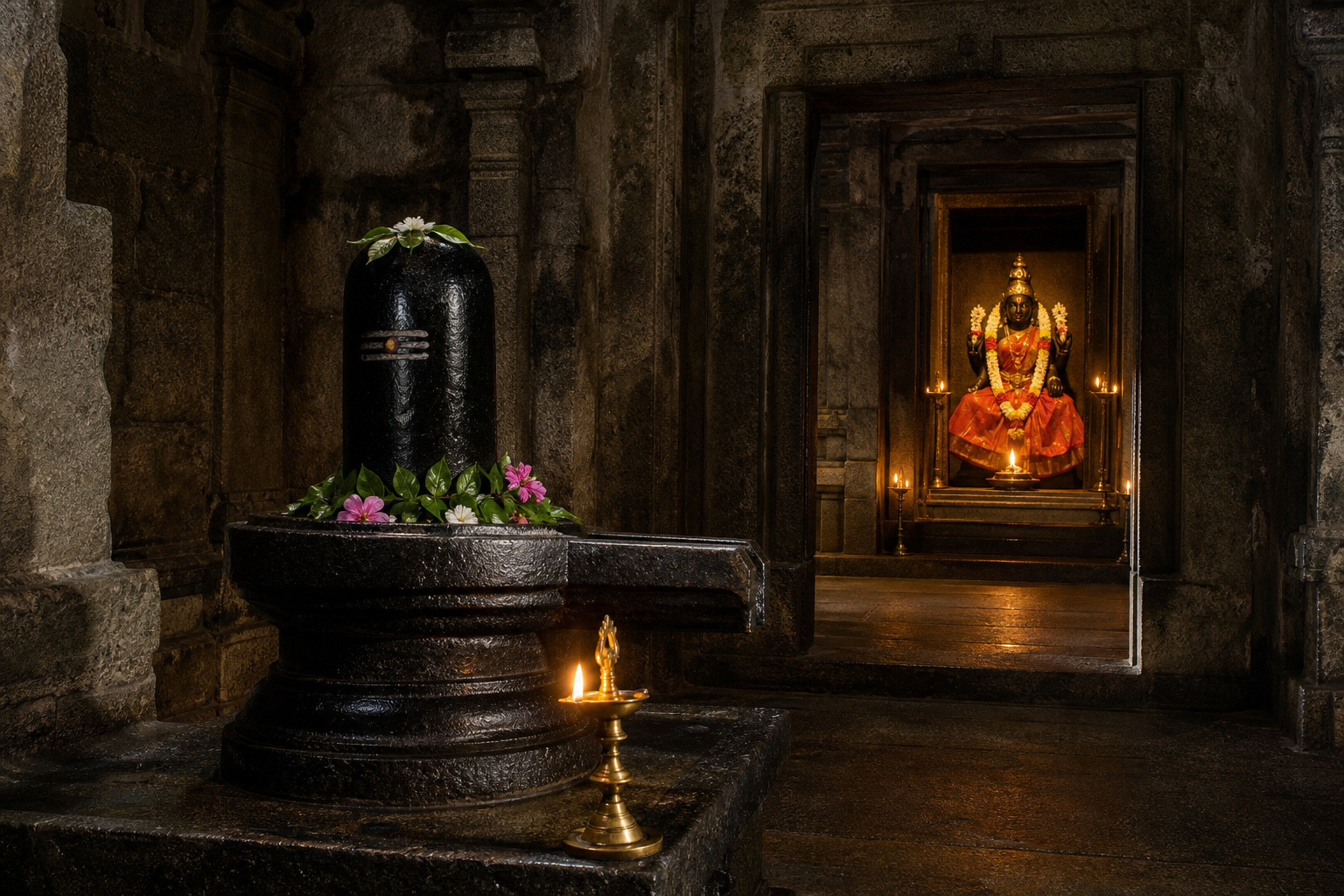
The formal name, Sri Akhilandeswari Samedha Sri Sundareswara Swamy Temple, tells you how to read the shrine. Sundareswara is Shiva as the beautiful and auspicious Lord. Akhilandeswari is the sovereign Mother whose domain embraces the whole cosmos. Their presence together expresses a foundational Shaiva insight: consciousness and power, Shiva and Shakti, cannot finally be separated.
This is more than theology to remember while standing in a queue. It gives you a practical way to shape your prayer. Before Sundareswara, ask what must become clear, still, or truthful within you. Before Akhilandeswari, ask for the compassion, courage, and disciplined energy required to act on that clarity. A decision without steadiness remains an idea; energy without discernment easily becomes agitation.
Choose one sankalpa before entering. It might concern a duty you have been postponing, anger that is distorting your judgement, or a decision that requires both firmness and care. Keep it short enough to hold in one sentence. A temple visit becomes more coherent when every action—darshan, mantra, circumambulation, and silence—returns to the same intention.
The ritual sequence gives that intention a physical form. Shaiva Agamic worship commonly proceeds through abhishekam, alankaram, archana, and deepa-aradhana: sacred bathing, adornment, the offering of flowers with divine names, and finally the presentation of light. Water, milk, curd, honey, sandal, flowers, and bilva leaves may appear in the worship, but visitors should not assume that every substance can be handed directly to the priest at every puja. Ask what the temple accepts before purchasing an offering.
Watch what the ritual asks of your attention. Abhishekam strips the form back to simplicity. Alankaram reveals sacred beauty. Archana gathers the wandering mind through repeated names. Deepa-aradhana concentrates sight on a single flame. Bells, mantra, incense, conch, and nagasvaram are not competing decorations; together they draw the senses toward one object of awareness.
If you do not know a long liturgy, do not imitate one. Sit or stand quietly before the linga, hold your sankalpa, and recite the Mahamrityunjaya mantra if it belongs to your practice. Offer bilva only where permitted. Then go to Akhilandeswari and complete the prayer with a pranam for compassionate strength. Vibhuti received as prasadam signifies purification and the transience of worldly identity; kumkuma signifies auspicious Shakti. Receive both deliberately rather than treating them as souvenirs.
Let the temple’s sacred space guide your movement
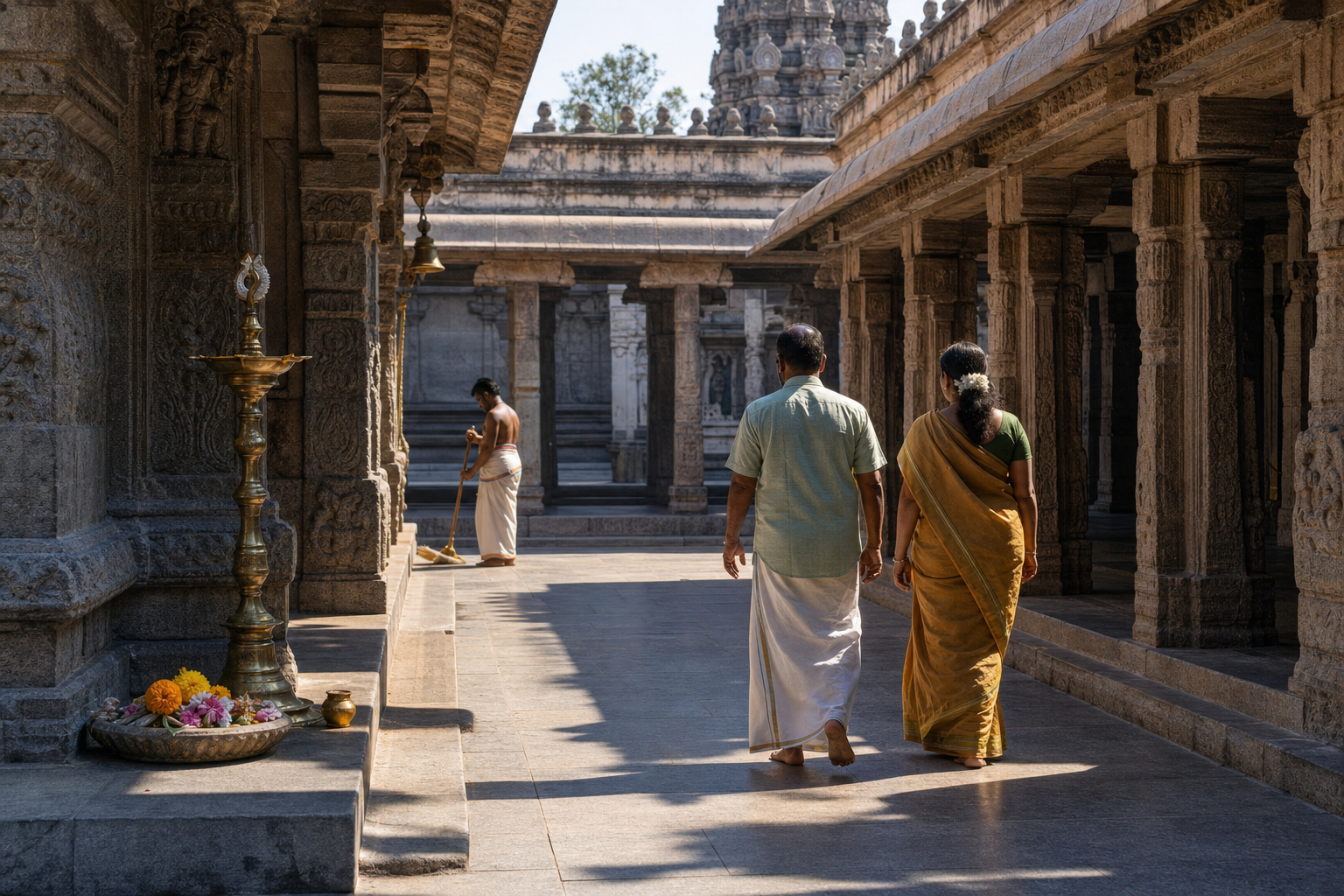
You do not need to be an architectural historian to read a Dravidian temple intelligently. Its spaces teach through movement. The garbhagriha is the concentrated inner chamber, often understood as an image of the heart-cave. The mandapa opens worship into communal space. The prakara turns walking into pradakshina, with the sacred centre kept to your right. The route moves you from dispersion toward focus and then carries that focus back into the world.
Local custom and instructions from priests or attendants take precedence over any generic sequence. If no special route is prescribed, use the following as a calm framework:
- Pause after entering. Silence your phone, settle your breath, and identify the main axis before moving toward the sanctum.
- If a Ganesha shrine is present and accessible, begin there. Do not rush from one image to another merely to complete a list.
- Approach the axial sequence attentively. In a classical Shaiva layout, the flagstaff and offering pedestal lead toward Nandi, who faces the linga. Let Nandi’s unwavering orientation remind you what sustained attention looks like.
- Take Sundareswara’s darshan without blocking others. Hold your sankalpa, receive the offered flame respectfully, and step aside before beginning a longer private prayer.
- Make clockwise pradakshina where the route is open. Look for the sanctum-wall images traditionally associated with Shaiva temples: Dakshinamurti to the south, Lingodbhava to the west, and Durga to the north. Their sequence presents Shiva as silent teacher, the divine as immeasurable infinity, and Shakti as protective wisdom.
- Notice secondary shrines rather than assuming that every standard deity must be present. Ganesha, Subrahmanya with Valli and Devasena, Bhairava, Nataraja, the Navagrahas, and Chandikeswara belong to the wider Shaiva temple vocabulary, but the actual arrangement should be identified on site.
- Conclude at Akhilandeswari’s sanctum. Her reassuring and boon-bestowing gestures place compassion beside the austerity of the linga. Ask not only for a favourable result, but for the character needed to meet whatever result comes.
- After receiving vibhuti or kumkuma, sit quietly if space and temple practice allow. Even two undistracted minutes can prevent the visit from collapsing into a series of visual impressions.
This route also corrects a common mistake in temple tourism. A sculpture is not merely an object placed on a wall. Its direction, relationship to the sanctum, and place in your clockwise movement are part of its meaning. Dakshinamurti is not simply another representation of Shiva; he makes silence itself a form of instruction. Lingodbhava prevents the mind from reducing the divine to a measurable object. Durga reminds you that insight must be protected and enacted.
The same attention should govern photography. Never assume that permission in an outer courtyard extends to an inner shrine, icon, or mural. Ask before taking a photograph, and put the camera away during arati. If you experience the entire temple through a screen, you preserve an image while losing the pilgrimage.
Choose your time by the form of worship you seek
The best time to visit is not a universal hour. It depends on what you want to participate in. Early morning is the natural choice if abhishekam is your priority. Midday worship centres on offerings. Evening is especially suited to deepa-aradhana, when flame, mantra, bells, and the dimness of the sanctum make concentrated attention easier. Exact times change with the season and temple administration, so do not build a tight road itinerary around an unverified online schedule.
Festival days offer more elaborate worship but change the pace of darshan. Decide whether you want sustained personal silence or participation in a larger observance. Neither is spiritually superior; they serve different needs.
| Observance | Focus at the temple | Choose it when |
|---|---|---|
| Monthly Pradosham | Shaiva worship on Trayodashi, associated with cleansing and renewed resolve | You want a recurring vrata rhythm rather than waiting for an annual festival |
| Maha Shivaratri | Night vigil, mantra-japa, and special abhishekams for Shiva | You are prepared for extended worship and have confirmed the temple’s access arrangements |
| Arudra Darshan | Nataraja and Shiva’s cosmic dance during the Tamil month of Margazhi | Your pilgrimage is centred on Shiva as the source of cosmic movement and stillness |
| Karthigai Deepam | The symbolism and offering of sacred light | You want a festival whose central language is illumination |
| Aippasi Annabhishekam | A grain offering that joins worship to agrarian gratitude | You want to contemplate the relation between food, land, divine grace, and community |
| Navaratri | Successive forms and adornments of Shakti | Akhilandeswari’s many dimensions are the main focus of your visit |
| Aadi Fridays | Special attention to the Goddess, protection, prosperity, and resilience | You are planning a Devi-centred pilgrimage during the Tamil month of Aadi |
Festival names do not supply a timetable. Maha Shivaratri may involve a night vigil, but that does not guarantee unrestricted entry throughout the night. Navaratri may bring daily alankarams, but the hour of each alankaram remains a local matter. Confirm the date, opening window, and whether devotees must register or bring prescribed offerings. Arrive early enough that transport delays do not consume the puja you travelled to attend.
Plan the journey carefully and read the history honestly
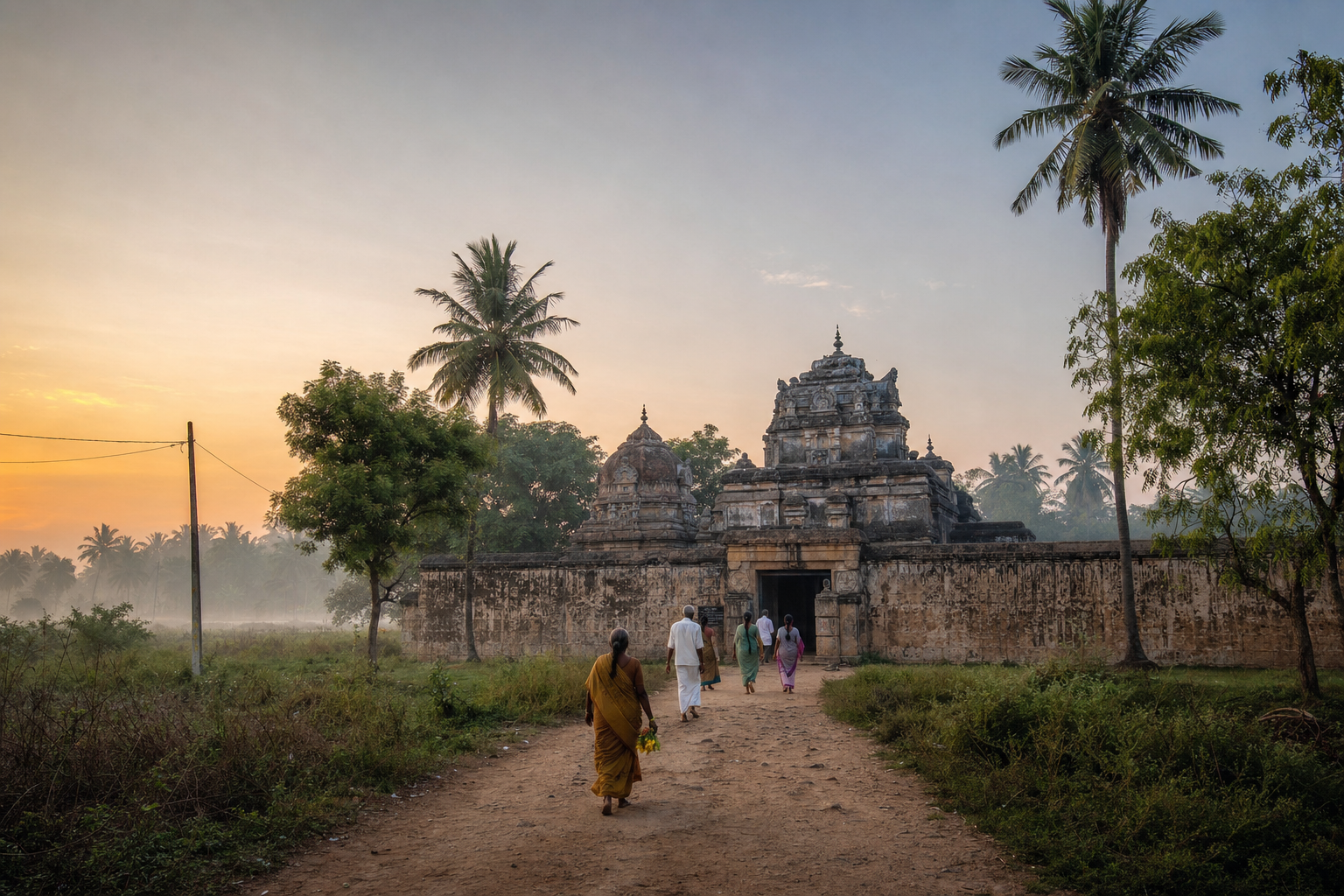
Tiruloki lies within the temple landscape of the Thanjavur region and the Kaveri delta. The two names Tiruloki and Thiruloki are both used, while the temple may be listed as Sundareswara, Sundareswarar, or Sundaresvarar Temple. Give your driver the village name and the paired deity name—Akhilandeswari with Sundareswara—rather than relying on a single spelling.
Thanjavur and Kumbakonam serve as the main railheads for this temple region, and Tiruchirappalli, commonly called Trichy, is the nearest major airport. The remaining journey uses state highways and local roads, with autos and taxis available from nearby towns. Availability for the outward ride does not guarantee a convenient return, so agree on pickup or waiting arrangements before the driver leaves.
You can combine Tiruloki with major Chola landmarks and Paadal Petra Sthalams, but do not plan so many sanctums that every delay feels like a problem. Give Tiruloki one complete puja window rather than an arbitrary number of minutes. If the confirmed evening arati is the heart of your visit, build the day’s route backward from that time.
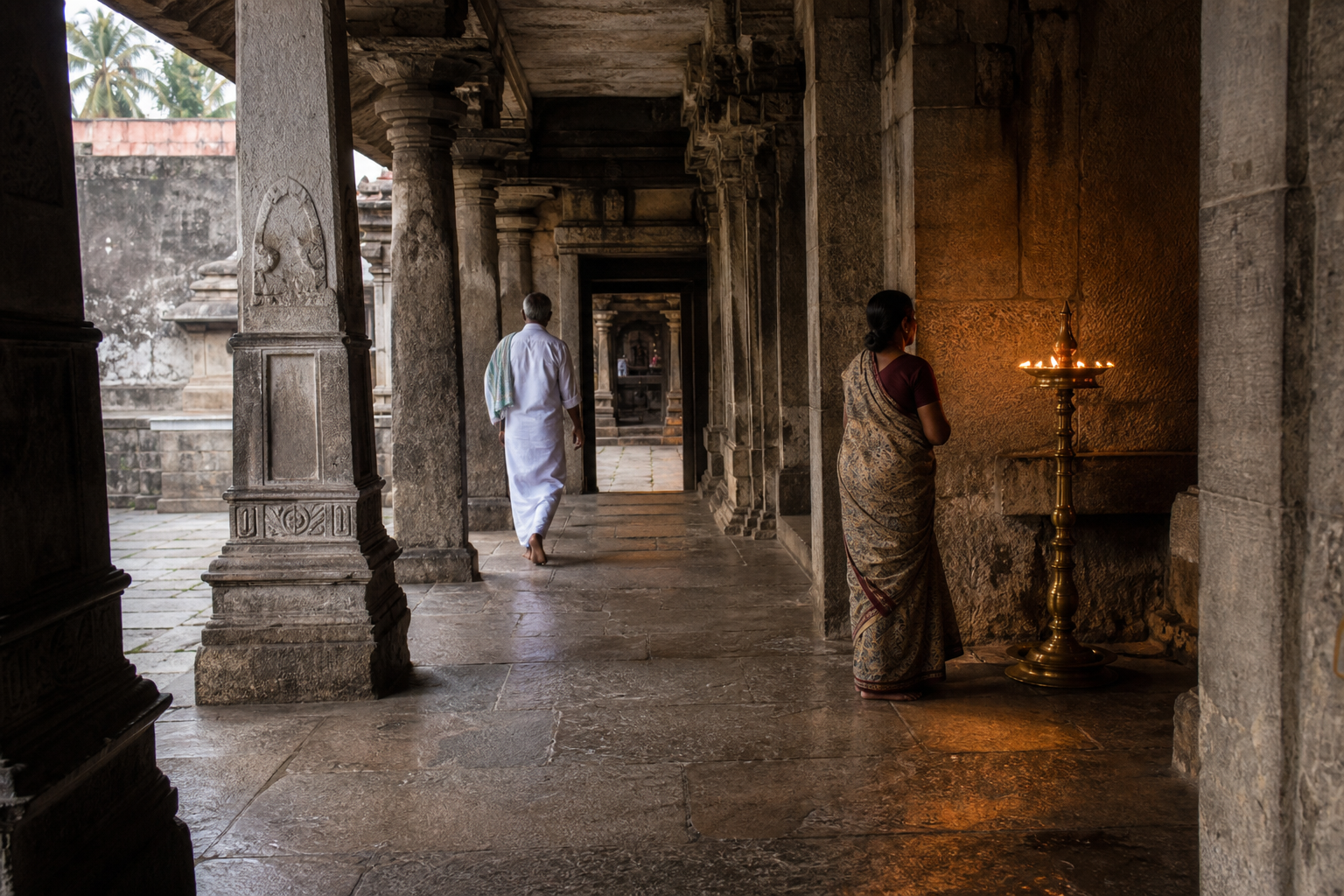
Pack and behave as a pilgrim rather than a consumer of sights. Wear modest clothing, keep conversation low near the sanctums, carry plastic out rather than leaving it behind, and use incense or lamps only in designated places. Kaveri-delta temples face practical conservation pressures involving water drainage, vegetation close to foundations, lime-stucco surfaces, and electrical additions around old masonry. A carelessly placed flame, discarded plastic, or ignored photography restriction is not a minor breach of etiquette; it transfers the cost of your visit to the sacred place and its custodians.
The temple should also be described with historical discipline. Its granite construction, axial planning, sculptural niches, vimana, mandapas, and enclosure connect it to the broader Dravidian architectural world of the Kaveri delta. Across that region, inscriptions from Chola, Pandya, and Nayaka periods record land gifts, ritual patronage, agriculture, and water management. That regional history provides context, but it does not by itself establish Tiruloki’s founder, construction date, or dynastic sequence.
Detailed epigraphic records for Tiruloki have not yet been systematically published. Until an inscription is read, dated, and connected to the structure in question, visual resemblance should remain a clue rather than a conclusion. If a guide assigns an exact dynasty or century, ask whether the claim comes from an inscription, a published survey, an oral tradition, or architectural comparison. Each kind of evidence can be valuable, but they do not carry the same historical weight.
Periodic kumbhabhishekam adds another layer to what you see. Agamic tradition commonly places reconsecration and associated maintenance at intervals of roughly twelve years. Repaired stucco, renewed paint, or recent-looking ritual fittings therefore do not prove that the underlying shrine is recent. Equally, an old-looking stone does not supply an exact date. Observe materials, repairs, and iconographic placement, but keep observation separate from attribution.
Before setting out, confirm the day’s puja window, settle your last-mile transport, and write your sankalpa in one sentence. Then give Tiruloki enough unbroken time for Sundareswara’s stillness, Akhilandeswari’s grace, and the silence after the final flame. That is a more faithful pilgrimage than collecting another photograph or an unsupported historical label.