

If you help close a neighbourhood temple, live beside one, or place offerings in its hundial, the Thoraipakkam incident gives you a practical question to answer: what protects the shrine after the final ritual and the locking of its doors? A suspicious sound noticed at the right moment helped stop this attempt, but chance should not be the security plan.
You need two things at once: a safe response when something is wrong and a routine that makes the temple a harder target. That means protecting people first, reducing the amount of cash exposed, preserving usable evidence, and refusing to turn an allegation against individuals into suspicion of an entire community.
What happened at Sri Sundara Vinayagar Temple
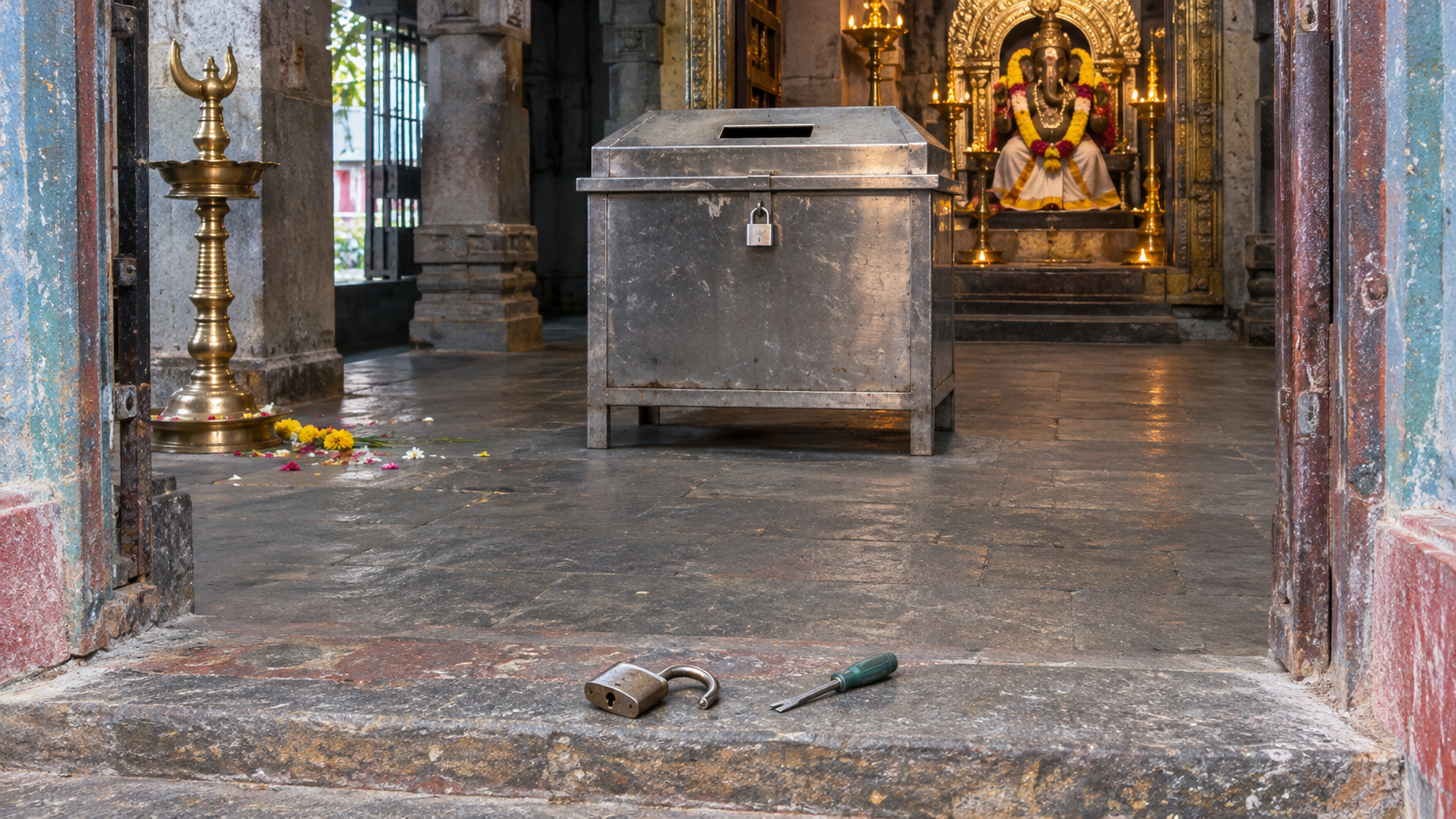
Sri Sundara Vinayagar Temple in Mettukuppam had been locked after its routine night rituals. At about 3 a.m. on November 13, nearby residents heard sounds resembling metal being forced open. A neighbour looked from a rooftop, saw two men allegedly trying to break open the hundial, and alerted temple administrators and other residents.
Residents gathered around the temple. One man escaped, while members of the public caught the other and handed him to Thoraipakkam police. Police registered a case and began examining footage from the temple and surrounding cameras to identify the second suspect and determine whether either man might be connected to similar offences.
The language matters. This was an alleged attempt, not a completed theft, and the person detained is a suspect rather than a convicted offender. The second individual has not yet been traced in the information available. Those limits should shape what temple committees and residents say publicly.
Investigators believe the hundial was targeted because the men expected it to contain a substantial amount of devotees’ money. Whether that belief was accurate is not established. The practical lesson does not depend on the actual balance: a visibly accessible donation box can attract an attempt whenever an intruder assumes cash is waiting inside.
Key takeaways for temple committees and neighbours
- The first useful alarm was human: a neighbour recognised an abnormal sound and knew whom to alert.
- Community vigilance should trigger a police response, not an unsafe confrontation or punishment by a crowd.
- A hundial is not only a strong-box problem. Cash levels, emptying procedures, key control and record-keeping all affect its risk.
- Cameras help only when they cover the relevant approach, work after dark, carry the correct time and produce footage that can be retrieved quickly.
- Security decisions should be based on conduct, access and evidence, never on a person’s nationality, occupation or migrant status.
Make community vigilance safe rather than reckless
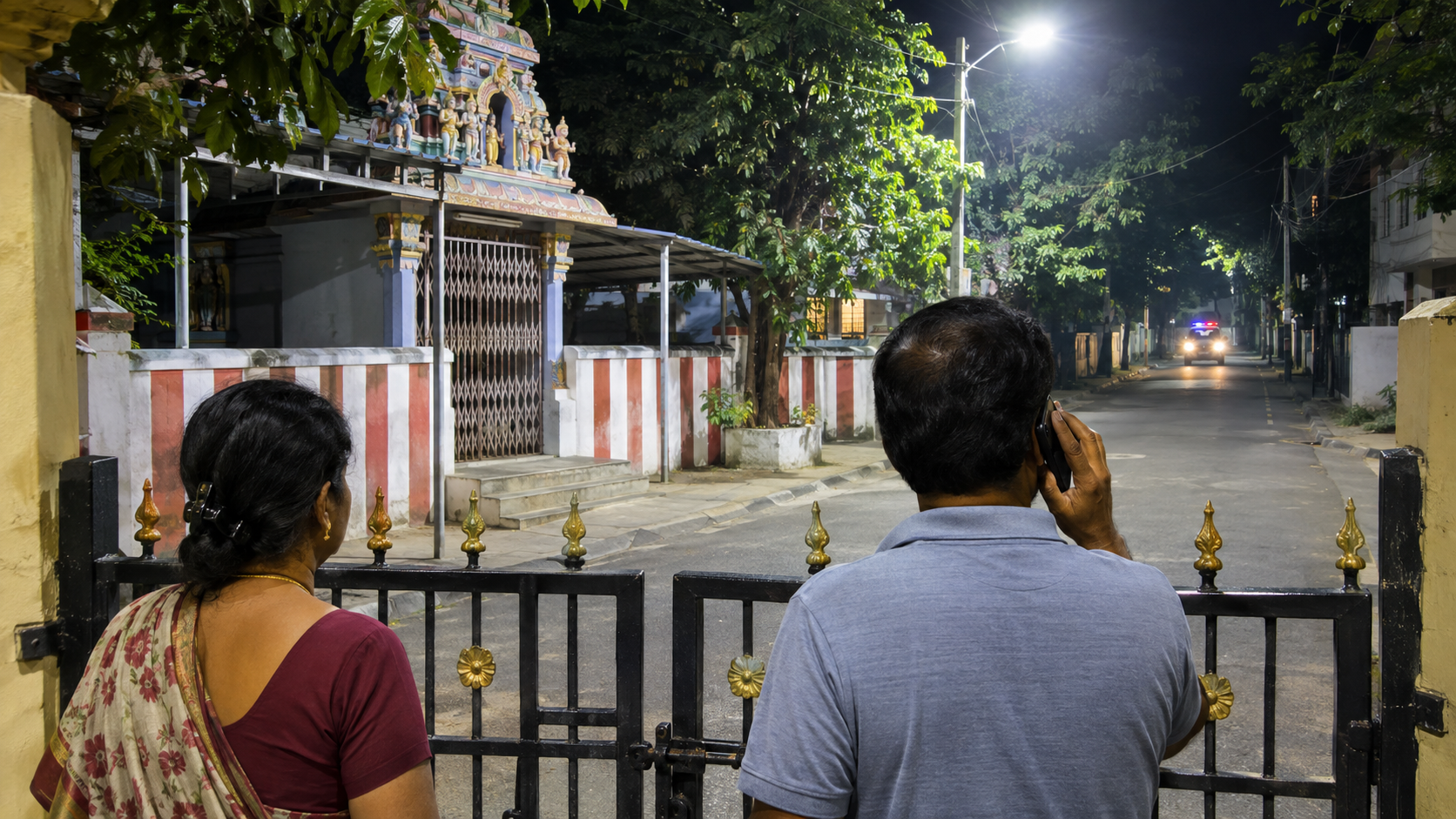
The residents’ rapid response appears to have prevented the hundial from being opened. It would still be dangerous to turn that outcome into a standing instruction to surround suspected intruders. You cannot know whether a person is armed, intoxicated, desperate or prepared to attack. Temple property can be repaired; a serious injury cannot be undone.
If you hear forced metal, breaking glass or movement inside a locked shrine, use a response sequence that does not depend on physical courage:
- Move to a protected position and call the police. Give the temple’s exact address, the nearest entrance and what you can presently hear or see.
- Observe from a safe distance. Note how many people are present, their direction of movement, clothing, any vehicle and whether anyone appears to carry a weapon. Do not approach to obtain a better description.
- Alert the temple’s designated contacts. Keep other residents and devotees away from the gate so that curiosity does not create a crowd or obstruct police access.
- Do not chase a fleeing person or attempt a physical detention. Continue observing only while you can do so safely.
- After police arrive, avoid touching the hundial, locks, tools or other disturbed objects. Preserve the original camera recording and give investigators an accurate timeline.
A simple call tree makes this easier. Assign in advance who calls the police, who contacts trustees, who checks the camera system and who keeps people away from the affected entrance. Put the current numbers where the closing team can find them without searching through personal phones. Test the chain periodically; an outdated number is not an emergency plan.
Build security in layers around the hundial
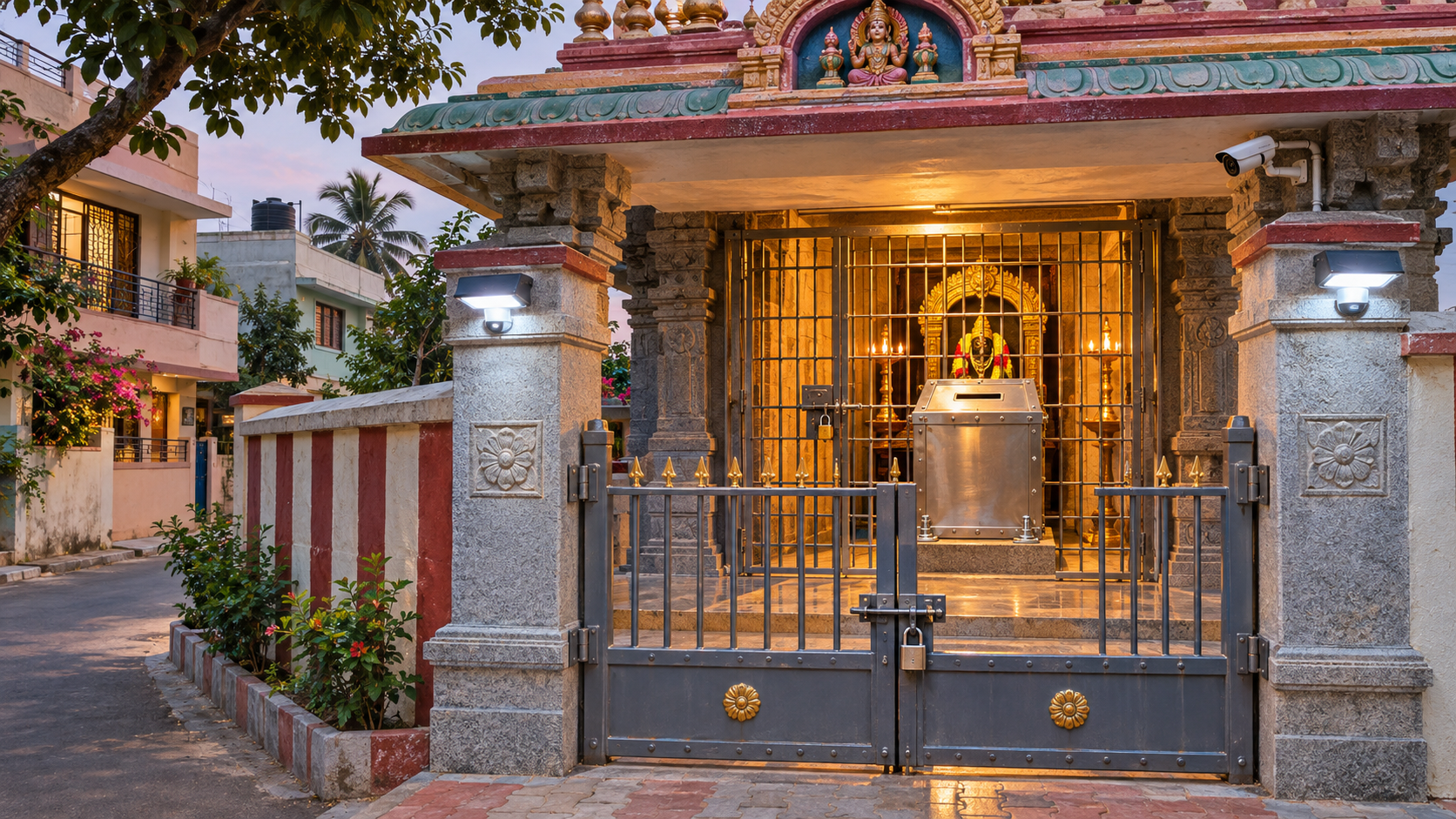
A strong lock is useful, but it is only one layer. Recent cases illustrate the range of property that can be targeted: in Ambattur, two people were arrested over the theft of silver articles valued at approximately Rs 14 lakh from an Aishwarya Vinayagar Temple, with about 11 kilograms of silver and cash recovered. In the Thiruvattar region of Kanyakumari district, two people were arrested after a temple hundial was allegedly forced open and offerings stolen.
Those examples do not establish a crime rate or prove that every temple faces the same threat. They do show why a committee should examine cash, valuables, doors, cameras and human response as one system.
Reduce the value exposed overnight
- Set a written hundial-emptying schedule based on the temple’s actual collections and applicable rules. Do not leave offerings accumulating merely because counting has always been done on a familiar date.
- Require two authorised people to be present when the hundial is opened, counted and recorded. Reconcile the amount and transfer it promptly through the temple’s approved process.
- Keep collection and transfer times restricted to those who need to know. A predictable routine discussed publicly can reveal when the box is likely to be fullest.
- Inspect the box, its anchoring points, hinges, locks and surrounding enclosure. A heavy box is still vulnerable if it can be pried from a weak base.
- Maintain a key register. Record who holds each key, prohibit informal duplicates and never hide a spare near the shrine.
Make surveillance produce usable evidence
- Cover the approach to the temple, the principal entrances and the hundial area. Check the actual image for blind spots instead of relying on the direction in which a camera appears to point.
- Test the picture after dark under the same lighting present when the temple is closed. Confirm that faces and movements are distinguishable rather than reduced to glare or silhouettes.
- Correct the date and time on every camera and recorder. A visibly wrong timestamp makes it harder to align the recording with witnesses and neighbouring systems.
- Store the recorder where an intruder cannot simply remove it with the camera. Restrict administrative access, protect credentials and keep any backup arrangement consistent with privacy requirements.
- Practise finding and exporting a short clip. In Thoraipakkam, surveillance footage became a central part of the effort to trace the person who escaped; a recording that nobody can retrieve promptly offers much less help.
Connect the equipment to people and police
- Use a closing checklist that records who checked the doors, hundial enclosure, lights, cameras and alarm before leaving.
- Consider a door or hundial tamper alert that reaches designated contacts. Test the alert routinely and remove former office-bearers from the recipient list.
- Keep a log of suspicious sounds, failed locks, camera outages and attempted entry. Small incidents are easily forgotten when they remain in private messages.
- Give local police a current temple contact and ask how to report recurring suspicious activity. Where a shrine has a known vulnerability, request coordination on night patrols rather than waiting for a loss.
Protect the temple without profiling a community

During preliminary questioning, the detained suspect was identified as a Nepalese national working locally as a construction labourer. That is an identifying detail in an investigation. It is not evidence that Nepalese residents, migrants or construction workers pose a collective risk.
The same discipline applies to speculation about other crimes. Police are examining whether the suspect may be connected to similar offences, but an investigative question is not an established link. Do not circulate an unverified name, photograph, accusation or claim of a wider conspiracy. Give relevant material to police and let evidence determine responsibility.
A temple can be defended firmly without humiliating innocent people. Base access controls on roles, keep the same sign-in and key rules for everyone, and report suspicious conduct in specific terms: what happened, when it happened and where the person went. Nationality and occupation are not substitutes for observation.
Before the next overnight closure, walk through the temple after dark. Check what each camera actually captures, test the alert chain, inspect the hundial’s mounting, verify the police contact and confirm who can retrieve footage. Record every failed check beside a responsible person and a completion date. If you are a devotee rather than a trustee, ask whether these checks exist and offer to help with the call tree or closing roster. That is how one foiled attempt becomes a safer routine instead of a story everyone remembers until the next incident.
References

Leave a Reply
You must be logged in to post a comment.