
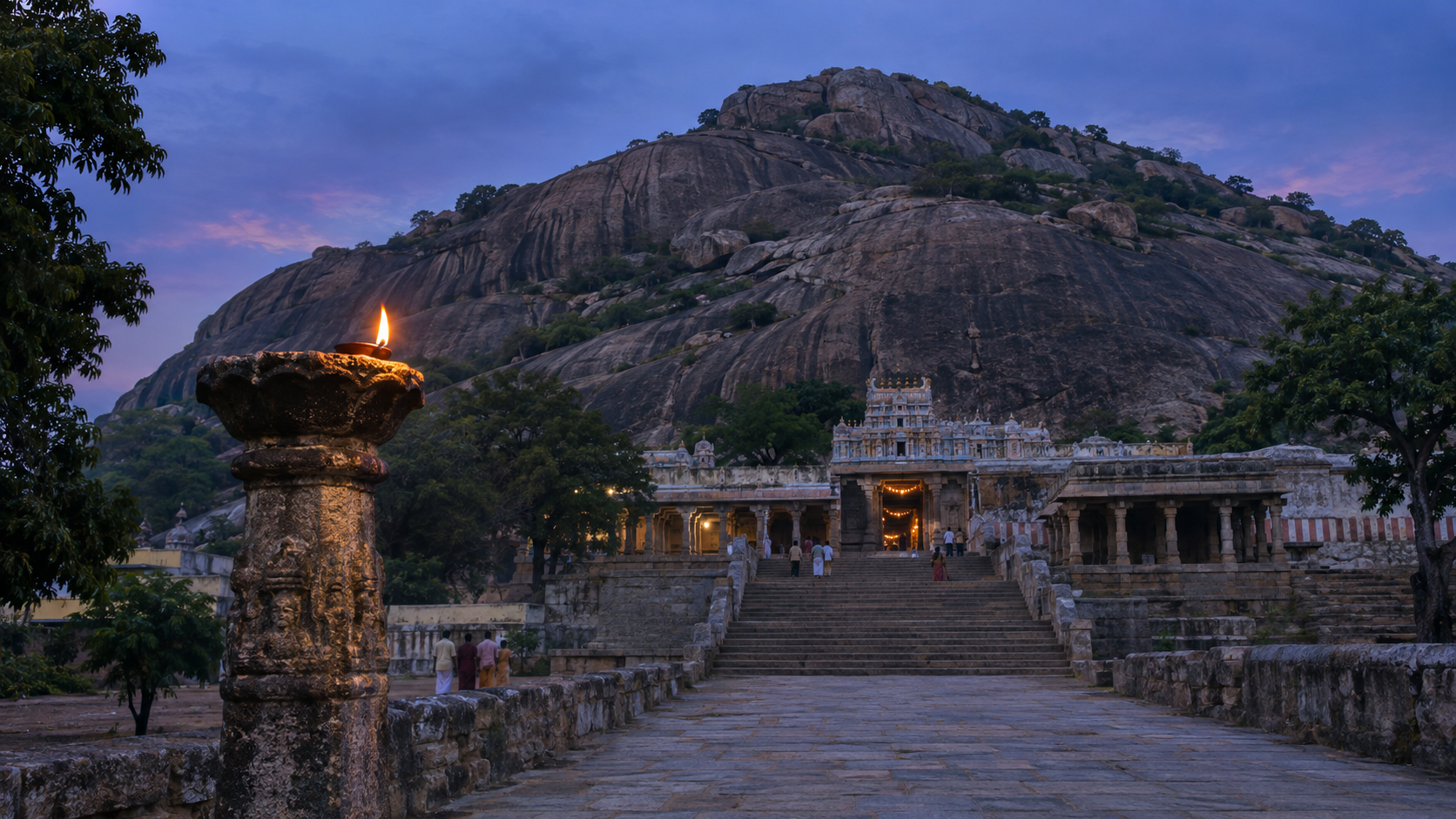
If you have seen the Thirupparankundram dispute reduced to “a lamp versus law and order” or “a judge versus the government,” slow down. Neither slogan tells you what must actually be established: which observance is claimed, where it belongs, who controls access to that place, and what a court has ordered.
Those distinctions matter whether you are a devotee, a Tamil Hindu trying to understand the controversy, or someone deciding which public claims to support. The immediate issue concerns lighting the Karthigai Deepam at the Deepathoon in Thirupparankundram. The deeper issue is whether a living Hindu tradition can be protected through evidence, lawful action and precise public advocacy rather than being lost inside party politics.
The dispute contains four different questions
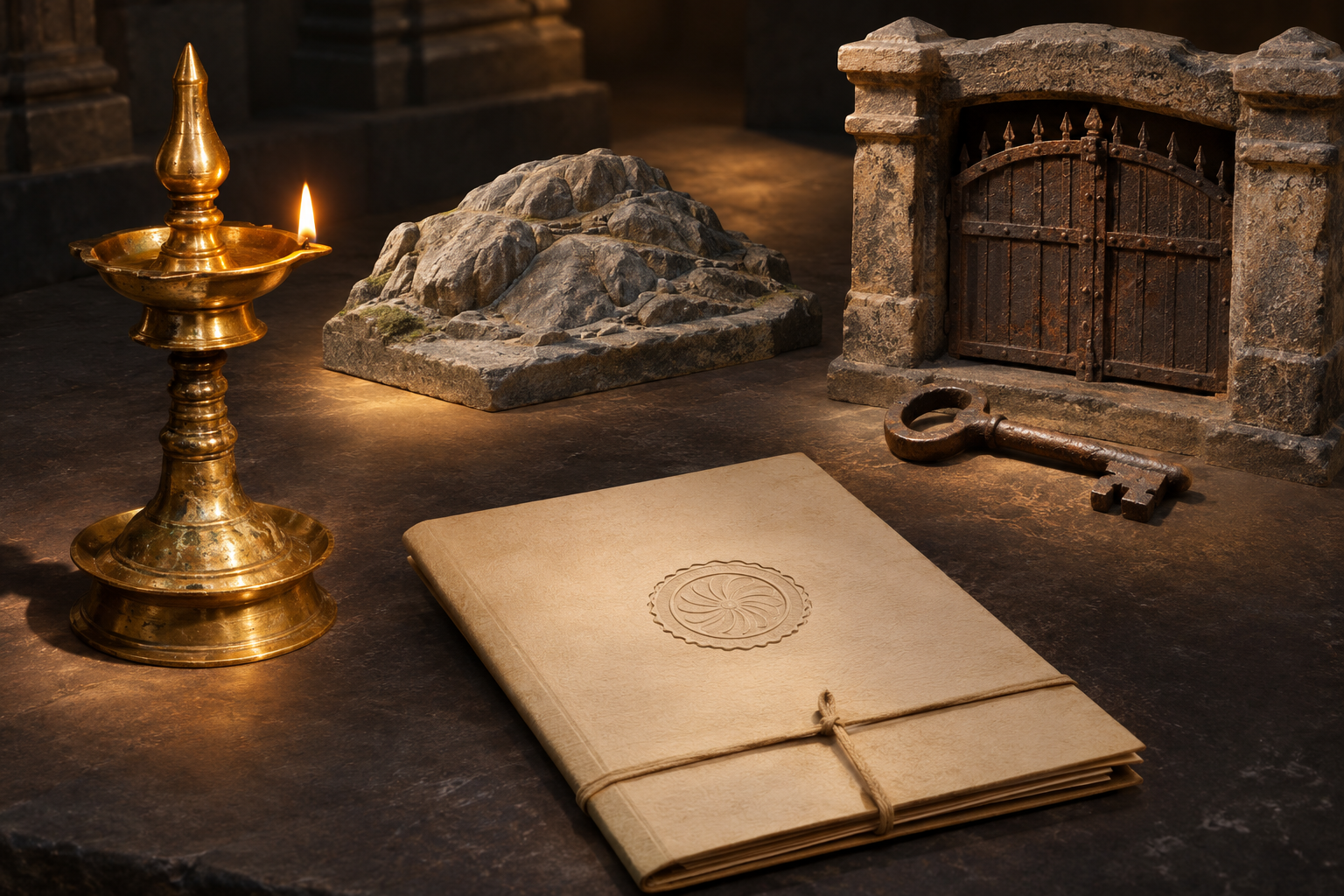
The controversy has involved the Tamil Nadu government, the judiciary, devotees and proceedings before the Supreme Court. That makes it tempting to speak of a single battle with two obvious sides. In reality, four questions have to be answered separately.
- The ritual question: What exactly is the claimed Karthigai Deepam observance? Is the claim about lighting a lamp somewhere in the temple, at a particular pillar, or at a location whose sacred meaning cannot be transferred elsewhere?
- The continuity question: What evidence shows when, how often and under whose supervision the observance took place? A tradition can be old even when its records are incomplete, but antiquity and continuity should not be asserted more precisely than the available evidence permits.
- The site question: What is the administrative and legal status of the Deepathoon and the land through which devotees must pass? Sacred association, ownership, management and physical access may overlap, but they are not automatically the same issue.
- The legal question: What relief was requested, what did each court actually direct, and which order currently governs the parties? Political commentary cannot substitute for the operative text of a judicial order.
A person may accept the religious importance of the observance while still asking for proof about its customary location. Another may accept that the site is sacred while disputing a particular route, administrative arrangement or safety condition. Those are narrower disagreements than denying the tradition altogether. If you fail to identify which proposition is contested, you can end up answering an argument nobody actually made.
The publicly described controversy establishes that the Deepathoon observance has become a serious political and judicial matter. It does not, by itself, supply every order, map, administrative record or item of evidence needed to resolve the competing claims. Anyone presenting absolute certainty should therefore be able to show the primary material behind that certainty.
Why the location of one flame carries civilisational weight
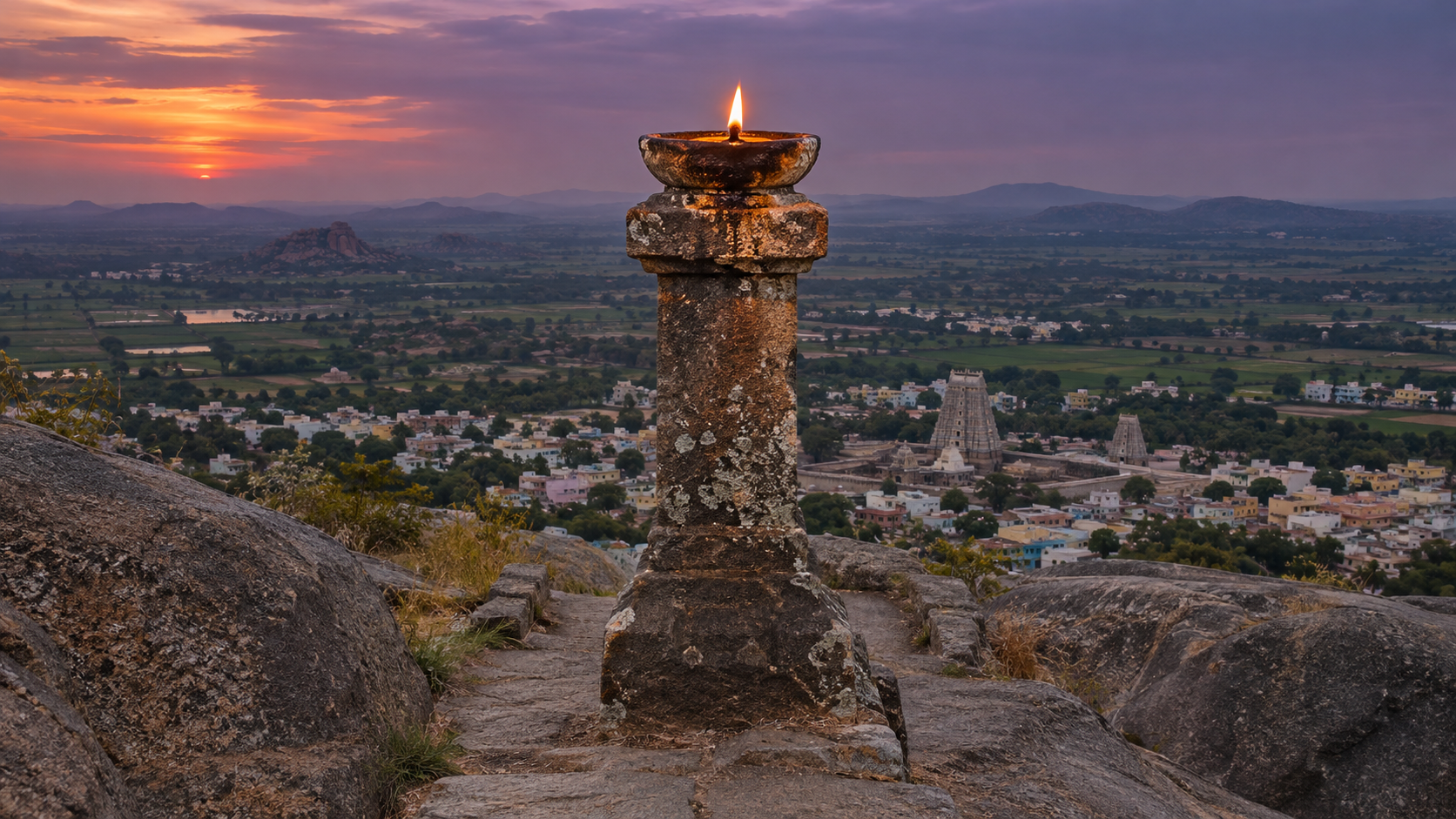
Thirupparankundram is one of the six sacred Murugan kshetras. Its importance is not exhausted by the boundaries of a building or by the number of people who attend one festival. It belongs to Tamil Nadu’s living Kaumara tradition, in which Murugan worship, sacred geography, festival time and community memory reinforce one another.
This is why telling devotees to treat every location as interchangeable can miss the point. In a place-based tradition, an act derives part of its meaning from where it is performed. A lamp lit at a substitute location may preserve the physical action while altering the inherited relationship among deity, hill, shrine, route and festival.
That principle does not prove that every claimed location has an uninterrupted custom attached to it. It explains why the location cannot be dismissed as a minor logistical detail. The proper response is to investigate the place-specific claim carefully, not to assume either that sacred geography decides every legal question or that administrative convenience decides every religious one.
Tamil Nadu’s role in preserving Skanda worship and the Kaumara Sampradaya also raises the stakes. A living tradition is not preserved merely by celebrating its antiquity. It survives through recurring acts: opening a route, reciting a name, conducting a procession, lighting a flame and teaching the next generation why that act belongs there. When an observance is interrupted, the resulting gap can later be used to question whether it was customary at all.
Devotees should notice the practical consequence. Documentation is not opposed to faith. In a contested administrative environment, documentation helps prevent living memory from being treated as an unverifiable assertion.
Do not let party politics replace the evidence
The dispute has acquired a wider political frame involving the DMK, the emergence of the TVK under Vijay, criticism directed at Justice G. R. Swaminathan and proceedings involving the Supreme Court. These developments matter, but they do not all prove the same thing.
A party’s ideology may help you understand its incentives. It does not establish the historical use of the Deepathoon. Criticism of a judge may reveal political pressure or disagreement with judicial reasoning. It does not tell you the contents of the order. A large devotional gathering can demonstrate the intensity and present vitality of belief. It does not, on its own, establish the precise legal status of a site.
This discipline is especially important for a pro-Dharma response. If advocates combine a well-supported religious claim with an allegation they cannot document, opponents can use the weaker allegation to avoid the stronger claim. Precision is therefore not timidity. It is how you keep the central question visible.
Apply the same standard to statements from every camp. Ask for the exact order rather than a paraphrase of it. Ask whether a statement concerns ownership, management, access, public order or religious custom. Ask whether a restriction is permanent, temporary or conditional. Ask whether an alternative location was offered and, if so, whether that alternative preserves the religious meaning being claimed.
Until those questions are answered from primary records, avoid claims that a particular court conclusively settled an issue whose operative wording you have not read. Supreme Court involvement does not tell you, by itself, whether a lower ruling was affirmed, modified, stayed or considered only at an interim stage. The actual orders control; commentary about them does not.
A disciplined way to defend the tradition
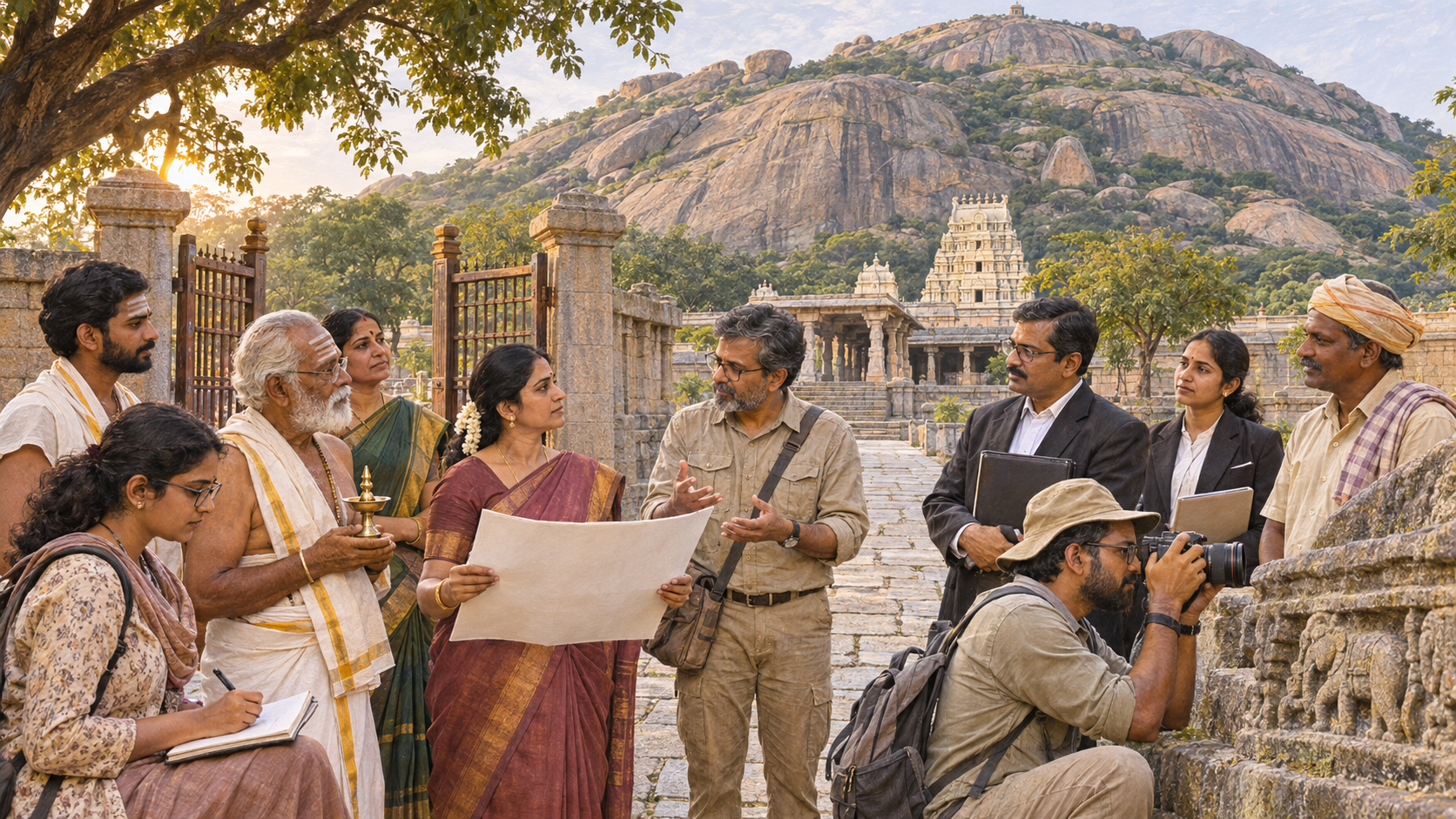
If you want to help rather than merely react, build the case in layers. The work is less dramatic than an online slogan, but it is far more durable.
- State the claim in one exact sentence. Identify the ritual, the requested location, the occasion and the authority from whom permission or compliance is sought. Do not alternate between a broad claim to the entire hill and a narrow request concerning the Deepathoon unless the evidence supports both.
- Obtain the judicial record. Collect the relevant petitions, written responses, orders and any later modifications. Record the court, case number, date, parties, relief requested and operative directions. If you cannot verify those items, describe the legal position as unresolved rather than filling the gap with inference.
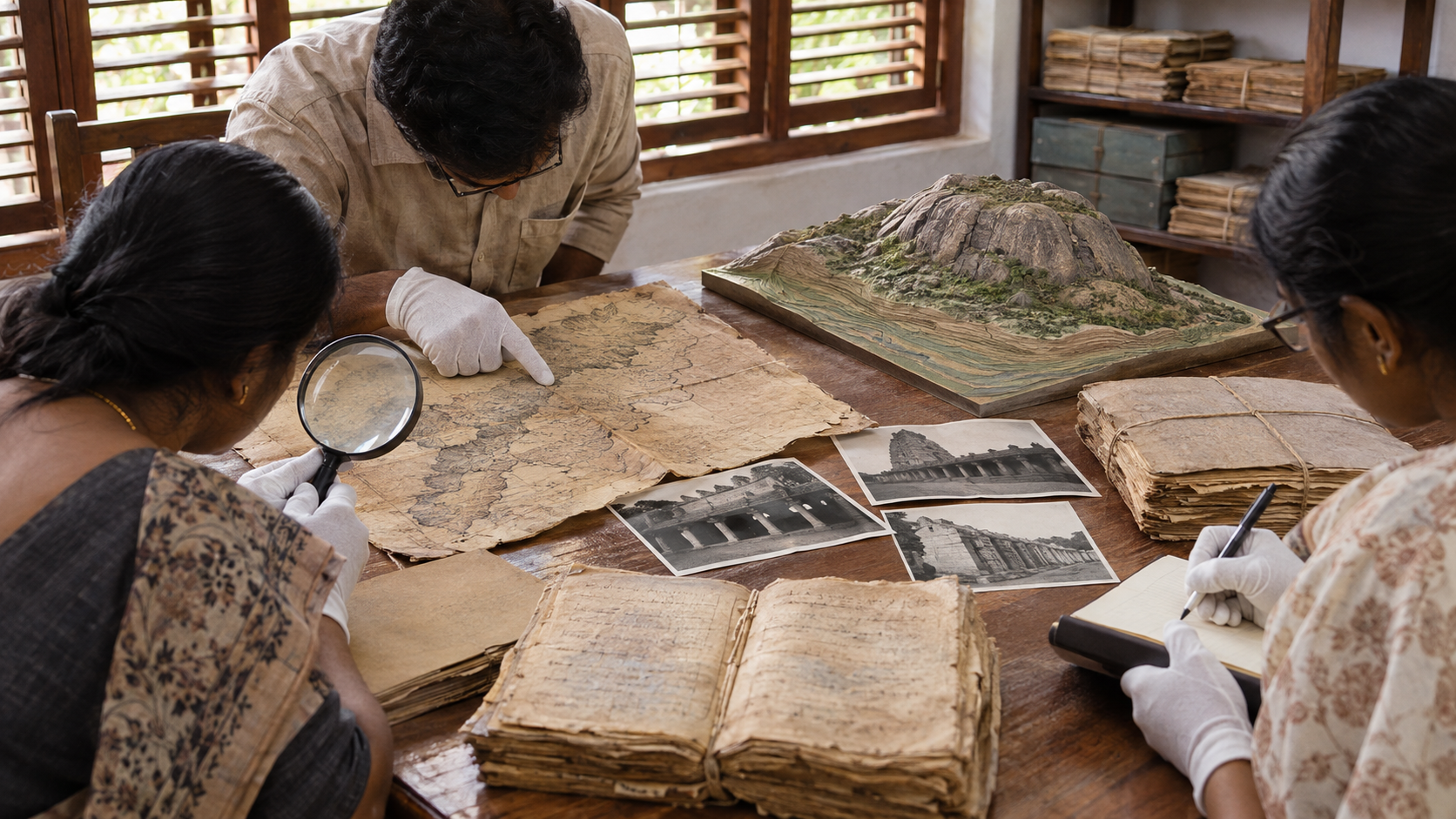
- Build a chronology of observance. Gather dated photographs, festival notices, temple records, administrative correspondence, news footage and testimony from identifiable participants. Keep original files when possible. A forwarded image without a date or location is much less useful than a modest record with a traceable origin.
- Map the sacred and administrative geography. Mark the temple, hill, Deepathoon, access routes and any boundaries relevant to management. Use official maps and records where available. This prevents an argument about one location from silently expanding into a different claim about the whole landscape.
- Request written reasons for restrictions. A written reason can be examined and challenged; a rumour cannot. Determine whether the stated concern is access, safety, management authority, another community’s rights or public order. Each ground requires different evidence and a different response.
- Keep public communication factual. Say what happened, cite the relevant order, identify what remains disputed and name the remedy being sought. Avoid attributing a motive to a judge, official, party or religious community unless reliable evidence supports it.
- Act through lawful channels. Do not trespass, breach a court direction or encourage a confrontation at a sensitive site. Such conduct can endanger people and weaken the very claim you want protected. Anyone planning litigation, a procession or an on-site religious act should obtain advice from qualified local counsel who has read the current orders.
Community archives deserve particular attention. Store copies in more than one place. Add dates, locations and the names of people who can authenticate an item. Separate contemporary devotional material from evidence offered to prove older practice. Both have value, but they answer different questions.
Language matters as well. “This site is sacred to us” is a theological and communal claim. “This ritual has been performed here continuously” is a historical claim requiring chronological evidence. “The administration must permit it” is a legal claim dependent on jurisdiction, rights, restrictions and the wording of applicable orders. A strong case may include all three, but none should be used as a substitute for another.
Key takeaways
- The immediate controversy concerns lighting Karthigai Deepam at the Deepathoon in Thirupparankundram, not the value of lamps or festivals in the abstract.
- Religious significance, historical continuity, control of the site and the current legal position are separate questions. Evidence for one does not automatically prove the others.
- Thirupparankundram’s place among the six sacred Murugan kshetras explains why devotees regard location as part of the observance rather than a disposable detail.
- Political affiliations and criticism of a judge may shape the controversy, but the operative court orders and documented history must remain central.
- The most useful response is to preserve records, obtain the exact orders, define the requested remedy and pursue it through lawful, non-violent means.
If this tradition matters to you, begin with one concrete task: secure the relevant order, authenticate one item in the historical record, or help create a reliable chronology of the observance. Dharma is not defended by indignation alone. At Thirupparankundram, disciplined memory and lawful persistence may prove as important as the flame itself.
References

Leave a Reply
You must be logged in to post a comment.