
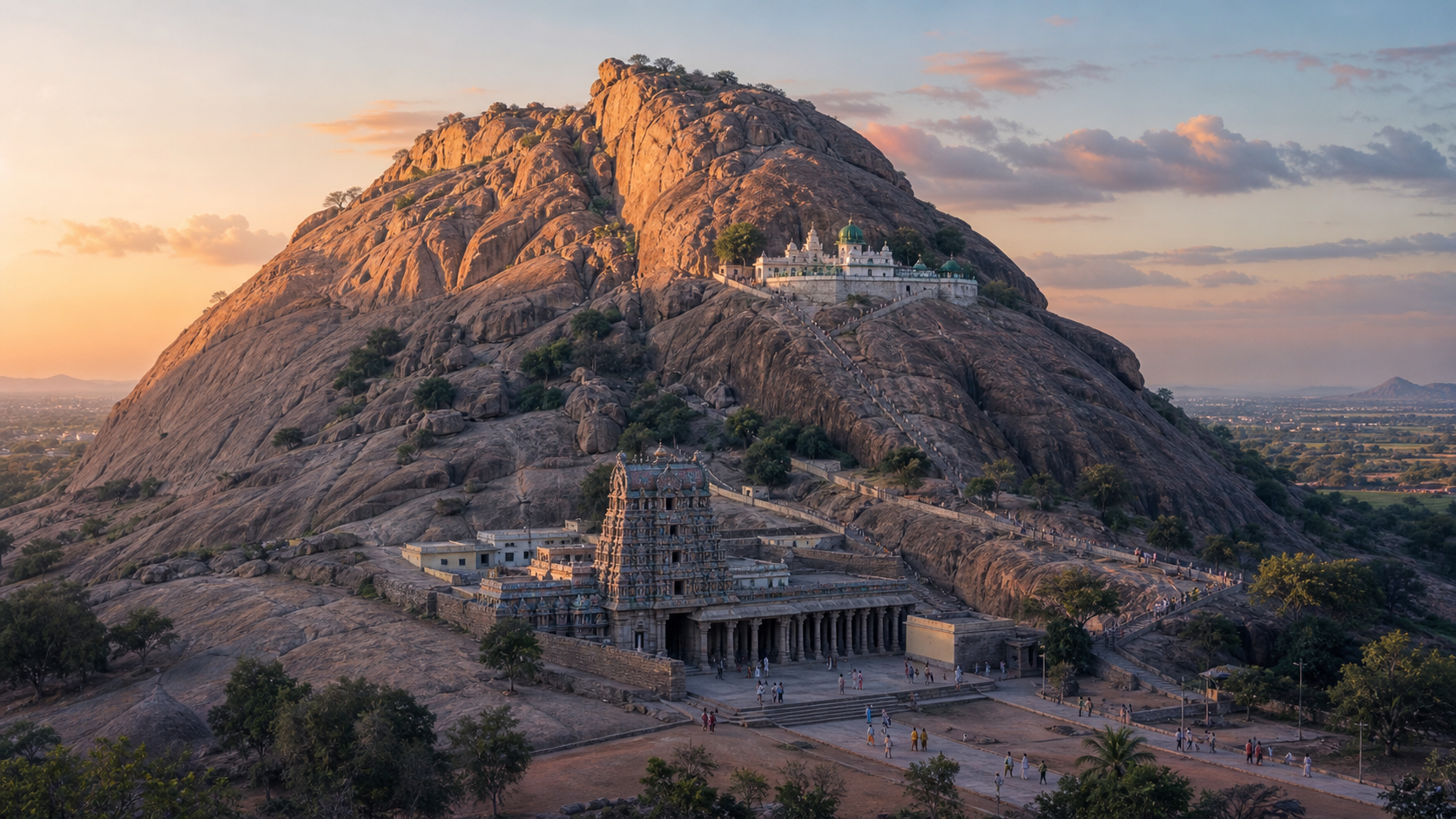
If you are trying to understand what the Thiruparankundram ruling means for darshan, the Sikandar Dargah, or the sacred character of the hill, keep three questions separate: what worship may continue, what conduct is prohibited, and what new route or territorial claim has actually received approval.
That distinction cuts through most of the noise. The reported outcome is neither a licence to alter the hill without limits nor an order extinguishing every existing non-temple practice. It establishes boundaries. Your next step depends on which side of those boundaries an activity falls.
Key takeaways for devotees and community leaders
- Animal sacrifice is reportedly prohibited within the hill precincts. Treat this as a firm conduct rule, not as a symbolic recommendation.
- The proposed "Sikandar Malai" processional route did not receive approval. Continued worship at an existing site does not automatically create a right to a new procession or route.
- Regulated worship at the existing Sikandar Dargah may continue, subject to statutory compliance. That permission is limited by law, public order, and the protection of the hill.
- Fresh encroachments should be prevented, while recognized institutional rights must be preserved. Boundary clarity is therefore central to both peace and heritage protection.
- Before organizing a procession, changing a ritual arrangement, or making a legal claim, consult the operative portion of the official judgment and the latest lawful administrative directions. A paraphrase or social-media image is not enough.
What the reported ruling separates

The reported framework has three distinct effects: animal sacrifice within the hill precincts is prohibited; the "Sikandar Malai" processional route is not approved; and regulated worship at the existing Sikandar Dargah may continue subject to statutory requirements. Reading one part without the other two produces a misleading picture.
The prohibition on animal sacrifice concerns conduct within a defined sacred precinct. It should not be diluted into a request for voluntary restraint. At the same time, it should not be expanded into claims about activities or places that the operative order does not cover. Administrators need a clear map of the precinct because a rule without a publicly understood boundary invites selective enforcement and avoidable confrontation.
The rejection of the processional route addresses expansion. A right to worship at an existing religious institution is not the same thing as a right to establish a new procession, enlarge an access claim, introduce a new recurring public event, or change the accepted ritual geography of the hill. When someone argues that permission for worship necessarily validates a proposed route, they are collapsing two legally different questions.
The continued operation of regulated worship at the dargah addresses continuity. It does not, on the reported terms, erase the hill’s Hindu sacred character or negate the rights of the Arulmigu Subramaniya Swamy Temple. Nor should opposition to an unapproved expansion be turned into obstruction of the worship that the court has expressly allowed under regulation. A stable settlement requires both sides of that limit to be enforced.
This gives you a practical test for claims circulating online. Place each claim into one of three categories: existing worship, proposed expansion, or prohibited conduct. Then ask whether the claim jumps from one category to another without legal support. Statements such as "worship is permitted, therefore the procession is permitted" fail that test. So does "the procession was rejected, therefore all worship was prohibited."
Religious freedom in India operates subject to public order, morality, and health. Heritage protection, institutional rights, and anti-encroachment duties also matter in a shared and sensitive landscape. The point is not to make every religious claim equal in history, scale, or legal status. The point is to identify the precise right at issue and enforce its precise limit.
How to visit the hill and respond responsibly
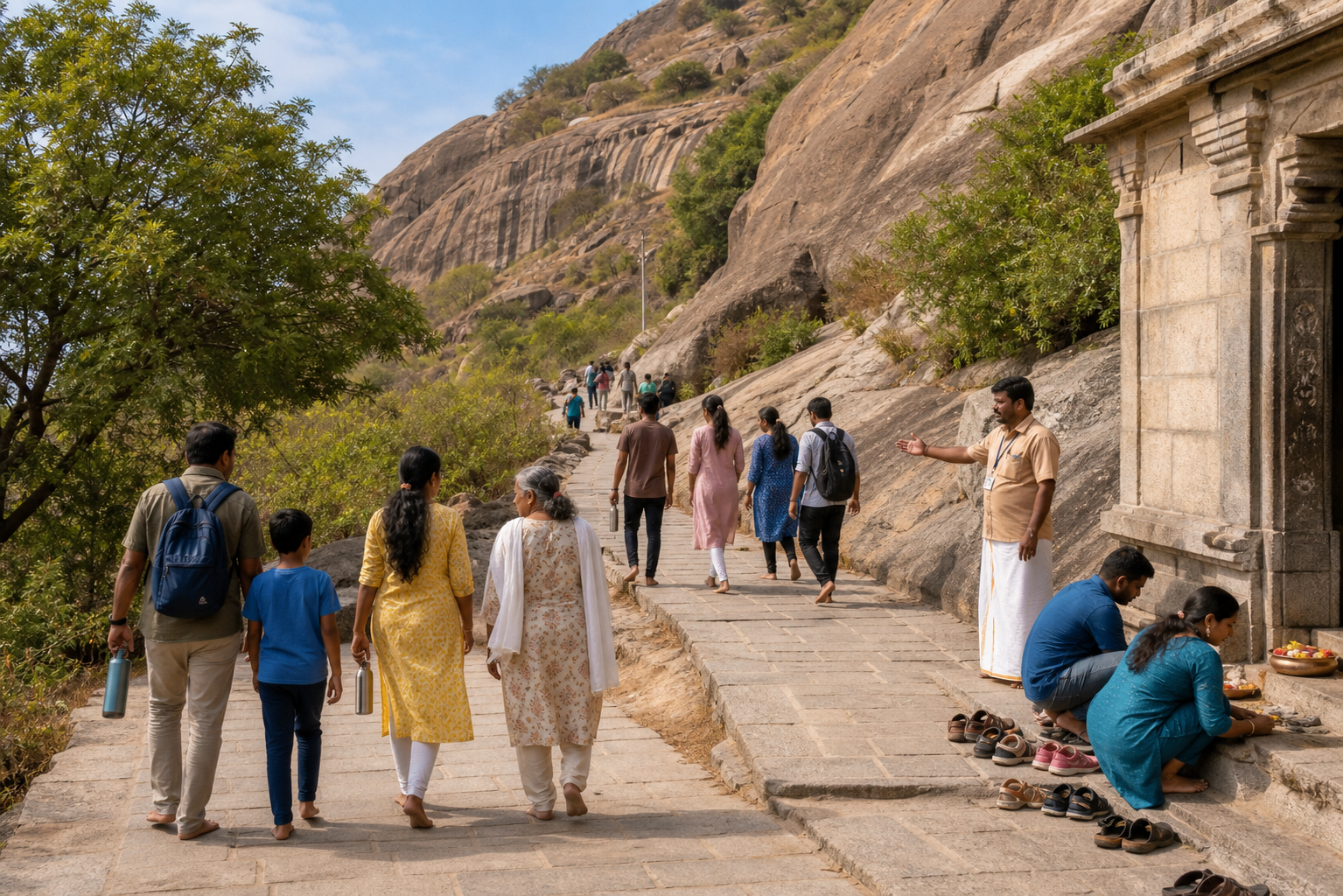
Most devotees are not litigants. You may simply want darshan without being pulled into a dispute at the entrance, on a pathway, or through a message forwarded shortly before your visit. A small amount of verification protects both your pilgrimage and the people travelling with you.
- Find the controlling direction. Read the operative portion of the official judgment and any current notice issued by the competent temple, district, police, or other statutory authority. Headlines and cropped screenshots often omit the conditions attached to a permission.
- Confirm the authorized route. Do not assume that a historically used footpath, an informal gathering point, and an approved processional route are legally interchangeable. If the route is unclear, ask the responsible authority before moving as a group.
- Observe the no-sacrifice boundary. Do not carry animals or materials for sacrifice into the hill precincts. Organizers should communicate the restriction before departure, not after pilgrims reach a checkpoint.
- Do not improvise a procession. A group walking together can acquire a different public-order character when it carries banners, uses amplified sound, stops at contested points, or announces a new route. If you are organizing rather than merely visiting, obtain local legal advice and the required administrative permissions before the event.
- Record problems precisely. If you encounter an obstruction, suspected encroachment, inconsistent instruction, or damage to heritage fabric, note the location, time, wording of the notice, and authority involved. Use photographs only where lawful and safe. Submit the record through an official grievance channel instead of confronting visitors or staff at the site.
- Verify before sharing. Ask whether a viral claim identifies the operative direction, the authority that issued it, and the area to which it applies. If you cannot identify those elements, describe the claim as unverified or do not circulate it.
If you represent a temple group, dargah committee, pilgrimage association, or political organization, the standard must be higher. A mistaken route announcement can expose participants to crowd danger, police intervention, and legal consequences. Get advice from a lawyer familiar with the actual order and local proceedings before announcing a change in worship, access, or procession arrangements.
Heritage protection requires an enforceable management plan
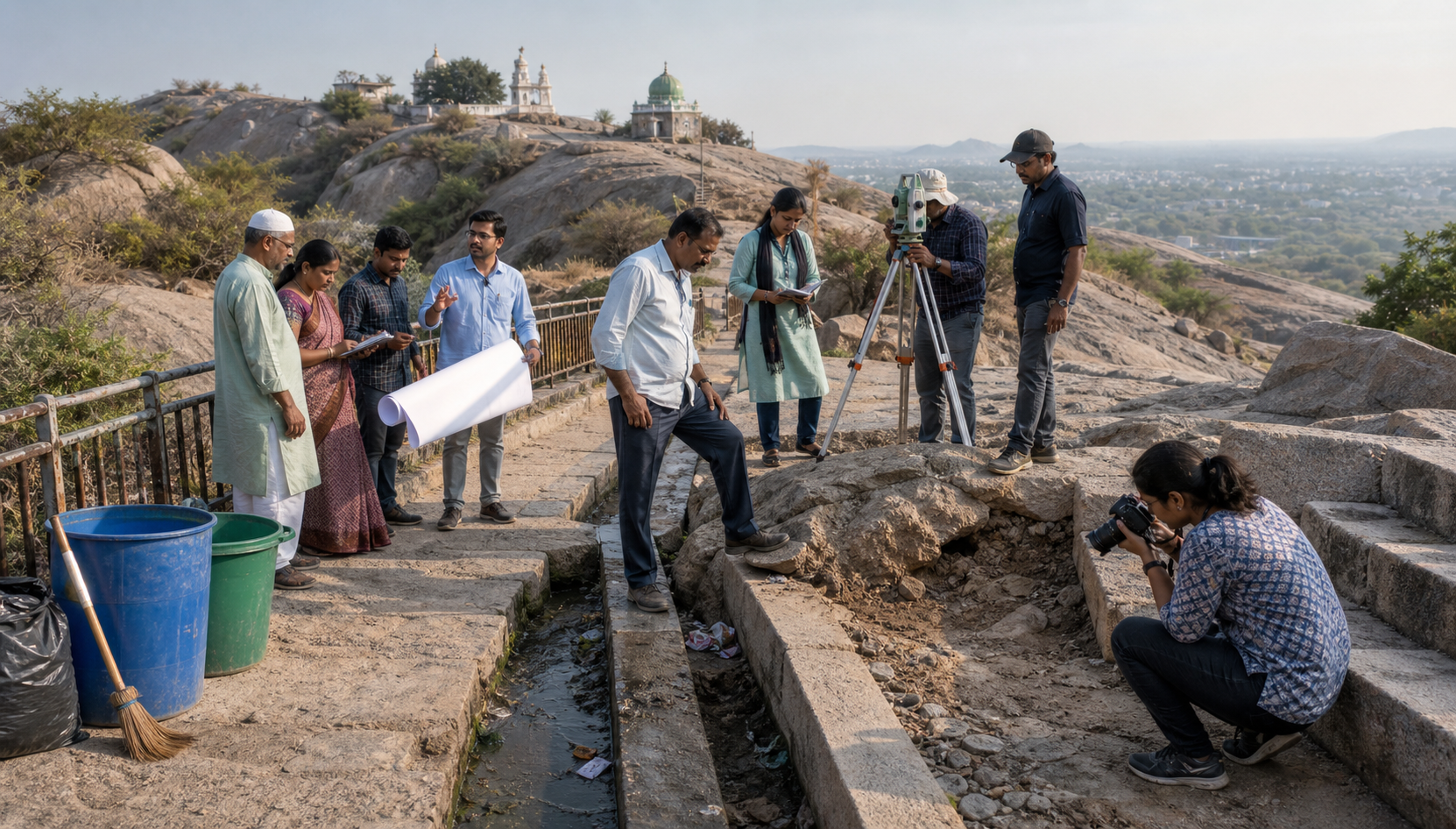
Thiruparankundram is not merely the location of a dispute. It is sacred geography shaped by temple worship, pilgrimage, family memory, physical pathways, archaeology, and ecology. For many families in Madurai, darshan and walking on the hill connect generations. Protecting that inheritance requires more than preventing a clash on a contentious day.
Map the sacred landscape before regulating it
Administrators should publish an accessible map showing recognized institutional areas, authorized access paths, restricted or environmentally sensitive zones, and any area whose status remains under legal consideration. The map should distinguish an ordinary visitor path from a route approved for an organized procession. Without that distinction, every crowd-control decision risks being interpreted as a decision about ownership or religious rights.
The map should also support enforcement against fresh encroachment. An anti-encroachment policy loses credibility when boundaries are vague, inspections are irregular, or action appears to depend on the identity of the alleged encroacher. Record the location, physical extent, date detected, authority responsible, and status of each complaint. Apply the same documented process while respecting the different legal rights of the institutions involved.
Protect the hill without covering it in infrastructure
Heritage management can itself damage heritage when every problem produces a new barrier, platform, road, loudspeaker, kiosk, or permanent structure. Temporary crowd controls and reversible installations should be preferred where they can do the job safely. Any lasting intervention should be assessed for its effect on archaeology, drainage, vegetation, sightlines, customary movement, and the ritual atmosphere of the hill.
During heavy footfall, practical arrangements matter: separate entry and exit flows where necessary, visible signs explaining prohibited conduct, waste collection, noise control, drinking water, shaded rest points, and access to first aid. These measures are not substitutes for religious or legal boundaries. They make those boundaries easier to follow without confusion or humiliation.
Devotees can support this work in concrete ways. Stay on marked paths, carry waste back to collection points, avoid attaching objects to old stonework, and report damage with an exact location. If a proposed convenience would require permanent alteration of the hill, ask whether a temporary or off-site alternative can meet the same need.
The real test is transparent and even-handed implementation
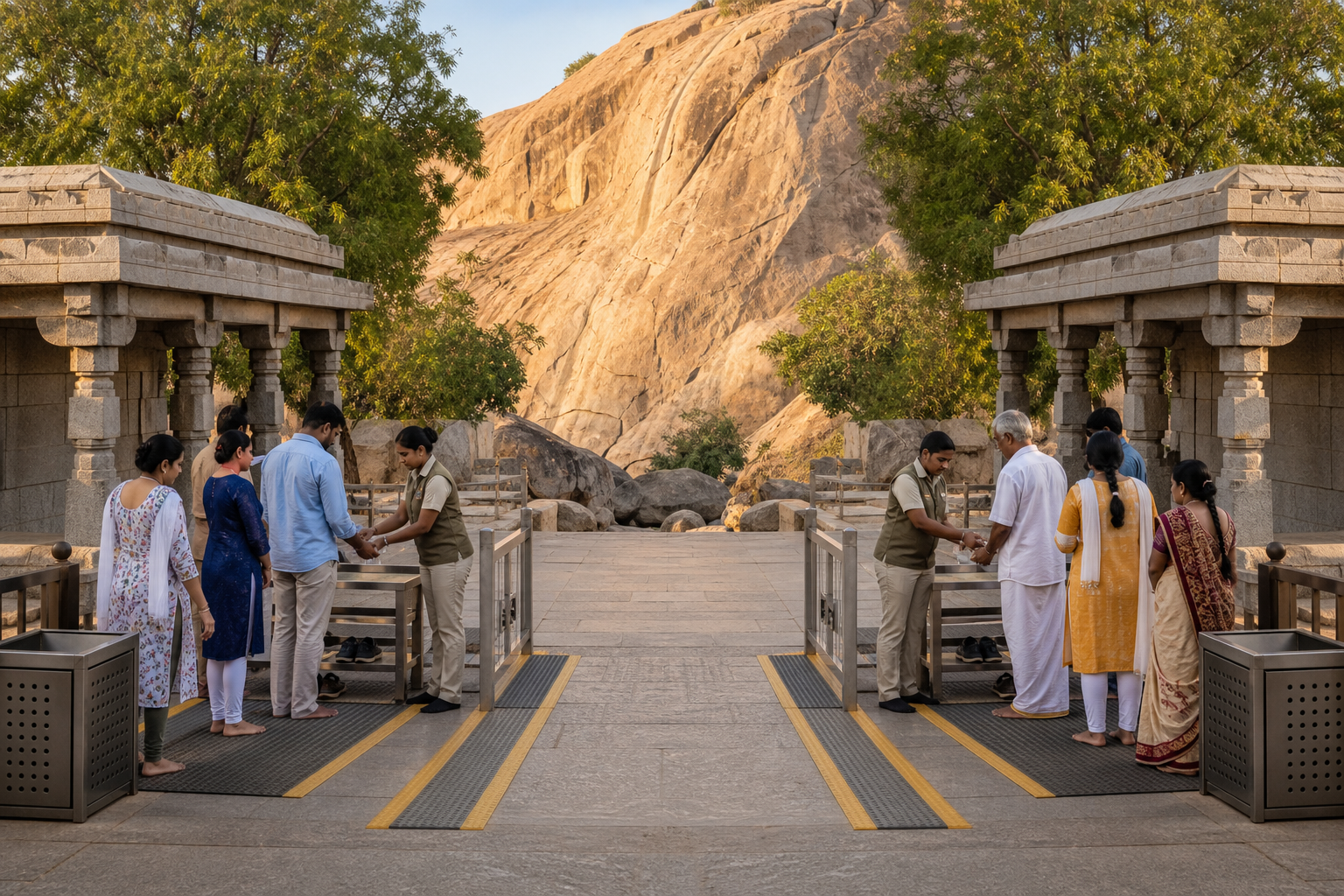
A carefully worded verdict cannot manage festival calendars, crowd flows, grievances, sound levels, or route confusion by itself. A practical implementation body could bring together the Tamil Nadu Hindu Religious & Charitable Endowments Department, the Waqf Board, local community representatives, heritage specialists, and law-enforcement officials. Such a committee would be an administrative mechanism, not a venue for renegotiating recognized temple rights or reviving a route that has not been approved.
Representation alone will not make that body useful. It needs a narrow mandate and visible outputs: a common site map, a festival and crowd-management calendar, a register of authorized routes, an anti-encroachment process, a contact point for urgent problems, and a grievance log showing which authority is handling each matter. Meeting summaries should record decisions and responsibility without publishing personal information that could inflame tensions.
Public communication should answer operational questions in plain language. Where may an ordinary pilgrim walk? Which routes are authorized for organized events? What conduct is prohibited throughout the precinct? Where should a suspected encroachment be reported? Which restrictions are temporary crowd measures, and which arise from a court or statutory direction? A multilingual notice at the site and a matching online notice can stop rumours before they become mobilizing narratives.
For a Dharmic audience, harmony cannot mean silence about encroachment, erosion of customary access, or dilution of temple sanctity. It also cannot mean disregarding a lawful boundary because enforcement is politically inconvenient. Ahimsa, restraint, truthfulness, and stewardship become meaningful here as standards of conduct: protect the tirtha firmly, state claims accurately, and do not turn another community’s regulated worship into a pretext for disorder.
You can judge implementation by observable results. Is the no-sacrifice rule enforced within the defined precinct? Is the unapproved processional route still treated as unapproved? Can worship at the existing dargah occur within the stated regulations? Are new encroachments documented and stopped? Are temple access, ritual schedules, and the physical integrity of the hill protected? If administrators cannot answer these questions with records, the settlement remains vulnerable to rumour and selective enforcement.
If you are a devotee, verify the latest official direction, use the authorized path, and preserve accurate evidence when something goes wrong. If you lead a community organization, request the site map, route policy, encroachment procedure, and grievance contact in writing. Thiruparankundram will be protected when sanctity is translated into boundaries that everyone can see and authorities consistently enforce.
References
