
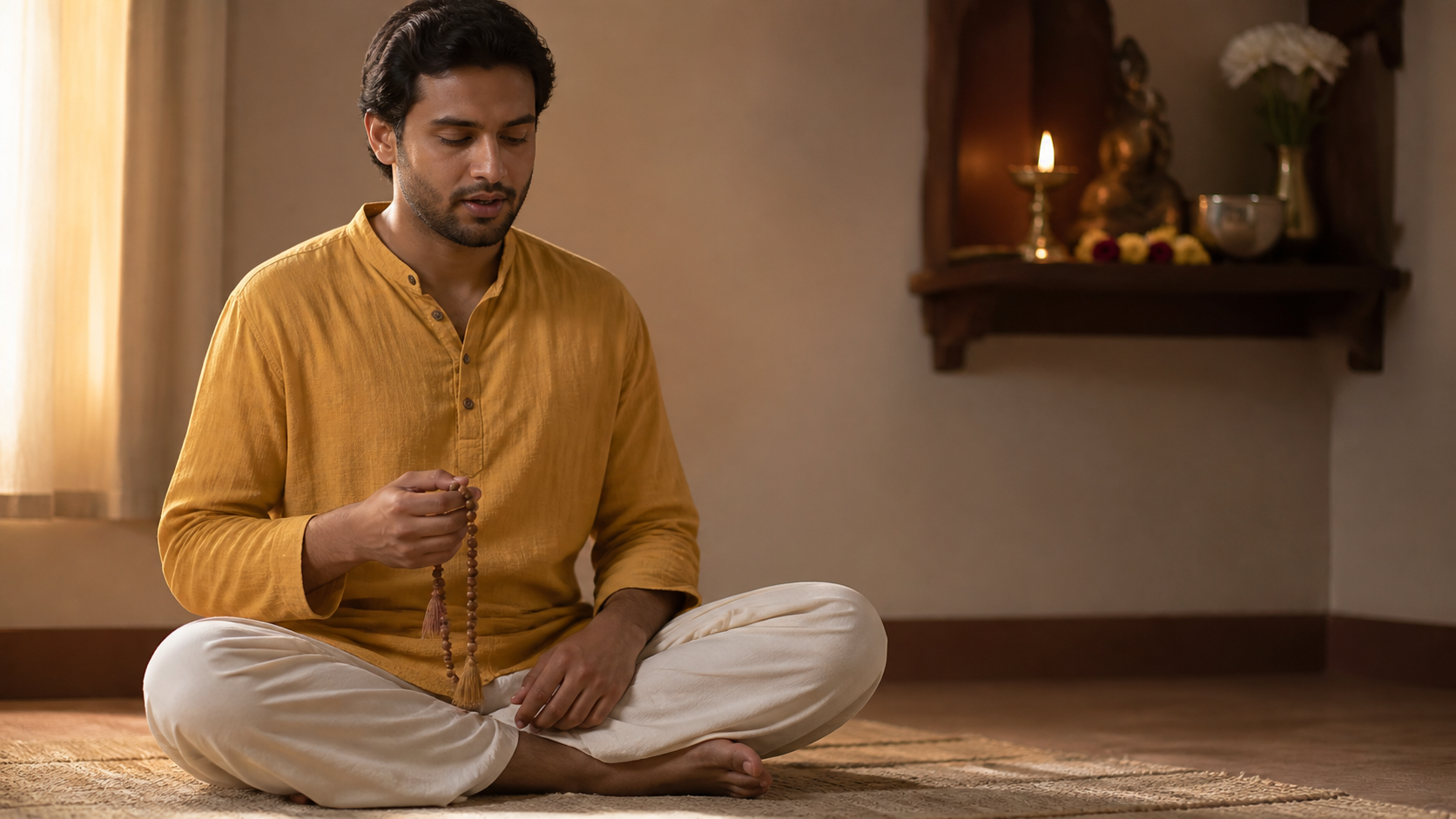
You sit down to chant, repeat the sacred words, and soon discover that your mouth has continued while your mind is planning the day. That does not mean you are unsuited to bhakti. It means you have reached the real work of the practice: learning to hear the Name you are already saying.
A sustainable chanting practice does not depend on manufacturing a devotional mood. It depends on returning, patiently and repeatedly, to sacred sound. Once you understand what to listen for, how to recover from distraction, and how chanting should affect your conduct, the practice becomes much clearer.
The practice begins with hearing, not performance
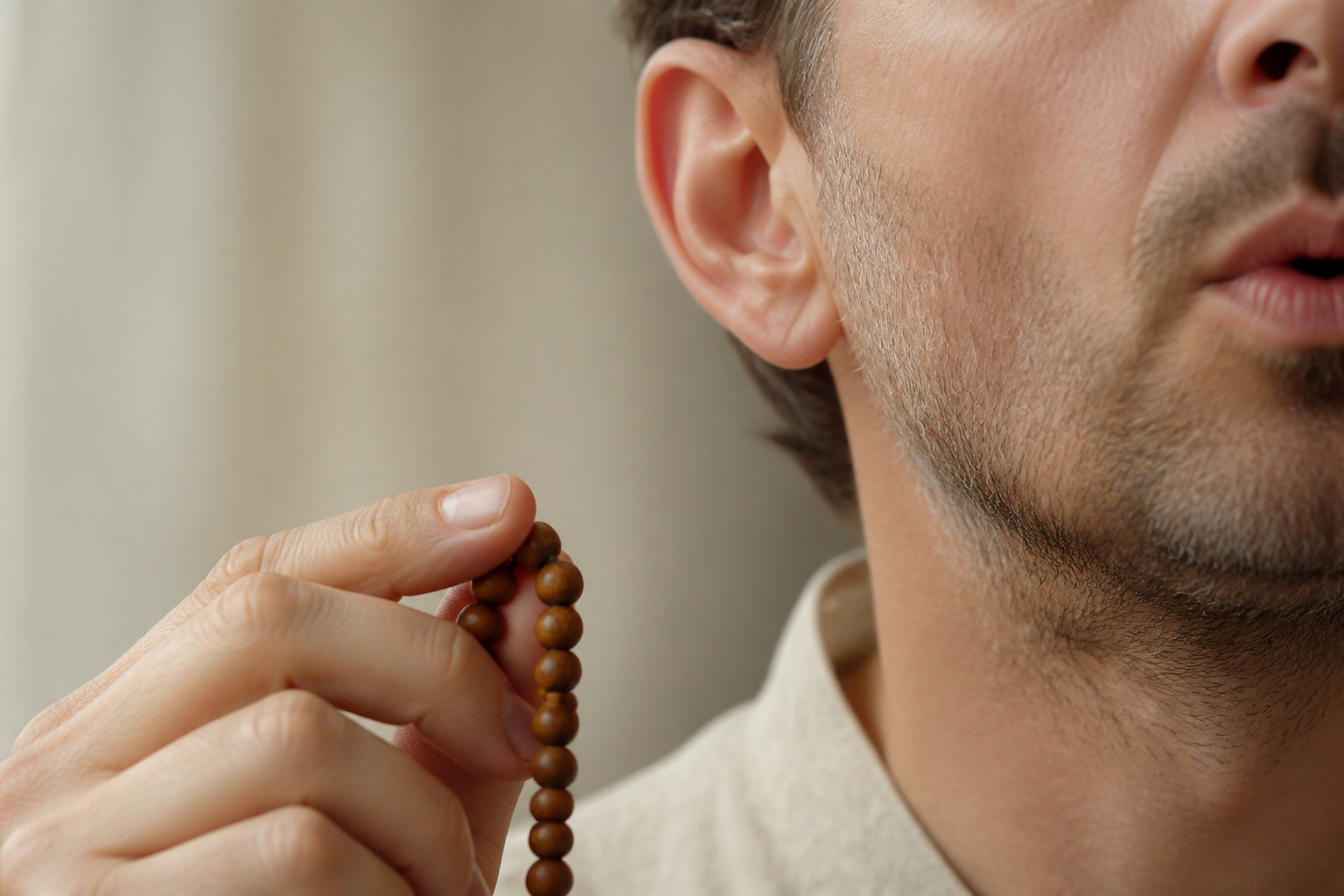
The Garuda Purana compares material forgetfulness to the condition of someone rendered unconscious by a snake bite. Just as an expert mantra can revive the stricken person, attentive hearing of the Divine Name awakens consciousness obscured by maya. The point is not that you are physically lifeless. It is that you can remain busy, informed, and outwardly successful while forgetting your spiritual identity and relationship with the Divine.
This is why bhakti does not treat the holy name as background noise. The tongue produces the sound, but the ear receives it. When attention leaves, the immediate task is not to condemn the mind, restart the entire session, or force an emotion. Hear the next Name. Then hear the one after it. Each return is part of the practice rather than evidence that the practice has failed.
The maha-mantra is:
Hare Krsna, Hare Krsna, Krsna Krsna, Hare Hare / Hare Rama, Hare Rama, Rama Rama, Hare Hare.
Say the complete mantra clearly enough for your own ears to follow it. Do not rush merely to finish a quota. Do not stretch the words theatrically in the hope of creating an experience. Let sound carry remembrance. If your mind wanders halfway through, return at the word currently being spoken instead of turning the distraction into a second subject for meditation.
Chanting can coordinate breath, attention, and emotion, but breath is a support rather than a performance target. Breathe naturally. There is no need to hold the breath, force a special rhythm, or chase an altered state. The devotional object is the Name.
Build a daily practice that survives ordinary life
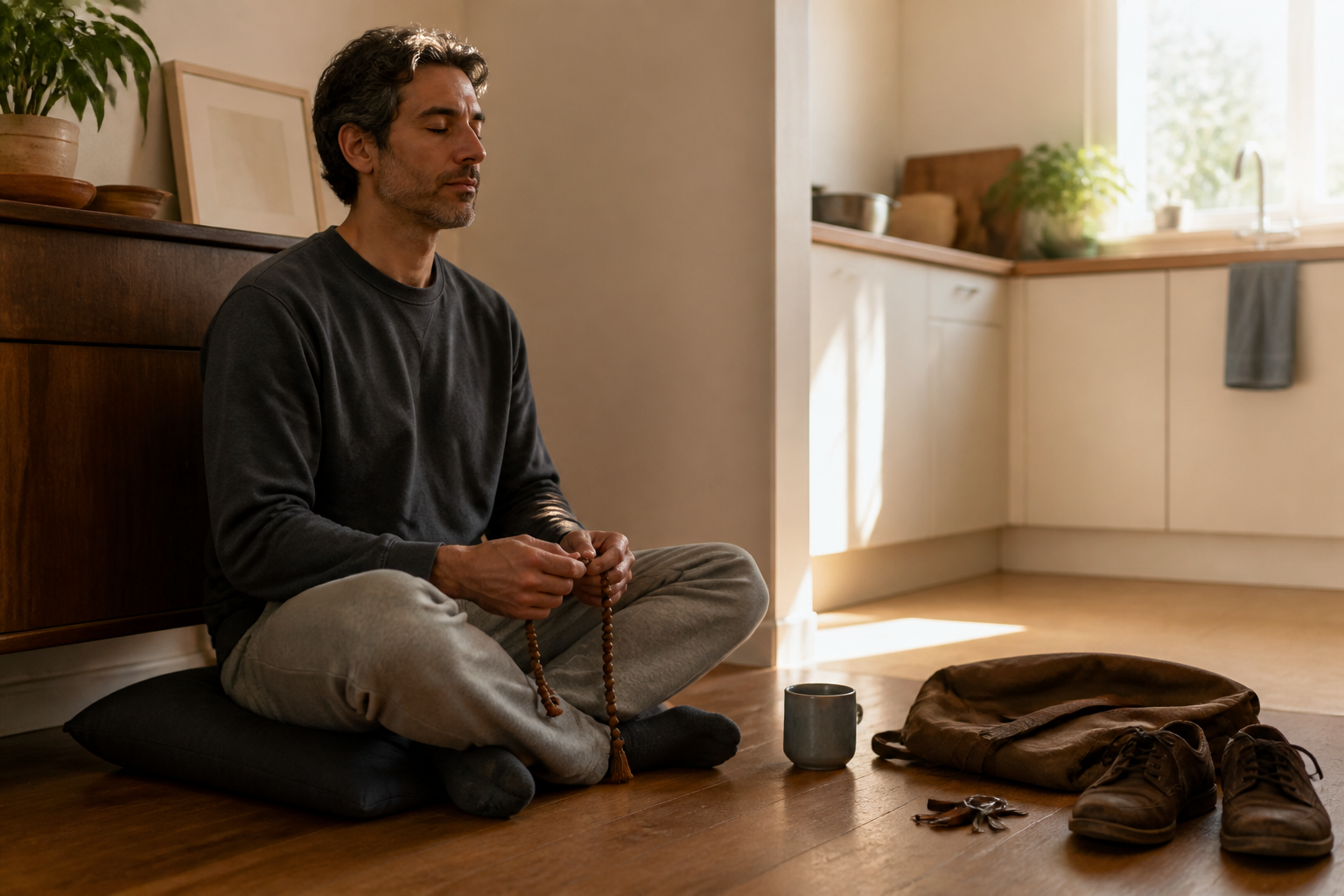
An ambitious routine that disappears when work becomes difficult is less useful than a modest discipline you can keep. Choose a short, predetermined period and connect it to a stable event in your day, such as waking, bathing, or beginning your first quiet task. A cue removes the daily negotiation over whether you feel ready.
- Choose the sacred formula you will practise. If you have received instructions from a guru or established lineage, follow them rather than assembling a method from unrelated fragments. If you are beginning with the maha-mantra, keep its full sequence intact.
- Use the same dependable cue each day. Decide where chanting belongs before distraction arrives, not while you are already scrolling, rushing, or solving problems.
- Sit or stand in a position that lets you remain comfortable without becoming dull. Put aside avoidable interruptions. The setting does not have to be elaborate, but it should tell the mind that this activity has begun.
- Chant softly enough to remain collected and audibly enough to hear. With each phrase, let your attention move from producing the sound to receiving it.
- When another thought takes over, notice it without following its story. Return to the current Name. You do not need to win an argument with the mind before continuing.
- Close without grading the session as mystical, dry, successful, or wasted. Instead, identify one situation in which remembrance should affect your conduct that day.
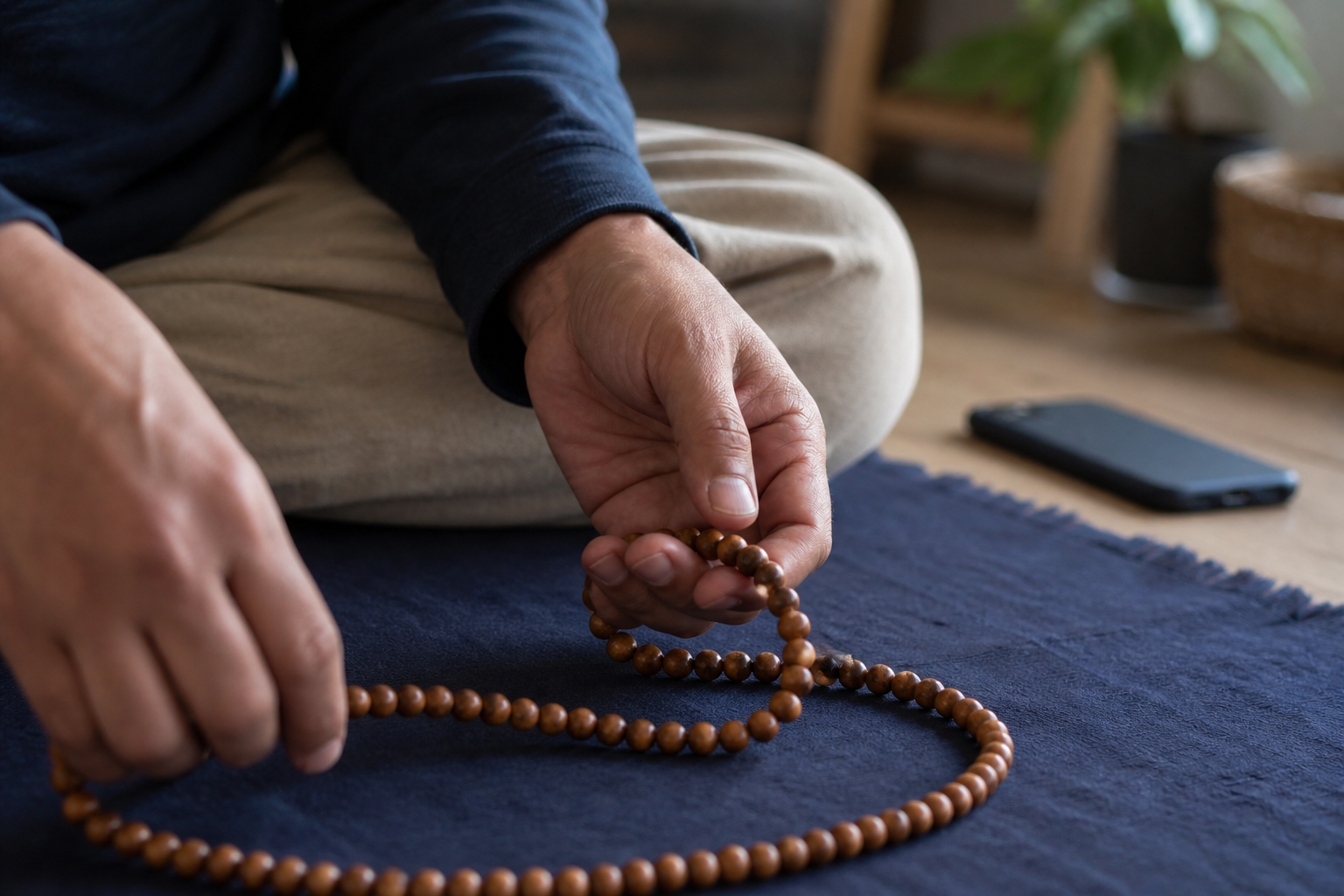
Beads can give japa a physical structure, but they should serve attention rather than replace it. If the fingers move while the ear disengages, slow down. The useful checkpoint is simple: can you hear the words you are speaking now?
Private japa and communal kirtan can support different weaknesses. Japa reveals how quickly your attention escapes when there is no group energy to carry it. Kirtan can help when isolation or mental heaviness makes solitary practice difficult. Enter kirtan as a participant in remembrance, not as a spectator evaluating a musical performance. When possible, let communal chanting renew your private discipline, and let private discipline make your participation in kirtan more attentive.
Correct the obstacle instead of abandoning the practice
Most difficulties in chanting do not require a new mantra. They require a more accurate response to what is happening. Notice the pattern, identify its mechanism, and make the smallest correction that restores hearing.
- Your mouth is moving while the mind is elsewhere. Do not restart every time this happens; constant restarting can make distraction the centre of the session. Return to the word being spoken.
- You are chanting too quickly to hear distinct words. Reduce the pace until the ear can follow the mantra. In communal kirtan, remain with the shared rhythm while listening to each phrase rather than competing with it.
- You are waiting to feel devotional before beginning. Keep the appointment first. Mood can change during practice, but mood is not the admission requirement.
- You are anxious about pronunciation. Learn from a trusted teacher or established community, then practise steadily. Endless self-monitoring can become another way of avoiding the Name.
- You are looking for an emotional high. Strong feeling may come or may not come. Regularity, humility, and conduct are sounder measures than intensity during a single session.
- You are using chanting to postpone a duty or difficult conversation. Remembrance should clarify responsible action, not become a devotional label for avoidance.
Practitioners commonly turn to sacred sound when rumination, crisis, or burnout has made the inner world feel closed in, and many describe greater composure and renewed meaning through attentive chanting. Treat this as spiritual support, not as proof that mantra replaces medical or psychological care. If distress is persistent, disabling, or dangerous, seek qualified help while retaining any safe devotional practice that supports you.
Let the Name move from the tongue into conduct
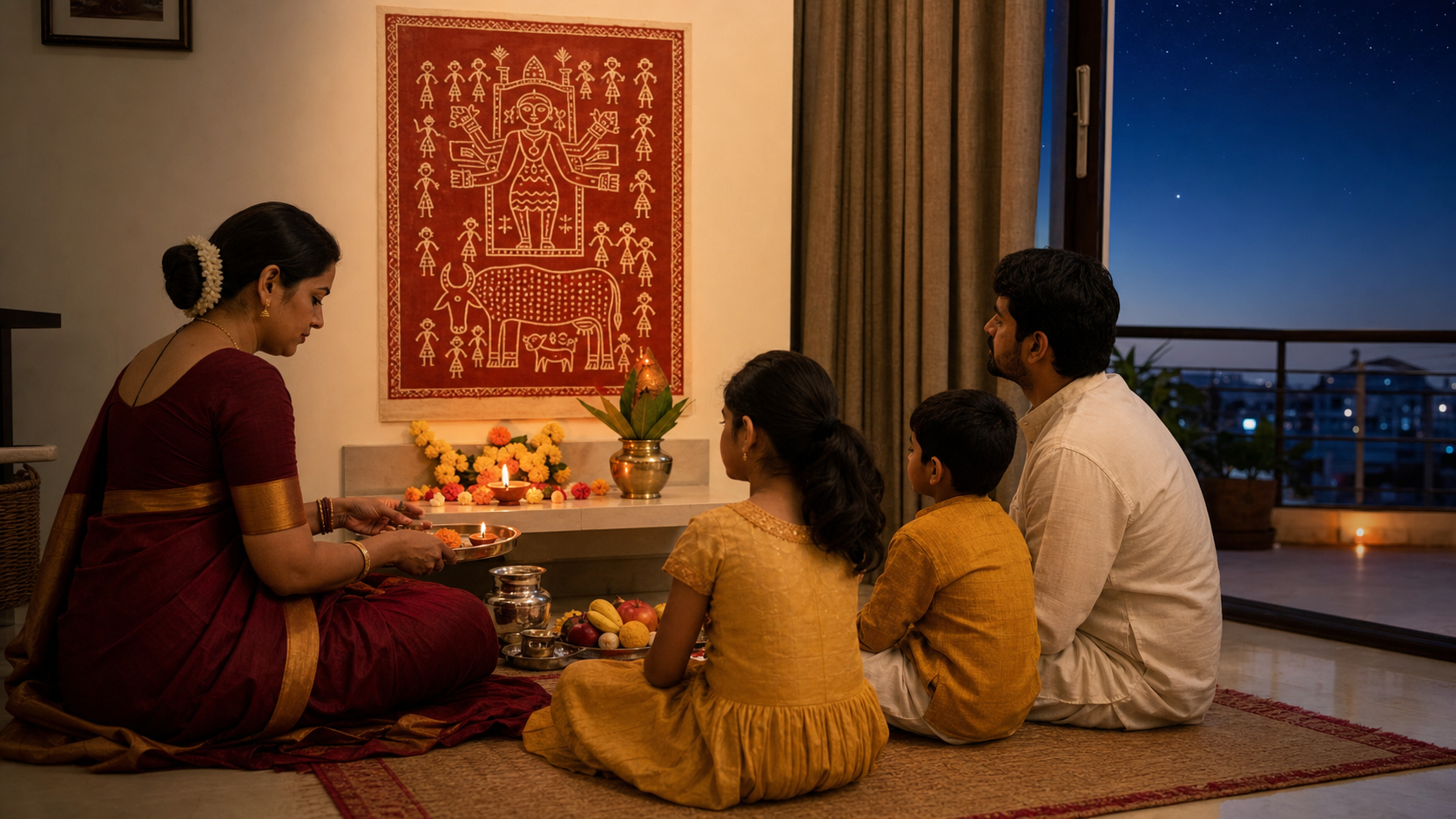
Bhakti is weakened when chanting becomes sealed off from the rest of life. The practical test is not whether you can describe an elevated experience. It is whether remembrance interrupts contempt, dishonesty, needless aggression, or indifference when those impulses arise.
After chanting, carry one concrete intention into the day. You might listen before replying to someone, complete a neglected duty without resentment, or refuse to feed a hostile thought. This does not reduce devotion to good behaviour. It prevents devotional language from becoming detached from humility and compassion.
Use these questions as a brief examination rather than a performance score:
- Did I become more willing to remember the Divine when the mind was disturbed?
- Did remembrance make my speech more truthful and less needlessly harsh?
- Did I become humbler, or merely more pleased with my identity as a practitioner?
- What responsibility is clearer now that I have stopped feeding distraction?
This discipline of remembrance belongs to a wider Dharmic inheritance. Hindu traditions practise japa; Sikh practice includes Naam Simran; Buddhist practitioners recite mantras such as Om Mani Padme Hum; and Jain tradition preserves the Namokar Mantra. These are parallel disciplines of sacred remembrance joined to ethical living.
Recognising that family resemblance does not require you to pretend that all mantras have identical meanings or that all traditions make identical theological claims. Respect each practice within its own lineage. The shared lesson is more precise: repeated sacred sound trains the practitioner to return from forgetfulness, and that remembrance must become visible in the way life is lived.
Key takeaways
- The central action in chanting is attentive hearing, not merely verbal repetition.
- When the mind wanders, return to the Name currently being spoken instead of condemning yourself or restarting the session.
- A short practice attached to a stable daily cue is more sustainable than an ambitious routine dependent on mood.
- Use japa to train personal attention and kirtan to deepen remembrance in community.
- Do not measure bhakti only by emotion. Look for greater humility, responsibility, gratitude, and compassion in daily conduct.
- Honour related Dharmic practices without collapsing their distinct meanings and lineages.
Choose your cue now. When it next arrives, recite the complete maha-mantra in a voice you can hear, and return to the present Name whenever attention leaves. Then carry that remembrance into one deliberate act of patience or responsibility. Tomorrow, meet the same cue again.
References
