
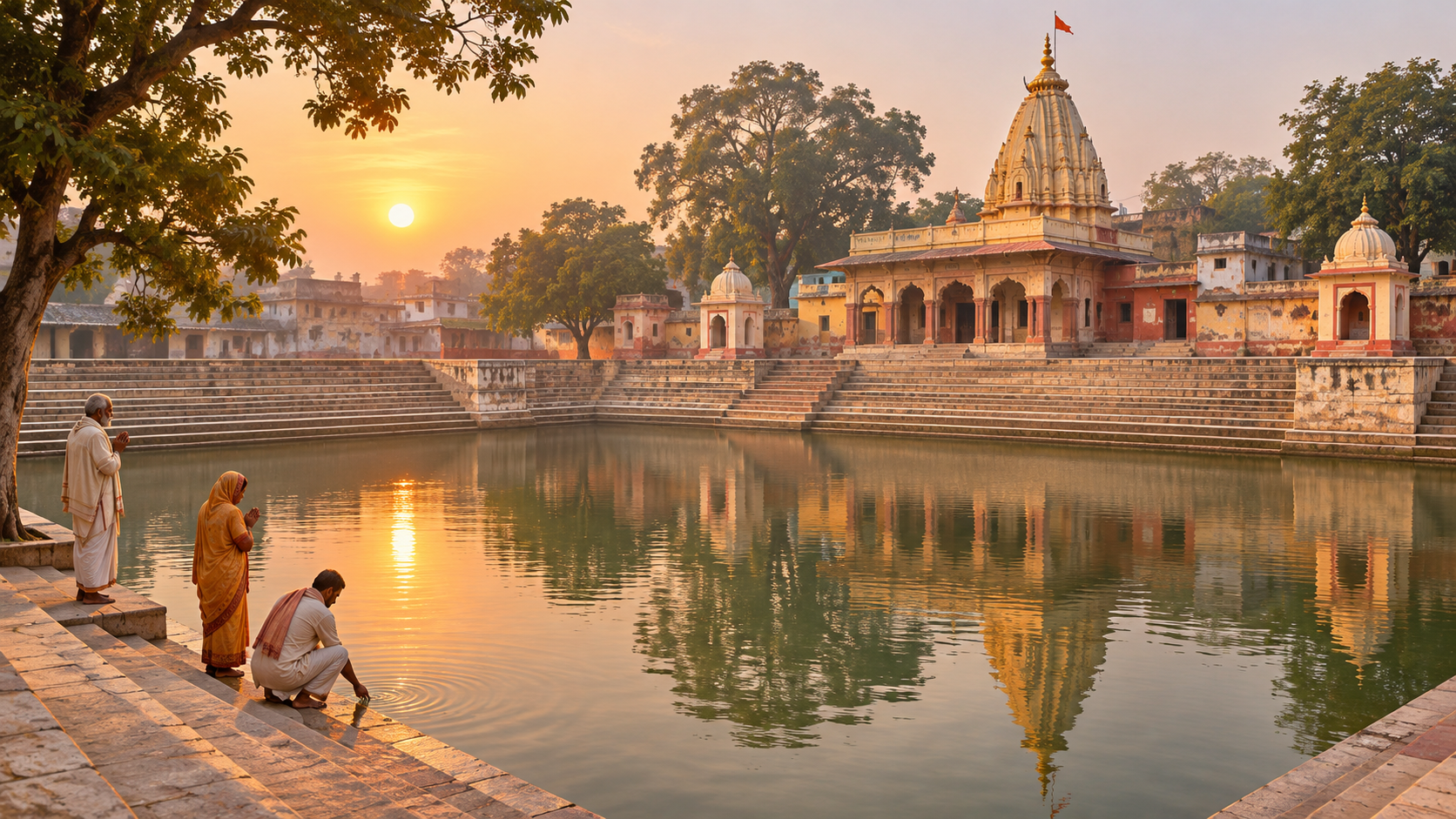
If you are planning an Ayodhya pilgrimage, you may be wondering whether Surya Kund deserves a place beside the city’s better-known Rama sites. It does, especially if you want to understand Ayodhya through the Suryavanshi inheritance associated with Bhagavan Rama rather than through a single temple alone.
Surya Kund brings three elements together: a sacred body of water, a temple dedicated to Surya, and the memory of Ayodhya’s solar dynasty. The value of visiting lies not in collecting another photograph, but in recognizing how ancestry, worship and ethical conduct meet in one place.
Why Surya Kund belongs in an Ayodhya pilgrimage
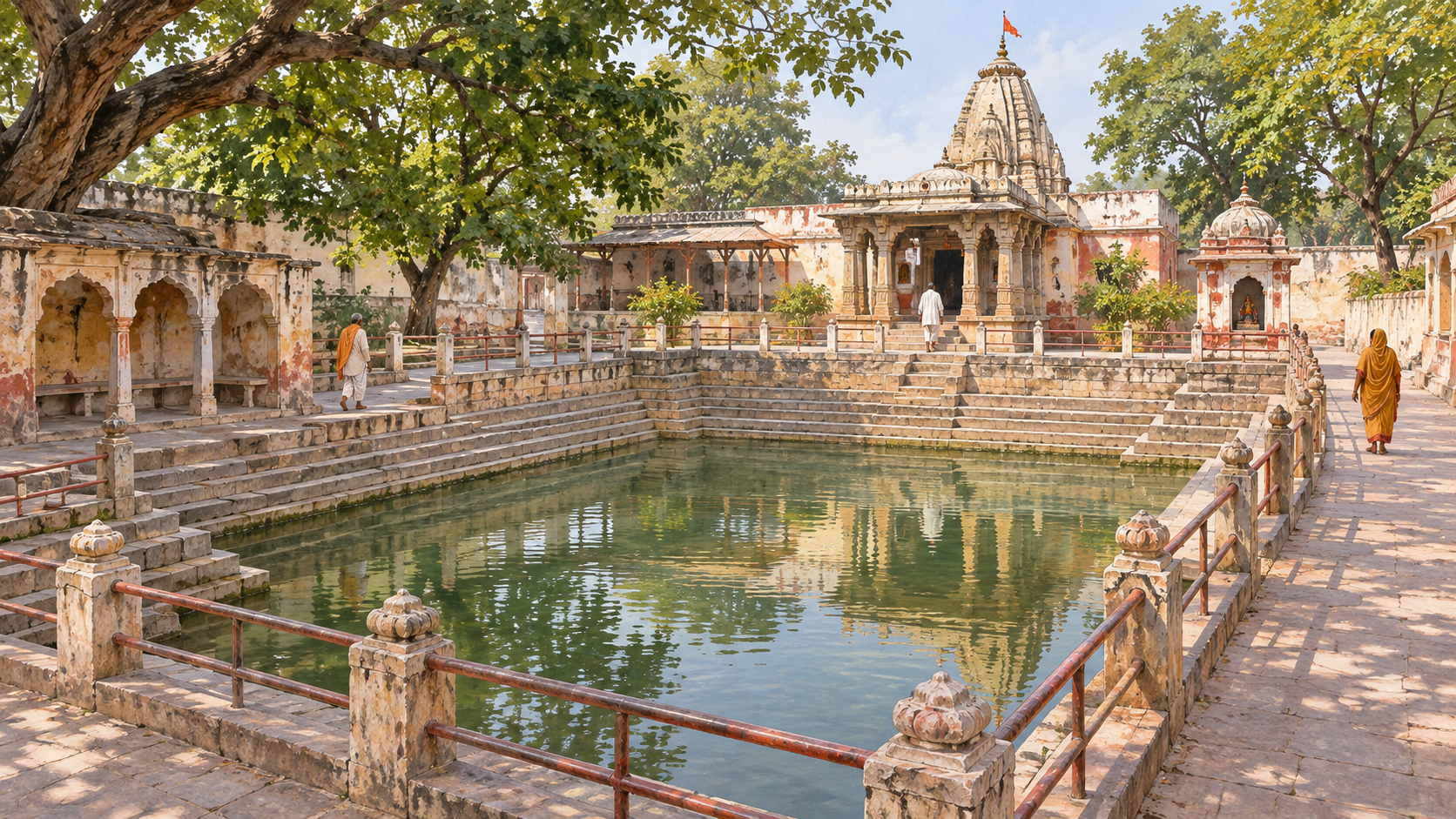
Surya Kund and the Surya Temple stand in Darshan Nagar, about four kilometres from Ayodhya, on the 14-Kosi Parikrama Marg. That location matters. The site belongs to Ayodhya’s wider sacred landscape and its culture of parikrama; it should not be approached as an unrelated attraction outside the main pilgrimage.
The place is also associated with the older name Ghoshark Tirth. Its kund is traditionally believed to have been established by Ayodhya’s Suryavanshi rulers. The wording matters: this is a sacred tradition about the site’s origin, not a securely dated construction claim. You do not need to turn inherited memory into modern archaeological certainty in order to take it seriously.
For a devotee of Rama, this solar connection is not ornamental. Rama is remembered within the Suryavansha, the lineage of the Sun. Surya worship at Ayodhya therefore need not be treated as a rival or detour from Rama bhakti. It supplies a dynastic and ethical frame for it: the radiance of a lineage becomes meaningful only when its descendants embody dharma.
Keep that distinction in mind as you visit. The kund preserves a relationship between water, light, lineage and pilgrimage. The temple gives that relationship a focus in worship. Neither should be reduced to scenery.
How to understand Sun worship without reducing it to symbolism
You can appreciate Surya as a symbol of clarity, regularity and life-giving energy, but Hindu worship does not stop at metaphor. Surya is addressed as a divine presence worthy of reverence. The visible Sun gives the mind a concrete focus while pointing beyond itself to the source of illumination, order and consciousness.
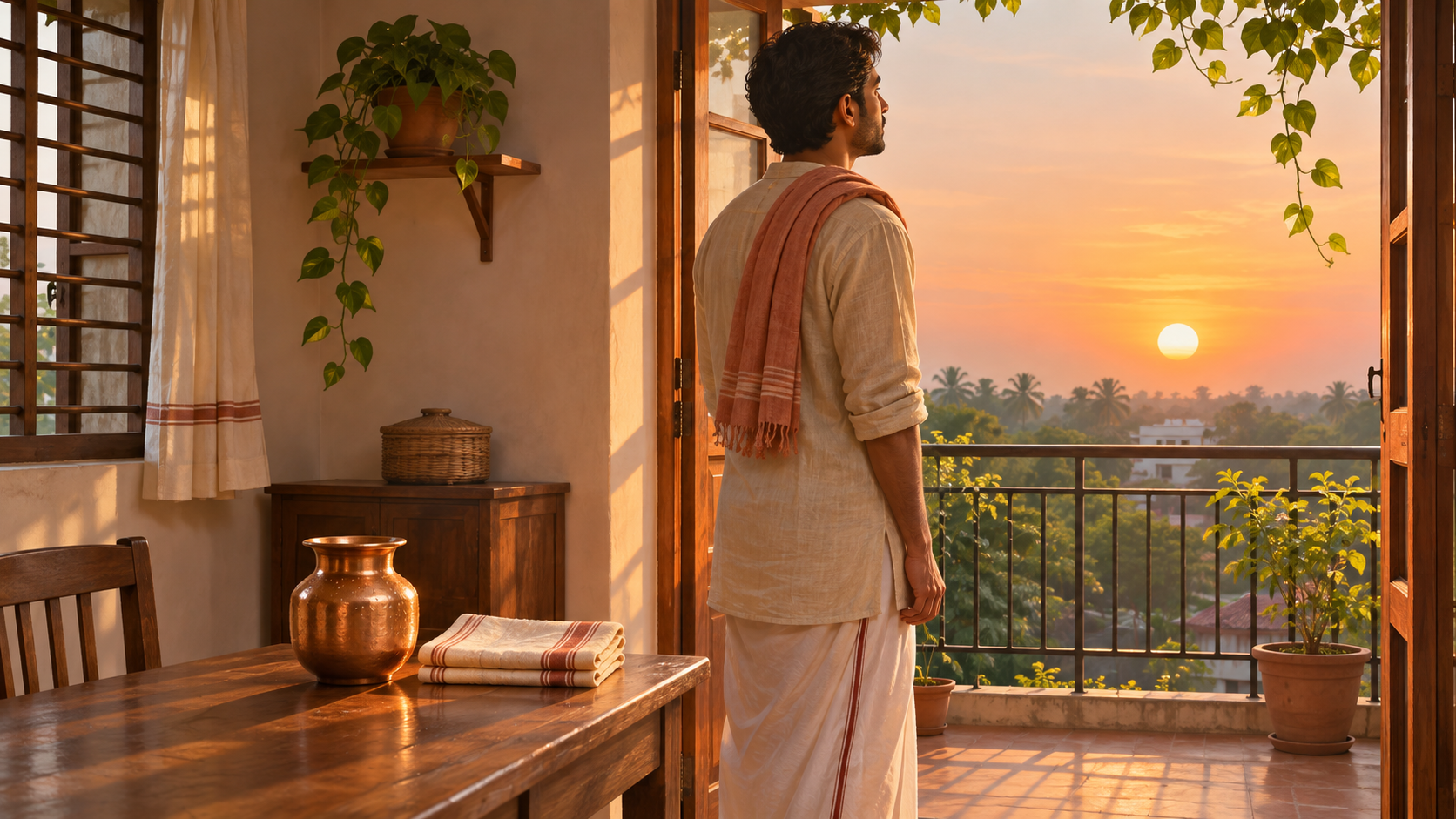
This is why Sun worship can be both outward and inward. Outwardly, you recognize the light by which the world becomes visible. Inwardly, you ask what remains obscured in your own conduct. The practice becomes useful when that second question produces a change rather than a passing devotional mood.
Offering water, or arghya, to Surya is a familiar Hindu form of reverence. Surya Namaskar is another widely recognized solar practice, though it should not automatically be treated as the temple’s prescribed ritual. If you wish to perform any observance at Surya Kund, first follow the instructions of the temple and the customs being observed by local devotees. A personal practice should fit the sanctity of the place rather than take it over.
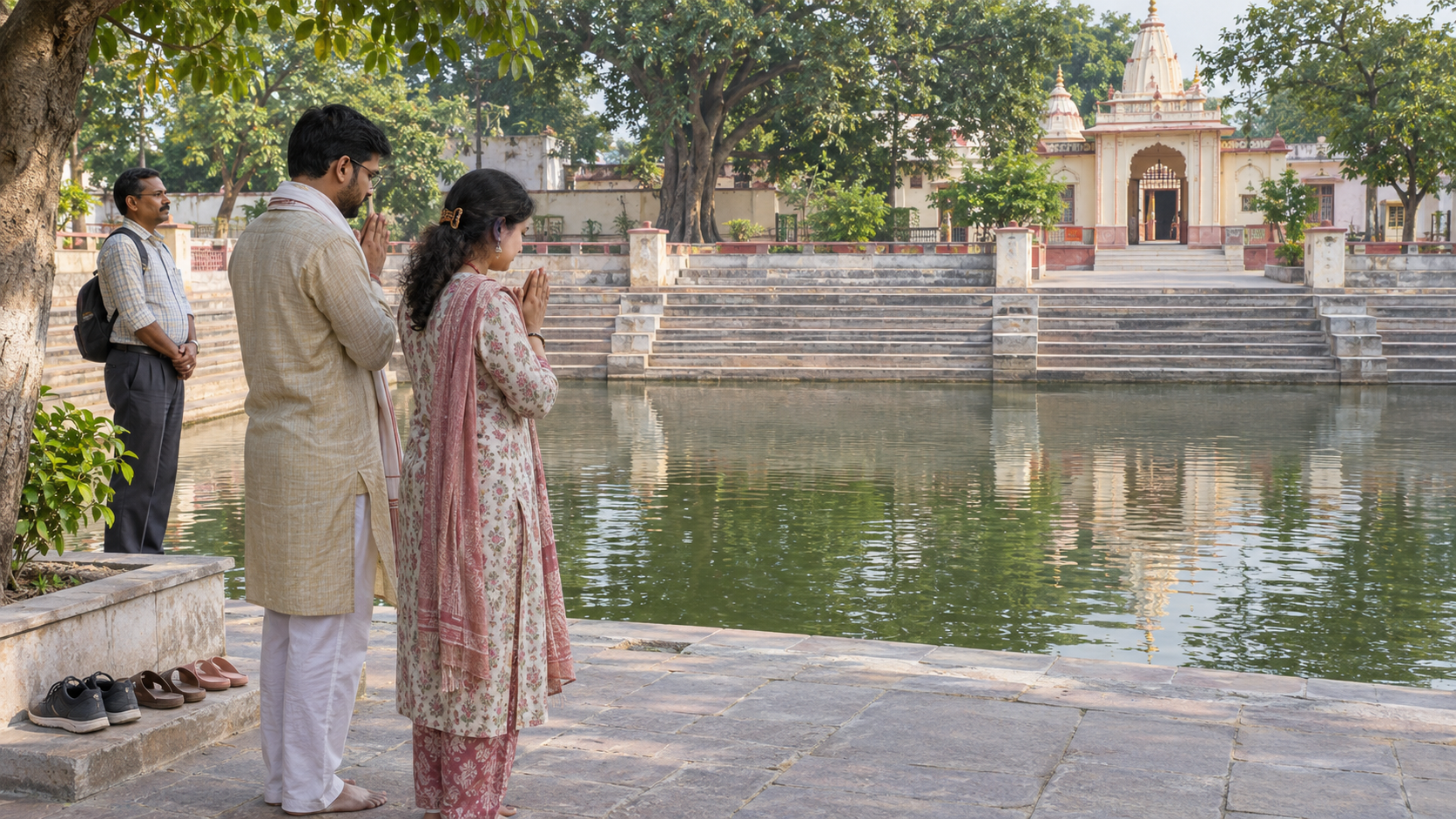
If no formal ritual is available to you, a simple act of attention is enough. Stand quietly where visitors are permitted, offer pranam, and consider one area of life in which you need greater clarity. Then make one precise resolution. “I will speak truthfully in this pending matter” is more meaningful than a vague promise to become a better person.
A practical way to visit Surya Kund respectfully
The available distance is an orientation point, not a door-to-door travel estimate. “About four kilometres from Ayodhya” depends on where you begin within the city. Check the current route, temple hours, access conditions and any festival-related restrictions locally before setting out. Do not build a tightly timed itinerary around an unverified opening schedule.
- Place it within the pilgrimage. If you are following or studying the 14-Kosi Parikrama, approach Surya Kund as part of that sacred geography. If you are making a shorter visit, consciously connect it with Ayodhya’s Suryavanshi memory.
- Pause before photographing. First identify the kund, the temple and the areas being used for worship. Ask before photographing rituals or individual devotees, and obey any posted restrictions.
- Do not assume that entering the water is allowed. A kund is sacred water, not automatically a public bathing facility. Follow local instructions and use only designated access points. If the rules are unclear, remain at the edge and offer pranam without entering.
- Keep offerings clean and permitted. Do not leave plastic, packaging, food containers or other waste near the water. If you want to offer arghya, flowers or another item, ask where and how it may be done.
- Give the visit an ethical conclusion. Before leaving, name one habit that creates darkness in your life: carelessness, anger, dishonesty, indiscipline or avoidance. Choose a concrete corrective action that you can begin the same day.
If you can visit in the morning and the temple’s current schedule permits it, the relationship between dawn and Surya may make the symbolism more immediate. But do not treat a later visit as spiritually empty. The deeper discipline is to bring alertness to the time actually available to you.
You should also resist the urge to rank the stop by size or spectacle. A kund and a Surya shrine may not produce the same visual impact as Ayodhya’s monumental temples. Their importance lies in the continuity of sacred memory and in the form of attention they ask from you.
Key takeaways for your visit
- Surya Kund and the Surya Temple are in Darshan Nagar, roughly four kilometres from Ayodhya, along the 14-Kosi Parikrama Marg.
- The kund is traditionally associated with Ayodhya’s Suryavanshi rulers; treat that as inherited sacred memory rather than an independently established construction date.
- Sun worship here belongs naturally within Ayodhya’s Rama-centered landscape because Rama is remembered in the solar lineage.
- Check present-day access and ritual arrangements locally; do not assume that bathing, photography or particular offerings are permitted.
- Let the visit produce one specific act of clearer, more disciplined conduct. That is a practical way to carry the teaching of light beyond the shrine.
Carry the teaching of light beyond the kund
Surya Kund offers you a way to see Ayodhya as more than a collection of destinations. The city holds relationships: Rama and his lineage, pilgrimage and place, sacred water and solar light, inherited honour and present conduct.
When you plan your visit, leave enough space to stand still rather than rushing through a checklist. Before you depart, choose the one decision in your life that most needs light and take its first honest step. That will make your darshan part of your dharma rather than merely part of your itinerary.
References

Leave a Reply
You must be logged in to post a comment.