
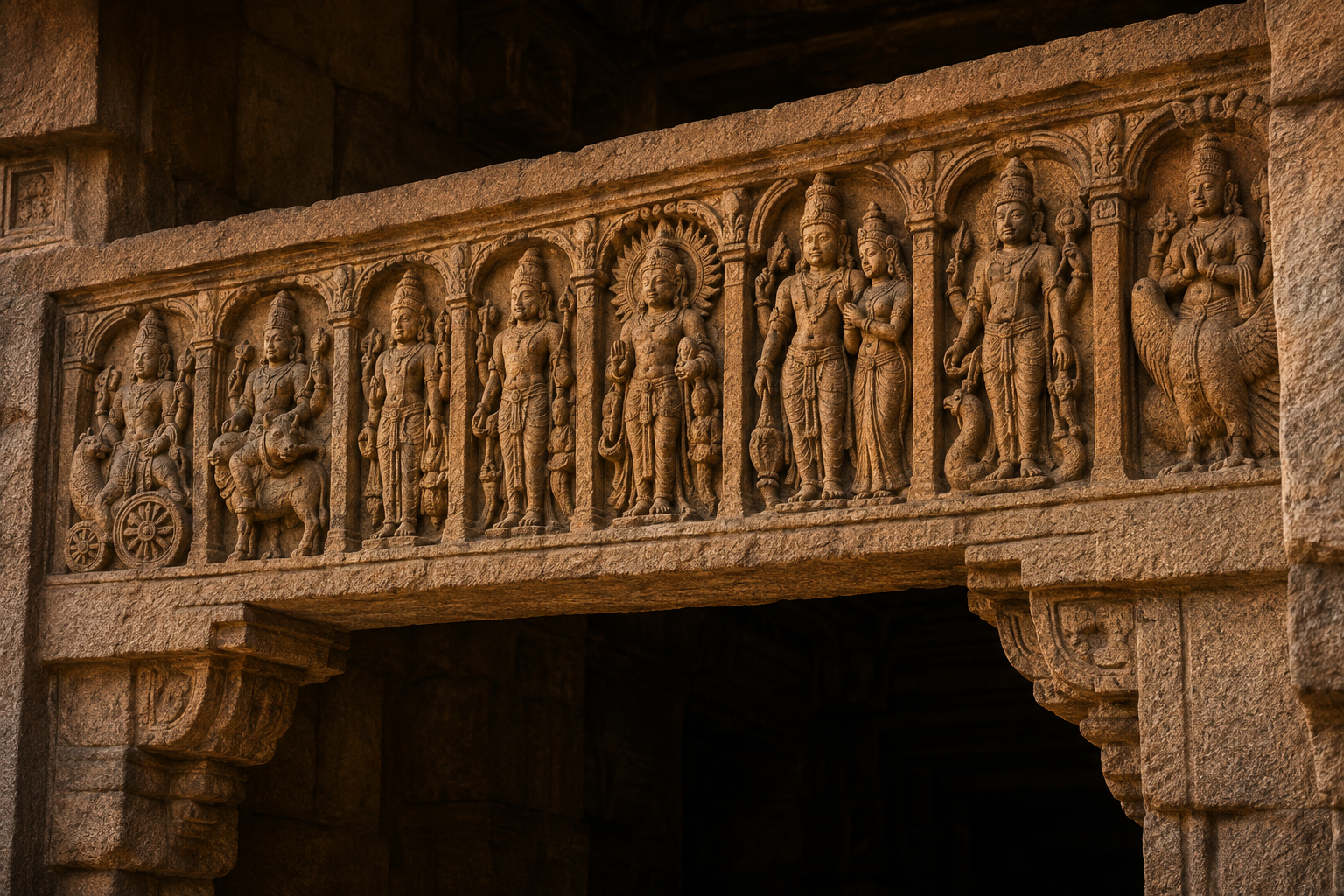
You are looking at a temple sculpture, photograph, or catalogue entry in which a female figure associated with Shukra is named Sukriti. Your immediate problem is not merely remembering the name. It is knowing what the identification means, how secure it is, and what you can responsibly infer from it.
The safest rule is simple: identify the relationship before interpreting the details. Sukriti is not another graha and should not be casually described as a Hindu version of the Greco-Roman Venus. She belongs to the sculptural setting as Shukra’s consort.
The shortest accurate identification
In Hindu temple iconography, Sukriti is identified as the divine consort of Shukra. Shukra belongs to the Navagrahas, the nine celestial regents, and corresponds to the planet Venus. He is also known as the Daitya Guru, the preceptor of the Asuras.
That compact answer contains three distinct claims, and keeping them separate prevents most misreadings:
- Cosmic identity: Shukra is one of the Navagrahas and is associated with Venus.
- Theological identity: Shukra is a teacher, especially known as the guru of the Asuras or Daityas.
- Sculptural relationship: Sukriti is identified as his consort.
Calling Sukriti a consort does not make her an incidental decoration. It identifies the relationship through which she is understood in this setting. At the same time, the presence of one such sculpture does not prove that every Hindu representation of Shukra must include her, or that every regional tradition presents the pairing identically.
Read the Navagraha ensemble before the individual figure
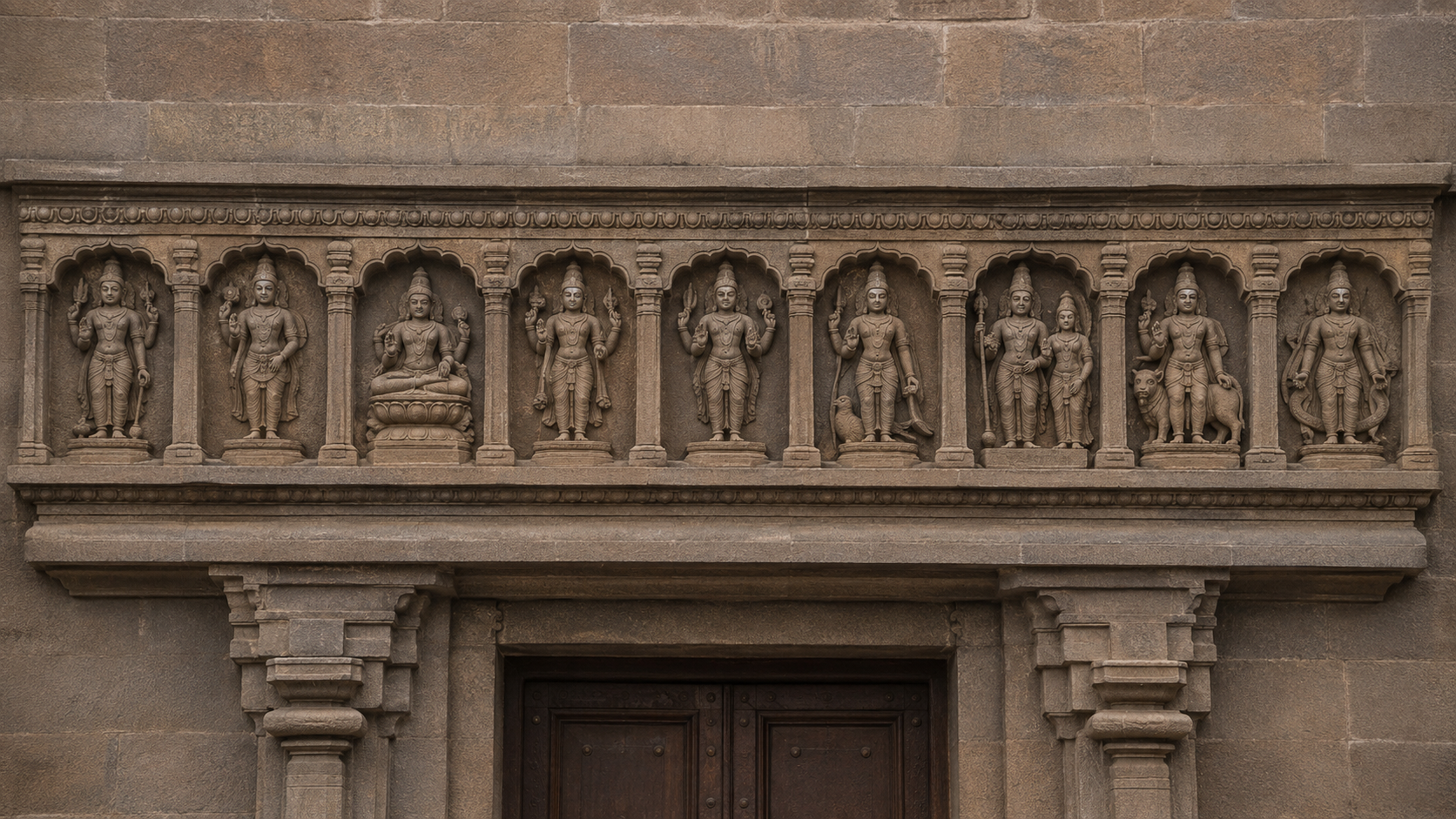
A viewer often begins with the smallest visible details: jewellery, hand position, headdress, vehicle, or an object held by the figure. Those details can matter, but they should not carry an identification that the available evidence does not support. When you do not have a documented attribute list for Sukriti, context is more reliable than an improvised visual checklist.
- Establish whether the image belongs to a Navagraha setting. Look at the whole panel, shrine, or sequence rather than a cropped companion figure.
- Establish Shukra’s identity independently. Use a temple label, inscription, catalogue record, or a documented identification of the ensemble. Do not identify the central deity as Shukra merely because you expect the accompanying figure to be Sukriti.
- Observe the relationship shown in stone. Note proximity, orientation, scale, gesture, and whether the figures form a clear pair. Record what you actually see before explaining what it signifies.
- Trace the name Sukriti to its basis. A traditional temple identification, inscription, or documented iconographic account is stronger than an unattributed caption copied between websites.
- Preserve uncertainty where it remains. If Shukra is secure but the companion’s personal name is not, describe her first as a consort or companion figure associated with Shukra.
This creates a useful hierarchy of confidence. You may be certain that an image belongs to a Navagraha group, reasonably certain that one member is Shukra, and less certain that an accompanying figure should specifically be called Sukriti. Those are not contradictory conclusions. They are different levels of identification.
If you are photographing the sculpture, include the entire ensemble before taking close-ups. A tight crop may preserve ornament clearly while destroying the very context needed to identify the figure.
What Sukriti’s presence changes in the reading of Shukra
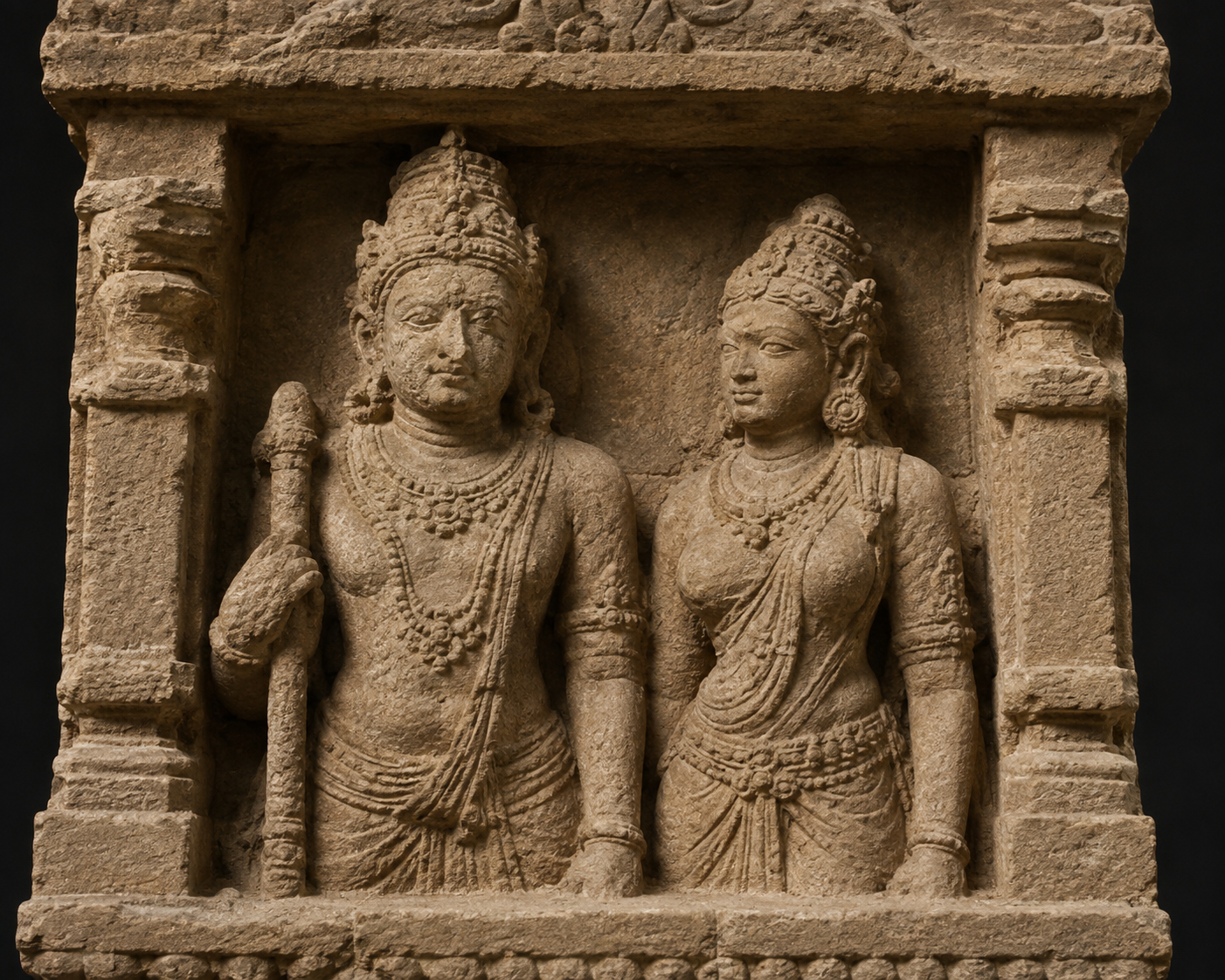
Shukra should not be reduced to a stone marker for an astronomical body. Within sacred cosmology, he is a celestial personality and teacher. His identity as the Daitya Guru is associated with learning that includes statecraft and medicine. The sculptural image therefore gathers astronomical, theological, intellectual, and relational meanings into one form.
Sukriti’s place as consort strengthens that relational dimension. The secure inference is modest but important: Shukra can be represented not as an isolated planetary sign but as a divine person situated within relationship. Temple sculpture often communicates through such arrangements. Position and association can carry meaning alongside objects and gestures.
Restraint matters here. It is tempting to assign Sukriti every quality that a modern reader associates with Venus: romantic love, physical beauty, fertility, luxury, or marital fortune. The stated relationship alone does not establish that complete symbolic programme. If a local tradition, inscription, or iconographic authority supplies such an interpretation, cite it. If not, do not turn an attractive possibility into a settled teaching.
The same caution applies to cross-cultural comparisons. Shukra corresponds astronomically to Venus, but that does not make Sukriti “the goddess Venus,” nor does it make the pair interchangeable with figures from Roman or Greek religion. Planetary correspondence and theological identity are different categories.
How to caption or teach the sculpture responsibly
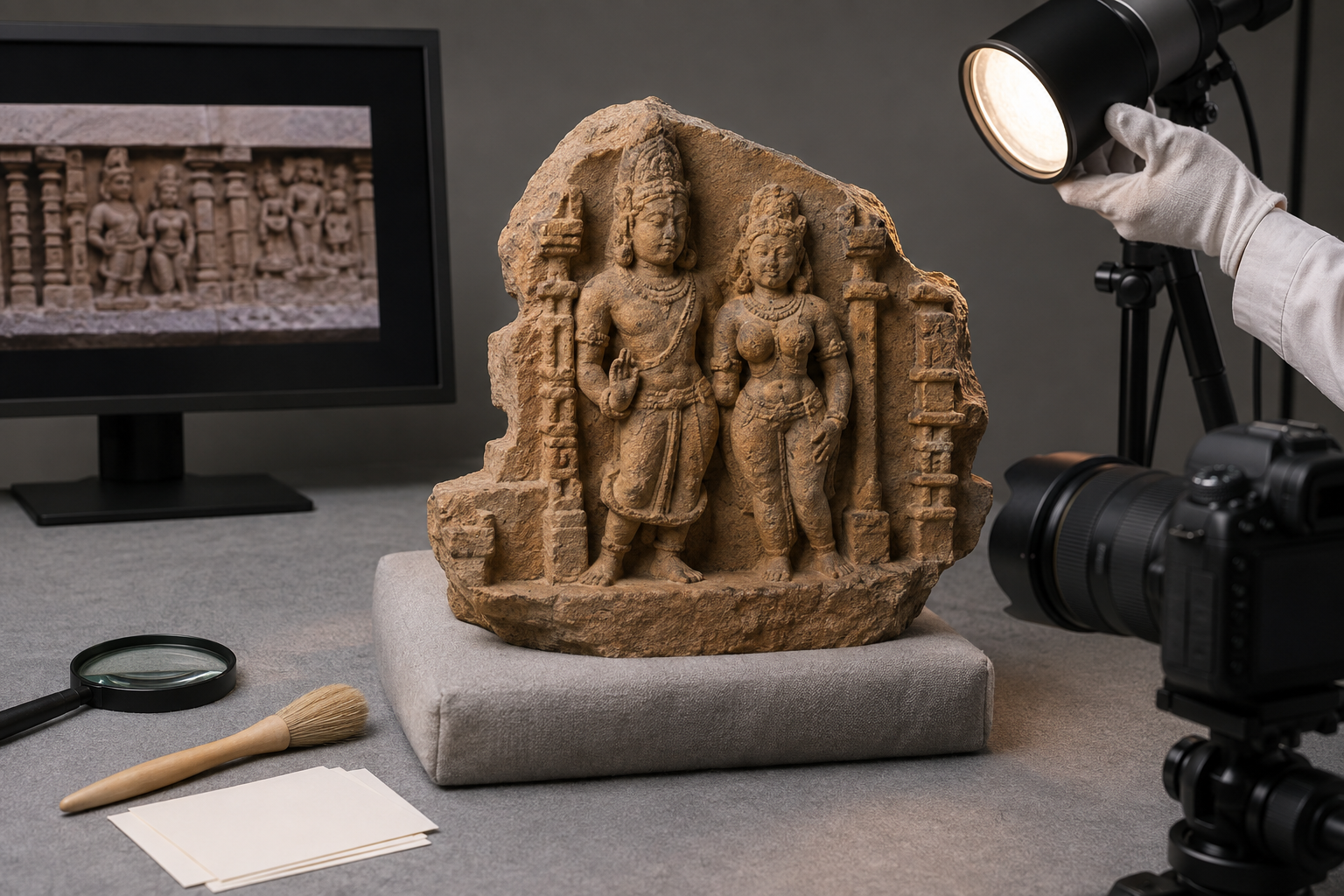
A useful caption tells the reader what is visible, what tradition identifies, and where uncertainty begins. It should not conceal the chain of identification behind a confident-sounding name.
- When both figures are securely identified: “Shukra with his consort Sukriti in a Navagraha sculptural setting. Shukra is the celestial regent associated with Venus and is known as the Daitya Guru.”
- When Shukra is secure but the companion’s name depends on a particular record: “Shukra with a consort figure identified in this tradition as Sukriti.”
- When only the relationship appears secure: “Shukra with an accompanying female figure, probably represented as his consort; the personal identification requires confirmation.”
For a museum note, lecture slide, archive, or social-media explanation, record the following information with the image:
- the temple or collection name, if known;
- the sculpture’s location within the temple or architectural programme;
- whether it survives as part of a complete Navagraha group;
- the basis on which the principal figure is identified as Shukra;
- the basis on which the companion is named Sukriti;
- whether damage, restoration, or cropping has removed relevant context.
This method avoids four common errors: calling Sukriti another planetary deity, treating an undocumented ornament as her fixed emblem, presenting one regional image as a universal rule, and importing meanings from the Western goddess Venus merely because the same planet is involved.
Key takeaways
- Sukriti is identified in Hindu temple sculpture as the consort of Shukra.
- Shukra, not Sukriti, is the Navagraha associated with the planet Venus.
- Shukra’s identity also includes his role as Daitya Guru, the preceptor of the Asuras.
- Identify the Navagraha ensemble and Shukra before assigning the name Sukriti to a companion figure.
- Separate what the sculpture visibly shows from what a temple tradition, inscription, or catalogue supplies.
- Do not build an elaborate theology of Sukriti from the modern associations of Venus alone.
The next time you encounter this pairing, begin with a photograph of the complete sculptural setting and write down the basis for each name. That small discipline preserves both the integrity of the temple image and the distinction between a careful identification and an attractive guess.
References
