

You may have encountered a temple plan, a diagram of the dikpalas, or advice about arranging a shrine and wondered what a directional assignment actually means. Is it a building rule, a ritual instruction, a description of nature, or a symbol for inner practice?
That distinction matters. Vayu in the northwest and Agni in the northeast can teach you how movement and transformation are held within sacred space, but a symbolic map should not be turned automatically into a universal architectural command.
Start with the map, not the directional slogan
A dikpala is a guardian or sustaining power associated with a direction. In this way of seeing, direction is more than a compass bearing. It helps organize space by quality, relationship, and consequence.
Three different layers are often compressed into a statement such as “Vayu belongs in the northwest”:
- The physical layer: where sunlight appears, how air moves, and where water tends to collect.
- The symbolic layer: the quality represented by a deity or natural power.
- The applied layer: what a particular ritual, temple tradition, or architectural system asks you to do.
Do not assume that the first two layers automatically produce the third. Observing air movement does not by itself establish a ritual rule. A symbolic association does not by itself tell you where to place a flame, doorway, altar, or room.
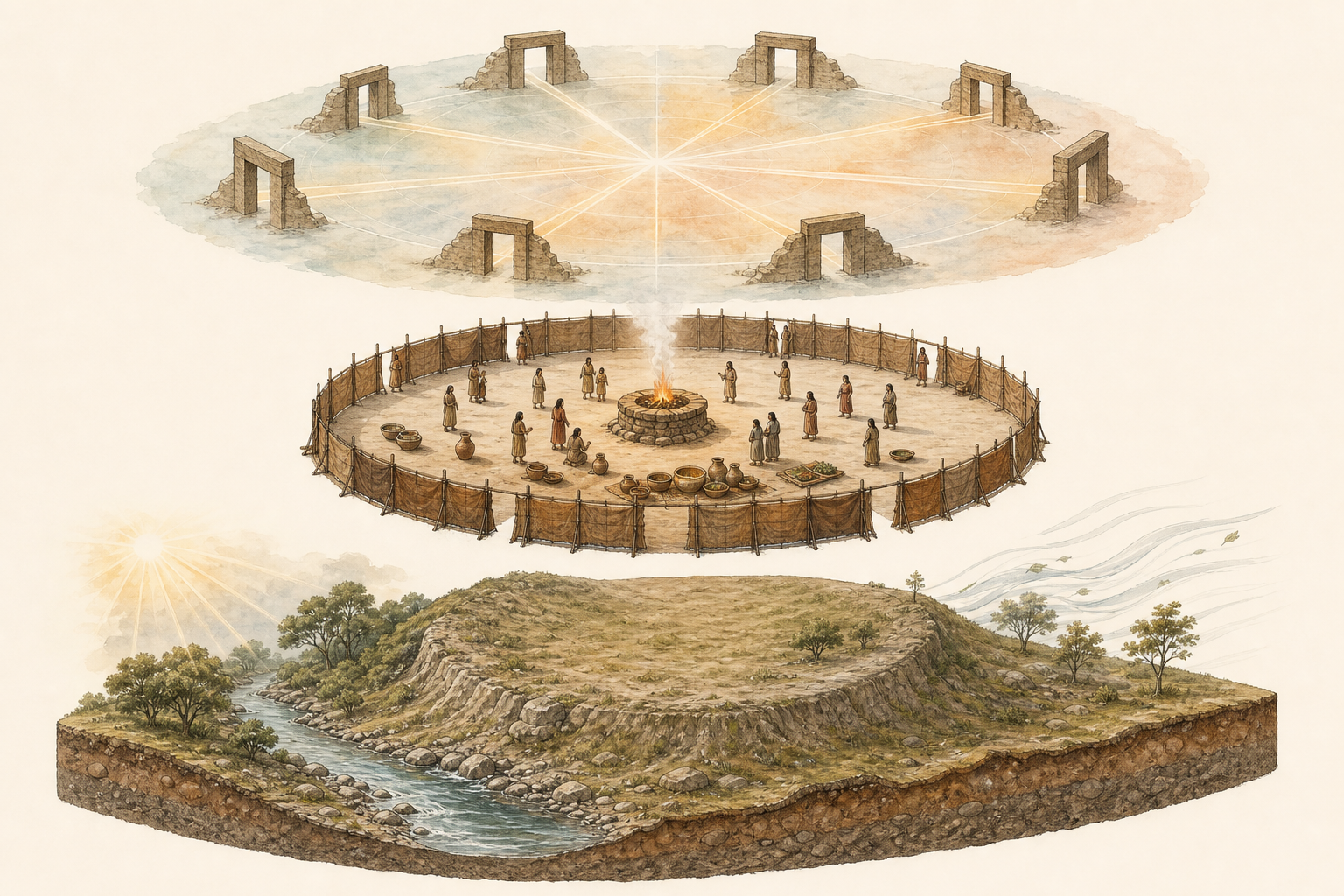
Direction became tangible when settled communities could repeatedly notice where the sun rose, where winds moved, and where water gathered. Sacred orientation gives those recurring observations a larger meaning: the ground beneath you becomes an ordered field rather than an interchangeable surface.
When you meet a directional claim, therefore, ask which layer it belongs to. If no ritual lineage, textual framework, or architectural method is named, read it first as symbolism. That one habit will prevent most overconfident interpretations.
Vayu and Agni are active powers, not decorative labels
Vayu is experienced through movement. Air circulates, carries, presses, enters, departs, and changes direction. Breath makes that power intimate: what moves through the world also moves through the body.
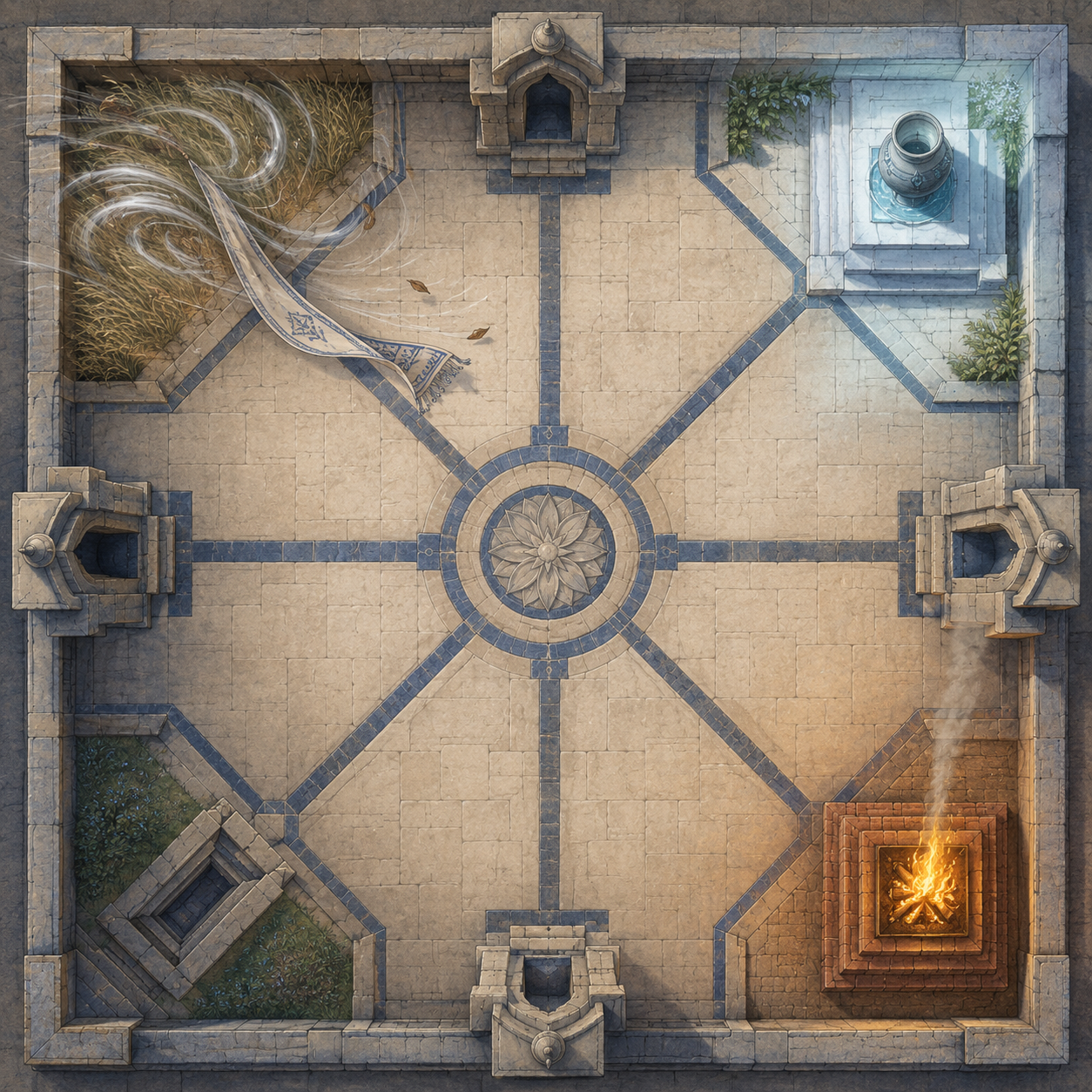
Placing Vayu in the northwest invites you to read that corner in terms of passage and circulation. Northwest is not simply “the Vayu box” on a floor plan. It can direct your attention toward what is arriving, what is leaving, and whether movement through a space is free, scattered, obstructed, or disciplined.
Agni acts differently. Fire gives heat and light, consumes fuel, and changes the condition of what it touches. Its symbolism therefore concerns transformation rather than movement alone. In sacred action, Agni should be approached as a power that makes change visible and consequential, not merely as a convenient emblem for energy.
The directional scheme considered here associates Agni with the northeast. Read that placement as an invitation to ask what must be illuminated, refined, or transformed at that edge of the sacred field. Do not convert it into an instruction to place an open flame in a northeast corner. Actual fire use belongs to a defined ritual setting and must also meet ordinary requirements of ventilation, clearance, supervision, and safety.
This distinction gives you a reliable test. If the meaning remains intelligible without moving furniture or lighting a lamp, you are still working at the symbolic level. If someone tells you to alter a building or ritual, you have entered the applied level and should ask which tradition authorizes that instruction.
Read wind and fire as a relationship
The deeper lesson appears when Vayu and Agni are read together. Wind changes the behavior of flame. It may strengthen a fire, direct it, scatter it, or extinguish it. Fire, meanwhile, makes otherwise invisible air movement perceptible through the direction and intensity of its flame.
That physical relationship becomes a disciplined symbolic question: how should movement serve transformation without turning into disorder?
Vayu without a governing purpose can be read as dispersal. Agni without restraint can be read as uncontrolled consumption. Held within an ordered sacred field, movement and transformation cease to be random forces. Each is given a place, a boundary, and a relationship to the whole.
This is why directional symbolism should not be reduced to a catalogue of favorable and unfavorable corners. A living sacred map asks how distinct powers coexist. It trains you to notice proportion: movement must not overwhelm stability, and transformation must not destroy the order it is meant to renew.
You can use this relationship as a contemplative diagnostic. When an undertaking has plenty of motion but no meaningful change, Vayu has become activity without Agni. When change is pursued with no attention to timing, circulation, or consequence, Agni has been separated from the regulating presence of Vayu. The point is not to predict events from a compass. It is to recognize an imbalance in how you are acting.
Use a five-step method to interpret sacred direction
When you examine a shrine, temple diagram, ritual enclosure, or directional teaching, work through these steps before drawing a conclusion:
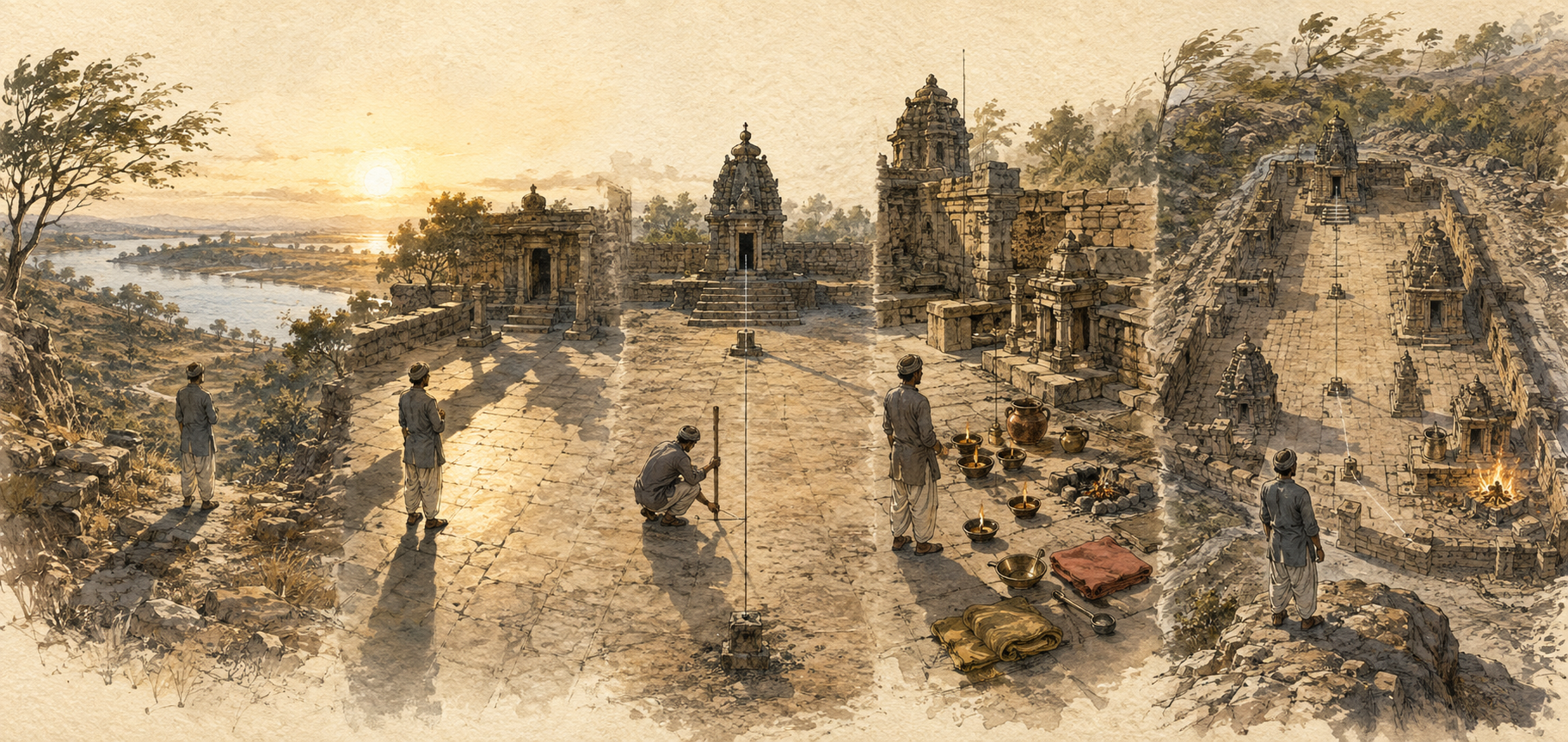
- Establish the orientation. Find north on the actual plan. Do not assume that the top of an image is north or that your viewpoint determines the sacred orientation.
- Name the system being used. Ask whether the map belongs to a particular ritual, architectural, regional, sectarian, or interpretive tradition. “Vedic” by itself is too broad to settle every directional detail.
- Separate presence, quality, and command. A deity associated with a direction is the presence. Movement or transformation is the quality being contemplated. A direction-specific building or ritual act is a command. These are related, but they are not interchangeable.
- Read relationships before judging locations. Ask how Vayu and Agni affect one another and how both serve the integrity of the entire space. This reveals more than labeling either corner as simply good or bad.
- Make the smallest appropriate application. For contemplation, you might observe where movement in your life needs purpose or where transformation needs restraint. For a permanent shrine, temple, or building alteration, seek guidance from someone competent in the specific tradition rather than relying on an isolated diagram.
This method protects both seriousness and flexibility. It allows the symbolism to work on your attention now, while reserving ritual and architectural decisions for the context in which their rules can be interpreted properly.
Key takeaways
- Directional symbolism organizes sacred space through qualities and relationships, not compass labels alone.
- Vayu in the northwest directs attention to movement, circulation, passage, and the discipline of what comes and goes.
- Agni in the northeast, within the scheme discussed here, directs attention to illumination, consequence, and transformation.
- Wind and fire are most useful when read together: movement can support transformation, but it can also scatter or overwhelm it.
- A symbolic correspondence is not automatically a construction rule or ritual instruction.
- Before making a permanent change, identify the particular tradition and consult someone qualified to apply it.
The next time you stand in a sacred space, begin with observation. Find the directions. Notice how light, air, movement, and human activity meet the boundaries of the place. Then ask what kind of order the space is training you to perceive.
That is the practical value of Vayu and Agni: they turn orientation into attention. Start with the map, read the powers in relationship, and let action follow only when the tradition and purpose are clear.

References
