
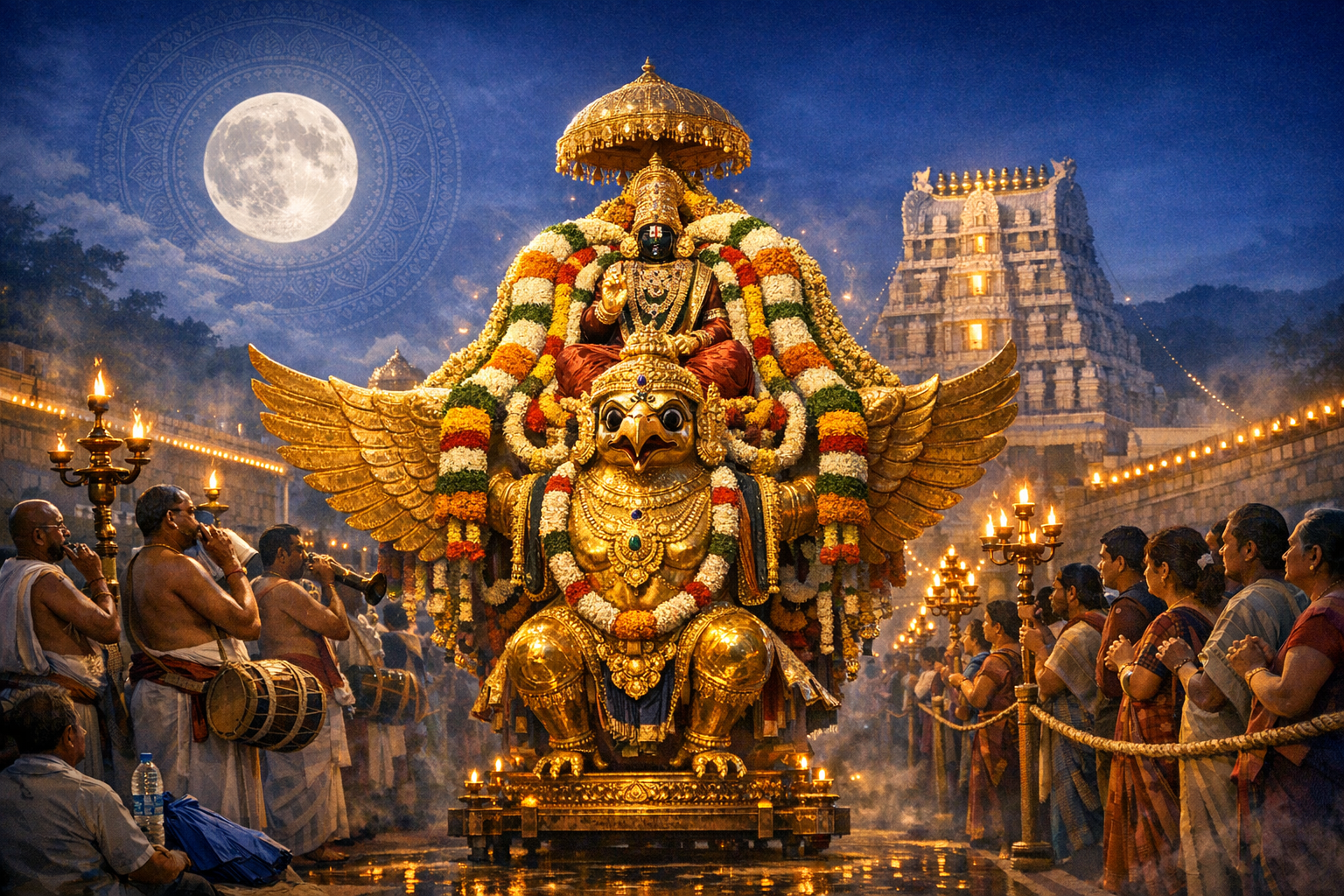
Srivari Pournami Garuda Seva is the revered full-moon (Purnima) procession of Sri Venkateswara Swamy at Tirumala, when the Lord is taken in grandeur on the Garuda Vahanam around the four Mada streets. The synergy of Purnima’s radiance with the sacred mahadwara of the hill temple creates a deeply devotional ambience that pilgrims across India and the world plan for months in advance. This guide consolidates the 2026 dates, explains how they are determined by the Purnima tithi, and outlines practical ways to experience the seva with bhakti and ease.
Based on the Purnima tithi (Indian Standard Time) and customary Tirumala Tirupati Devasthanam (TTD) practice, Srivari Pournami Garuda Seva in 2026 is expected on the following civil dates: 1 May (Friday), 31 May (Sunday), 29 June (Monday), 29 July (Wednesday), 28 August (Friday), 26 September (Saturday), 26 October (Monday), 24 November (Tuesday), and 24 December (Thursday). Two occurrences in May reflect a natural lunar-cycle feature rather than a special insertion. These dates are subject to confirmation via the monthly TTD calendar and may be adjusted if a Purnima overlaps with major temple events or operational requirements.
How these dates are derived is technical yet intuitive when viewed through the lens of the traditional panchang. Purnima tithi is the lunar day during which the Moon’s elongation from the Sun attains the 180° opposition. When Purnima spans two civil dates in IST, TTD typically schedules the Garuda Vahana Seva on the evening when Purnima prevails for a significant duration over Tirumala. In edge casessuch as late-night transitions, coinciding Brahmotsavam events, or Pavitrotsavamthe procession may be integrated with or shifted around the larger festival calendar, as per TTD’s official notification.
The ritual significance of Garuda Vahana Seva is profound in the Sri Vaishnava tradition. Garuda, the divine vahana of Vishnu, symbolizes steadfast devotion (bhakti), strength, and the swift conveyance of the Lord’s grace. On Purnima, when mind and lunar cycles are traditionally considered most conducive to contemplation and stotra, devotees witness Sri Venkateswara Swamy’s anugraha darshanam outside the sanctum as the procession gracefully circumambulates the Mada streets.
On the day of the seva, pilgrims can expect a post-sunset procession accompanied by veda parayana, mangala vadyas, and coordinated participation by temple functionaries. The atmosphere is devotional yet orderly, with security and volunteer teams facilitating movement through designated corridors. Photography rules, movement controls, and cordons are generally in place to preserve decorum and safety; compliance ensures everyone has a meaningful darshan.
Practical planning helps transform a yearning for darshan into a serene experience. Accommodation on the hill can be tight on Purnima dates, so early booking through TTD’s official channels is prudent. Weather considerations matter: late June through September coincides with the monsoon, and showers can affect mobility and vantage points along the route. Comfortable footwear, light rain gear in monsoon months, and water are sensible; respectful attire appropriate for temple premises is essential year-round.
Crowd movement during Garuda Vahana Seva typically concentrates along the four Mada streets. Families, senior citizens, and children often seek relatively less-crowded stretches slightly off the most popular junctions; local police advisories and TTD volunteer guidance on the day offer real-time cues. Arriving well ahead of the procession, identifying exit routes, and keeping essentials minimal can help ensure calm passage to and from viewing areas.
For those keen on the devotional rhythm of the evening, participating in Sahasra Deepalankara Seva on eligible days or joining the collective chanting of Vishnu sahasranama and Govinda nama smarana in the precincts prior to the procession can align the mind beautifully. Many devotees observe a Purnima vrata, satvika ahara, and heightened japa on these dates; aligning personal sadhana with the temple’s public utsava enhances the entire pilgrimage.
Beyond its Vaishnava heart, the contemplative spirit of Purnima resonates across dharmic traditions. Full-moon observances are historically connected with reflection and ethical living in Hinduism, Buddhism, Jainism, and Sikhism. The shared emphasis on compassion, seva, and inner clarity under the full moon fosters a sense of unity in diversityan ethos that enriches the cultural and spiritual fabric of the subcontinent.
Important clarifications for 2026 include the following. First, two Purnima civil dates in May (1 May and 31 May) arise from the synodic month length; this is normal. Second, if a Purnima overlaps with significant festivals (for example, during the broader Brahmotsavam window), TTD may integrate or adjust the procession time; official notifications prevail. Third, while the dates above are anchored to the Purnima tithi in IST, local viewing conditions and route management depend on crowd levels and weather on the day.
In essence, Srivari Pournami Garuda Seva offers an accessible, deeply moving darshan of Sri Venkateswara Swamy amid Tirumala’s storied ritual landscape. Aligning travel and sadhana with the full-moon calendar, keeping an eye on TTD’s monthly schedule, and approaching the event with patience and reverence will allow devotees to experience both the grandeur of the procession and the quiet transformation it inspires.
Inspired by this post on Hindu Pad.
