
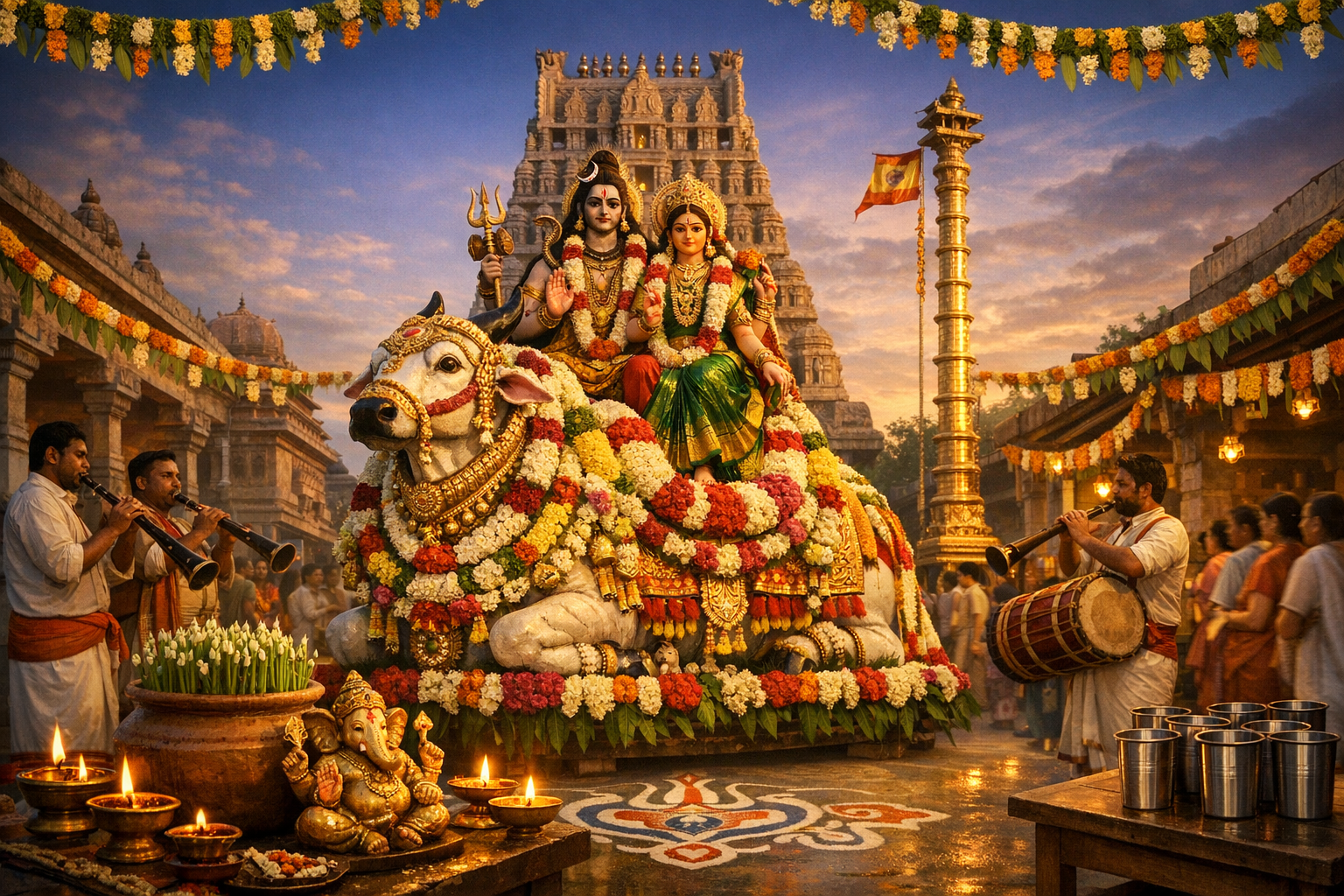
The annual Brahmotsavams of Sri Agastheeswara Swamy, celebrated along with Goddess Maragadavalli and closely associated with the Sri Kalyana Venkateswara Swamy Temple at the Narayanavanam Mandal headquarters, will be observed with devotion from April 21 to 30. As per the programme, Ganapati Puja and Ankurarpanamthe traditional preliminary ritualare scheduled for April 20 between 6:00 PM and 8:30 PM. This announcement offers devotees a clear window to plan darshan and participate in the sacred proceedings at Narayanavanam, near Tirupati in Andhra Pradesh.
Situated in a historically resonant landscape, Narayanavanam is revered both for its Shaiva sanctity at the Agastheeswara temple and its Vaishnava heritage at the Sri Kalyana Venkateswara Swamy Temple. The dual presence of these sacred centers encapsulates a living tradition of dharmic harmony, where practices and sentiments of reverence flow seamlessly across denominational lines while remaining faithful to agamic prescriptions.
At the heart of this celebration stands Sri Agastheeswara Swamy, a Shivaic form linked in popular memory with the legendary sage Agastya. Goddess Maragadavalli, the consort, embodies Śaktiauspicious energy that completes the divine pair. For many families who return each year, the Brahmotsavam is not merely a calendar event but a continuum of shared faith, gratitude, and intergenerational remembrance nurtured through prarthana, seva, and satsang.
Brahmotsavam, in the South Indian temple context, denotes a grand sequence of utsava-kramas (festival procedures) grounded in the agamas and temple-specific sampradaya. While the etymological and mythic associations of “Brahma” are better known in Vaishnava settings, many Shaiva kshetras likewise conduct Brahmotsavam as a comprehensive temple energization rite (kshetra-prana-pratishthana in a periodic sense) that seeks kshema and shanti for the community. The ritual architecture typically emphasizes invitation of divinities, consecratory invigoration, public processions of the utsava-murtis, and prayers for well-being and ecological balance.
The preliminary rites scheduled on April 20Ganapati Puja and Ankurarpanamestablish the sanctity and intent of the festival. In Ganapati Puja, the deity is invoked as Vighneshwara to remove obstacles; this is accomplished through mantras, naivedya, and the offering of durva, modaka, and other traditional upacharas. Ankurarpanam, literally the “sowing of seeds,” places sprouted navadhanyas in sanctified soil, symbolizing fertility, renewal, and the germination of auspicious results for devotees and the larger community. These actions, conducted in an ordained muhurta, ritually announce the festival’s commencement in harmony with agamic timekeeping.
Following preliminary rites, Brahmotsavams typically proceed with events such as Dhwajarohanam (hoisting of the temple flag) to ritually proclaim the festival across realms, morning and evening vahana-sevas in which the utsava-murtis are taken in procession for darshan, and daily pujas including abhishekam and alankaram. In a Shaiva temple, Nandi symbolism often predominates, and the processional iconography reaffirms dharma, steadfastness, and the protective grace of Mahadeva and Śakti for the loka-sangraha (collective welfare). The concluding sequence usually features poornahuti and Dhwajavarohanam, marking ritual closure and thanksgiving.
Goddess Maragadavalli’s presence throughout the Brahmotsavams underscores the complementarity of Shiva and Shaktian ontological union celebrated in temple liturgy and classical commentaries alike. For devotees, darshan of the divine couple during festive alankaram carries a felt sense of inner steadiness (dharana), compassion (daya), and auspicious resolve (mangala sankalpa) that extends into personal and family life.
Beyond ritual orthopraxy, the Brahmotsavam nurtures a social and ethical fabric rooted in values that resonate across dharmic traditionsHinduism, Buddhism, Jainism, and Sikhism. Principles such as ahimsa, dana, seva, and satya find practical expression in orderly queues, compassionate volunteerism, and attention to shared spaces. Visitors from diverse lineages often report a palpable experience of unity-in-diversity as temple streets become sites of collective remembrance, music, and mindful celebration.
For those planning a yatra, Narayanavanam lies close to Puttur, with Tirupati serving as the major transit hub. Tirupati International Airport (Renigunta) and Tirupati railway station offer convenient access, while local buses and cabs connect pilgrims to Narayanavanam Mandal. Comfortable, modest attire in accordance with temple guidelines is advisable, along with early arrival for high-footfall rituals and care for children and elders during processions. As with many South Indian festivals, nadhaswaram and tavil music may accompany the utsavas, enhancing the immersive atmosphere.
Environmentally conscious participation adds an important layer of dharmic responsibility: minimizing single-use plastics, using designated footwear stands, and keeping prasad and water distribution areas clean reflect reverence for both the kshetra and shared community spaces. In many temple towns, anna-prasadam distribution accompanies major utsavas; where offered, disciplined queues and mindful consumption help ensure an equal and dignified experience for all.
Key dates to note: on April 20 from 6:00 PM to 8:30 PM, Ganapati Puja and Ankurarpanam will inaugurate the festival cycle. From April 21 to 30, the Brahmotsavams of Sri Agastheeswara Swamy and Goddess Maragadavalli will be celebrated with devotion in Narayanavanam Mandal. Devotees often find that attending the preliminary rites deepens the subsequent festival experience, aligning personal sankalpa with the temple’s sacred rhythm.
As schedules and local arrangements can be refined closer to the dates, it is prudent to check on-site or official announcements in the days leading up to the festival. The enduring strength of the Agastheeswara Swamy Temple Brahmotsavams lies in the confluence of precise agamic practice and an open-hearted culture of welcomequalities that continue to inspire returning pilgrims and first-time visitors seeking darshan, learning, and inner quietude.
The Brahmotsavam at Narayanavanam ultimately offers more than an itinerary of ceremonies; it offers a living encounter with a heritage that honors sacred time, community care, and spiritual inclusivity. In that spirit, the presence of Sri Agastheeswara Swamy and Goddess Maragadavalli during the utsavas becomes a shared blessinginviting reflection, gratitude, and renewed commitment to values that bind dharmic traditions together.
Inspired by this post on Hindu Pad.
