
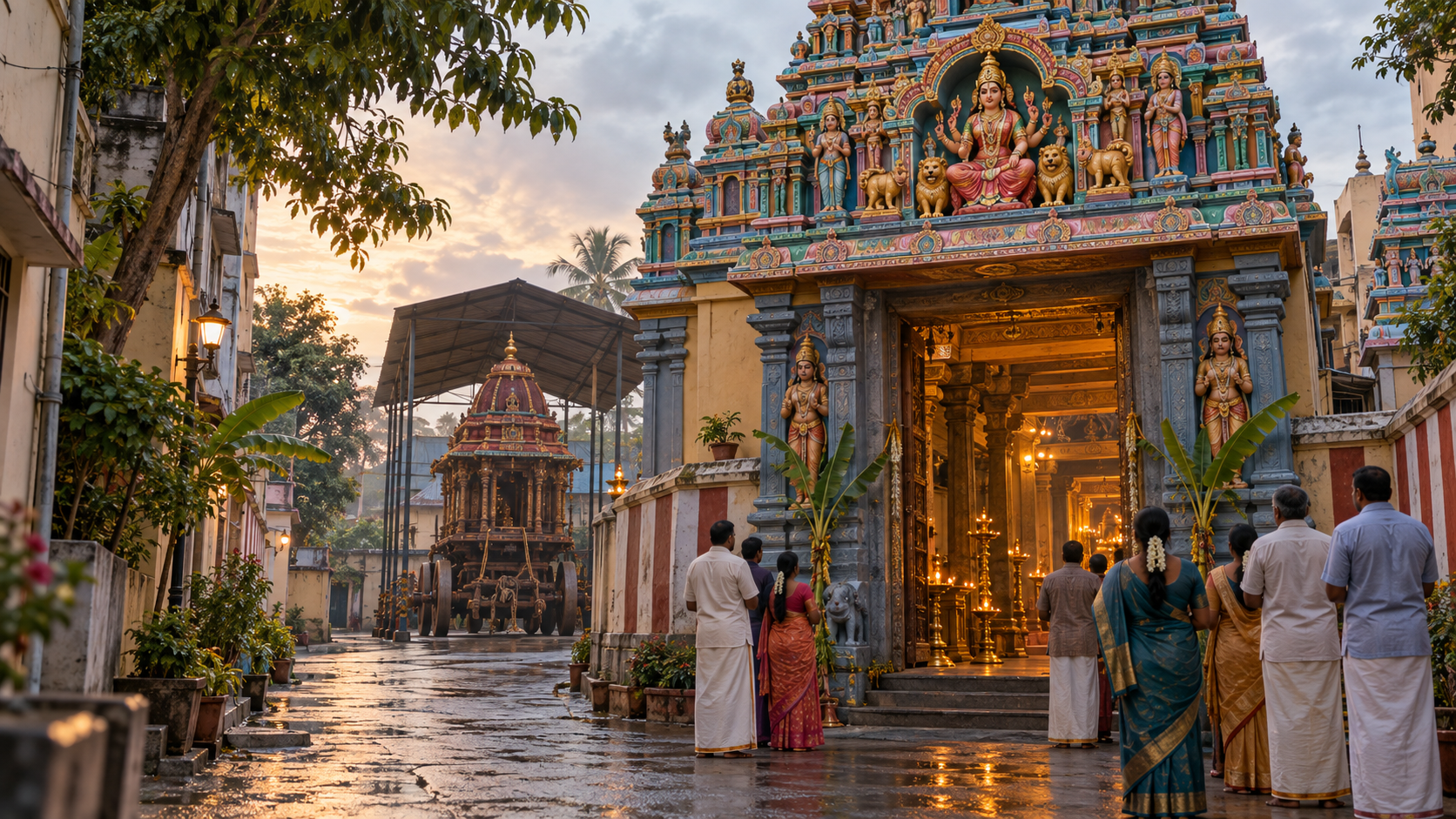
If this is your neighbourhood temple, or the Devi shrine your family depends on for regular worship, the problem is not abstract. You need to know when normal darshan can resume, why the annual temple car festival remains suspended, and who is responsible for removing each obstacle.
Devotees say that the annual car festival has not been conducted for three consecutive years and the main sanctum has remained closed for nearly a year. Renovation has reportedly been cited in connection with the festival, while ritual requirements have been cited in connection with the sanctum. These are serious disruptions, but they do not by themselves prove administrative neglect or misuse of temple funds. That distinction should guide every demand devotees make.
Begin with what is reported – and what is not proven
There are three different layers to the dispute, and collapsing them into one accusation will make it harder to obtain a useful answer.
- The reported disruption: Three consecutive annual car festivals have not taken place, and access to the principal sanctum has reportedly been unavailable for nearly a year.
- The explanations that require detail: Renovation, rituals and related religious requirements have been cited, but devotees are seeking a clear account of what remains unfinished and when restrictions can end.
- The concerns that require verification: Questions have been raised about maintenance, donations and renovation expenditure, but those financial concerns have not been independently established as misconduct.
This is more than a matter of careful wording. A demand for records is answerable; an unsupported allegation invites denial and shifts attention away from the closed sanctum. Say, for example, that you want the approved budget and expenditure examined. Do not say that money was misused unless documentary evidence establishes it.
The same discipline applies to delay. A prolonged closure deserves scrutiny, but duration alone cannot tell you whether the unresolved obstacle is structural, ritual, financial or administrative. The administration should identify the obstacle instead of leaving devotees to guess.
The sanctum and the car festival need separate decisions
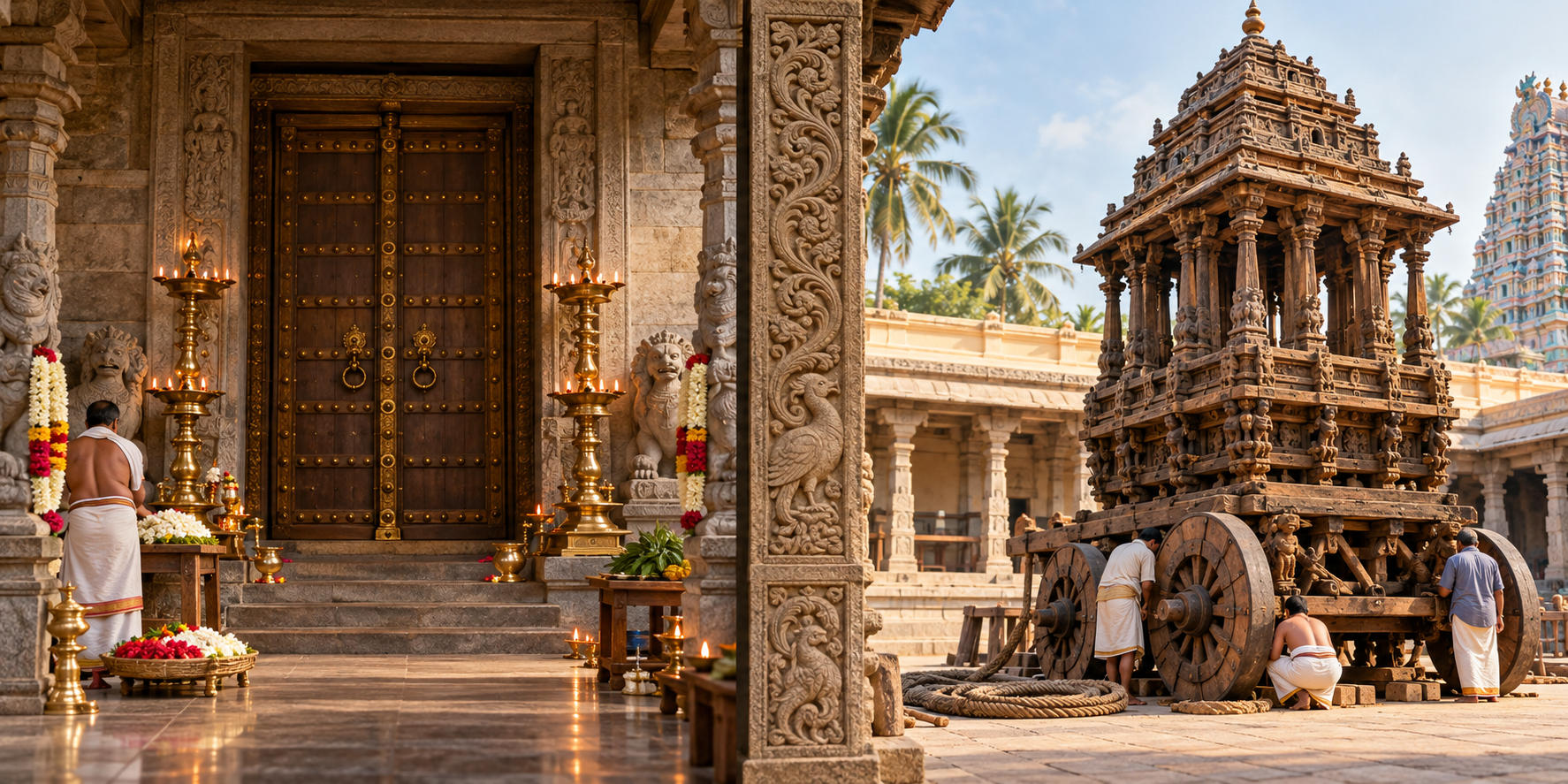
The main sanctum and the temple car festival are connected to the same religious institution, but they need not have the same technical, ritual or administrative dependencies. A general reply that renovation is continuing does not explain why each activity remains suspended.
For the main sanctum
Access to the principal deity lies at the heart of regular worship. If closure is necessary, devotees should receive a written answer to five specific questions:
- What precise condition or requirement currently prevents the sanctum from reopening?
- Is the remaining obstacle structural work, a safety clearance, a ritual or consecration requirement, or an administrative approval?
- Which religious, technical or administrative authority determines that the requirement has been satisfied?
- What work or ritual remains pending, and what event will mark its completion?
- What arrangements are available for darshan and regular worship until the sanctum reopens?
If more than one obstacle exists, each should be named separately. A ritual cannot be scheduled until building work is complete in some circumstances; an inspection may then be required before devotees can enter. That sequence should appear in the restoration plan rather than being compressed into the phrase pending work.
For the annual car festival
A temple car festival brings the Devi into the shared religious life of the community. After three consecutive suspensions attributed to renovation, devotees need more than another undated assurance.
- Which safety, structural, permission-related or religious requirement prevents the festival from being conducted?
- Has the temple car, its operating infrastructure and the proposed festival arrangement been assessed by the appropriate authorities?
- Which approval remains outstanding, and who is responsible for obtaining it?
- What changed, or failed to change, between the first missed festival and the third?
- Can any safe and ritually appropriate interim arrangement be considered while permanent work continues?
That final question is not a demand to bypass safety or tradition. It asks the religious and technical authorities to determine whether continuity is possible within those requirements. If it is not possible, devotees should be told exactly why.
A credible restoration plan has dates, dependencies and owners
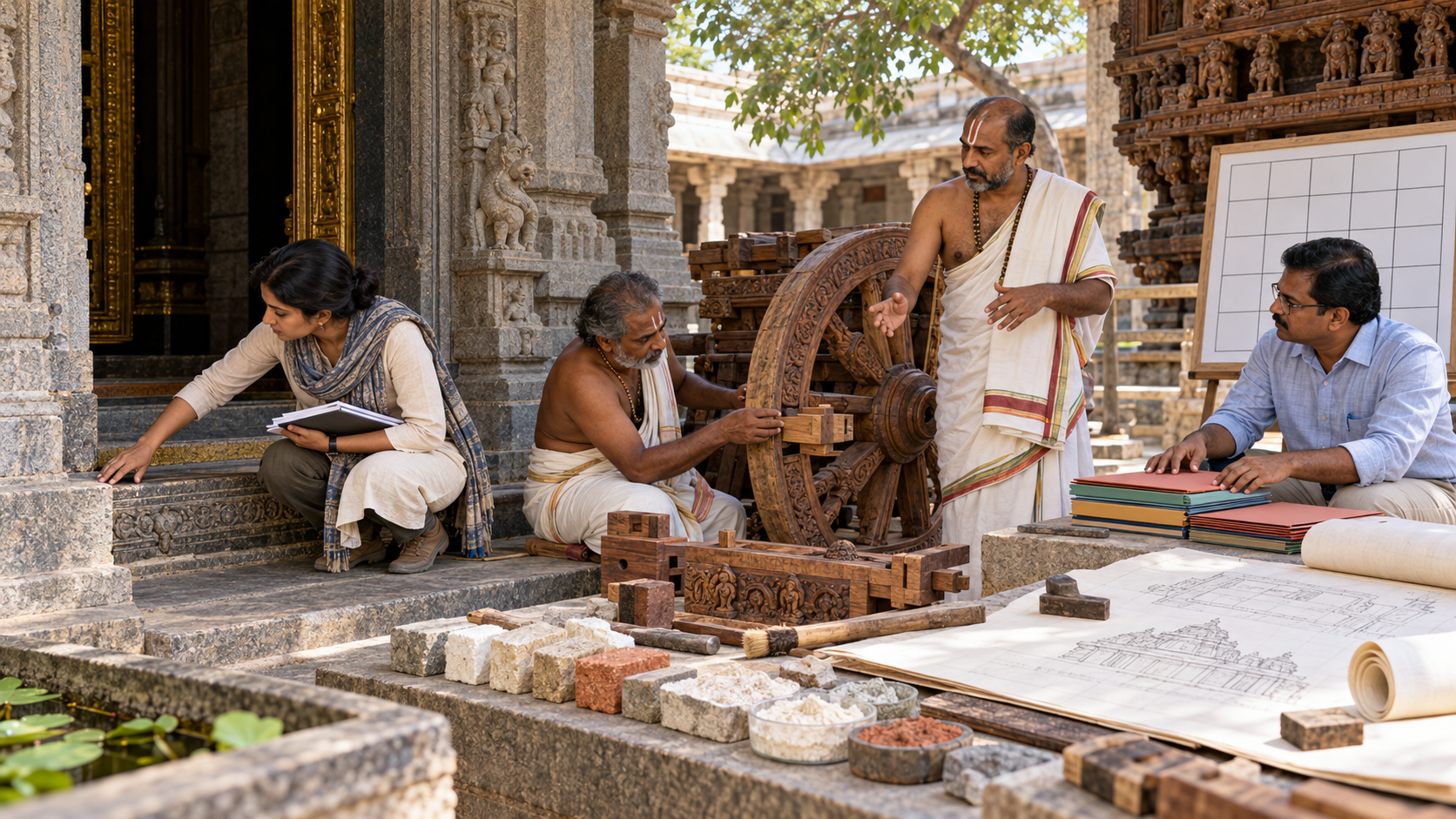
A completion promise is not a restoration plan. Devotees should ask for a short written status sheet that can be updated without ambiguity. It should contain:
- Approved scope: the renovation work that was authorised and the purpose of each major component.
- Starting point: when the work began and which restrictions were introduced at that stage.
- Completed stages: work already finished, inspected or accepted.
- Pending stages: unfinished construction, ritual requirements, inspections and approvals.
- Current blockers: the technical, financial, religious or administrative reason holding up each pending stage.
- Responsible authority: the agency, official or religious authority expected to resolve each blocker.
- Target dates: separate dates for completing physical work, performing any necessary rituals, receiving approvals, reopening the sanctum and deciding whether the festival can resume.
The dates may need revision if a genuine safety or technical problem emerges. That does not make dates pointless. A revised deadline accompanied by a stated reason allows devotees to distinguish a real obstacle from administrative drift.
It is especially important to separate the end of construction from the restoration of worship. Physical work can be complete while an inspection, consecration-related procedure or other religious requirement remains pending. If devotees receive only a construction date, they still do not have a reopening date.
Financial accountability starts with records, not insinuation
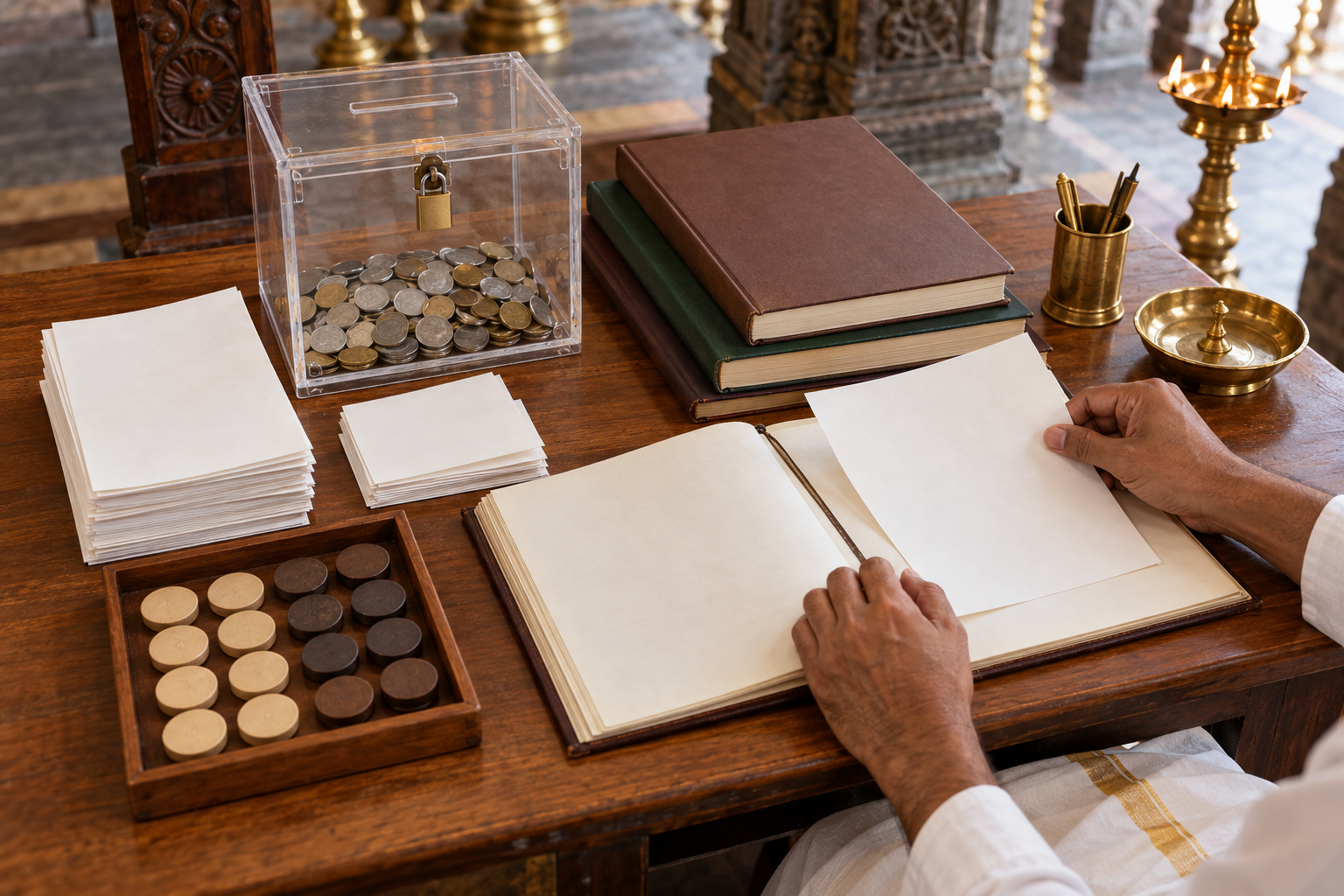
Donations offered for temple maintenance, worship and renovation carry religious as well as financial significance. Devotees therefore have a legitimate interest in asking the competent authorities to scrutinise the relevant accounts. The useful questions are documentary:
- What renovation budget was approved?
- What donations, allocations or other funds were received for the work?
- How much has been spent, and against which approved components?
- Which agencies or individuals are supervising the renovation?
- What work has been completed against the expenditure recorded?
- What amount and work remain outstanding?
- Has an inspection or financial review been conducted, and can its findings be communicated to devotees?
The purpose is verification. Devotees have called for scrutiny of renovation expenditure, donations and outstanding work, but a question about money is not evidence that money disappeared. Publicly accusing named people without verified records can damage reputations and distract from the practical goal: completing the work and restoring worship.
A formal inspection can connect the financial and physical records. It can establish what was approved, what was paid for, what is visible on site, what remains incomplete and whether the stated delay has a documented basis. That is far more useful than an exchange of allegations.
How devotees can turn concern into an answerable request
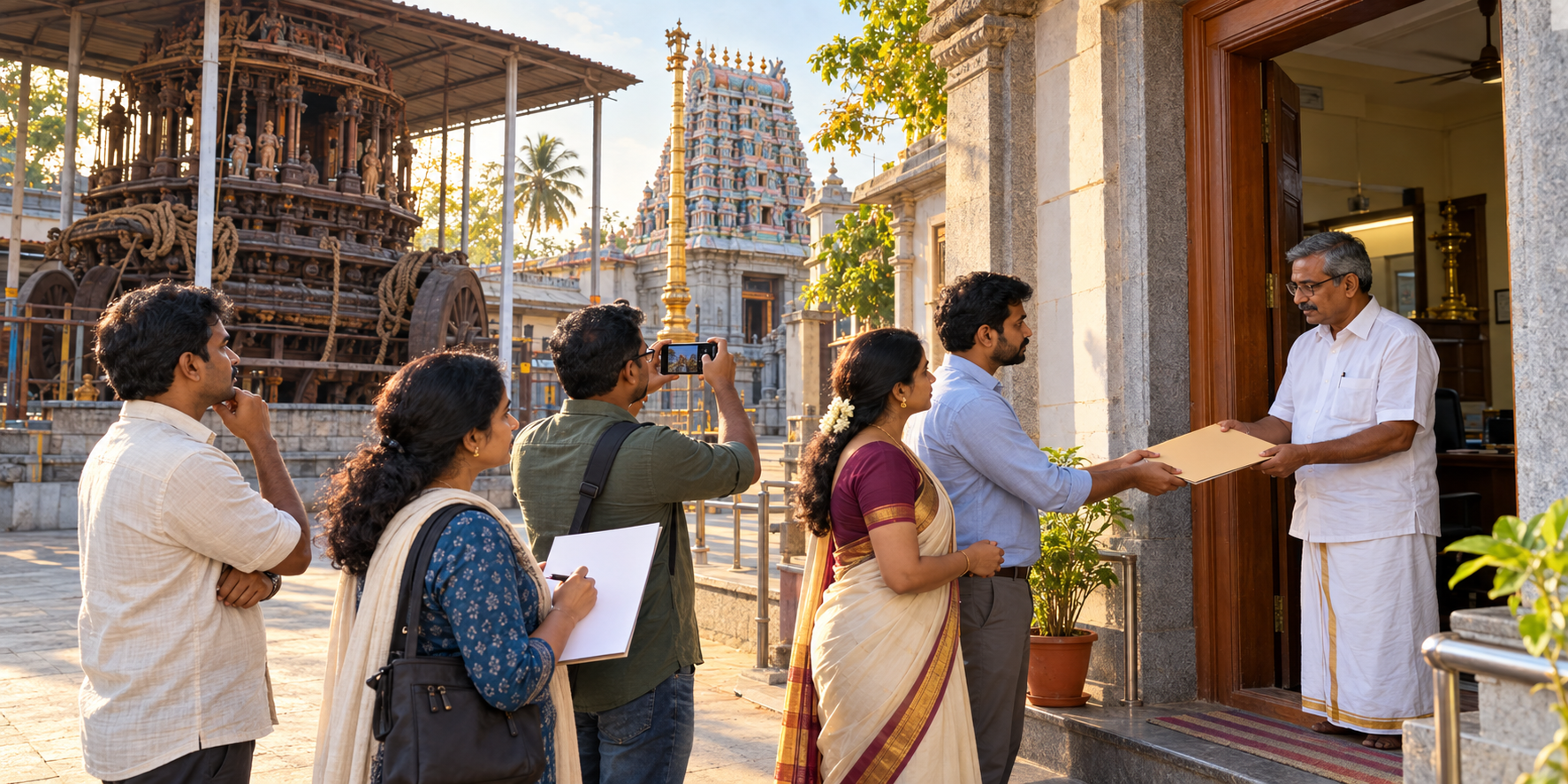
You do not need to settle every disputed fact before asking for accountability. You do need a request precise enough that an authority cannot answer it with a general assurance.
- Prepare a restrained chronology. Record the sequence of missed festivals, the period during which the sanctum has reportedly been closed, the explanations communicated to devotees and any observable changes in access. Mark uncertain dates as uncertain.
- Submit one numbered request. Send the same set of questions to the temple administration and the relevant Hindu Religious and Charitable Endowments officials. Ask each recipient to clarify its jurisdiction and responsibility.
- Request a site inspection and written progress report. The report should identify completed work, outstanding defects or requirements, expenditure status and the approvals still needed.
- Ask for an update schedule. If an immediate reopening date cannot be given, the administration should state when the next public status update will be issued and what decision is expected by then.
- Keep the record coherent. Retain copies, submission dates, acknowledgements and replies. When several devotees participate, use the same factual chronology so that inconsistencies do not weaken the request.
Suggested wording: Please provide the approved scope and budget for the renovation, work completed and pending, reasons for delay, officials or agencies responsible for each pending step, arrangements for worship during closure, and target dates for reopening the main sanctum and restoring the annual car festival.
If the reply cites safety, ask for the condition that must be remedied and the authority that will sign off on it. If it cites ritual requirements, ask which requirement remains and who determines its completion. If it cites lack of funds, ask for the approved budget, receipts, expenditure and cost of outstanding work. Each explanation should lead to a verifiable next step.
Key takeaways
- The reported sanctum closure and the suspension of the temple car festival are two distinct problems and require separate explanations.
- Devotees should ask for the exact pending work, decision-making authority and target date attached to each restriction.
- Construction completion, ritual completion and reopening may occur on different dates; the plan should show all three.
- Financial concerns should be pursued through budgets, receipts, expenditure records, inspection and documentary verification.
- The strongest request is written, numbered, factual and directed to both the temple administration and the relevant HR&CE authorities.
Your next step is to put one clear request in writing and ask for a dated response. The aim is neither an unsafe reopening nor the bypassing of necessary ritual requirements. It is to prevent temporary restrictions from becoming indefinite through silence. A temple’s physical preservation and its living worship must return to the same plan.
References

Leave a Reply
You must be logged in to post a comment.