

When someone asks why milk is being poured over a Shiva Lingam while a child needs food, you do not have to choose between an embarrassed defence of ritual and the abandonment of abhishekam. Ask the practical questions first: How much milk is used in worship? How much remains sealed? Where does each portion go? Who can verify the answer?
A dharmic response has two duties. It must respect the sacred meaning of the offering, and it must prevent carelessness with food. Devotees can support both duties by offering deliberately. Temples can support them by separating, redistributing and documenting what they receive.
Sacredness raises the standard of care
Abhishekam is the ritual bathing of a murti or sacred form. In Shiva worship, the Lingam is bathed as an act of consecration, purification, gratitude and surrender. Water and milk are among the traditional substances used. Milk, curd, ghee, honey and sugar together form the familiar panchamrita used in many ritual settings.
The offering is not valuable because food has been destroyed. Its meaning lies in relinquishing something valued and returning it to its sacred source. The subsequent distribution of theertham or prasada therefore does not diminish the worship. Sharing can complete the movement from receiving, to offering, to giving.
That meaning does not give anyone permission to handle milk negligently. A perishable substance remains perishable after it enters a temple. If anything, designating it as sacred should produce greater care, cleaner handling and clearer responsibility.
This is where ritual and seva meet. Dana in Hindu, Buddhist and Jain life, and the public service embodied in Sikh langar, do not erase the real theological differences among these traditions. They do show a shared dharmic refusal to separate spiritual aspiration from responsibility toward living beings.
The right ethical test is therefore not whether milk ever touches a Shiva Lingam. It is whether the whole offering is handled with reverence: the portion used in worship, the unopened surplus, the prasada and anything no longer suitable for consumption.
Separate the milk before it becomes a problem
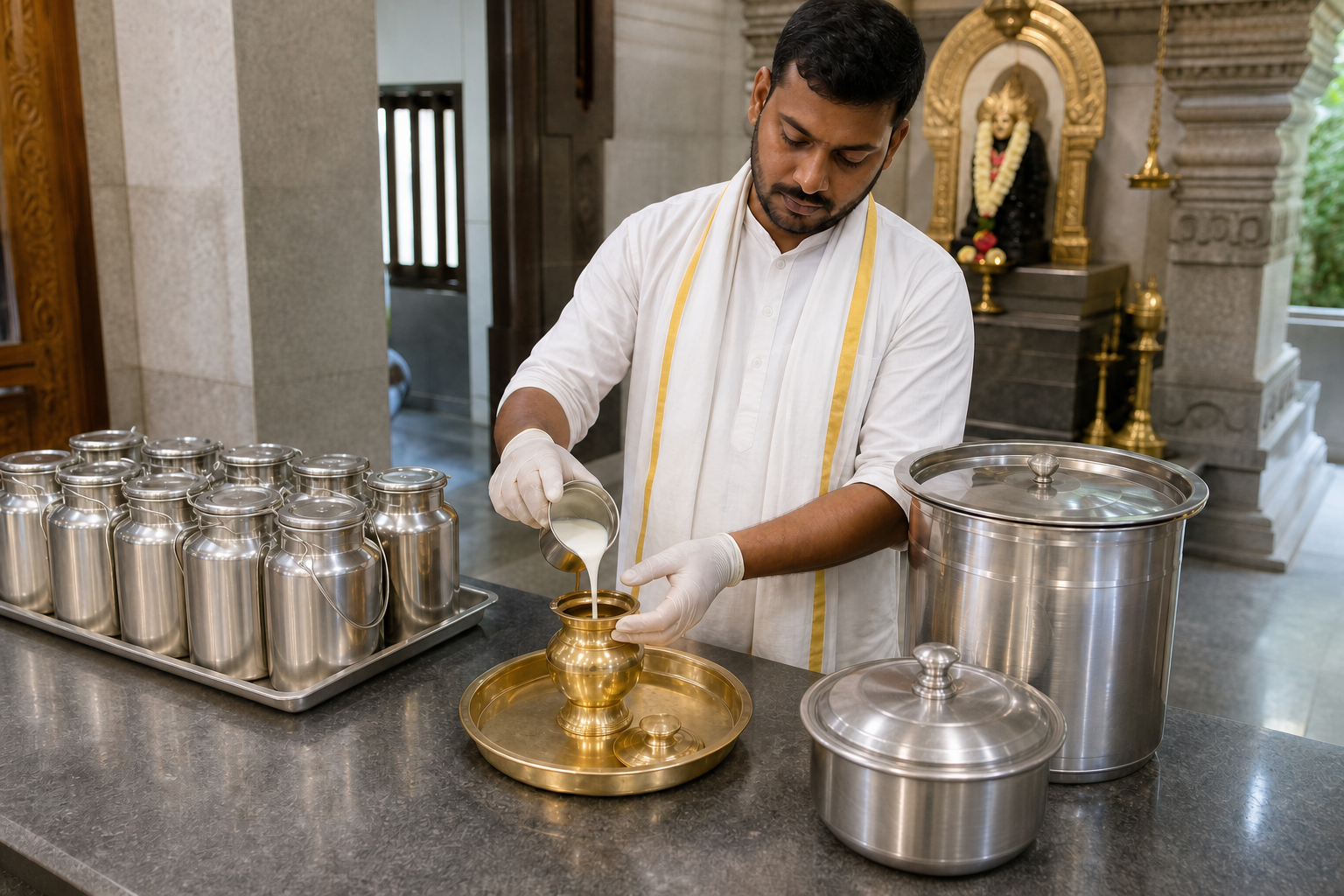
The decisive moment comes at the temple entrance, not after several packets have been opened. Milk should be placed into a defined stream as soon as it is accepted. Treating every packet identically makes both ritual management and safe redistribution harder.
| Milk stream | Appropriate handling | Stewardship purpose |
|---|---|---|
| Sealed, in-date packages | Check the seal and date, record the quantity, preserve the required cold chain and transfer promptly to an annadanam kitchen, distribution partner or eligible household. | Keep usable food in the human food stream without interfering with the ritual portion. |
| Milk used in abhishekam | Distribute a small quantity as theertham or prasada only where temple practice and safe handling permit. Use another approved pathway when consumption is inappropriate. | Preserve the integrity of the rite while preventing indiscriminate handling of ritual residue. |
| Damaged, expired or uncertain milk | Do not distribute it for human consumption. Use an appropriate animal-care pathway only when it is genuinely suitable and accepted, or follow an environmentally responsible disposal process. | Prevent charitable distribution from becoming a route for passing unsafe or unwanted material to somebody else. |
Redistribution is not achieved merely by putting unopened packets into another box. Volunteers must check packaging integrity and dates. Dairy that requires temperature control must remain within the appropriate cold chain. A recipient family should receive milk that the temple would be willing to serve to its own devotees.
At Dhyanalinga in Coimbatore, on-site footage shows sealed milk offerings being collected for redistribution to economically weaker households. This is a useful operational example: preserve the ritual stream, identify unopened stock and move the usable surplus through a separate service channel.
One documented temple does not prove that every temple follows the same practice. It proves that the supposed choice between abhishekam and redistribution is false. Whether your own temple meets that standard remains a local, verifiable question.
What you can do before bringing a milk offering
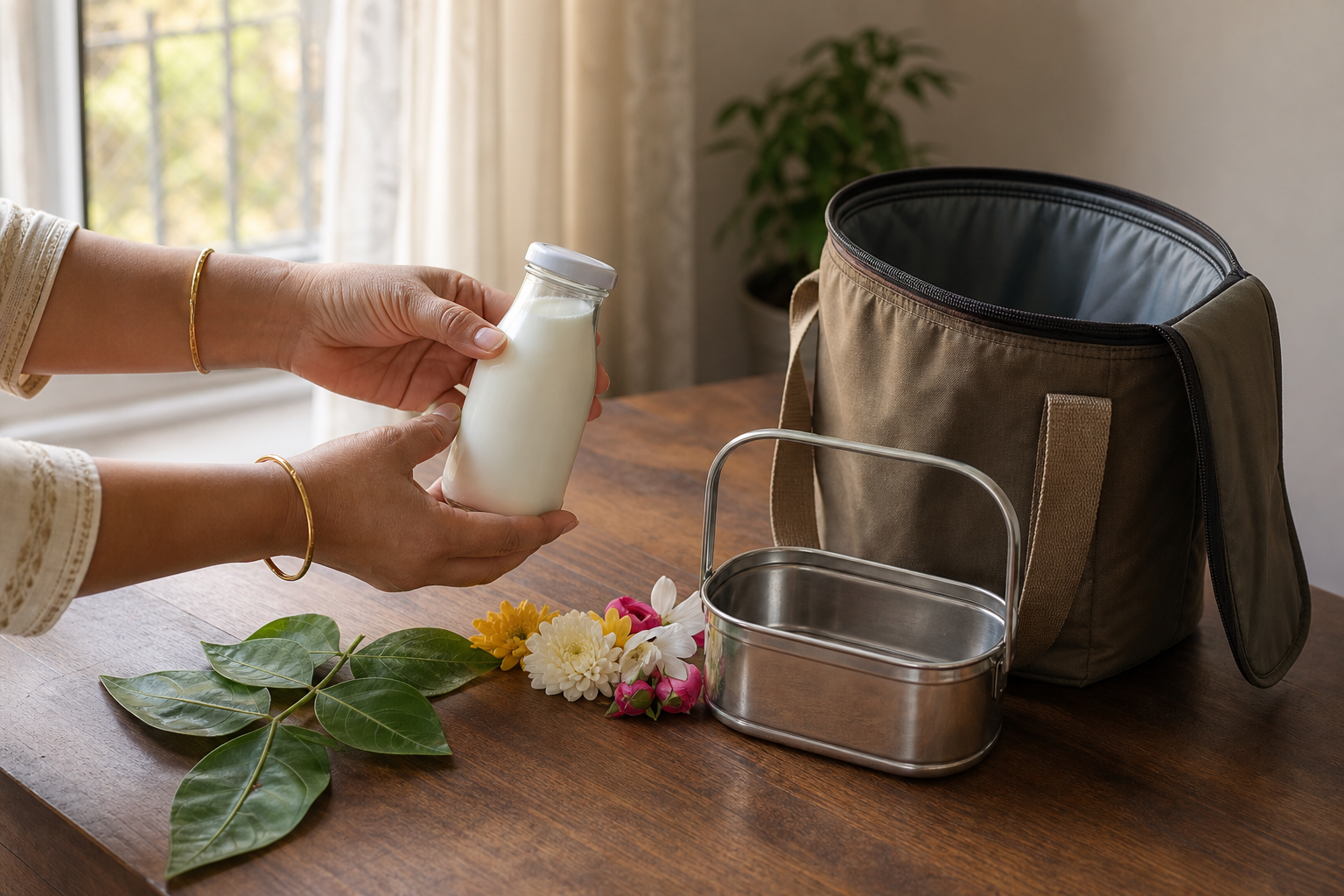
You have more influence over the outcome than you may think. Most avoidable waste begins when a devotee buys an arbitrary quantity without knowing what the temple can use or redistribute.
- Ask about the temple’s policy before buying milk. Find out whether devotees should bring an opened ritual quantity, a sealed packet for redistribution, or both. Ask what sizes and types the temple actually accepts.
- Offer an appropriate quantity. More milk does not automatically mean more bhakti. If only a small amount will be used in abhishekam, do not insist that a large volume must touch the Lingam. Follow the temple’s ritual maryada.
- Bring redistributable milk in usable condition. Choose a sealed, in-date package. Do not offer a leaking, damaged or improperly stored packet on the assumption that sacred intent will compensate for unsafe handling.
- Keep ritual use and dana conceptually distinct. You may dedicate a suitable quantity to abhishekam and another sealed quantity to community use. Both can arise from the same sankalpa without pretending they are operationally identical.
- Consider direct seva alongside the offering. An annadanam contribution, support for a school meal, or a donation to a trusted food-distribution effort can accompany the puja. Charity need not replace worship, and worship need not become an excuse to neglect charity.
- Use restraint during home worship. Measure what you genuinely need. If your sampradaya or family practice permits it, water is itself a traditional abhishekam substance. Consume or share prasada only when the ingredients and handling make that appropriate.
- Do not improvise with leftovers. If milk is no longer suitable for people, that does not automatically make it suitable for cattle or other animals. Follow the receiving goshala’s requirements or the locally appropriate disposal method.
If a temple cannot explain what happens to unopened milk, the responsible choice is not to create surplus and hope for the best. Bring the quantity requested, choose water where the tradition permits, and place the remaining value directly into dana.
A minimum stewardship standard for temples
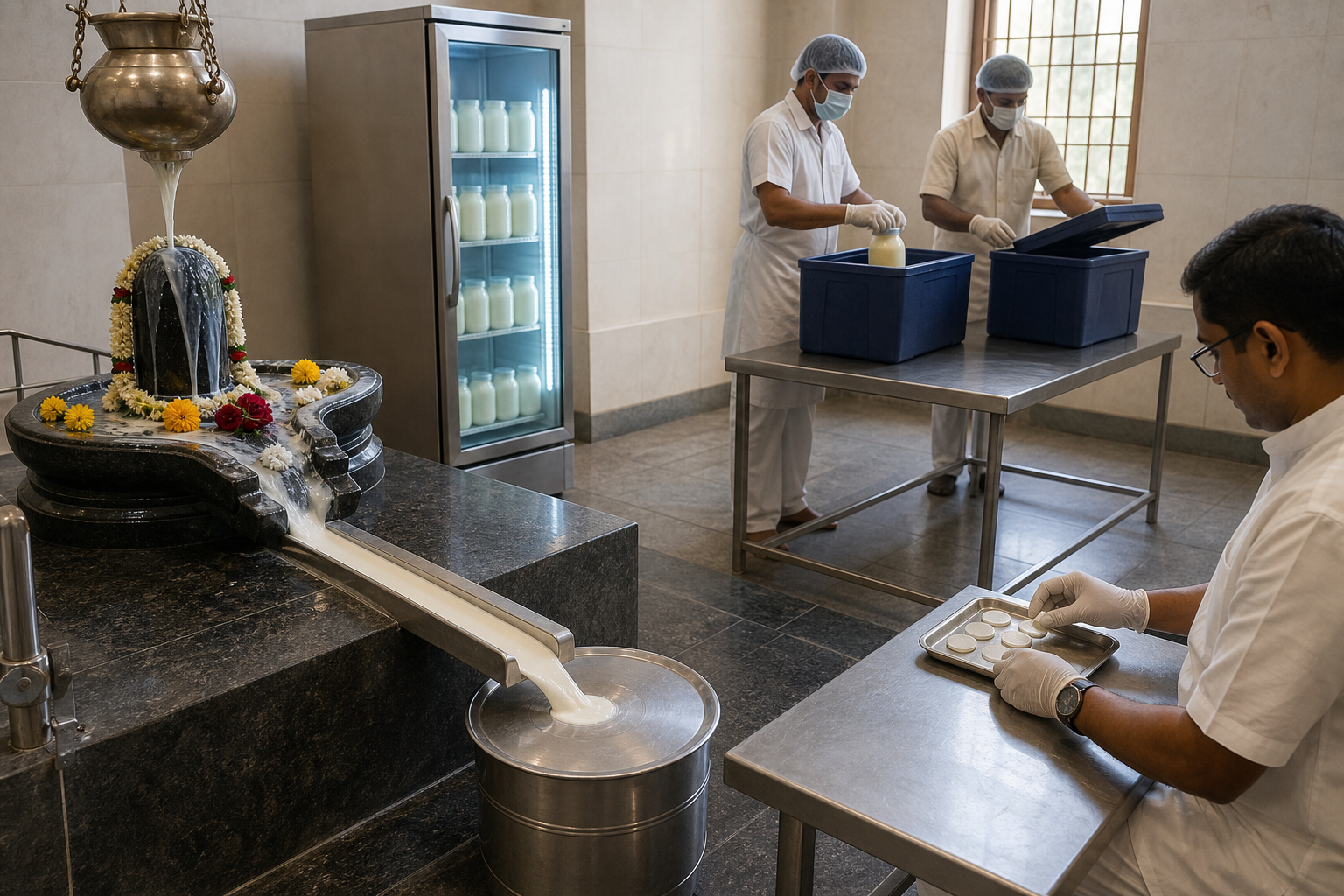
A temple accepting perishable offerings becomes their custodian. Good intentions are not an operating system. Even a small mandir needs a named process, a responsible person and a destination for every category of milk it accepts.
- Publish an intake rule. Tell devotees which packages, quantities and conditions are accepted. Place the instruction where people make the decision, not only inside the sanctum after they have purchased the milk.
- Create visibly separate collection points. Mark one stream for the quantity intended for ritual use and another for sealed redistribution stock. Explain the distinction so devotees know how their offering will be handled.
- Inspect and record sealed stock. Check dates and package integrity at intake. Record what was accepted, rejected, used and transferred. A paper register is enough for a small temple if it is maintained consistently.
- Name the receiving pathway in advance. Establish relationships with an annadanam kitchen, eligible households, a food-distribution organisation or another capable local partner. Do not wait until milk is nearing the end of its usable life to search for a recipient.
- Protect the cold chain. Provide the storage and transport required by the dairy products being accepted. If the temple lacks that capacity, it should limit intake rather than collect more than it can safely handle.
- Define the ritual-residue policy. State when abhishekam milk may be distributed as prasada, when it should not be consumed, and which approved secondary pathway will be used. Volunteers should not make a different decision for every container.
- Publish a daily or weekly summary. Report quantities received, used in worship, redistributed and found unsuitable. Recipient identities need not be public; accountability does not require turning families into publicity material.
This structure also protects the temple. A visible counter, a simple ledger and a known handoff partner provide a factual answer when edited images or decontextualised claims circulate online. More importantly, they help the temple notice excess intake before it becomes waste.
Large institutions may work with accredited kitchens, neighbourhood distribution points, non-governmental organisations, orphanages or goshalas. A smaller temple can use the same logic at a modest scale. The standard is not administrative complexity. It is traceability: the temple should be able to say what it accepted, what it used and where the remainder went.
Answer the waste objection with evidence and honesty
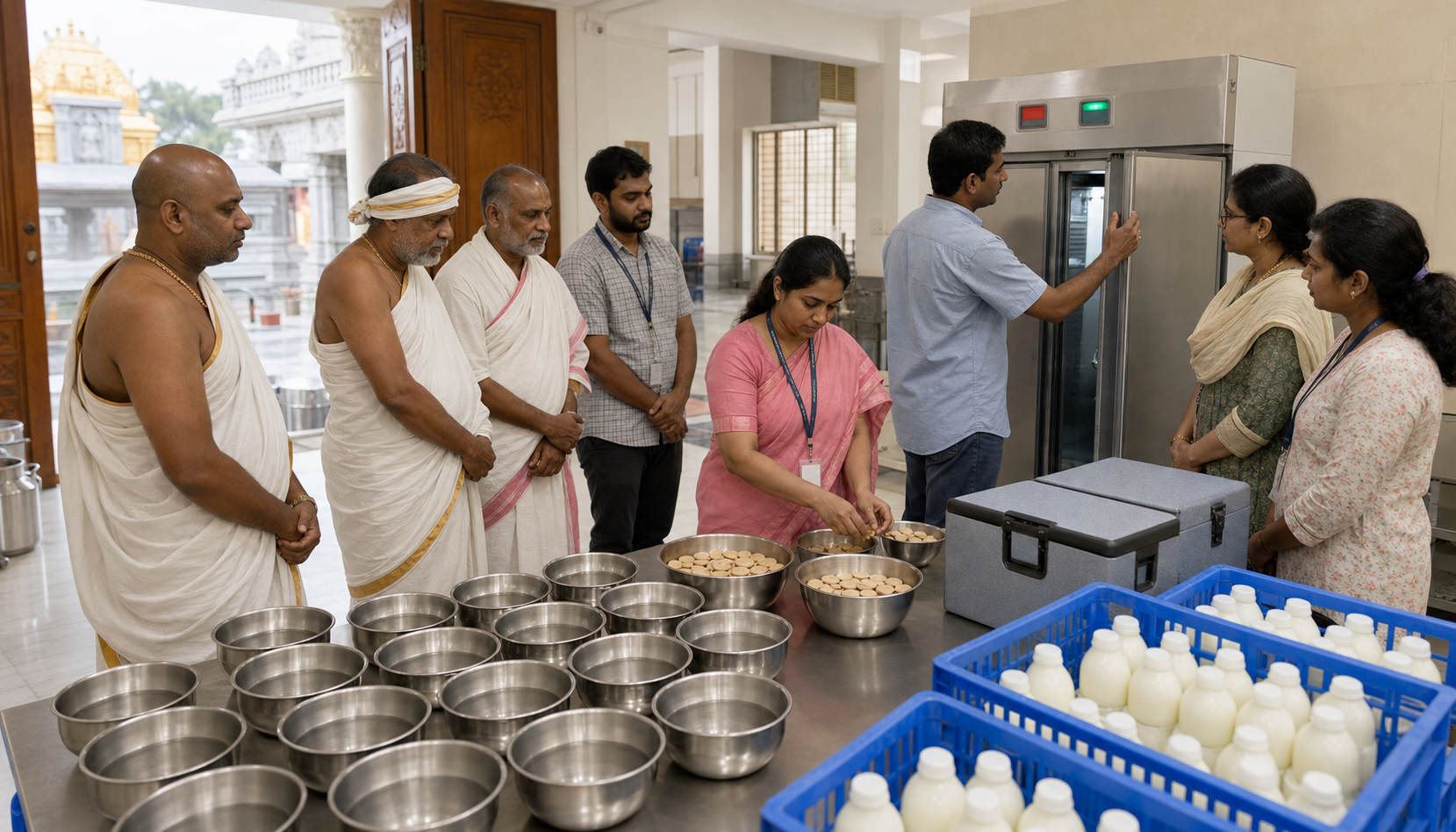
The claim that every measure of milk offered to Shiva directly deprives a hungry child is a zero-sum assumption, not an established fact. Devotees who support puja often also fund annadanam, school meals, health camps and other forms of service. Devotion and charity frequently reinforce each other.
That does not mean every criticism should be dismissed as hostility to Hindu practice. A temple that accepts more milk than it can use, distribute or safely manage has a stewardship problem. Defending abhishekam does not require defending poor administration.
A sound answer begins with the ritual meaning and then moves immediately to the local process: abhishekam is a sacred offering; sealed surplus can remain in the food stream; safe ritual portions may become prasada; unsuitable residue needs a responsible pathway; and the temple should disclose the results. The documented Dhyanalinga collection and redistribution process shows what that union of worship and service can look like.
Do not generalise from that example to a temple whose arrangements you have not checked. Ask for the local policy and ledger. If they are strong, share the evidence. If they are absent, request reform. This keeps the discussion on actual stewardship instead of allowing either a hostile caricature or an unexamined defence to decide the issue.
Key takeaways
- Abhishekam and compassionate food stewardship are compatible duties.
- The central operational distinction is between sealed surplus, milk already used in ritual and milk unsuitable for consumption.
- Devotees should ask what the temple accepts before purchasing an arbitrary quantity.
- Temples should inspect, separate, record and promptly transfer usable sealed milk.
- Redistribution requires food-safety discipline; sacred intent does not make damaged or mishandled dairy safe.
- A documented process is the strongest response to claims of waste, while an absent process is a reason to improve temple administration.
Before your next offering, ask the temple one concrete question: What happens to unopened milk? If the answer names a clear collection and redistribution process, support it. If the answer is vague, help the temple establish a separate counter, a reliable partner and a public ledger. That is how reverence becomes stewardship people can trust.
References
- DharmaRenaissance Blog — Milk Offerings to Shiva: Evidence-Based Myth-Busting and Compassionate Redistribution at Dhyanalinga
- Hindu Human Rights — Dhyanalinga milk-redistribution footage
