

When a temple controversy reaches your phone, the loudest question is usually who should be blamed. That is rarely the most useful place to begin. Whether the dispute concerns a prohibited display, conduct in a pilgrimage zone, or a discrepancy involving sacred property, you need to ask four things first: What was the rule? Who had authority? What record exists? What process will establish the facts?
A temple has two duties that cannot be separated. It must protect the devotional character of the sacred site, and it must account for every asset entrusted to its care. A rule deserves respect when it is clear, relevant, consistently applied, and open to review. An administration deserves trust when its decisions and custody records can withstand scrutiny.
A temple has two kinds of boundaries to guard
The first boundary is devotional. Dress, speech, religious promotion, processions, vehicle displays, queue conduct, photography, and access to particular areas can all affect the atmosphere of a living shrine. Rules governing these matters are not decorative etiquette. They help a community preserve the conditions under which worship, darshan, ritual, and seva can proceed without avoidable disruption.
That responsibility became visible when authorities registered a case at Tirumala on 21 November 2025 after a vehicle bearing a non-Hindu religious symbol was identified inside the protected pilgrimage zone. The driver and owner were booked under rules associated with the site. Registration began a process of inquiry; it did not settle intent, liability, or guilt.
The second boundary is custodial. It surrounds jewellery, sacred metals, ritual objects, offerings, documents, and every material placed under temple administration. The institution must be able to show who authorised an item to move, who held it, what work was performed, what came back, and who independently verified the result.
The investigation into alleged Sabarimala gold irregularities connected with a 2019 idol-refurbishment process, including the arrest of former Travancore Devaswom Board president N. Vasu, illustrates why that boundary matters. The arrest is significant, but it is not a verdict. The institutional question is whether the full custody trail can establish what happened to the sacred material.
These two responsibilities reinforce each other. A temple that demands discipline from pilgrims while tolerating opacity among officials creates a moral contradiction. A board that publishes accounts but treats the shrine as an ordinary venue also fails its purpose. Devotees should not have to choose between sanctity and transparency. Sound governance provides both.
Key takeaways
- Separate rules for sacred conduct from controls for sacred assets, but require written authority, consistent procedure, and review for both.
- Judge a site rule by its source, scope, notice, connection to the shrine’s purpose, and manner of enforcement.
- Judge asset stewardship by authorisation, inventory, signed handovers, return verification, reconciliation, and independent oversight.
- Treat a complaint, registered case, inquiry, or arrest as a procedural stage, not as proof of guilt.
- Ask for exact records rather than relying on slogans, forwarded messages, or general assurances.
A sacred-site rule should pass five practical tests
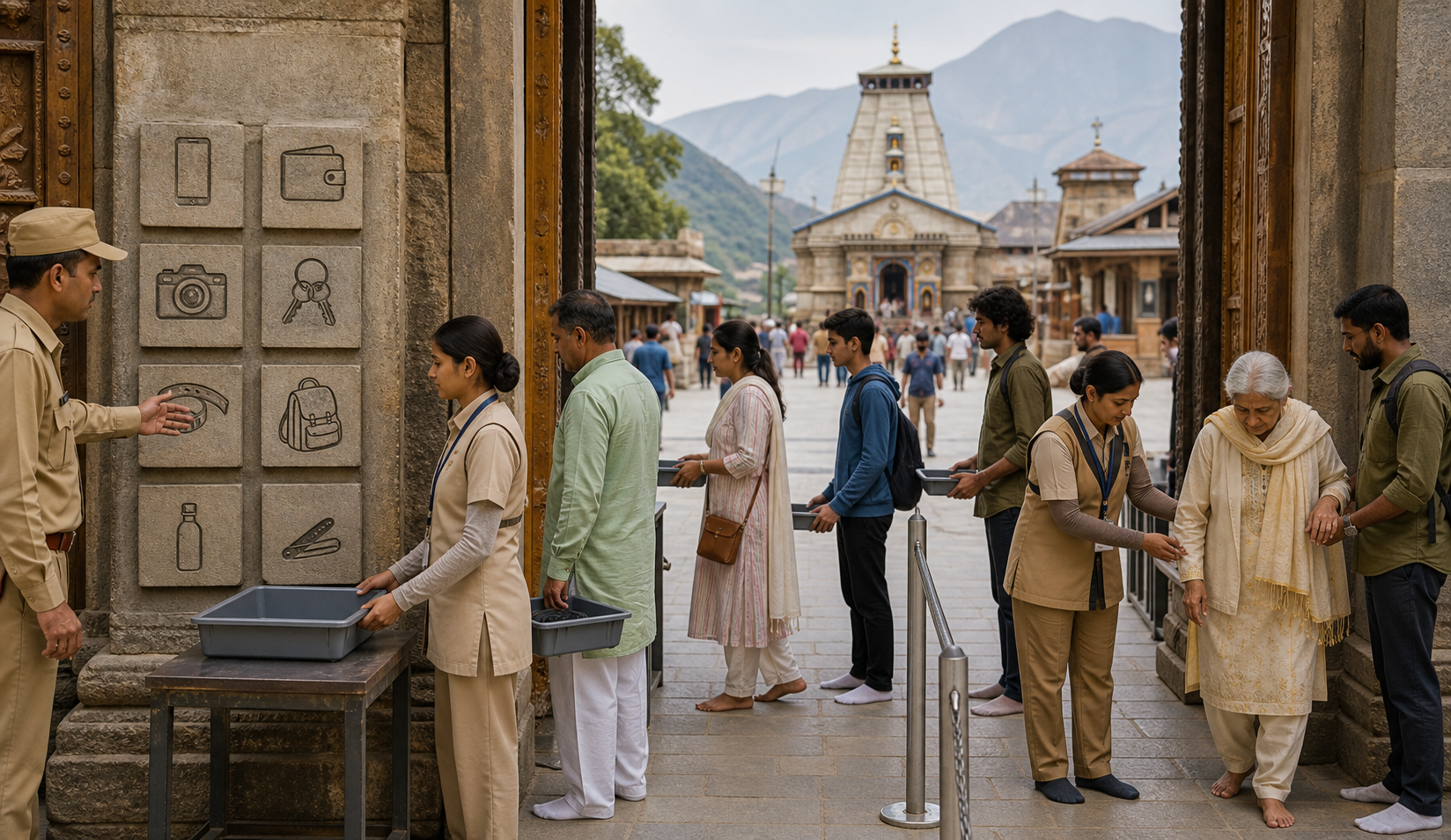
India’s religious pluralism does not require every sacred place to become religiously neutral. Entering a living shrine means entering a community’s inherited discipline. Refraining from religious promotion in a protected temple zone is not the same as surrendering one’s private belief. At the same time, invoking sanctity cannot turn an unclear preference into an unlimited power.
If you are deciding whether a rule is worthy of support, test it in this order:
- Identify the authority. Ask which temple body, statute, regulation, established custom, or authorised office created the rule. A staff member’s personal preference is not automatically temple policy. If the rule rests on custom rather than a numbered regulation, the administration should say so plainly and explain who is responsible for interpreting it.
- Define the exact scope. A rule should tell you what conduct it covers, where it applies, and to whom it applies. The inner shrine, queue complex, temple-controlled accommodation, protected hill, public approach road, and surrounding town are not interchangeable. Before supporting enforcement, confirm that the incident occurred inside the regulated area.
- Provide usable notice. An ordinary visitor should have a reasonable opportunity to learn the rule through official advisories, entry signs, vehicle instructions, booking information, or an authorised help desk. Notice should describe the prohibited conduct, not merely demand respect in general terms. When notice is weak, guidance and correction may be more appropriate than immediate escalation, unless safety, deliberate disruption, or applicable law requires otherwise.
- Connect the restriction to a sacred purpose. The administration should be able to explain how the rule protects worship, ritual order, pilgrim movement, safety, or the devotional atmosphere. For a rule concerning signs, campaigning, processions, or proselytising, enforcement should remain focused on that conduct. It should not become a pretext for hostility outside the stated boundary.
- Apply and record it consistently. Similar conduct inside the same regulated space should receive a similar initial response. Every serious incident should record the time, place, applicable rule, material facts, action taken, and official responsible. Any exception should also be recorded. That creates a basis for review and prevents selective memory from becoming policy.
A vehicle carrying a religious symbol, for example, raises factual questions before it raises conclusions. Was the marking an ordinary personal identifier or an intentional promotional display? Was the vehicle inside the protected zone? What did the applicable rule prohibit? Had the visitor received notice? Was an opportunity to comply offered where that was safe and lawful? Did investigators preserve context and evidence? Asking these questions does not weaken the shrine’s authority. It makes that authority more credible.
The response should also be calibrated. A visitor who did not understand a clearly site-specific restriction is not necessarily situated like someone who refuses repeated directions or deliberately organises a disruptive campaign. Context and intent belong in the inquiry. Administrators should not improvise detention, seizure, exclusion, or a criminal complaint. Where a response can affect liberty, property, or legal rights, they must act through authorised officials and the applicable legal process.
Due process protects the temple as well as the person accused. It separates an enforceable rule from an emotional reaction, preserves reliable evidence, and makes the final decision easier for devotees to trust.
Sacred assets need an unbroken custody record
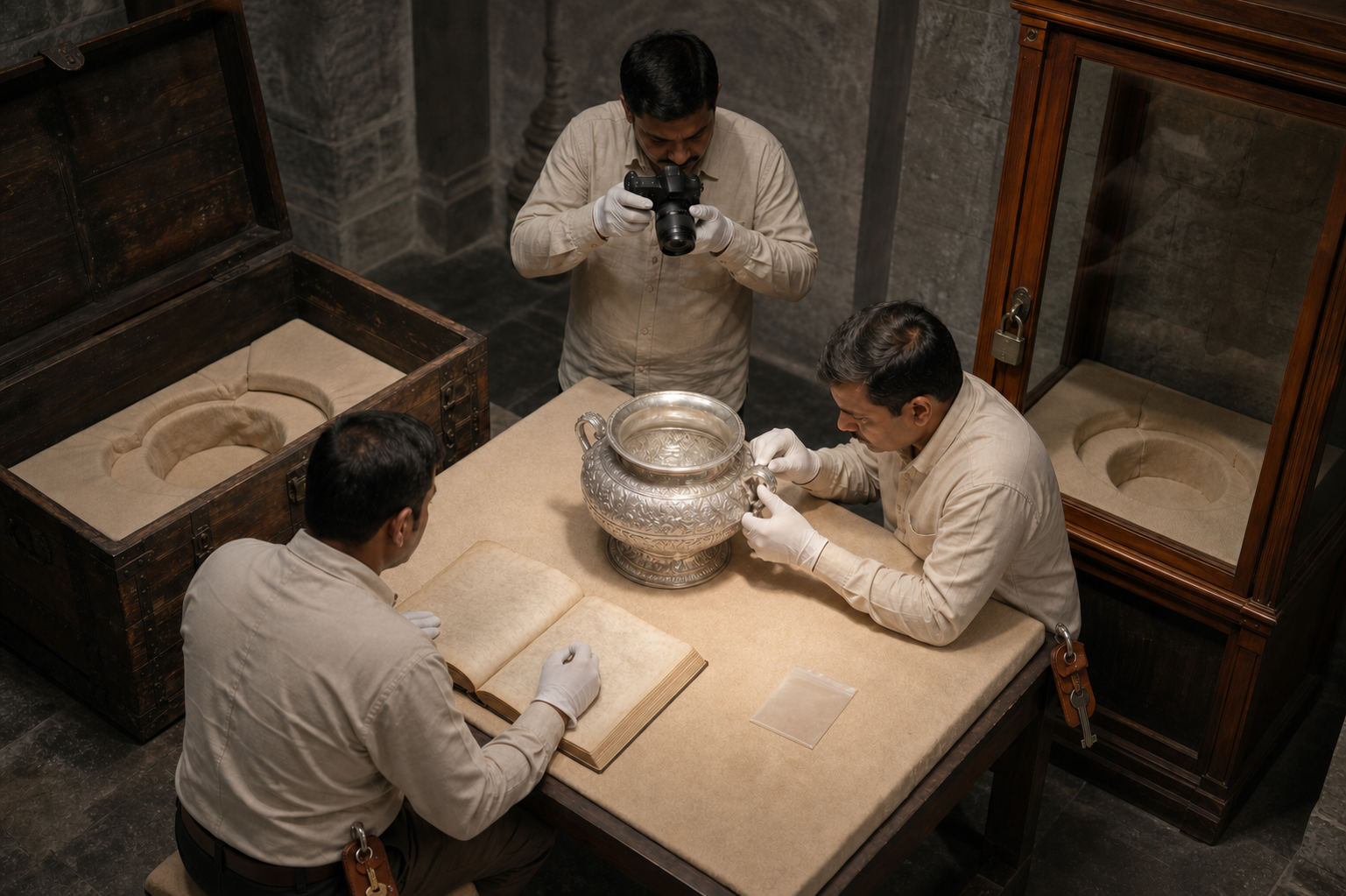
Devotion does not reduce the need for material controls. It increases it. Gold used in an idol, a donated ornament, or a ritual vessel may carry monetary value, but its importance to a devotee is not exhausted by its price. The record must therefore protect both the object and the relationship of trust surrounding it.
The safest system begins before an asset leaves its usual custody. It continues through transport, repair, refurbishment, return, verification, and formal closure. If the administration starts reconstructing that trail only after a discrepancy appears, the most important evidence may already be uncertain.
A minimum control path should include:
- Written authorisation: Identify the object, purpose of the work, permitted scope, responsible officials, outside contractor if any, and approving authority. A broad instruction to repair or refurbish is not enough when valuable sacred material can be added, removed, or transformed.
- Secure starting inventory: Assign an asset identifier and record the description, condition, measured weight or quantity where relevant, distinguishing marks, and secure internal photographs. The record should be completed before movement, not from memory afterward.
- Signed handovers: Every transfer should record the date and time, sender, receiver, purpose, condition, and seal or package identifier where used. A custody gap is not repaired merely because the same people say the item passed through safely.
- Work-stage records: Document the authorised method, material added, material removed, residue or scrap produced, and anything returned separately. The contractor’s completion statement should be matched to the original work order.
- Independent return verification: Someone who did not perform or directly supervise the work should compare the returned object with the starting inventory and approved scope. Any difference should be measured, explained, and recorded before the file is closed.
- Formal reconciliation: The asset register, custody forms, contractor records, measurements, and approvals should agree. An unresolved difference belongs in an exception register with a responsible officer and a defined next action; it should not disappear into correspondence.
- Public closure without security exposure: Devotees should receive a concise account of what work was authorised, whether the custody record reconciled, whether an independent check occurred, and what corrective action followed. Exact storage locations, security arrangements, and other exploitable details can remain confidential.
Separation of duties is equally important. The same person should not authorise the work, release the asset, supervise the contractor, receive the item, and certify the reconciliation. Even an honest official should not be placed in a system that depends entirely on personal assurances. Shared custody and independent verification protect the official from unsupported accusation as much as they protect the temple from misconduct.
An audit is not a ritual of suspicion. It is a disciplined way to honour a trust that no office-bearer personally owns. When an inquiry or arrest occurs, the records should allow investigators to test a precise chain of events. Public discussion should then distinguish verified discrepancies from allegations, and allegations from findings.
Ask for records, not assurances, when trust is strained
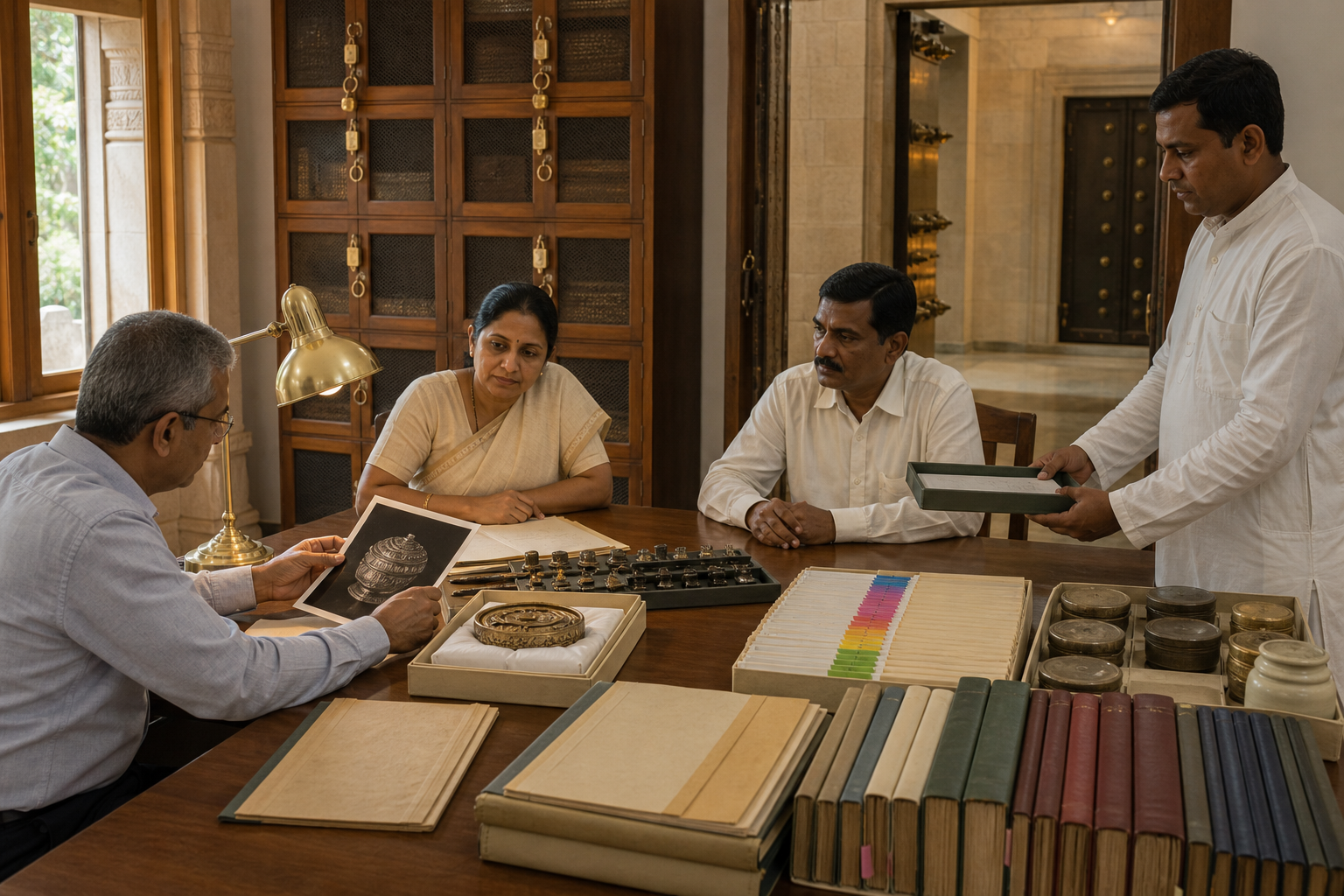
You do not need to become an investigator to respond responsibly. You do need to slow the movement from allegation to certainty. A cropped video, anonymous message, or partisan caption may identify something worth checking, but it does not establish the governing rule, the full context, or the procedural outcome.
If you are a pilgrim or concerned devotee
- Locate the temple body’s current advisory or ask its authorised help desk for the exact rule. Save the text or reference number rather than paraphrasing it from memory.
- Confirm the physical boundary. Ask whether the event occurred in the sanctum area, wider temple precinct, temple-administered property, protected pilgrimage zone, or an ordinary public space.
- Separate procedural stages. A complaint, registered case, inquiry, arrest, charge, finding, and judgment do not mean the same thing. Use only the term supported by verified information.
- Send questions through a written channel provided by the institution. Ask for records that can be answered without prejudicing an investigation or exposing temple security.
- Do not publish personal details, threats, or declarations of guilt. Ahimsa in public speech does not mean passivity; it means pursuing the truth without creating additional harm.
For a site-rule dispute, ask: What is the exact rule or custom? Which authority administers it? Where does it apply? How are visitors notified? What action was recorded? What review or appeal channel exists? When the process ends, will the institution publish the outcome?
For an asset dispute, ask: Which object and authorised work are involved? Was a starting inventory completed? Who signed each handover? Was the returned material independently measured or inspected? Has the record reconciled? If not, what discrepancy remains open and who is responsible for resolving it?
If you serve on a temple board or committee
Your first duty during a controversy is preservation, not public combat. Secure the relevant asset where applicable, preserve existing authorisation and custody records, prevent unauthorised alteration of the file, and place the matter under an official who is not implicated in the disputed transaction. Cooperate with lawful inquiries and avoid public claims that the available evidence cannot yet support.
Publish the governing rule and procedural status in plain language. State what has been verified, what remains alleged, which authority is examining it, and what can legally be disclosed next. Do not invoke sanctity to hide an operational fact. Do not invoke transparency to reveal information that would endanger the shrine, prejudice due process, or compromise asset security.
After the matter is resolved, close the institutional loop. Record the finding, correct the control that failed, train the people who administer it, and tell devotees what changed. An investigation that identifies one person’s conduct but leaves the same weak process in place has not fully protected the temple.
A compact accountability charter
A temple administration can make trust less dependent on personalities by adopting and publishing a short charter with these commitments:
- Site rules will identify their authority, scope, effective status, and official contact for clarification.
- Visitors will receive reasonable notice of restrictions before entering the regulated area whenever circumstances permit.
- Serious enforcement actions will be tied to a specific rule and recorded for supervisory review.
- Sacred assets will have current registers, written movement authority, signed handovers, and return verification.
- Authorisation, custody, execution, and reconciliation will be divided among responsible roles.
- Officials and contractors involved in sensitive transactions will disclose relevant conflicts of interest.
- Audits and reconciliations will occur on a published schedule and after significant asset work.
- Verified findings, unresolved exceptions, and corrective measures will be communicated without exposing security-sensitive information.
- Complaints will have a traceable acknowledgement and a defined reviewing authority.
- No allegation, complaint, case, or arrest will be publicly described as a finding of guilt before due process is complete.
The next time a temple dispute demands your reaction, refuse the false choice between defending sanctity and demanding accountability. Check the exact rule before your pilgrimage. Ask for the custody trail when sacred property is questioned. If you hold responsibility in an institution, put the controls in writing before the next incident or handover. Reverence becomes more durable when disciplined stewardship is treated as part of seva itself.
References
- DharmaRenaissance Blog – Tirumala Hill Case: Non-Hindu Symbol Triggers Probe and Renewed Focus on Pilgrim Harmony
- DharmaRenaissance Blog – Sabarimala Gold Case Shockwave: SIT Arrests Former Travancore Devaswom Board Chief, Deepening Probe
