
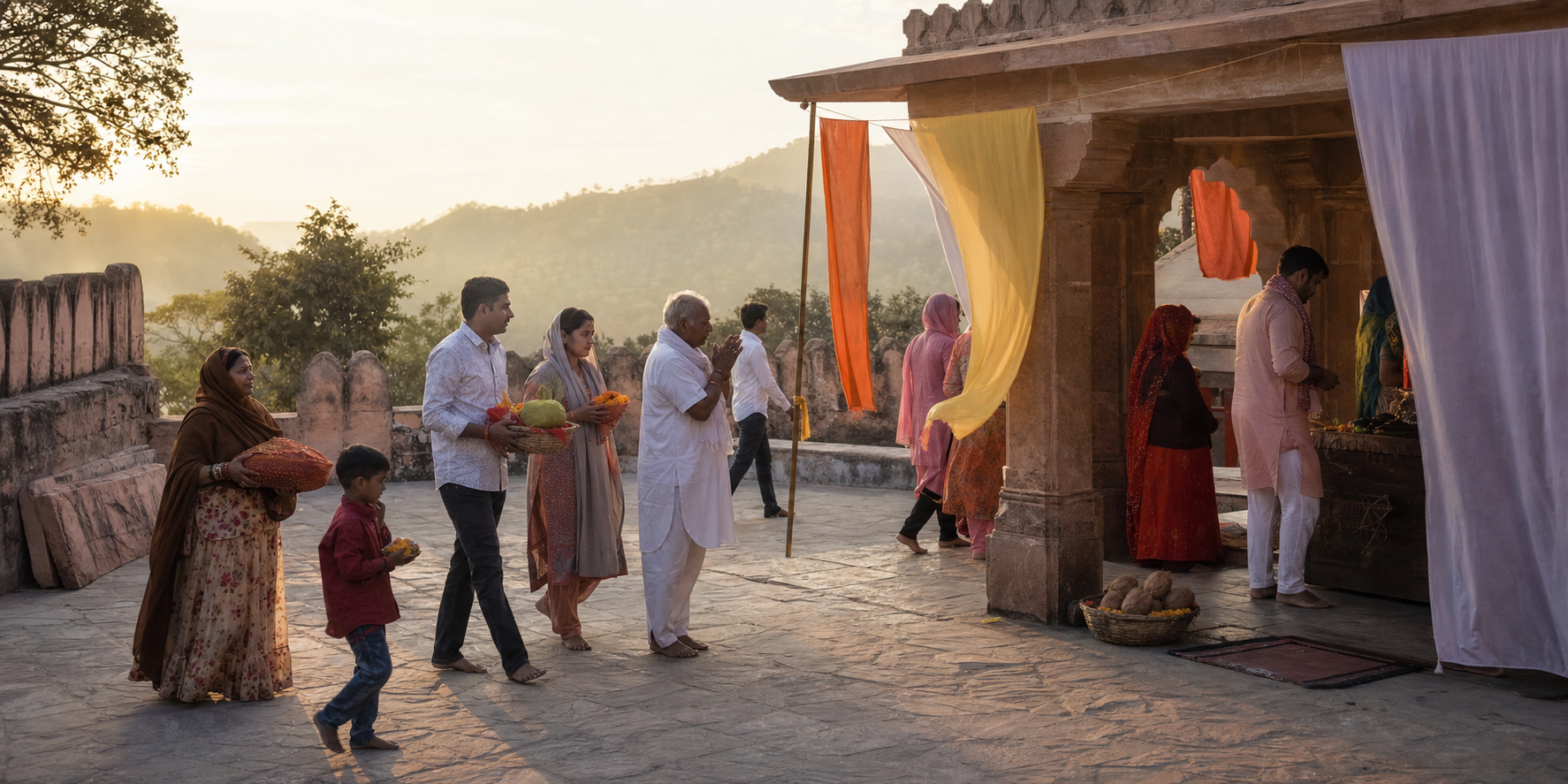
You may be planning a Rajasthan pilgrimage, trying to understand a family devotion, or wondering why a regional shrine can command such enduring loyalty. The most useful question is not simply what you should see. It is what you should learn to notice.
Khatushyam at Khatu and Narayani Mata near Amanbagh reveal two different expressions of a living sacred culture. One gathers devotees around an ethically demanding heroic katha, public worship and a major seasonal pilgrimage. The other is known for the quieter rhythm of Shakti devotion, community belonging and contemplative prayer. Both show how Rajasthan’s temple heritage remains alive through relationships among deity, devotee, story, ritual and place.
A living shrine is sustained through four relationships
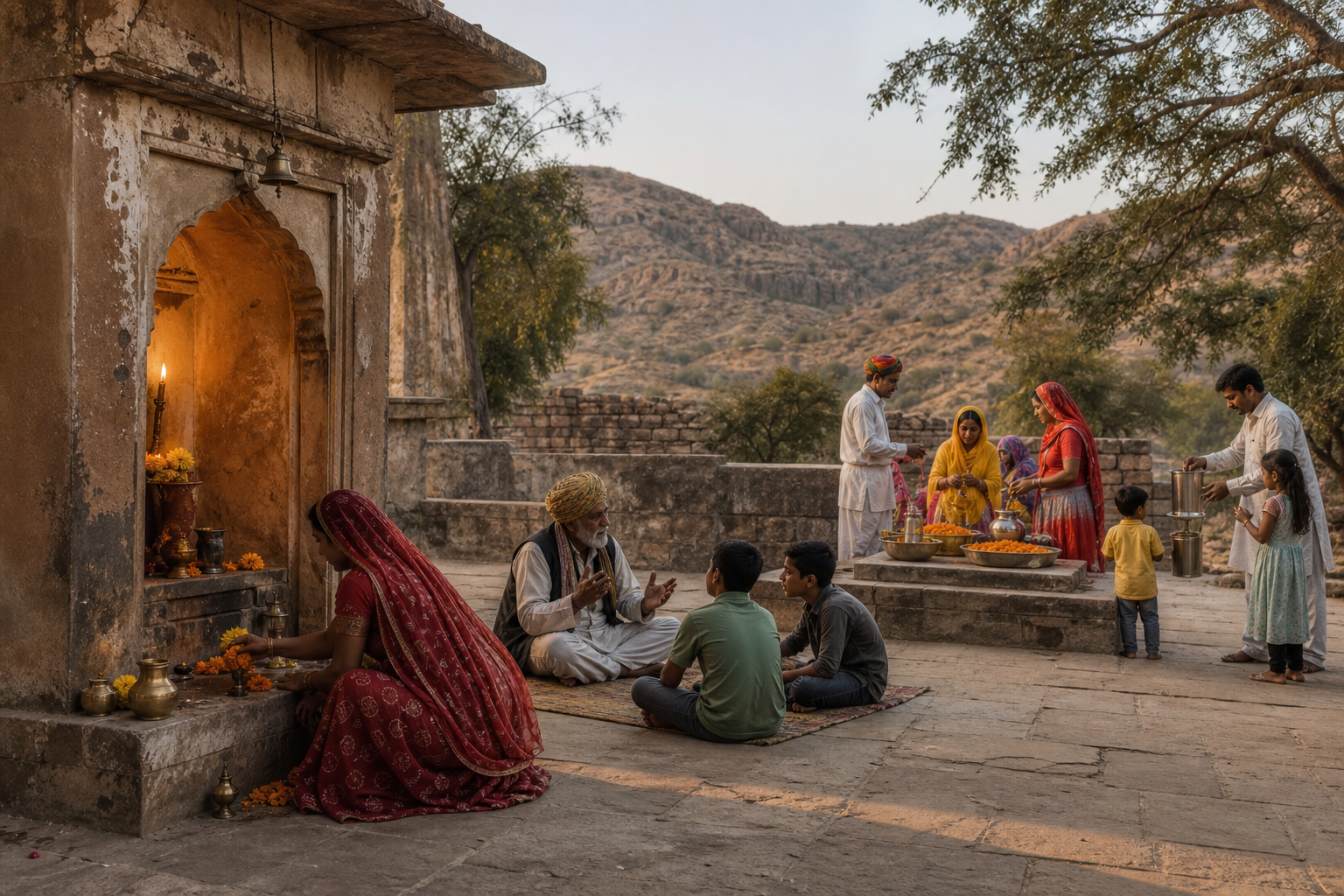
A temple may survive as architecture after its original social world has faded. A living shrine is different. People still address the deity, retell the sacred account, make vows, perform worship and return with their families. Its continuity is active rather than merely commemorative.
- Katha gives the deity a recognisable identity. It tells you who is worshipped, why the place matters and which moral questions devotees carry into the shrine.
- Ritual turns memory into repeated action. Aarti, kirtan, prayer and seasonal gatherings allow each generation to enter a practice it did not invent.
- Sankalpa connects worship to a devotee’s actual life. Protection, prosperity, well-being and moral resolve are brought before the deity rather than left as abstract ideas.
- Community gives the tradition social continuity. Families, pilgrims and particular samaj networks preserve forms of belonging that cannot be reduced to a building or an inscription.
Use these four relationships as a practical reading method. At any shrine, ask: Which katha identifies the deity? Which actions renew that relationship? Who sustains the worship? How does the sacred place connect with communities beyond its immediate location? Those questions will show you far more than a quick architectural circuit.
Khatushyam turns a warrior’s dilemma into living bhakti
Khatushyam is identified in Rajasthan’s Mahabharata-based regional tradition with Barbarika, the son of Ghatotkacha and Mourvi and therefore a descendant of Bhima. He vows to support the weaker side in the Kurukshetra conflict. Sri Krishna recognises the consequence: if Barbarika repeatedly strengthens whichever side becomes weaker, the balance will keep reversing and the war will not reach an end. Krishna requests Barbarika’s head as an offering; Barbarika gives it, and Krishna grants that he will be worshipped in Kaliyuga under the name Shyam. This is the devotional identity at the heart of Khatushyam worship.
The katha is more than heroic spectacle. Barbarika’s vow begins with compassion, but compassion alone does not settle the dharmic question. Krishna looks beyond immediate advantage to the consequences of an endlessly shifting intervention. The tension is important: good intention needs discernment, power needs restraint, and even a noble promise may have to be surrendered when its outcome obstructs a larger order.
Barbarika’s offering can also be read as a surrender of ahankara. The warrior possesses extraordinary capacity, yet the decisive act is not his entry into battle. It is his willingness to place power, identity and personal certainty before a wisdom greater than his own. That is why the tradition can speak to a devotee who has never faced a battlefield. Your battlefield may be a family conflict, a position of responsibility, or a promise whose consequences you have not fully examined.
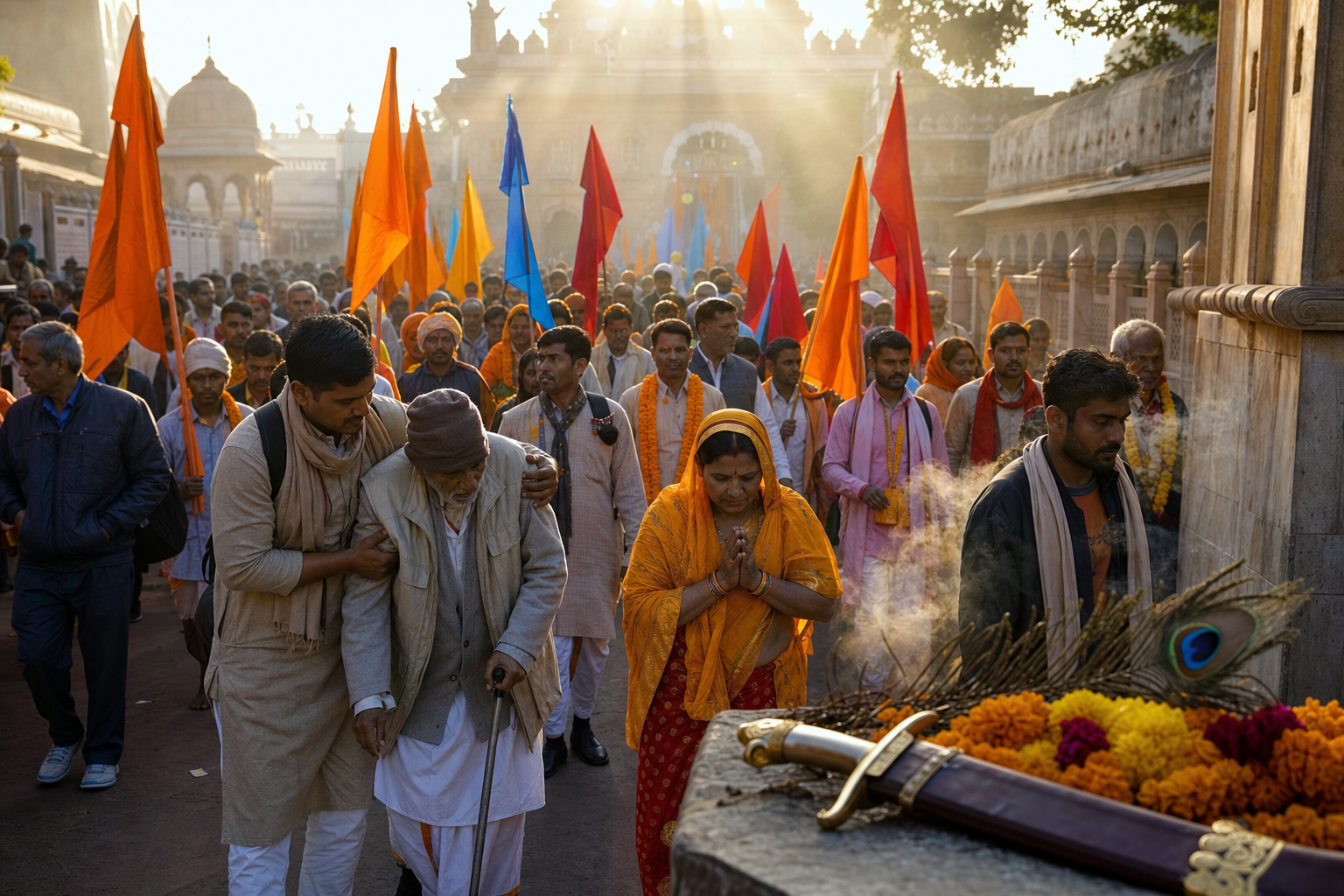
The principal temple at Khatu in Rajasthan’s Sikar district gives this katha a public devotional life. During the Phalguna festivities, pilgrims gather for darshan, aarti, kirtan and sankalpa. The same divinity is also worshipped in Gujarat as Baliyadev, showing that the devotional current extends beyond one locality and one regional name. These ritual and regional connections are part of the shrine’s living heritage, not secondary details around it.
If you approach Khatushyam devotion, do not stop at asking whether Shyam Baba will grant a wish. Form a two-part sankalpa: name what you seek, and name the responsibility you will accept if it is granted. This is not a prescribed temple formula. It is a practical way to let the katha discipline your prayer. A request for success can be joined to restraint; a request for protection can be joined to service; a demand for fairness can be tested against its likely consequences.
Narayani Mata shows the strength of quiet continuity
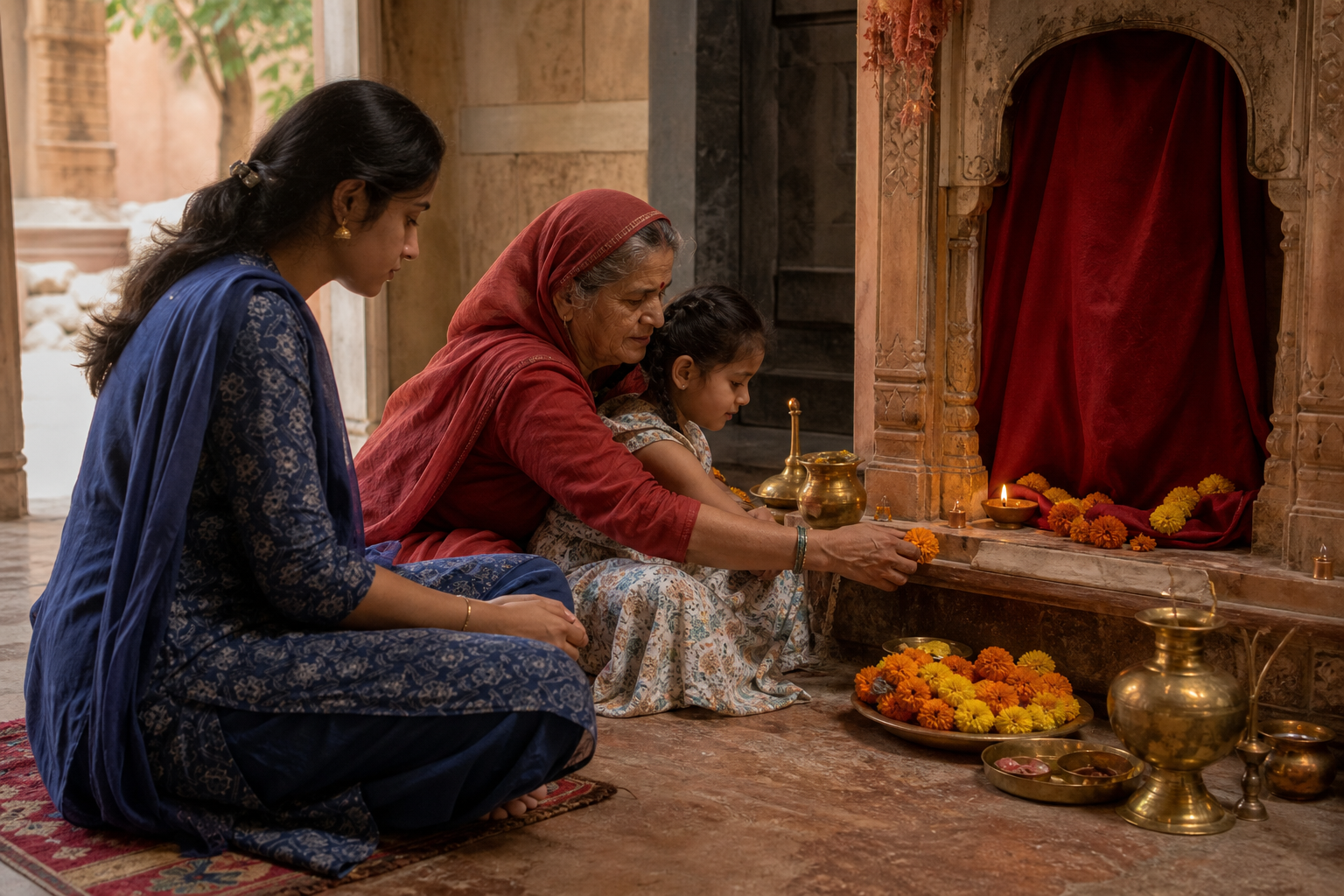
Not every living shrine gathers its meaning through a warrior’s moral crisis or a large festival. Narayani Mata Temple near Amanbagh in Alwar is known as a serene Shakti shrine where devotees seek calm, clarity and connection with Devi. Its contemplative atmosphere is not an absence of religious life. Quiet prayer, recurring family devotion and the steady presence of a worshipping community are themselves forms of continuity.
Sati Narayani is especially venerated within the Sain Samaj, while the temple welcomes others who come to honour Devi. This distinction matters. A shrine can be deeply rooted in the memory of a particular community without becoming spiritually meaningless to everyone outside it. Respecting that rootedness is more honest than either treating the shrine as closed or dissolving its identity into a vague universal spirituality.
Families, artisans and pilgrims gather at the shrine for prayer, well-being and community harmony. Another prominent Narayani Maa temple stands in Lonavala, Maharashtra, linking devotion in Rajasthan’s Aravalli setting with the Sahyadri landscape. The connection between the Alwar and Lonavala shrines demonstrates how a sacred tradition can remain locally grounded while travelling across regional boundaries.
If you visit Narayani Mata, resist the urge to search only for a dramatic legend or a monumental feature. Leave unhurried time for prayer and observe how people use the sacred space. Notice whether they come as individuals or families, what forms of reverence recur, and how the atmosphere changes your own pace. At a contemplative shrine, attention is part of the pilgrimage.
These are Hindu shrine traditions, and that identity should remain clear. Their ethical vocabulary can nevertheless be understood across the wider dharmic family. Compassion, service, restraint, reverence, surrender of ego and inner transformation also matter within Buddhist, Jain and Sikh paths. Shared values create a basis for respect; they do not make different histories, doctrines or practices interchangeable.
How to enter a living shrine tradition responsibly
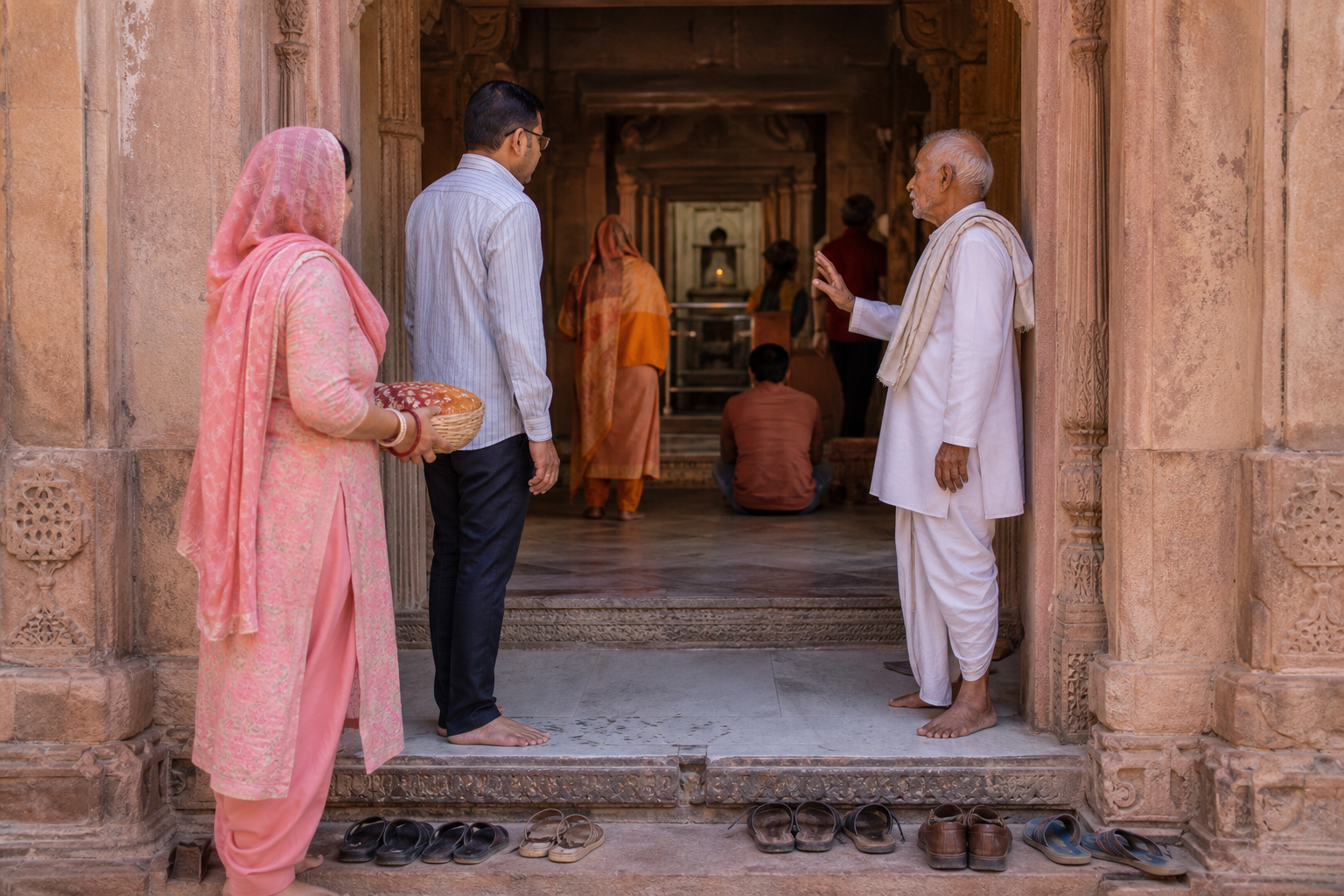
You do not need specialist training to approach these traditions well. You do need to move beyond collecting names and photographs. The following sequence works whether you are preparing for an in-person pilgrimage or beginning with worship and study at home.
- Choose your primary purpose. Decide whether you are seeking darshan, fulfilling a vow, learning a family tradition or studying cultural heritage. You may have several motives, but naming the main one prevents the visit from becoming an unfocused tour.
- Learn the shrine’s own katha. For Khatushyam, understand Barbarika’s vow, Krishna’s intervention, the offering and the boon of worship as Shyam. For Narayani Mata, begin with her place in Shakti devotion and her special relationship with the Sain Samaj.
- Preserve the status of the tradition. Describe the Khatushyam account as a Mahabharata-based regional tradition rather than carelessly presenting every detail as if all textual recensions and communities narrate it identically. Precision protects devotion from avoidable historical argument.
- Observe before imitating. If aarti, kirtan or another form of worship is underway, watch how the local community participates and follow the cues it offers. A living tradition has an internal rhythm that a visitor should first receive.
- Notice the people who keep the shrine alive. Ask which gatherings matter, how families relate to the deity, and what forms of service support the community. The answers reveal continuity that architecture alone cannot show.
- Carry one teaching into conduct. After Khatushyam darshan, examine one good intention whose consequences need clearer thought. After Narayani Mata worship, protect a period of quiet prayer or perform one concrete act of service. Pilgrimage becomes formative when remembrance changes behaviour.
A camera can preserve an image of the shrine, but it cannot substitute for this attention. Record the name correctly, understand the devotional account, participate respectfully and write down the ethical question you are taking home. That small discipline turns heritage travel into encounter.
If you are planning both shrines as part of a wider Rajasthan journey, do not expect them to produce the same experience. Khatu invites sustained engagement with public bhakti, kirtan, sankalpa and the moral tension in Barbarika’s story. Narayani Mata invites a slower encounter with Devi, community rootedness and contemplative space. Let each shrine set its own devotional register.
Key takeaways
- Rajasthan’s living shrines endure through katha, repeated worship, devotee commitments, community stewardship and connections across regions.
- Khatushyam devotion asks you to join compassion with discernment: a noble intention must still be tested by its consequences.
- Barbarika’s offering gives devotees a practical image of power and ego placed under dharmic restraint.
- Narayani Mata demonstrates that quiet prayer, family participation and the continuity of a particular samaj can sustain a powerful Shakti tradition.
- A responsible pilgrimage begins by learning the shrine’s own identity and ends by carrying one teaching into daily conduct.
Begin with one shrine, one katha and one practice. If Khatushyam draws you, pair your prayer with a responsibility and examine the consequences of what you seek. If Narayani Mata draws you, make room for quiet attention and service. Rajasthan’s devotional heritage remains living when darshan becomes remembrance, and remembrance becomes conduct.
References
- DharmaRenaissance Blog — Khatushyam (Barbarika): Shyam Baba’s Kaliyuga Grace, Legend, and Temple Heritage
- DharmaRenaissance Blog — Narayani Mata Temple, Amanbagh: A Serene Shakti Shrine in Alwar, Rajasthan
