
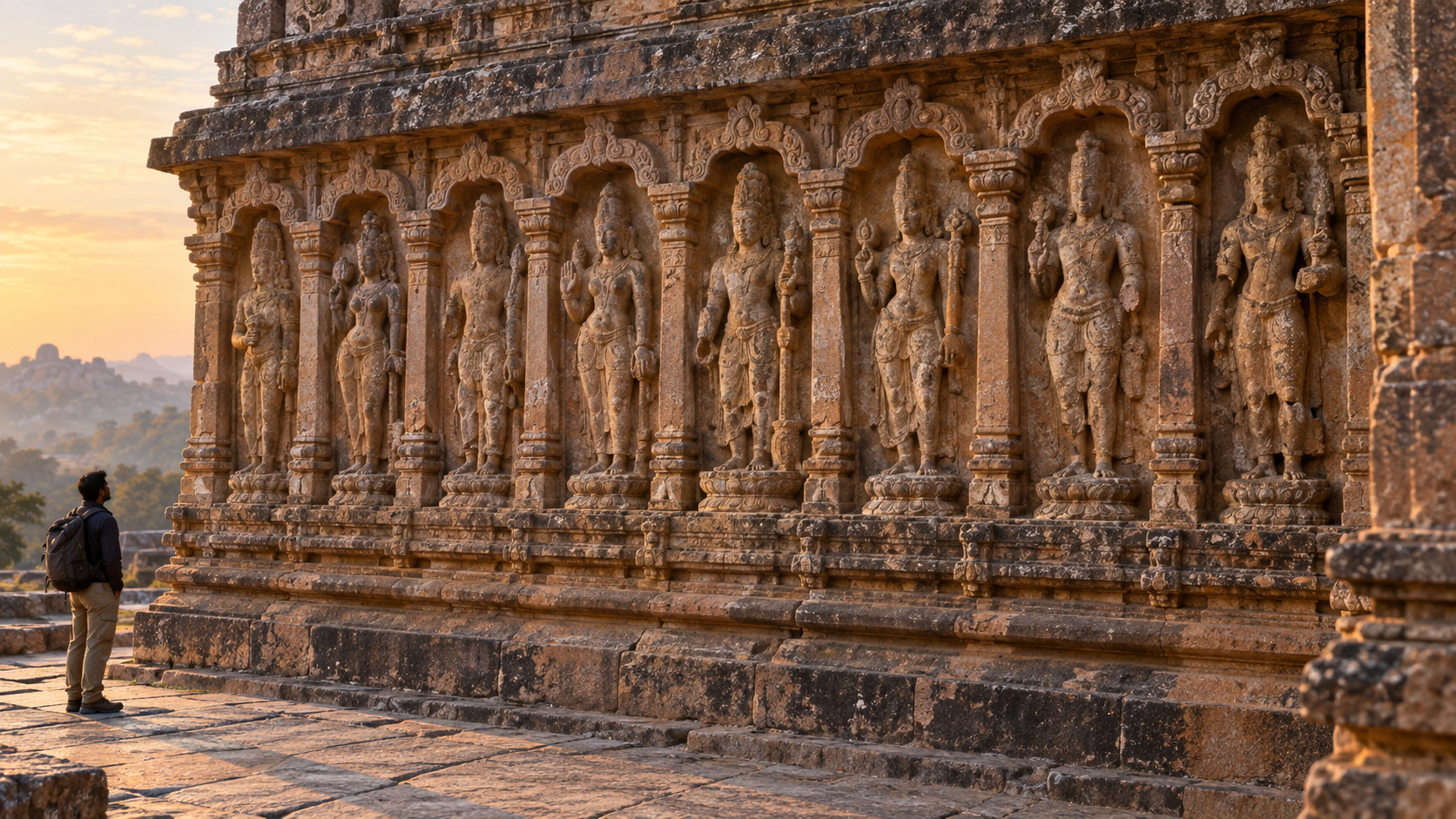
You are standing before a temple wall, looking at a row of weathered divine figures. A local label mentions the Ashtavasus, but it does not tell you which figure is Pratyusha. Should you look for the rising sun, count the figures, study their objects, or begin somewhere else?
Begin with the ensemble. Pratyusha is meaningful here not as an isolated dawn deity but as one member of an eightfold cosmic order. Once you read the placement, number, relationships, and condition of the sculptures together, you can separate a defensible identification from an attractive guess.
Begin with the eight, not with Pratyusha alone
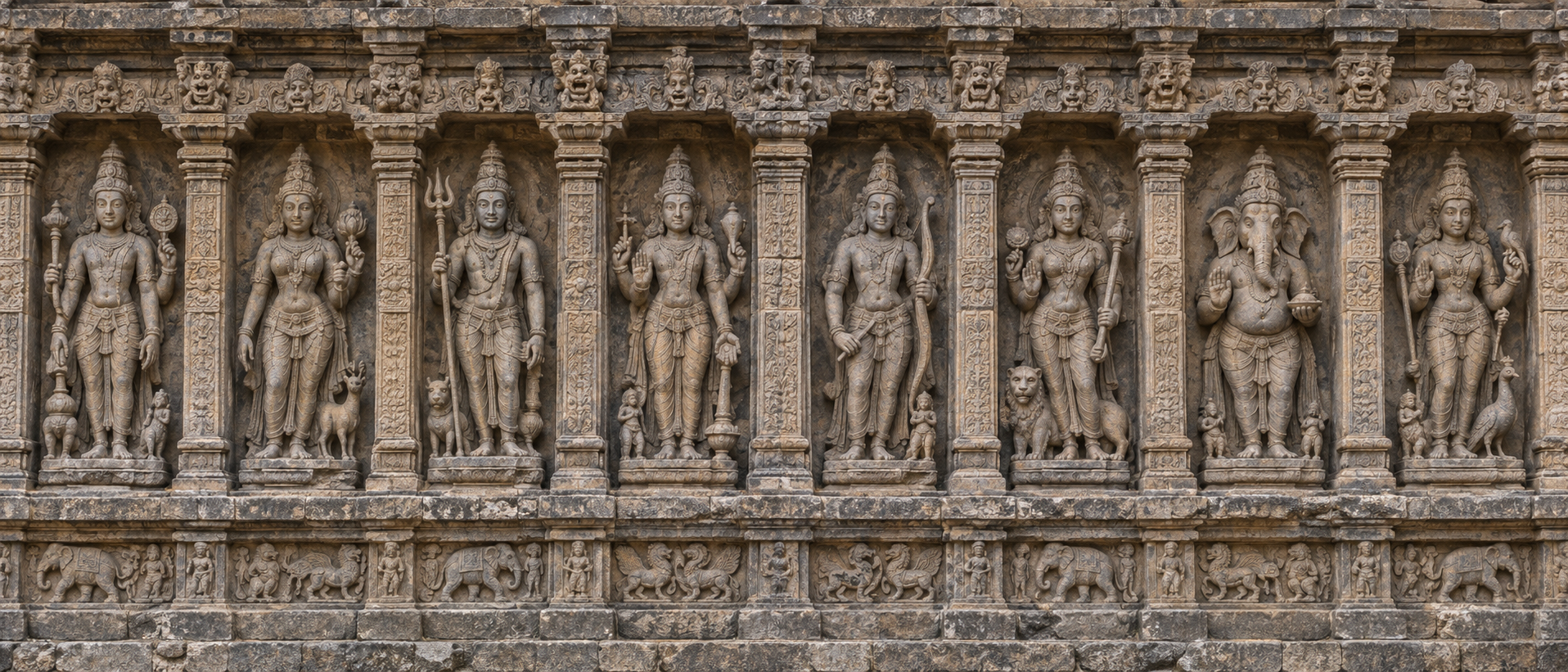
The word ashta means eight. The Ashtavasus are therefore a defined group rather than a loose gathering of minor deities. They are eight divine beings associated with elemental and cosmic forces that sustain existence. Pratyusha belongs within that collective structure as the deity of dawn.
This changes how you should inspect a sculpture. A single luminous-looking figure is not enough. First determine whether the figure actually belongs to an eight-member program. Look for a continuous register, a sequence of related niches, repeated scale, similar posture, matching frames, or another compositional device that binds the figures together.
Count carefully, but do not assume that the number now visible is the original number. A damaged register may preserve seven figures and an empty position. Two adjacent groups may appear to form a row of eight. A later repair may also disturb the sequence. Count surviving figures, damaged spaces, and probable original positions separately.
Even an intact group of eight establishes only that an Ashtavasu identification is plausible. It does not tell you which member is Pratyusha. The group and the individual require two different arguments.
What dawn contributes to the Ashtavasu order
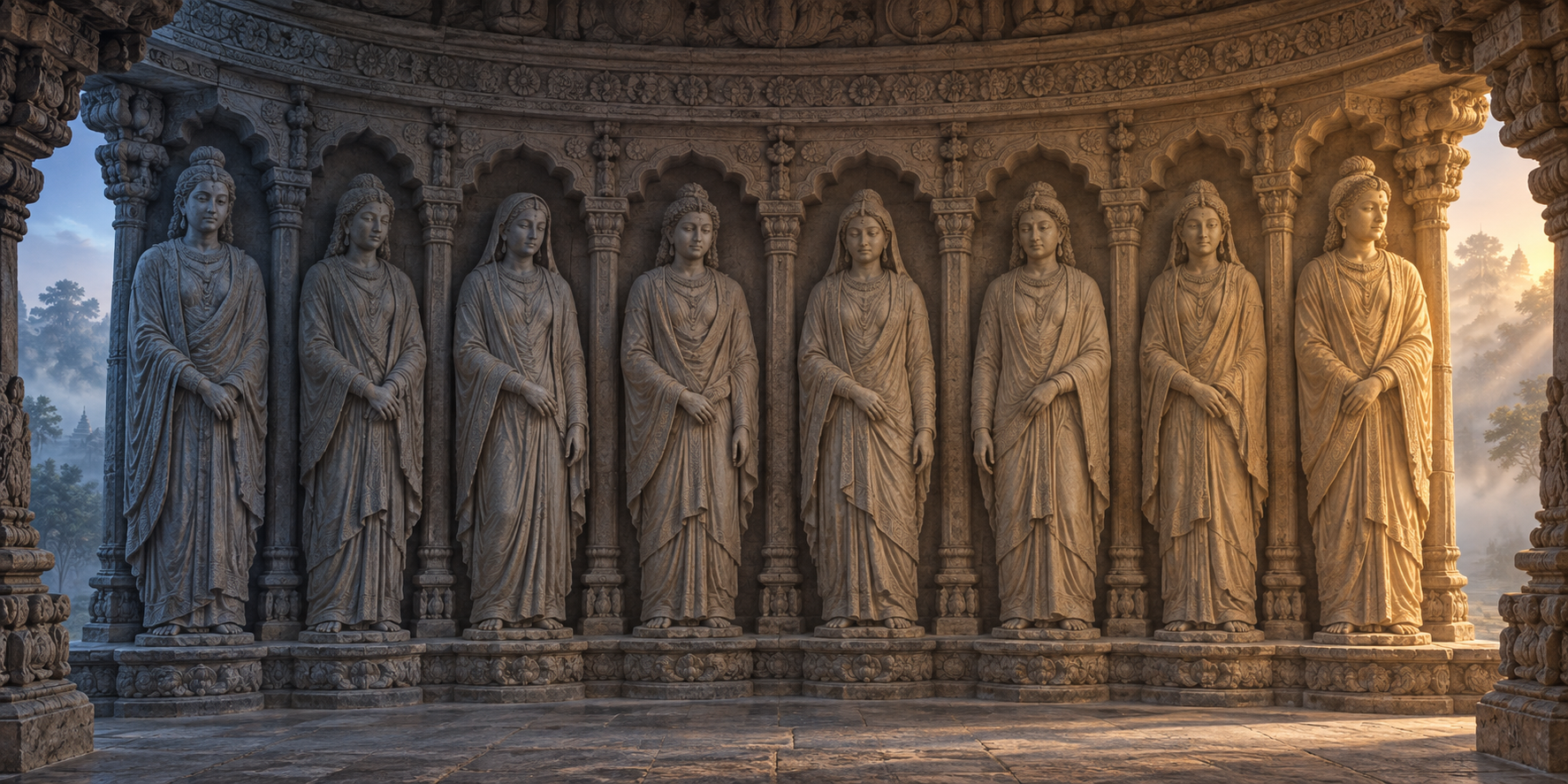
Dawn is not merely a colour in the sky. It is a recurring transition: darkness gives way, forms become visible, and another cycle of activity begins. When dawn is represented as Pratyusha within the Ashtavasus, that transition becomes part of the ordered forces by which the cosmos is sustained.
The name Vasu has associations with dwelling and also with goodness or brightness. Those meanings help you approach the ensemble, but etymology is not an iconographic code. It can illuminate the theological idea behind the group; it cannot, by itself, identify one damaged figure on a wall.
Pratyusha should therefore be read on two levels. Individually, the deity gives sacred form to dawn. Relationally, Pratyusha shows that renewal, visibility, and temporal transition belong within a larger network of sustaining powers. The surrounding figures are not background decoration. They are part of the meaning.
This is also why reducing Pratyusha to a generic image of sunrise misses the more important point. The sculpture places dawn within an ordered whole. It asks you to notice a rhythm that returns reliably and supports life without standing apart from the other forces of existence.
A field method for identifying a possible Pratyusha
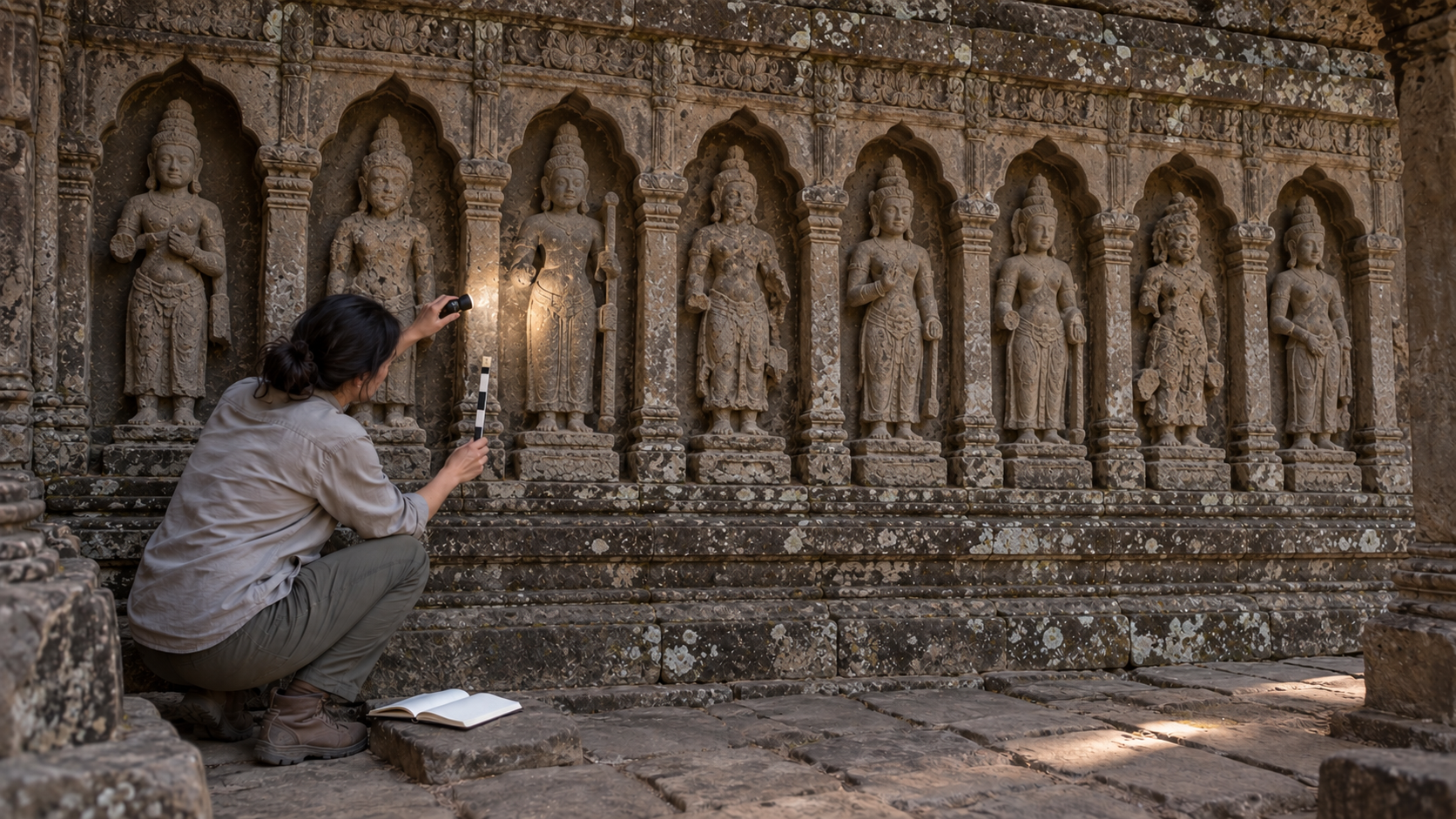
If you are visiting a temple, studying photographs, or reviewing a museum record, use the same sequence every time. It prevents a promising clue from becoming a premature conclusion.
- Record the architectural location. Note the wall, doorway, pillar, ceiling, tier, niche, or register. If the orientation is securely known, record it as context rather than treating it as proof.
- Photograph the complete composition. Take a wide view before taking close-ups. A tightly cropped image may preserve an object in the deity’s hand while concealing the eightfold arrangement that makes the identification possible.
- Establish the boundaries of the group. Look for frames, pilasters, changes in scale, intervening motifs, or breaks in the sculptural sequence. Do not count neighbouring deities merely because they stand on the same wall.
- Count positions as well as surviving figures. Record intact images, fragments, empty niches, and uncertain spaces separately. Write down what is present before reconstructing what may have been present.
- Describe before interpreting. Note posture, number of arms, gestures, objects, headgear, vehicle, attendants, direction of gaze, and damage. Use neutral wording such as “round object” until the form can be identified securely.
- Look for direct labels or documentation. An inscription, temple record, conservation report, or well-provenanced catalogue can carry more weight than a visual resemblance. Transcribe the wording exactly and distinguish a group label from an individual name.
- Compare relationships inside the same ensemble. Ask what repeats and what changes. A unique attribute matters more when the other seven figures share a consistent visual grammar.
- State the level of confidence. Use “confirmed” when direct evidence identifies the figure, “probable” when several independent clues agree, “possible” when the context fits but the individual clues are weak, and “unidentified” when the evidence does not support a name.
The last step is especially important. “Possible Pratyusha within an Ashtavasu group” is not a failure of interpretation. It is a precise conclusion that preserves what the sculpture can support while leaving room for better evidence.
Three mistakes that turn a clue into a claim
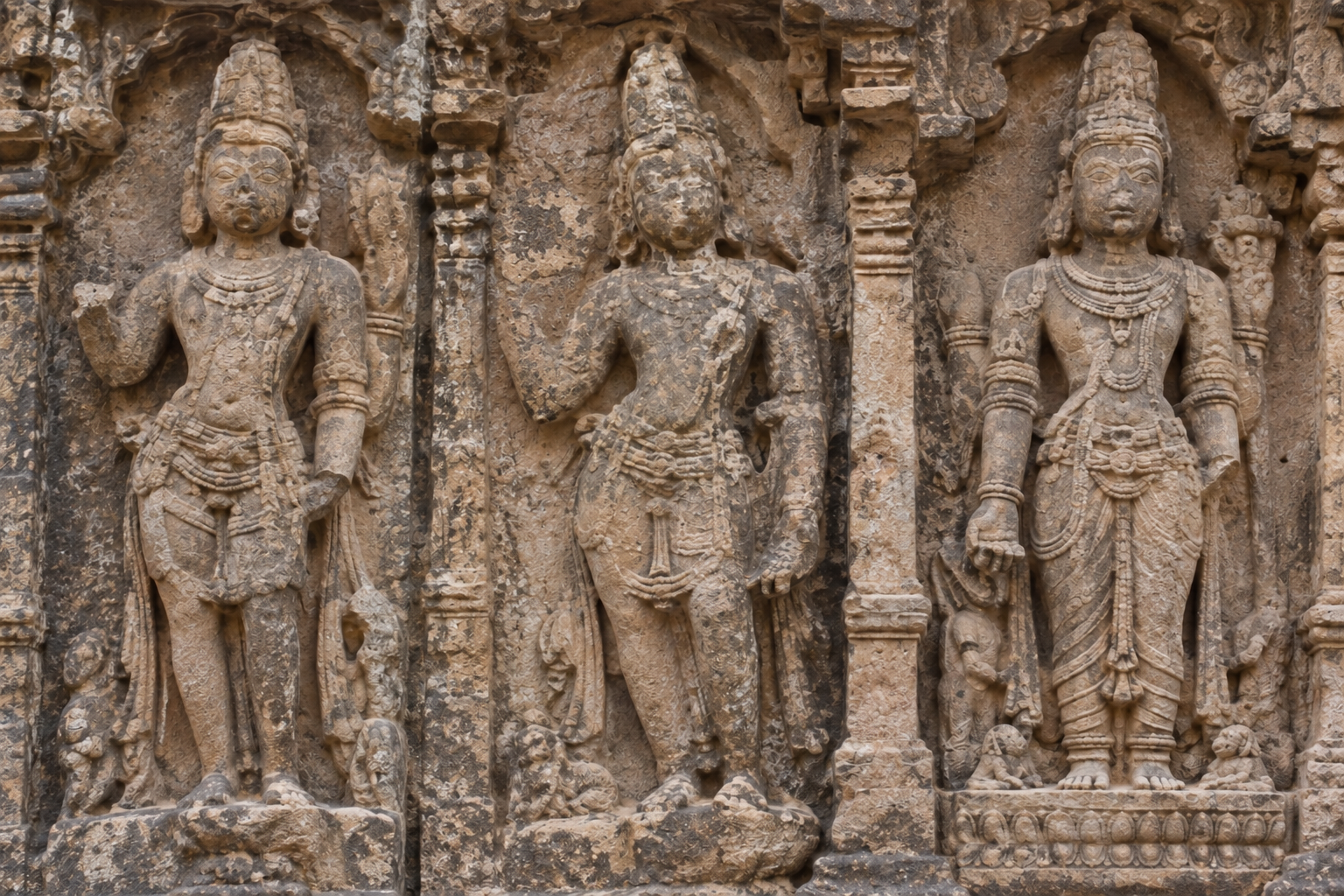
Treating the number eight as an individual name
An eight-figure composition can support an Ashtavasu reading, especially when its placement and internal design agree. It cannot distinguish Pratyusha from the other members. Keep the sentence “this may be an Ashtavasu ensemble” separate from “this figure is Pratyusha.” Each needs its own evidence.
Promoting a dawn-like feature into an exclusive attribute
A feature that appears bright, solar, floral, or eastward may seem appropriate to a dawn deity. Appropriateness is not exclusivity. Unless a reliable iconographic tradition or direct label connects that feature specifically to Pratyusha, describe it as supporting context rather than a decisive marker.
The same caution applies in reverse. The absence of an expected luminous feature does not automatically rule out Pratyusha. Stone may be broken, an object may be eroded, paint may be lost, or the local sculptural convention may express identity through placement rather than through a conspicuous attribute.
Reading the figure without reading the sculptural program
Temple sculpture communicates through relationships. Scale can indicate hierarchy. Repetition can establish membership. Direction can create a sequence. Proximity can connect a subsidiary being to a principal deity. None of these clues is infallible, but together they are more informative than a single object viewed in isolation.
Ask one practical question: what would this figure mean if the seven related figures were removed? If the answer changes substantially, then the ensemble is doing essential theological work. In the case of Pratyusha, dawn is being presented as one sustaining force among others, not as a self-contained spectacle.
Key takeaways for your next temple visit
- Confirm the boundaries and original count of the ensemble before trying to name an individual figure.
- A group of eight can support an Ashtavasu identification, but the number alone cannot identify Pratyusha.
- Read Pratyusha as dawn within a larger order of sustaining cosmic forces, not merely as a decorative sunrise image.
- Record visual details neutrally before assigning symbolic meanings to them.
- Treat orientation, luminous forms, and other dawn-like clues as supporting evidence unless a direct label or established iconographic basis makes them distinctive.
- Use an explicit confidence level so that observation, reconstruction, and identification do not blur together.
On your next visit, take the wide photograph first, count the whole register second, and name the individual figure last. That small change in order will let you see Pratyusha as temple sculpture intends: through the company the deity keeps and the cosmic pattern that company makes visible.
References

Leave a Reply
You must be logged in to post a comment.