,

Mundeshwari Temple: Understanding Its Ancient Legacy

2 min read
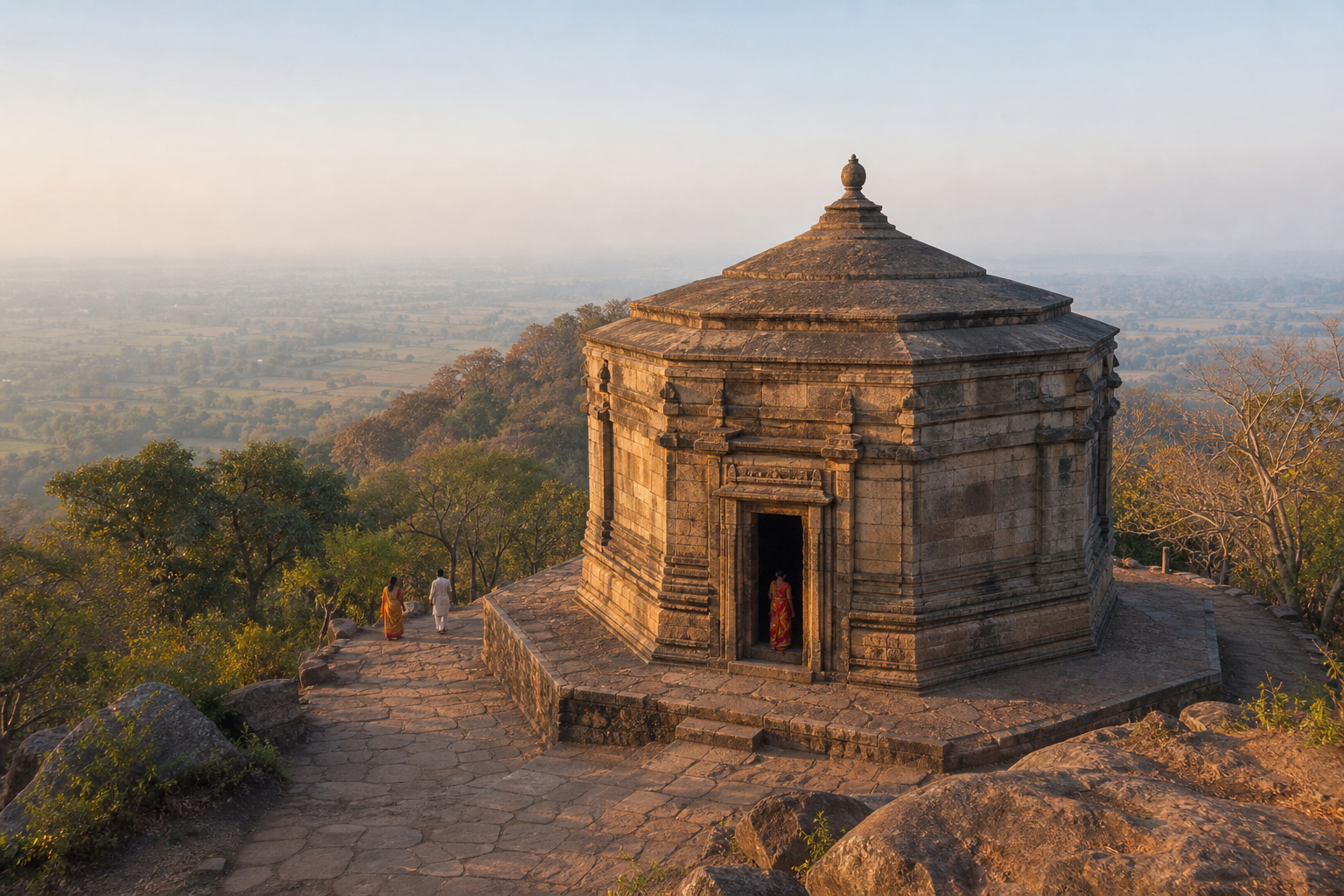
The octagonal stone Mundeshwari Temple on a forested hilltop, with a few devotees approaching in early morning light.

You may have arrived after seeing Mundeshwari described as India’s oldest functioning temple and wondered whether that is history or promotional shorthand. The careful answer is still remarkable: the shrine is believed to be nearly 1,900 years old and is often described as one of India’s oldest continuously functioning Hindu mandirs. Both “believed” and “one of” matter.

Its legacy cannot be reduced to a large age claim. The octagonal building, hilltop setting, worship of Mundeshwari Devi, association with Bhagwan Shiva, and continuing presence of devotees belong together. If you visit the temple, teach children about it, or describe it online, that fuller picture is the one worth carrying forward.

Key takeaways
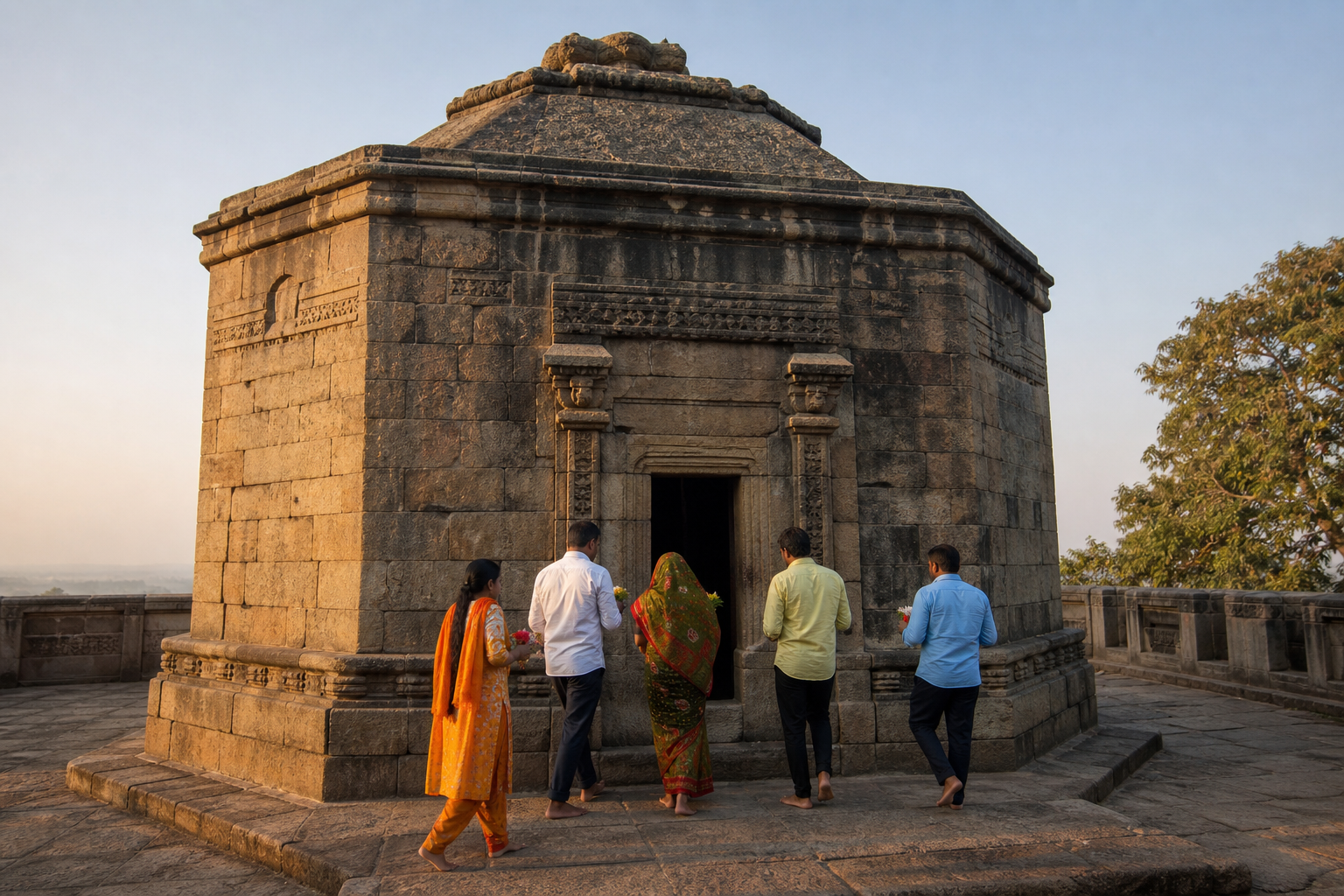
A three-quarter view of Mundeshwari Temple's octagonal stone exterior as devotees carrying flowers approach the entrance.
  • Mundeshwari Temple stands on the Mundeshwari Hills in Bihar’s Kaimur district, at an elevation of roughly 600 feet.
  • Its age is traditionally placed at nearly 1,900 years, but that estimate should not be converted into an unsupported exact foundation date.
  • The temple has a distinctive octagonal structure, an observable architectural fact that does not need invented symbolism to make it significant.
  • The presiding deity is Mundeshwari Devi, a form of Shakti, while the shrine is also closely associated with Bhagwan Shiva.
  • Its civilisational importance rests not only on an old building but also on a living tradition of Hindu worship.

Why the 1,900-year claim needs careful language
Weathered carved stone details beside an ancient temple wall, with a conservator's brush and measuring scale nearby.

Ancient temples often acquire simplified labels: “the oldest,” “unchanged since antiquity,” or “worshipped without a single interruption.” Such phrases travel quickly because they are easy to remember. They can also claim more than the available facts establish.

With Mundeshwari, keep three different questions separate:

<!– wp:list {

FAQs

How old is Mundeshwari Temple, and is it India’s oldest functioning temple?

Its age is traditionally placed at nearly 1,900 years. It is often described as one of India’s oldest continuously functioning Hindu mandirs, not as a conclusively dated or exclusively oldest temple.

Where is Mundeshwari Temple located?

Mundeshwari Temple stands on the Mundeshwari Hills in Bihar’s Kaimur district, at an elevation of roughly 600 feet. Its hilltop setting is part of the temple’s wider legacy.

What makes Mundeshwari Temple’s architecture distinctive?

The temple has a distinctive octagonal structure. This is an observable architectural fact, and its significance does not depend on invented symbolism.

Who is worshipped at Mundeshwari Temple?

The presiding deity is Mundeshwari Devi, a form of Shakti. The shrine is also closely associated with Bhagwan Shiva.

Why is Mundeshwari Temple important beyond its age?

Its legacy brings together the octagonal building, hilltop setting, worship of Mundeshwari Devi, association with Bhagwan Shiva, and continuing presence of devotees. Its civilisational importance rests on a living tradition of Hindu worship as well as an old structure.

How should the temple’s 1,900-year claim be described responsibly?

Use careful qualifiers: the temple is believed to be nearly 1,900 years old and is often described as one of India’s oldest continuously functioning Hindu mandirs. Avoid assigning an unsupported exact foundation date or treating claims of an unchanged or wholly uninterrupted history as established fact.

Leave a Reply