
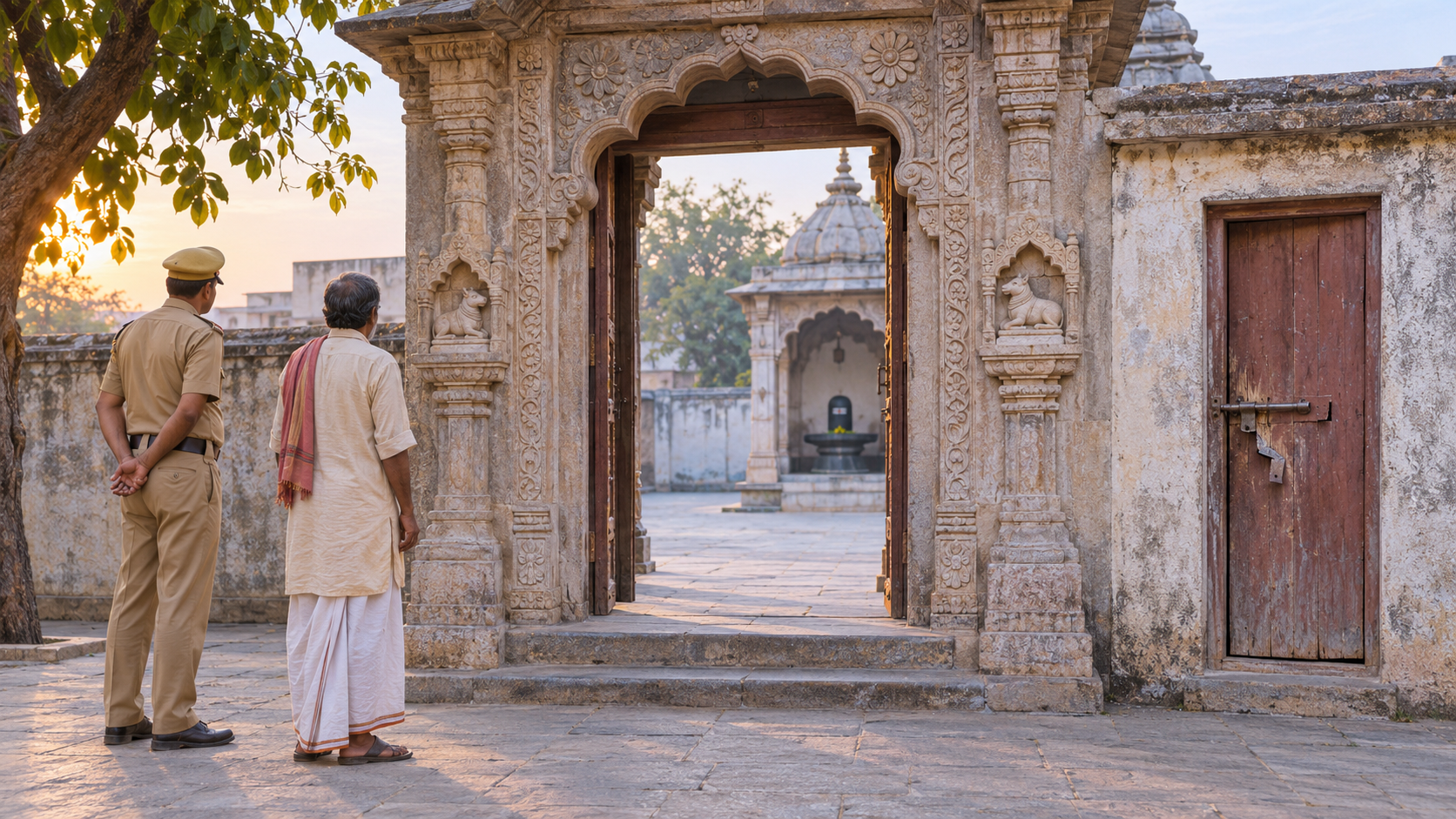
If you worship at, volunteer for, or help manage a neighbourhood mandir, the Meerut burglary raises an immediate question: what should a temple community do after a break-in, and what should it change before another attempt?
The answer begins with discipline. Protect people, preserve evidence, account for every sacred and material object, and resist rumours. Then examine the temple as a burglar might: entry points, darkness, keys, cash, camera blind spots and the predictable moments when nobody is present.
Start with the facts: unidentified means unidentified
At a centuries-old Shiva temple in Uttar Pradesh’s Meerut district, two masked individuals allegedly entered during the early hours and stole murtis, donation money and temple equipment. CCTV reportedly recorded their movements through the premises.
The theft was discovered when caretakers and devotees arrived in the morning and found signs of forced entry. At the stage described, police had registered a case, taken statements and begun examining footage from the temple and surrounding roads, shops and residences. The exact value of the missing property was still being assessed.
The suspects’ covered faces, speed and apparent familiarity with the premises led investigators to consider whether the burglary had been planned. That is an investigative theory, not proof of who committed the crime, why they selected the temple or whether they were connected to any earlier theft.
This distinction matters. Anger over the desecration of a sacred space is understandable, but anger cannot supply missing evidence. No communal, political or organisational identity should be assigned to unidentified suspects without proof. Unsupported accusations can harm innocent people, divert attention from the actual offenders and complicate the investigation.
At this stage, the responsible formulation is simple: a Hindu temple was burglarised, sacred and material property was taken, two masked suspects were reportedly recorded, and the police investigation must establish the rest.
After a break-in, treat the mandir as both sacred space and crime scene
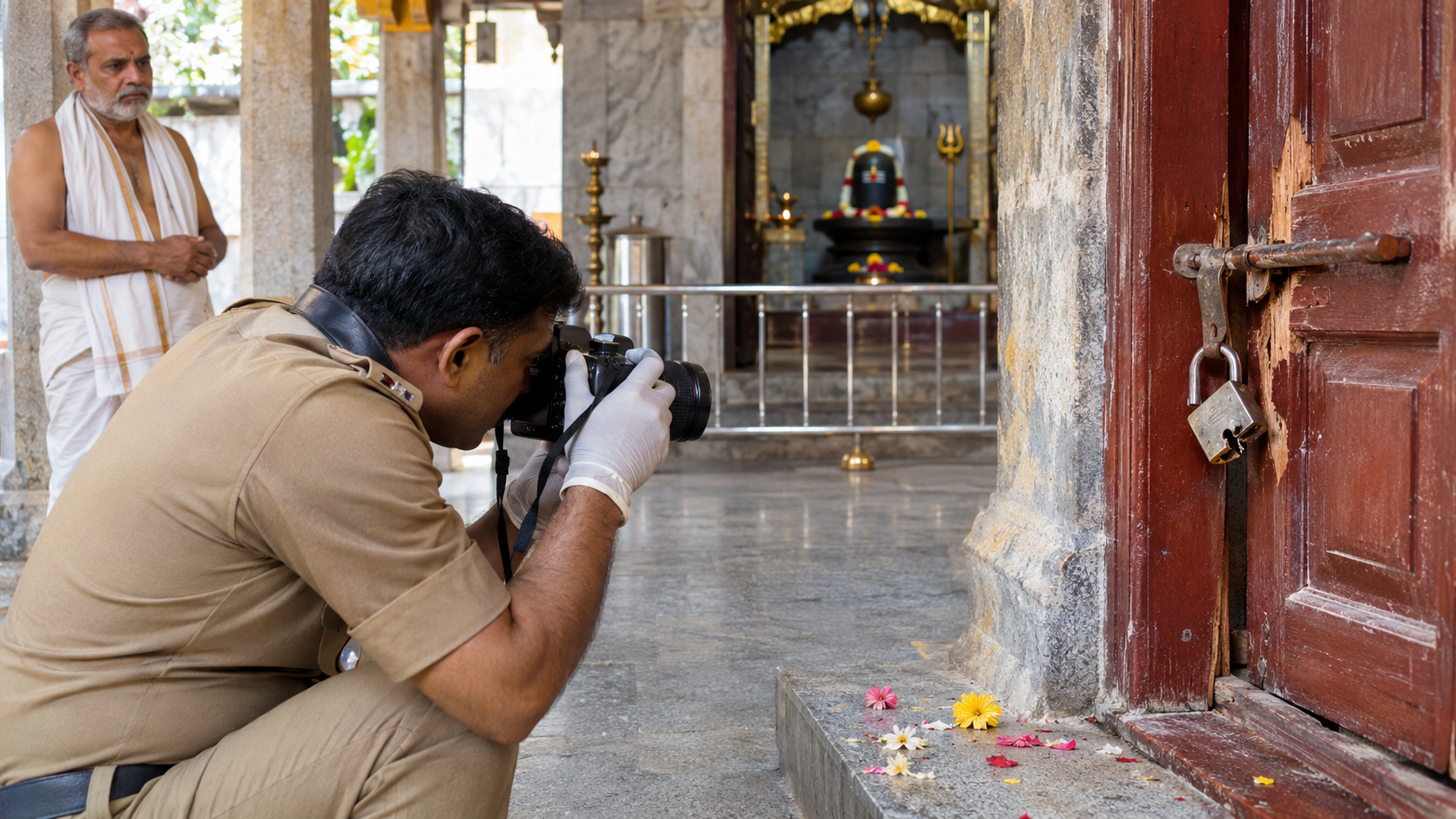
For a devotee, a murti installed for worship is not an interchangeable object with a market price. It belongs to a living relationship of darshan, seva, ritual duty and community memory. Its removal therefore causes a spiritual and emotional injury that no valuation can capture.
That sacred character does not conflict with careful evidence preservation. Until investigators release the premises, the sanctum, doors, donation box, cupboards and pathways may all contain useful evidence. The natural urge to clean, repair or restore order should wait for police instructions.
- Protect people first. Confirm that nobody is inside or injured, call the police and prevent an untrained volunteer from searching the building alone. Do not pursue or confront suspects.
- Restrict entry. Keep devotees and bystanders outside the affected area. Record the names of anyone who entered before the restriction was established.
- Do not clean or rearrange anything. Avoid touching damaged locks, doors, donation boxes, cupboards, footprints or objects near the altar until investigators have examined them.
- Preserve the original video. Stop the recorder from automatically overwriting the relevant period if this can be done without altering the recording. Export the requested footage, retain an untouched copy and note whether the camera’s displayed time differs from the actual time. Do not trim, caption or compress the evidentiary copy.
- Prepare two inventories. List what is missing and, separately, what was disturbed but remains present. Use earlier photographs, purchase records, donation registers and ritual inventories to identify each object accurately.
- Ask neighbours to retain their recordings. Nearby homes and businesses may have captured an approach route, vehicle or direction of escape. Ask them to preserve footage for police rather than circulating it publicly.
- Create one written incident log. Record when the break-in was discovered, who was notified, when police arrived, what material was handed over and who retained each copy. Follow police directions if they differ from this checklist.
Temple management should also nominate one liaison for police communication and one spokesperson for public updates. This reduces contradictory statements and prevents an early assumption from hardening into a supposed fact.
Build temple security in layers, not around one camera

Many smaller temples depend on basic locks, volunteer caretakers and limited surveillance even though they may contain donation cash, ornaments, worship equipment and old murtis. The Meerut incident shows why a camera by itself is not a security plan. A useful system must deter entry, detect it, preserve evidence and trigger a response.
- Secure the perimeter. Inspect doors, windows, roof access, boundary gates, hinges and hasps. A strong padlock cannot compensate for a weak frame or an exposed hinge. Repair the weakest entry point first.
- Improve night visibility. Illuminate gates, entrances, exterior paths and concealed corners. Position lights so that a camera can record a face rather than only a silhouette.
- Make cameras evidentiary. Cover entrances, exits, the donation area and the routes between them. Check that the date and time are correct, faces are recognisable in both daylight and darkness, recordings can be exported, and the recorder itself is locked away from the camera it serves.
- Add an alert mechanism. A door sensor, siren or phone-connected alarm can shorten the interval between entry and response. Test the alert routinely and define who receives it when the regular caretaker is unavailable.
- Reduce cash exposure. Empty donation boxes on a controlled schedule, count collections with two authorised people, document the amount and move funds to secure custody promptly. Do not advertise collection times or allow accumulated cash to remain visible.
- Control keys and access codes. Maintain a current register of key holders, recover keys when responsibilities change and replace compromised locks or codes. Avoid leaving spare keys in familiar hiding places near the premises.
- Document sacred and valuable property. Photograph each murti, ornament and significant ritual object from several angles. Record its material, dimensions, inscriptions, distinctive marks, customary location and any available acquisition history. Keep a protected copy of the inventory away from the temple.
- Use a closing checklist. The final authorised person should confirm doors, windows, donation storage, alarms, cameras and exterior lights. A signed or time-stamped checklist turns an assumed task into an accountable one.
Changes around an installed murti or the conduct of worship should be discussed with the temple’s priest or relevant acharya. Security hardware should protect the premises without casually altering ritual arrangements. In particular, do not improvise restraints or fixtures on a worshipped murti merely because they appear mechanically convenient.
Test the completed system by walking through a closing shift. Can someone enter through an unobserved side door? Does glare hide a face? Can a thief take the recorder along with the footage? Who receives an alarm at night, and what are they expected to do? The safe response is to call police and observe from a secure position, not to send a lone volunteer into a possible confrontation.
Devotees can help without fuelling rumours or vigilantism
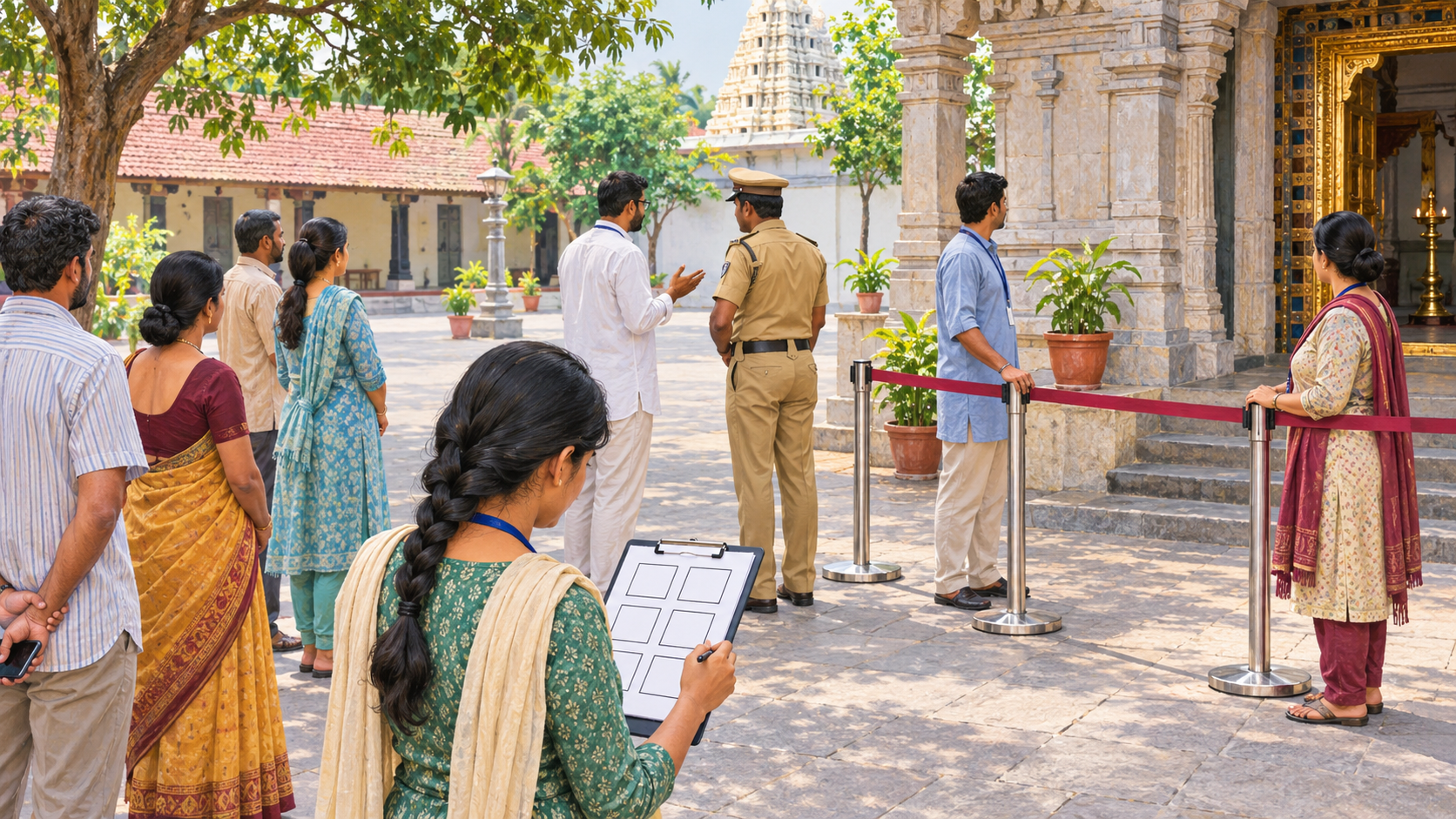
Concern becomes useful when it is converted into a defined responsibility. If you want to help a temple after this incident, ask what concrete gap you can close instead of forwarding an unverified message.
- Fund a named improvement. Offer to support a repaired door, exterior light, alarm, protected recorder, secure donation box or professional electrical installation. A targeted contribution is easier to verify than a vague security collection.
- Offer relevant skills. Electricians, locksmiths, camera technicians, bookkeepers and people experienced in documenting collections can help establish systems that volunteers are able to maintain.
- Help build the inventory. Older festival photographs and family records may show a missing object’s appearance and distinguishing marks. Give useful copies to temple management and investigators rather than posting sensitive details indiscriminately.
- Preserve, do not embellish. If you possess relevant video or witnessed unusual activity, retain the original file and contact police. Do not add labels, names or communal claims that the recording itself does not establish.
- Ask for transparent follow-through. Temple management should be able to explain what was repaired, who controls access, how donations are handled and when the new arrangements will be tested, without publishing details that would help an offender.
- Reject vigilantism. Devotees should not organise a suspect hunt, confront named individuals or circulate personal information. Supporting the temple means helping the lawful investigation reach the actual offenders.
Local coordination also matters. Temple representatives can give the nearest police station updated caretaker contacts, identify vulnerable hours and request that the premises be considered during local patrols. Neighbours can agree on whom to call when they notice an open gate, broken light or unexpected movement, while leaving confrontation to police.
Key takeaways
- The Meerut suspects remain unidentified in the facts available for this account; do not convert suspicion into communal attribution.
- After a burglary, protect people and preserve the scene before cleaning, repairing or resuming normal access.
- Retain original CCTV files, document any clock discrepancy and prevent automatic overwriting.
- Combine physical barriers, lighting, cameras, alerts, cash controls, inventories and accountable closing procedures.
- Help through defined repairs, evidence, skills and transparent administration, never rumours or confrontation.
Before your temple’s next closing shift, ask five questions: Are all entry points sound? Are the cameras recording usable images? Will an intrusion alert a responsible person? Is donation cash secured? Is there an off-site inventory of sacred property? Any uncertain answer is a task to assign now, while the choice is still yours.
References

Leave a Reply
You must be logged in to post a comment.