
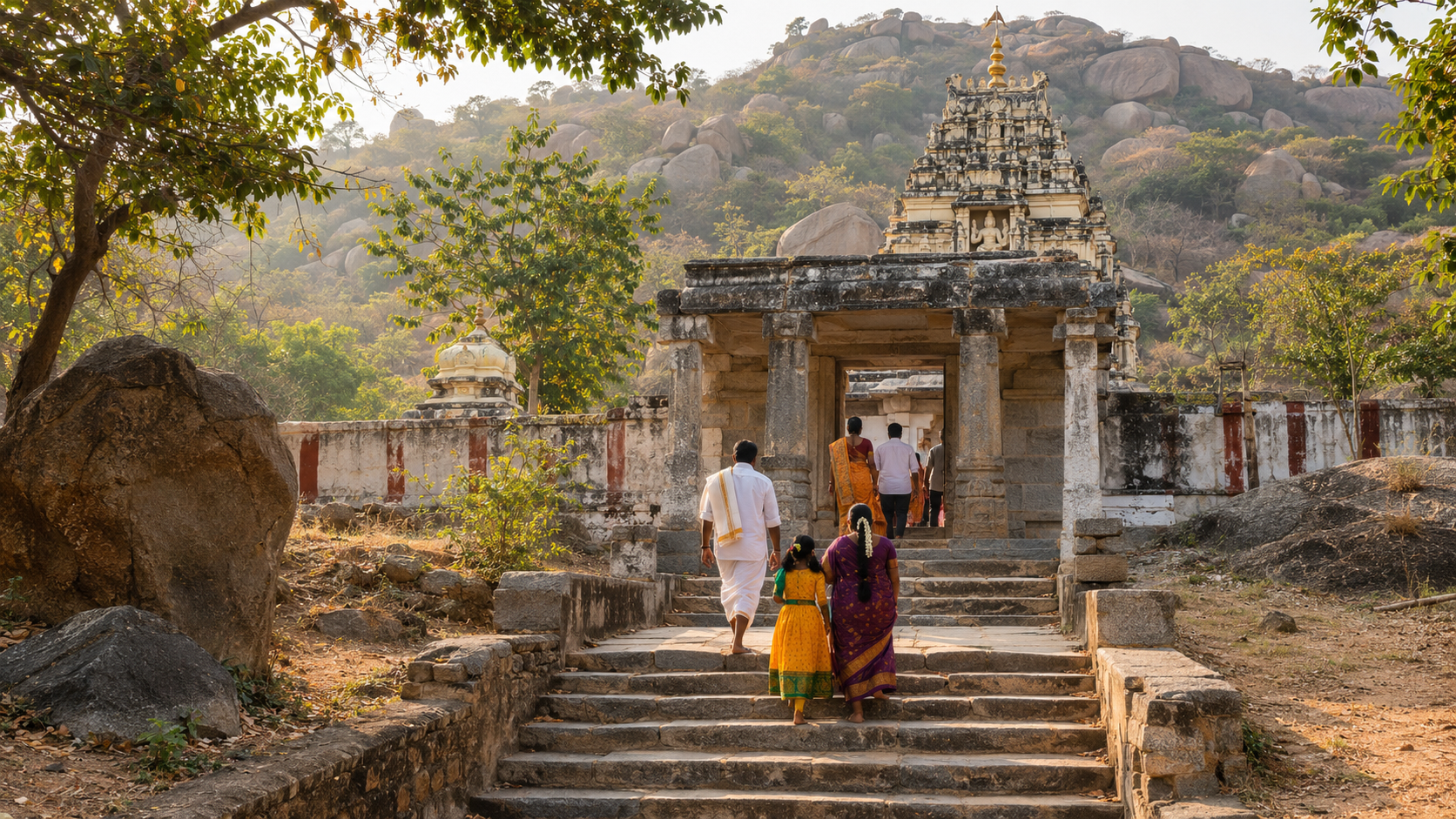
If you are planning darshan at Kurumurthy Venkateshwara Temple, the first challenge is not devotion but identification: finding the right shrine, choosing a reliable route anchor, and knowing which practical details still need local confirmation.
The temple is in Ammapur village in Mahabubnagar district. It is dedicated to Lord Venkateshwara Swamy and is known as the Tirumala Tirupati of Telangana. Those facts give you the correct devotional and geographical identity; the plan below turns them into a workable pilgrimage.
Find the right Kurumurthy before you set out
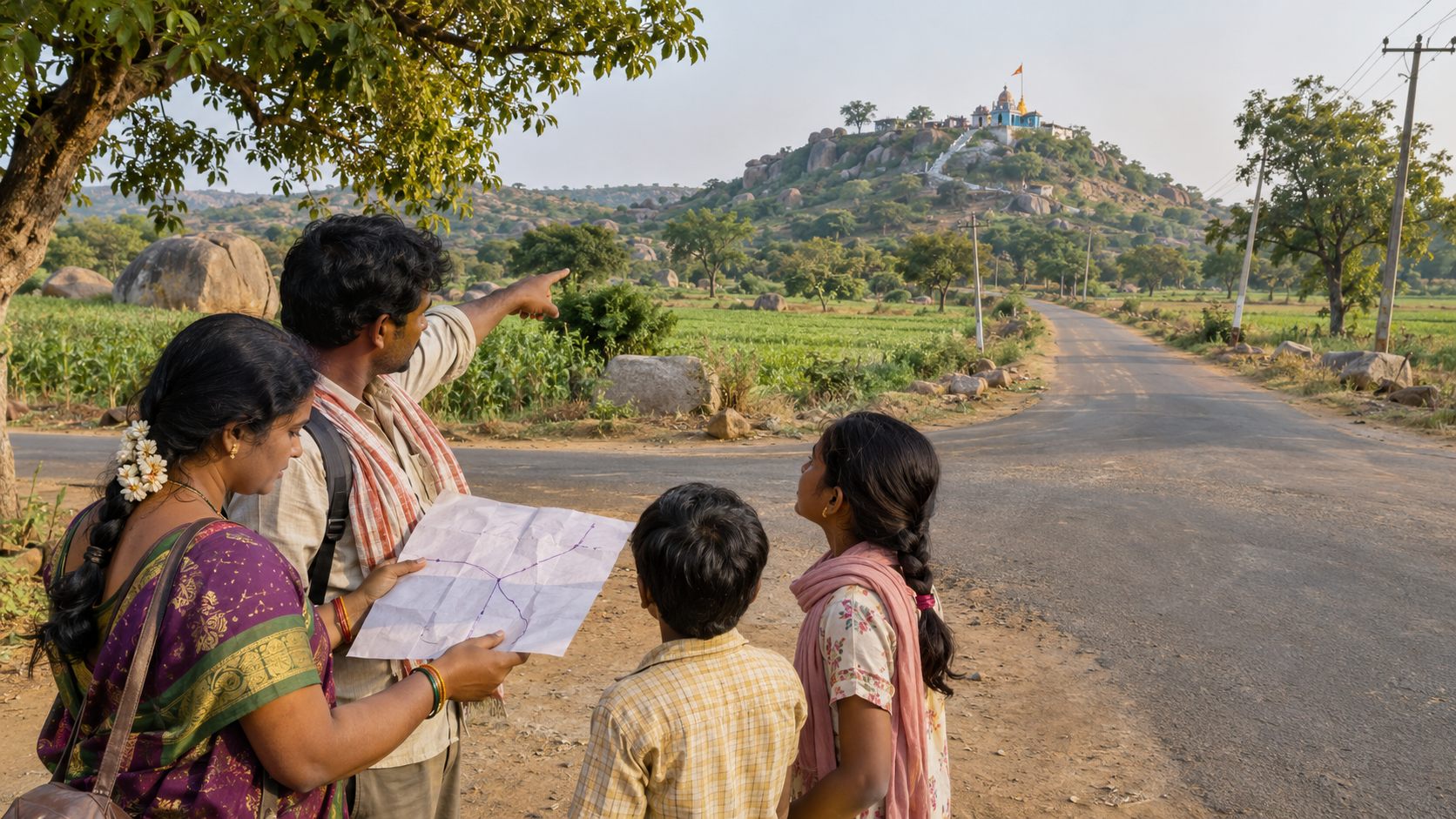
The shrine may appear under the names Kurumurthy Swamy Temple or Kurumurthy Venkateshwara Temple. The wording can vary because one name identifies the local shrine while the other makes its presiding deity explicit. Do not reject a map result merely because it uses one form rather than the other.
At the same time, do not select a result simply because it contains Venkateshwara or Tirupati. Venkateshwara temples are found in many places, and the title Tirumala Tirupati of Telangana is a devotional epithet, not a street address. Match all four identifiers before saving your destination:
- Temple name: Kurumurthy Swamy Temple or Kurumurthy Venkateshwara Temple.
- Deity: Lord Venkateshwara Swamy.
- Village: Ammapur.
- District: Mahabubnagar.
Add Kothakota as a separate saved place. It is the most useful approach point in the available location details, and it gives a driver or local resident something clearer to work with than the temple’s regional epithet.
Build the journey around Kothakota and Ammapur
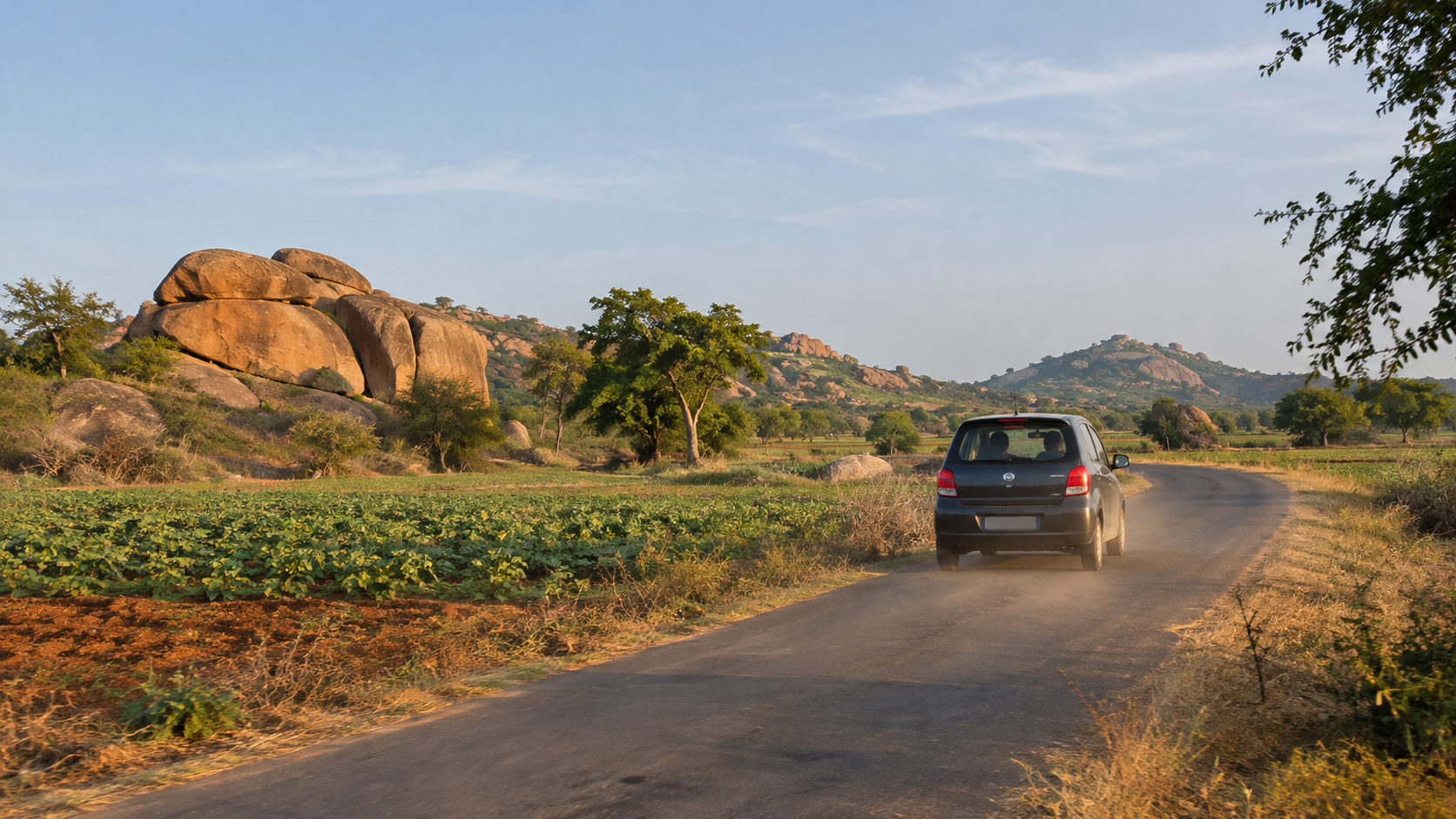
Ammapur is about 25 kilometres from Kothakota. Kothakota lies on National Highway 7 between Hyderabad and Kurnool. Think of the trip in three parts: reach the Hyderabad-Kurnool corridor, locate Kothakota, and then confirm the final road to Ammapur.
- Save Kothakota and Ammapur as separate map points rather than relying on a single end-to-end route.
- Keep the full temple identity written down: Kurumurthy Swamy Temple, Lord Venkateshwara, Ammapur, Mahabubnagar.
- At Kothakota, confirm the current Ammapur turnoff with someone who knows the local road before continuing.
- If you depend on a bus, auto, taxi, or hired vehicle, arrange the return leg before entering the temple. Reaching a village shrine and finding transport back are two different tasks.
- Save an offline map or screenshot. Place names remain useful when mobile data or live navigation becomes unreliable.
Do not convert the 25-kilometre figure into an assumed travel time. It describes distance from Kothakota, not road condition, waiting time, traffic, or the availability of local transport. It also does not describe your full journey from Hyderabad, Kurnool, or another starting point.
Road numbers can also be less useful than place names when signs, local speech, and mapping services use different labels. Keep Kothakota and Ammapur at the centre of your directions; treat the highway number as supporting information.
Let the temple’s identity shape your darshan
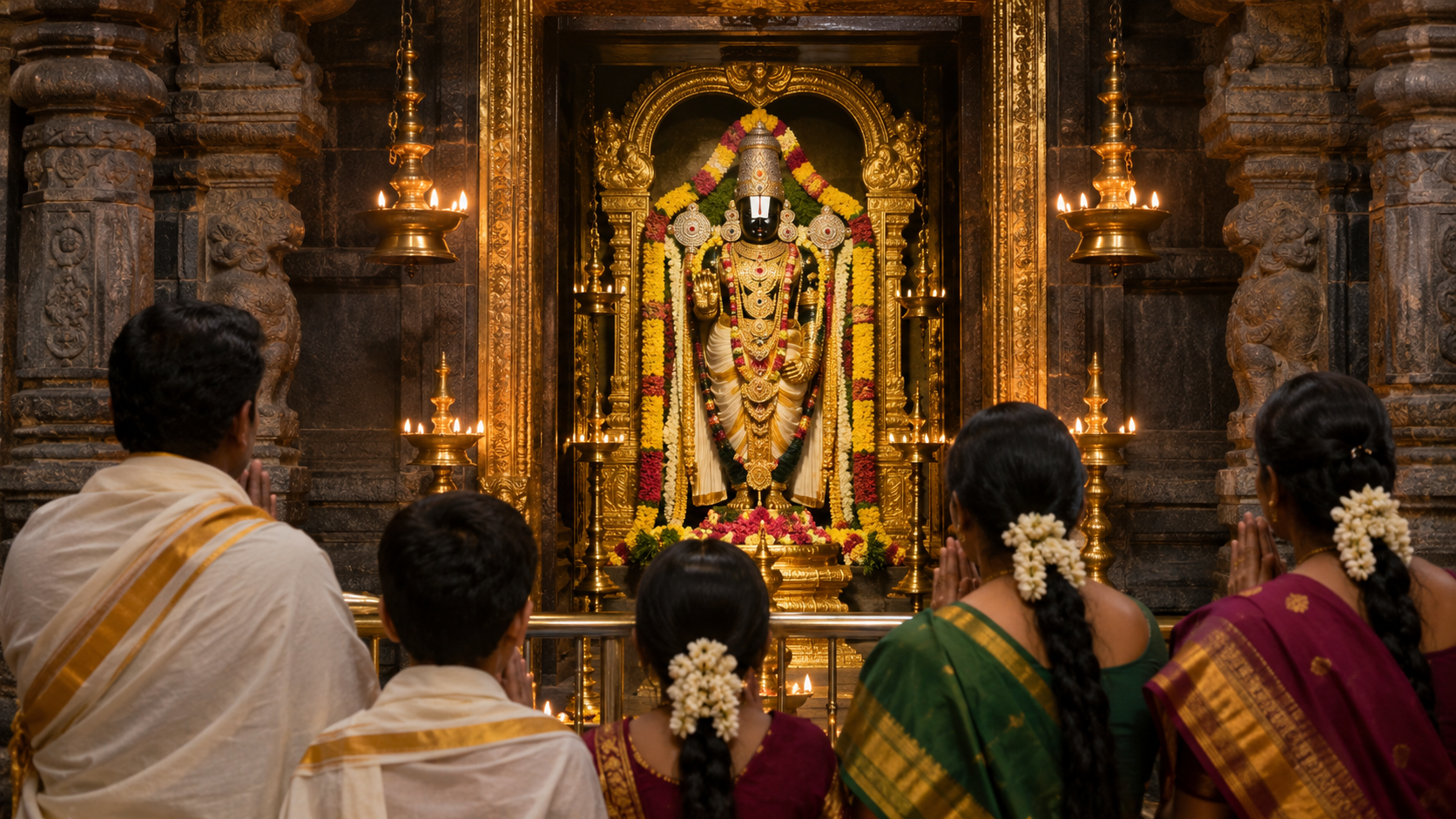
Calling Kurumurthy the Tirumala Tirupati of Telangana expresses the shrine’s regional devotional importance. It should not be read as a promise that its administration, queues, bookings, accommodation, offerings, or daily schedule duplicate those of Tirumala. Honour the comparison without importing operational assumptions from another temple.
Venkateshwara is worshipped as a form of Vishnu. For a pilgrim, darshan is not sightseeing alone; it is the devotional act of approaching the deity with attention and reverence. A simple plan is often better than an elaborate one whose offerings or rituals have not been confirmed.
- Decide your prayer, vow, or intention before you join the line. This prevents practical distractions from taking over the visit.
- Wear clean, modest clothing suitable for a Hindu temple, while following any more specific instructions displayed on site.
- Carry only an offering you know will be accepted. If you want a particular seva, archana, or other ritual, confirm its availability instead of assuming it.
- Follow local directions concerning footwear, queues, photography, entry areas, and the handling of offerings.
- Silence your phone before approaching the sanctum. If space and temple instructions permit, pause quietly after darshan rather than leaving in a rush.
If you are visiting with children, older relatives, or someone with limited mobility, separate the spiritual plan from the access plan. Ask about walking distance, steps, vehicle access, resting places, and toilets before the final leg. A map pin cannot answer those questions.
Verify the details that can change
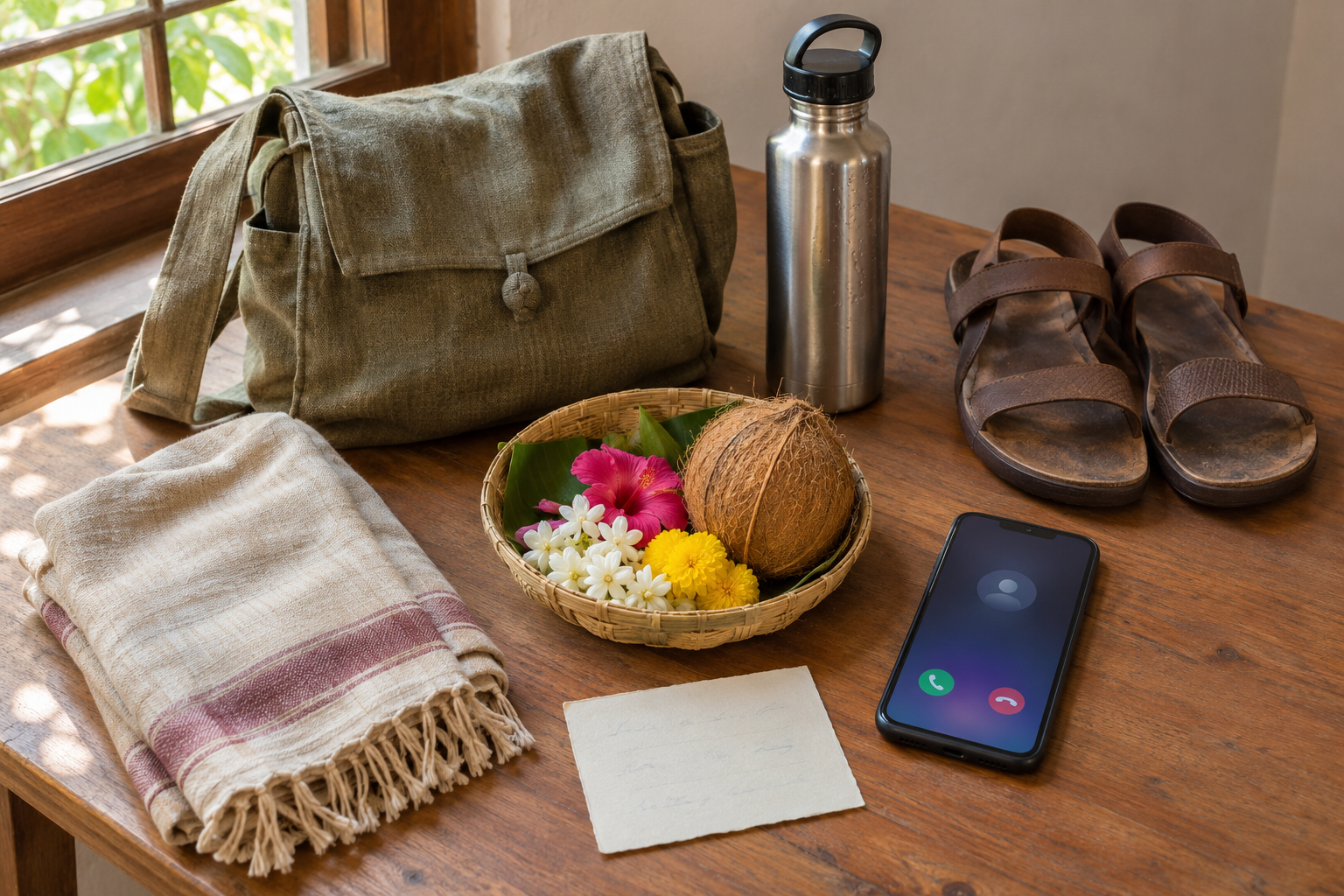
The temple’s identity and broad location are stable enough to begin planning. Day-specific arrangements are not. Before departure, seek current confirmation from a reliable temple contact or someone familiar with conditions in Ammapur. If you cannot find an authoritative current contact, confirm the essentials at Kothakota before continuing.
- Opening and darshan hours, including any closure or break during the day.
- Whether your intended date coincides with a festival, special puja, or unusually large gathering.
- Availability and registration method for any seva, archana, or offering you intend to make.
- How close private vehicles, taxis, buses, or autos can currently reach.
- Parking, walking distance, steps, and accessibility for members of your group.
- Availability of drinking water, food, toilets, and a suitable place to rest.
- Whether payments require cash or whether a verified digital option is accepted.
- Rules for phones, cameras, bags, footwear, and items carried toward the sanctum.
- The last practical return-transport option if you are not travelling in your own vehicle.
Prioritise the checks according to your situation. A same-day visitor should settle darshan hours and return transport first. A family accompanying an older pilgrim should settle vehicle access, walking, steps, rest, and toilets first. Someone travelling to fulfil a vow should confirm the permitted offering or ritual before buying or carrying anything.
Key takeaways
- Kurumurthy Swamy Temple and Kurumurthy Venkateshwara Temple refer to the shrine dedicated to Lord Venkateshwara Swamy at Ammapur.
- Use Ammapur, Mahabubnagar, and Kothakota to distinguish it from other Venkateshwara temples.
- Ammapur is about 25 kilometres from Kothakota, which is on the Hyderabad-Kurnool highway corridor.
- Treat Tirumala Tirupati of Telangana as an expression of sacred regional stature, not as proof that Tirumala’s procedures apply here.
- Confirm current hours, local transport, access, offerings, and facilities before attempting the final leg.
Your next step is straightforward: save Kothakota and Ammapur, write down the temple’s complete identity, and verify the few current details that matter most to your group. Once those are settled, you can approach Kurumurthy as a pilgrimage rather than a navigation problem.
References

Leave a Reply
You must be logged in to post a comment.