
If you are entering Margashirsha observances into your family calendar, the difficult part is not finding one festival date. It is keeping four distinct patterns straight: an Ekadashi, a six-day Khandoba festival, a major Skanda observance, and five consecutive Lakshmi Thursdays.
The dates below give you a practical planning calendar for 2026-2027. Use them as civil-date anchors, then confirm tithi boundaries, fasting or parana times, and temple schedules with the panchanga followed by your family or local mandir.
The 2026-2027 dates at a glance
Enter the entire sequence at once. That makes the overlap on December 15 visible and prevents the January observance from disappearing when you change Gregorian calendars.
| Observance | Date or span | Devotional setting | What to record |
|---|---|---|---|
| Utpanna Ekadashi | December 4, 2026 | Margashirsha Krishna Paksha Ekadashi; the Smarta and Vaishnava observances are listed on the same civil date | Add the date now, then attach locally confirmed fasting and parana timings if you observe the vrata |
| Champa Sashti | December 9-15, 2026 | Six-day Maharashtrian festival of Lord Khandoba, from Shukla Pratipada through Sashti | Use a multi-day entry, with December 15 clearly marked as the culminating Sashti |
| Margashirsha Lakshmi Vratam | December 10, 17, 24 and 31, 2026; January 7, 2027 | Thursday Lakshmi observance associated especially with Andhra Pradesh and its North Coastal districts | Create all five reminders together rather than adding each Thursday separately |
| Subramanya Sashti | December 15, 2026 | Major observance of Lord Subramanya, also known as Kartikeya, Murugan, Shanmukha and Skanda | Check the relevant temple’s puja or abhishekam programme before making travel plans |
The sequence begins with Utpanna Ekadashi on December 4. Champa Sashti starts five days later, the first Lakshmi Thursday follows on December 10, and December 15 carries two distinct Sashti observances. The Thursday vrata then continues across the end of the Gregorian year through January 7.
December 15 carries two devotional identities
Champa Sashti and Subramanya Sashti fall on the same civil date in 2026, but they should not be flattened into a single generic Sashti. Their deities, regional settings and devotional narratives are different.
For devotees of Khandoba, December 15 completes the six-day Champa Sashti observance. It recalls Lord Khandoba’s victory over Mani and Malla and belongs to a festival arc beginning on December 9. Its meaning therefore comes partly from the days leading into Sashti, not only from the final date.
For devotees of Subramanya, December 15 is a major day dedicated to Skanda. Sashti is observed for Subramanya each month, but this observance has particular importance and is marked with special pujas and abhishekams.
- If your family follows a Khandoba tradition, keep December 9-15 as one continuous calendar entry and identify December 15 as the culmination.
- If your family follows a Subramanya, Murugan or Skanda tradition, make a separate December 15 entry and attach the programme of the temple you intend to visit.
- If both traditions are present in your household, retain two named entries. Sharing a date does not make one observance an alternative name for the other.
Plan the five Lakshmi Thursdays as one vrata cycle
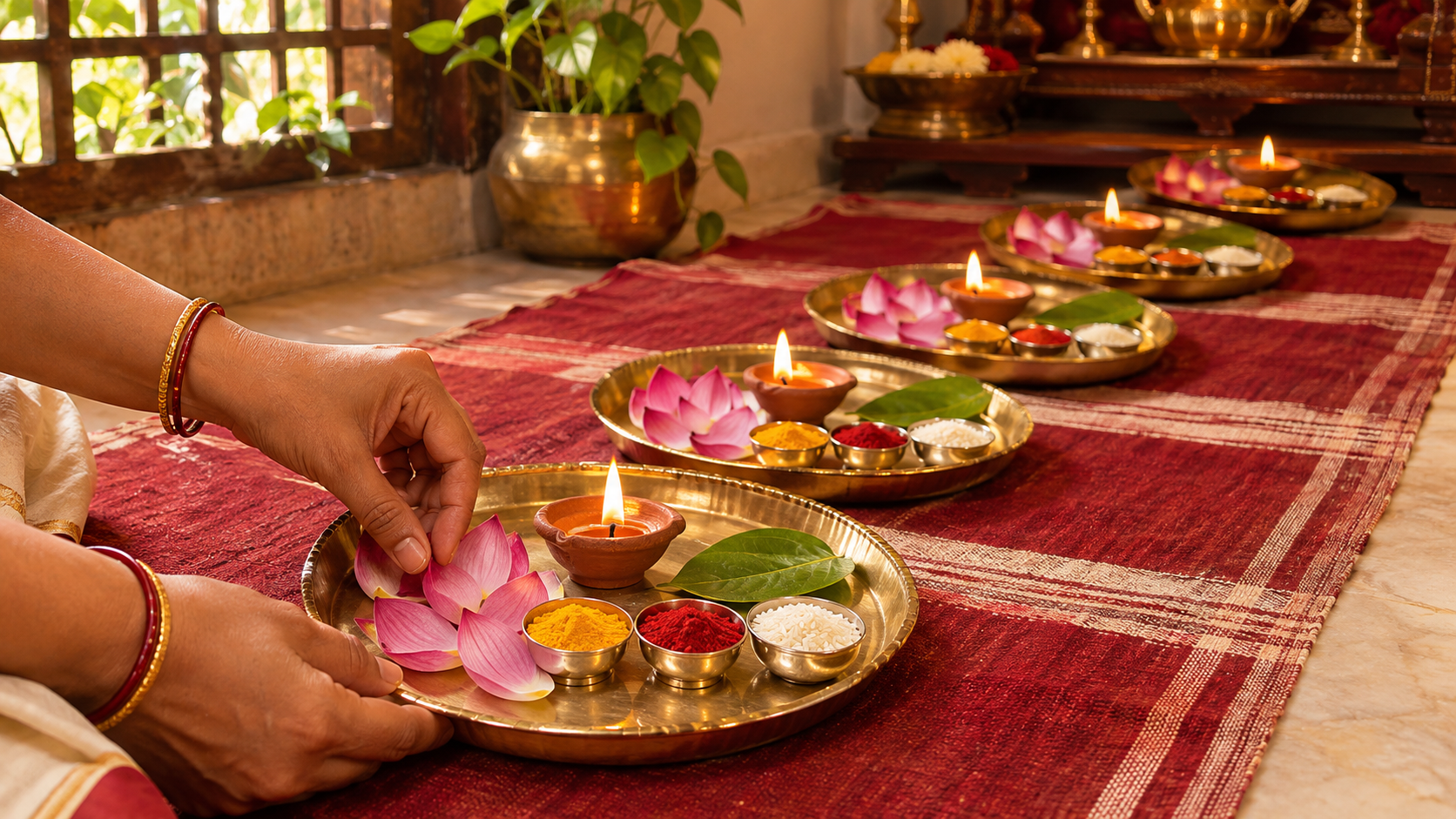
Margashirsha Lakshmivaram, also called Margashira Guruvara Lakshmi Puja, is observed on the Thursdays of Margasira masam in Andhra Pradesh. It is especially associated with Visakhapatnam, Srikakulam and Vizianagaram in North Coastal Andhra. For 2026-2027, the five listed Thursdays are December 10, December 17, December 24, December 31 and January 7.
The practical mistake is to treat these as five unrelated festival dates. A weekly vrata is easier to sustain when you make one decision about the full cycle before the first Thursday and then preserve the same place, time window and household responsibilities from week to week.
- Add all five dates now. Do not wait until each new week to remember the next one.
- Decide before December 10 whether your household is following the entire Thursday sequence or a family-specific form of the practice.
- Put your family’s actual procedure in the calendar notes. Use instructions received from family elders, your sampradaya or your temple rather than assembling a generic ritual from unrelated regional customs.
- Set any preparation reminder for the previous day. This is especially useful around December 24 and December 31, when ordinary year-end commitments can crowd the calendar.
- Highlight January 7, 2027 separately. It belongs to this listed Margashirsha Thursday sequence even though it appears on the next Gregorian year’s calendar.
This Thursday vrata is a strong Andhra observance, not a universal requirement for every Hindu household. If it is not part of your inherited practice, learn its regional setting before adopting its outward form. If it is part of your family tradition, the local name and method deserve to be preserved rather than replaced by a one-size-fits-all checklist.
Turn the dates into a dependable household plan
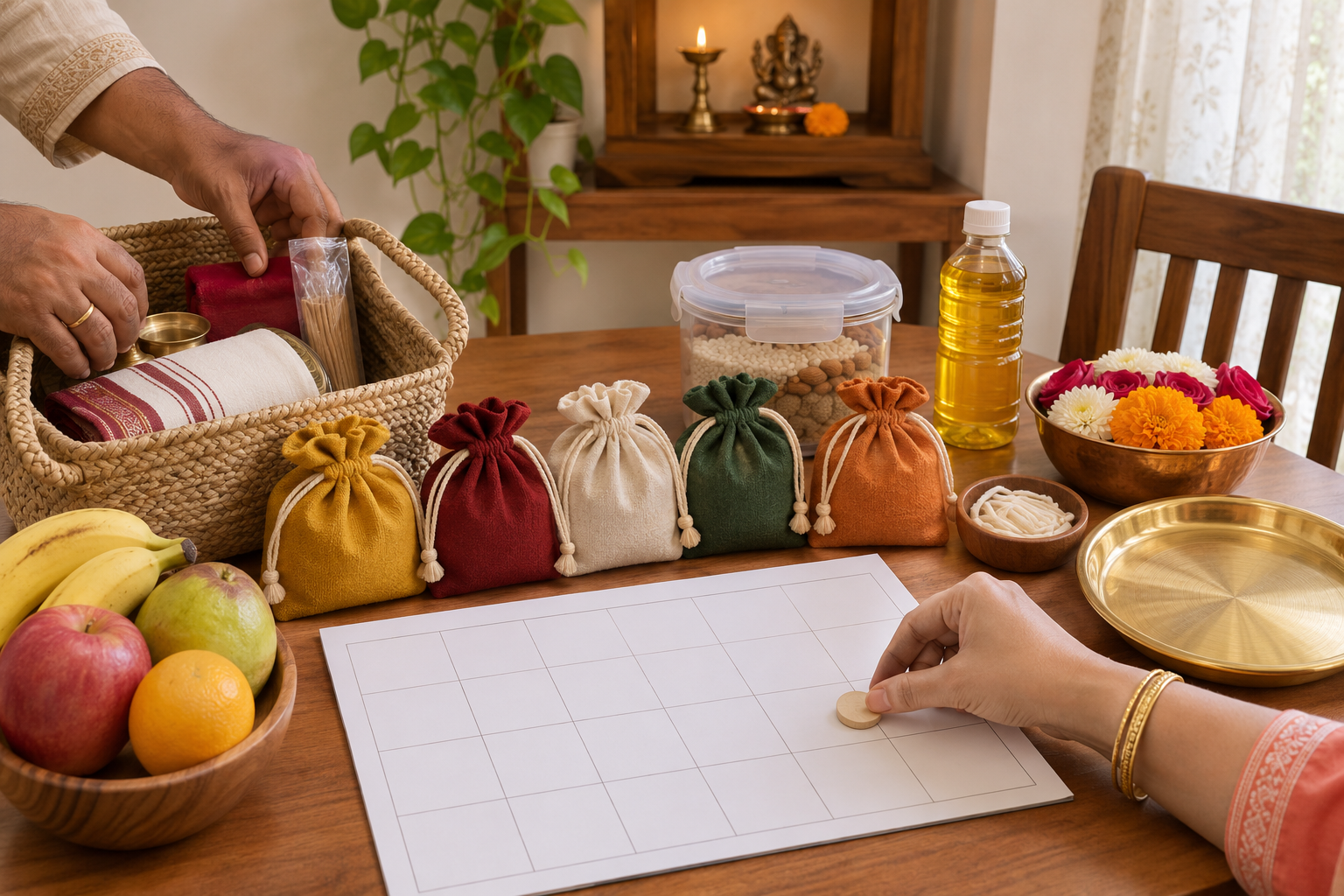
A civil date tells you when to keep space in your schedule. It does not, by itself, settle every ritual timing. Build the calendar in two passes so that an unresolved local detail does not cause you to miss the whole observance.
- Enter the working dates: December 4; December 9-15; December 10, 17, 24 and 31; and January 7.
- Label each entry by type. Utpanna Ekadashi and Subramanya Sashti are single-date entries, Champa Sashti is a six-day span, and the Lakshmi vrata is a five-Thursday sequence.
- Ask which panchanga your household or temple follows. Add locally confirmed tithi boundaries, vrata details and parana timing to the relevant event instead of assuming that the civil date supplies every answer.
- Flag December 15 as an overlap. Write the deity and tradition in each event title so that Champa Sashti and Subramanya Sashti do not become an ambiguous entry called only “Sashti.”
- Check temple programmes before arranging leave or travel. A festival’s civil date can be known well in advance while a particular temple’s puja and abhishekam schedule still requires local confirmation.
- Share the completed calendar with the people who will actually participate. A repeated vrata works better when shopping, cooking, transport and puja responsibilities are assigned before the first date arrives.
Frequently asked planning questions
Which date should I enter first from this guide?
Enter December 4, 2026, for Utpanna Ekadashi. It falls in the Krishna Paksha of Margashirsha and commemorates Lord Vishnu’s defeat of Murasura.
Are Champa Sashti and Subramanya Sashti the same festival?
No. Champa Sashti is the culmination of a six-day Khandoba festival observed in Maharashtra. Subramanya Sashti is dedicated to Subramanya or Skanda. They share December 15 in 2026, but their devotional identities remain distinct.
Why does the Lakshmi Thursday schedule continue into 2027?
The listed vrata cycle contains five Thursdays. Four fall in December 2026, while the fifth falls on January 7, 2027. The Gregorian change of year does not split the sequence into two unrelated observances.
Can one national calendar settle every ritual detail?
Use these civil dates to reserve time, but verify tithi boundaries and local programmes with the panchanga and temple relevant to you. That matters most when you need a precise fasting, parana, puja or abhishekam time rather than a general date.
Put December 4, the December 9-15 span, the December 15 overlap and all five Thursdays into your calendar now. Then attach one local verification to each observance. You will have a workable plan without pretending that Maharashtra’s Khandoba tradition, Andhra’s Lakshmi vrata and the worship of Subramanya are interchangeable.
References
- Hindu Pad — Margashira Lakshmivaram 2026-2027 | Margashira Guruvara Lakshmi Puja in Andhra Pradesh
- Hindu Pad — Utpanna Ekadashi 2026 | Uthpanna Ekadasi Vrata
- Hindu Pad — Champa Sashti 2026
- Hindu Pad — Subramanya Sashti 2026 | Subbaraya Shashti | Subrahmanya Shashti

Leave a Reply
You must be logged in to post a comment.