
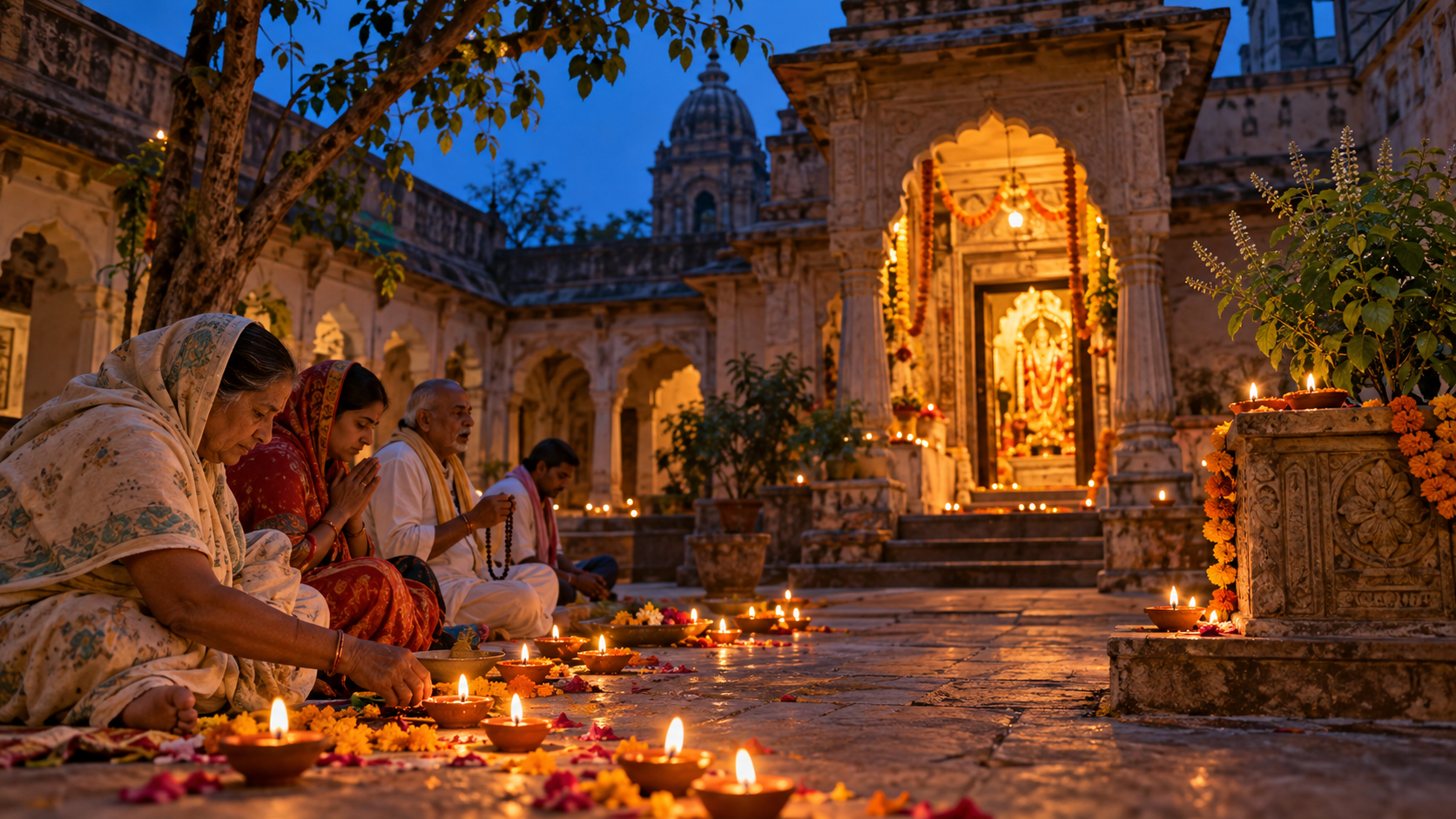
You can return from Vrindavan with hundreds of photographs, a long list of temples, and very little inward change. That is the central danger when a Kartik pilgrimage becomes an itinerary to complete rather than a devotional vow to inhabit.
A better approach is to decide what you will practise before deciding how much you will see. This guide follows a Radha-Krishna bhakti pattern centred on hearing, chanting, lamp offering, remembrance, seva, and parikrama. If your guru or sampradaya has given you different Kartik instructions, those instructions should govern your pilgrimage.
Begin with a Kartik vow you can actually keep
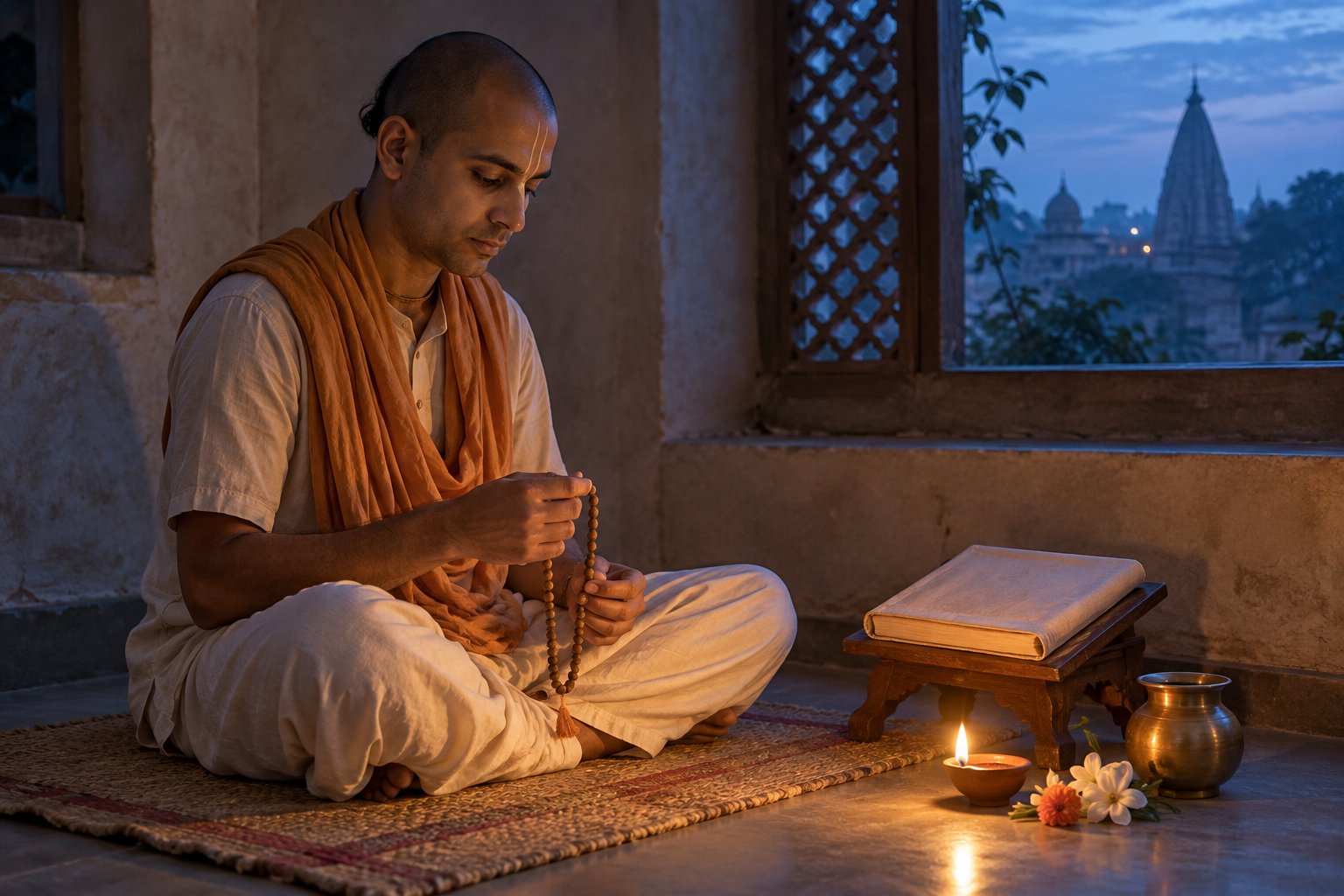
Kartik offers a concentrated opportunity to deepen devotion through offering lamps, chanting the Hare Krishna Mahamantra, hearing about the Lord, and performing devotional service. These practices are simple enough to name, but travel can easily displace them. Transport, queues, meals, companions, shopping, and route changes begin controlling the day. Sadhana gets postponed until everyone is tired.
Prevent that by writing a short sankalpa before you leave home. It should state what you will do every day, including on difficult travel days. Keep it small enough to protect and clear enough to verify. A workable Kartik rule might include:
- Maintain your established daily chanting commitment rather than replacing it with sightseeing.
- Hear or read a teaching connected with Kartik, Krishna, or the place you are about to visit.
- Offer a lamp where the temple or ashram provides a designated and permitted arrangement.
- Perform a concrete act of seva without using it to claim status or attention.
- End the day by recording what corrected, softened, or distracted your mind.
Do not build your vow out of impressive additions that you have never sustained before. Kartik intensifies devotion most reliably when it deepens an existing practice. If you already chant daily, guard the quality and regularity of that chanting. If you already study, choose material that directs your attention toward the places you will encounter. If your tradition includes Damodarashtakam, listen carefully to the meaning of the prayer so that recitation does not become hurried sound without contemplation.
Lamp offering also requires ordinary responsibility. Follow the temple’s instructions, use only a designated place, and do not improvise with an open flame in a crowded passage, vehicle, or lodging. Devotion is not diminished by fire safety or respect for local rules.
Enter Vrindavan as a sacred abode, not a collection of attractions
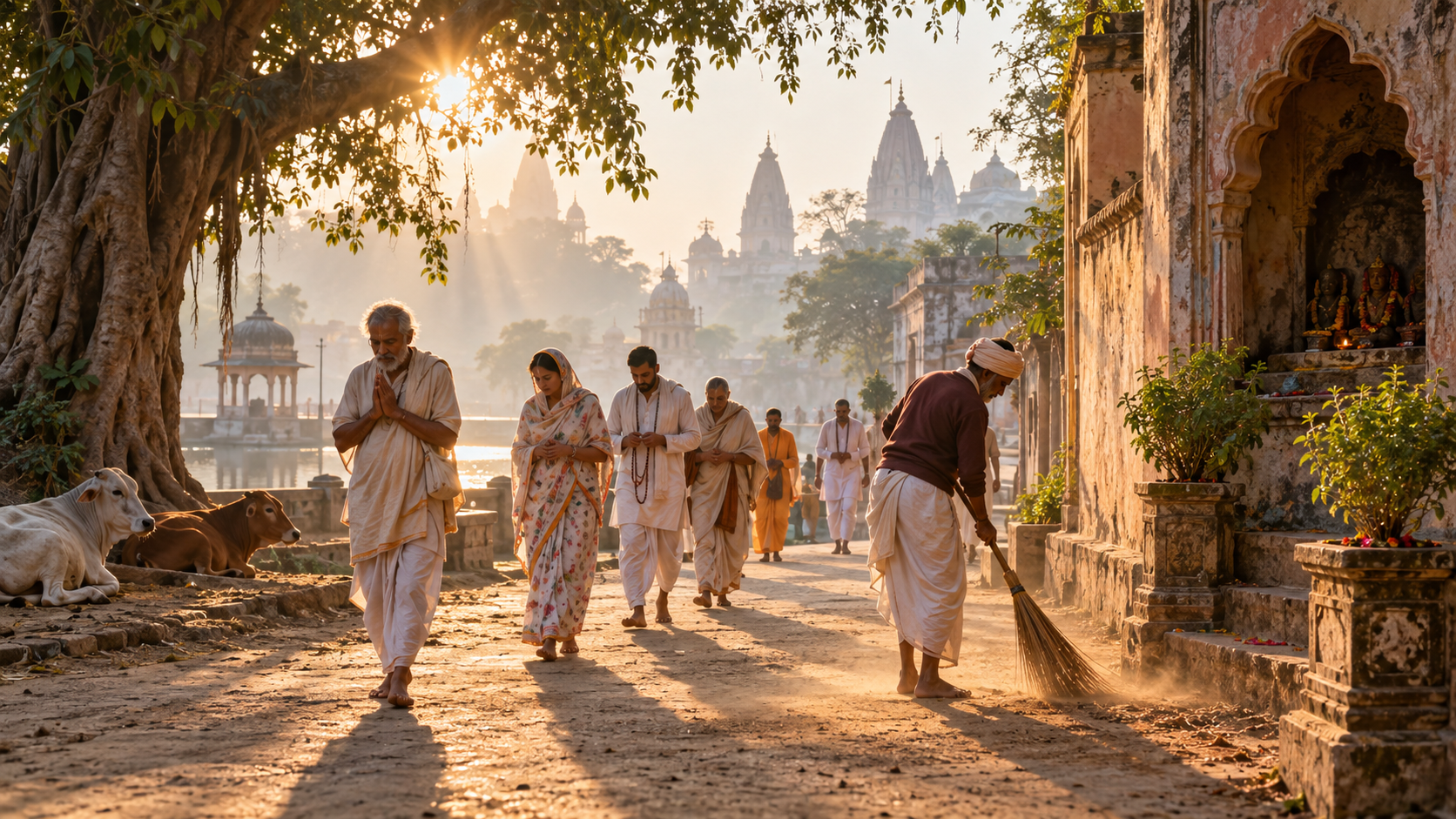
In Krishna bhakti, Vrindavan is approached as a dhama, a sacred abode associated with the Lord’s presence and lila. That understanding changes the posture of pilgrimage. You are not arriving as a consumer asking whether each stop is sufficiently impressive. You are arriving as a guest asking whether you are sufficiently attentive.
A sound entry into parikrama begins by adjusting the mind before moving the feet. One Kartik gathering did this through kirtan followed by instruction on the mood for approaching Vrindavan. You can apply the same principle even when travelling independently: hear first, then walk.
Use three disciplines to preserve that mood:
<!– wp:list {
Leave a Reply
You must be logged in to post a comment.