
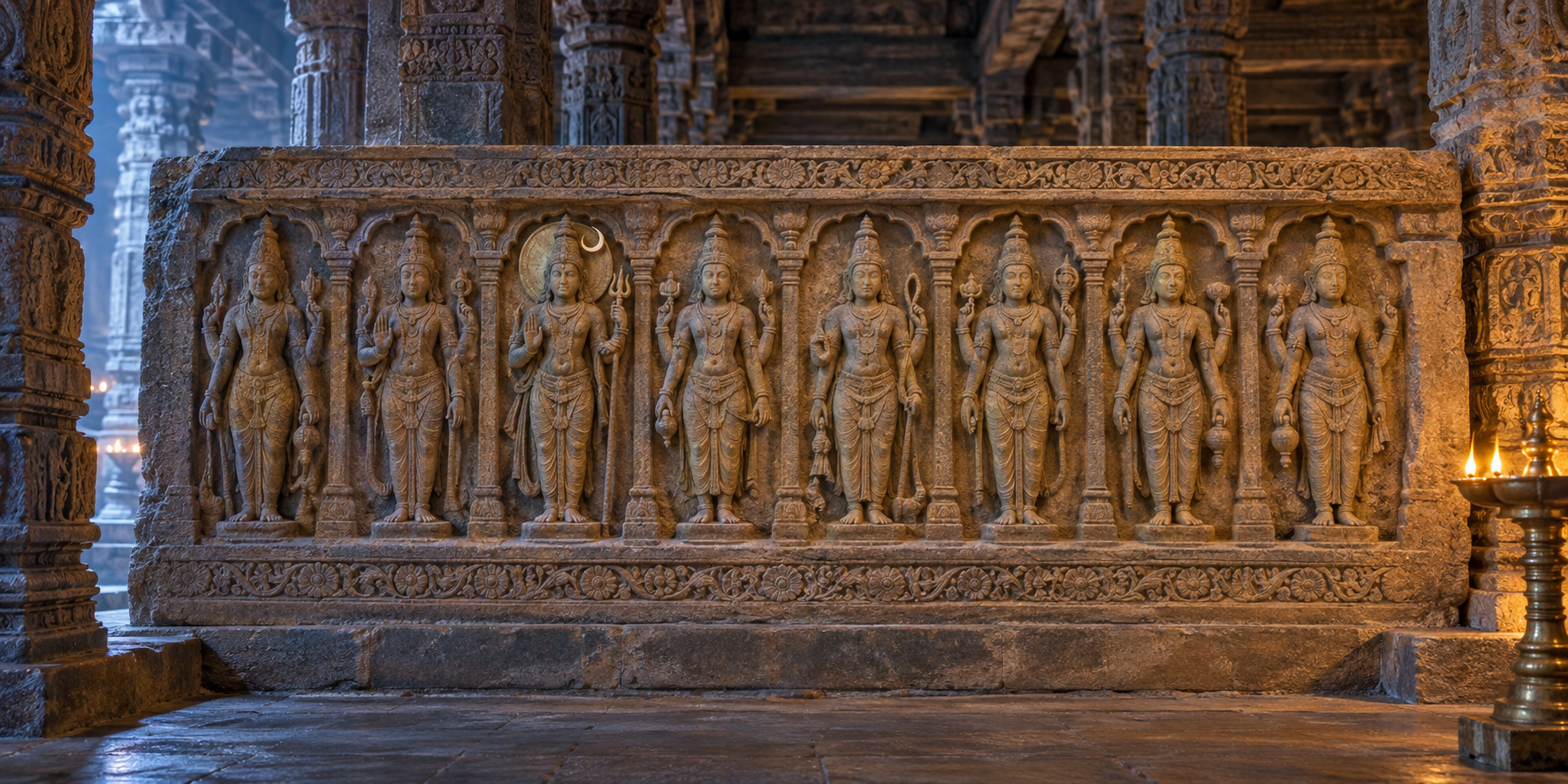
You are looking at a temple panel, a museum photograph, or a weathered row of divine figures. One figure may appear lunar, but that alone does not establish that you have found Soma. The decisive question comes first: does the figure belong to an Ashtavasu ensemble?
Reading Soma well requires three kinds of evidence: the structure of the group, the figure’s lunar significance, and whatever the particular temple preserves about its own iconographic program. This approach gives you a defensible identification without turning sacred art into a guessing game.
Identify the Ashtavasu ensemble before naming Soma
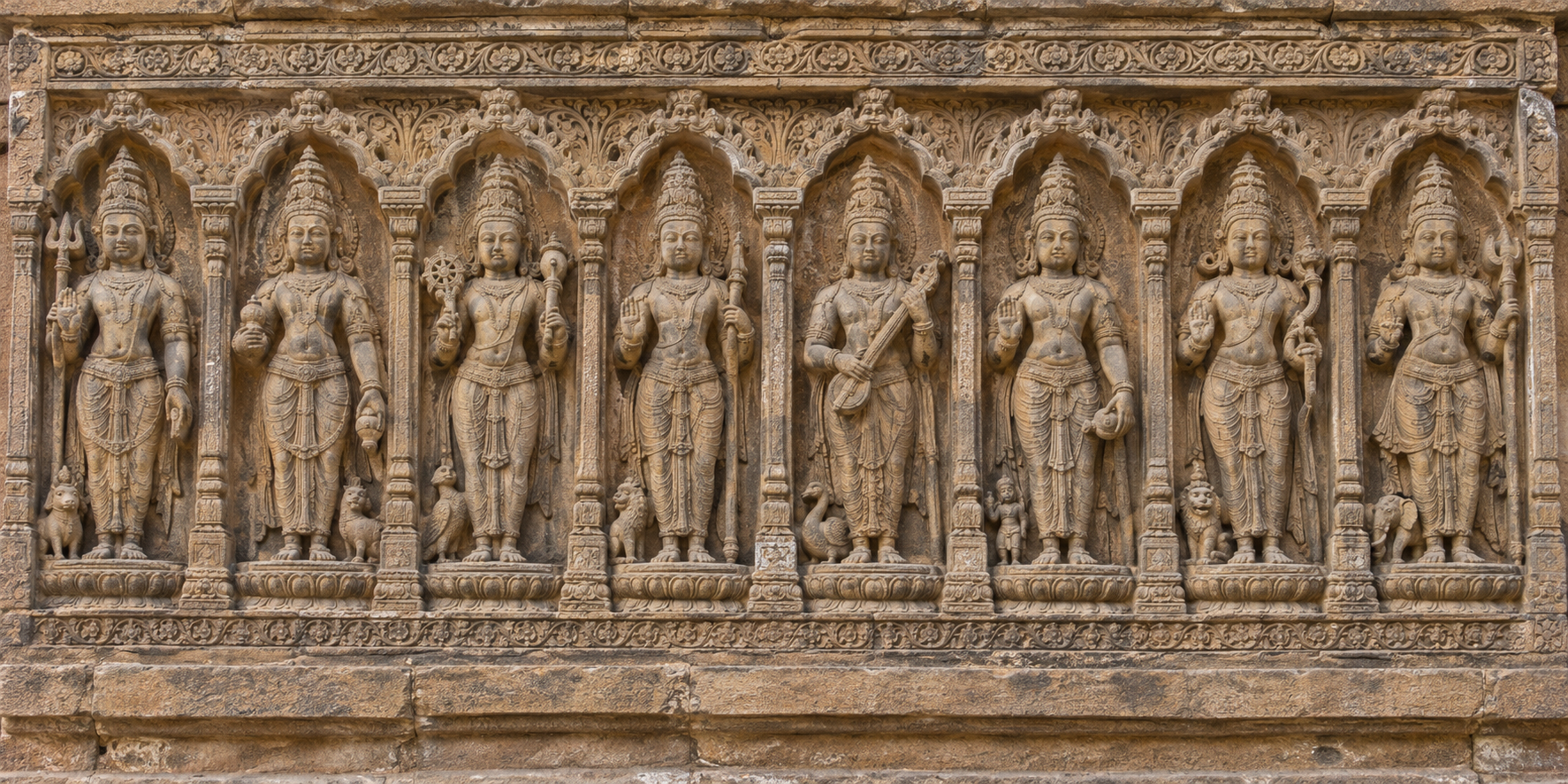
The Ashtavasus form an eightfold group of radiant, life-sustaining cosmic powers, with Soma occupying the lunar place within that group. This is the anchor for identification. Soma’s place in Ashtavasu iconography is relational: you understand the individual through the ensemble.
Start with the entire sculptural unit, not the most attractive surviving face. A close crop can conceal an adjacent niche, a broken figure, or the frame that separates one divine group from another. If you begin with a single figure, almost any circular or luminous-looking detail can tempt you into a premature lunar reading.
- Mark the visual boundary of the panel. Look for the architectural frame, repeated niches, pillars, bands, or other features that show which figures belong together.
- Count positions as well as surviving bodies. A damaged niche or fragment may preserve the place of a missing member even when the figure itself cannot be read.
- Compare the figures before interpreting them. Note shared scale, posture, framing, and carving treatment, then record the details that vary.
- Ask whether the ensemble can reasonably be read as an eight-member group. Do not force a complete set when the panel is broken, cropped, or mixed with another sculptural sequence.
- Only after the group test should you ask which member carries the strongest lunar association and whether that candidate can responsibly be identified as Soma.
A row of eight figures is not automatically the Ashtavasus, just as a solitary lunar figure is not automatically Soma in his Vasu role. Both parts of the identification must hold: the collective setting and the individual significance.
Treat lunar symbolism as evidence, not a visual password
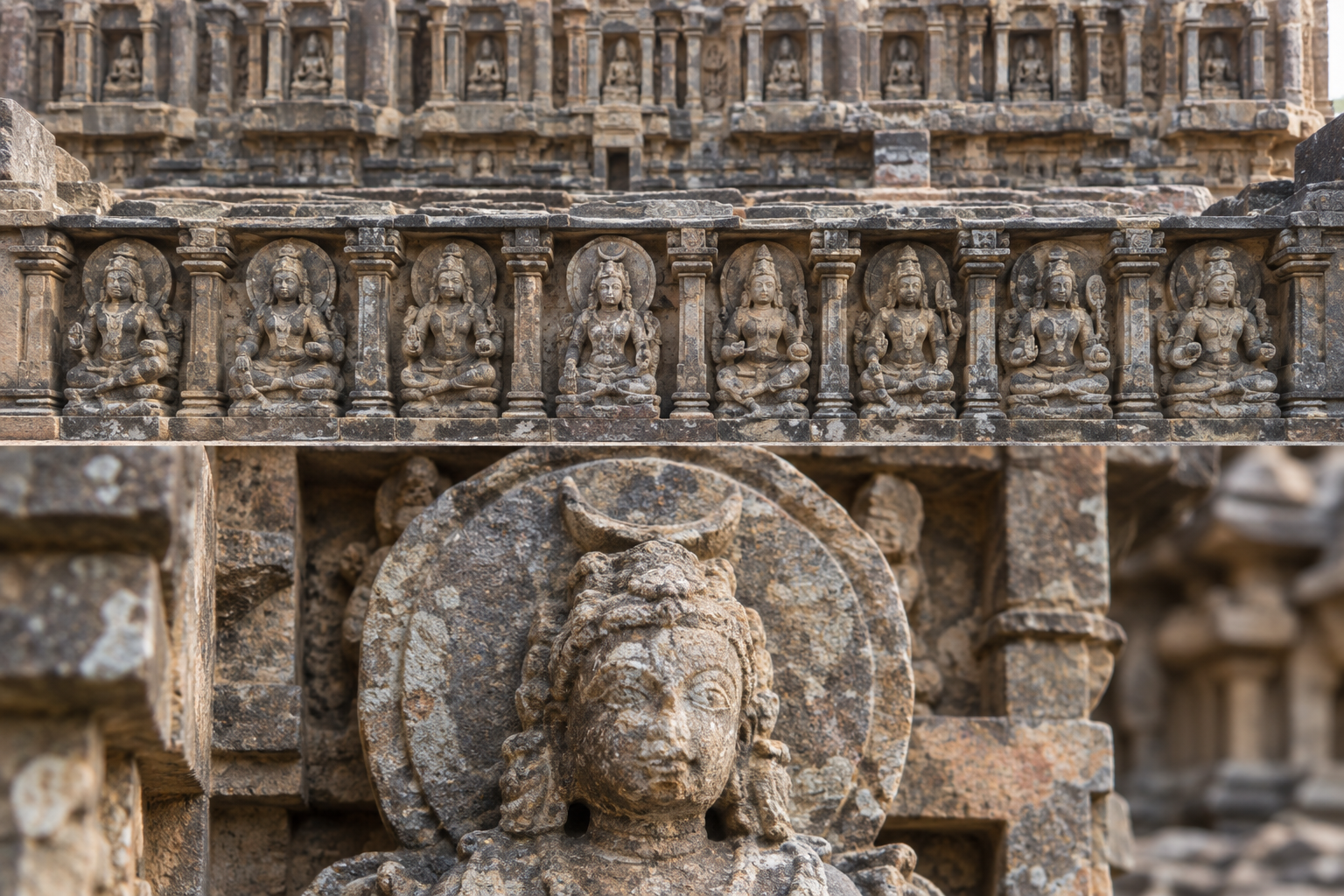
Calling Soma the lunar Vasu supplies the strongest interpretive clue, but it does not give every temple a single, universal visual formula. Regional practice, the date and condition of the carving, the panel’s scale, and the conventions followed at that shrine can affect how clearly an identity is expressed.
Describe what you can actually see before assigning a name. Write “circular form behind the head,” “object held in the raised hand,” or “distinctive head ornament” rather than immediately writing “moon,” “Soma attribute,” or “lunar crown.” The first wording records evidence. The second already assumes an interpretation.
A useful identification separates four levels:
- Observation: the literal features preserved in the carving, without theological labels.
- Group context: the reasons the figure appears to belong to an eight-member Vasu ensemble.
- Interpretation: the feature or position that makes Soma a plausible identity.
- Confirmation: an inscription, site-specific explanation, documented temple convention, or relevant iconographic prescription that independently supports the reading.
This distinction matters when the sculpture is worn. A round form might be read as lunar, but shape alone may not distinguish a celestial emblem from a halo, ornament, background feature, or damaged carving. Conversely, the absence of an obvious lunar mark does not by itself disprove the identification. The expected detail may be broken, faint, or expressed through a convention you have not yet established.
Use confidence language that matches the evidence. “Soma” is appropriate when the identity is secure. “Probably Soma” suits a coherent Ashtavasu context with persuasive lunar evidence. “Possibly Soma” is more honest when either the ensemble or the individual attribute remains uncertain. If neither can be demonstrated, leave the figure unidentified until better context appears.
Read Soma as a Vasu, not merely as a moon figure
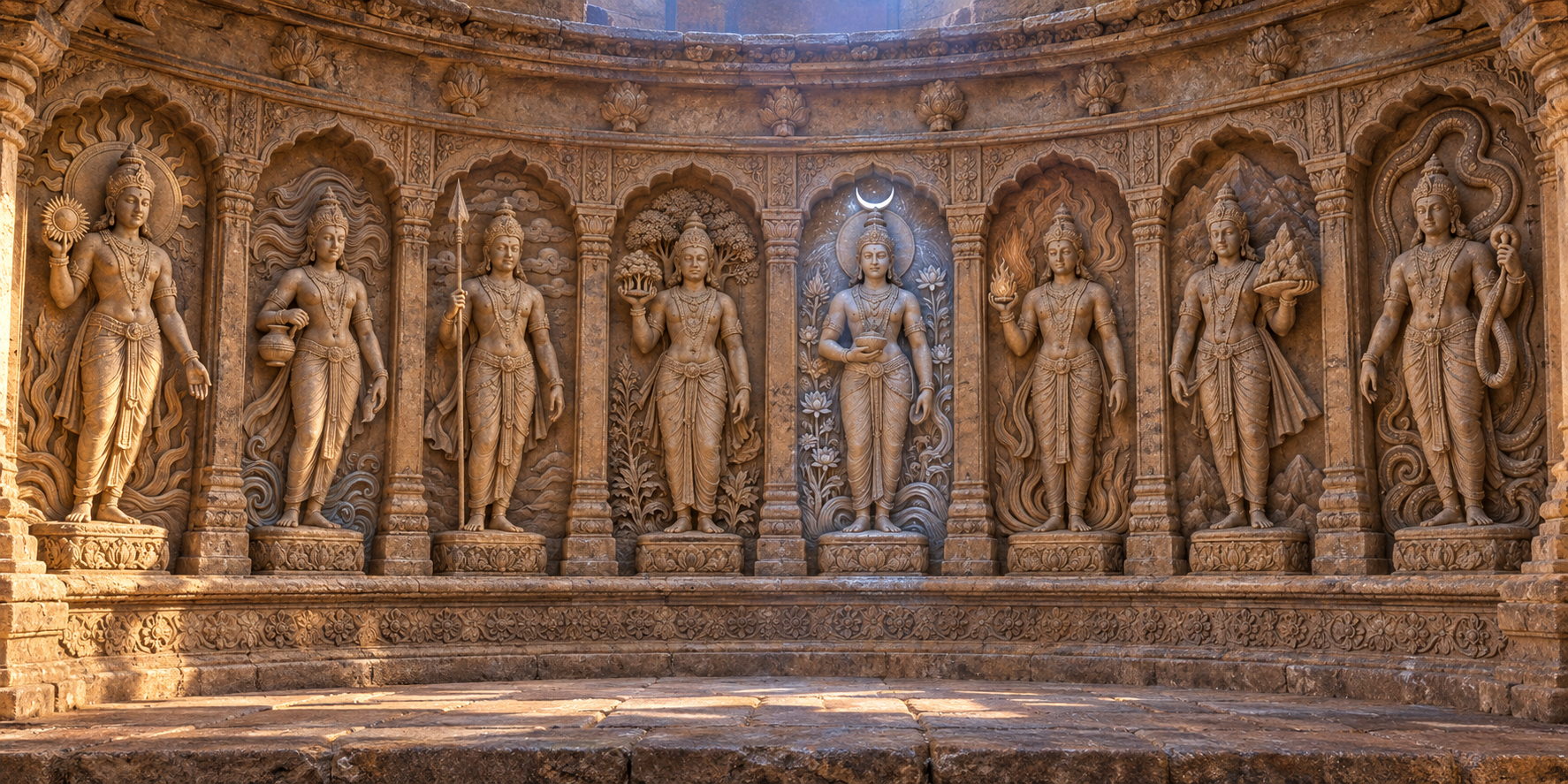
The name Vasu carries ideas of brightness and the bestowal of excellence. The Vasus are therefore not an arbitrary set of decorative attendants. They express radiant forces that sustain an ordered cosmos. Soma’s lunar character belongs inside that larger sacred structure.
This changes what you should notice. Do not look only for the feature that separates Soma from the other seven. Also look at what joins him to them: equivalent scale, repeated posture, shared framing, a common level in the temple elevation, or a deliberate visual rhythm. When such features are present, they tell you that collective identity matters alongside individual identity.
The lunar designation should not reduce the image to an astronomical label. In this setting, it identifies one mode of sacred radiance within an eightfold cosmic company. The theological meaning lies in the relationship between distinction and order: Soma has a particular identity, yet the temple presents that identity as part of a coordinated whole.
Ask two questions of the sculpture. “What makes this figure distinct?” helps you investigate Soma. “What makes this figure part of the ensemble?” helps you understand Soma as a Vasu. An interpretation that answers only the first question may identify a lunar being while missing the Ashtavasu meaning of the panel.
Avoid the errors that produce confident misidentifications
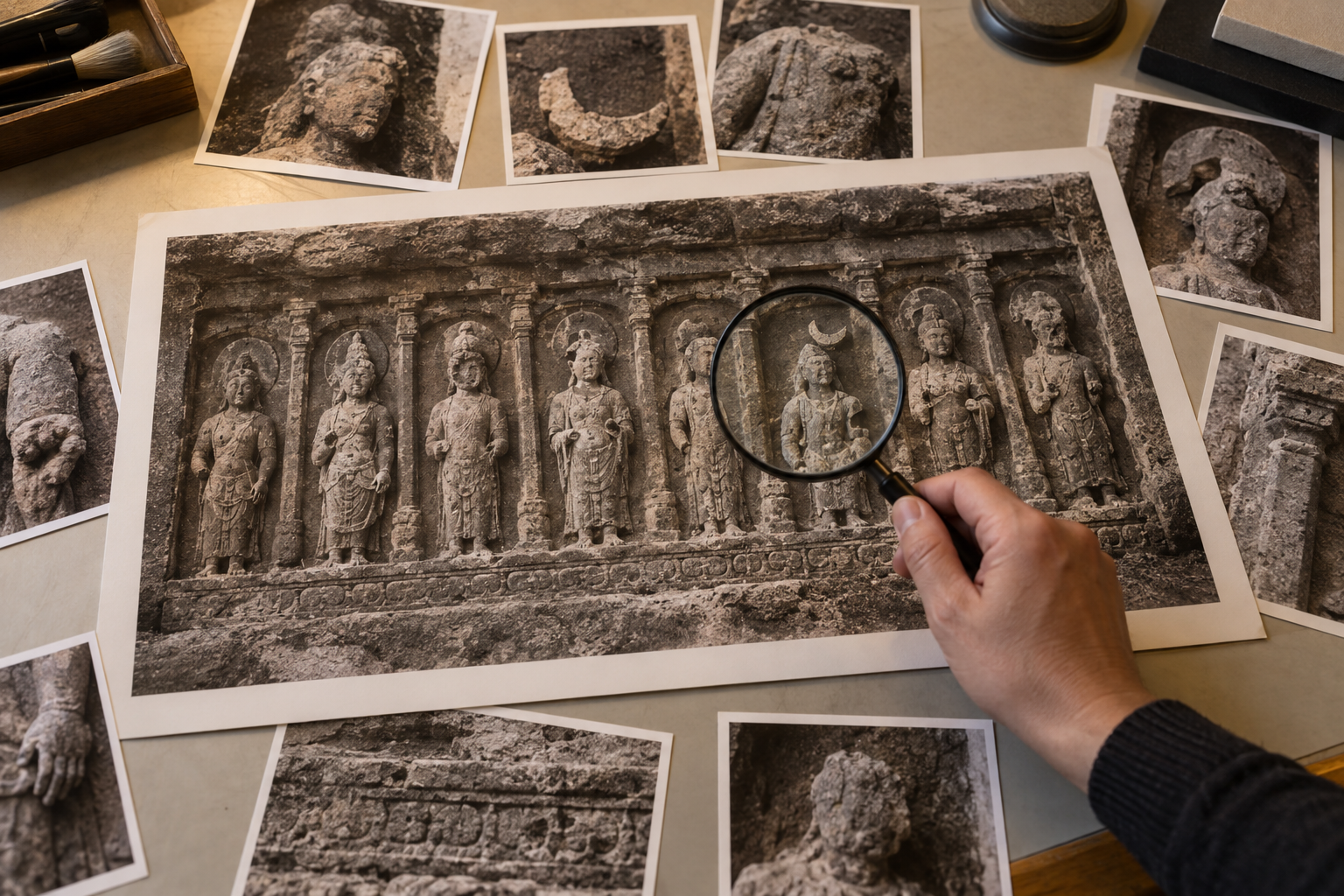
The most common mistakes arise when a reasonable clue is asked to do more work than it can bear. Five checks will keep your reading disciplined.
- Do not identify from a cropped figure alone. Find the widest available view and establish the panel’s boundaries first.
- Do not assume that eight visible forms settle the matter. Determine whether they share one sculptural program rather than merely occupying the same wall or photograph.
- Do not assign names by left-to-right numbering unless the local iconographic order is independently known. A numbering scheme imported from elsewhere can make every later identification appear precise while leaving its foundation unproved.
- Do not treat restoration as neutral evidence. Record whether a supposed attribute belongs to the original carving, a repaired section, or a modern reconstruction.
- Do not let one possible lunar cue override contradictory context. Group membership, individual symbolism, and site-specific evidence should reinforce one another.
There is also a subtler error: treating uncertainty as disrespect. It is more respectful to preserve the difference between what the temple clearly shows and what a modern observer proposes. Careful attribution protects the integrity of the sacred image, especially when weathering or incomplete documentation prevents certainty.
If two interpretations remain possible, record both and state what would decide between them. A wider photograph might reveal the eightfold ensemble. A clearer image might distinguish a carved emblem from surface damage. A temple inscription or locally relevant Agamic convention might confirm the order. This turns uncertainty into a practical next step.
Key takeaways for a temple visit or image review
- Establish the full sculptural group before trying to identify Soma.
- Look for an eight-member Vasu context; do not rely on a lunar-looking detail alone.
- Separate literal observation from iconographic interpretation in your notes.
- Read Soma’s lunar identity within the Vasus’ wider symbolism of radiance, sustenance, and cosmic order.
- Use local inscriptions, explanations, and iconographic conventions to confirm rather than merely decorate an initial guess.
- State your confidence honestly: secure, probable, possible, or unidentified.
When documenting the panel, take or retain four views if permitted: the whole ensemble, the proposed Soma figure, the neighboring figures, and the panel’s architectural location. A useful note can be as short as: “Proposed identification: Soma; ensemble evidence: eight related positions; individual evidence: possible lunar feature; confirmation: none yet; confidence: possible.” Another reader can then test the conclusion instead of simply inheriting it.
Before you label the next image, widen the frame and count the whole sacred company. If the ensemble, lunar meaning, and local context converge, you can name Soma with confidence. If they do not, preserve the question and gather the missing evidence.
References

Leave a Reply
You must be logged in to post a comment.