
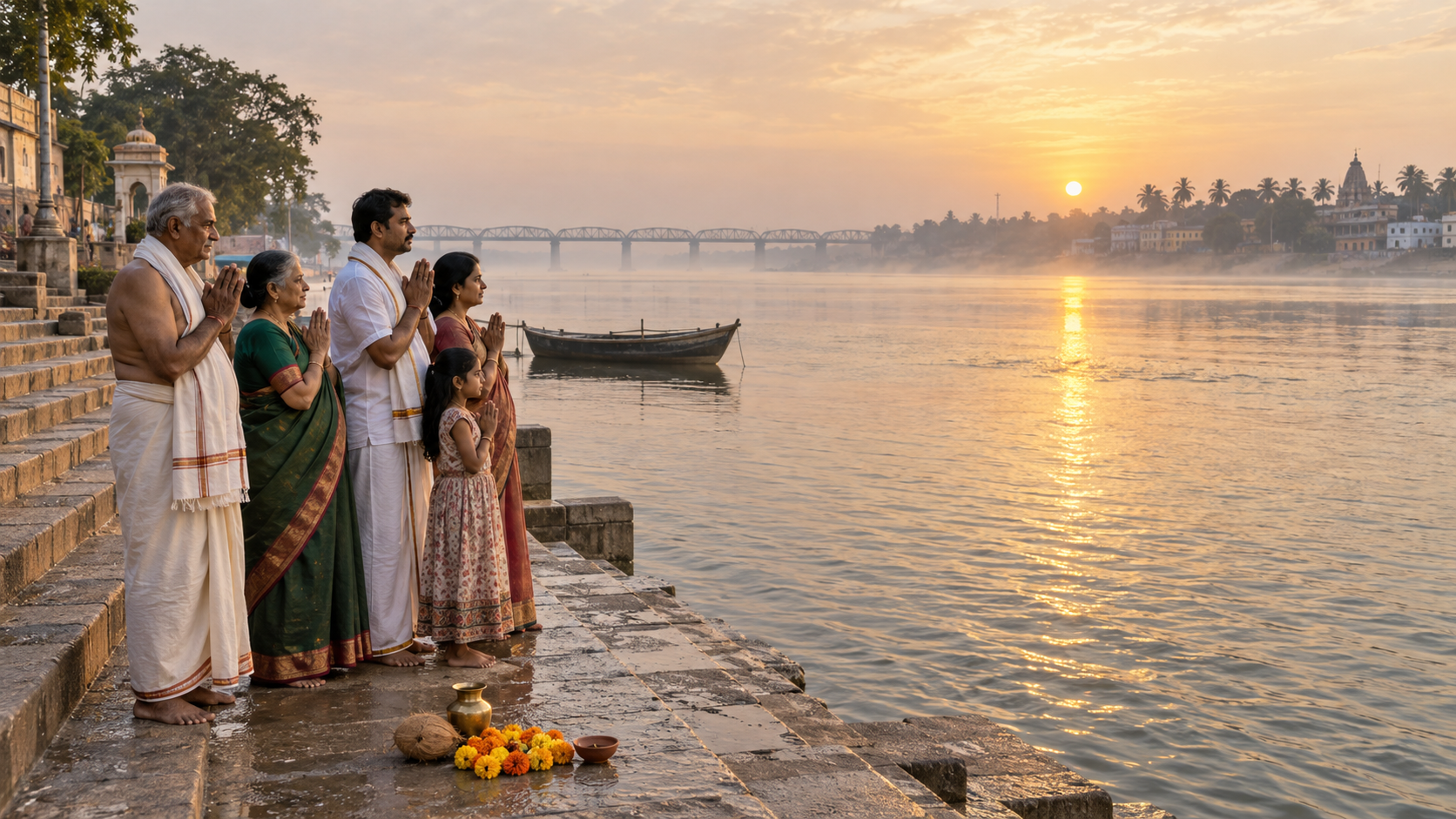
If you are deciding which sacred sites of Andhra Pradesh belong in one coherent pilgrimage, the real question is not how many temples you can cover. It is what you are going there to do: pray beside a sacred river, undertake a vrata with your family, receive darshan, honour your ancestors, or enter a kshetra where several streams of Dharma meet.
Rajamahendravaram, Annavaram and Pithapuram form a meaningful route because each asks something different of you. The Godavari invites stillness. Annavaram centres the disciplined worship of Sri Satyanarayana. Pithapuram joins Shaiva, Shakta and Datta traditions with the obligations of pitru dharma. Plan around those purposes, and the journey will feel like a pilgrimage rather than a hurried circuit.
Begin with a sankalpa, not a list of attractions
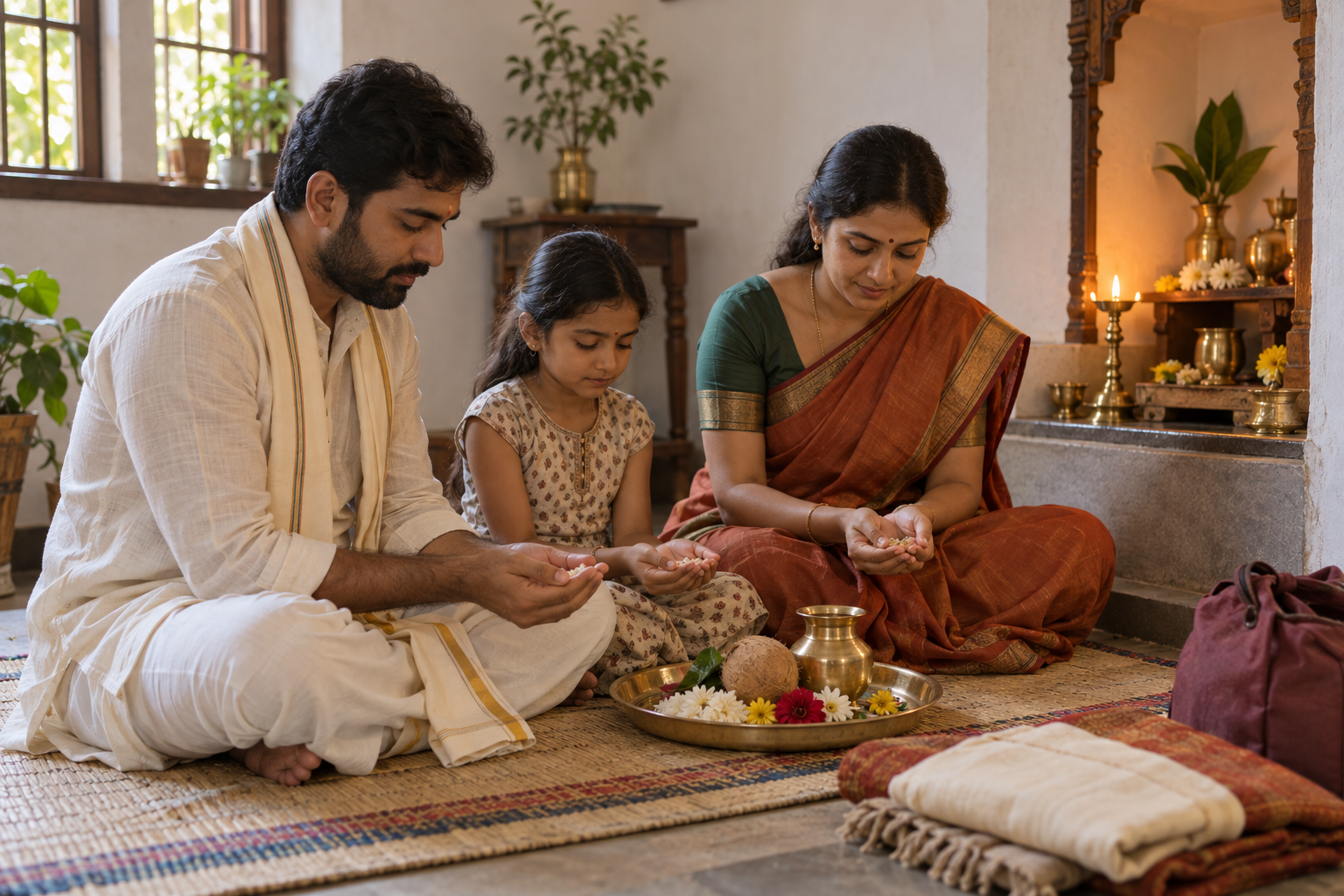
Before choosing dates, write down one sentence that states the purpose of your journey. A useful sankalpa is concrete: “We are going to perform the Sri Satyanarayana Vratham as a family,” or “We are going to Pithapuram for ancestral rites.” This decision determines how much time you need, which arrangements require advance confirmation, and which stop must not be sacrificed when queues or travel delays intervene.
If several generations are travelling together, ask each person to name one non-negotiable act of worship. An elder may be concerned with tarpanam at Pada Gaya, while younger family members may primarily want darshan at Annavaram. Put the ritual obligation first, then build the remaining visits around it. A missed photograph is inconsequential; a rite for which the family travelled across Bharat is not.
| Your main purpose | Sacred anchor | What to decide before travelling |
|---|---|---|
| River prayer and an unhurried devotional beginning | Godavari at Rajamahendravaram | Where you will pause safely and which nearby temple you will visit |
| Sri Satyanarayana worship or a family vrata | Annavaram | Whether you want darshan only or intend to participate in the vrata |
| Ancestral rites or a kshetra joining several traditions | Pithapuram | Whether you need priestly guidance and what family particulars or ritual materials are required |
This distinction matters because a darshan visit and a ritual visit are not the same undertaking. For darshan, your principal variables are access, queues and temple timings. A vrata or ancestral rite may also require coordination, materials, family details and enough time to proceed without rushing. Confirm current procedures before fixing the rest of the itinerary; temple arrangements can change, and festival days can alter the normal rhythm considerably.
Three sacred stops, each with a different spiritual grammar
Rajamahendravaram: let the Godavari set the pace
Rajahmundry, officially Rajamahendravaram, stands on the banks of the Godavari. Begin here by giving the river your attention before giving the city your schedule. The simple act of pausing for prayer beside a tirtha changes the tone of everything that follows: you arrive as a pilgrim receiving a sacred geography, not as a visitor collecting locations.
Use an established, safe access point and do only what conditions permit. You do not need an elaborate performance. A quiet namaskara, a familiar river invocation, or several minutes of silence can be more honest than forcing a ritual while distracted by traffic, crowds or an unsafe bank. If you touch the water, do so with care and without assuming that every visible stretch is suitable for entering.
The Kotilingeshwara Temple and ISKCON Rajahmundry are both situated near the river. Together they allow a pilgrim to move from the expansive presence of the Godavari into two distinct forms of temple devotion. Do not turn that proximity into an excuse to rush. Choose at least one place in which you will sit after darshan instead of immediately returning to the vehicle.
Rajamahendravaram is most useful as the opening of the route because it gives you a threshold. Let conversations settle, put away work messages, and agree with your companions that the coming stops will not be judged by the number of photographs taken or the speed with which the queue moved. The river is not scenery between temples; it is part of the pilgrimage itself.
Annavaram: decide between darshan and vrata before arrival
Annavaram’s Sri Veera Venkata Satyanarayana Swamy Temple occupies Ratnagiri Hill, overlooking the Pampa River and the surrounding countryside. The approach includes a winding hill road, so families travelling with elders, small children or anyone prone to discomfort on such roads should plan the ascent with that in mind rather than treating it as a minor transfer.
The shrine’s theological form deserves attention. The presiding deity expresses the harmony of Brahma, Vishnu and Shiva; the main deity is enshrined above, with the sacred Yantra below. Sri Anantha Lakshmi Ammavaru is also worshipped within the complex. Knowing this before you enter helps you see more than a crowded sanctum and a brief moment of darshan.
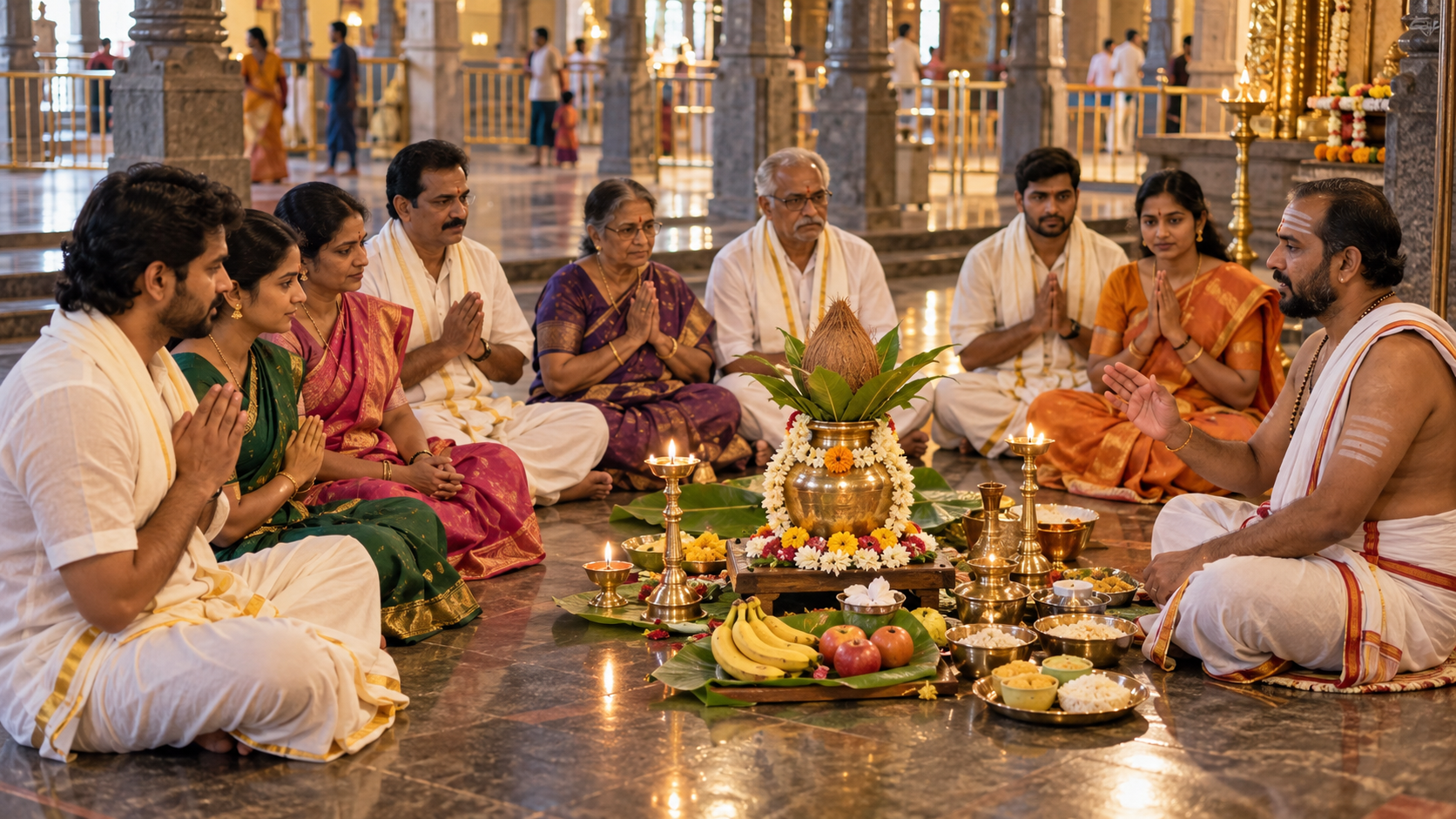
Annavaram is especially associated with the Sri Satyanarayana Vratham. Families perform the observance together in designated halls, following priestly instructions and reciting from prayer booklets. If the vrata is your purpose, make that explicit when checking current arrangements. Ask whether participation requires advance registration, what offerings or materials are supplied, what you must bring, and where your family should report. Do not rely on a general darshan plan to cover a structured ritual.
If you are not performing the vrata, observe it respectfully without crowding participating families or treating their worship as spectacle. Use the time to understand what makes the kshetra distinctive: household devotion is being carried into a public sacred space, with children, parents and elders sharing one discipline. That intergenerational character is central to the vitality of the place.
The temple should not be given an artificial antiquity to make it seem more sacred. Temple tradition traces its origin to the nineteenth century and to divine visions. Its significance rests in its distinctive form of worship, its hilltop setting and the continuing participation of devotees. Dharma’s continuity is not measured only by the age of masonry.
The annual Kalyanotsavam and Vaikuntha Ekadashi draw large numbers of pilgrims. If your purpose is quiet darshan or an unhurried family vrata, check whether your intended date coincides with a major observance. If you deliberately want the festival experience, accept that crowding and longer waits are part of that choice. The mistake is not choosing a busy day; it is arriving on one while expecting the rhythm of an ordinary day.
Pithapuram: separate ordinary darshan from pitru dharma
Pithapuram requires the most careful preparation because several sacred identities converge there. The Sri Kukkuteswara Swamy Temple complex is a Shaiva kshetra, an important Shakti Peetha, a Datta Kshetra and Pada Gaya Kshetram. The town is therefore not reducible to one deity or one sectarian story. You enter a landscape in which different duties and forms of worship coexist.
For devotees of Lord Dattatreya, Pithapuram holds particular importance. For Shaivas and Shaktas, the same complex is approached through other sacred relationships. Allow each tradition to retain its own meaning. A layered kshetra does not prove that all forms are interchangeable; it shows how distinct forms of devotion can inhabit one sacred geography without losing their character.
Pada Gaya has a more specific claim on the pilgrim. In the traditional account, the feet of Gayasura fell at Pithapuram, while other parts fell at Gaya in Bihar and Jajpur in Odisha. These three places are consequently associated with rites for ancestors. The large Padagaya Sarovaram within the precincts is a place where pilgrims undertake tarpanam and related observances.
If ancestral rites are your principal reason for coming, do not improvise the procedure after reaching the tank. Confirm beforehand which rite is appropriate to your family’s intention, which personal and ancestral details you should know, what materials are needed, and how much time should be reserved. Ritual disciplines vary by family tradition and circumstance, so seek guidance from a competent priest rather than copying another group at the site.
If you are visiting only for darshan, remember that another family may be present for an intimate obligation to the departed. Keep a respectful distance from rites, avoid photographing participants, and do not turn the sarovaram into a backdrop for casual group pictures. Here, good pilgrimage conduct includes protecting the privacy and concentration of people you do not know.
Plan the route around worship, not mileage
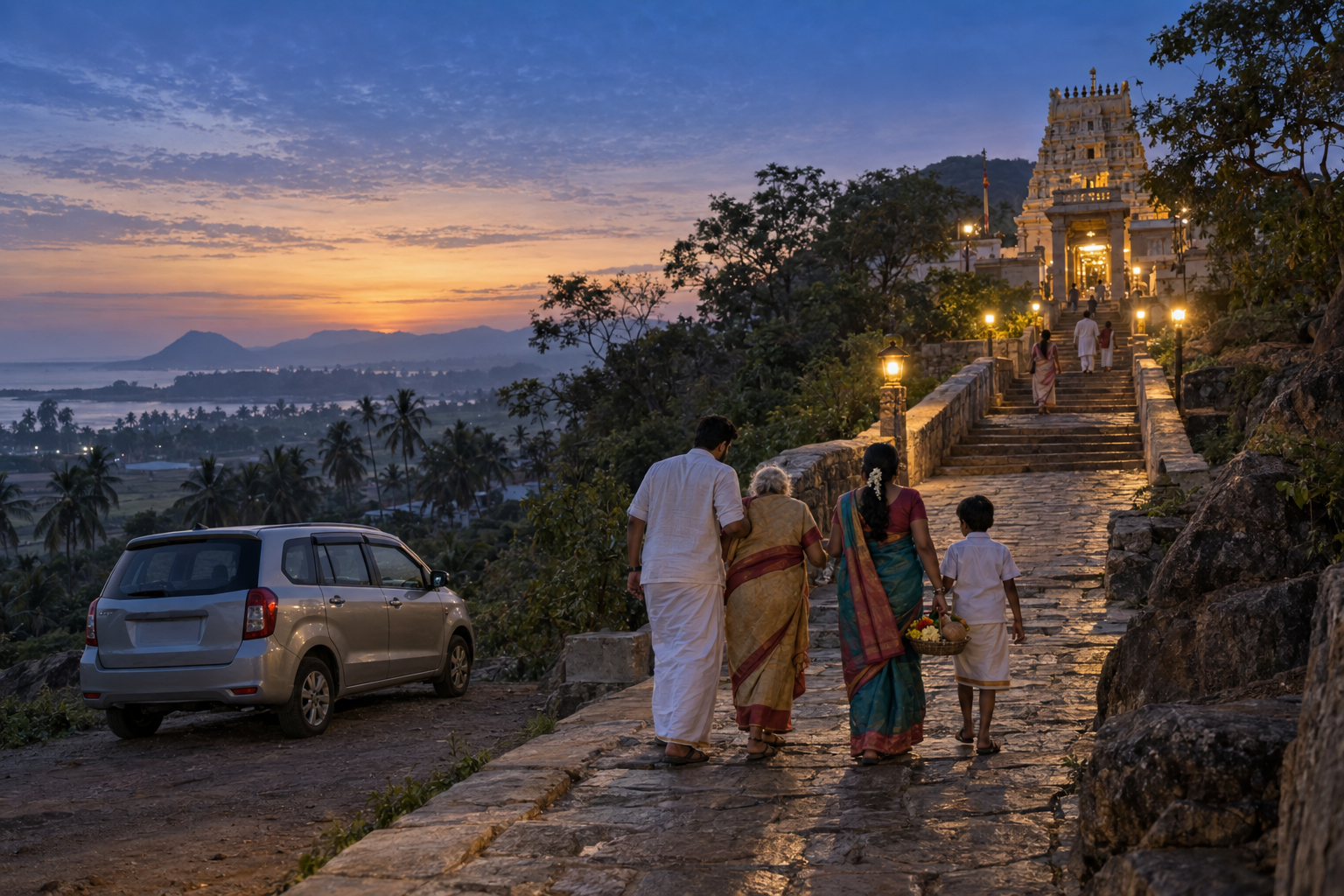
A practical sequence is Rajamahendravaram, Annavaram and then Pithapuram. It moves from the Godavari and nearby temples to Satyanarayana worship on Ratnagiri Hill, then into the more ritually layered setting of Pada Gaya and the Kukkuteswara complex. The sequence also gives your journey an inner progression: arrival, vowed worship and remembrance.
- Name the non-negotiable rite. If it is the Satyanarayana Vratham or an ancestral observance, confirm that arrangement before adding secondary stops.
- Open at the Godavari without manufacturing haste. Choose a safe place for prayer and one nearby temple where you will remain long enough for the mind to settle.
- Treat Annavaram as a destination, not a hilltop detour. Allow for the winding approach, temple queues and the difference between darshan and vrata participation.
- Give Pithapuram its own ritual window. Do not place pitru rites inside a narrow gap between checkout time and the next journey.
- Keep one part of the schedule flexible. The buffer should sit around your non-negotiable worship, so a queue or delayed arrival does not force you to abandon the very purpose of the pilgrimage.
Avoid filling every open interval with another temple merely because it appears close on a map. Sacred travel produces its own fatigue: early starts, hill roads, standing in queues, unfamiliar procedures and the emotional weight of family rites all consume attention. When attention is exhausted, adding a shrine may increase the count while diminishing the pilgrimage.
Carry a simple written plan that distinguishes fixed commitments from optional visits. Share it with every adult in the group. Include the name of the ritual, the place where it will occur, the information or materials you must carry, and the point at which the group will abandon an optional stop to protect the main sankalpa. This prevents decisions from turning into arguments at the temple gate.
Key takeaways
- Choose the journey’s purpose before choosing how many sites to visit.
- Use Rajamahendravaram as an unhurried entry through the sacred presence of the Godavari.
- At Annavaram, decide in advance whether you want darshan only or participation in the Sri Satyanarayana Vratham.
- At Pithapuram, distinguish a general temple visit from ancestral rites at Pada Gaya; the latter requires more preparation.
- Check current procedures, access and festival conditions directly before fixing your itinerary.
- Protect the privacy of families performing vrata, tarpanam or other personal observances.
- Leave enough open time for prayer after darshan; otherwise the route can become a sequence of arrivals and departures with no inward pause.
Let one clear intention govern the journey
Your next step is small: decide whether this pilgrimage is centred on the Godavari, Sri Satyanarayana worship, pitru dharma, or a deliberate encounter with all three. Then verify the arrangements for that one priority and allow everything else to remain secondary.
When you finally reach the riverbank, hill or temple tank, stop managing the itinerary for a moment. Stand where generations of devotees have brought gratitude, vows and remembrance, and give the place your undivided attention. That is where a route through sacred Andhra Pradesh becomes a tirtha-yatra.
References

Leave a Reply
You must be logged in to post a comment.