
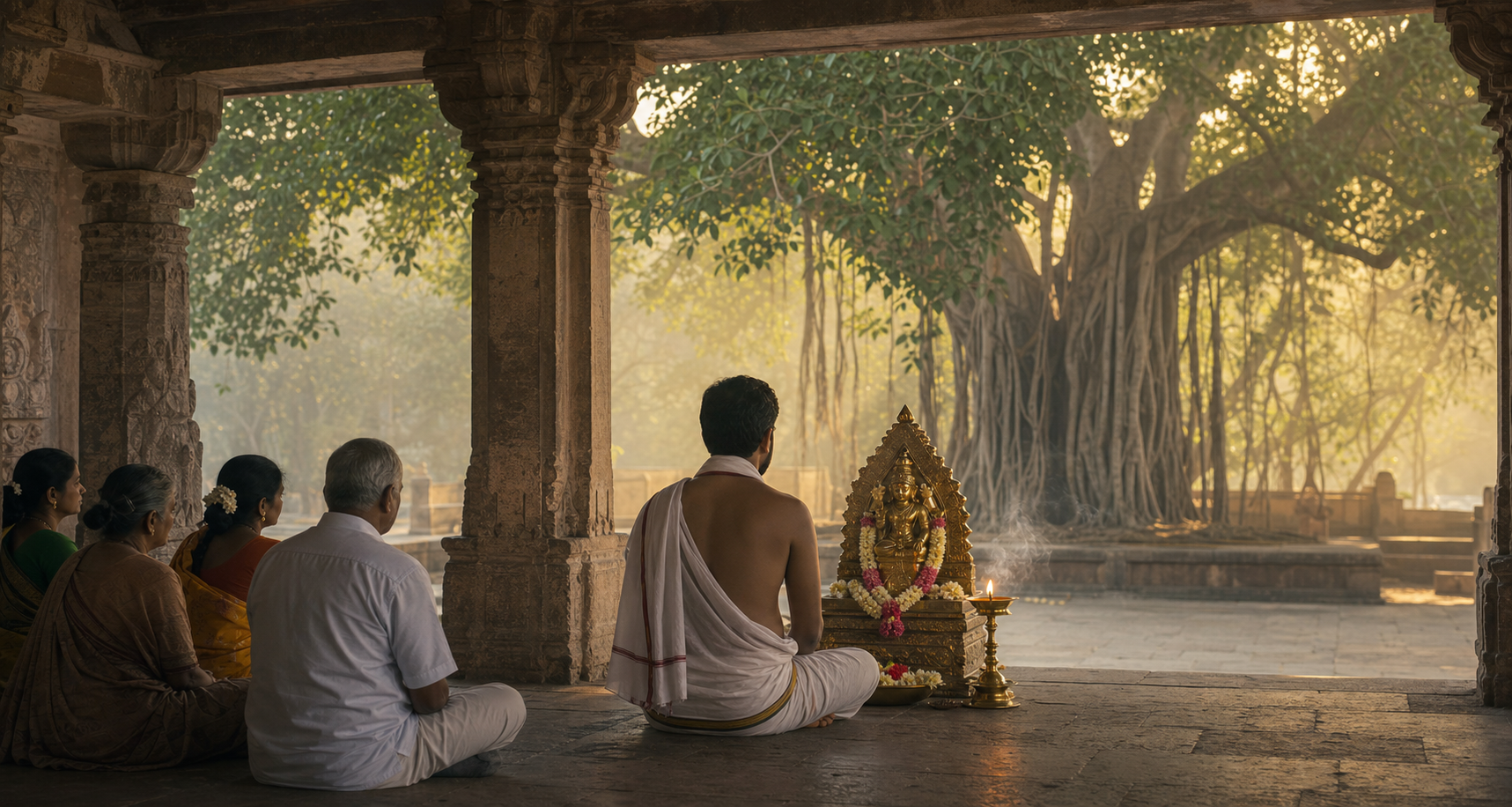
If you have felt closer to the divine beneath a tree than inside a crowded temple, or wondered whether a bond with your guru makes temple visits unnecessary, the real question is not where sacred presence is allowed to exist. The question is how you can approach it without reducing it to either an object or a passing feeling.
The temple, the sacred icon, and the living grove are not competing addresses for the divine. Each asks something different of you. The temple places devotion within a shared order. The icon teaches concentrated relationship. Nature tests whether reverence changes how you inhabit the world.
The temple gives private devotion a shared body
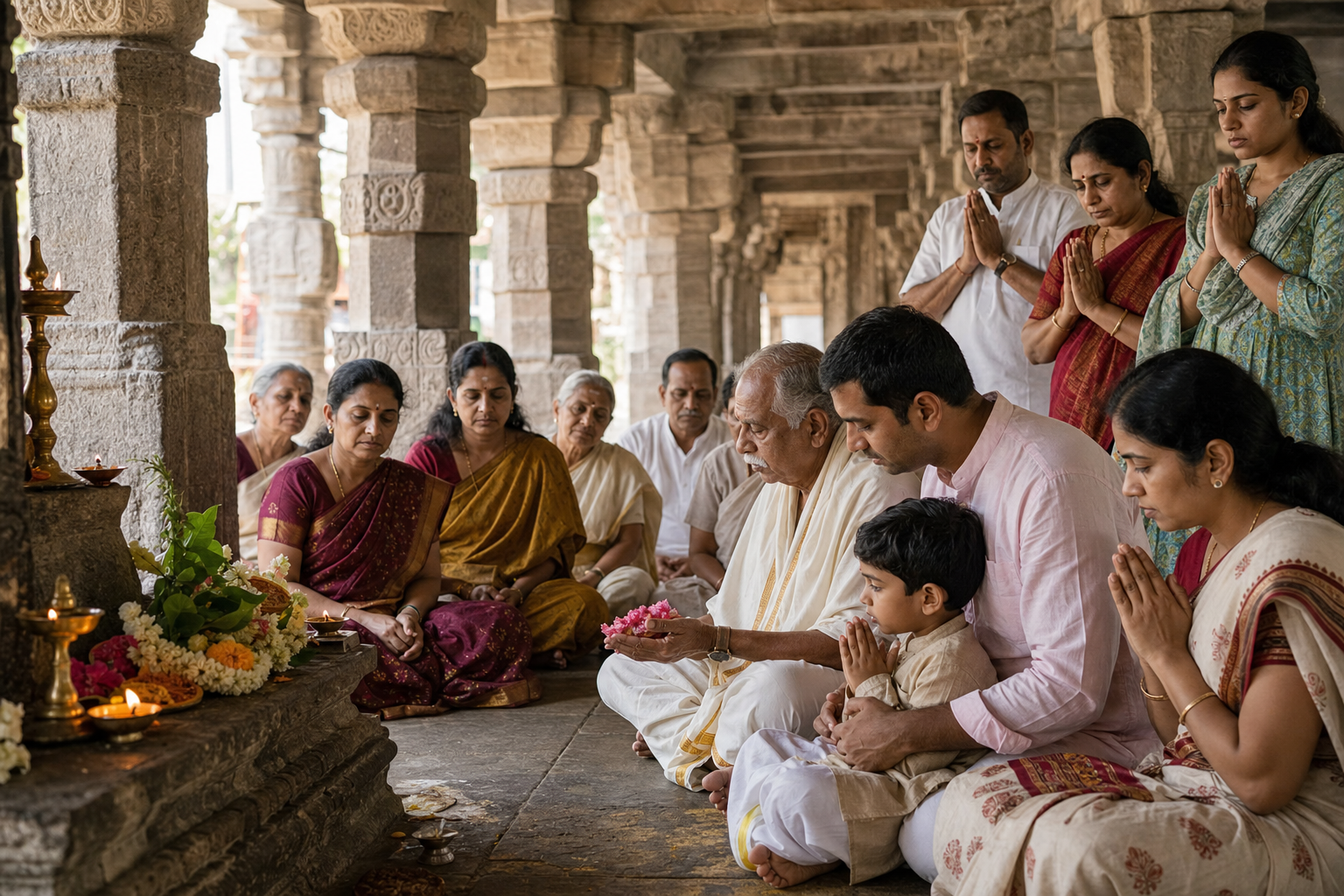
A temple visit can have cultural, sociological, and spiritual dimensions at the same time. That is why attendance should not become an admission test for devotion. A person can possess sincere inward faith without visiting frequently, while another can attend regularly and remain inwardly distracted.
Yet the temple offers something that private practice does not provide in the same way. It brings your body, attention, family relationships, inherited customs, and local community into one setting. You do not determine every part of the encounter. You enter an order already being observed by other people, and that limitation can itself become a discipline.
Before your next visit, decide what you are actually going there to do. You might seek worship, quiet attention, participation in a family observance, connection with a community, or relief from the habit of treating spirituality as a purely private preference. A clear purpose makes it easier to distinguish genuine practice from merely passing through the building.
- Pause at the threshold. Put away the phone and allow your pace to change before you approach the sacred image.
- Follow the customs of that temple. Rules concerning footwear, movement, dress, offerings, and photography vary. If you are unfamiliar with them, observe first and ask respectfully when necessary.
- Let the sequence guide you. Do not rush directly to the most visually impressive point. Notice how the temple leads attention from ordinary activity toward worship.
- Remain briefly after the immediate act is complete. Give the encounter enough quiet for its meaning to settle instead of treating departure as the next item on a schedule.
- Carry away one discipline. Choose a concrete restraint, duty, or act of care that expresses the reverence you offered inside.
A close connection with a guru does not have to compete with this. Guidance can orient your inner life, while the temple gives that orientation a communal and embodied setting. The useful question is not whether one invalidates the other. Ask whether your present practice needs guidance, shared participation, concentrated worship, or some combination of them.
The icon is a meeting point, not a visual puzzle
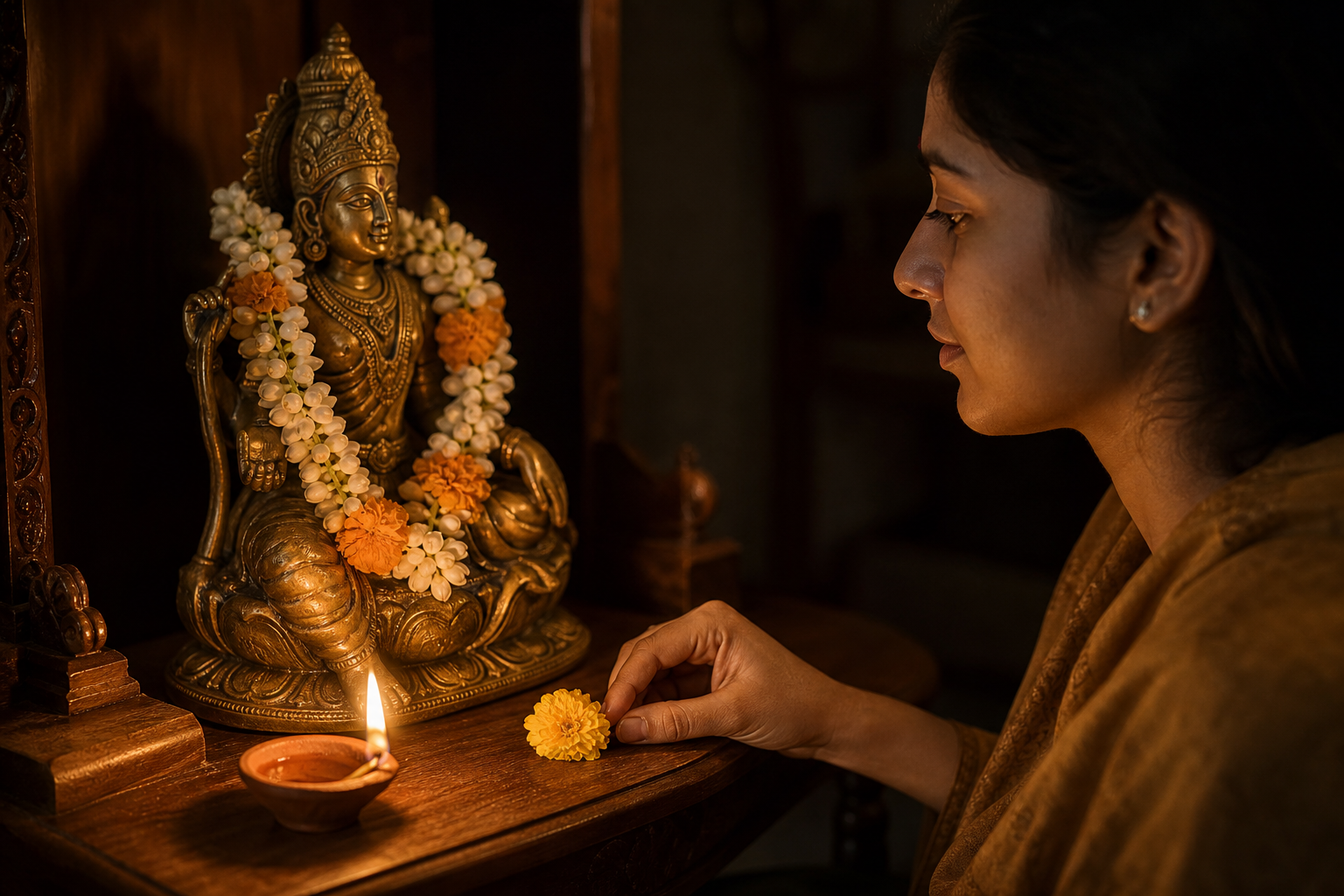
Within temple worship, an image is not approached merely as an interesting arrangement of stone or metal. It is received as a living presence through which the finite form opens toward the infinite. Hindu philosophies and communities may explain that presence differently, but the practical posture is relational: you are not simply inspecting an object from the outside.
This is why iconography should deepen attention rather than turn worship into a decoding contest. You do not need to identify every ornament before you can stand reverently. Knowledge helps when it returns you to the divine form. It becomes a distraction when collecting meanings replaces the encounter itself.
The Prabhavali, also called the Prabhamandala or Thiruvachi, makes this especially clear. The ornamented arch rises around and behind the deity as an image of effulgence. It is not simply a decorative border. It directs you to see the central form together with the radiance that cannot be contained by that form’s physical outline.
You can use a simple pattern of looking when you stand before such an icon:
- Receive the whole arrangement first. Resist the impulse to inventory details immediately.
- Bring your attention to the deity. Notice posture, expression, and the quality of presence the form evokes without forcing an interpretation.
- Notice the surrounding arch. Let the Prabhavali change the way you understand the boundary between visible form and radiance.
- Return to the centre. Ask what response the encounter calls from you: humility, courage, steadiness, gratitude, or restraint.
Do not judge the visit only by emotional intensity. A dramatic feeling is not the sole evidence of presence, and a quiet encounter is not a failed one. The icon trains fidelity of attention: you return, look again, and allow relationship to mature without demanding a sensation on command.
The grove teaches reverence without possession

The Lalita Sahasranama names Goddess Tripura Sundari Kadamba Vana Vasini, the one who dwells in the forest or grove of kadamba trees. The kadamba is known for fragrant, round, orange-yellow blossoms, while vana refers to a forest or grove. The name does more than compare the Goddess with natural beauty. It places divine dwelling within a living habitat.
That distinction matters. If nature is only scenery, you remain a consumer looking for a pleasing view. If the grove is approached as a dwelling, you enter as a guest. The relevant question changes from “What experience can I get here?” to “What conduct is appropriate in a place I do not own?”
You do not need an exotic destination to practise this shift. Choose a living place you can visit responsibly: a grove, a garden, a riverbank, or a familiar tree. Repeated attention to one place often corrects the restless search for a more impressive spiritual setting.
- Begin without taking. Do not pluck, carve, break, or collect merely to prove that you were there.
- Observe relationships, not just objects. Notice shade, soil, scent, water, insects, birds, decay, and renewal as parts of one inhabited place.
- Do not leave devotion behind as litter. An offering that violates local rules, damages wildlife, or burdens the habitat does not become harmless because the intention was religious.
- Allow reverence to impose a limit. Leave the place no worse than you found it, and support its care where you can do so safely and appropriately.
- Return to ordinary life with one changed habit. Reduced waste, gentler use of water, or care for a nearby tree makes sacred ecology more than an elevated mood.
A pleasant feeling outdoors may be welcome, but it should not automatically be confused with spiritual insight. The sharper test is whether calling a place sacred alters your behaviour toward it. Presence without responsibility can easily become projection.
Choose the practice by the attention you are missing
Temple, icon, and nature should not be flattened into interchangeable symbols. A temple has inherited forms and communal obligations. A sacred icon concentrates relationship in a particular form. A grove confronts you with life that does not exist for your convenience. Use the distinction to identify what your practice currently lacks.
| Setting | What it trains | Common distortion | Useful correction |
|---|---|---|---|
| Temple | Shared, embodied participation | Routine attendance, haste, or social display | Enter with a purpose, follow local order, and remain attentive after the formal act |
| Sacred icon | Concentrated, relational seeing | Treating the form as decoration or an intellectual puzzle | See the whole, attend to the centre, notice the radiance, and return to the centre |
| Living grove | Reverence beyond human-made space | Consuming scenery or projecting a mood onto nature | Observe without taking, protect the habitat, and translate attention into care |
| Guru relationship | Guidance and orientation | Using personal connection as a reason to withdraw from every shared practice | Let guidance clarify which communal, contemplative, or ethical discipline you need |
If you have become mechanical in temple worship, spend more time actually seeing the icon. If private devotion has become isolated, return to a shared sacred setting. If spirituality remains confined to human-made spaces, approach a living place with restraint. If all three feel unfocused, seek sound guidance rather than adding more activities.
There is also a danger in saying that everything is sacred without treating anything as worthy of special care. Recognition has consequences. A sacred threshold changes your pace. A sacred image changes your manner of looking. A sacred grove changes what you permit yourself to take or damage.
Questions people ask about sacred presence
If I feel the divine at home or in nature, do I still need a temple?
There is no useful reason to turn attendance into a competition over who is more devout. Your home practice or time in nature may be sincere. The temple nevertheless offers shared custom, embodied discipline, and participation with a community. Visit when those are dimensions you need, not merely to satisfy appearances.
Is a sacred icon only a symbol?
The word “only” is too narrow for the devotional encounter. The icon certainly communicates through form and symbolism, but temple worship approaches it as divine presence rather than as a visual reminder with nothing on the other side. You do not need to settle every philosophical explanation before adopting the appropriate reverence.
Does sacred nature mean that every beautiful landscape is a shrine?
Beauty can awaken attention, but sacred presence is not the same as attractive scenery. The image of Tripura Sundari dwelling in the kadamba grove directs attention toward relationship and habitation. Ask whether your reverence protects the place, limits your consumption, and recognizes forms of life beyond your own preferences.
What if I visit, look, or sit quietly and feel nothing?
Do not manufacture emotion and do not declare the practice empty after one unrewarding encounter. Complete one attentive act: slow down at the temple threshold, look at the icon without rushing, or leave a grove without taking anything. Steadiness is a more reliable foundation than chasing a spiritual sensation.
At your next encounter, choose one correction rather than attempting every practice at once. Slow down at the threshold, look from centre to radiance and back again, or enter a living place without taking from it. Let reverence change one behaviour before you ask it to produce another feeling.
References
- Hindu Pad – Is it necessary to visit temples if one has direct connection with the Guru?
- Hindu Blog – Prabhavali: The Arch of Effulgence: Structure, Symbolism and Sacred Meaning
- Hindu Blog – Goddess Tripura Sundari and the Kadamba Grove: A Lesson in Sacred Presence