
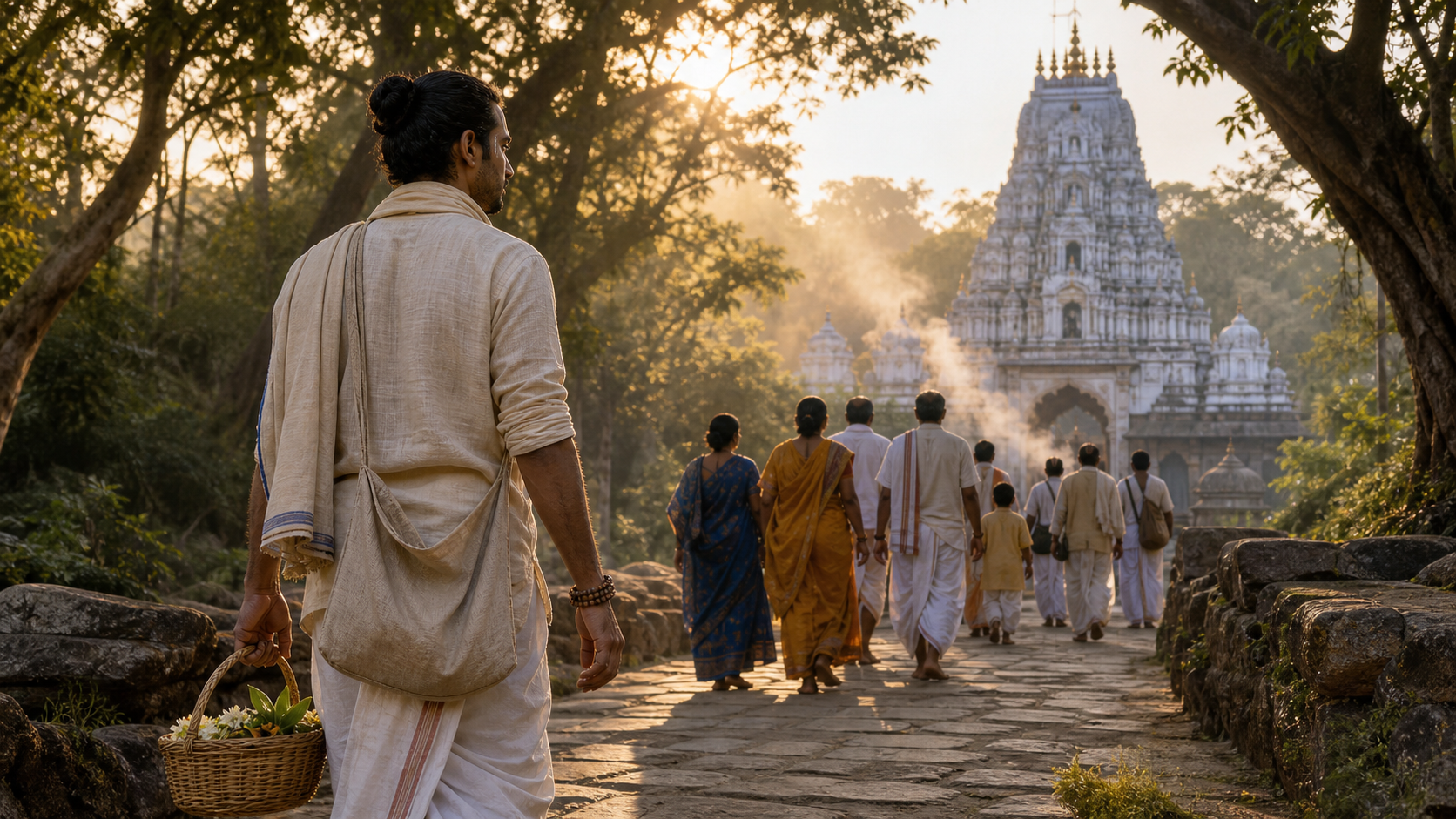
You may know how to reach a temple, arrange darshan, and complete the outward journey. The harder question is what makes that journey Vaishnava rather than merely religious tourism.
The answer begins before you leave home and continues after you return. A Vaishnava pilgrimage carries remembrance of Vishnu into your intention, conduct, worship, and service. The shrine gives that identity a sacred focus, but your response to the shrine determines whether it becomes part of your life.
Know which kind of Vaishnava identity you are carrying
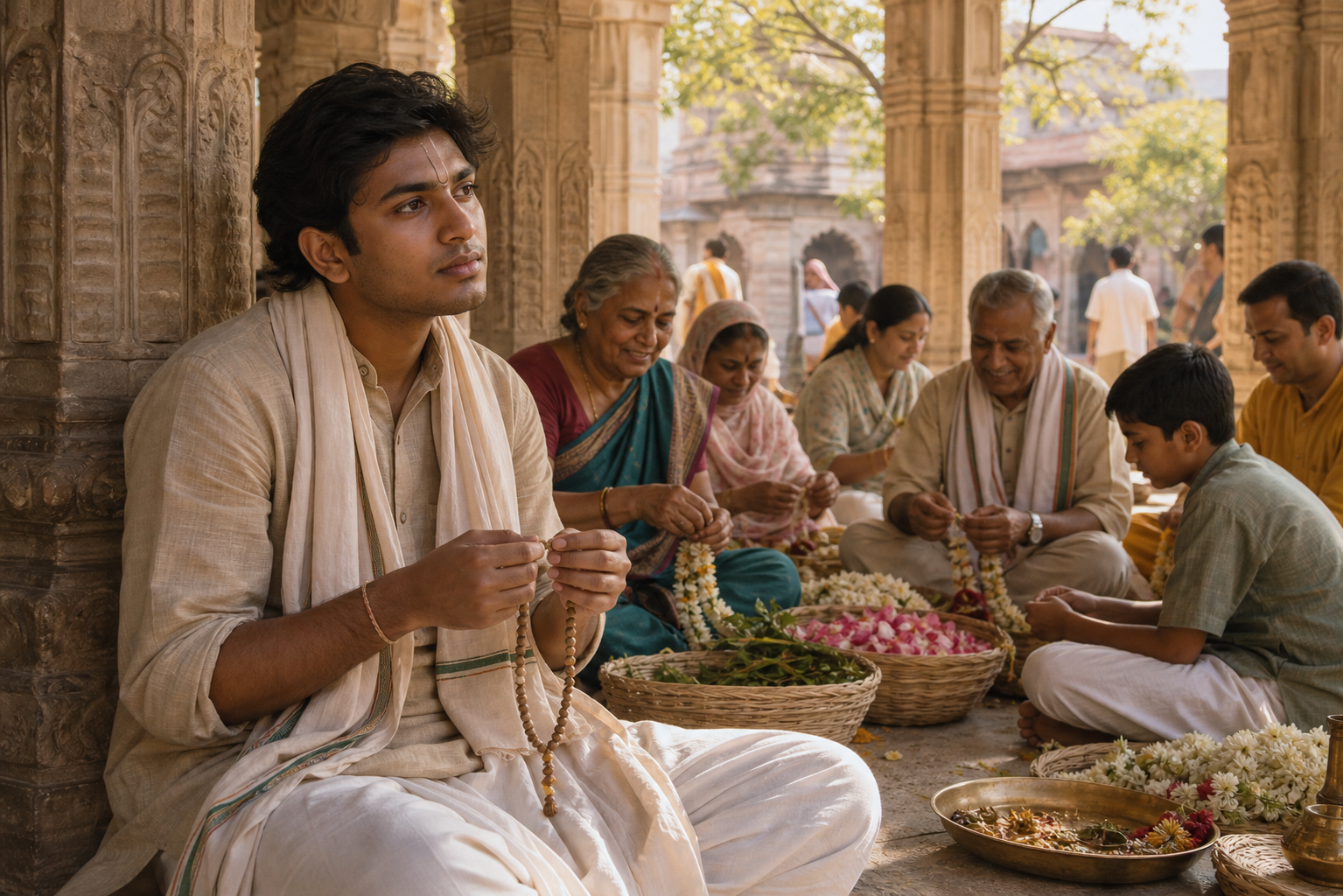
Vaishnava identity has an inner dimension, a communal dimension, and, in some lineages, a formally initiated dimension. Keeping these distinct prevents two common errors: treating devotion as a private feeling with no obligations, or adopting the visible forms of a lineage without accepting its discipline.
In Sri Vaishnavism, the Pancha Samskaras — Tapa, Pundra, Nama, Mantra, and Yajna — give sacred form to a devotee’s relationship with Vishnu, Sri, an Acharya, and the community. Nama is especially important because the bestowed devotional name can make humility part of ordinary self-understanding. The suffix Dāsa, used in many Sri Vaishnava lineages, does not advertise spiritual status. It declares servanthood. The name joins remembrance to an Acharya’s parampara and to an ethical commitment.
If you have received such rites, carry them according to your Acharya’s instruction. Use the name, mantra, Urdhva Pundra, and worship discipline as responsibilities rather than ornaments. A pilgrimage is an opportunity to renew that responsibility.
If you have not received initiation, you do not need to imitate it. Approach Vishnu sincerely through the devotional practice already proper to you: remembrance of a divine name, prayer, respectful darshan, study, and service. Formal belonging should come through a qualified Acharya and a real relationship with a lineage, not through self-appointment during a temple visit.
Before planning your route, therefore, answer one question plainly: are you travelling as an initiated disciple renewing a commitment, as a Vaishnava devotee seeking deeper practice, or as a respectful visitor learning about the tradition? All three can enter with reverence. They should not pretend to be the same.
Prepare a sankalpa, not just an itinerary
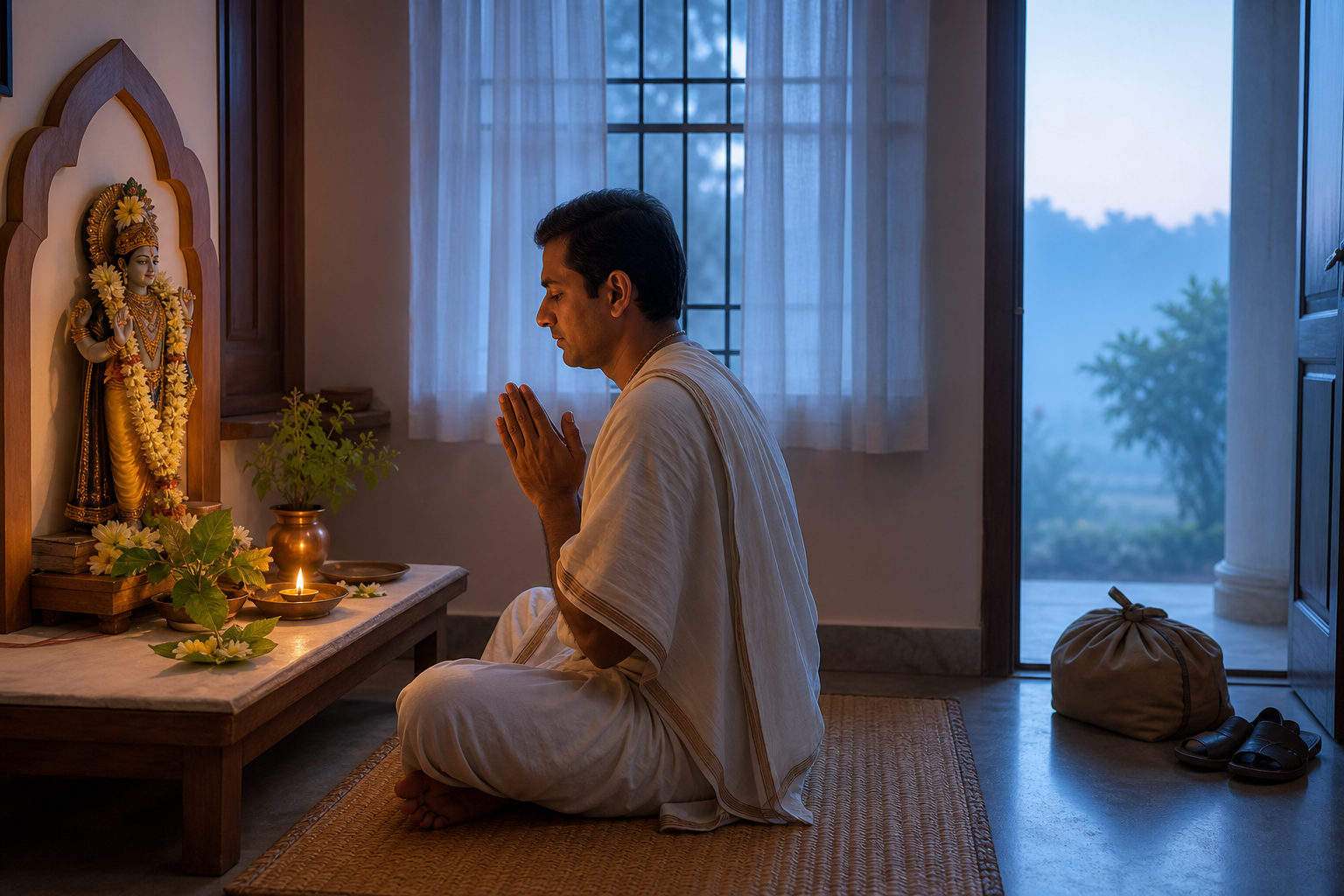
A route tells you where you will go. A sankalpa tells you why. Without that inner decision, logistics occupy the mind and darshan becomes one more item to complete.
Write your purpose in one direct sentence before leaving. It might be to seek clarity about a duty, renew daily remembrance, give thanks, or learn steadiness from Narasimha. Avoid asking vaguely for a spiritual experience. Choose a purpose that can alter your conduct when you return.
Then prepare four parts of the journey:
- Remembrance: Decide which established name or prayer you will carry on the road. Om Namo Narayanaya, Vishnu Sahasranama recitation, japa, and kirtana are cherished Vaishnava disciplines. If you have received a mantra from an Acharya, follow the instruction attached to it rather than improvising a new method.
- Restraint: Choose a simple vrata suited to your circumstances. The point is not discomfort for its own sake. It is to reduce distraction, impatience, careless speech, and consumption so that attention can turn toward Bhagavan.
- Temple readiness: Confirm current hours, access conditions, transport, and local rules before departure. Wear modest clothing and carry only what you can manage without making the visit burdensome to others.
- Service: Decide how servanthood will appear in practice. You can yield space to an older pilgrim, avoid pushing in a queue, keep the premises clean, follow the directions of temple workers, and help family members complete the ascent without complaint.
This preparation joins bhakti to dharma. Repeating a divine name while disregarding the people around you divides worship from conduct. A pilgrimage should make that division harder to maintain.
Let the sacred place teach you how to approach darshan
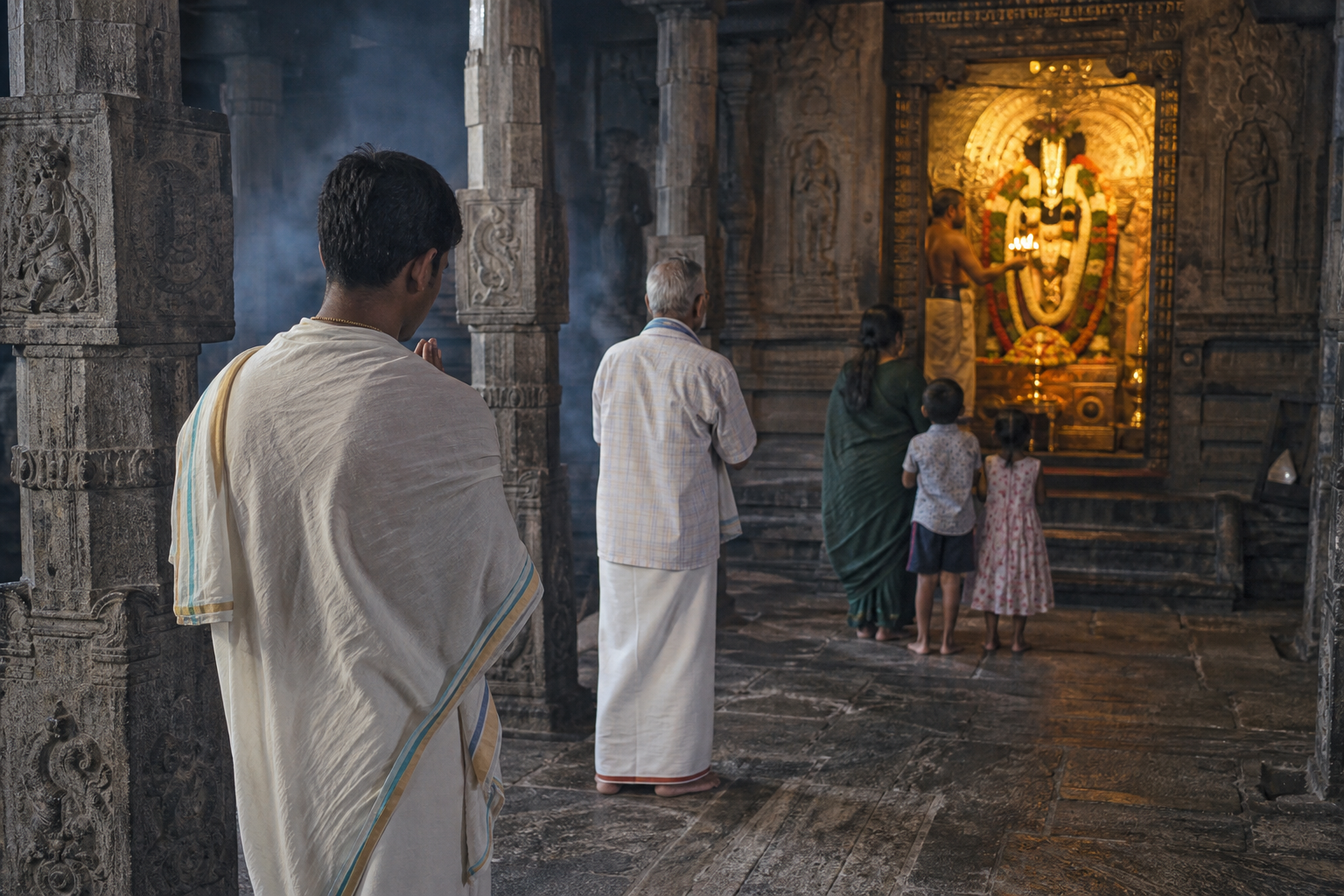
Nampally Gutta offers a concrete example of how landscape, architecture, and deity can shape a Vaishnava journey. The Lakshmi Narasimha Swamy Temple stands on a hill near Nampally village and Vemulawada in Telangana’s Karimnagar district, approximately 160 kilometres from Hyderabad by road. Its hilltop setting and serpent-shaped architectural form turn the approach itself into part of the pilgrimage.
The ascent is moderate, but it still asks you to adjust your pace. If you are travelling with children, older devotees, or anyone who needs pauses, plan around the slowest member of the group. That is not an inconvenience outside the pilgrimage. It is an immediate test of seva.
The large serpent motif is often understood as a protective naga encircling the sacred hill. You need not force a single interpretation onto every architectural feature. Notice instead how the form changes your approach: protection surrounds the path, the climb separates ordinary movement from sacred arrival, and Lakshmi Narasimha stands at the devotional centre as the union of formidable protection and divine compassion.
For a visit to Nampally Gutta, practical and spiritual preparation belong together:
<!– wp:list {