

If you are asking why a shrine dedicated to Chhatrapati Shivaji Maharaj can receive less public support than Aurangzeb’s tomb, the disparity deserves scrutiny. But the useful question is not simply which site received the larger figure. You need to know what each allocation pays for, which authority controls it, what condition the site is in, and whether the money produces verifiable conservation.
The annual grant for Shri Shivrajeshwar Temple rose from ₹3,000 to ₹1 lakh after a 55-year interval, yet the revised amount reportedly remains below allocations associated with the upkeep of Aurangzeb’s tomb. That correction was overdue. It should now become the starting point for a transparent funding system, not the end of the discussion.
The ₹1 lakh correction is not a conservation plan
A grant can be larger than before and still be inadequate. The old ₹3,000 annual amount had become little more than a token after remaining unchanged for decades. Raising it to ₹1 lakh acknowledges that upkeep, utilities, security and ritual continuity cost real money. It does not establish that the temple’s structural or operating needs are now fully funded.
Shri Shivrajeshwar Temple is also more than a room requiring routine maintenance. It is a living shrine inside the 17th-century Sindhudurg Fort. Worship continues there, while the setting carries the memory of Shivaji Maharaj’s maritime statecraft, courage and public duty. Damage to the structure therefore affects built heritage, religious practice and civilizational memory at the same time.
That combination requires three separate funding judgments:
- Immediate conservation need: Is masonry unstable, water entering the structure or salt attacking stone and metal?
- Continuing operation: What is required for worship, utilities, sanitation, security and orderly visitor movement?
- Long-term resilience: Which preventive works will reduce repeated damage instead of financing the same repairs again?
If ₹1 lakh covers only annual operations, it should not be presented as though it also finances major conservation. If it is expected to cover both, the state should publish the work quantities that the amount can realistically purchase. A round number is not evidence of adequacy.
Compare functions before comparing rupees
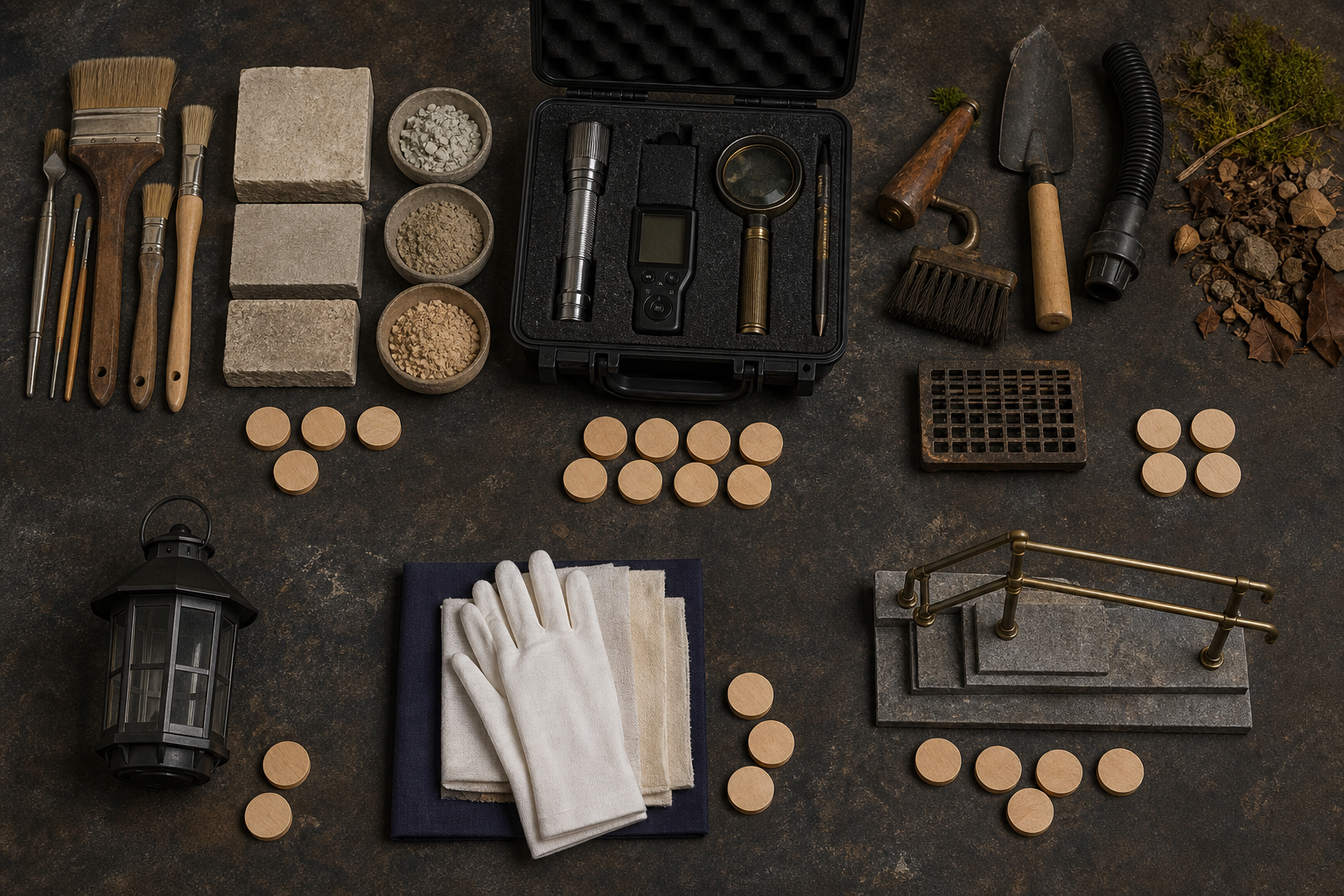
Heritage expenditure in Maharashtra can pass through different administrative channels. A nationally protected monument may fall under the Archaeological Survey of India. A state-protected property may be handled by the state archaeology and museums machinery. A living shrine may also depend on a temple trust or devasthan body, while certain Islamic properties may involve waqf institutions. Municipal agencies can separately fund roads, sanitation or public facilities around a heritage zone.
Those arrangements can produce a misleading comparison. One public figure may be an annual operating grant; another may be a structural conservation contract; a third may include the surrounding precinct. Before concluding that two sites are being treated unequally, put the figures through the same tests.
| Question to ask | Why it changes the comparison |
|---|---|
| Which authority owns the work? | Different agencies operate under different laws, budget heads and procurement systems. |
| Is the figure sanctioned, disbursed or actually spent? | An announced grant is not the same as money released, and money released is not proof of completed work. |
| Is it structural or operational funding? | Wall stabilization and moisture treatment cannot be compared directly with security, electricity, sanitation or ritual expenses. |
| What period does the figure cover? | An annual grant and a conservation project extending across several work stages answer different needs. |
| What deliverable is attached? | A defensible allocation identifies the wall, roof, drain, visitor facility or service it is meant to provide. |
This does not make the reported disparity irrelevant. It tells you what evidence is needed to test it. If the state publishes comparable categories and Shri Shivrajeshwar Temple still receives less than its documented need, the inequity becomes clearer and harder to excuse.
Fairness does not require identical cheques for every monument. It requires identical rules. A site facing greater physical risk, heavier visitor pressure or the obligations of living worship may justifiably receive more. The test is whether the same criteria are applied to a temple, tomb, dargah, monastery, gurudwara, fort or museum.
Sindhudurg’s coast changes what responsible funding costs
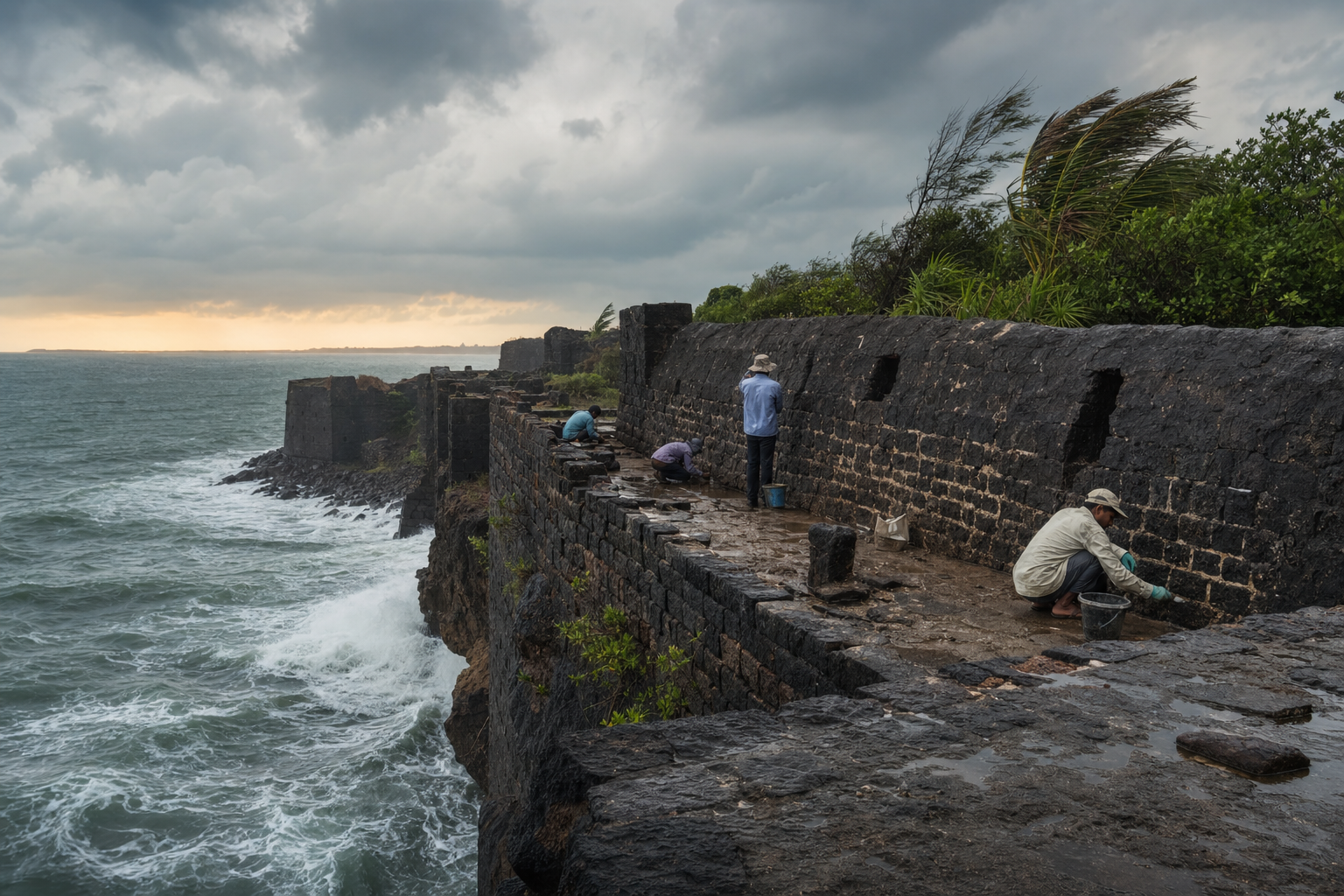
Sindhudurg cannot be budgeted like an inland building. Salt spray introduces chlorides into porous material. Moisture can rise through masonry. Metal elements corrode more rapidly. Biological growth takes hold in damp areas, and cyclical wave exposure adds another source of stress. A cosmetic repair may improve appearance without interrupting any of these mechanisms.
A sensible conservation programme for the fort and shrine should therefore connect each expense to the deterioration it is meant to control:
- Document condition and risk. Map moisture, salt-affected masonry, cracks, biological growth and vulnerable metal before deciding the scope of work.
- Stabilize threatened fabric. Address unsafe walls, foundations, superstructure and protective capping before spending heavily on presentation.
- Control water and salt. Use compatible lime mortars, masonry desalination and controlled drainage appropriate to the historic fabric.
- Protect without trapping damage. Specify materials and interventions that remain compatible with the fort’s stone and traditional construction.
- Monitor after repair. Periodic structural checks and moisture observation should reveal whether the intervention worked before deterioration becomes severe again.
Lighting also needs care in a sensitive historic environment. It should support worship and safe movement without creating harmful microclimate conditions or encouraging unsuitable alterations to old fabric.
Structural work should have its own ring-fenced budget. Temple operations should have a separate allocation for ritual continuity, security, sanitation, utilities and festival-related management. This separation protects both purposes: conservation money cannot quietly disappear into recurring administration, and worship is not treated as an optional leftover after construction contracts are paid.
A funding rule Maharashtra could defend in public
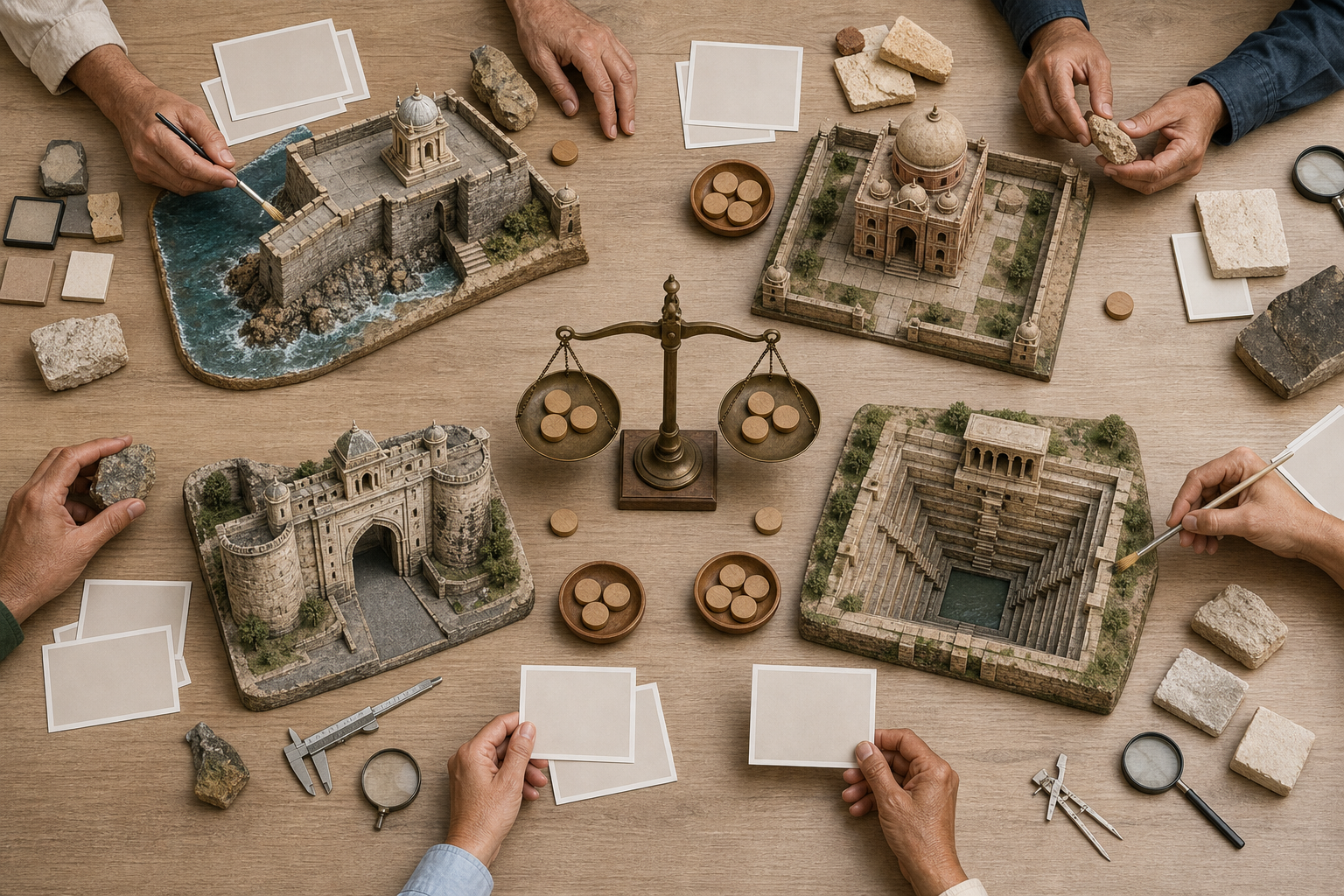
Maharashtra needs a common Heritage Value and Need Index rather than a chain of exceptional announcements. The index should assess every site under the same published headings while allowing evidence to produce different allocations.
- Significance and rarity: What does the site preserve that cannot be replaced, and how central is it to Maharashtra’s historical or civilizational memory?
- Structural condition and risk: Is there active deterioration, instability, water ingress or a threat of irreversible loss?
- Climate and exposure: Does the site face coastal salt, heavy moisture, wave action or another environment that raises its lifecycle cost?
- Footfall and carrying capacity: Are visitor numbers placing pressure on access, sanitation, safety or fragile fabric?
- Living and intangible heritage: Does worship, pilgrimage, ritual knowledge or community practice continue at the site?
- Local social and economic value: Does conservation sustain local skills, livelihoods, responsible tourism and community participation?
The state need not pretend that all six headings carry the same importance in every decision. It should publish how they are evaluated, what evidence supports each rating and how the result affects the grant. Secret scoring would merely replace one opaque process with another.
Turn the assessment into distinct funding streams
The index becomes useful only when it controls real budget decisions. It should produce:
- An indexed baseline grant for essential annual care, adjusted with inflation and relevant construction costs so that it does not become another decades-long token.
- A variable risk grant based on condition assessments reviewed by qualified conservation architects and structural engineers.
- A living-heritage allocation for ritual continuity and the additional operational duties of an active shrine.
- Ring-fenced conservation capital tied to defined structural works, tender milestones and measurable completion.
Under such a system, Sindhudurg would not depend solely on an argument about symbolic status. Its exceptional association with Shivaji Maharaj, continuing shrine, maritime exposure and conservation complexity would all enter the same documented assessment. That is a stronger basis for substantial funding than either bureaucratic inertia or periodic outrage.
A five-year conservation and operations roadmap would then show how annual maintenance connects to major works. Each year should have a defined condition target, a funded scope, a responsible authority and independent verification. This makes it possible to identify delay early instead of discovering years later that a grant was announced but the underlying damage continued.
Key takeaways: tests that reveal a fair heritage allocation
- The increase from ₹3,000 to ₹1 lakh corrects an obsolete grant; it does not by itself prove that Shri Shivrajeshwar Temple is adequately funded.
- Compare the same types of expenditure: structural work with structural work, operations with operations, and annual support with the same time period.
- Ask whether a figure is merely sanctioned or has been disbursed, spent and connected to a completed conservation milestone.
- Give coastal exposure, active deterioration and preventive maintenance priority over cosmetic improvements.
- Count continuing worship as a real heritage function with its own operational needs, not as an inconvenience outside conservation policy.
- Judge fairness by one published rule applied to every tradition, not by identical amounts detached from need.
Move the debate from outrage to an auditable decision
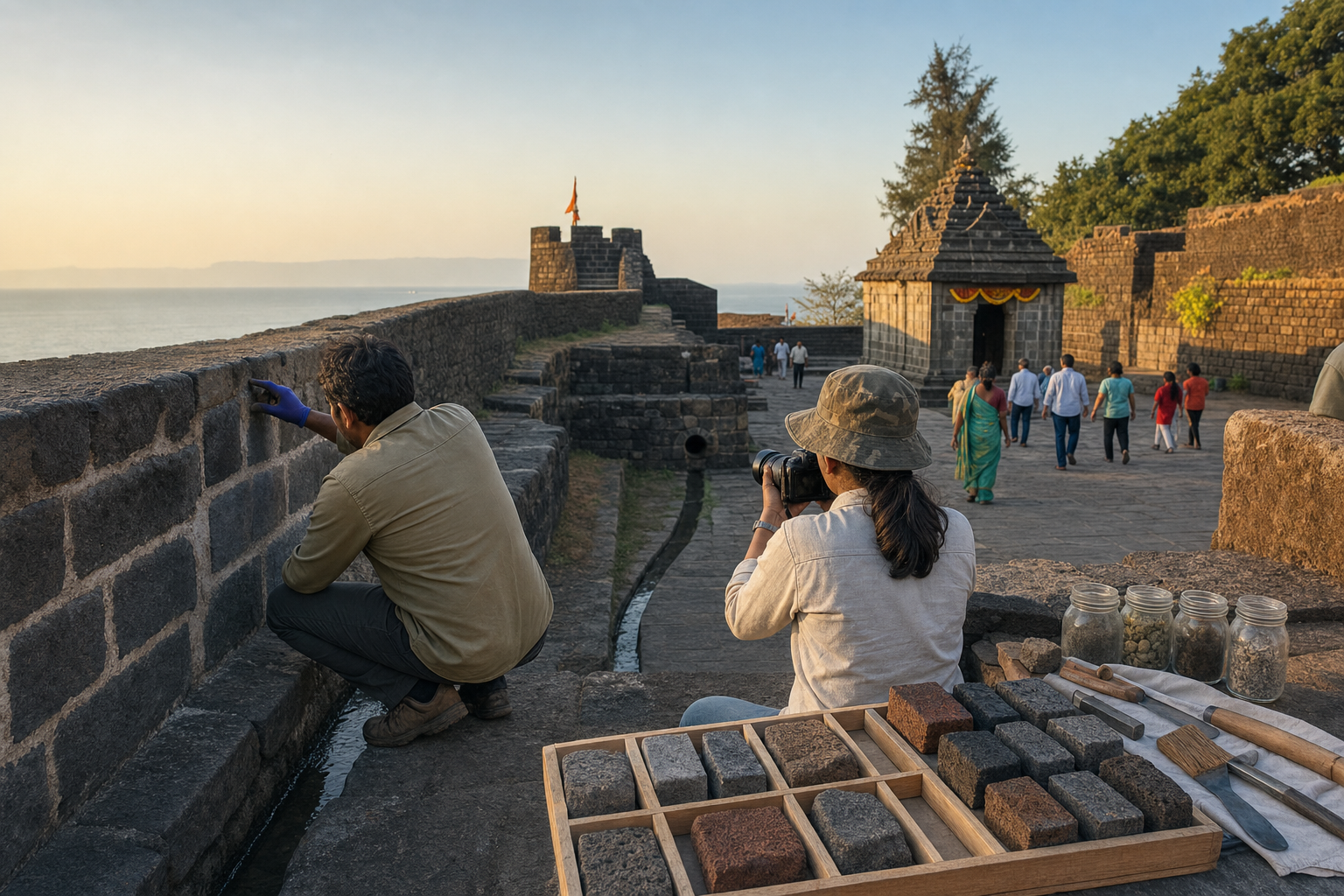
You do not need to choose between respecting Shivaji Maharaj and conserving the material remains of a layered past. Maharashtra can maintain Aurangzeb’s tomb as a historical site without assigning moral equivalence to the legacies represented by the two places. It can also recognize that a living shrine to Shivaji Maharaj within a vulnerable maritime fort has claims that a generic monument formula may miss.
What citizens should reject is opacity. A public heritage dashboard should show, site by site, the sanctioned amount, actual disbursement, tender status, work description, responsible agency and conservation milestone. The categories must be consistent enough that you can compare like with like across temples, forts, tombs, dargahs, monasteries, gurudwaras and museums.
Three reforms would make the next allocation materially easier to judge:
- A unified state registry identifying the authority responsible for each site and separating structural, operational and precinct-level needs.
- A published condition assessment connecting each proposed expense to a documented risk or public function.
- Independent milestone audits showing whether money released has produced sound, compatible and durable work.
Community participation can reinforce that system. Cleanliness programmes, guided heritage walks, multilingual interpretation and trained volunteers can connect Hindus, Buddhists, Jains and Sikhs through the dharmic ethic of seva. Interpretation at Sindhudurg should make the values associated with Shivaji Maharaj – courage, dharma, ethical governance and public service – intelligible without reducing the shrine to a tourist prop.
Corporate support can help with non-sectarian facilities such as access, sanitation, signage and lighting where legal norms permit. Skill partnerships can train local people in lime work, masonry, carpentry and site management. These contributions should supplement the state’s responsibility, not become an excuse for withdrawing public conservation funding.
When you contact a representative or heritage authority, ask for the unified registry entry, current condition assessment, structural-versus-operational budget split and five-year roadmap for Shri Shivrajeshwar Temple and Sindhudurg Fort. Those documents would answer far more than another isolated grant announcement.
The next step should be clear: require Maharashtra to show the rule, the need, the money and the completed work. If Sindhudurg’s civilizational importance, living worship and coastal risk are assessed honestly, adequate support for Shri Shivrajeshwar Temple will follow from evidence as well as reverence.