
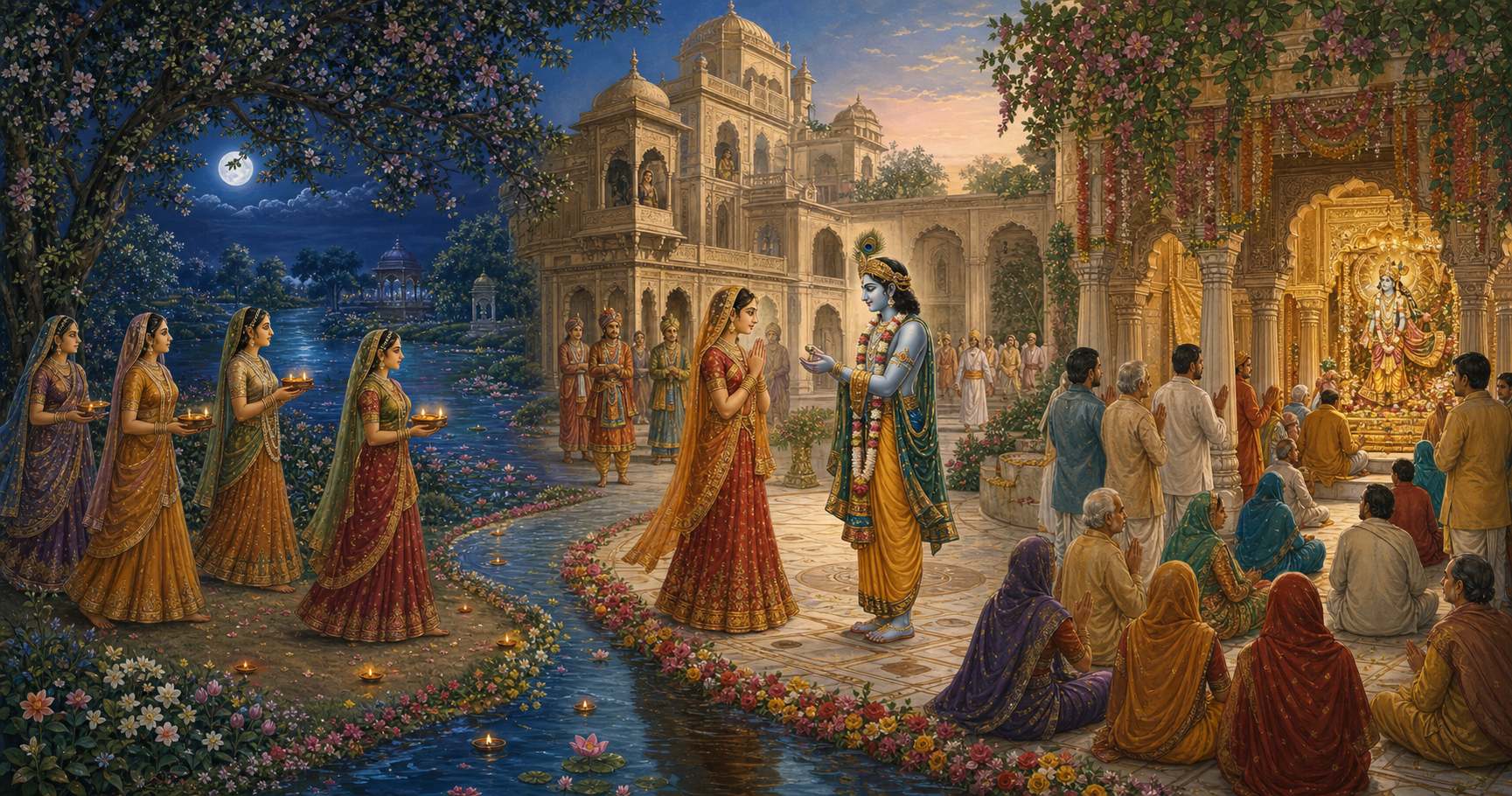
You may meet Krishna through a song about the gopis, a katha about Rukmini’s marriage, or darshan of Govind Dev Ji in Jaipur. These belong to one devotional world, but they do not describe the same relationship. If you collapse them into a single romantic story, you lose the teaching carried by each.
A clearer map will help you read Krishna-katha, explain it to your family, and enter a Krishna temple with better questions. The gopis reveal undivided devotion, Rukmini reveals divine companionship amid opposition, and Govind Dev Ji shows how sacred memory becomes a public inheritance.
Begin by identifying the relationship
The easiest way to orient yourself is to ask what kind of bond each name identifies. The gopis are female cowherds whose lives are centred on remembering, praising, and worshipping Krishna. They appear as a community of devotees. Rukmini is a named princess, Krishna’s consort, and a divine manifestation of Lakshmi. Govind Dev Ji belongs to the temple world, where Krishna’s presence is remembered through lineage, sacred form, architecture, and continuing worship.
These are not competing answers to one question. Rukmini’s status as consort does not make the gopis unimportant, and the intensity of the gopis’ devotion does not erase Rukmini’s distinct place. The temple does not replace either relationship. It gives later generations a place in which remembrance can become shared practice.
When you encounter a Krishna story or image, make a three-part scan:
- Who is relating to Krishna? A community of devotees, a named consort, a descendant, or a worshipping community?
- What is the setting? Cowherd life, royal and family conflict, or an established temple?
- What is being preserved? Remembrance, fidelity to a chosen relationship, a sacred lineage, or a place of darshan?
This simple scan prevents a common mistake: treating every Krishna narrative as though it teaches the same form of bhakti.
The gopis teach the discipline behind loving devotion
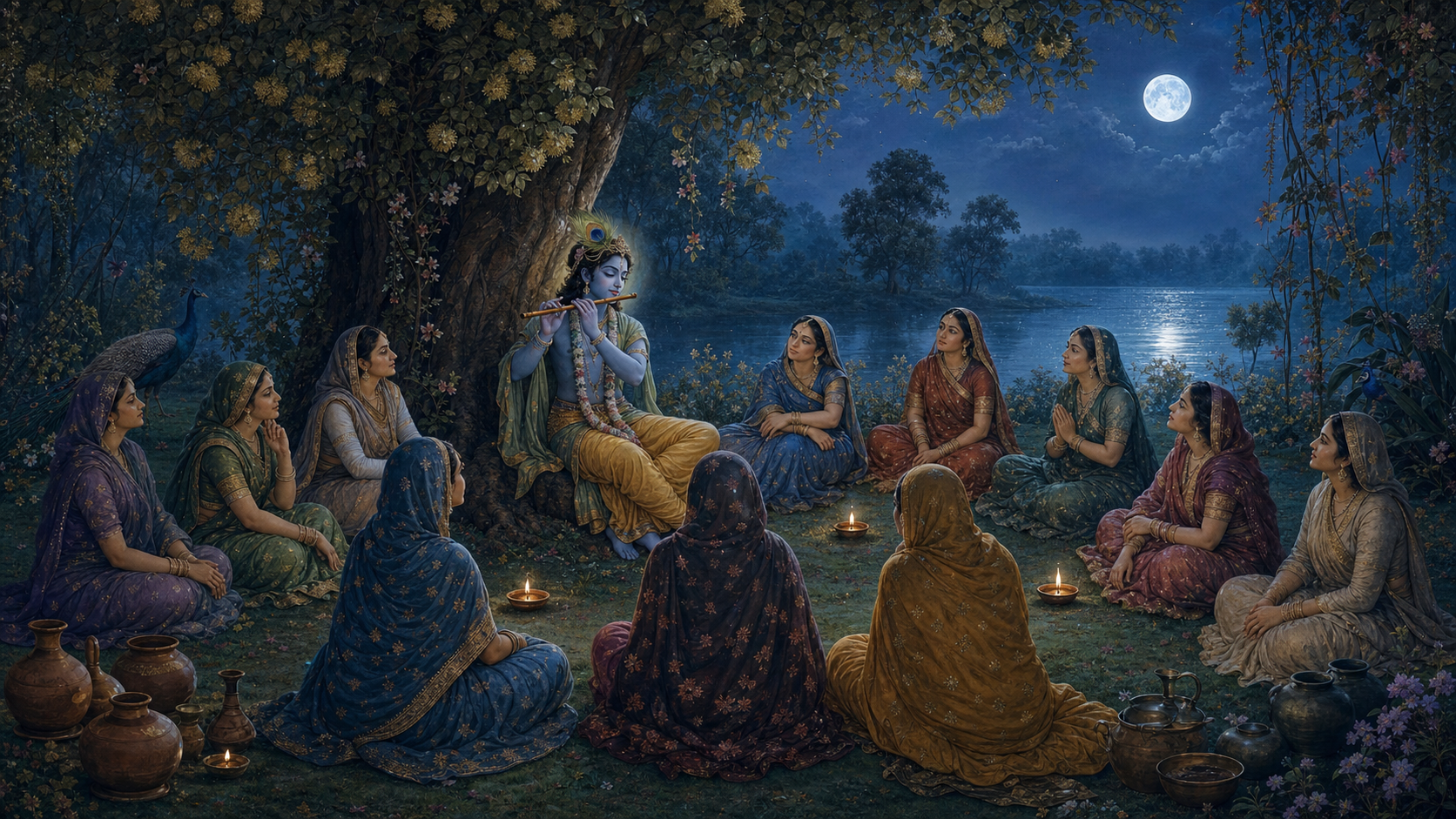
The gopis are often approached through the emotional beauty of their relationship with Krishna. That beauty matters, but it can hide the practical core. They regard Krishna as everything and dedicate themselves to praising, thinking about, and worshipping him wholeheartedly. The pattern rests on sustained attention, not on a passing religious mood.
Notice the progression. Praise gives devotion a voice. Remembrance carries it beyond formal worship. Wholehearted worship orders the rest of life around the divine. If you admire the gopis but your remembrance ends when a song or festival ends, you have encountered the emotion without yet adopting its discipline.
You do not need to imitate a dramatic narrative to begin learning from that discipline. Choose one stable act of remembrance: a fixed period of nama-japa, one Krishna prayer recited attentively, or one lila read slowly rather than consumed as entertainment. At the end of the day, ask what occupied your unguarded attention. That answer will tell you what currently functions as the centre of your life.
The gopis also carry a tradition of devotion extending across yugas. The sages of Dandakaranya in the Treta Yuga receive Rama’s blessing to be born as gopis in the Dwapara Yuga. Within that sacred account, their devotion to Krishna is the maturation of an earlier longing. Rama and Krishna are therefore not presented as disconnected objects of devotion, and the gopis do not appear without spiritual preparation.
When you teach this episode, keep its two layers clear. The narrative layer concerns the sages, Rama’s blessing, rebirth, and the gopis. The devotional layer concerns longing that persists and ripens. Stating both layers is more faithful than either dismissing the account as decoration or turning it into a vague slogan about love.
Rukmini places devotion within family and royal conflict
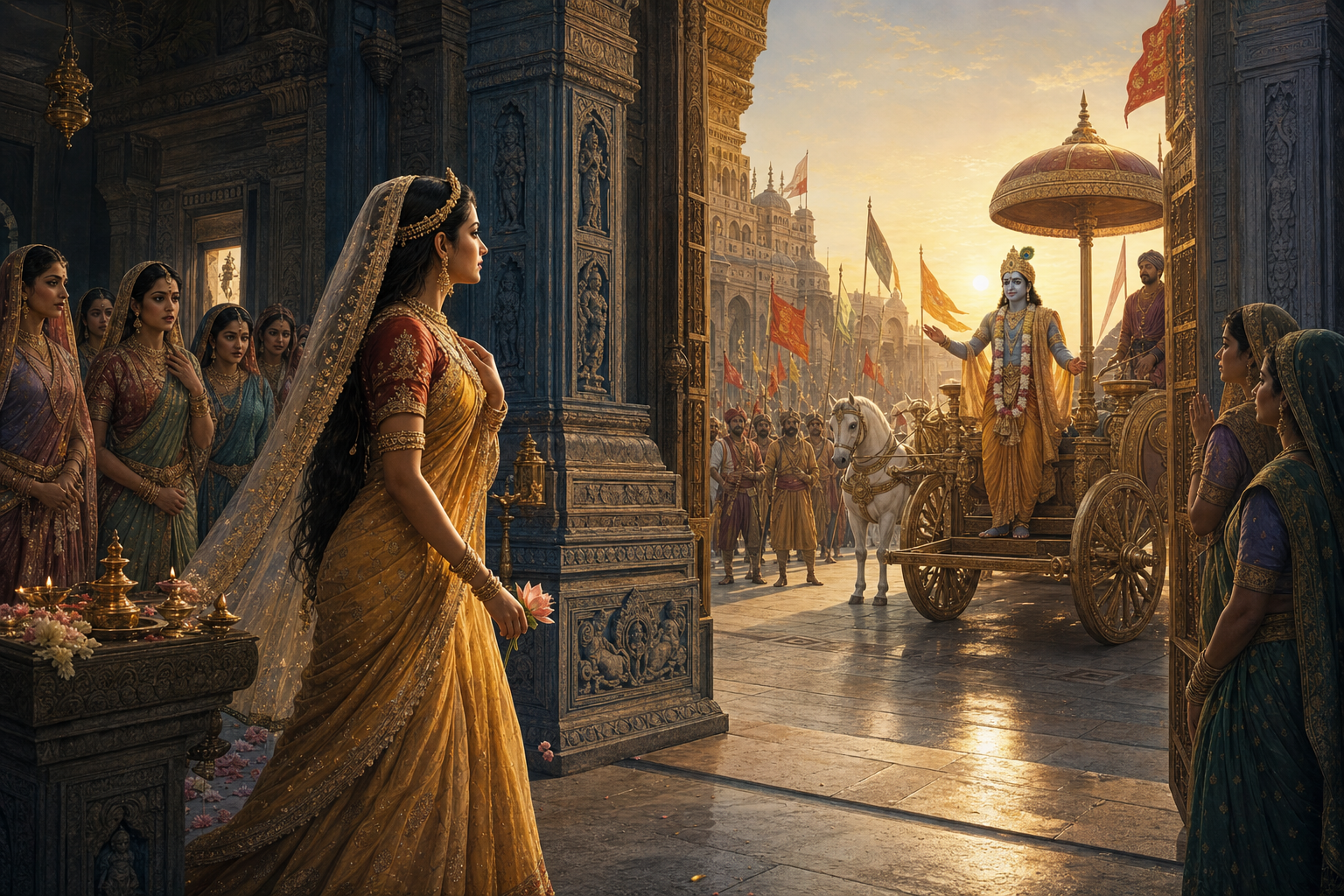
Rukmini should not be introduced merely as another woman associated with Krishna. She is the princess of Vidarbha, Krishna’s consort, and a divine incarnation of Lakshmi. Each part of that identity matters. Her royal position places the relationship inside dynastic expectations, while her identification with Lakshmi places it within divine theology rather than ordinary palace romance.
The obstacle is concrete. Rukmini’s brother Rukmi dislikes Krishna and arranges her marriage to Sishupala. Krishna confronts the assembled opposition and marries Rukmini. The conflict involving Rukmi, Sishupala, the opposing kings, and Krishna gives the marriage its narrative pressure.
This is a different devotional setting from that of the gopis. The gopis appear collectively and express a life of constant remembrance. Rukmini is a named royal figure whose relationship with Krishna must pass through family opposition and an imposed marriage arrangement. The shared centre is Krishna, but the human circumstances surrounding that centre are different.
When listening to a Rukmini katha, track four things: the alliance Rukmi tries to impose, the reason he opposes Krishna, the resistance Krishna encounters, and the meaning of Rukmini’s identity as Lakshmi. Those details keep the episode from becoming a generic rescue story. They show devotion entering a field shaped by kinship, status, competing loyalties, and decisive action.
The same care helps in home worship. If you have an image of Rukmini and Krishna, name her when explaining it to a child or visitor. Mention Vidarbha, Rukmi, and Sishupala rather than saying only that she is Krishna’s queen. Accurate naming is itself a form of cultural preservation: it carries the structure of the katha instead of retaining only a decorative image.
Govind Dev Ji turns remembrance into a temple inheritance
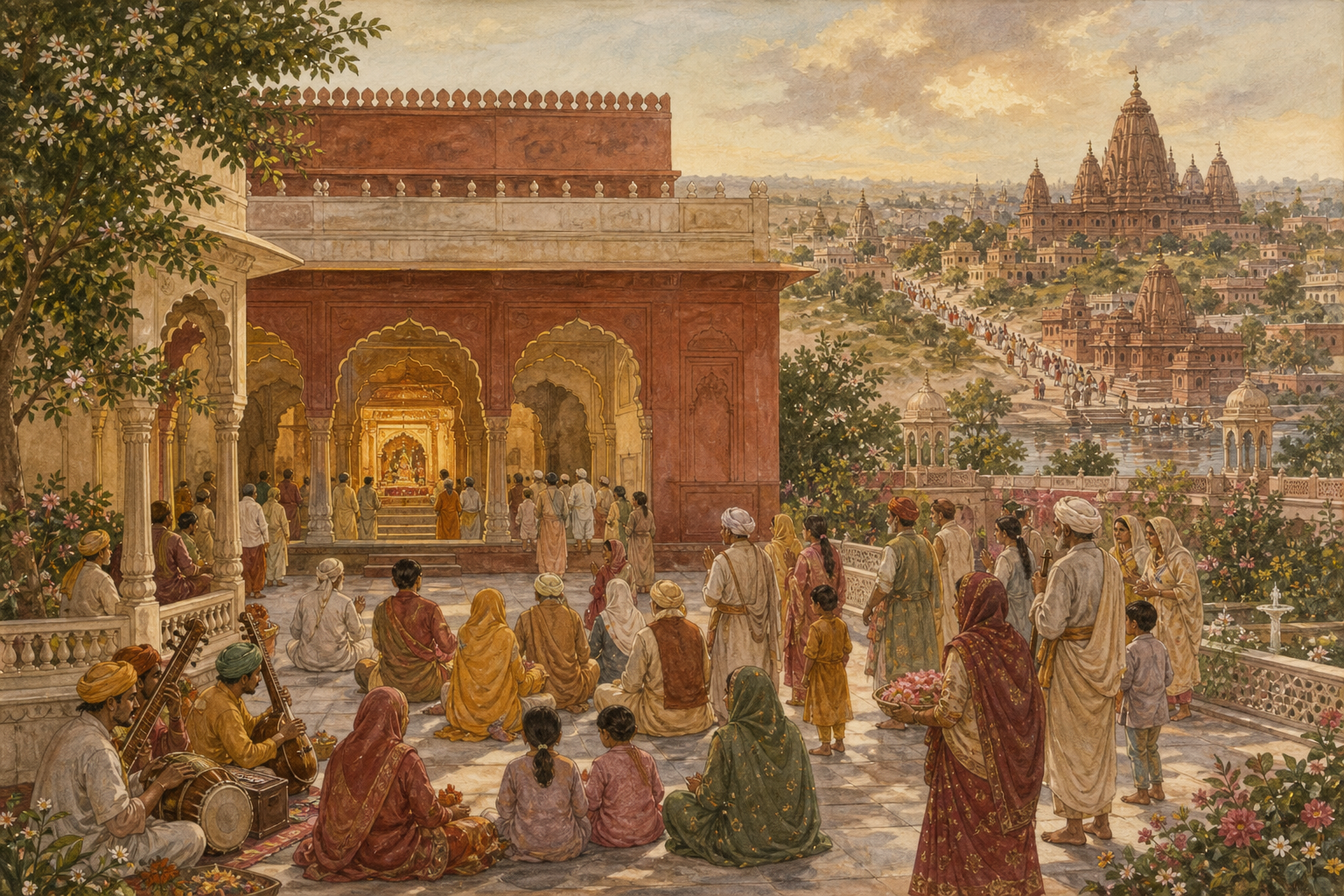
A temple adds another dimension to Krishna bhakti. Personal remembrance becomes public darshan. Narrative becomes sacred geography. Devotion is carried not only by an individual heart but also by names, buildings, inherited associations, and communities that return to worship.
The Govind Dev Ji legacy joins these dimensions. The prominent Krishna temple stands in Jaipur’s City Palace and is built with red and pink stone. Its sacred lineage is associated with Bajranabh, Krishna’s grandson. Genealogy connects the temple memory to Krishna’s family, while the visible shrine gives devotees a present place for encounter.
Preserve three layers when you retell this legacy. First comes the divine identity: Govind Dev Ji is a form and name of Krishna worshipped by devotees. Second comes inherited memory: Bajranabh connects the legacy to Krishna’s grandson. Third comes the physical setting: the temple stands in Jaipur’s City Palace and has its recognisable red-and-pink stone structure. Keeping those statements separate prevents sacred lineage and the presently visible building from being compressed into an unsupported chronology.
If you visit, use the temple as a place of attention rather than merely a backdrop:
- Before darshan, learn and use the name Govind Dev Ji. A temple’s divine name tells you whom the community has come to meet.
- Notice the City Palace setting and the red and pink stone. Architecture shows how devotion occupies public and historical space.
- Remember Bajranabh as Krishna’s grandson and as the genealogical link within the temple legacy.
- After leaving, retain one precise detail about the deity, lineage, or structure. Share that detail accurately instead of passing on an embellished version.
This method works beyond Jaipur. At any temple, distinguish the deity’s identity, the inherited sacred history, and the building you can presently see. Each may have its own story, and responsible cultural memory does not force them into one undifferentiated claim.
Key takeaways for your next katha or darshan
- The gopis are a community of devotees whose defining practice is wholehearted praise, remembrance, and worship of Krishna.
- The Dandakaranya tradition presents their Krishna bhakti as the fruition of devotion extending from Rama’s Treta Yuga.
- Rukmini is a distinct, named consort of Krishna and a manifestation of Lakshmi, not a generic figure in a Krishna love story.
- Her marriage narrative must retain its concrete conflict: Rukmi’s opposition, the proposed marriage to Sishupala, and Krishna’s confrontation with the opposing kings.
- Govind Dev Ji’s legacy should be understood through three separate layers: Krishna’s sacred identity, the Bajranabh lineage, and the temple’s Jaipur City Palace setting.
- You do not need to rank these relationships. Ask what form of devotion each one makes visible and what disciplined response it asks of you.
The next time you hear these names together, write down three headings: devotee, consort, and temple legacy. Place each detail under the relationship it actually describes. Then carry one response into practice: steadier remembrance from the gopis, more accurate retelling of Rukmini’s identity, or more attentive darshan of Govind Dev Ji. That is how a collection of familiar names becomes living Krishna bhakti.
References
- Hindu Pad — Gopikas (Gopis) | Story of Gopikas & Krishna
- Hindu Pad — Rukmini | Consort of Krishna, Divine Incarnation of Lakshmi
- Hindu Pad — Bajrakriti – Govind Ji Temple built by Bajranabh, Lord Krishna’s Grand son
