
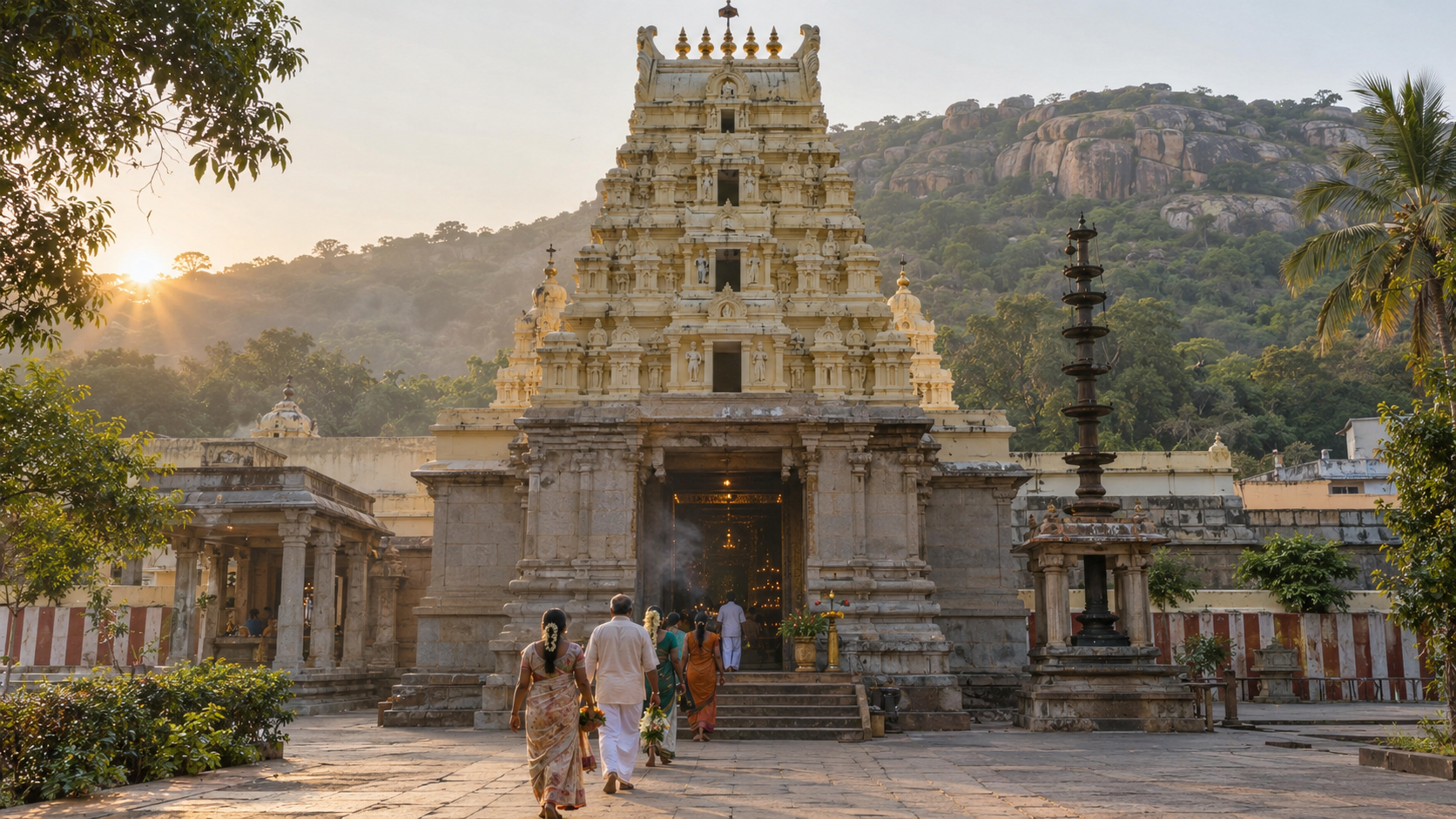
If you are planning darshan at Champakadhama Temple, the useful question is not simply how to reach it. You also need to know how to approach Sri Varu, what to notice once you arrive, and how to distinguish the temple’s documented setting from an attractive but unverified story.
That matters in Bannerghatta, where the better-known park and leisure destinations can overshadow a temple of historical significance within Bengaluru’s wider cultural landscape. A little preparation lets you make the visit as a devotee first and a careful observer of heritage second.
See Champakadhama as a living temple, not a sightseeing stop
Modern Bengaluru often conceals its historical depth in ordinary-looking places. A busy road, neighborhood junction, modest shrine, or weathered stone may preserve a connection with a city older than the buildings surrounding it. Champakadhama belongs in this way of seeing Bengaluru: not as an isolated relic, but as a living sacred place within a heavily transformed urban region.
The wider Bengaluru area has been shaped across periods associated with the Cholas, Hoysalas, Vijayanagara rulers, Mysuru Wodeyars, and Palegaras. That sequence provides regional context. It does not prove that every surviving feature at Champakadhama belongs to one of those powers, or that each dynasty patronized the temple.
This distinction protects the temple’s real history. If someone assigns a dynasty or date to a structure, ask what supports the claim: a dated inscription, an identifiable architectural feature, a temple record, or a transmitted local tradition. Oral tradition deserves respectful attention, but it should not silently become an archaeological date.
Make darshan the center of your visit. Observe the temple’s instructions, remove footwear where directed, and allow regular worship to continue without turning the sanctum or devotees into a backdrop. Historical curiosity is welcome when it remains subordinate to the purpose for which the temple is alive.
What the name Sri Varu asks of the visitor
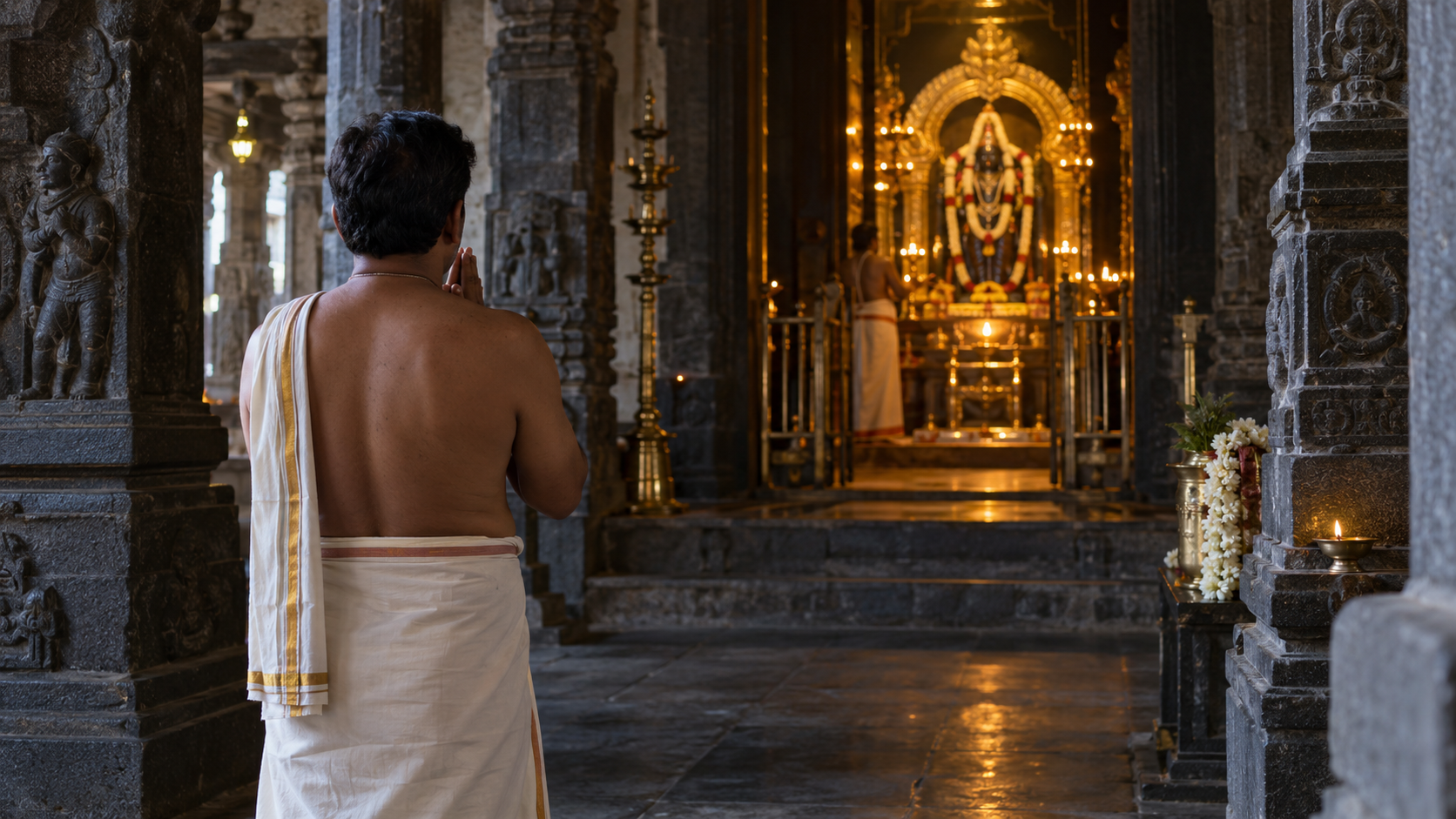
Sri Varu is devotional language rather than a detached catalogue label. It functions as a respectful way of referring to the revered Lord. The expression therefore tells you something essential about Champakadhama: devotees encounter a sacred presence here, not merely an object surviving from the past.
The description of Champakadhama as an Anandadhama, an abode of joy, carries the same devotional frame. Its meaning is experienced through darshan, reverence, and participation in an established sacred space. It should not be reduced to a claim about architectural grandeur or the scale of the complex.
If you are unfamiliar with the temple, let its own practice teach you. Watch where devotees pause, how they move through the space, and whether a queue or worship sequence is being followed. When uncertain, ask a temple attendant or archaka a short, practical question rather than copying another visitor without context.
- Enter with darshan as your first purpose; examine historical features afterward.
- Follow posted instructions and local practice concerning footwear, offerings, queues, and access.
- Ask before photographing the deity, ritual activity, inscriptions, or people. Permission in an outer area does not automatically extend to the sanctum.
- Do not infer the deity’s full iconographic or sectarian identity from the honorific Sri Varu alone. Use the temple’s own nameboards, explanations, and worship tradition.
- Keep conversations quiet and brief when puja or darshan is underway.
Plan the journey around Bengaluru’s traffic
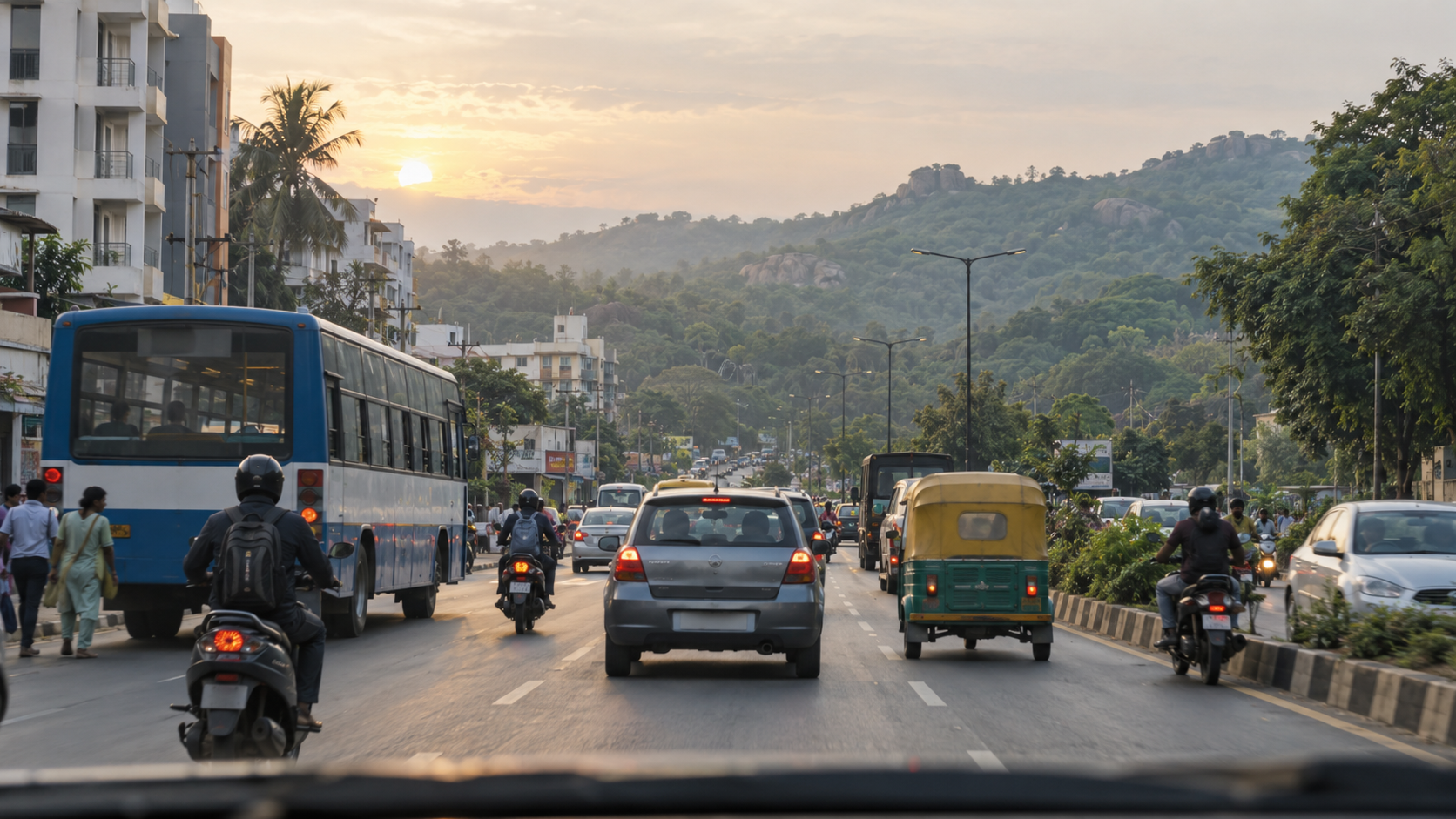
The practical route from central Bengaluru can combine the Metro with a road-based last mile. From Majestic, you can travel toward the southern part of the city and then continue from Yelachenahalli by autorickshaw or other local transport. Treat that as a route framework, not a guaranteed timetable: transit arrangements, road conditions, and temple access can change.
The common planning error is to look only at distance. Bengaluru traffic can consume the time you expected to spend at the temple, particularly after the roads become busy. An early departure gives you a quieter arrival and reduces the risk of reaching during a closed interval. Because no opening schedule should be assumed, confirm the current darshan window locally before leaving.
- Save the precise destination. Use Champakadhamaswamy Temple as the destination name rather than relying on the broad word Bannerghatta, which is also associated with other prominent attractions.
- Confirm access on the day. Check the current opening window and whether a festival, special puja, or local restriction affects ordinary darshan.
- Leave early. Build the traffic allowance into your departure time, not into the time reserved for worship.
- Plan the last mile both ways. If you arrive by autorickshaw or local transport, determine how you will return before entering the temple.
- Keep the visit flexible. Do not promise yourself an exact ritual, offering, or unrestricted photography unless the temple has confirmed it.
A good visit does not require a packed itinerary. If Champakadhama is your purpose, give it enough time to stand on its own rather than squeezing darshan between unrelated Bannerghatta stops. The temple’s value is easiest to miss when it is treated as a quick detour.
Read the heritage without manufacturing a history
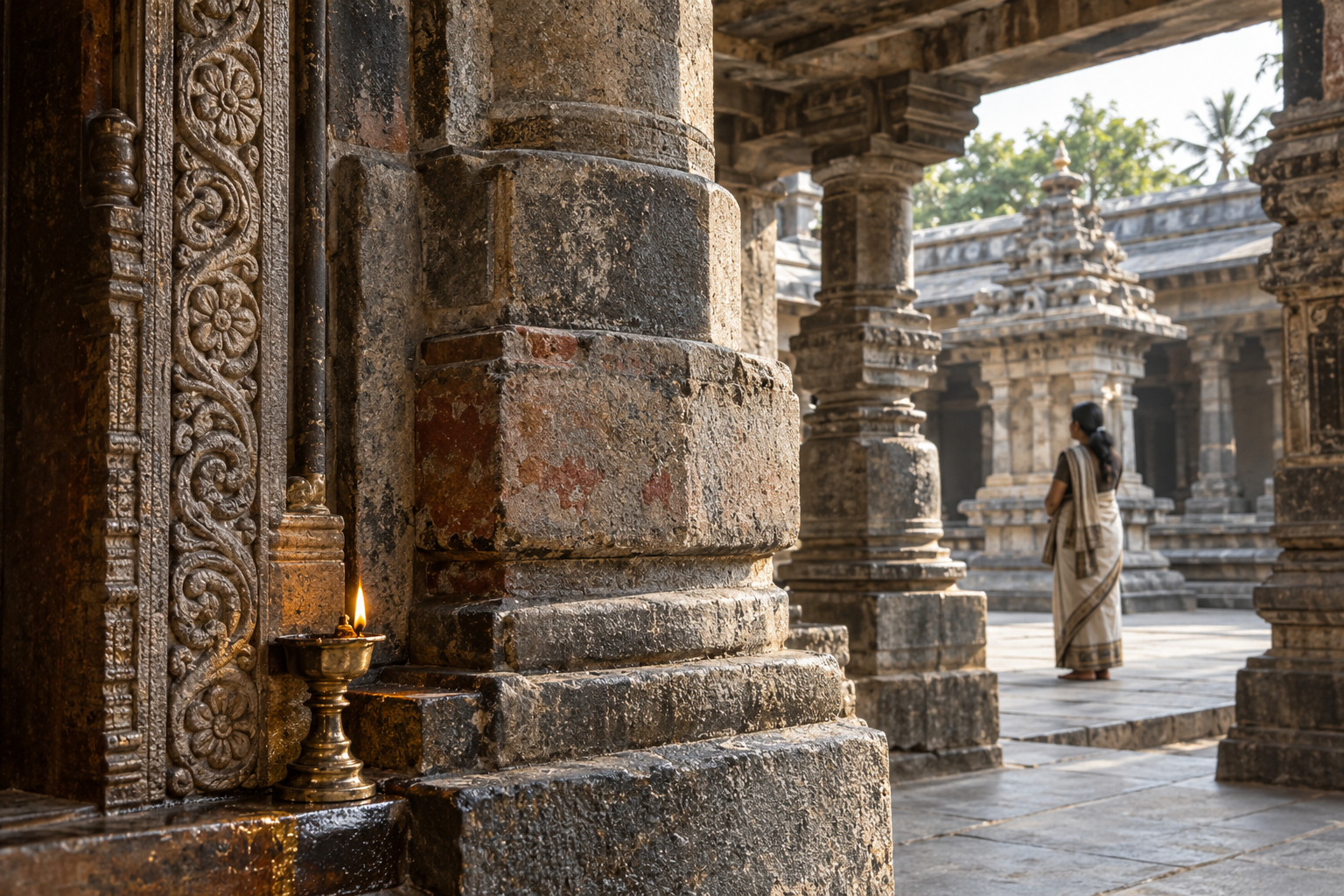
Bengaluru’s past does not survive only in monumental complexes. It can remain in small shrines, stone inscriptions, and temples that ordinary urban movement passes by. That makes careful attention valuable, but it also makes overconfident identification especially tempting.
Begin with what you can actually observe. Look for official nameboards, inscriptions, reused stone, subsidiary shrines, restoration notices, and visible differences between older and newer fabric. Do not touch, trace, chalk, wet, or rub an inscription to make it easier to read. Those actions can damage a surface that has already endured weather and repeated human contact.
If an inscription is accessible and photography is permitted, record the whole stone and its surroundings before taking a close image. Context helps establish whether the slab remains in its original position or has been moved. Never climb onto a structure or cross a restricted boundary to obtain a better angle.
Ask questions that can produce usable answers:
- Is there a dated inscription connected with the temple?
- Which parts of the present structure are regarded as old, and which have been repaired or rebuilt?
- Does a particular account come from a written record, an inscription, or local oral tradition?
- Are there features visitors should notice without touching or entering a restricted area?
- Where can a serious visitor learn the temple’s worship tradition from those responsible for it?
This method prevents two opposite mistakes. One is dismissing a modest temple because it lacks the scale of a famous monument. The other is decorating it with unsupported dates and dynastic labels to make it seem important. Champakadhama does not need either treatment. Its continued sacred life and its place in Bannerghatta’s historical landscape already warrant attention.
Key takeaways for your Champakadhama visit
- Approach Champakadhama first as the abode of Sri Varu and a functioning place of darshan.
- Travel early; from central Bengaluru, the journey can combine the Metro toward Yelachenahalli with local road transport.
- Confirm current temple hours and access locally rather than relying on an assumed schedule.
- Treat Bengaluru’s dynastic history as regional context, not automatic proof of Champakadhama’s construction date or patronage.
- Ask before taking photographs, especially near the sanctum, rituals, inscriptions, or other devotees.
- Value inscriptions and small shrines without touching them or making claims that exceed the available evidence.
When you go, start early, make darshan your first act, and then take one unhurried circuit of the temple with your phone put away. Notice what the living tradition reveals before asking the stones to tell their story. That order allows Sri Varu, the community, and the heritage of Champakadhama to be encountered on their own terms.
References

Leave a Reply
You must be logged in to post a comment.