

When public conversation swings between national self-dismissal and empty chest-thumping, you may wonder what responsible pride looks like. The answer is not to feel less. It is to become more exact about what you celebrate and more willing to carry its lesson into your own conduct.
Three recent examples give you a practical starting point: courage under mortal pressure, achievement across many sporting disciplines, and civilizational knowledge brought into conversation with modern science. Each reveals a different kind of national strength. Each also asks something of you beyond applause.
Use a five-question test before you share a success
National pride becomes credible when it can survive basic questions. A vague claim may produce a moment of excitement, but an exact claim can shape memory, standards and action. Before you forward a triumphant message or use it as evidence of Bharat’s rise, apply this test:
- What exactly happened? Separate the demonstrated achievement from the praise surrounding it.
- When was the claim accurate? A medal tally is a dated snapshot, not a permanent total.
- What capacity does it reveal? Look for courage, preparation, competitive range, accumulated knowledge or disciplined execution.
- What does it not prove? One brave person does not prove that every institution works well. An inherited agricultural practice is not automatically validated for every crop and soil.
- What can you do because you know it? Follow a neglected sport, improve your own emergency readiness, preserve a name, or help test a traditional practice responsibly.
This test protects you from two errors at once. You do not have to diminish a genuine achievement merely because Bharat still has problems. You also do not have to inflate an achievement into a claim it cannot support. Disciplined pride can hold gratitude and unfinished work in the same frame.
Courage becomes national character only when we imitate the duty
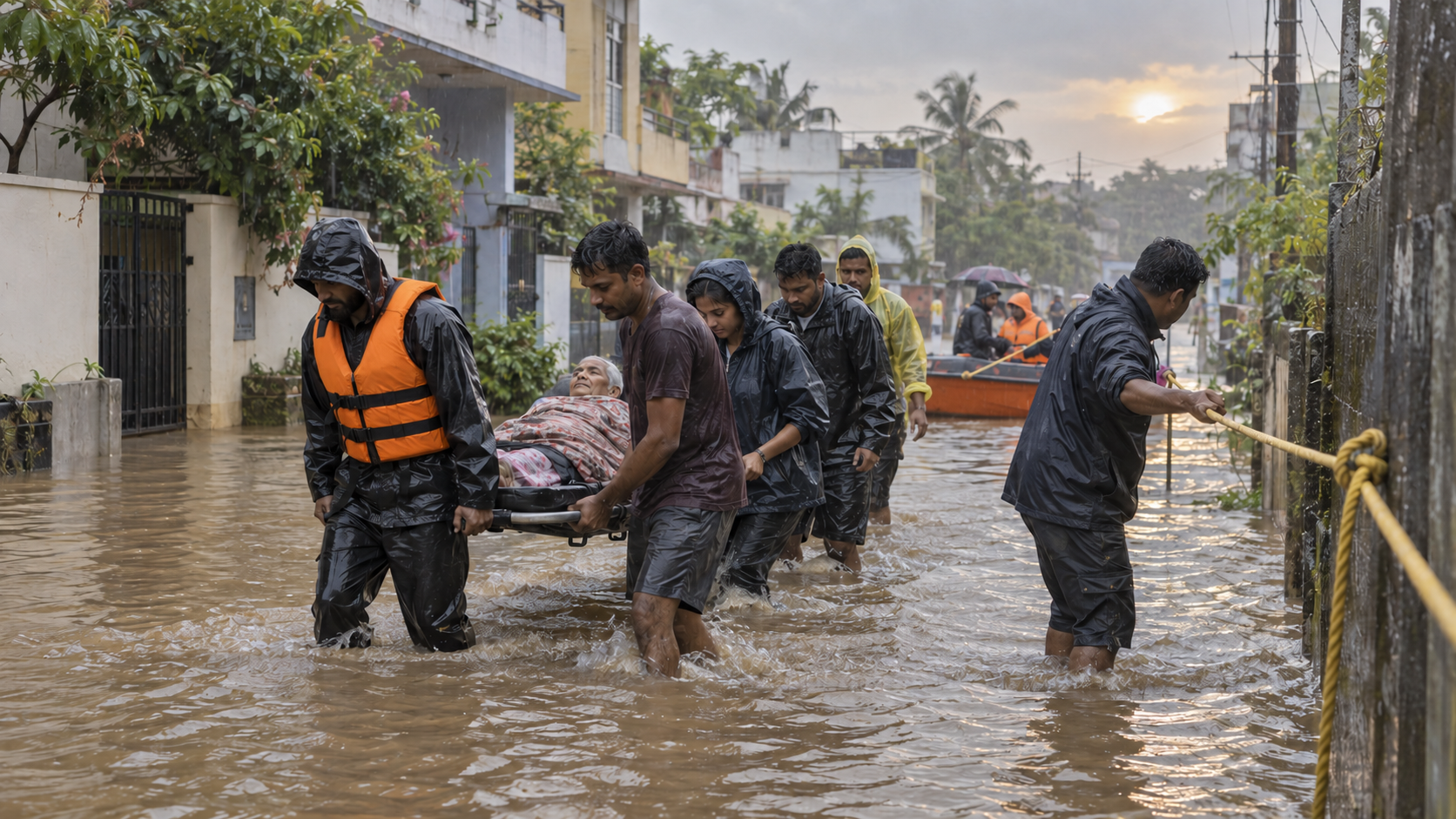
Bharatiya pilot Smit Machchhar is credited with continuing to perform his responsibilities after being stabbed during a FlyDubai flight, helping protect 174 people aboard. Injury could have turned his attention entirely toward his own danger. Instead, he remained focused on the lives entrusted to him.
The number matters, but it is not the deepest lesson. The achievement was a hierarchy of responsibility maintained under extreme pressure: passengers and crew still depended on the person who had himself become a casualty. This is professional competence joined to self-command.
Machchhar also draws courage from the Hanuman Chalisa. That detail should be understood carefully. A devotional anchor can steady the mind and clarify one’s sense of duty; it does not replace training, procedure or technical competence. In a safety-critical role, approved protocols and the trained chain of command must come first.
For a Dharmic reader, this is kartavya made visible: duty defined by the people and responsibilities placed in one’s care. You can translate that principle into ordinary life without pretending that every situation is heroic:
- Name your entrusted circle. Write down who depends on you at home, at work or in your community. Duty becomes clearer when it has names attached to it.
- Identify the first correct action. For each serious but plausible disruption, know the official procedure, whom to contact and which responsibility cannot be abandoned.
- Rehearse before pressure arrives. Read the safety procedure, keep essential contact information accessible and practise the role you would actually need to perform.
- Choose a stabilising anchor. Prayer, recitation, a checklist or a short mental cue can help you return attention to the next duty. It should reinforce competent action, not delay it.
- Praise the right feature. When telling Machchhar’s story, emphasise presence of mind and responsibility for others. That gives a young reader a standard of conduct, not merely a dramatic anecdote.
A nation does not acquire courage by repeatedly calling itself courageous. It acquires courage when families, professions and institutions train people to keep their duty when fulfilling it becomes costly.
The medal tally matters because achievement was broad

By 2 October, Bharat’s results at the 2026 Asian Games in Aichi-Nagoya had reached 75 medals and fifth place in the medal table. The dated breakdown was:
| Medal | Count through 2 October |
|---|---|
| Gold | 15 |
| Silver | 25 |
| Bronze | 35 |
| Total | 75 |
The gold medals came from shooting, archery, athletics, boxing, wrestling, kabaddi and women’s cricket. The larger tally also included results in weightlifting, wushu, squash, sailing, badminton, rowing, table tennis and sepaktakraw, among other disciplines.
The accurate lesson is not that Bharat dominates every sport. Fifth place prevents that exaggeration. The achievement is competitive range. Success appeared across precision events, combat sports, team games, endurance and strength disciplines. That breadth directs your attention away from one celebrity or one tournament and toward the many athletes, families, coaches and sporting environments that make a national campaign possible.
You can help convert a medal moment into a stronger sporting culture:
- Choose one less-followed discipline from the tally. Learn its rules and follow its Bharatiya competitors beyond the medal ceremony.
- Preserve the date with the number. Say “75 medals through 2 October,” not simply “75 medals.” Precise pride remains trustworthy when later results change the total.
- Notice silver and bronze performances. A culture interested only in gold erases much of the competitive depth visible in the tally.
- Ask what participation requires locally. Find out whether a nearby school, club or community centre offers the discipline, and whether it needs volunteers, spectators or practical support.
- Praise preparation as well as placement. A podium result is the visible end of a long process. Young people need to hear that training, recovery, repetition and restraint are part of the achievement.
Sporting pride is most useful when it expands attention. If you celebrate only the athletes whom the public already knows, you enjoy national success without helping to widen its foundations.
Vrikshayurveda must be revived through testing, not nostalgia
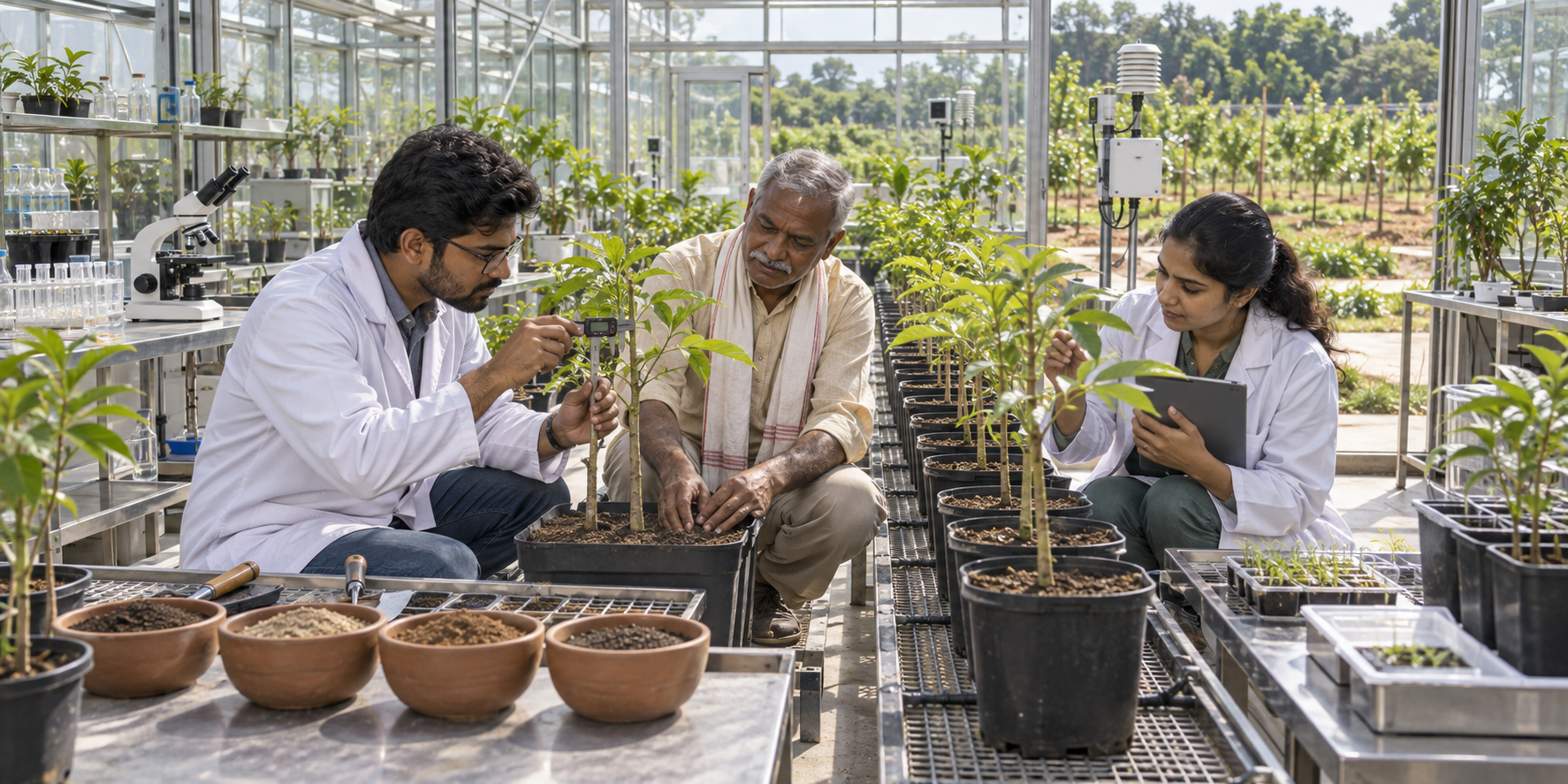
Vrikshayurveda offers another form of national achievement: a civilizational framework that treats soil, plants, water, animals and human beings as interconnected. Its agricultural outlook includes nourishing soil with materials such as cow dung, compost, plant residues, leaves and ash; observing soil texture, moisture, fertility and drainage; matching cultivation to local conditions; maintaining crop diversity; planting trees; and using locally available preparations for pest management.
This inheritance is relevant to concerns about degraded soil, declining fertility, water stress and excessive dependence on chemical inputs. Relevance, however, is not the same as proof that every old preparation is effective, safe or suitable everywhere. Soil type, crop, climate, input quality and method of application all matter.
The productive approach is integration. Traditional questions about ecological relationships can be combined with soil testing, modern irrigation, improved seeds, scientific composting and careful measurement. That relationship is more demanding than either blind rejection or romantic acceptance, because it asks a practice to produce observable results.
If you farm, advise farmers or maintain a serious garden, use a controlled pilot rather than changing an entire holding at once:
- Define one problem. Choose a specific concern such as poor water retention, weak soil structure, erosion, low fertility or recurring pest damage.
- Establish a baseline. Use an appropriate modern soil test and record current crop performance before introducing a new practice.
- Select one clearly documented intervention. Record the materials, preparation method and application. Do not combine several changes if you want to know which one affected the result.
- Keep a comparison area. Apply the intervention to a limited plot while managing a comparable plot through the existing method.
- Record outcomes that matter. Depending on the problem, track soil condition, water use, visible pest damage, plant health and yield rather than relying on impressions.
- Review the result with qualified local expertise. An agronomist or agricultural extension professional can help interpret tests and identify crop-specific or soil-specific risks before you expand the practice.
Do not risk a full crop or a family’s income to prove a civilizational point. Natural materials can be contaminated, unsuitable or harmful when prepared or applied badly. Small-scale testing, hygienic handling and competent local advice protect both the farmer and the integrity of the tradition.
A knowledge system earns contemporary authority when its useful practices can be explained, tested, corrected and repeated. Scientific validation does not dishonour Vrikshayurveda. It gives living farmers a way to distinguish durable wisdom from claims that merely carry an ancient name.
Key takeaways for practising national pride
- Attach every achievement to an exact act, result or dated figure before sharing it.
- Read courage as a call to prepare for your own duties, not as a substitute for professional training and procedure.
- Use Bharat’s 75-medal snapshot to widen your attention beyond gold medals, celebrity athletes and the most televised sports.
- Treat civilizational knowledge as a field for preservation, disciplined inquiry and responsible testing.
- Pair celebration with one adjacent contribution: learn, document, support, practise or validate.
Choose one lane for the next seven days. Learn the name and discipline of a Bharatiya athlete outside your usual sport, improve one real safety procedure in your household or workplace, or outline a small and measurable agricultural pilot. Pride becomes part of national renewal when an achievement changes what you pay attention to and what you are prepared to do.
References

Leave a Reply
You must be logged in to post a comment.