
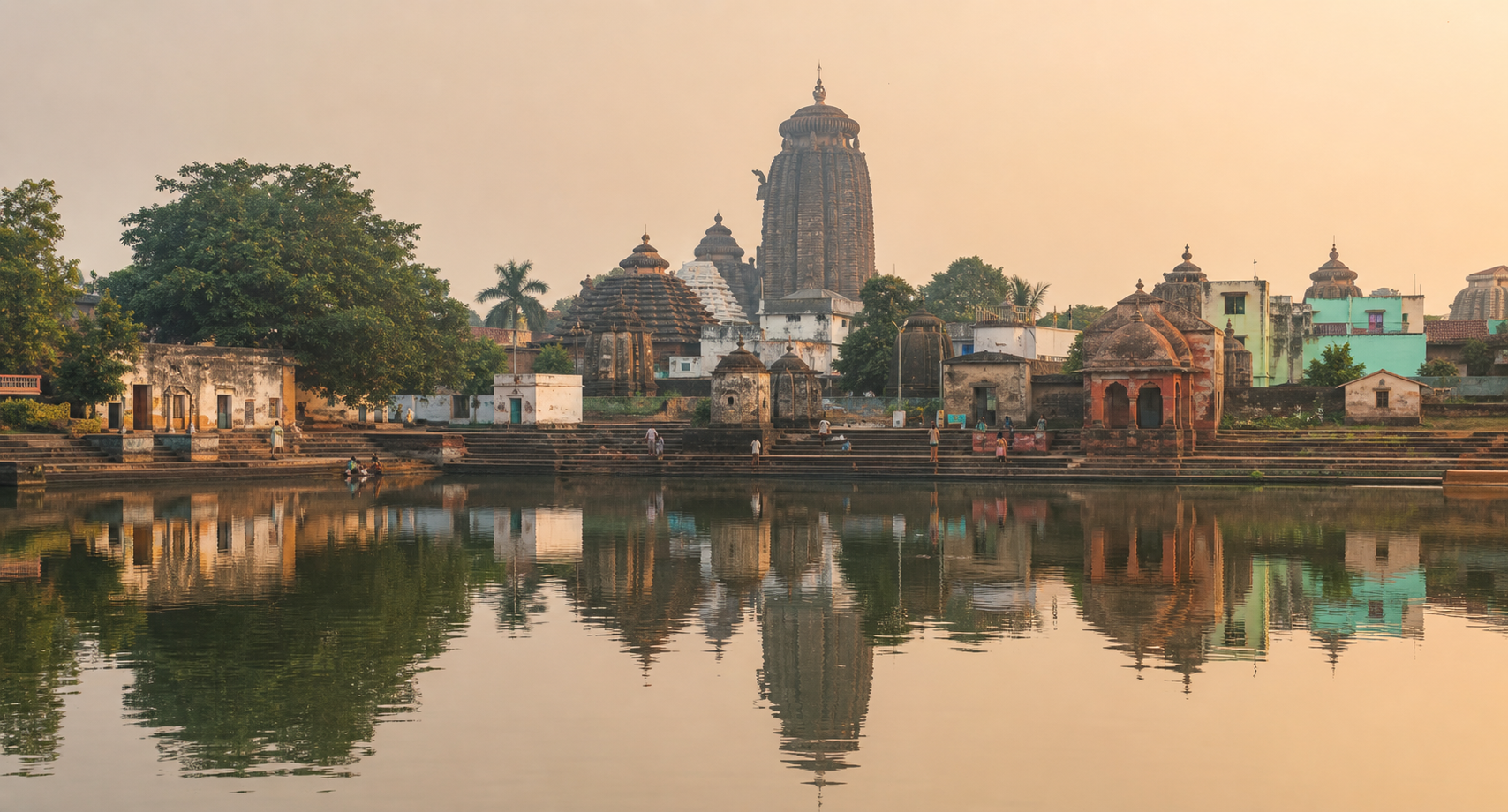
You may arrive at Bindusagar wondering whether it deserves more than a brief stop beside Lingaraja Temple. It does, but not because it is simply an old lake or a picturesque reflection point. Bindusagar is the feature that helps you read Ekamra Kshetra as a connected sacred landscape rather than a collection of monuments.
Give the lake deliberate attention and you can see how Puranic memory, Shaiva worship, Kalinga architecture, civic life, and ecological responsibility fit together. The practical shift is simple: look at the water, temple, ghats, ritual movement, and conduct of the community as parts of one living system.
Start with the relationship between water and temple
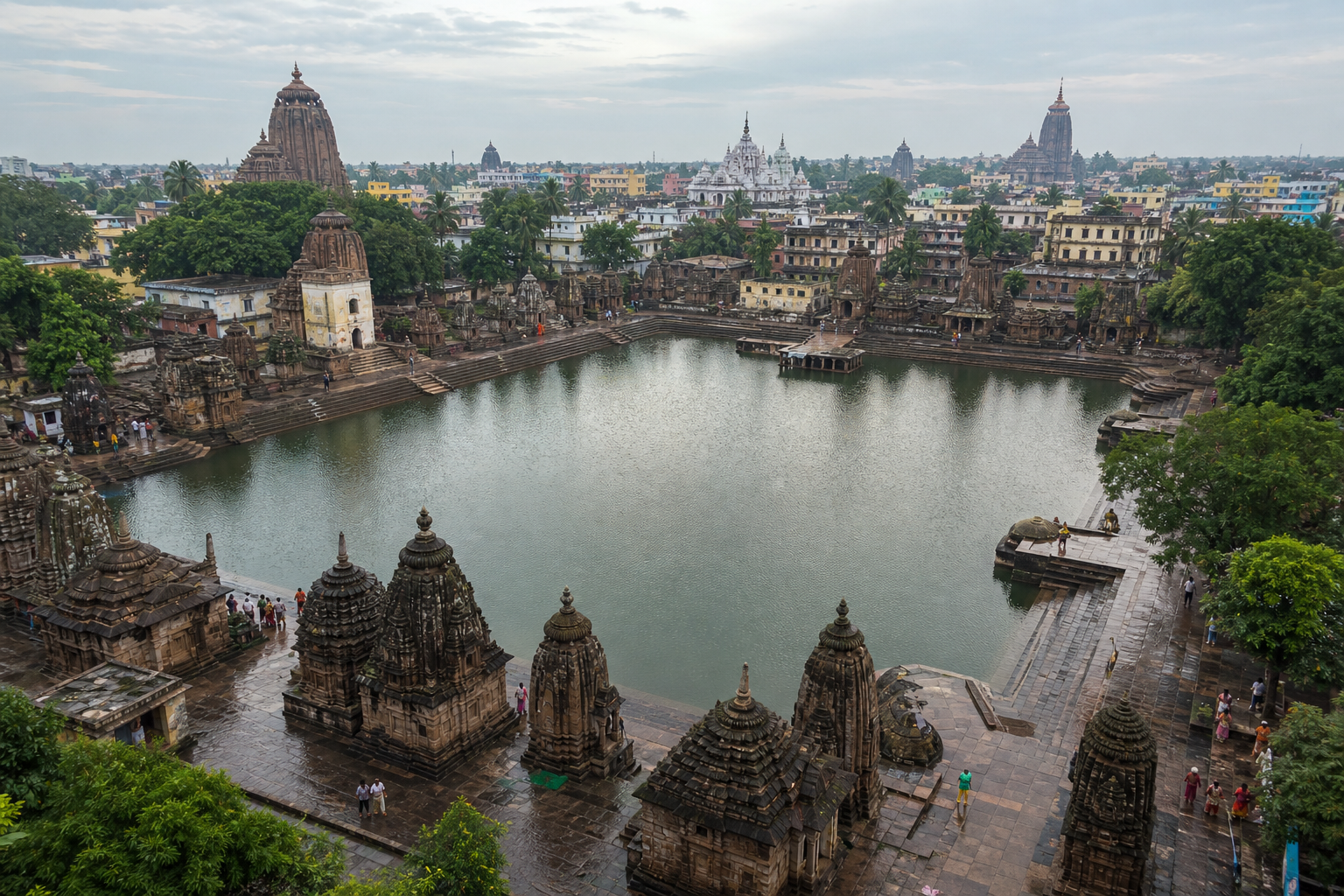
Bindusagar lies beside Lingaraja Temple in ancient Bhubaneswar, the Ekamra Kshetra of sacred tradition. That proximity is not incidental scenery. The lake serves as a tirtha, a place where ordinary space becomes a point of encounter with the sacred, while also functioning as a gathering place within the life of the city.
This changes how you should approach the area. If you look only at individual temple facades, you see architecture as a set of objects. If you include the tank, ghats, sightlines, and routes of ritual movement, you begin to see a designed religious environment. Water is not outside the temple experience. It helps organize it.
The architectural setting belongs to the wider flowering of Kalinga architecture between the 7th and 13th centuries. That period does not provide a single construction date for every feature you see. It gives you the more useful historical frame: temple building, sacred tanks, public movement, and urban form developed in relation to one another.
Use this four-part observation sequence from any permitted public vantage point:
- Locate the water before studying ornament. Notice how the lake establishes open space beside the dense temple environment.
- Read the ghats as thresholds. They join land and water while giving worshippers a place to gather, approach, and perform ritual actions.
- Follow the visual relationship. Look for the ways the temple silhouette and sacred water remain present in the same field of view.
- Watch movement without obstructing it. A procession, circumambulation, or gathering can reveal more about the landscape than an isolated photograph can.
If current access rules allow, dawn is especially suited to this kind of attention. Softer city noise and the temple reflected on the water can make the relationship between stillness, architecture, and worship easier to perceive. Do not reduce that moment to a photography opportunity. Spend a few minutes looking before reaching for a camera.
Read the origin narrative as a map of meaning

Within the sacred history associated with the Brahma Purana and the Ekamra Kshetra Mahatmya, Shiva gathers drops from holy rivers and tirthas to create Bindusagar. The name carries that image: bindu is the drop, while the lake holds those dispersed sanctities together in one place.
Some strands connect the lake’s creation with Parvati’s need for sacred ablution after her tapasya in the mango grove remembered in the name Ekamra Kshetra. The variations should be preserved rather than forced into one rigid chronology. Their shared center is more important: the water comes into being through divine care and makes renewal possible within the sacred landscape.
Do not mistake this Puranic account for a modern hydraulic claim about the lake’s physical supply. It answers a different question. It explains why one local body of water can ritually represent a much wider sacred world. A pilgrim at Bindusagar does not need to travel physically to every river invoked by the tradition; the drops gathered by Shiva make the lake a concentrated geography of pilgrimage.
The image also offers a disciplined way to think about unity. Each drop joins the basin without making every river identical. Unity here is not sameness, and it does not require origins to disappear. If you apply that insight beyond the lake, use it carefully: Hindu tirthas, Buddhist and Jain relationships with sacred water, and Sikh sarovars belong to distinct ritual and theological worlds. Their comparison can encourage dharmic respect, but it should not erase their differences.
This distinction matters whenever you hear Bindusagar described as a symbol of harmony. The strongest reading is not that every path says precisely the same thing. It is that plurality can enter a shared field without surrendering its character. The lake gives that philosophical claim a physical form you can stand beside and contemplate.
Ritual movement turns the lake into a living tirtha
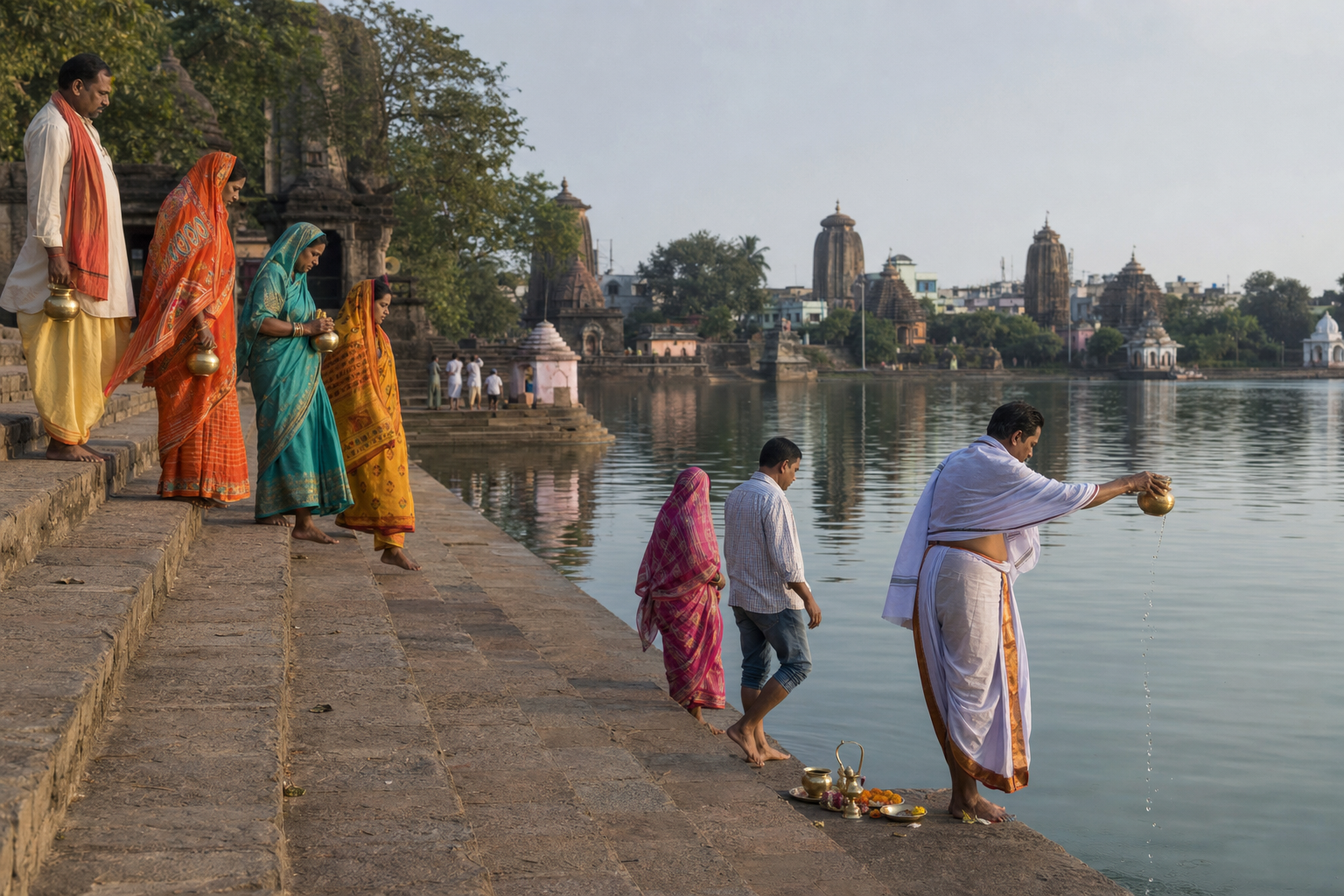
A sacred lake does not remain alive through antiquity alone. Repeated worship renews its place in communal memory. At Bindusagar, immersion, sprinkling, pradakshina, stotra recitation, bilva offerings, and ceremonial ablutions connect the body of the worshipper with the larger sacred environment.
During major festivals associated with Lingaraja Temple, deities are ceremonially brought to Bindusagar. This movement matters. The deity, lake, ghats, worshippers, sound of mantras, and public route become one ritual event. The temple’s sanctity is not confined behind walls; it extends into water and civic space.
If you encounter such a ceremony, resist the urge to treat it as a performance arranged for spectators. First determine where observers may stand. Keep the route and ghat access clear, let worshippers take precedence, and follow instructions from temple or local custodians. A visible ritual is not automatically an invitation to imitate every action.
You can also learn from the lake when no major procession is underway. Notice the smaller devotional acts: a circumambulation, a prayer at the water’s edge, or the way residents pause within a familiar sacred setting. These ordinary repetitions are how a tirtha remains part of lived life rather than becoming a preserved relic.
Purification and healing need equally careful language. Within Shaiva devotion, contact with sacred water can signify the release of impurity, renewal of intention, and restoration of one’s relationship with the divine. That is a religious meaning, not a medical guarantee or a laboratory assessment of water quality. Do not drink the water or enter it merely because it is revered. Follow current on-site rules and safety guidance, and use designated ritual arrangements where they exist.
Stewardship is part of the sacred landscape
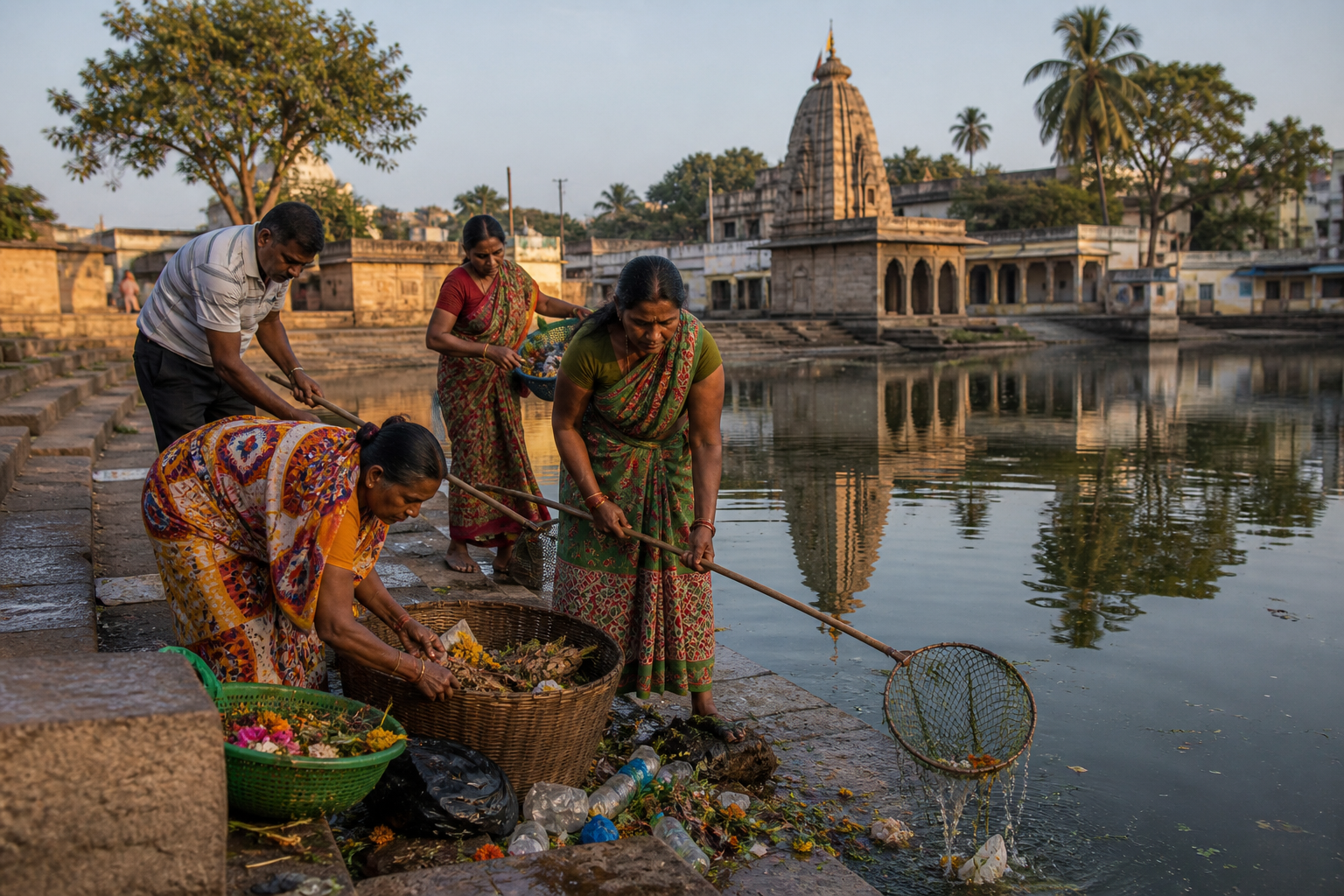
Bindusagar’s religious meaning depends on material conditions. Polluted water, damaged ghats, blocked ritual access, or a broken view toward Lingaraja Temple would affect more than appearance. They would weaken the relationships through which the landscape is understood and used.
That is why water quality, restored ghats, protected sightlines, habitat, and community stewardship belong in the same conservation conversation. Heritage care cannot stop at cleaning stonework. It must protect the water and the patterns of worship that make the place culturally intelligible.
As a visitor, you can turn that principle into specific conduct:
- Carry away your packaging and other personal waste. Do not assume that the water or ghat is an acceptable place for disposal.
- Place flowers, lamps, food, or other ritual materials only through an established local practice. A devotional intention does not make unmanaged waste harmless.
- Keep steps, approaches, and processional space open. Ghats are working sacred infrastructure, not merely seating for visitors.
- Avoid interrupting worship for photographs. Ask before making identifiable worshippers the subject of an image.
- Support community-led conservation where a credible local channel is available. Do not conduct an improvised cleanup that may disturb offerings, ritual objects, or protected material.
The same standard applies to public planning. A proposal around Bindusagar should be judged by more than whether the finished area looks tidy. Ask whether it improves water health, keeps ghats usable, respects ceremonial movement, protects the visual relationship with Lingaraja Temple, and allows the local community to continue its devotional life. Beautification that damages those relationships is not successful conservation.
Questions to settle before you visit
Is Bindusagar simply a temple tank?
No. Its water is connected with Lingaraja’s ritual life, but Bindusagar also functions as a tirtha, a gathering place, an element of Ekamra Kshetra’s urban design, and a carrier of community memory. Calling it only a tank describes its form while missing its role.
Does the gathering of sacred rivers describe literal hydrology?
It is a Puranic account of sacred origin. Its purpose is to locate many tirthas symbolically within Bindusagar and to express Shiva’s compassionate creation of a place of renewal. Questions about present water sources and water quality require material evidence, not a literalized reading of sacred narrative.
Is dawn or a festival the better time to understand the lake?
They reveal different dimensions. Dawn, where access permits, helps you notice stillness, reflection, and the spatial relationship between water and temple. A festival reveals ceremonial movement and collective worship, but the rite takes priority over visitor convenience. Check current local arrangements rather than assuming access or timing.
Does the symbolism of unity make all dharmic water traditions interchangeable?
No. Bindusagar can encourage respect among Hindu, Buddhist, Jain, and Sikh communities without claiming that their doctrines or practices are identical. The more faithful lesson is unity without erasure: many waters can share a basin while retaining meaningful origins.
When you next stand beside Bindusagar, choose one deliberate act: follow a permitted stretch of the ghat slowly, learn the meaning of a rite before joining it, or ensure that nothing from your visit is left behind. The sacred landscape becomes legible when you stop treating it as a view and begin behaving as a responsible guest within it.
References
