
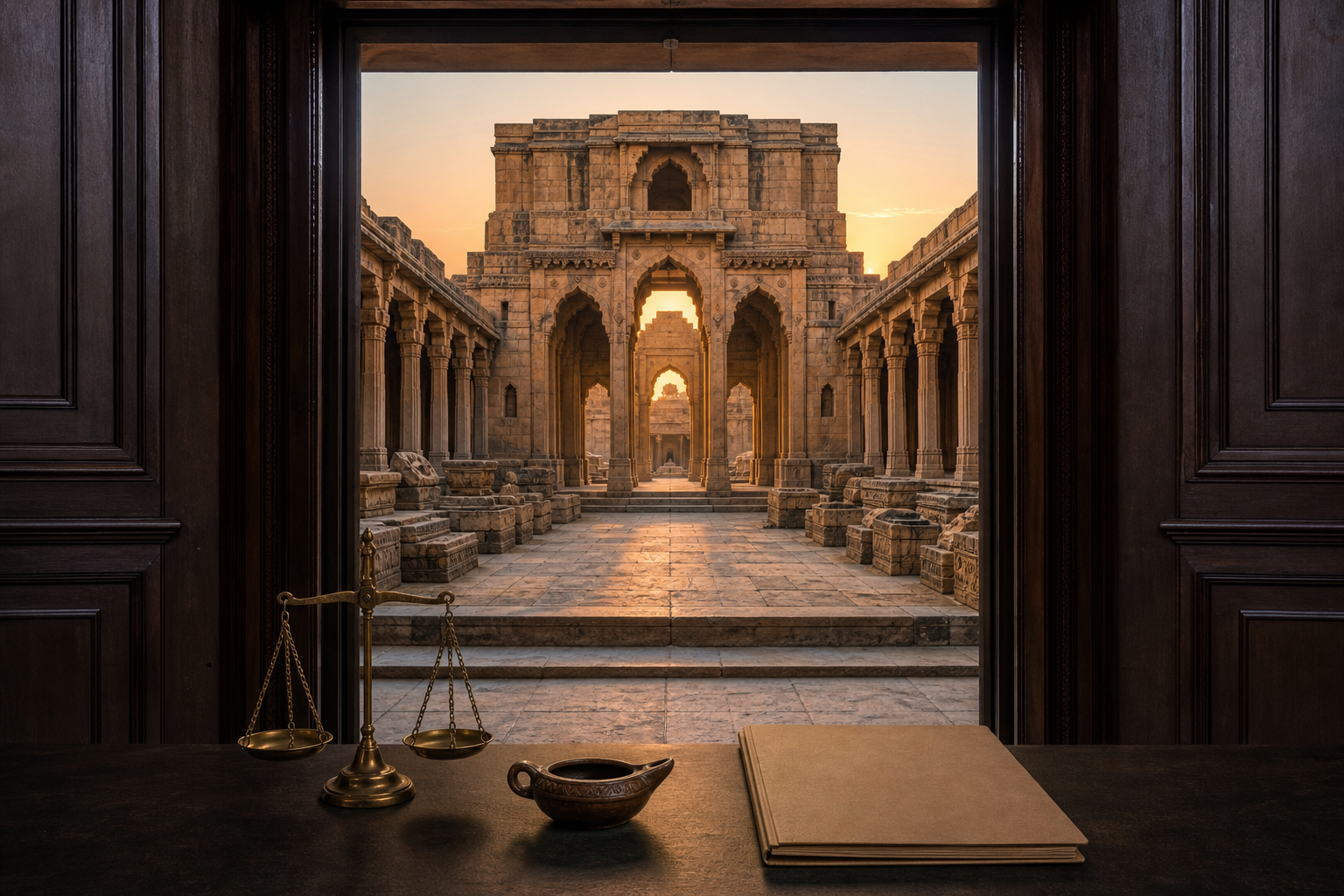
If you are asking whether the Bhojshala verdict opens a lawful path for other temple reclamation claims, the answer is yes, but only in a disciplined and site-specific sense. It strengthens the case for allowing historical evidence to be examined. It does not turn every inherited grievance into an automatic court decree.
That distinction matters. A durable Hindu civilizational case must be able to survive legal scrutiny, archaeological scrutiny and moral scrutiny at the same time. Bhojshala is significant not merely because Hindus obtained relief, but because evidence and lawful procedure were treated as instruments of historical correction.
What the verdict establishes, and what it does not
The Madhya Pradesh High Court’s reported ruling recognised Bhojshala in Dhar as a temple dedicated to Maa Saraswati and granted Hindus sole access to the site. The reported reasoning relied substantially on archaeological findings, historical records, inscriptions and evidence gathered through an Archaeological Survey of India survey.
Its immediate importance is therefore concrete: the identity of a contested sacred place was treated as a question that could be investigated through evidence. A civilizational claim was not required to remain a matter of private memory or political rhetoric. Material remains, inscriptions and historical continuity could be placed before a court and assessed.
That is a meaningful change in how such disputes can be discussed. For too long, even asking whether a Hindu sacred site had been destroyed, altered or appropriated was liable to be dismissed as inherently communal. Bhojshala demonstrates that examining the past is not the same as inciting conflict in the present. Historical inquiry can be conducted within constitutional institutions.
But you should resist four conclusions that the verdict does not support. It does not prove every reclamation claim. It does not make archaeology unnecessary in future cases. It does not by itself erase the Places of Worship (Special Provisions) Act, 1991. And it does not authorise anyone to seize a place, damage a structure or disregard a court’s operative directions.
A High Court ruling is also not a substitute for reading the signed judgment. Headlines usually compress findings, legal reasoning and operative relief into one sentence, even though those are different things. Before you repeat a legal claim, identify exactly what the court found, what it ordered and whether any later order changed its implementation.
Evidence turns civilizational memory into a legal claim
Communities preserve knowledge through worship, names, pilgrimage, oral memory and inherited practice. Those forms of continuity matter. A court, however, must connect memory to evidence capable of supporting a specific legal remedy. In Bhojshala, the combination of archaeological material, inscriptions, historical records and an ASI survey gave the claim an evidentiary structure.
If you are evaluating another contested-site claim, use the same discipline. Begin with four separate questions:
- What precisely is being claimed: original construction, long-standing worship, later alteration, dispossession, or present custodial rights?
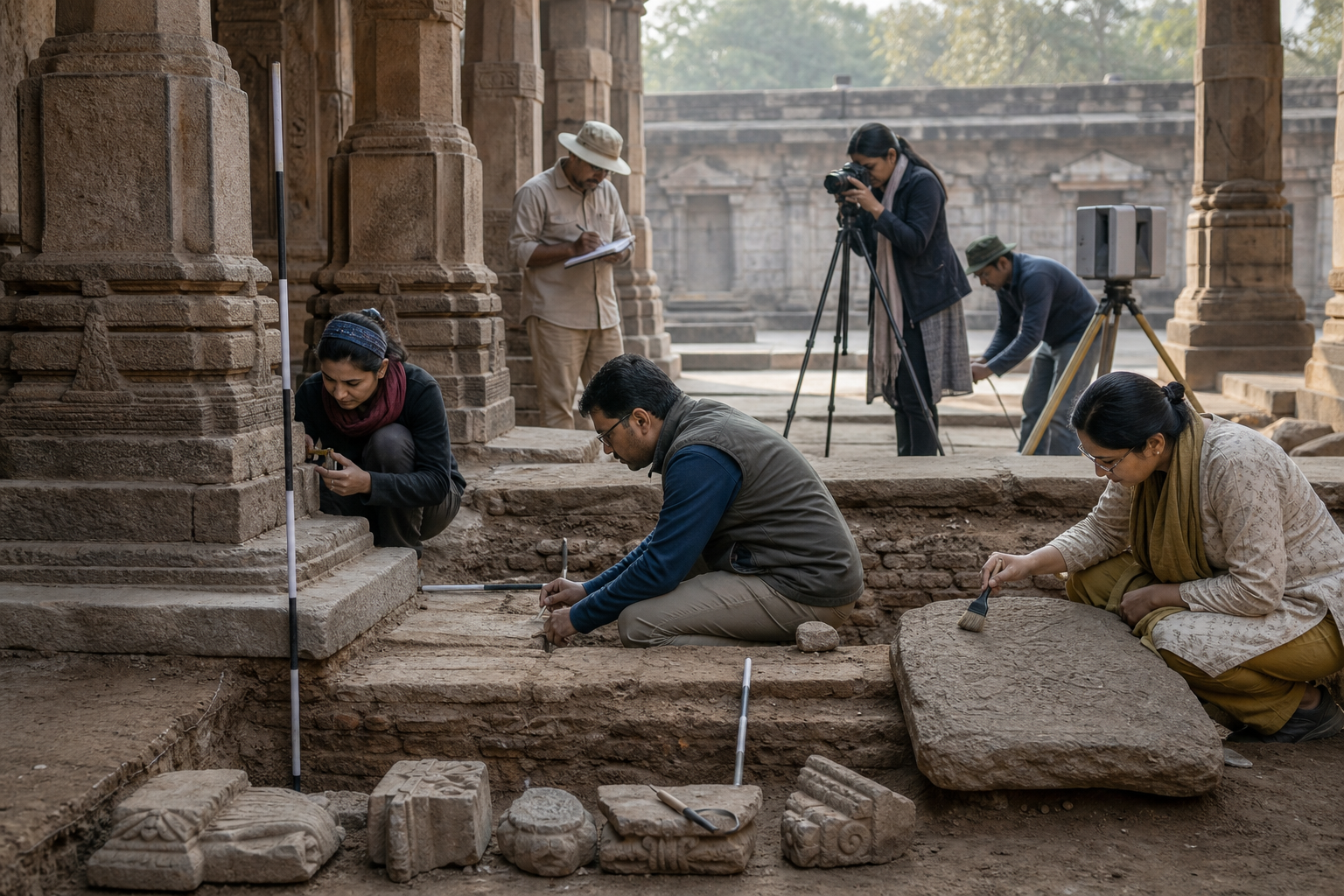
- Which evidence supports each part of that claim: inscriptions, architectural features, excavated remains, dated records, administrative documents, ritual continuity, or several of these together?
- Which statements are direct observations, and which are historical interpretations drawn from those observations?
- What remedy does the evidence actually justify: preservation, further investigation, recognition of identity, regulated worship, transfer of control, or exclusive access?
This sequence prevents a common mistake. Evidence that establishes the ancient identity of a structure may be powerful without automatically deciding every question about present ownership, access or worship. Archaeology can reveal physical layers and cultural markers. The court must still determine what those findings mean under the applicable law.
Provenance is especially important. A dramatic photograph of a carved stone proves little if nobody can establish where it came from, whether it remains in its original position, how it was dated, or whether an inscription was translated competently. When you share evidence, include its location, custodial history and interpretive basis. If those details are unavailable, label the claim as unverified instead of presenting it as settled.
Contrary evidence should not be hidden. A credible reclamation case states the strongest competing interpretation and explains why the complete record supports a different conclusion. This is not weakness. It makes selective quotation, mistranslation and political exaggeration easier to detect before they damage the underlying claim.
The Places of Worship Act question cannot be settled by slogans
The Bhojshala verdict has renewed debate about the constitutional limits of the Places of Worship (Special Provisions) Act, 1991. That debate deserves precision. Civilizational justice is a moral and constitutional framework for thinking about historical wrongs; it is not, by itself, a legal cause of action that answers every statutory question.
Three layers must remain separate:
- Historical identity: What was the site, how was it used, and what happened to it over time?
- Legal maintainability: Can a court hear the particular claim, and which statutory or constitutional questions must it decide?
- Remedy: If the claimant succeeds, what directions are lawful, workable and proportionate to the findings?
Winning the historical argument does not automatically decide the statutory argument. Winning both does not necessarily predetermine the precise remedy. When public commentary collapses these layers, expectations rise beyond what a judgment says. The resulting disappointment is then used to discredit the entire cause.
Before relying on Bhojshala in another dispute, verify the full court name, case details, date, operative paragraphs and any later stay, modification or appeal order. Check whether the court finally decided an issue or merely discussed it. Check whether a statement was a binding part of the reasoning or background to the dispute. These distinctions can determine whether an apparent precedent actually applies.
If you are a party to litigation, advising an organisation or planning activity at a contested site, obtain advice from a lawyer who has read the complete record. Acting on a news headline can create legal exposure, disrupt the case and endanger the very heritage you hope to protect.
Civilizational justice must remain restorative
Civilizational justice begins with a refusal to treat conquest, desecration and appropriation as events that Hindus must forget in order to qualify as secular citizens. A society cannot decolonise its institutions while placing its deepest historical injuries beyond investigation. Restoring a sacred community’s relationship with a place can repair a continuity that political domination once interrupted.
Yet restoration is not revenge. Historical actors must be described truthfully, but present-day citizens do not inherit personal guilt for every act committed by past rulers. A dharmic claim seeks the restoration of truth, worship and responsible custody. It does not require humiliation, collective blame or retaliation against living communities.
This is where restraint becomes a form of strength. If the evidence is persuasive, intimidation adds nothing to it. Mob action can damage archaeological material, create public disorder and give opponents grounds to shift attention away from the historical record. The lawful route protects the site as evidence while allowing the claimant to demand a reasoned answer.
A successful reclamation also creates obligations after the verdict. The purpose cannot end with a change in access or control. Those responsible for a restored sacred place should be prepared to:
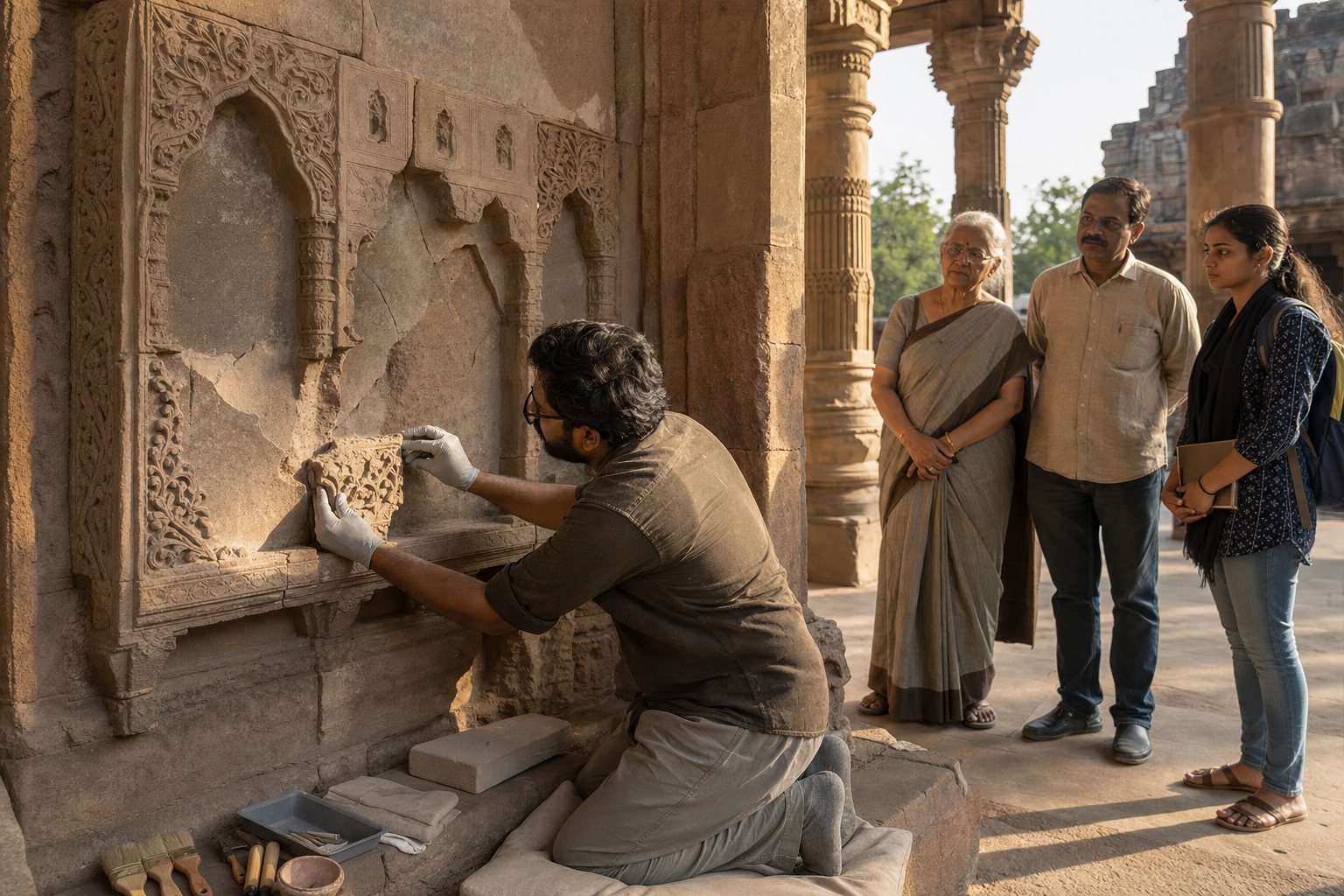
- preserve inscriptions, sculptures, foundations and other material evidence under competent conservation practices;
- establish clear responsibility for ritual continuity, maintenance, security and visitor conduct;
- make verified historical findings accessible without turning uncertainty into propaganda;
- respect every operative judicial direction, including any conditions governing implementation;
- prevent the restored place from becoming a platform for threats or collective denigration.
These are not secondary concerns. Stewardship is part of the justice being claimed. If a community asks the law to recognise its ancient relationship with a sacred place, it must be ready to care for that place after public attention moves elsewhere.
Key takeaways for reading and acting on Bhojshala
- The reported Bhojshala outcome is important because the court treated archaeological findings, inscriptions, historical records and an ASI survey as relevant to the identity of a contested sacred site.
- The verdict supports evidence-based reclamation, not automatic acceptance of every temple claim.
- Historical identity, legal maintainability and the final remedy are distinct questions. Do not treat success on one as success on all three.
- The ruling renews debate over the Places of Worship (Special Provisions) Act, 1991, but should not be described as abolishing that law without support from the judgment’s operative text.
- Civilizational justice is strongest when it combines historical candour, lawful procedure, protection of present-day citizens and long-term stewardship of the restored site.
- Before sharing a claim about the verdict, read the signed order, check later proceedings and quote the court’s actual direction rather than a headline.
If you support the Bhojshala outcome, strengthen its civilizational significance through exactness. Preserve evidence. Distinguish findings from assumptions. Reject both enforced historical amnesia and extra-legal triumphalism. Support worship, conservation and responsible custody together.
The next contested sacred site will bring its own history, evidence and legal obstacles. Approach it with the same standard you want a court to apply: hear the claim, test the record, protect the place and pursue a remedy worthy of dharma.
References
