
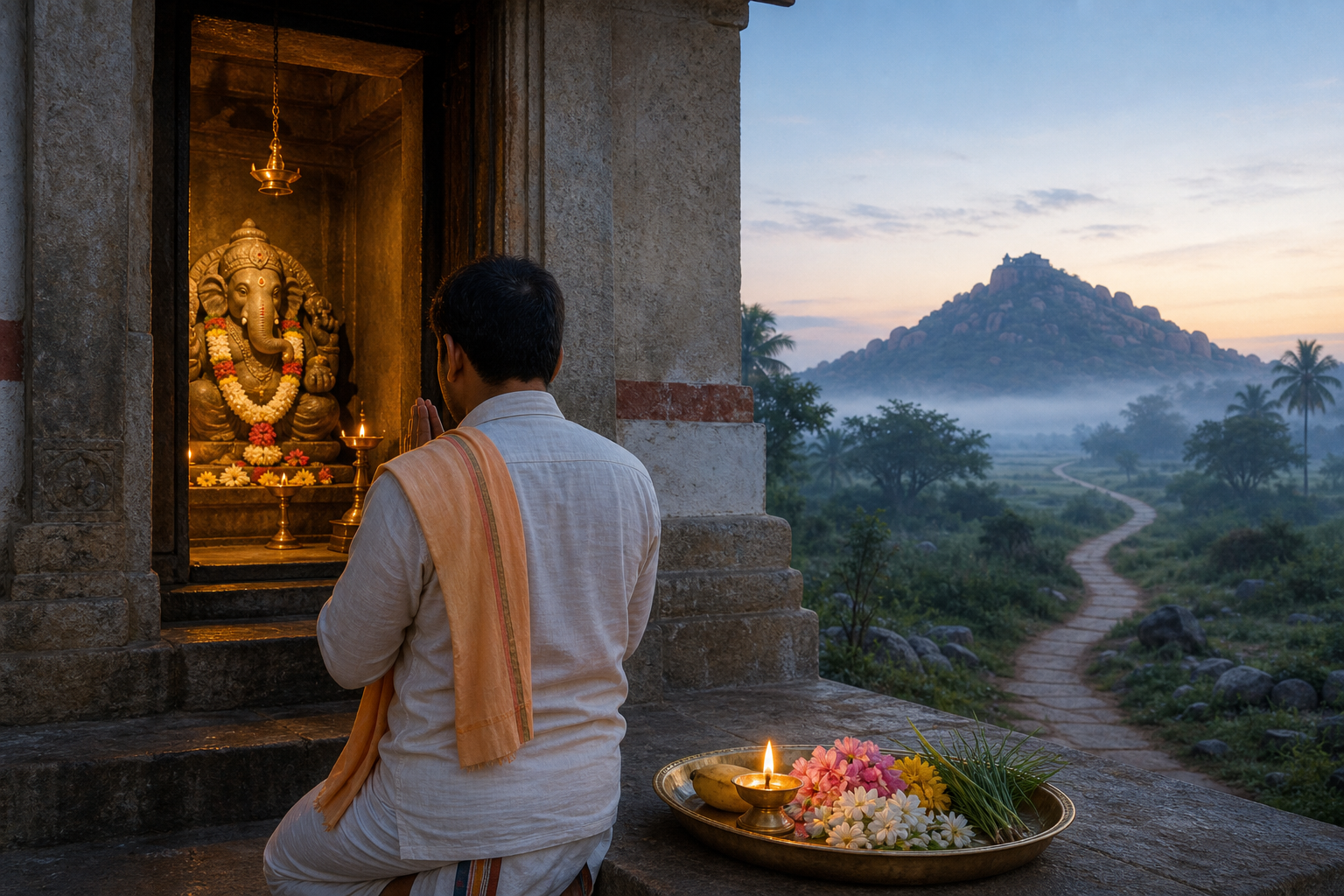
You may be deciding whether your next act of Ganesha bhakti should be a pilgrimage, a home puja, or a vrata tied to a sacred day. The right choice depends less on how elaborate the observance looks and more on your sankalpa: what you are asking Ganesha to help you face, and what discipline you can honestly complete.
A sound observance joins devotion to preparation. You choose one clear intention, learn the form before beginning, respect your physical limits, and carry the prayer into an action after the ritual ends.
Choose the observance that matches your sankalpa
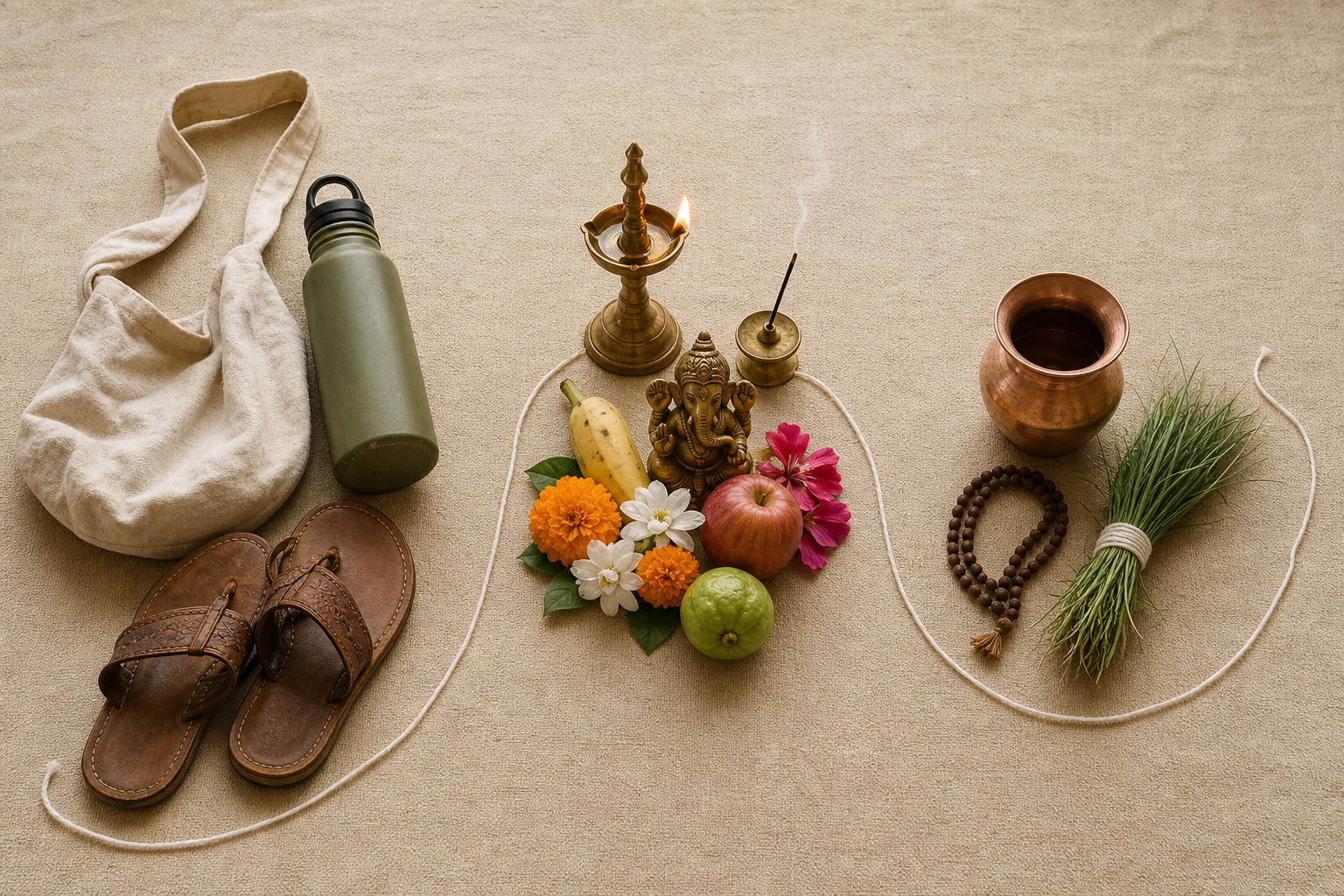
Pilgrimage, puja, and vrata are related, but they do different work. A pilgrimage places the body inside sacred geography. A puja gathers attention around invocation and offering. A vrata binds devotion to a chosen discipline and time. Treating them as interchangeable can leave you with an impressive schedule but an unclear purpose.
- Choose pilgrimage when you need to step out of ordinary routine and carry a prayer through sustained physical effort.
- Choose a home or temple puja when your intention is specific and you can follow a known family, sampradaya, or temple vidhi.
- Choose a vrata when you are prepared to honour both its sacred timing and its discipline, including any limits on food or conduct required by your tradition.
- Choose a combined observance only when each part strengthens the same sankalpa. More rites do not automatically mean more bhakti.
For example, a couple praying for children may undertake Santhana Ganapathi Puja on Ganesh Chaturthi. A devotee seeking a pilgrimage discipline may include Pillayar darshan while walking around Arunachala. Someone drawn to a tithi-based vrata may worship Ganesha and Gauri with durva on Durvashtami. These are distinct commitments, not competing claims about which form is superior.
Key takeaways
- Begin with one sentence of sankalpa rather than a long list of desired outcomes.
- For Arunachala Girivalam, prepare for a route of about 14 kilometres and treat Pillayar darshan as part of the pilgrimage, not a sightseeing interruption.
- For Santhana Ganapathi Puja, obtain the actual vidhi from a trusted priest or family tradition; do not assemble a specialised rite from disconnected instructions.
- Durvashtami in 2026 falls on September 19, but you should still confirm the locally observed tithi with your temple or panchanga.
- Neither puja nor vrata guarantees conception, prosperity, or the removal of every difficulty. Devotion must accompany responsible action.
Place Pillayar darshan inside the Arunachala journey
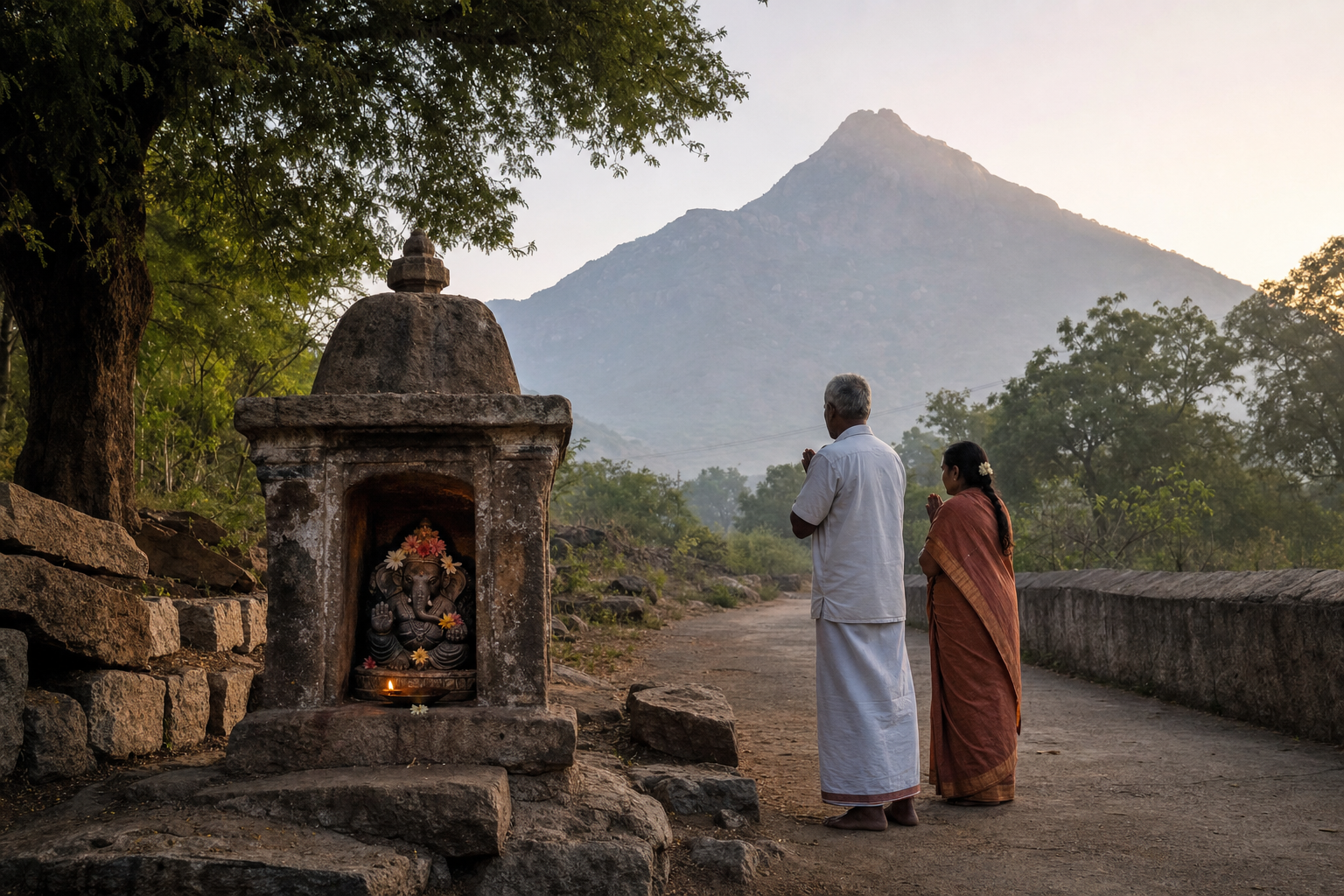
In Tamil usage, Pillayar is Ganesha. At Tiruvannamalai, his darshan belongs within a larger sacred landscape: Arunachala Girivalam is about 14 kilometres, and the hill itself is worshipped as Shiva. This makes a visit to Idukku Pillayar Temple a Ganesha-centred pause within a Shaiva circumambulation rather than a detached temple stop.
Fourteen kilometres is long enough to punish casual planning. Before setting out, confirm the current route, access arrangements, and local temple guidance. Decide whether your health and mobility allow you to complete the full circumambulation. Carry what you need for safe walking, allow time to rest, and do not make speed the measure of devotion.
- Write your sankalpa before leaving. Keep it direct: “May Ganesha remove the obstacles created by confusion and help me take the right next action.” This is a prayer, not a guarantee.
- Learn the route locally. A map can show roads, but local guidance tells you how the living pilgrimage is being observed.
- Set a pace you can sustain. If pain, illness, weather, or exhaustion makes continuing unsafe, stopping is wiser than turning the pilgrimage into self-harm.
- Approach Idukku Pillayar without rushing. Offer namaskara, hold your sankalpa in mind, and make space for other devotees rather than blocking the shrine for a private performance.
- Resume the circumambulation with the same attention. Darshan is not a box to tick before returning to distraction.
- After completing the journey, identify one action that expresses the prayer: make the delayed apology, begin the necessary work, seek qualified help, or end the habit you already know is obstructive.
Basic pilgrimage conduct is part of the rite. Follow queue and photography rules, keep noise low near worship, dispose of nothing on the route, and avoid pressuring companions to match your pace. A vow that makes everyone around you carry its cost has already drifted away from discipline.
Approach Santhana Ganapathi Puja without promises or blame
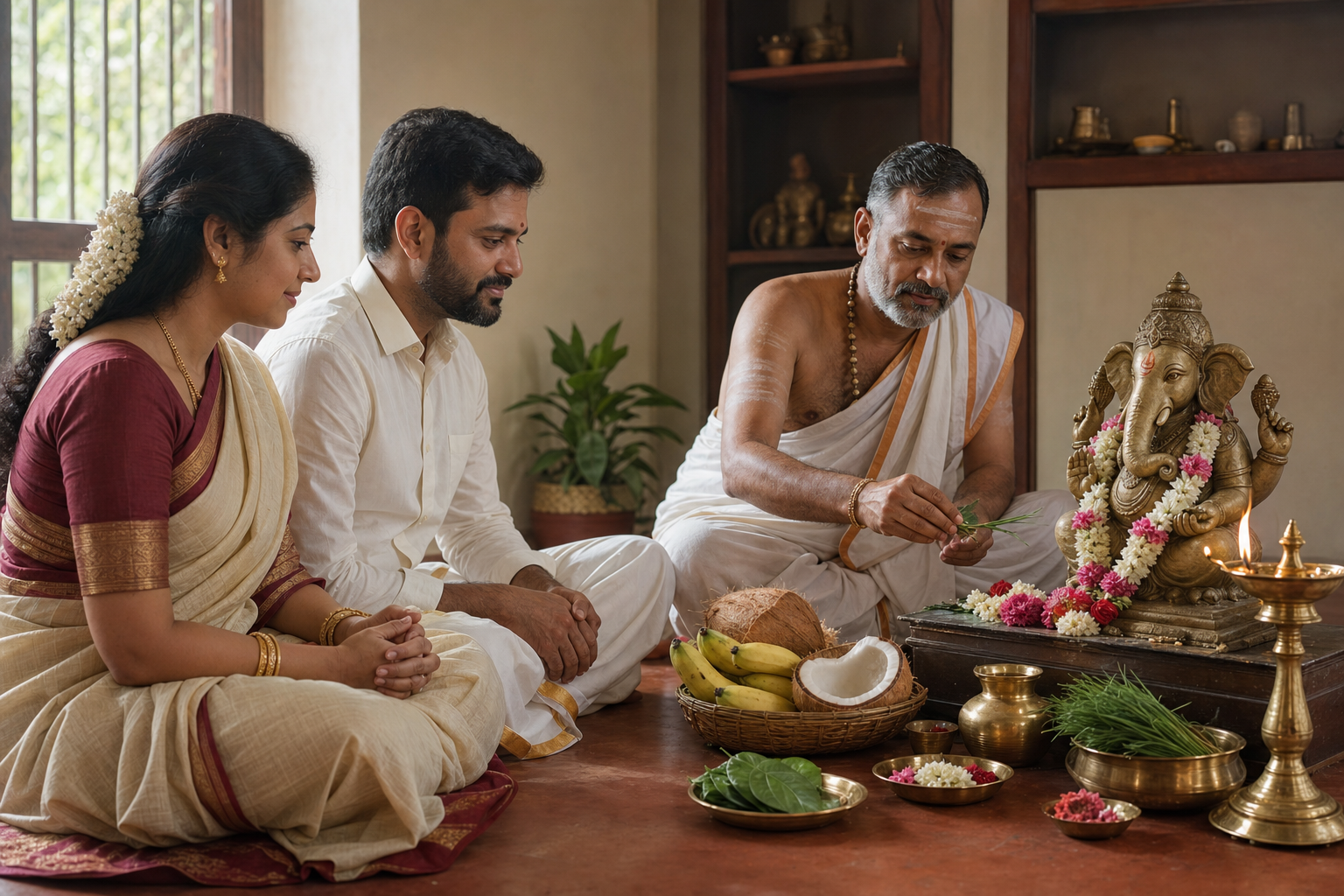
Santhana Ganapathi Puja is traditionally undertaken by those praying for children. The observance may be performed by a couple on Ganesh Chaturthi, with an early-morning ceremonial bath forming part of the preparation.
The emotionally difficult part is not arranging the altar. It is resisting the idea that a flawless ritual obliges the deity to produce a particular result. That belief can turn devotion into a bargain and disappointment into blame. Neither partner should be treated as spiritually deficient, impure, or insufficiently faithful if conception does not follow.
- Before Ganesh Chaturthi, ask a trusted priest or knowledgeable family elder whether the specialised puja should be performed at home or in a temple, who should make the sankalpa, and which materials and mantras belong to your tradition.
- Prepare inwardly as well as outwardly. The early bath and clean worship space matter, but so do truthful speech, restraint, and agreement between the couple about the prayer being made.
- State the sankalpa together when possible. Ask for grace, steadiness, and the blessing of family life without assigning fault or setting a deadline for the result.
- Follow one coherent vidhi. If you do not have reliable instructions for the specialised rite, an ordinary Ganesha puja performed sincerely is better than inventing mantras or combining incompatible procedures.
- Receive prasada and close the worship according to your tradition. Do not keep adding rites because anxiety makes the completed puja feel insufficient.
A child-seeking puja can hold longing, grief, and hope within dharma, but it is not a substitute for medical evaluation or treatment. If you have concerns about fertility or reproductive health, seek qualified clinical advice. Doing so does not weaken shraddha; it is part of acting responsibly with the knowledge and care available to you.
Observe Durvashtami as a disciplined vrata
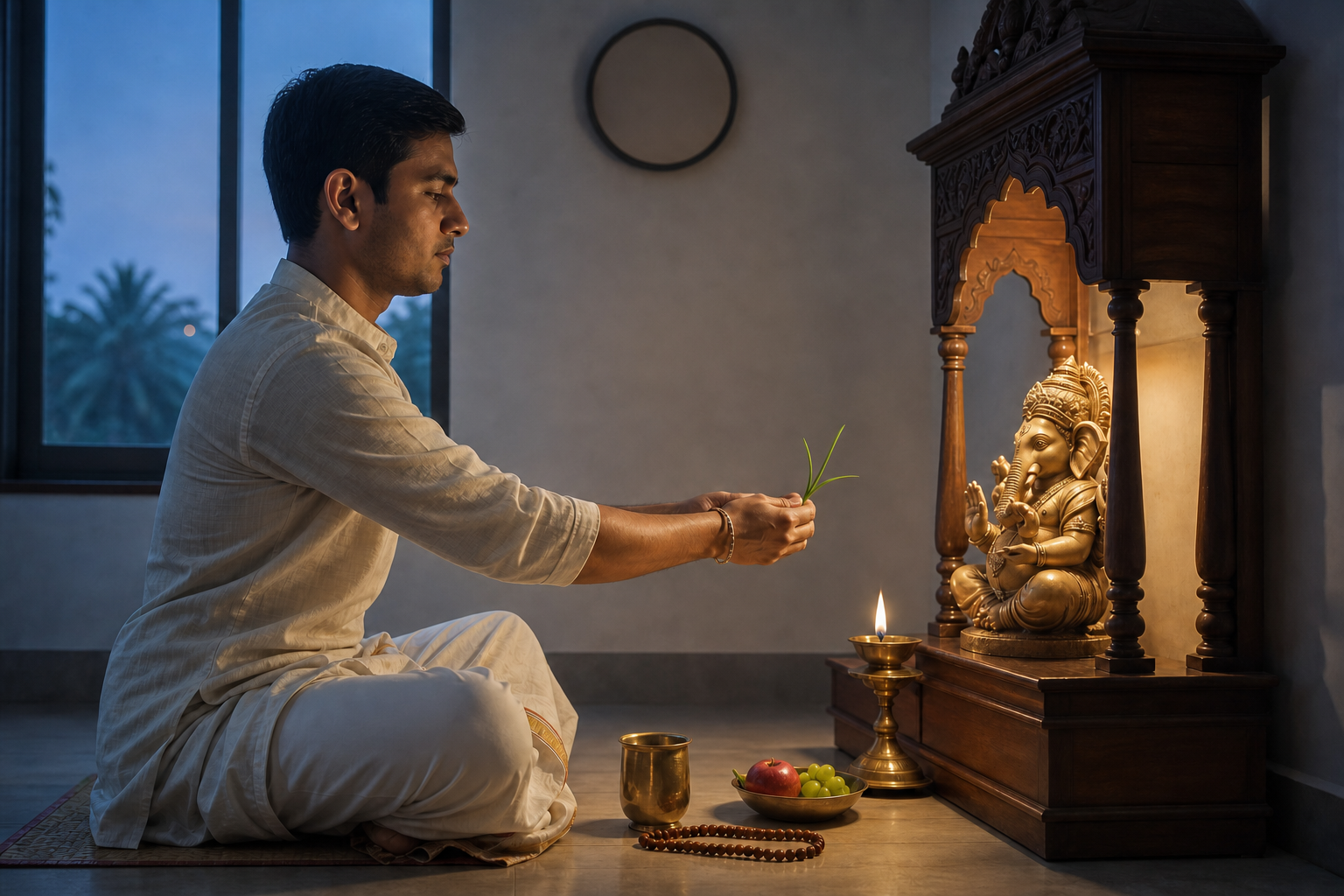
Durvashtami is observed on the eighth day of the bright fortnight of Bhadrapada. In 2026, the stated date is September 19. Because tithi observance can depend on local calendrical practice, confirm the date with the panchanga or temple you actually follow before making arrangements.
Durva is central to this vrata, not merely an altar decoration. Ganesha and Gauri are worshipped with blades of the sacred grass, and some devotees also keep an upvaas. The practical question is therefore not only what you will offer, but what form of restraint you can observe without dishonesty or harm.
- Confirm the locally observed tithi and the form of the vrata before the day arrives.
- Decide the form of fasting from your own tradition rather than copying another household. If food restriction is unsafe for your health or conflicts with medication, do not improvise; seek appropriate medical and religious guidance and adopt a safe discipline.
- Obtain clean durva respectfully and prepare the worship space for both Ganesha and Gauri.
- Make a sankalpa that includes conduct, not merely acquisition. You might ask for steadiness in family duties, freedom from a persistent obstruction, or clarity before an important beginning.
- Offer the durva and complete the puja according to your family or temple practice. Avoid treating the number or size of offerings as a contest.
- End the fast and conclude the vrata according to local custom. If you undertook a restraint in speech or conduct, carry it through the whole promised period.
Upvaas should bring you nearer to the object of worship, not make you proud of enduring more discomfort than someone else. A modest vrata completed truthfully is stronger than an extreme promise abandoned halfway or maintained at the expense of health.
Keep the rite devotional rather than transactional
Ganesha is invoked in relation to obstacles, but obstacle removal does not mean exemption from effort, uncertainty, or consequence. Sometimes the first obstacle removed is confusion about what you must do next. Sometimes it is attachment to an outcome you cannot command.
Use these tests before accepting ritual advice or making a vow:
- Can you explain the purpose of the observance in one clear sentence?
- Do you know which tradition or temple practice supplies the vidhi?
- Can you complete the commitment without hiding its cost from your family or damaging your health?
- Does anyone guarantee a worldly result in exchange for payment, secrecy, or escalating ritual expense? If so, step back.
- What responsible action will accompany your prayer once the puja, walk, or fast is over?
Choose one observance now and prepare it properly. If it is Arunachala Girivalam, plan for the full 14-kilometre undertaking and verify local arrangements. If it is Santhana Ganapathi Puja, obtain the vidhi before Ganesh Chaturthi. If it is Durvashtami, mark September 19, 2026, and confirm the local tithi. Then write your sankalpa in one sentence. That small act will tell you whether you are ready to undertake the rite or are still collecting rituals in place of making a decision.
References
- Hindu Pad – Tiruvannamalai Idukku Pillayar Temple
- Hindu Pad – Santhana Ganapathi Pooja | Ganesha Sadhana to beget Children
- Hindu Pad – Durvashtami 2026 | Durvashtami Vrat
