-
Alidhasana Unveiled: The Warrior Stance Powering Hindu Iconography and Yoga

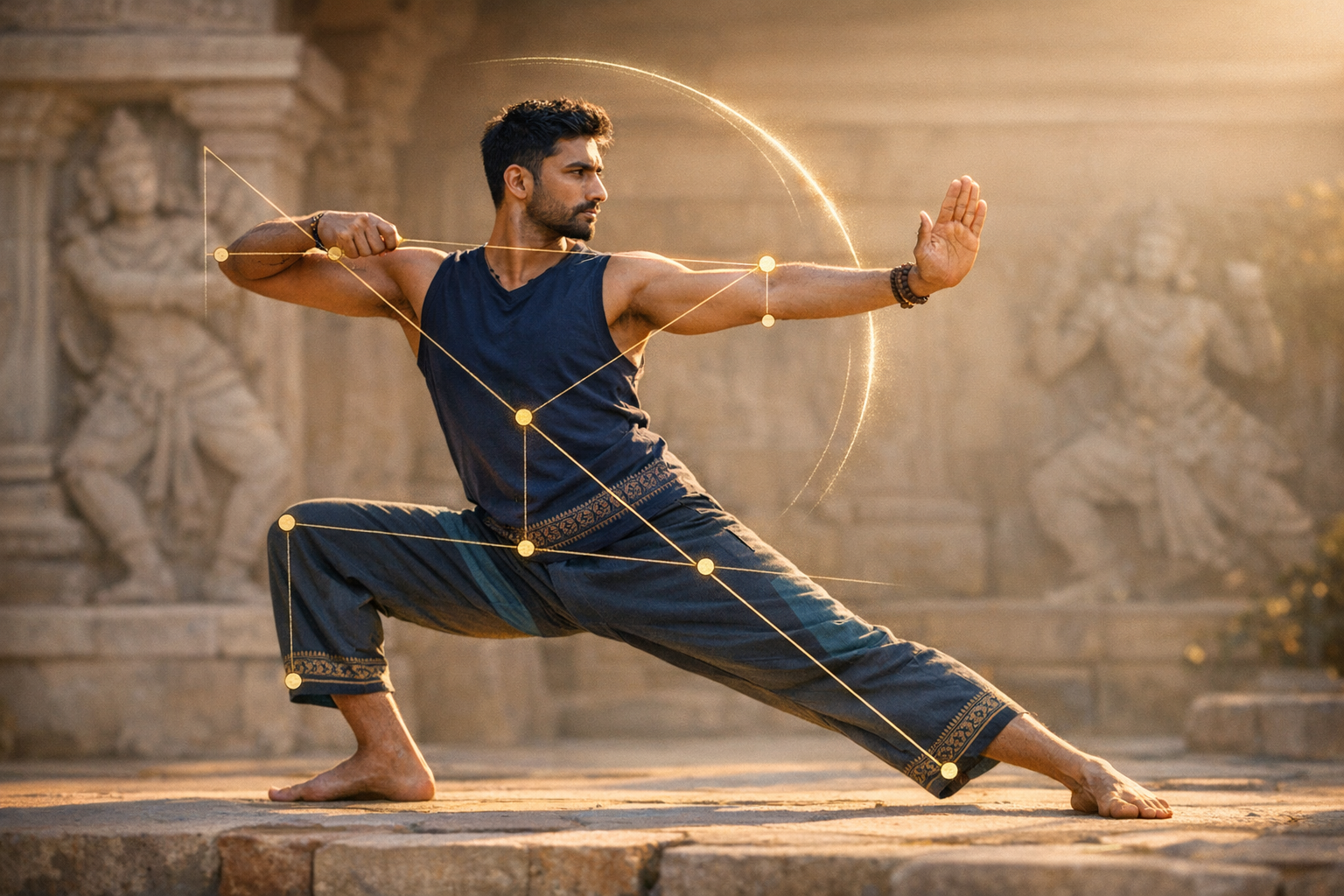
Alidhasana (Alīḍha/Ālīḍha) is the subcontinent’s signature warrior stance, a diagonal lunge that encodes heroic intent in Hindu iconography, dance, and yoga. Grounded in the Nāṭyaśāstra and Śilpa-śāstra, it appears in temple sculpture for Durgā, Bhairava, and Vīrabhadra to signal protective, dharmic power. The same geometry informs Bharatanatyam karaṇas, kalaripayattu lunges, and modern haṭha alignments akin…
-
Virabhadra vs Bhairava: Decoding Shiva’s Fierce Twins—Origins, Iconography, Tantra, Temple Worship

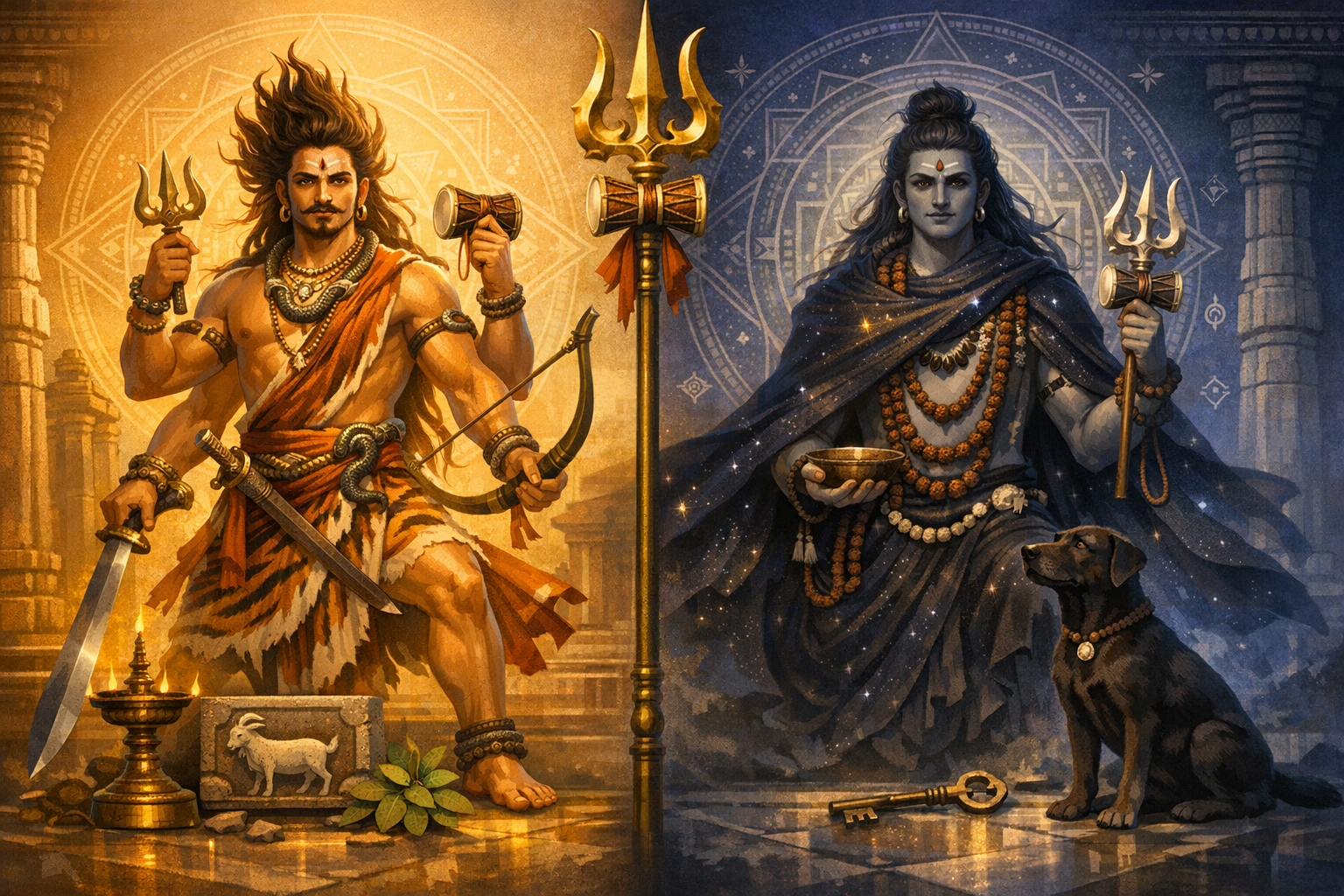
Virabhadra and Bhairava are Shiva’s fiercest yet compassionate forms, distinguished by purpose, scope, and soteriology. Virabhadra embodies event-specific dharmic correction in the Daksha Yajna narrative, while Bhairava serves as perennial guardian of thresholds and time. Their iconographies differ—Virabhadra as heroic warrior and Bhairava as digambara sentinel with skull-bowl and dog vahana—yet both enact restorative justice.…
-
Sacred Goat in Hinduism: Daksha Prajapati’s Goat-Head and Agni Dev’s Mesha Vahana Explained

This in-depth exploration clarifies why Agni Dev’s classical vahana is a ram (mesha) even as popular retellings sometimes call it a goat, tracing both animals’ proximity to Vedic fire ritual. It analyzes the Daksha Prajapati narrative, explaining how the goat-head (aja-śira) signifies humility, restored cosmic order, and ethical governance of ritual power. The discussion grounds…
-
From Shiva’s Rage to Sacred Art: Decoding Veerabhadra’s Iconography and Symbolism

Veerabhadra stands at the junction of myth, ritual, and art, translating Shiva’s fierce compassion into a precise visual language. This essay decodes the idol’s canonical features—stance, attributes, ornaments, and narrative companions—using Agamas and Shilpa Shastra as guides. Readers learn how trishula, damaru, khadga, and khetaka map to ethical functions such as discernment, rhythm, protection, and…