
-
Decoding the Khatvanga: Skull Staff of Chamunda & Kali—Fearlessness, Tantra, and Transcendence
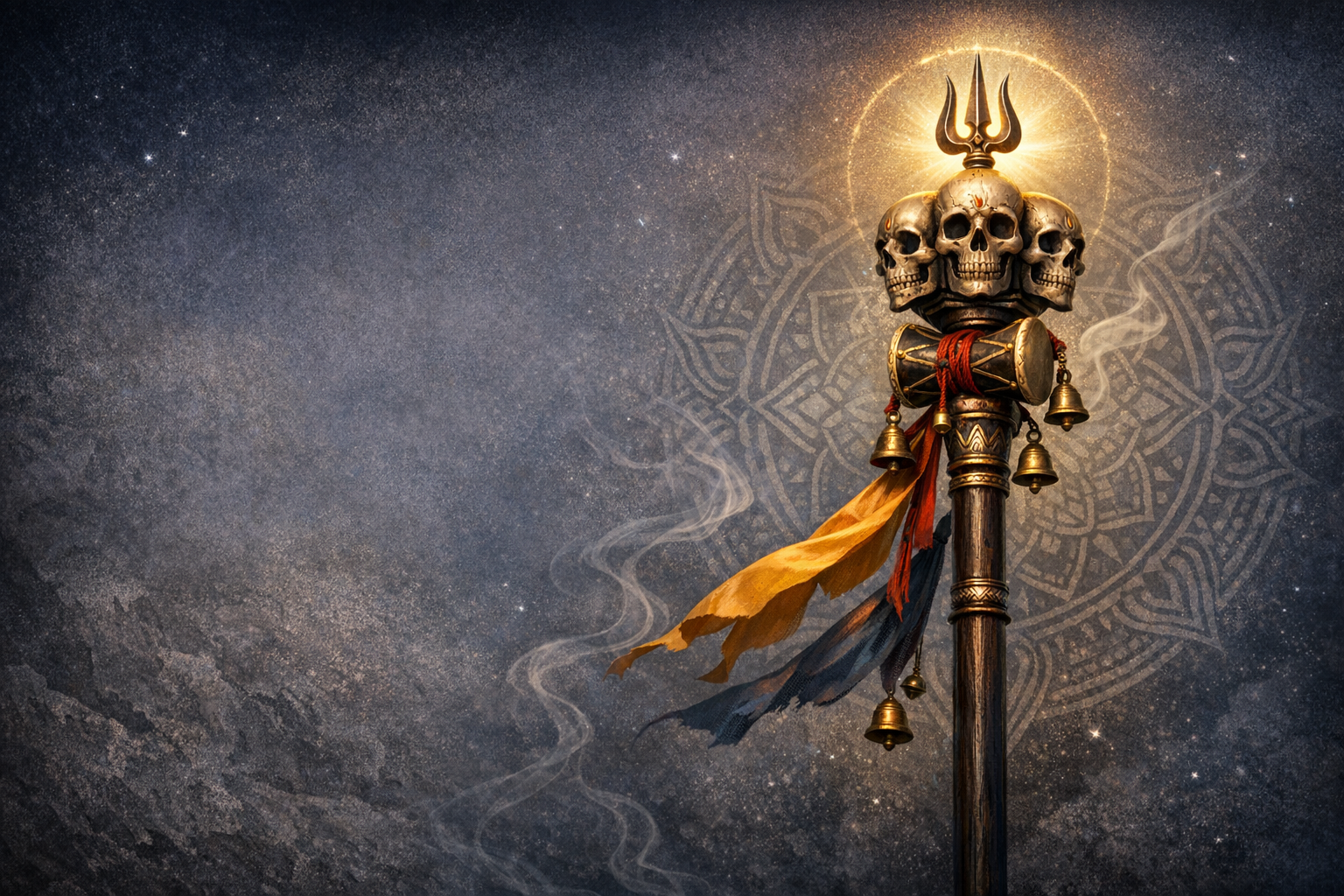
The khatvanga—skull-staff of Chamunda, Kali, and other fierce goddesses—emerges as a precise, multilayered symbol in Hindu iconography and tantric philosophy. This long-form analysis decodes its form (skull, bone staff, damaru, banner), its cremation-ground origins, and its ethical evolution from literal bone to wood or metal in mainstream ritual spaces. It clarifies how the staff encodes…
-
Garuda in the Vishnudharmottara Purana: Iconography, Weapons, and Living Symbolism
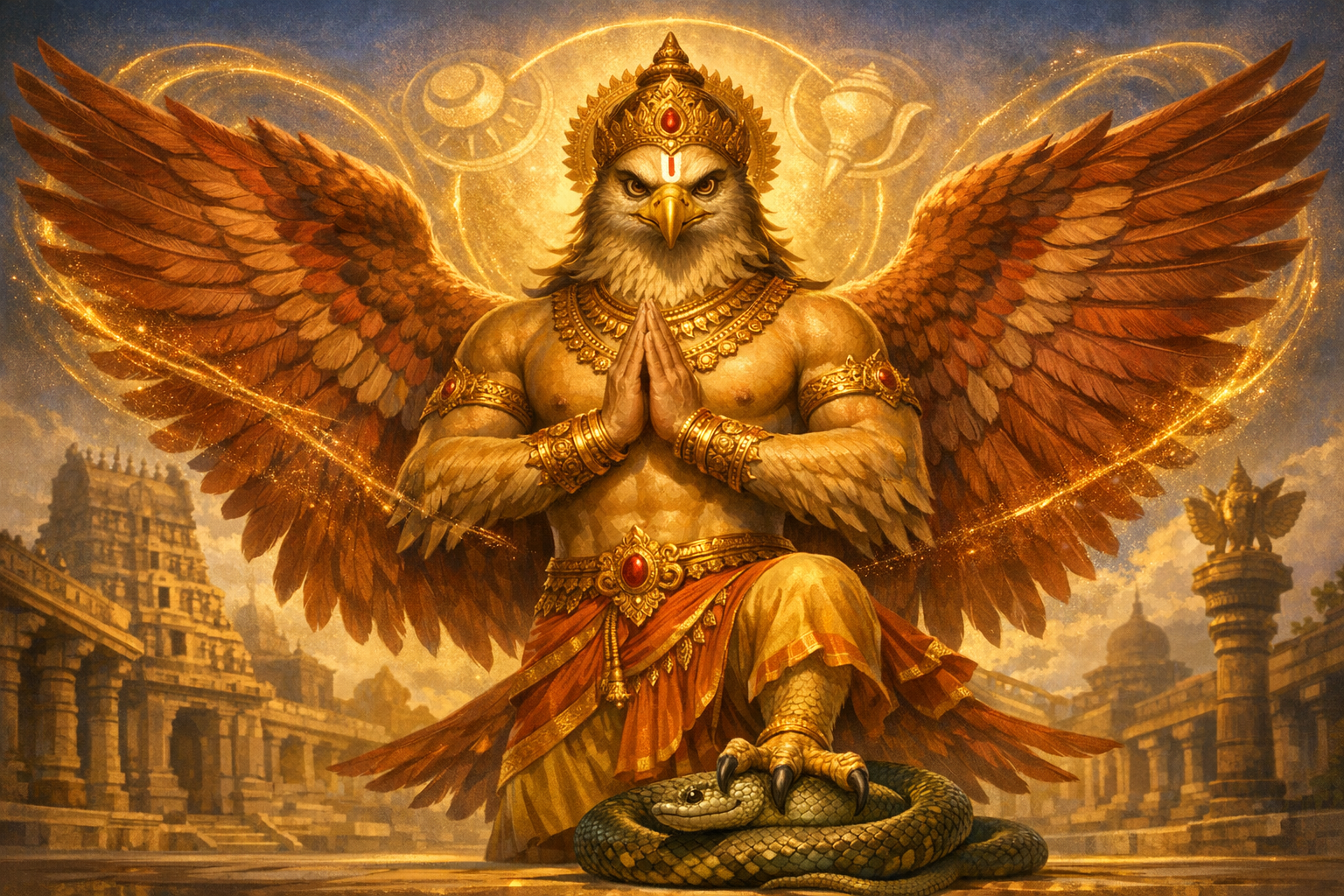
This in-depth study presents Garuda as codified in the Vishnudharmottara Purana, clarifying how precise iconography communicates theology in Hindu scriptures. Readers will learn the canonical features of Garuda’s form, the logic of his attributes and weapons, and why serpent-subjugation is central to his protective meaning. The essay situates Garuda within Vedic antecedents and Puranic narratives,…
-
Kalantaka Shiva Unveiled: Tantric Iconography and the Fearless Conquest of Death and Time
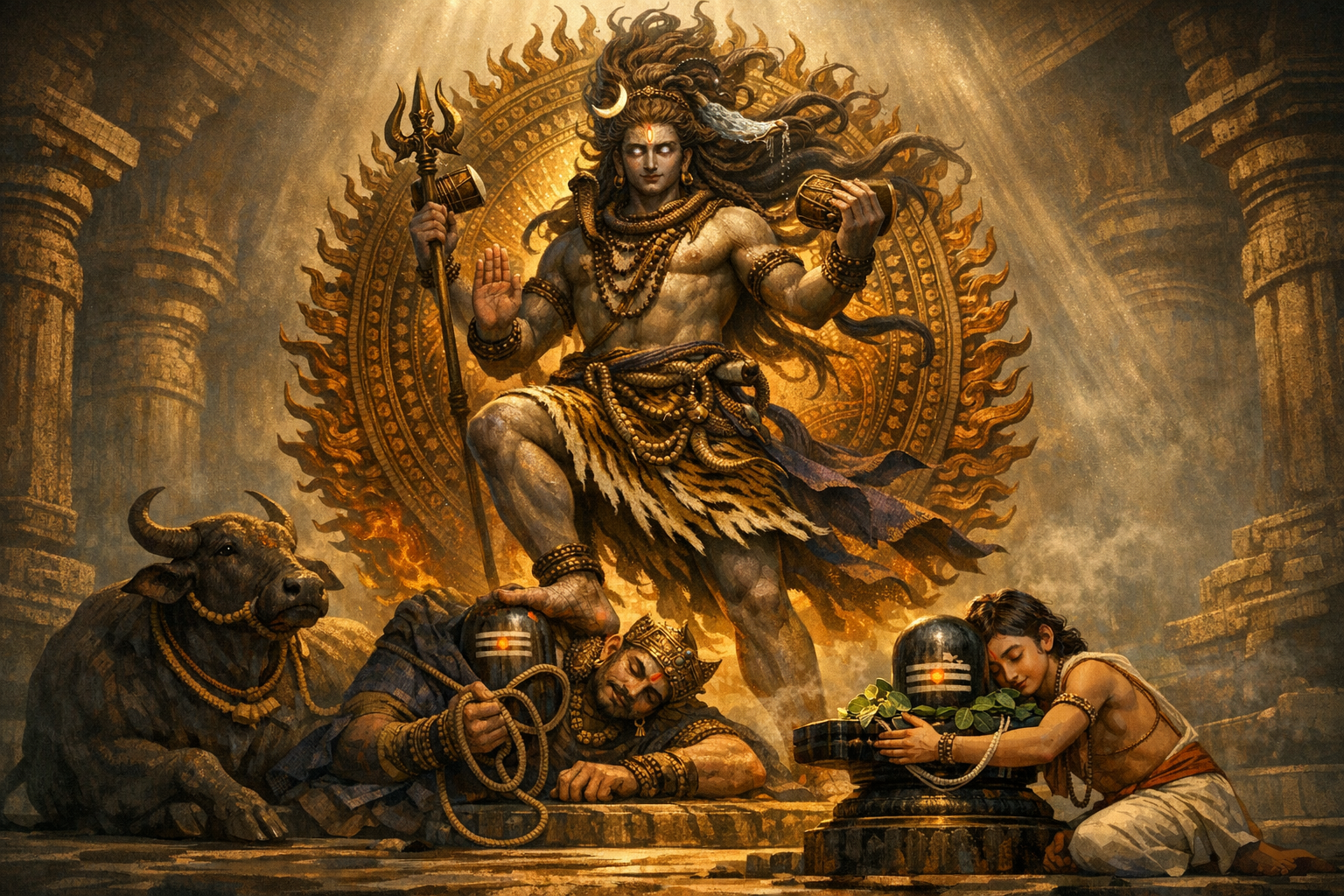
Kalantaka Shiva embodies Lord Shiva’s sovereignty over death and time, uniting narrative, ritual, and art into a coherent path of fearlessness. Drawing on Puranic sources—especially the Markandeya episode—this study unpacks the icon’s ugra yet compassionate character and explains how the trishula, damaru, and noose operate as precise Tantric symbols. Readers gain a field guide to…
-
Ganesha’s Small Eyes, Vast Vision: Iconography, Mindfulness, and Dharmic Unity Lessons
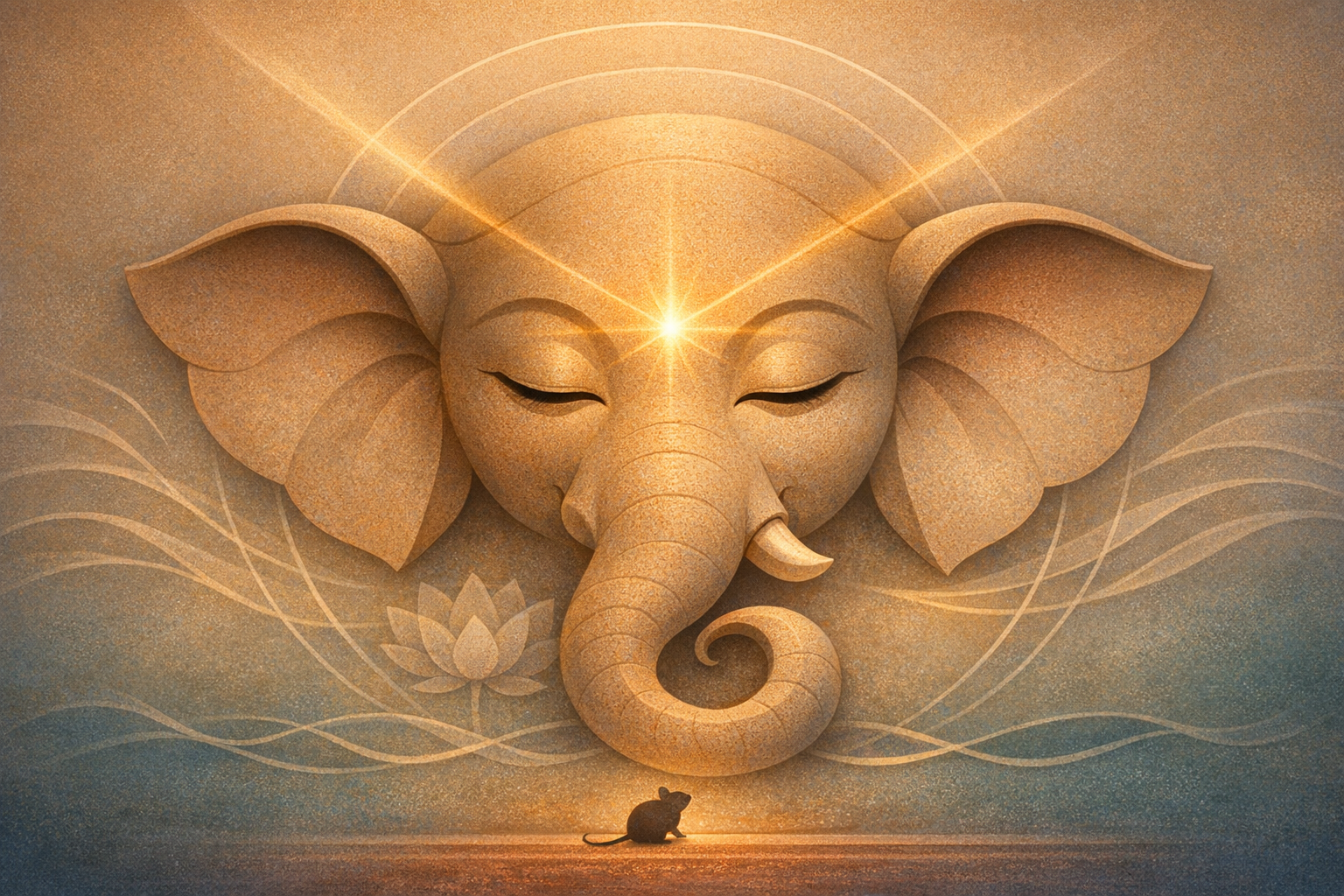
Ganesha’s small, intent eyes encode a powerful contemplative teaching: expansive wisdom arises from focused, compassionate attention. Drawing on Hindu iconography and Yoga philosophy, the symbol aligns with pratyahara, dharana, and dhyana, and is reinforced by the Bhagavad Gita’s guidance on nasikagra-drishti. Contemporary attention science complements this reading, linking steady gaze with reduced cognitive load and…
-
Shiva’s Serpent Sacred Thread: Timeless Symbolic Power, Protection, and Unity in Hinduism

Shiva’s serpent as a sacred thread (yajnopavita) encodes a living synthesis of Hindu symbolism, yogic practice, and cosmic vision. The serpent signifies awakened awareness, mastery of prana, and the transformation of fear into protection and compassion. As an image of cyclical time and eternity, it invites practitioners to see renewal, not threat, in life’s changes.…
-
Decoding Dakshinakali: The Powerful Tantric Meaning of Jackals in Cremation-Ground Iconography

Tantric depictions of Dakshinakali with jackals in the cremation ground form a precise symbolic language that teaches fearlessness, compassion, and inner integration. The jackals signify liminality, time’s change, and the recycling of what is discarded—nothing lies outside the Goddess’s compassionate gaze. This iconography affirms ecological and ethical interdependence by revering even life’s overlooked processes. Parallels…
-
Discover the Secret Eye on Kali’s Sickle Sword: A Complete Guide to Transformative Symbolism

The eye often depicted on Goddess Kali’s sickle-shaped sword (khadga or kripan) is a visual doctrine: wisdom guiding power. Far from signifying mere destruction, it encodes the union of discernment and action—awareness cutting through ignorance (avidya) with ethical clarity (dharma). The eye represents vigilant consciousness (jnana-netra), while the blade symbolizes transformative discernment (viveka). This symbolism…
-
Parliament Of The World’s Religions Features Discussion On Distinguishing The Sacred Swastika From Hitler’s Hakenkreuz

The panel at the Parliament of the World’s Religions in Chicago focused on distinguishing the sacred Swastika from Hitler’s Hakenkreuz, featuring representatives from various faiths who highlighted the historical, cultural, and spiritual disparities between these symbols. Emphasizing the Swastika’s ancient origins and positive connotations across Hindu, Buddhist, Jain, and Native American traditions, the discussion clarified…