
-
No Destination, Only Awakening: Timeless Hindu Wisdom on the Transformative Spiritual Journey

Hindu wisdom reframes the spiritual path as unveiling rather than arrival: there is nowhere to go, nothing to acquire, and everything to recognize. Drawing on the Upanishads, the Bhagavad Gita, Advaita (advait), and the Yoga Sutra, this exploration clarifies the paradox of “no destination” as a disciplined return to presence. It outlines core methodsJnana, Bhakti,…
-
Kalachakra in Hindu Tantra: Decoding the Wheel of Time, Consciousness, and Dharmic Unity

Kalachakra in Hindu Tantra presents time as a living cycle that unifies microcosm and macrocosm, offering a precise path to the timeless ground of awareness. Drawing on the Maitri Upanishad and the Bhagavad Gita, it treats time as both measurable rhythm and doorway to the Akāla, the unconditioned. The framework integrates Vedic cosmology, pañcāṅga timing,…
-
The Eternal Joy Within: Dharmic Wisdom on True Happiness, Ananda, and Freedom from Suffering

Modern culture often ties happiness to external milestones, yet Hindu wisdom distinguishes this conditional pleasure from intrinsic anandathe steady joy of awareness. Drawing on the Upanishads, the Bhagavad Gita, and Yoga philosophy, this essay maps how attention becomes entangled in craving and how disciplined living restores clarity. It outlines four complementary yogaskarma, bhakti, jñāna, and…
-
Reviving Sacred Questioning: Vedic, Buddhist, Jain, and Sikh Paths to Intellectual Freedom

Sacred questioning sits at the heart of the dharmic heritage. This long-form analysis traces how Vedic dialogues, Nyāya–Mīmāṃsā logic, Buddhist pramāṇa theory, Jain anekāntavāda, and Sikh vichar cultivated disciplined inquiry as a path to truth and social harmony. It explains the technical tools of reasoningpramāṇas, syllogisms, hermeneutic canons, and fallacy-detectionand shows how classical śāstrārtha fostered…
-
Piercing the Veil of Avidya: How Ignorance Blocks Spiritual Growthand How to End It

Avidyamisapprehension rather than mere lack of informationsits at the root of suffering and obstructs spiritual progress. This analysis synthesizes Hindu philosophy with allied insights from Buddhism, Jainism, and Sikhism to show how ethics, meditation, devotion, and knowledge converge to dispel ignorance. Drawing on the Upanishads, the Bhagavad Gita, Vedanta, and the Yoga Sutra, it clarifies…
-
Pratyaksha in Nyaya Darshana: Mastering Direct Perception as the Bedrock of True Knowledge

This long-form, research-driven overview presents pratyaksha (direct perception) in Nyaya Darshana as the foundational pramana that grounds inference, analogy, and testimony in Indian epistemology. It clarifies Nyaya’s definition of valid perception, its two-stage phenomenology (nirvikalpa and savikalpa), and its fine-grained analysis of sense–object contact and extraordinary forms such as samanyalakshana, jnanalakshana, and yogaja pratyaksha. Readers…
-
Already Enough: Dharmic Wisdom on Love, Self-Acceptance, and Living Authentically Today

The post argues that love and acceptance are not earned through perfection but revealed through authentic living, aligning with core insights of Hinduism, Buddhism, Jainism, and Sikhism. It explains Atman, anatta, anekantavada, and Ik Onkar as complementary lenses for intrinsic worth and compassionate action. Drawing on the Bhagavad Gita and Upanishads, it reframes perfectionism as…
-
Timeless Union: The Transformative Power of Jnana and Yoga for Moksha in Hindu Philosophy

This long-form exploration shows how Jnana and Yoga converge in Hindu philosophy to deliver both liberating knowledge and lived stability. It clarifies Vedantic epistemology alongside Patanjali’s practical method, demonstrating why insight requires disciplined cultivation. It maps ethical foundations shared across Hinduism, Buddhism, Jainism, and Sikhism, highlighting a profound unity among dharmic traditions. It offers a…
-
Unlocking Moksha with Mantra: The Transformative Science of Sound Across Dharmic Paths

This essay examines mantra within Hindu wisdom as a disciplined contemplative technology aimed at moksha, clarifying the classical sense of mananat trayate mantrah“that which liberates through contemplation.” It situates mantra in the metaphysics of sound (vak, shabda-brahman), explains Vedic precision in phonetics and meter, and contrasts Vedic, Tantric, and devotional forms, including bija, nama-japa, and…
-
Basava Purana Unveiled: Palkuriki Somanatha’s Epic of Basavanna, Ishtalinga, and Equality
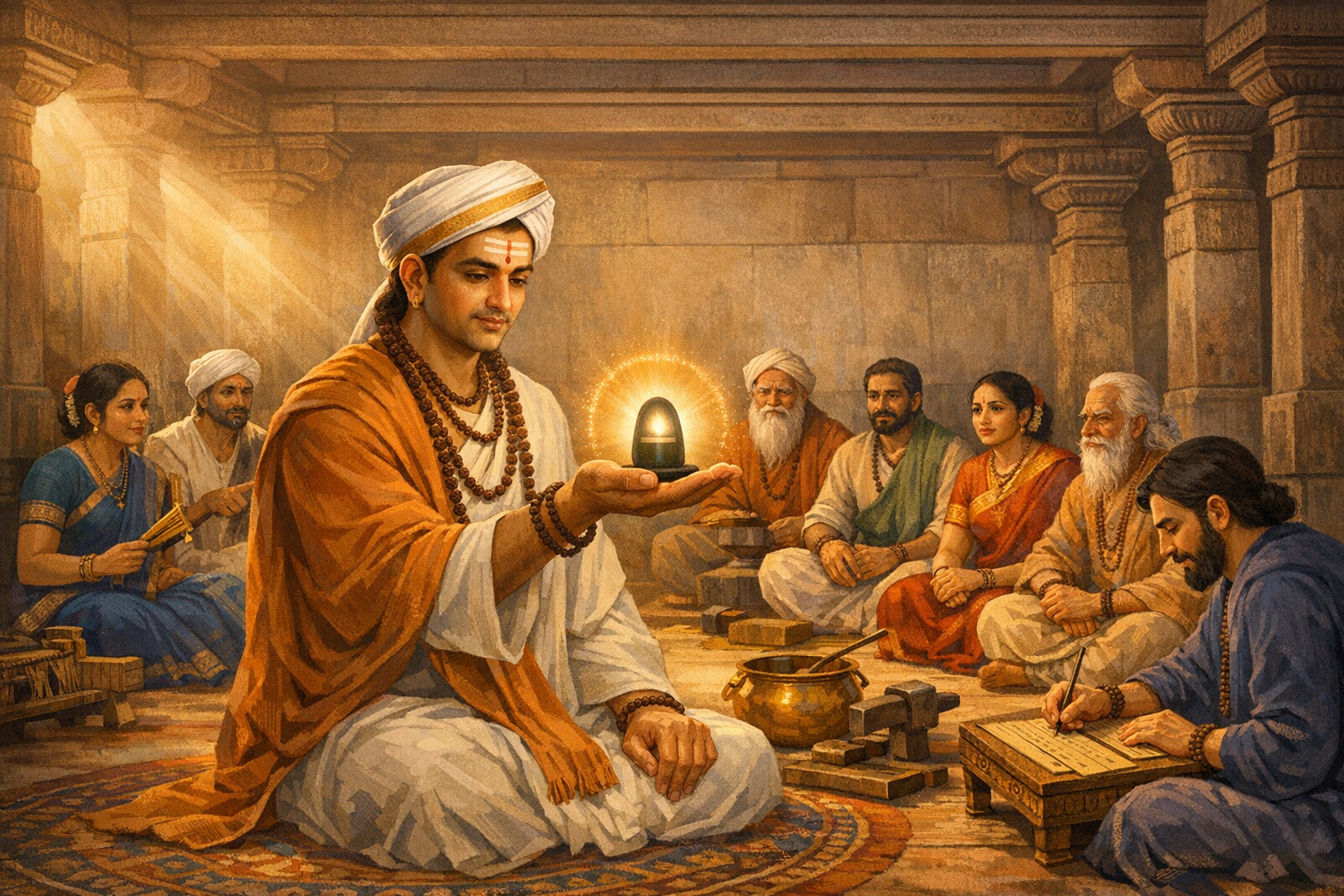
Basava Purana is a 13th-century Telugu epic by Palkuriki Somanatha that celebrates Basavanna (Basaveshwara) and codifies Lingayat principles through the Ishtalinga, Kayaka (work as worship), and Dasoha (sharing and service). Set against the vibrant bhakti milieu of medieval Deccan, it blends hagiography with social ethics and community dialogue through the Anubhava Mantapa. The poem’s dvipada…
-
Punya and Paap Unveiled: The Moral Physics of Karma in Hindu Dharma and Dharmic Unity

Punya and Paap are presented here as the moral physics of Hindu Dharma, explaining how intention, means, and consequence shape character, community, and future conditions. Readers gain a clear, text-grounded understanding of karma, including sañcita, prārabdha, and āgāmi, with practical guidance on cultivating Punya and attenuating Paap through yamas, niyamas, dāna, prāyaścitta, and daily mindfulness.…
-
Ananya Sharan Bhaava: Mastering Unshakeable Devotion and Inner Surrender in Dharmic Life

Ananya Sharan Bhaava, or single-minded devotion, is best understood as something uncovered rather than acquired. Dharmic traditionsHinduism, Buddhism, Jainism, and Sikhismconverge on a shared architecture: ethical grounding, attentional training, and devotion that matures into surrender. Practical methods include clarifying a chosen refuge (Ishta or central ideal), adopting regular sadhana (japa, Naam Simran, dhyana), and aligning…
-
Why Hinduism Has No Commandments: Dharma’s Liberating, Context-Sensitive Ethics

Hinduism’s ethical core is not a fixed list of commandments but the dynamic, context‑sensitive framework of dharma. Drawing on the Vedas, Upanishads, the Bhagavad Gita, and the Dharmashastra tradition, it integrates personal virtue, social responsibility, and a vision of the highest good. This article explains sadharana and vishesha dharma, Mimamsa hermeneutics, and yogic disciplines such…
-
Vihangama Nyaya Explained: The Bird’s-Eye Method for Clarity and Mastery in Hindu Philosophy

Vihangama Nyaya, the Maxim of the Bird, teaches how a panoramic, bird’s-eye orientation complements careful, stepwise effort and agile adaptation in both study and practice. By contrasting the bird with the ant and the monkey, it highlights that efficiency depends on capacity, context, and methodnot on a single superior path. Framed within Hindu philosophy, it…
-
Mahāpātakas in Hinduism: Decoding Heinous Sins, Dharma, and Their Urgent Modern Relevance

Mahāpātakas, the “heinous sins” in Hindu ethics, delineate acts that rupture the very fabric of dharma by attacking life, trust, truth, and sound judgment. Grounded in the Dharmashastras, these categories are interpreted here through a principle-first lens that fits modern lifeworkplaces, digital spaces, and public institutions. The analysis explains how intention, participation, and reparability shape…
-
Usharavṛṣṭi Nyāya: Why Wisdom Fails on Unprepared Mindsand How Dharma Cultivates Readiness

Usharavṛṣṭi Nyāyathe maxim of rain on barren landexplains why even profound wisdom fails when inner preparedness is lacking and how dharma cultivates the conditions for genuine transformation. Drawing on Hindu philosophy and allied dharmic insights, it frames readiness (adhikāra) as a cultivated fitness grounded in ethical discipline, attention, and stability. The essay relates the maxim…
-
Rama vs Ravana: A Dharma-first resolution to the Ramayana’s toughest moral dilemmas

This essay answers the enduring question of why Rama is revered as righteous while Ravana is condemned, even though Ravana was a learned Brahman and Rama faced morally hard choices. It uses a dharma-first framework grounded in the Ramayana to evaluate intention, lawful means, and just ends across contested episodes such as the exile, the…
-
Insults Reveal Insecurity: Dharmic Wisdom on Speech, Self‑Mastery, and Real Strength
Insults are often misread as strength, yet dharmic traditions consistently treat them as signs of insecurity and weak self-mastery. Drawing on the Bhagavad Gita, Dharmaśāstra, Buddhist Right Speech, Jain vows, and Sikh teachings, this analysis outlines a rigorous fourfold test for ethical speech: non-agitating, true, beneficial, and skillfully delivered. Contemporary psychology and neuroscience corroborate these…
-
Who Is the Real Father? Dharmic Wisdom on Body, Soul, Karma, and the Supreme Source

What distinguishes a living person from a lifeless body points directly to the dharmic insight at the heart of the Hare Krishna Movement: the living self (atman) is distinct from matter, and its ultimate source is the Supreme. This article presents a rigorous, compassionate exploration of “Who is the real father?” across ISKCON’s Gaudiya Vaishnava…
-
Desire and Dharma: Unmasking the Hidden Engine of Action from Freud to Srimad Bhagavatam
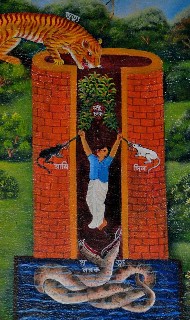
Does sexual desire really drive much of human behavior? This analysis bridges Freud’s libido theory with Srimad Bhagavatam’s diagnosis of kama as the seed of material striving. It clarifies how Hindu philosophy situates desire within the purusharthas and how the Bhagavad Gita frames its psychological dynamics. Drawing parallels from Buddhism, Jainism, and Sikhism, it shows…