-
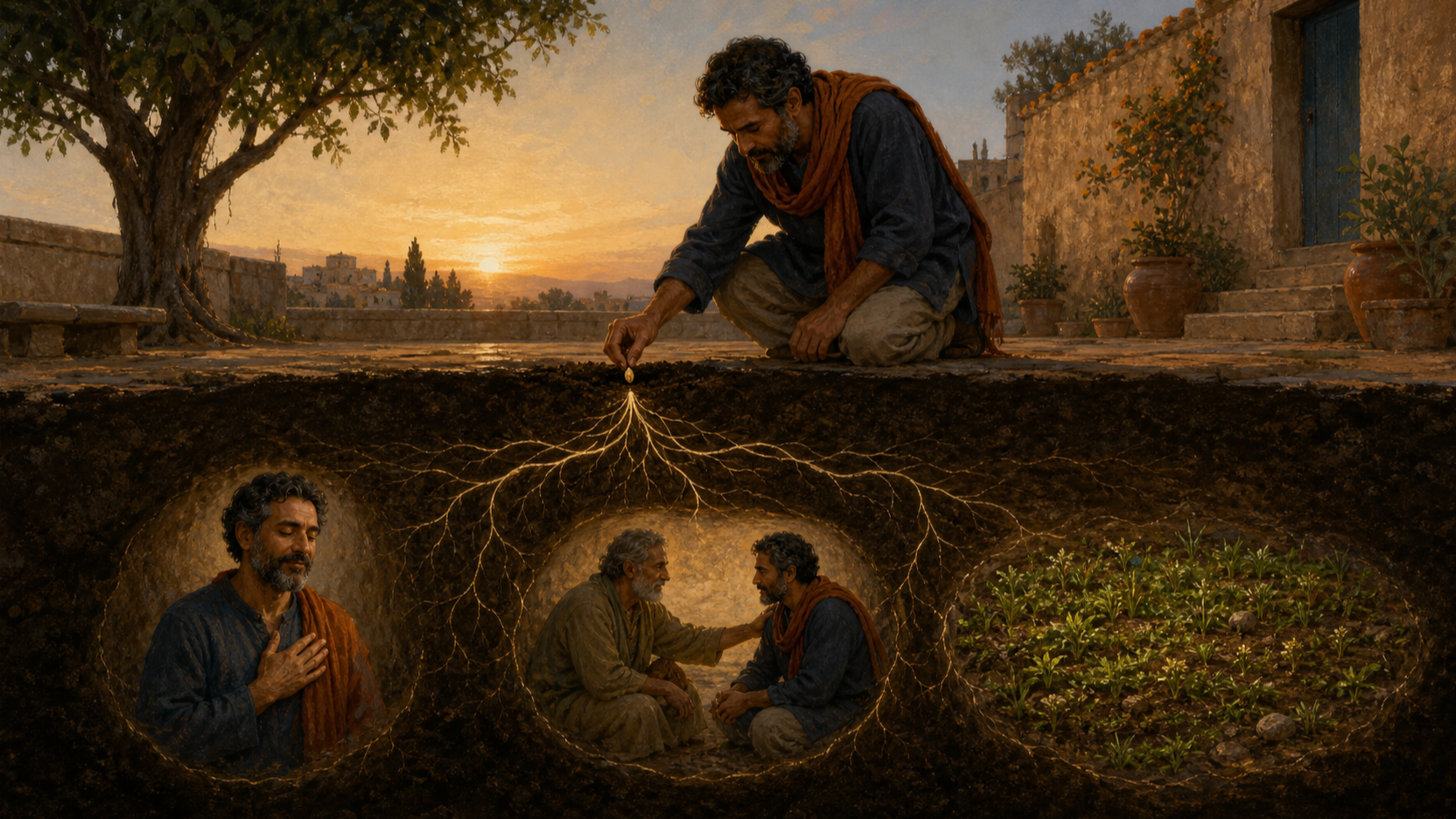
Beyond Ego: The Profound Hindu Teaching that the Divine Is the True Doerand How to Live It

This long-form exploration clarifies the Hindu teaching that the Divinenot the individual egois the true doer, situating personal agency within a larger moral order. Drawing on the Bhagavad Gita, Upanishads, and allied dharmic perspectives in Buddhism, Jainism, and Sikhism, it reconciles responsibility with non-attachment. Readers gain a practical framework for Karma Yoga, Bhakti, Jñāna, and…
-
Atma vs Anatma Explained: A Scholar’s Guide to Inner Freedom, Clarity, and Lasting Peace

This in-depth guide clarifies the difference between Atma (the changeless witness) and Anatma (all that arises and passes), showing why this insight is the key to inner freedom and lasting peace. Drawing on the Upanishads, the Bhagavad Gita, Vedanta, Sāṅkhya-Yoga, and Nyāya-Vaiśeṣika, it presents multiple, mutually reinforcing methods: Pancha Kosha Viveka, Drg-Drsya Viveka, Avasthātraya analysis,…
-
Introspection to Self-Realization: A Rigorous Dharmic Blueprint for Knowing the Divine

This long-form analysis explains why disciplined self-analysis is a direct, repeatable path to self-realization and knowing the Divine across Hinduism, Buddhism, Jainism, and Sikhism. It integrates the Upanishads, the Bhagavad Gita, Patanjali’s Yoga Sutra, the Satipaṭṭhāna Sutta, Jain Anekāntavāda with Samayik and Pratikraman, and Sikh Naam-centered living under hukam. A rigorous seven-phase practice cycleintention, observation,…
-
When Nothing Remains, Fear Ends: A Dharmic Science of Abhaya beyond Ego and Identity

This essay maps a dharmic science of fearlessness (Abhaya) grounded in Hindu philosophy and harmonized with Buddhism, Jainism, and Sikhism. It clarifies how fear originates in avidya and duality, then outlines practical pathsJnana, Karma, Bhakti, and Raja Yogato dissolve misidentification and regulate reactivity. Readers gain scriptural anchors from the Upanishads, the Bhagavad Gita, and the…
-
Two Yet One: Advaita Vedanta’s Science of Oneness and a Dharmic Bridge across Traditions

The teaching ‘you and I are two persons; yet we are one’ expresses Advaita Vedanta’s core insight: empirical plurality and ultimate unity coexist without contradiction. This long-form exploration clarifies Brahman, Atman, and the roles of maya and avidya, situating ethics and devotion within a rigorous non-dual framework. Drawing on the Upanishads and the Bhagavad Gita,…
-
Dissolving Matter’s Mirage: Dharmic Wisdom on Returning to the Primordial, Nondual Source

This essay examines how dharmic traditions understand the illusion of materiality and the emergence of a primordial, nondual source through deep inquiry. Drawing on the Upanishads, Bhagavad Gita, Advaita Vedanta, and yogic practice, it explains the movement from gross to subtle via pañca-kośa and the triad of sthūla–sūkṣma–kāraṇa śarīra. It highlights complementary perspectives in Buddhism…
-
Beyond Ego: Unmasking Supreme Truth in Dharmic Wisdom for Inner Freedom and Clarity

This article explores a core paradox in Hindu philosophy: the Supreme Truth exists prior to the ego, and practices driven by self-importance obscure rather than reveal it. Drawing on the Upanishads, Bhagavad Gita, and Advaita Vedanta, it shows how sadhana matures from acquisition to attunement. It connects Hindu insights with Buddhism’s anatma, Jainism’s Anekantavada, and…
-
Anatmabuddhi Explained: Unmasking the Not-Self Illusion and Awakening to Self-Realization

Anatmabuddhi names the intellect’s tendency to mistake the not-self for the Self, a root cause of anxiety, craving, and conflict. This article explains the concept in clear, accessible terms and connects it to allied insights in Buddhism’s anatta, Jainism’s anekantavada, and Sikh perspectives on ego. Readers gain practical toolsviveka, dhyana, ethical living, and a short…
-
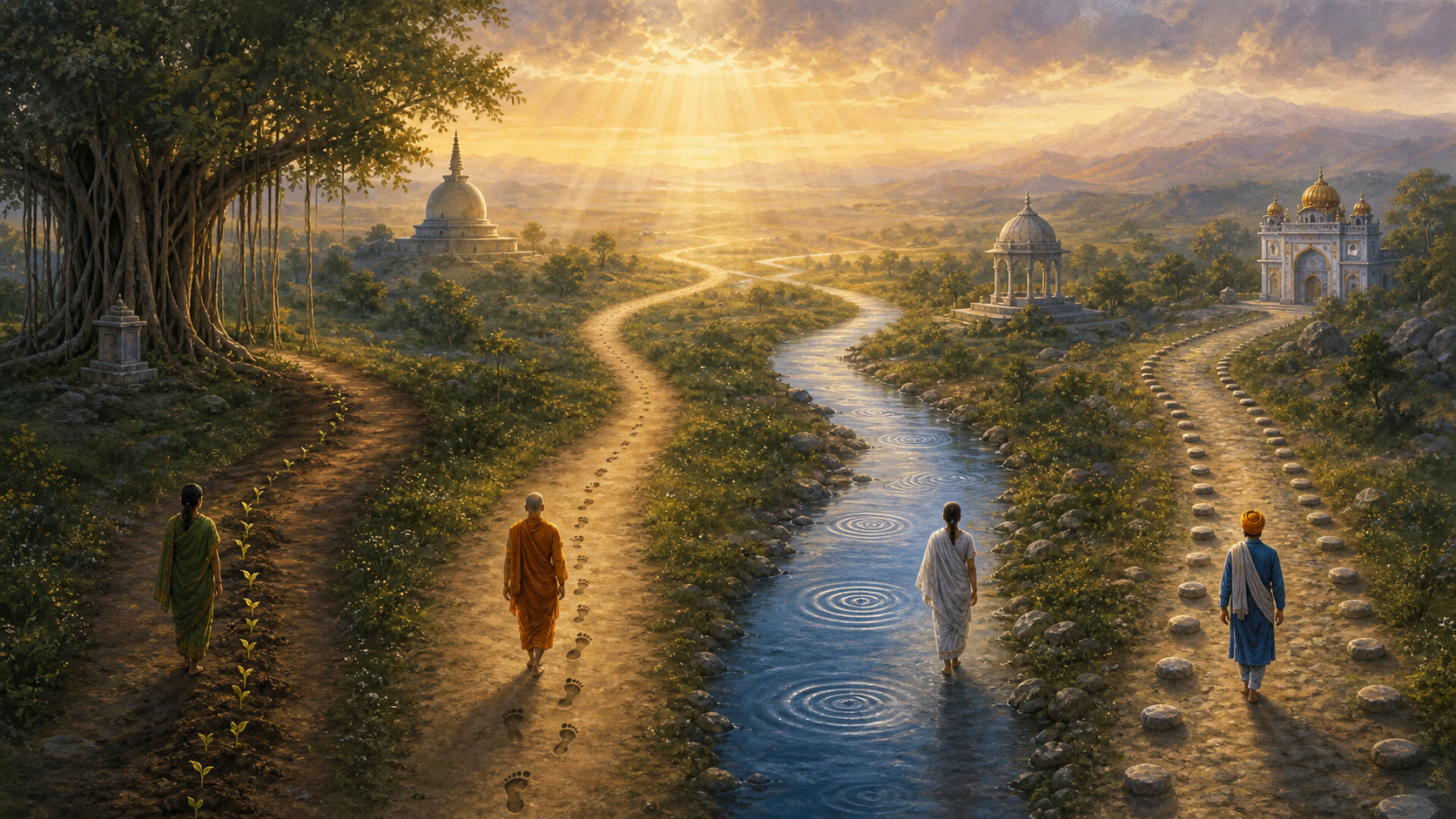
Discover the Complete Convergence of Buddhism and Hinduism: A Proven Path of Rediscovery

Is Buddhism a social reformation of Hinduism, or a rediscovery of perennial truths? Drawing on Ananda K. Coomaraswamy, this analysis reframes the relationship as a deep continuity rather than a rupture. It explores shared methodsneti neti and analytical discernmentand common aims such as transcending the senses and realizing ultimate truth. It clarifies how modern mindfulness…
-
Atman in Karmic Religions

atman, (Sanskrit: “self,” “breath”) one of the most basic concepts in Sanatan, the universal self, identical with the eternal core of the personality that after death either transmigrates to a new life or attains release (moksha) from the bonds of existence. As Karmic religions like Hinduism (and its various sects), Jainism, Buddhism & Sikhism arose…