-
From Restraint to Revenge: Dharmic Psychology of Violence and Paths to Compassionate Action

Retaliatory violence feels intuitive, yet Dharmic wisdom reveals why it often harms more than it heals. Hindu, Buddhist, Jain, and Sikh traditions converge on Ahimsa, disciplined intention, and compassionate restraint. Hindu Dharma distinguishes protective duty from vengeful harm through Dharma-Yuddha principles. Buddhism interrupts anger’s cycle with mindfulness, right intention, and skillful means. Jainism extends non-violence…
-
Awaken the Dashavatara Within: Transformative Practices to Embody Vishnu’s Ten Archetypes

This article reframes the Dashavatara of Vishnu as ten inner states of consciousness that anyone can cultivate for ethical clarity, resilience, and compassion. Each avatar is paired with practical ways to invoke it—such as breath awareness, mindfulness, micro-habits, service, and values-based action. The approach aligns with Vedic wisdom, the Upanishads, and the Bhagavad Gita while…
-
Silent Power of Vidura: How Strategic Restraint Became Ethical Resistance in the Mahabharata

Vidura’s leadership in the Mahabharata shows how restraint can function as ethical resistance when counsel is ignored and adharma gains ground. Drawing on Vidura-niti and Udyoga Parva, this analysis highlights how calibrated speech, principled silence, and timely withdrawal form a coherent framework for just action. The approach resonates across Hindu, Buddhist, Jain, and Sikh traditions…
-
From Discord to Dialogue: Hindu Wisdom to Prevent Animosity and Heal Modern Divides

Modern public debate often slips from critique into personal animosity. Dharmic teachings offer a corrective: examine ideas rigorously while honoring the dignity of persons. Hindu philosophy’s commitment to Ahimsa and the Bhagavad Gita’s portrait of equanimity encourage clarity without cruelty. Jainism’s Anekantavada reframes disagreement as a many-sided search for truth. Buddhist Right Speech and Sikh…
-
Vaishnava Compassion: Ending Criticism and Centering Ahimsa in Krsna Conscious Practice

Vaisnava compassion is presented as a practical ethic grounded in The Nectar of Devotion’s injunction to avoid giving unnecessary trouble to any living entity. The daily recitation “vancha-kalpatarubhyas ca… vaisnavebhyo namo namah” reinforces an ideal of care for all beings. The analysis explains why criticism disturbs both its target and its audience, echoing Srila Prabhupada’s…
-
Awaken Beyond Survival: Hindu Dharma on Human Nature, Karma, and Cosmic Responsibility
Human life clearly exceeds mere survival, and dharmic traditions explain why. Hinduism, Buddhism, Jainism, and Sikhism converge on a shared ethic of self-awareness, non-violence, service, and responsibility. Hindu teachings frame purpose through the puruṣārthas, guiding artha and kāma with dharma toward mokṣa. The Bhagavad-Gita and the Upanishads show how karma, guided by clarity and detachment,…
-
Choose Trust Over Revenge: A Dharmic Roadmap to Inner Strength, Peace, and Unity

In moments of hurt, choosing trust over revengeful action redirects energy from escalation to healing. Grounded in dharma, ahimsa, compassion, and kshama, this approach is shared across Hinduism, Buddhism, Jainism, and Sikhism. It combines inner clarity with practical accountability, replacing reactive punishment with boundaries, due process, and restorative steps. Mindfulness and brief meditation strengthen emotional…
-
Ethical Conduct that Inspires Trust: A Dharmic Guide to Confidence and Social Harmony

Ethical conduct, grounded in dharma, fosters trust, confidence, and social harmony across Hinduism, Buddhism, Jainism, and Sikhism. Practicing virtues like satya, ahimsa, compassion, and seva makes ethics practical and visible in everyday life. Consistent ethical action builds credibility, strengthens relationships, and enhances institutional legitimacy. Classical teachings—from the Bhagavad Gita and Upanishads to the yamas and…
-
Why Dharmic Farm Communities Matter Now: Simple Living, Resilience, and Ahimsa

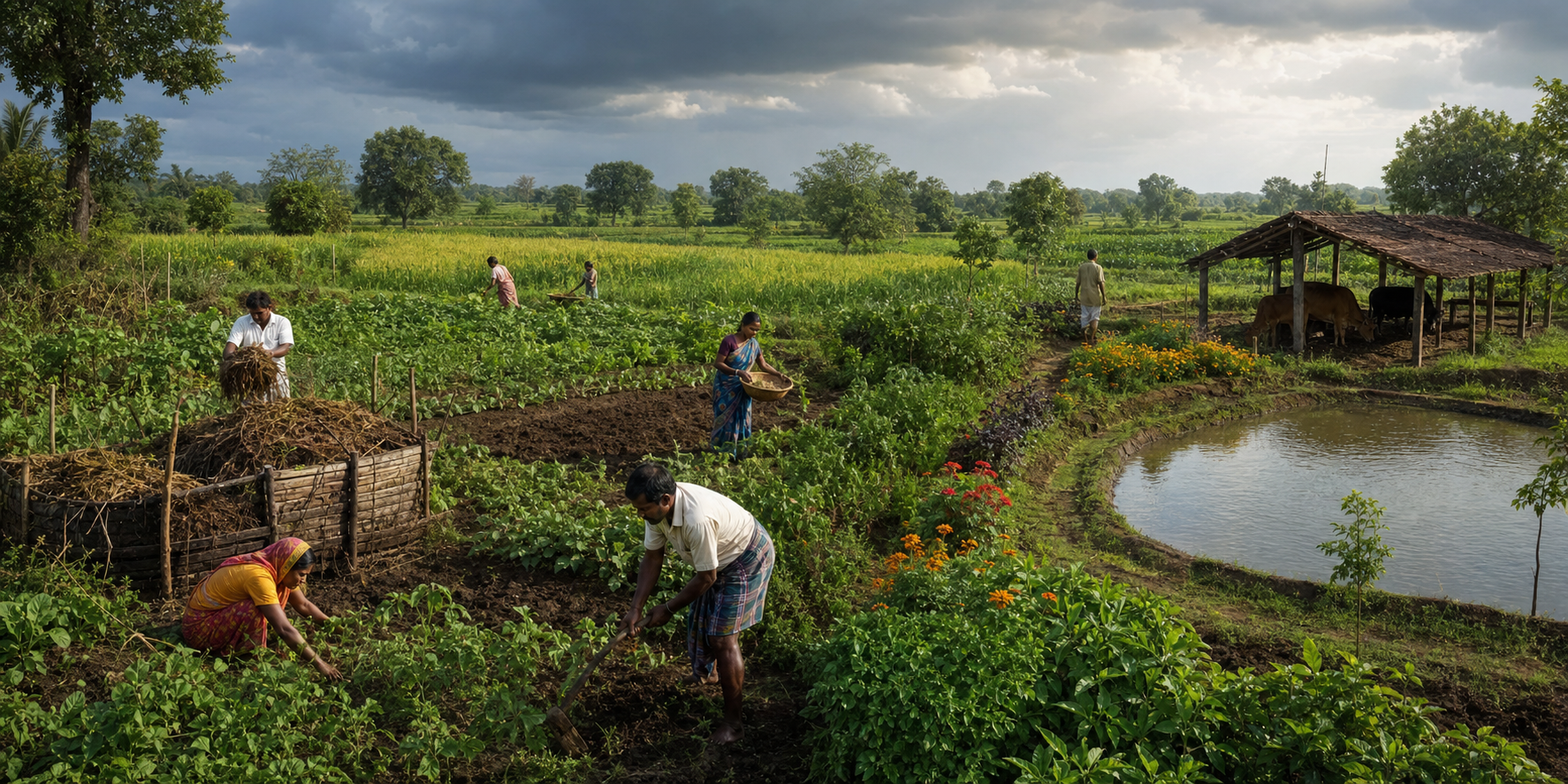
This reflection argues that dharmic farm communities embody a timely solution to ecological and social crises. Building on Srila Prabhupada’s foresight, “simple living, high thinking” offers a practical framework for resilience, ethical prosperity, and spiritual harmony. Shared values across Hinduism, Buddhism, Jainism, and Sikhism—ahimsa, seva, mindfulness, and community—naturally support sustainable agriculture and village life. Such…
-
Threads of Oneness: How Hinduism Inspires Unity in Diversity Across Dharmic Traditions

Hinduism’s core insight is that life is fundamentally interconnected, and this truth is expressed through diverse forms of worship, philosophy, and community ritual. By honoring Ishta and multiple yogic paths, it sustains unity in diversity without demanding uniformity. Ethical commitments such as ahimsa and seva translate this vision into daily conduct and social responsibility. Related…
-
Mastering Purushaartha: A Transformative Guide to Dharma, Artha, Kaama & Moksha

Purushaartha offers a complete framework—Dharma, Artha, Kaama, and Moksha—for a life that is ethical, prosperous, joyful, and inwardly free. Rather than rejecting wealth or desire, it refines them through Dharma so they support higher clarity. Practical steps include right livelihood, generosity, mindful restraint, and steady yoga-meditation practice. The Bhagavad Gita and the Upanishads inform a…
-
Ahimsa in Eating: A Sattvic Guide to Hindu, Jain, Buddhist, Sikh Plant-Based & Vegan Living

Ahimsa—non-violence—guides compassionate food choices across Hinduism, Jainism, Buddhism, and Sikhism, making plant-based and vegan diets a practical expression of Dharma. A sattvic approach from Ayurveda and Yoga nurtures clarity and balance through fresh, light, and harmonious foods. Traditions such as prasada, annadanam, and langar elevate meals into acts of gratitude, service, and unity. Ethical eating…
-
Release Judgment, Embrace Compassion: A Dharmic Path to Inner Freedom and Shared Harmony

Non-judgment in Hindu Dharma is a disciplined form of discernment that calms the mind, clarifies perception, and supports ethical action. Drawing from the Upanishads, the Bhagavad Gita, and Yoga, it replaces reactive labeling with compassionate understanding. Dharmic traditions converge on this insight—Hinduism, Buddhism, Jainism, and Sikhism each cultivate humility, Ahimsa, and service. Practical methods such…
-
ਚੁੱਪ ਦਾ ਸੰਦੇਸ਼: A Poetic Meditation on Truth, Courage, and Dharmic Unity in Silence

This reflection explores how silence, practiced with mindfulness, strengthens truth and courage across Hinduism, Buddhism, Jainism, and Sikhism. It presents mauna, Noble Silence, and simran as convergent disciplines that align speech with dharma and Ahimsa. Readers gain an academic yet accessible understanding of how Anekantavada invites many-sided truth while reducing harm. Practical micro-practices—brief mauna, three-breath…
-
Spirituality and Rajneeti: Why Dharmic Seekers Engage Politics with Compassion and Ethics

A widely asked question in Satsang—whether spiritual people should stay away from politics—finds clarity in a dharmic understanding of Rajneeti as ethical governance aligned with Dharma. Traditions across Hinduism, Buddhism, Jainism, and Sikhism converge on compassionate public ethics: Ahimsa, Satya, Seva, and the welfare of all. Rather than withdrawing from public life, seekers can engage…
-
Exposing a Pattern of Hate: Pieter Friedrich’s Rhetoric Against Hindus and Dharmic Pluralism
Public records reveal a consistent pattern in Pieter Friedrich’s rhetoric: delegitimizing Hindu American civic participation, invoking dual-loyalty tropes, and normalizing bigotry against multiple minorities. This analysis consolidates documented episodes—from chants targeting US Congressman Raja Krishnamoorthi to archived antisemitic and anti-LGBTQ writings—so civic leaders and the public can evaluate his claims with care. It examines his…
-
Rohtak video sparks outrage: interfaith appeals after sacred texts burned
A circulating video from Rohtak, Haryana, allegedly showing the burning of the Bible and the Quran has raised fears of communal tension. Authorities are investigating, and responsible communication is crucial to avoid rumor-driven unrest. The incident underscores the importance of Religious Tolerance, ahimsa, and interfaith dialogue across Hindu, Buddhist, Jain, Sikh, Christian, and Muslim communities.…
-
Love Those Who Lift You, Forgive Those Who Hurt: Dharmic Wisdom for Resilient Living

This article explores the dharmic wisdom behind the maxim “Love the people who treat you right, forgive the ones who don’t.” It clarifies how loving support builds sattva, while forgiveness safeguards inner peace without excusing harm. The analysis balances compassion with justice, showing how Dharma requires both accountability and kṣamā. Cross-tradition parallels in Buddhism, Jainism,…
-
Shantadurga’s Compassion: The Skanda Purana Goddess Who Guards Even the Ants

Shantadurga, celebrated in the Sahyadri Khanda of the Skanda Purana, is revered as a compassionate form of Goddess Durga whose protection extends even to ants. Her association with the valmika (anthill) in Goan traditions transforms everyday landscapes into sacred teaching spaces. This narrative illuminates ahimsa as a lived ethic, aligning Hindu devotion with shared dharmic…
-
Srimad Bhagavatam 2.2.5: Nature’s Abundance, Divine Shelter, and Fearless Simplicity

Srimad Bhagavatam 2.2.5 uses striking imagery—torn cloth, generous trees, life-giving rivers, and mountain caves—to argue that nature itself sustains a simple, dharmic life. The verse culminates in the assurance of divine protection, aligning security with inner renunciation and devotion rather than accumulation. Its values resonate across Hinduism, Buddhism, Jainism, and Sikhism through shared ideals like…