
You may be ready to undertake a year-long vrata and still be unsure what, exactly, you are promising. What happens when the tithi shifts across two civil dates, work interrupts your puja, travel removes you from your altar, or fasting becomes unwise?
Set those rules before the sankalpa. A clear calendar, a repeatable daily minimum, a recovery rule, and a defined closing rite turn devotional enthusiasm into a discipline you can actually keep.
Choose the sacred clock before choosing the austerity
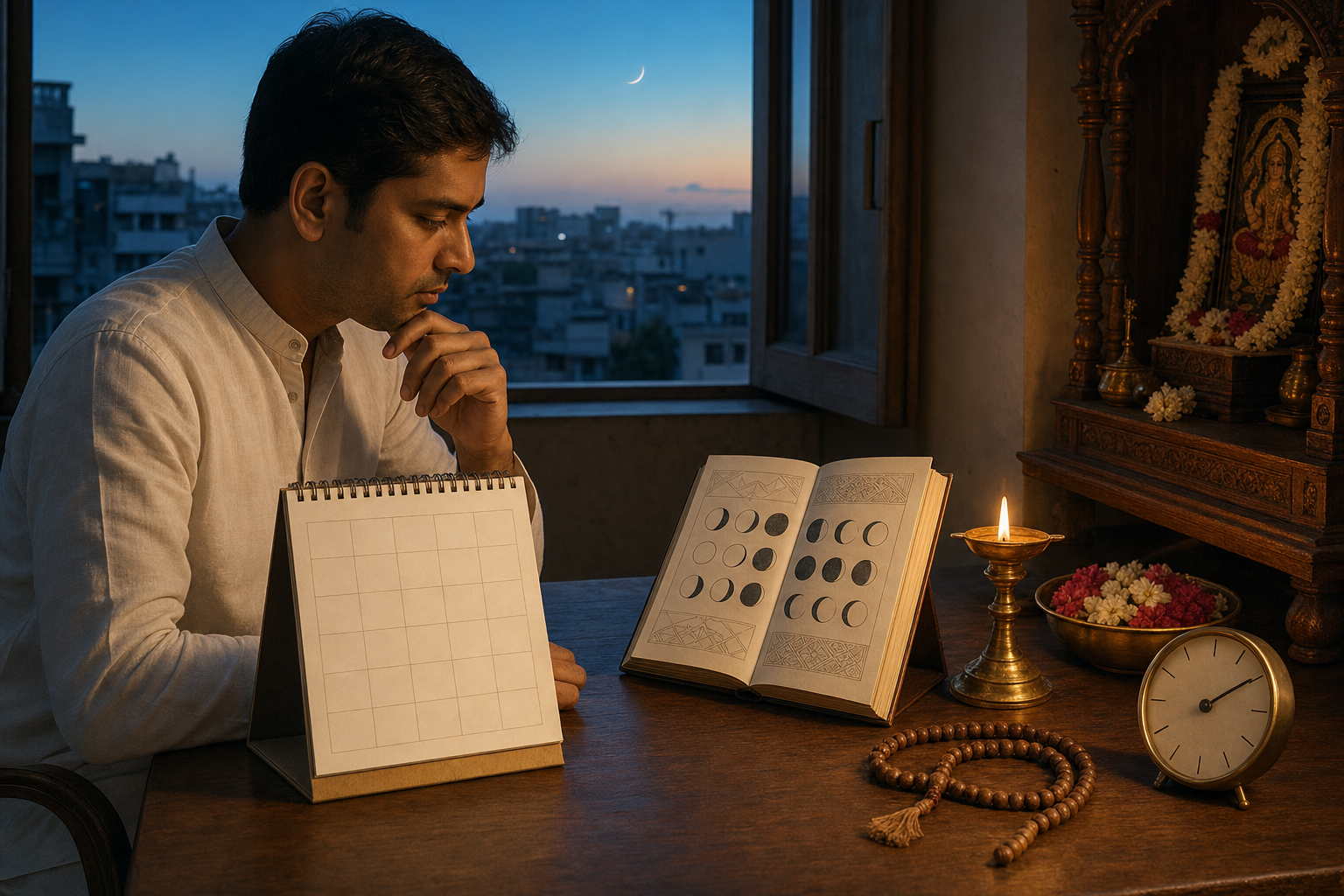
A year-cycle vrata is not simply a festival prolonged for twelve months. It is a rule of recurrence. That recurrence may follow lunar months, solar ingresses, or another cycle established by your sampradaya. The correct clock comes from the vrata you are observing, not from whichever date is easiest to remember.
| Framework | Master clock | What you must settle before beginning |
|---|---|---|
| Dwadash Maas Raksha Vrata | Twelve lunar months, commonly begun on Kartik Purnima | Which monthly tithi will renew the vow, how Adhika Masa will be handled, and which Ishta Devata and lineage practice will remain central |
| Rashi Vrata | Surya’s ingress through the twelve sidereal rashis | Which Sankranti begins the cycle, which panchanga determines the punya-kala, and whether worship follows the ingress or the next sunrise under local custom |
| Seasonal intensifier | A short sacred interval within the year | Whether it supplements the year vow without replacing its normal daily and monthly rhythm |
The distinction matters. Bhishma Panchaka runs from Prabodhini Ekadashi through Kartik Purnima; it is a concentrated five-day observance, not another name for a twelve-month vow. Bheema Vrata in Magha, Bhimseni or Nirjala Ekadashi in Jyeshtha, and Bheemana Amavasya in Ashadha are also distinct observances. Similar names do not make their dates or disciplines interchangeable.
Use your phone’s civil calendar as an alert system, not as the authority that defines the observance. A tithi can begin or end during a civil day, while Sankranti is tied to the moment of solar ingress. Amanta and Purnimanta month reckoning, as well as Smarta and Vaishnava Ekadashi conventions, can produce different-looking entries. Pick one vetted panchanga consistent with your family, temple, or sampradaya and follow it throughout the cycle.
Before making the vow, write down four calendar decisions:
- The master cycle: twelve lunar months or twelve Sankrantis.
- The exact opening anchor: for example, Kartik Purnima or a chosen Sankranti.
- The panchanga and sampradaya rule that will settle overlapping dates and worship times.
- The rule for Adhika Masa and the tithi or Sankranti on which udhyapana will be performed.
If you cannot fill in all four lines, do not compensate by adding more austerity. Resolve the calendar first with a knowledgeable family elder, acharya, or local temple.
Write a sankalpa that survives an ordinary Tuesday
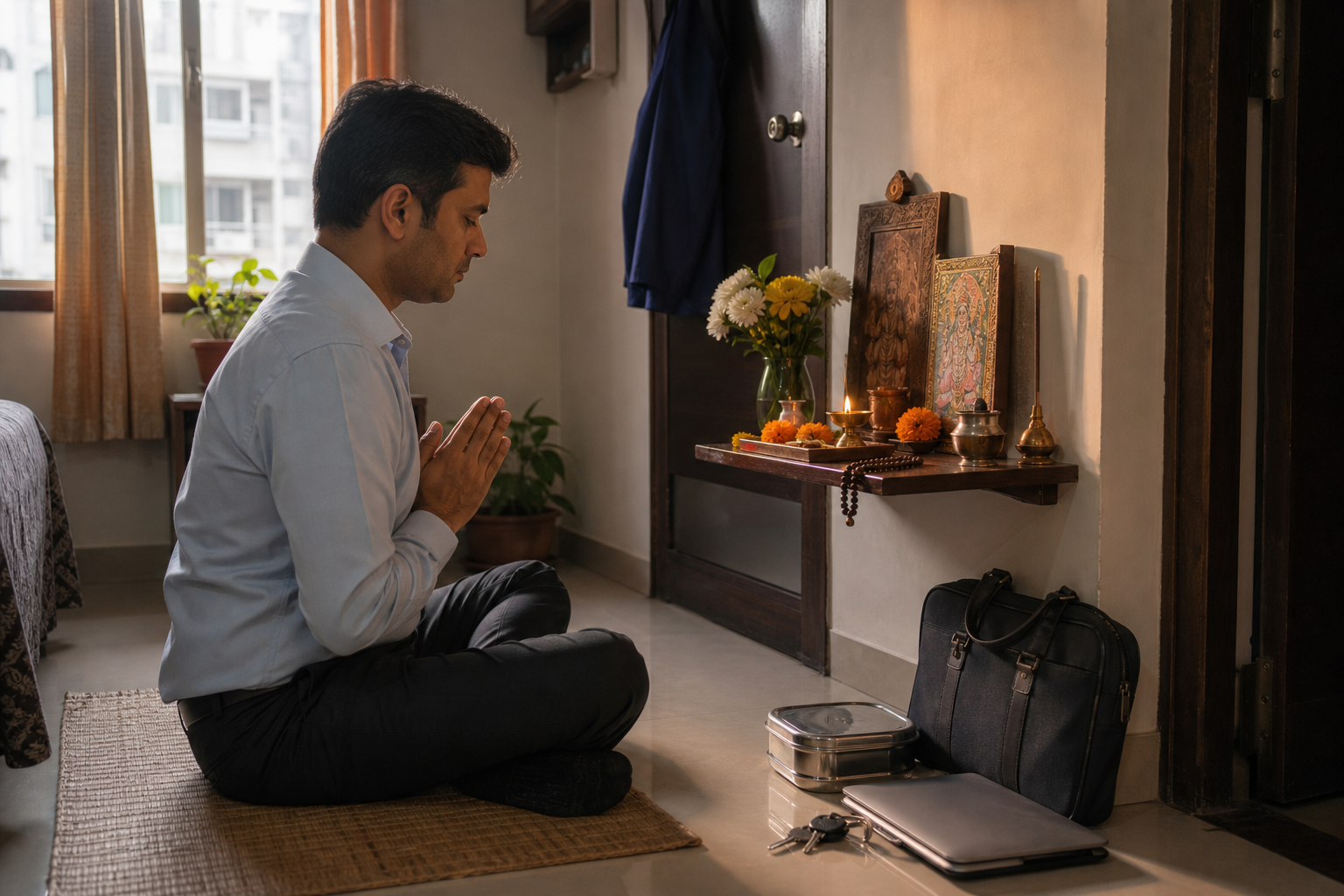
An auspicious opening can provide momentum. Kartik Purnima, for example, arrives amid lamps, sacred bathing, charity, tulasi worship, and active temple life. But the vow will be lived mostly on ordinary days. Its daily form must therefore fit your real duties, health, and household responsibilities.
The traditional grammar is clear in vrata literature consolidated by Hemadri’s Chaturvarga Chintamani: sankalpa, appropriately calibrated upavasa, dana, and udhyapana belong to one continuous undertaking. The spoken sankalpa may be concise, while a private written plan preserves the practical details that are easy to forget after the opening day.
A plain-language sankalpa can name the starting anchor, the twelve-month or twelve-ingress duration, your Ishta Devata, and the purpose of protection, clarity, ethical renewal, or the welfare of beings. Do not promise a guaranteed external result. Promise the worship, restraint, remembrance, and service that are actually yours to perform.
Build the vow at three levels
- The daily floor: a short puja or respectful mental offering, one selected mantra or lineage stotra, and one ethical niyama. Five to fifteen minutes of steady japa is more useful than a heroic count you cannot sustain.
- The monthly observance: fuller worship on the chosen tithi or Sankranti, a conduct review, dana or seva, and confirmation of the next calendar date.
- The annual completion: udhyapana with thanksgiving, offerings, charity, dedication of merit, and a deliberate decision about what practice continues.
Keep one devotional center unless your parampara directs otherwise. A devotee may honor Vishnu on Ekadashi, Shiva on Pradosha, Surya at sunrise, or Devi through an authorized hymn, but a year vow becomes difficult to hold if every available observance is treated as equally compulsory. Choose one backbone. Let other holy days support it.
Your niyama should be observable. Restraining harsh speech, maintaining truthful dealing, eating a suitable sattvic diet, or completing one act of seva each week can be reviewed honestly. A vague promise to become more spiritual cannot.
Unless a guru has prescribed a count, sincerity does not require you to invent one. Record the practice you can keep on a crowded day, not the elaborate version you imagine performing when life is quiet.
Make every monthly observance a point of renewal
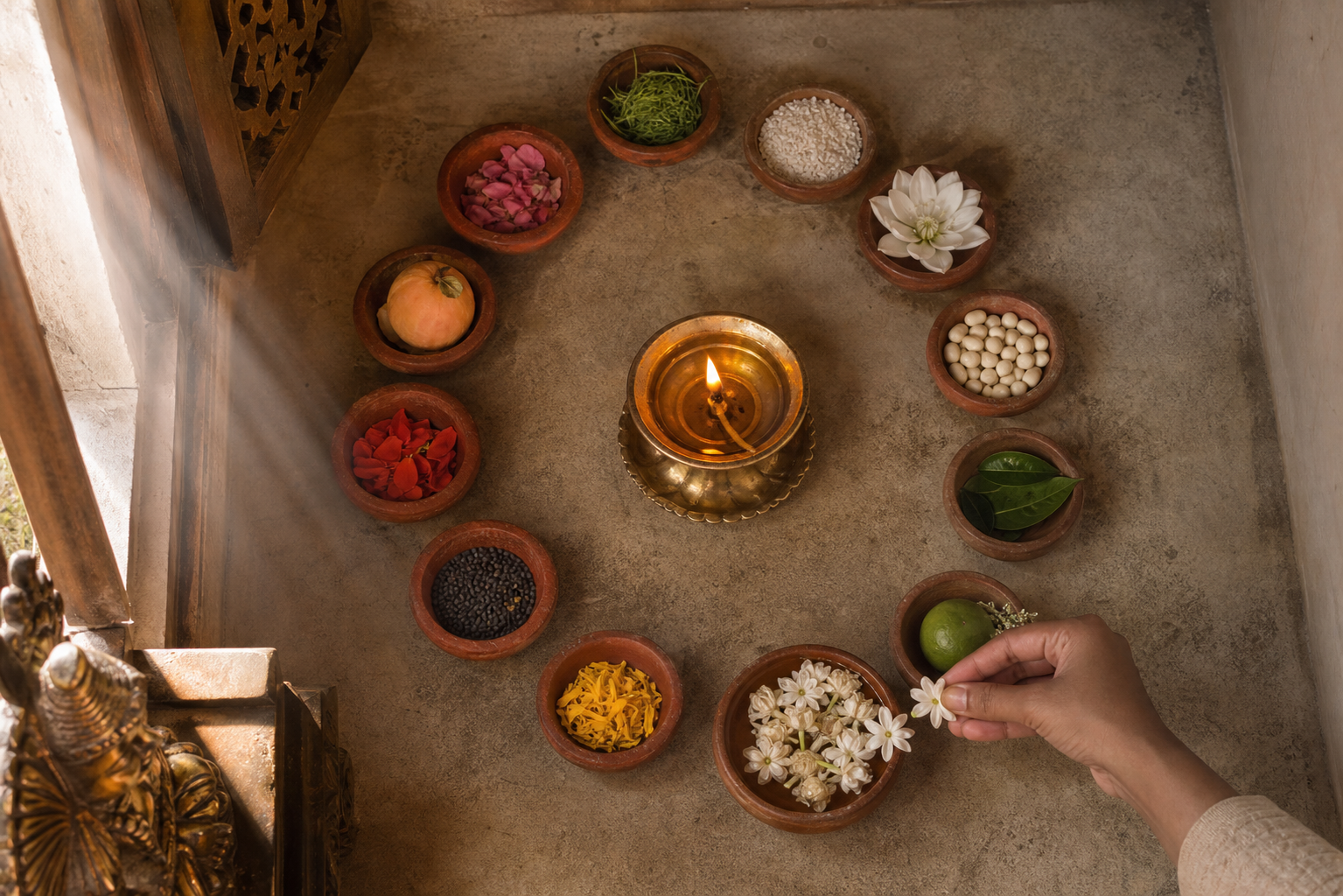
The monthly observance prevents the year from becoming an unexamined streak. Treat it as a renewal point, not merely a box to mark. Worship and ethical review belong together because the purpose of a vrata is not only continuity of ritual but refinement of conduct.
- Verify the next tithi or Sankranti in your chosen panchanga before finishing the present observance.
- Perform the fuller form of your puja, japa, stotra, or svadhyaya according to capacity.
- Review the niyama you chose. Name one instance in which it held and one in which it failed.
- Repair something concrete where possible: correct untruthful speech, apologize for avoidable harm, restore a neglected duty, or fulfill delayed dana.
- Complete the month’s seva or charity and record what was actually done.
- Write the next sacred date in both the panchanga and your civil reminder system.
A simple ledger needs only six fields: sacred date, civil date, practice completed, niyama reviewed, dana or seva completed, and the next corrective action. Do not use it to manufacture guilt. Use it to prevent memory from turning a broken pattern into an imagined success.
If you follow Rashi Vrata, the rashis can provide optional monthly questions for reflection: right beginnings in Mesha, stewardship in Vrishabha, learning in Mithuna, care in Karka, responsible courage in Simha, precision in Kanya, fairness in Tula, transformation in Vrischika, dharma-study in Dhanu, perseverance in Makara, community service in Kumbha, and compassionate release in Meena. These themes are aids to contemplation, not restrictions that override your lineage procedure.
For a lunar protection vow, Purnima or Amavasya may serve as the monthly checkpoint, while Ekadashi, Pradosha, or Sankatahara Chaturthi can supply a weekly or fortnightly rhythm appropriate to the devotee’s tradition. Select the cadence before beginning. Adding every possible observance halfway through the year usually makes the original vow harder to see.
Protection, or raksha, should not be treated as a magical guarantee that misfortune cannot occur. Truthful speech reduces avoidable conflict, restraint interrupts harmful impulses, dana strengthens social bonds, and worship steadies perception. Grace remains central, but the vow also creates practical protection by aligning repeated choices with dharma.
A cross-Dharmic household can share this ethic without flattening distinct paths. Buddhist Uposatha renews mindfulness and virtue; Jain pratikraman supports repentance and ethical clarity; Sikh nitnem, Simran, and seva sustain remembrance and truthful living. Sikh tradition does not make fasting the center of this discipline. A family can therefore share a monthly service project or period of ethical reflection while each member preserves the forms proper to their tradition.
Decide in advance what happens when life interrupts
A vow without an exception rule will be rewritten during the first disruption. Travel, illness, a missed day, and an intercalary month are foreseeable. Planning for them is not a weakening of sankalpa; it protects the vow from impulsive decisions.
When you travel
Carry a small kit if useful: tilaka, a pocket stotra, and whatever simple item can be used safely. Keep a reduced routine of remembrance, japa, and your conduct niyama. If fire, incense, bathing arrangements, or privacy are impractical, do not abandon the entire vrata because its full home form is unavailable. Resume that form when you return.
When health or capacity changes
Upavasa is disciplined nearness to the sacred, not a contest in food deprivation. Use a food discipline appropriate to your health and vocation, whether that means a complete fast under suitable guidance, fruit or liquids, one light sattvic meal, or restraint from a particular indulgence. Ahimsa applies to your own body as well.
Pregnant or nursing people, elders, and anyone with a medical vulnerability should seek informed healthcare advice before undertaking significant fasting or consuming ritual preparations. A health condition is not repaired by devotional resolve. Where food austerity is unsuitable, maintain the vrata through puja, japa, svadhyaya, dana, seva, and an appropriate sattvic diet.
When you miss an observance
Acknowledge the lapse plainly, perform the daily minimum at the next proper opportunity, and continue. A proportionate prayaschitta may take the form of extra japa, feeding beings, additional dana, or another modest act of service. Do not answer one missed observance with an unsafe fast or a punishment that makes the rest of the year less sustainable.
Rigorous corrective disciplines are not generic makeup work. Brahma Kurcha Vrata combines krcchra-type austerity, consecrated Panchagavya, mantra, and prayaschitta. Do not improvise its fasting sequence or ingest Panchagavya merely because you missed a day in another vow. Such practices call for competent ritual guidance, careful sourcing, and health assessment; symbolic offering, japa, dana, and svadhyaya preserve the ethical purpose when ingestion is contraindicated.
When Adhika Masa enters the lunar year
Some traditions include the intercalary month as a thirteenth segment; others fold it into the continuing twelve-month observance. Both approaches occur in practice. The right answer is the one established by your sampradaya and trusted panchanga, not a rule invented after the extra month appears. Record the decision before the opening sankalpa if the year’s calendar is already known.
If two calendars disagree, do not alternate between them according to convenience. Ask which month system, location, sunrise rule, and sampradaya convention each uses. Then remain with the authority appropriate to your vow unless your guru or temple directs a correction.
Close the cycle before deciding whether to renew it
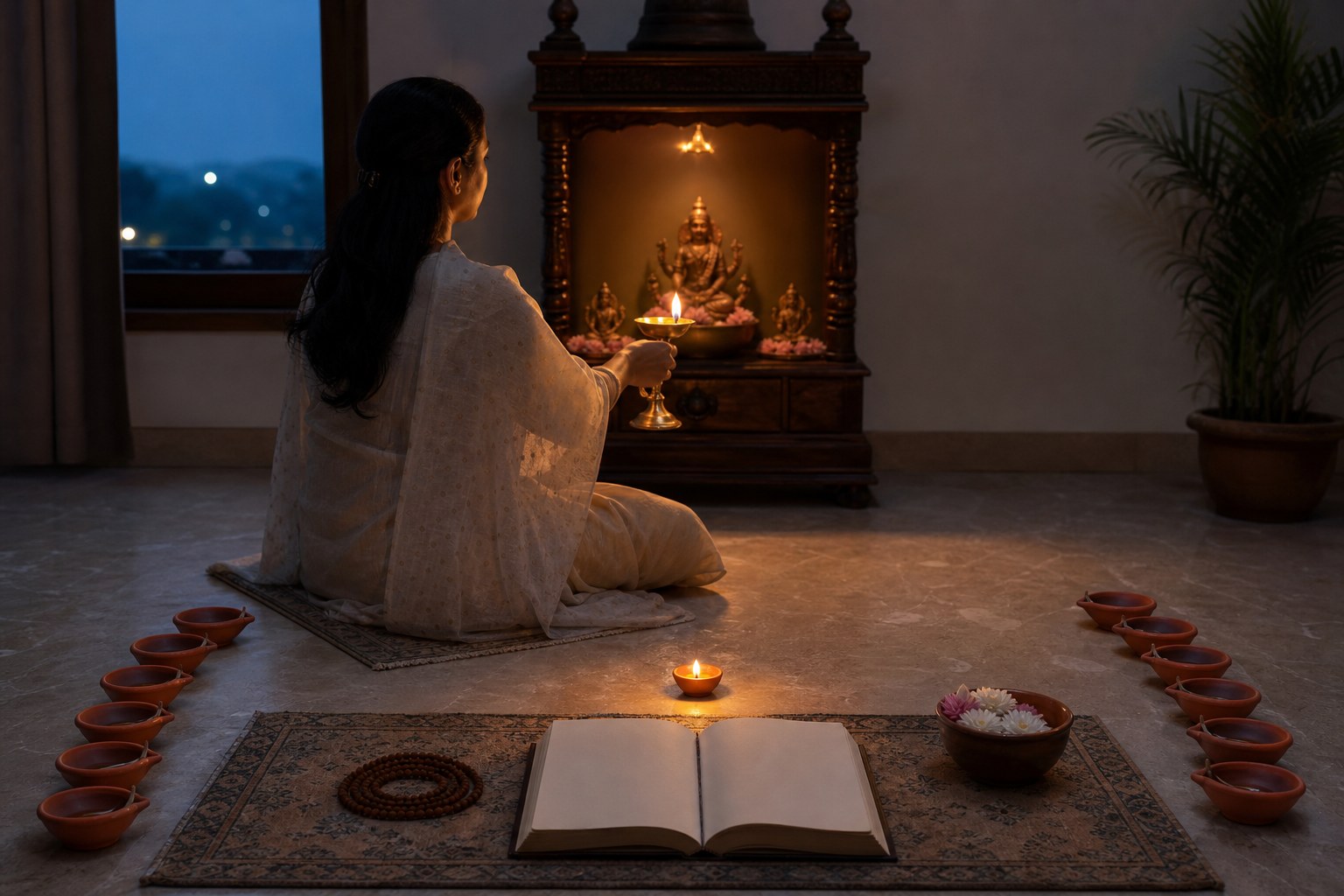
Udhyapana is not an optional celebration added after the real work. It completes the vow’s movement from private resolve to gratitude and shared welfare. Decide its scale according to means, but include it in the plan from the beginning.
- Confirm the final tithi or Sankranti and its proper observance window with the same calendar authority used throughout the year.
- Perform the concluding puja and recitation. Add homa or collective recitation only where it belongs to your tradition and capacity.
- Offer naivedya and deepa with thanksgiving rather than treating completion as a personal achievement.
- Complete dana, annadana, compassionate gau-seva, temple support, or another suitable act of service according to your means.
- Dedicate the merit to family welfare, the wider community, and all beings.
- Review the ledger and name the practices that produced a visible change in conduct.
If a family guru or elder cannot be present, participation in an appropriate local temple service can preserve the communal dimension. The scale of the closing is less important than completing the promised form honestly and returning part of the vow’s fruit through service.
Judge the year by evidence you can inspect. Did harsh speech become less frequent? Was dana completed regularly rather than postponed? Did remembrance survive travel and busy periods? Was a recurring wrong acknowledged and repaired? Ritual completion matters, but renewal becomes credible when speech, attention, consumption, and responsibility have also changed.
Key takeaways
- Choose one master clock: twelve lunar months or twelve solar ingresses.
- Use one trusted panchanga consistently; calendar apps are reminders, not authorities.
- Make the daily floor small enough for an ordinary workday and reserve the fuller practice for the monthly anchor.
- Write travel, health, missed-observance, and Adhika Masa rules before they are needed.
- Complete udhyapana before renewing, expanding, or replacing the vow.
Your next step is concrete: open the panchanga you trust and write one sentence naming your master clock, opening anchor, monthly checkpoint, and closing day. Take any unresolved calendar or health question to the appropriate acharya, temple, or healthcare professional before the sankalpa.
Then begin with a daily practice modest enough to keep and meaningful enough to shape the next decision you make. A year-cycle vrata renews you through return: the same sacred center, approached again with greater honesty.
References
- DharmaRenaissance Blog – Unshakeable Protection: Dwadash Maas Raksha Vrata on Kartik Purnima – Meaning, Method, Results
- DharmaRenaissance Blog – Bheema Vrata and Bhishma Panchaka: Definitive, Sacred Guide to Dates, Rituals, Meaning
- DharmaRenaissance Blog – Brahma Kurcha Vrata Unveiled: Rigorous Prayaschitta with Panchagavya for Inner Renewal
- DharmaRenaissance Blog – Rashi Vrata Unveiled: A Solar-Calendar Vow Across 12 Rashis to Cultivate Discipline and Dharma