
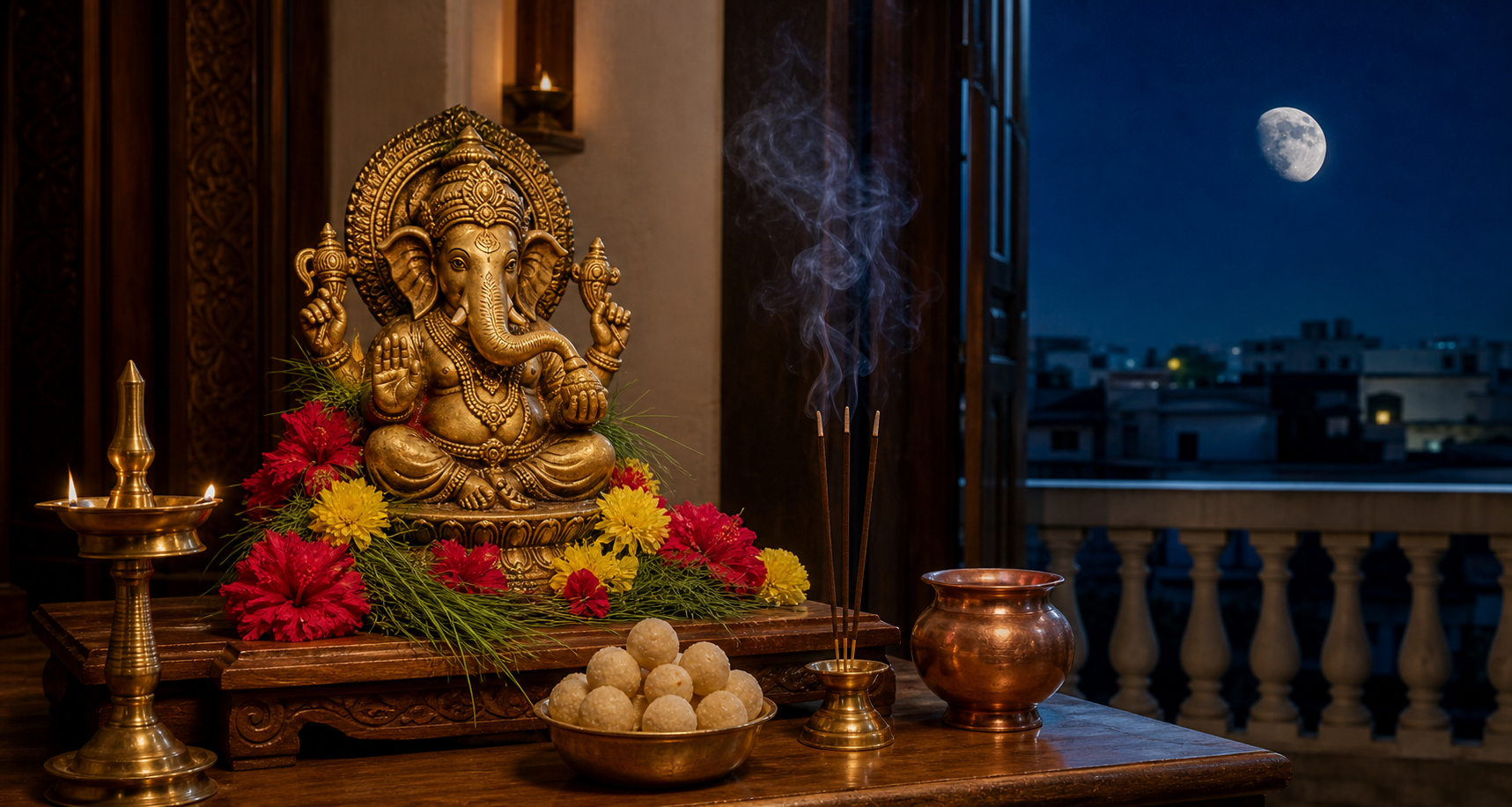
If you are planning to observe Vikata Sankashti Chaturthi in April 2026, settle one detail before arranging the puja: the fast is concluded according to moonrise at your location, not by a single time copied from an India-wide calendar.
The observance falls on Sunday, 5 April 2026. The widely published moonrise reference is 9:50 PM IST, but your local Chandrodaya may differ. Once you have confirmed that time, the rest of the vrata can remain simple: choose a fasting discipline you can sustain safely, worship Shri Ganesha without rushing, offer arghya to Chandra at moonrise, and break the fast with prasad.
Key details for 5 April 2026
- Date: Sunday, 5 April 2026.
- Lunar observance: Krishna Paksha Chaturthi in the Chaitra month.
- Monthly form: Vikata Sankashti Chaturthi.
- Moonrise reference: 9:50 PM IST for India; confirm your city-specific Chandrodaya.
- Parana: After local moonrise worship, Chandra darshan or its prescribed substitute when the sky is obscured, and the concluding Ganesha aarti.
| What to confirm | What to use | Why it matters |
|---|---|---|
| Observance date | Sunday, 5 April 2026 | This is the civil date associated with the Chaitra Krishna Chaturthi observance. |
| Local moonrise | Your city or locality’s Panchang | Moonrise changes with location and local horizon conditions. |
| Fast-breaking time | After local Chandrodaya and concluding worship | The 9:50 PM IST figure is a general reference, not a universal parana time. |
| Regional procedure | Your family, temple, or sampradaya tradition | Offerings, recitations, and fasting rules vary without changing the central vrata. |
A tithi is determined by the changing angular relationship between the Sun and Moon, not by the midnight-to-midnight structure of a civil calendar. Chaturthi can therefore begin or end partway through a conventional day. This is also why the relevant moonrise must be calculated for the place where you are actually observing the vrata.
For this observance, 9:50 PM IST is the India-wide moonrise reference. Latitude, longitude, elevation, atmospheric conditions, and the visible horizon can shift Chandrodaya from place to place. If your trusted local Panchang gives a different time, follow the local calculation. Devotees outside India should not merely convert 9:50 PM IST into another time zone; they should consult a Panchang or astronomical almanac calculated for their own location.
Prepare the vrata before Sunday evening
The most common practical difficulty is not the puja itself. It is reaching late evening without having checked the moonrise, selected a realistic fasting rule, or assembled the offerings. Make those decisions in advance so the final hour is devotional rather than hurried.
Choose a fasting discipline you can complete safely
Sankashti fasting is practiced at different levels of austerity. Your family tradition may prescribe one of the following:
- Phalahara: fruits and other simple foods accepted by your tradition.
- Restricted upavasa: a limited sattvic diet, commonly excluding grains according to household custom.
- Water-only fasting: a more demanding observance undertaken by some devotees when their health and circumstances permit.
Do not choose the harshest option merely because it appears more devout. The purpose is steadiness, restraint, and worship. A fast that causes avoidable harm or prevents you from completing the puja attentively defeats that purpose.
If you are pregnant, elderly, managing a health condition, taking medication affected by food intake, or doing strenuous physical work, use a moderated practice appropriate to your needs. Follow relevant medical advice as well as guidance from a trusted family elder or spiritual mentor. You can maintain the vrata’s intention through simpler food, mantra, puja, and seva without treating physical distress as a spiritual achievement.
Assemble a simple puja tray
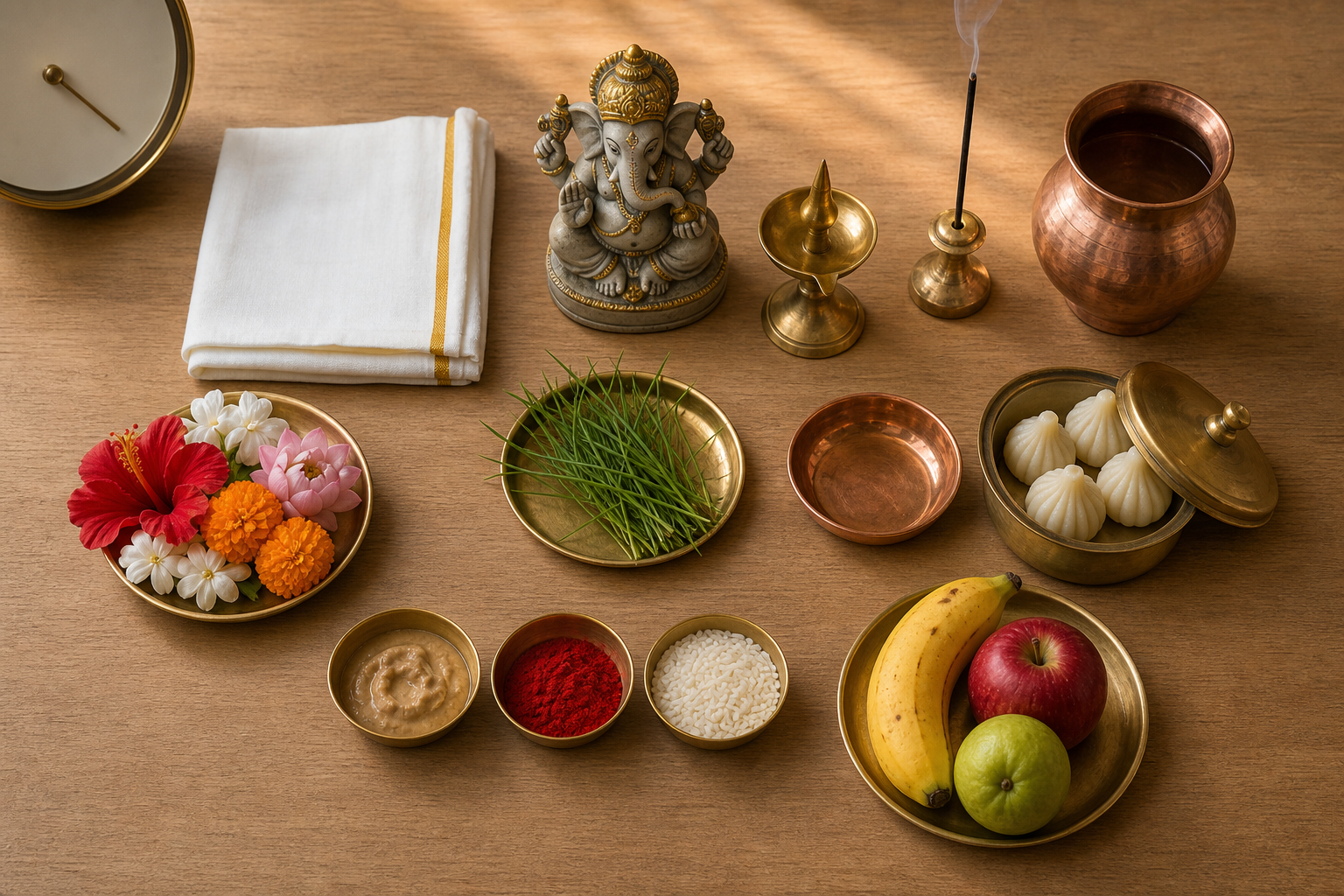
You do not need an elaborate arrangement. Prepare what your household normally offers and avoid last-minute substitutions that distract you from the worship. A practical set includes:
- A murti or image of Shri Ganesha.
- A clean cloth and an east- or north-facing place for the altar.
- Water for the puja and a separate vessel for Chandra arghya.
- Akshata, tilak, fresh flowers, incense, and a lamp.
- Twenty-one blades of durva grass, where this offering is part of your practice.
- Seasonal fruit and a simple naivedya such as modak, laddu, or a jaggery-based sweet.
- The text of the Sankashti vrata-katha and any stotra you intend to recite.
Also write down the local moonrise time and keep it beside the altar. This small step prevents repeated phone checking during japa or katha.
A practical home puja sequence
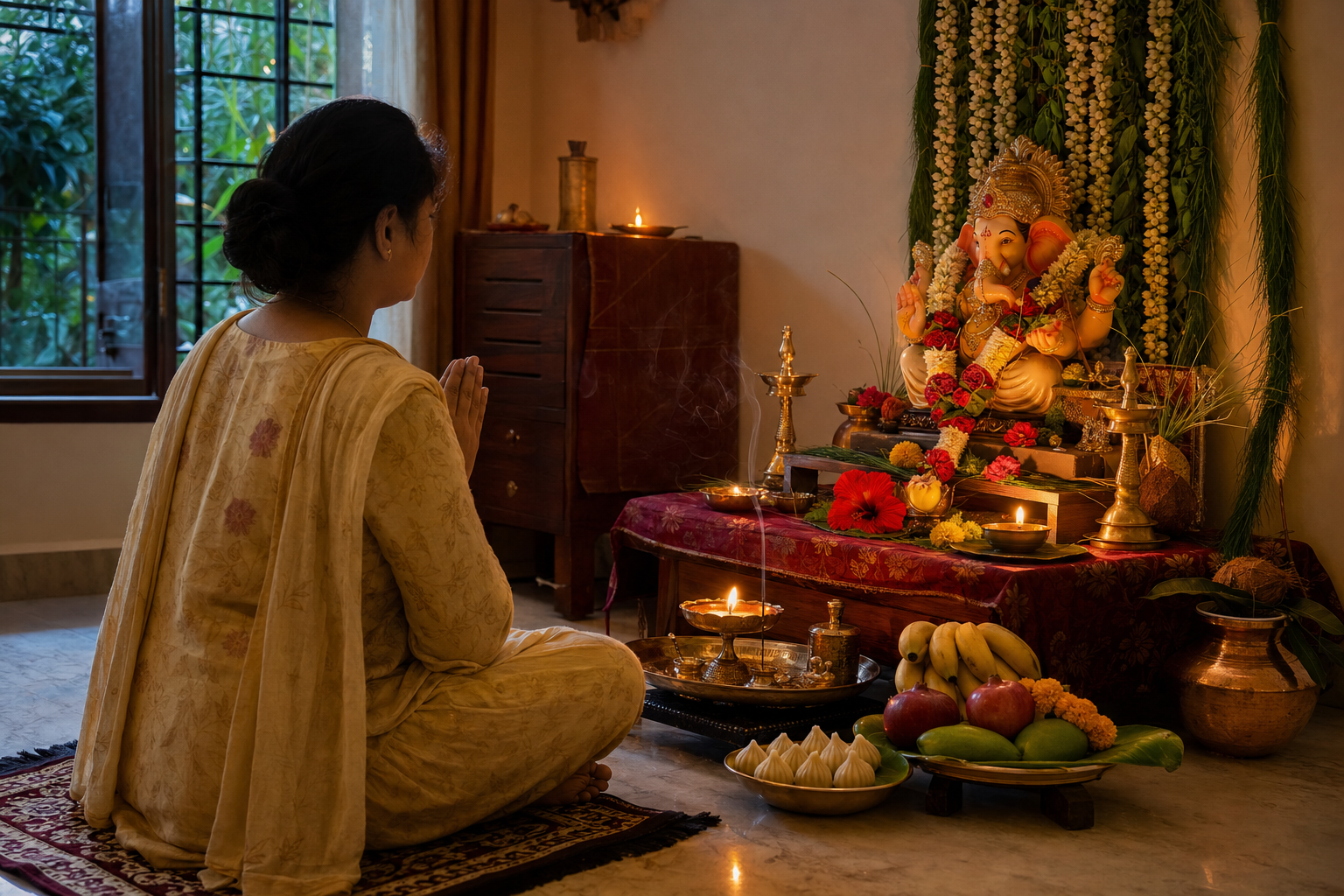
Family and regional procedures differ, so retain any instructions you have received from your elders, temple, or sampradaya. If you need a clear household sequence, use the following structure.
- Prepare the space. Clean the worship area, place Shri Ganesha on the altar, and arrange the offerings before you begin.
- Make the sankalpa. State that you are observing Chaitra Krishna Paksha Sankashti Chaturthi with devotion to Shri Ganesha. Name the obstacle or inner tendency you are placing before him, and ask for clarity and right action rather than demanding a particular outcome.
- Begin the worship. Offer water and tilak, then light the lamp and incense. Present the flowers and durva with attention.
- Offer naivedya. Place the fruit, modak, laddu, or other accepted sweet before Ganesha. It remains an offering until the puja is concluded and should be received later as prasad.
- Recite a Ganesha mantra. A simple choice is Om Gam Ganapataye Namaha. Repeat it steadily according to your capacity rather than rushing to reach an arbitrary count.
- Recite or hear the longer prayers you know. The Ganesha Atharvashirsha and Sankashta Nashana Ganesha Stotram are traditional choices. If you cannot complete both, attentive recitation of one is more meaningful than hurried recitation of many.
- Read or hear the vrata-katha. Treat it as ethical instruction, not as a box to check. Notice where impatience, pride, fear, or confused action resembles the obstacle you named in your sankalpa.
- Wait for local moonrise. Continue quiet japa, prayer, or reflection. Keep the concluding materials ready so that you do not begin searching for them after Chandrodaya.
If Sanskrit pronunciation is difficult, do not let self-consciousness stop the observance. Recite the mantra you know carefully, listen to a trusted family or temple rendition where that is your custom, and pray in the language in which your intention is clearest.
The familiar prayer Vakratunda Mahakaya Suryakoti Samaprabha; Nirvighnam Kuru Me Deva Sarva-Karyeshu Sarvada can be included as a request for obstacles to be removed from righteous undertakings. Its practical force lies in the final idea: seek freedom from obstruction in all worthy actions, then examine whether your own habits are creating the obstruction.
How to complete the vrata at moonrise
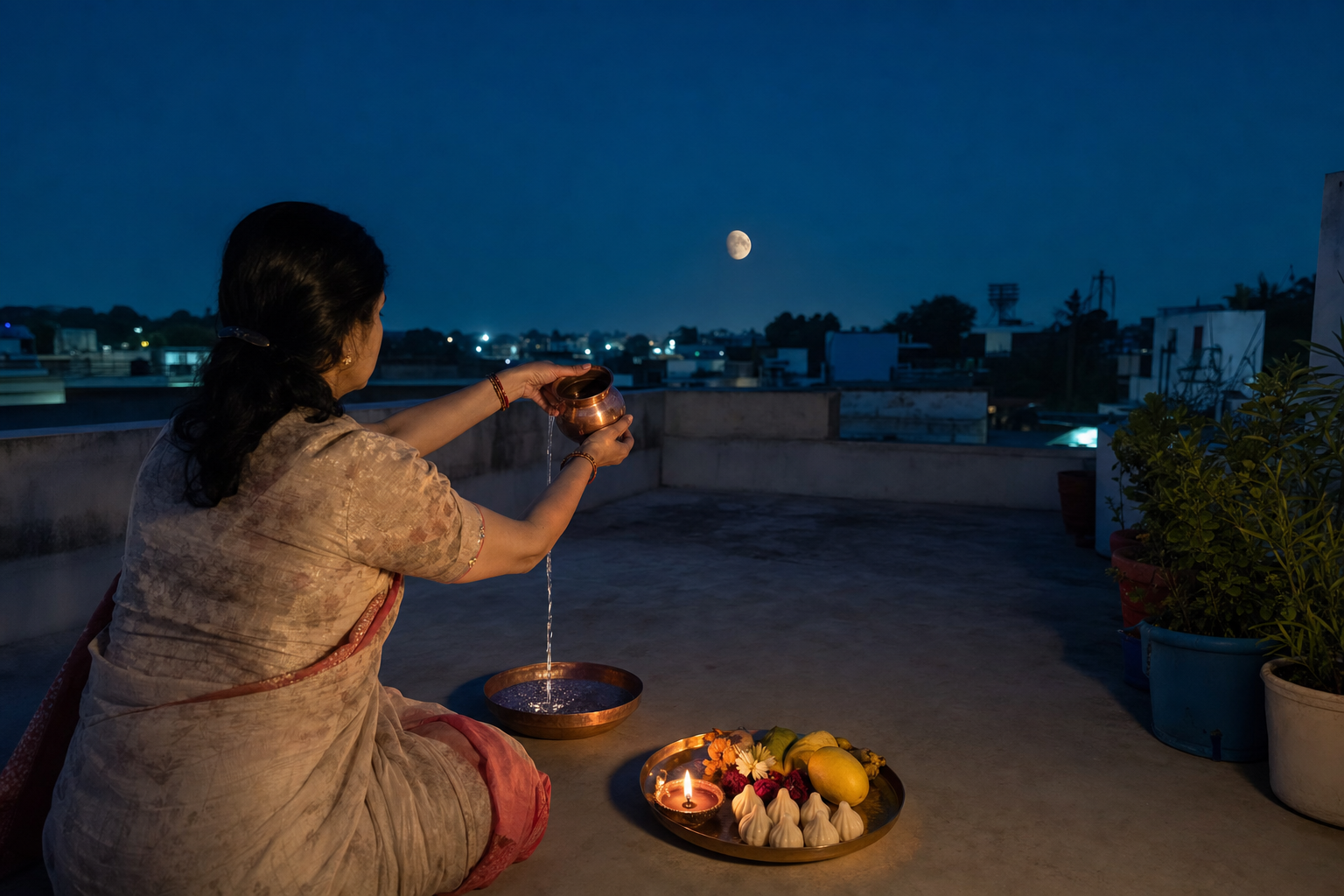
Moonrise is the operational marker for parana. Do not break the fast at an arbitrary dinner time simply because the civil day is nearly over. Use the local Chandrodaya you confirmed earlier and follow your household’s order of worship.
- At the local moonrise time, go to a place from which the moon can be seen safely.
- Take darshan of Chandra when visible.
- Offer arghya with water and akshata according to your tradition.
- Return your attention to Shri Ganesha and perform the concluding aarti.
- Offer your final prayer, acknowledging both the obstacle and the responsibility to act with wisdom.
- Receive prasad and water, commonly beginning with a portion of the naivedya offered to Ganesha.
- Continue with the food permitted by your family practice and health needs.
If clouds or buildings hide the moon
You do not need to turn a cloudy night into a test of anxiety. Once the published local moonrise time has arrived, perform the Chandra worship mentally if physical sighting is impossible, offer arghya as your circumstances allow, complete Ganesha aarti, and conclude the fast. The relevant distinction is between waiting for the calculated local Chandrodaya and waiting indefinitely for clouds to clear.
If nearby buildings block your horizon, do not climb onto an unsafe roof or travel impulsively at night for a sightline. Use a safe viewing place if one is readily available. Otherwise, rely on the trusted local time and complete the worship with sincere mental darshan.
Let the Vikata observance change one real action
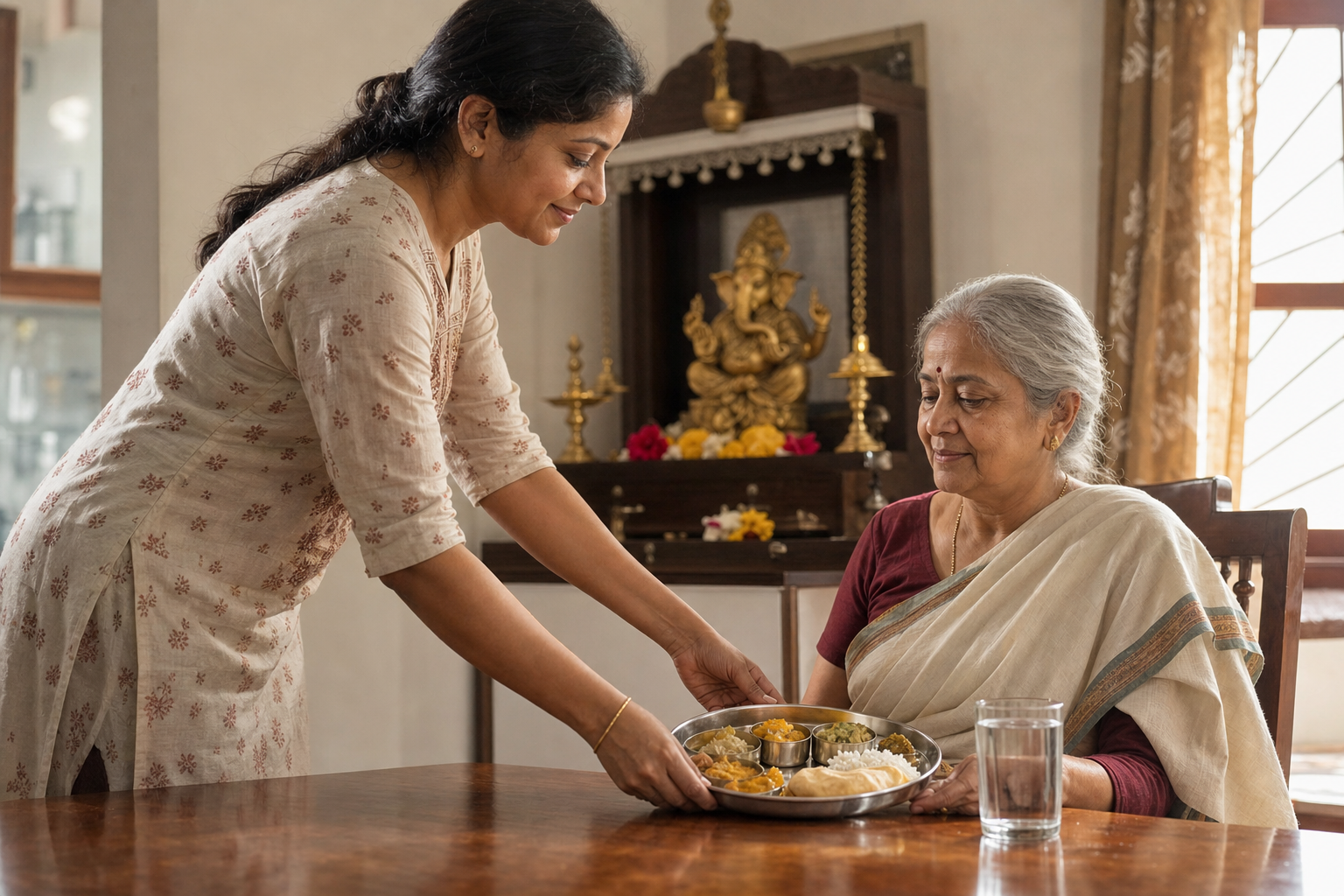
Vikata names a formidable, obstacle-clearing dimension of Ganesha and is counted among the eight celebrated manifestations associated with the Mudgala Purana. For this vrata, the name directs your attention toward difficulties that look tangled, oversized, or resistant to ordinary effort.
That does not make the observance a promise that every external problem will disappear overnight. It asks for something more demanding: enough clarity to distinguish the obstacle you cannot immediately control from the confusion, fear, pride, or avoidance you can address. Use the vrata to identify one concrete change rather than ending with a broad wish for a trouble-free life.
- Name the obstacle precisely. Replace “everything is blocked” with the actual decision, duty, conflict, or habit that needs attention.
- Identify your contribution. Ask whether delay, poor communication, anger, or lack of preparation is making the difficulty harder.
- Choose one dharmic next step. Decide what you will do after the vrata: make the call, complete the application, apologise, study the neglected material, or ask a qualified person for help.
- Remove an obstacle for someone else. Share food, help a neighbour, support education, or perform another quiet act of service within your means.
- Protect the insight. Write the action beside your sankalpa and begin it promptly rather than waiting for motivation to return.
This is where upavasa becomes more than food restriction. Restraint creates a pause; mantra steadies attention; katha provides an ethical mirror; seva carries the worship into the world. These qualities also speak to the wider Dharmic commitments to self-scrutiny, non-harm, remembrance, compassionate conduct, and responsibility, while the vrata itself remains a distinct act of Ganesha bhakti.
Before 5 April, confirm your local Chandrodaya, decide your fasting rule, and place the puja materials together. Then choose the one obstacle you will meet with clearer conduct after parana. That decision is the practical beginning of the Vikata vrata, not merely its conclusion.