
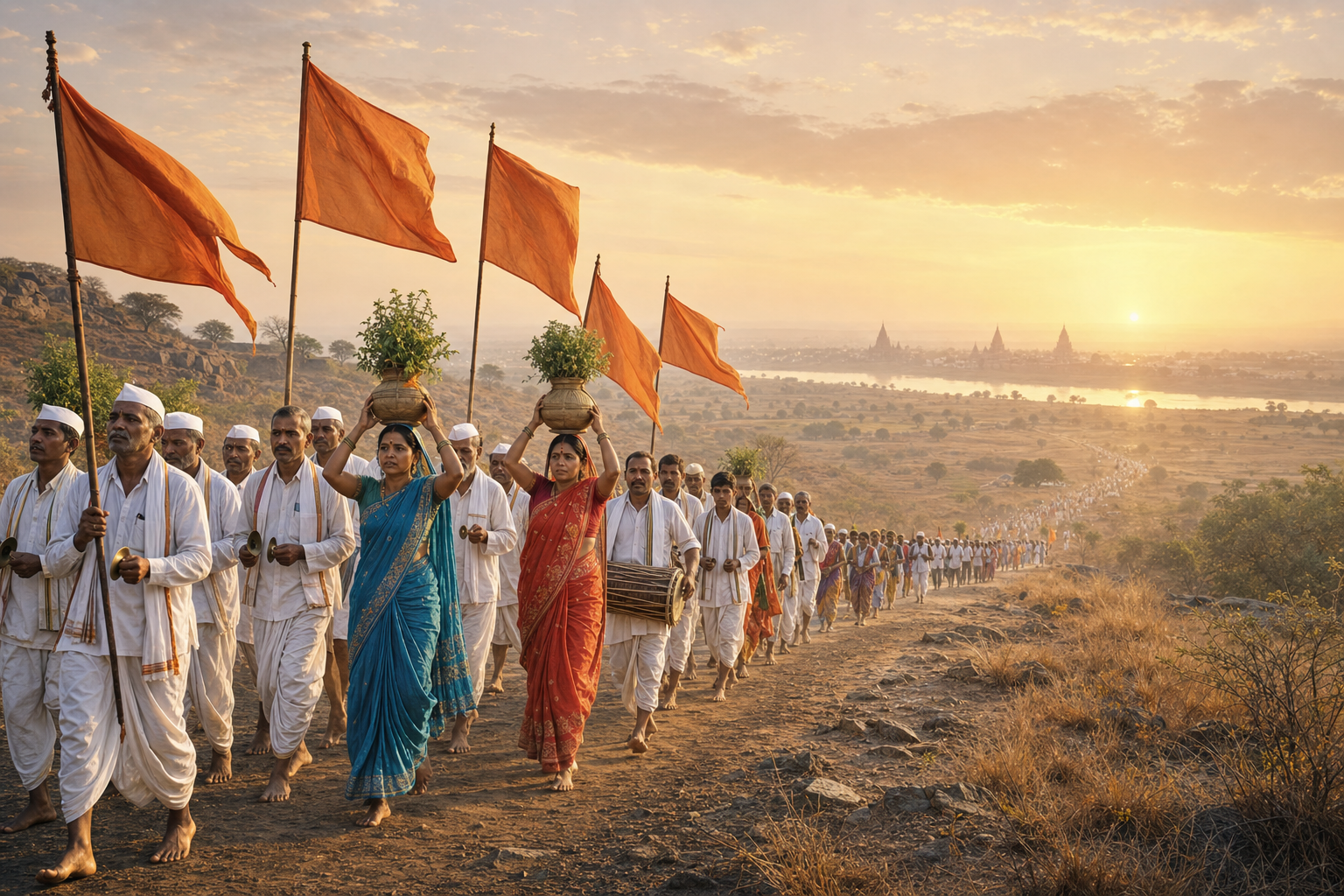
Varkari devotion is best understood as an integrated path rather than a collection of festivals, pilgrimages and saintly biographies. Vitthal provides its divine centre, Pandharpur its sacred destination, the Wari its collective discipline, abhanga and kirtan its public voice, and saints such as Dnyaneshwar its philosophical depth.
Taken together, the two supplied DharmaRenaissance articles reveal how these elements reinforce one another. They present a tradition in which devotion is expressed through movement, song, temple service, accessible teaching and an ethical effort to loosen the hold of ego and social privilege.
Vitthal is both the destination and the companion
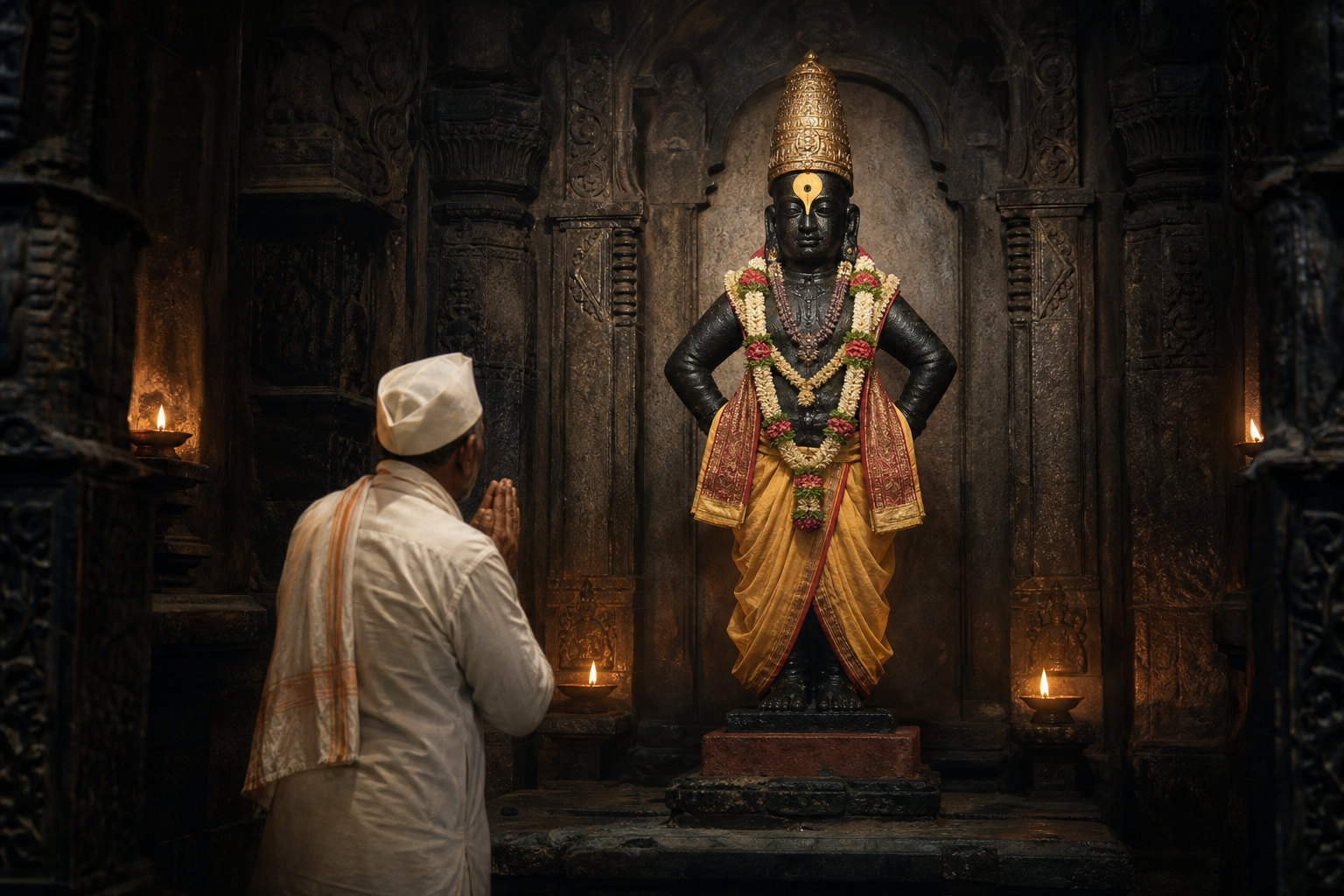
The DharmaRenaissance article on Vitthal Navratri describes Vitthal, also called Vithoba, Panduranga or Vitthala, primarily as a form of Vishnu and Krishna. His familiar image stands with hands at the waist, often upon a brick, while Rukmini is affectionately worshipped as Rakhumai. The report emphasizes that devotees approach this form not only as a remote cosmic lord but also as a patient, intimate presence who receives ordinary people, humble offerings and songs in familiar language.
That combination of majesty and accessibility helps explain Pandharpur’s place in Varkari consciousness. The Vitthal Navratri article reports that the sacred town is traditionally praised as Bhu-Vaikuntha, an earthly abode of Vishnu. The point is not simply that a particular temple is important. In the devotional imagination presented by the source, generations of pilgrims, saints, workers, farmers and families have made the town a meeting place between sacred geography and shared memory.
Rakhumai’s presence is equally significant. The source associates her with grace, patience, nourishment and auspicious household life. Vitthal bhakti therefore need not require withdrawal from ordinary responsibilities. It can locate service, steadiness and remembrance within the household as readily as on the pilgrimage road.
Road, song and temple ritual form one devotional discipline
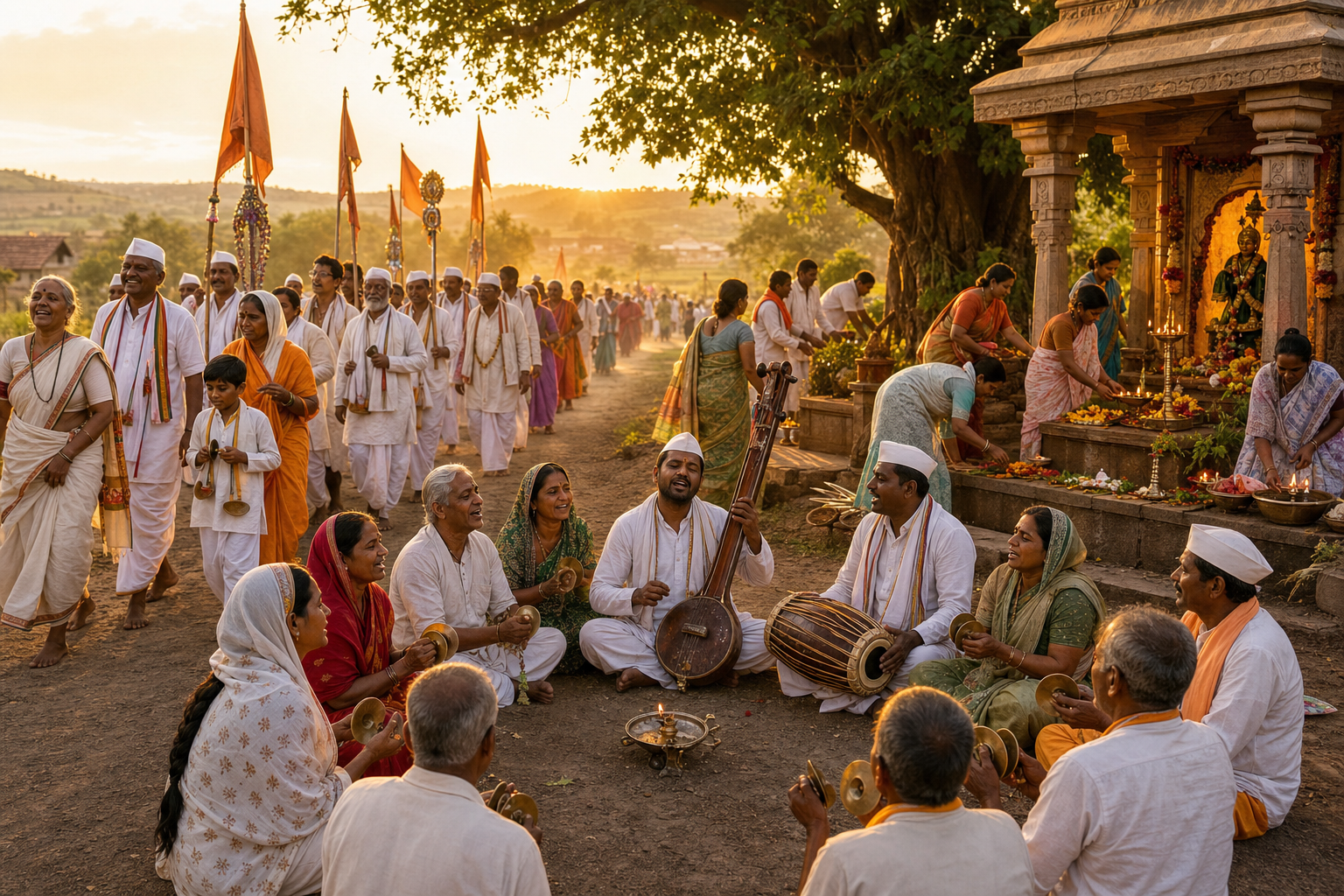
Both supplied articles connect Varkari identity with pilgrimage, communal singing, remembrance of the divine name, humility and service. The DharmaRenaissance article on Sant Dnyaneshwar Jayanti highlights the annual carrying of Dnyaneshwar’s paduka in a palkhi from Alandi toward Pandharpur. It interprets the Wari as a theology enacted through movement: devotees walk, sing, serve and submit individual preference to a shared discipline.
The Vitthal Navratri report supplies the corresponding temple perspective. It describes changing alankaras for Vitthal and Rukmini, together with a daily pattern in which the deity is awakened, bathed, dressed, offered food, praised and ceremonially put to rest. Flowers, garments, sandal paste, garlands, bells and collective singing engage attention through the senses. On this account, adornment is not decoration added to worship; it is a language of loving service.
The pilgrimage road and the temple sanctum consequently express complementary forms of bhakti. Walking cultivates endurance and participation in a community larger than oneself. Ritual service cultivates care, regularity and attentiveness. Abhanga and kirtan connect the two by carrying devotion beyond private contemplation and giving the community a vocabulary it can remember together.
The two source articles also place these practices within different points of the lunar calendar. The Vitthal Navratri report lists its 2026 observance from 24 to 29 July, moving from Ashadha Shukla Paksha Dashami to Purnima. The Dnyaneshwar Jayanti report places the saint’s 2026 remembrance on 4 September and connects it with Shravan Krishna Paksha Ashtami in the Maharashtrian Shaka-calendar tradition. These dates are reported by the respective articles rather than independently verified here; the Vitthal Navratri source also advises consulting a local temple or panchang because observances depend on tithi rather than a permanently fixed Gregorian date.
Dnyaneshwar joins philosophical inquiry to loving devotion
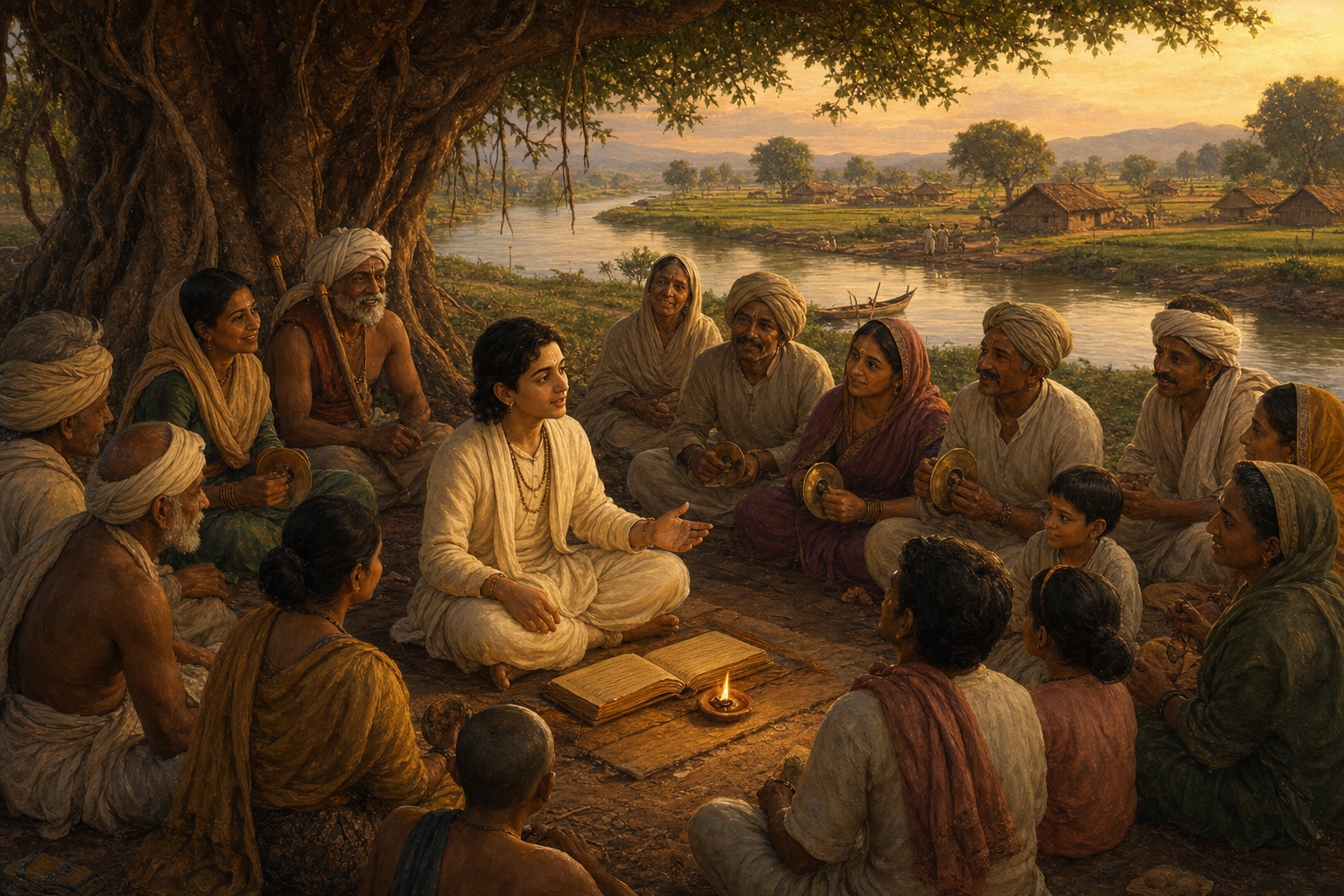
The Dnyaneshwar Jayanti article presents the 13th-century saint as a philosopher, yogi, poet and teacher central to the Varkari tradition. Its account of the Dnyaneshwari, or Bhavarth Deepika, shows why his importance extends beyond commemoration. The work is described as a Marathi commentary on the Bhagavad Gita, traditionally dated by the source to 1290, that made demanding questions of selfhood, action, knowledge, detachment, yoga and devotion available in the language of the people.
Accessibility in this setting does not mean simplification into slogans. According to the report, Dnyaneshwar used poetic analogies and familiar images while retaining the depth of the Gita’s philosophical teaching. The result is a particularly Varkari synthesis: knowledge and love illuminate each other. Philosophy guards devotion against thoughtlessness, while devotion guards philosophy against intellectual pride.
The same source presents the Amrutanubhav as a more direct investigation of non-duality, consciousness, language and realization. Read beside the public practices described in the Vitthal Navratri article, this adds an important dimension to Varkari life. Collective pilgrimage and temple worship are not substitutes for inward inquiry; they can provide a disciplined environment in which insight is tested through humility, patience and relationship.
Alandi completes this relationship between teaching, memory and movement. The Dnyaneshwar article identifies the town with the saint’s Sanjeevan Samadhi and describes its devotional atmosphere through darshan, circumambulation, Haripath recitation, abhanga and kirtan. The palkhi route then links Alandi’s remembrance of the teacher to Pandharpur’s worship of Vitthal. In symbolic terms, wisdom does not remain at a memorial: it sets out toward the deity with the community.
An inclusive ideal becomes an everyday ethical test
The Vitthal Navratri article locates Dnyaneshwar within a wider saintly memory that includes Namdev, Tukaram, Chokhamela, Janabai and Kanhopatra. It presents farmers, householders, ascetics, women saints, artisans, scholars and ordinary workers as participants in Pandharpur bhakti. The Dnyaneshwar article similarly interprets the saint’s family hardships and challenges surrounding social acceptance as part of a larger claim: spiritual capacity cannot be confined by age, inherited status or command of an elite language.
This gives Varkari inclusiveness a practical rather than merely sentimental meaning. If Vitthal accepts devotion expressed through ordinary work and vernacular song, a devotee cannot coherently treat learning, occupation or social standing as measures of another person’s spiritual worth. If walking in a shared pilgrimage requires mutual dependence, humility and service become public responsibilities rather than private feelings.
The supplied articles are devotional-cultural accounts, so they establish the tradition’s professed ideals more clearly than they establish how perfectly every community has enacted them. That distinction matters. The most useful contemporary reading neither dismisses the ideal nor assumes its automatic fulfilment. It asks whether the practices associated with Vitthal are actually producing restraint, compassion, non-injury, patience and dignity in everyday conduct.
The sources also portray the tradition as capable of holding several currents together. The Dnyaneshwar article identifies Vaishnava, Shaiva, Shakta, Vedantic and yogic sensibilities in his devotional world, while the Vitthal article notes connections between Varkari devotion in Maharashtra and Haridasa traditions in Karnataka. Their combined picture is of rootedness without isolation: a local deity, language and pilgrimage landscape can remain distinctive while opening paths of conversation across regions and forms of practice.
Key takeaways
- Vitthal bhakti presents the divine as both transcendent lord and approachable companion, with Rakhumai bringing household life and nurturing grace into the devotional frame.
- The Wari, abhanga, kirtan and temple service translate belief into repeated disciplines of movement, attention, care and participation.
- Dnyaneshwar’s reported contribution lies in making profound philosophical inquiry speak through Marathi without separating knowledge from devotion.
- The tradition’s inclusive promise is credible only when reverence for saints becomes humility, non-injury, service and respect for human dignity in ordinary relationships.
Future observances can keep this integrated vision alive by treating the calendar as an invitation to practice: to study with depth, worship with attention, walk with others and carry Vitthal’s ethic into the life that resumes after the festival or pilgrimage ends.
References
- DharmaRenaissance Blog — Sant Dnyaneshwar Jayanti 2026: Powerful Lessons from Maharashtra’s Mystic Saint
- DharmaRenaissance Blog — Vitthal Navratri 2026: Sacred Dates, Rituals, Pandharpur Bhakti and Deep Meaning