
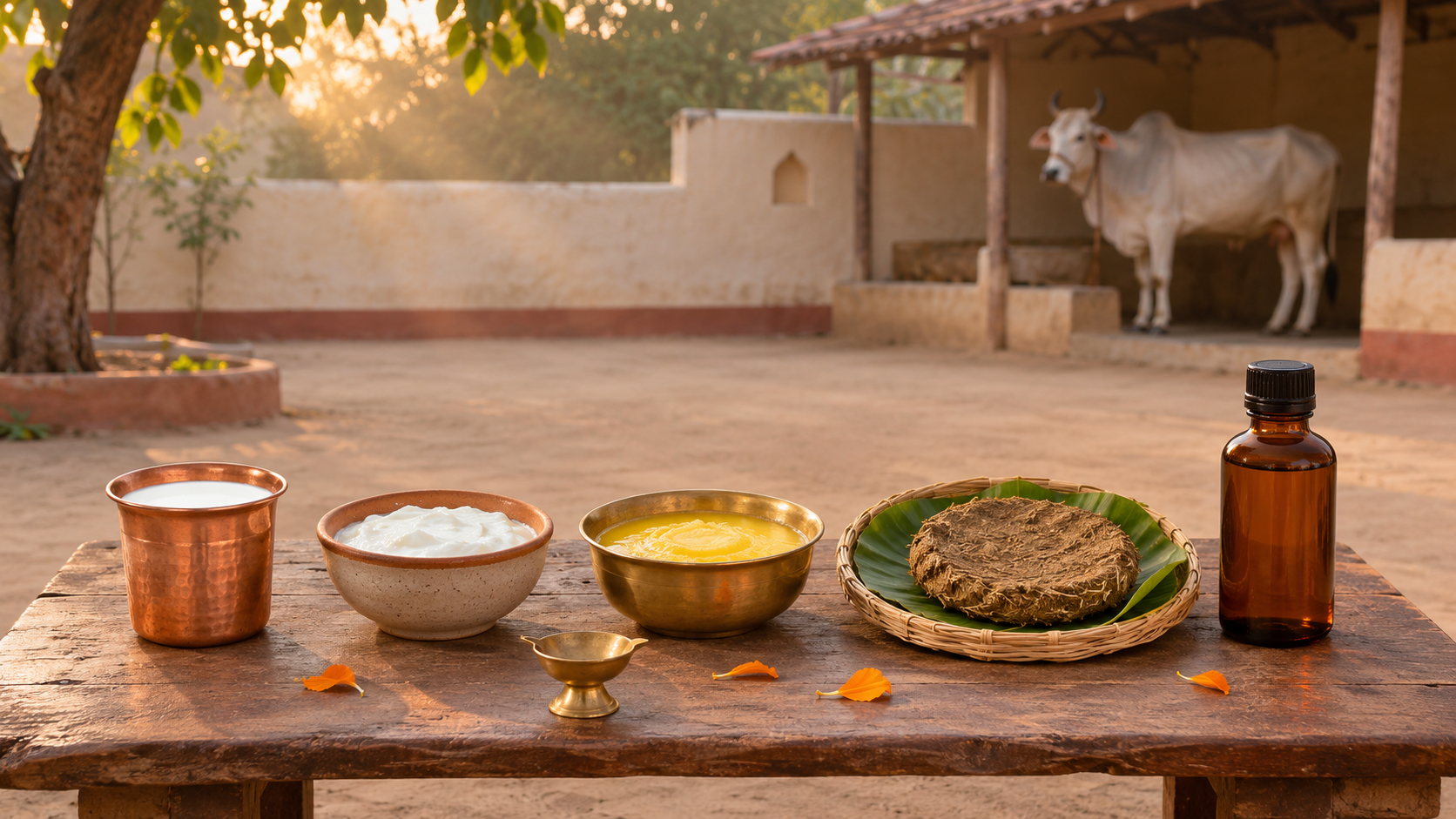
If a priest, temple volunteer or puja list has asked you to bring gomaya, gomutra, ghee or panchagavya, the first challenge is usually practical: Which product is actually required, in what form, and what will be done with it?
You do not have to choose between reverence and common sense. Respect for Gau Mata calls for careful use, not guesswork. Identify the ritual purpose, obtain the correct material, handle it hygienically and never turn a sacred association into an unsupported medical claim.
Identify the exact cow product before you buy anything
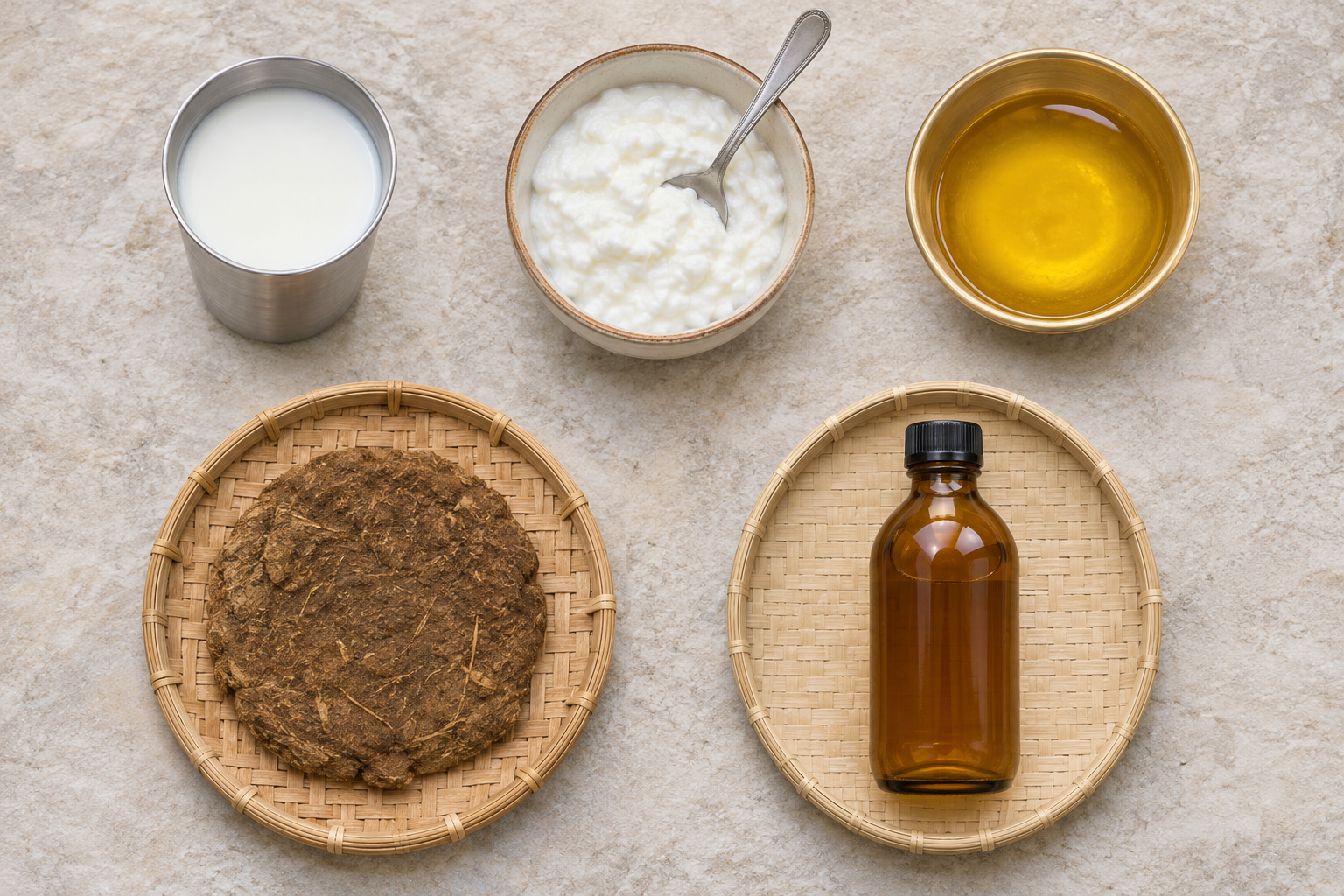
Panchagavya is the collective name for five cow-derived substances: milk, curd, ghee, gomaya and gomutra. Gomaya means cow dung, while gomutra means cow urine. The shared name does not make these substances interchangeable, and a request for one should not be silently expanded into a request for all five.
Not every Hindu ceremony uses panchagavya. Nor does every temple or household prepare and apply its ingredients in the same manner. Sampradaya, regional custom, the nature of the rite and the instructions of the officiating priest can all affect what is appropriate. When a written list is vague, ask rather than reconstructing a ritual from fragments found online.
Before purchasing or preparing anything, obtain clear answers to these questions:
- What is the exact substance: milk, curd, ghee, fresh gomaya, dried gomaya, gomutra or a prepared panchagavya product?
- What is its purpose: offering, abhisheka, lamp, external ritual application, agricultural use or something else?
- Will any part of it be eaten or drunk? If so, which part, and who has confirmed that it is food-grade?
- What quantity is actually required? More is not more sacred, and unnecessary excess creates storage and disposal problems.
- Does the temple provide the product or require a particular preparation?
- How should the remainder and the used material be handled? Follow the host temple or household’s instructions because customs differ.
This short conversation prevents the most common practical mistake: buying something labelled with a sacred term without knowing whether its form matches the intended use.
Sacredness does not make different uses interchangeable
For many Hindus, the name Gau Mata expresses a moral relationship rather than a claim that the cow is merely a useful commodity. The cow nourishes, and her products can remain part of domestic, devotional and agricultural life. Gratitude, restraint and reciprocity therefore matter as much as possession of the material.
Gomaya shows this relationship particularly clearly. Cow dung may look like something to discard, yet it can be dried and used as fertilizer for plants and trees. Its practical value and its association with the sacred cow help explain why many Hindus do not approach it through the modern category of waste alone.
Two opposite mistakes follow from missing this distinction. One assumes that anything sacred must be edible, sterile or medically effective. The other assumes that anything classified as animal waste must be spiritually meaningless. Neither follows. Ritual status, practical suitability and biological safety answer different questions.
- Ritual status asks what the substance signifies within a particular practice.
- Practical suitability asks whether you have the correct form and quality for the intended task.
- Biological safety asks how contact, storage, consumption and disposal can affect health.
A responsible Hindu practice can honour all three. Pavitrata is a religious category; microbiological cleanliness is a health category. Treating them separately is not disrespect. It is disciplined care.
Match milk, curd and ghee to their intended purpose
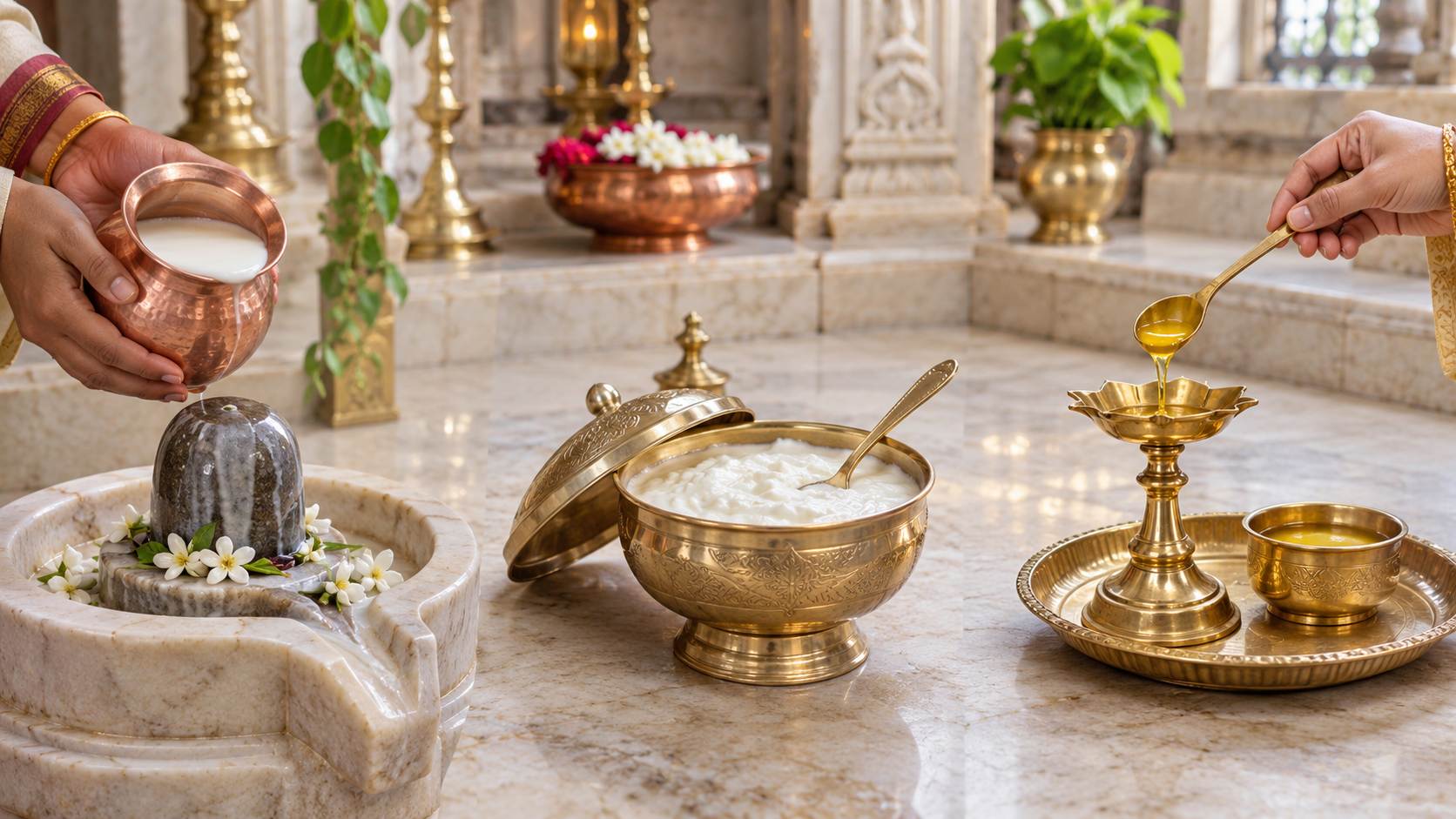
The familiar dairy members of panchagavya may be used in more than one setting, but the intended use determines how you should source and handle them.
- If milk, curd or ghee will be eaten, mixed into food or distributed as prasada, use food-grade products and ordinary food-safety precautions. Check the label, storage requirements and expiry information. A devotional intention does not rescue spoiled food.
- If a dairy product is intended for abhisheka, keep it in a clean, dedicated vessel and use only the requested amount. Do not automatically serve material that has contacted a murti, platform, drainage surface or non-food utensil. Follow the temple’s established protocol for anything intended to be distributed afterward.
- If ghee is intended for a lamp, use a stable diya on a heat-resistant surface. Keep the flame away from cloth, decorations, children and unattended spaces. The sacred purpose of the flame does not reduce ordinary fire risk.
- If the package is marked for ritual or external use, do not assume it is food-grade. Ask the seller or ritual organiser to clarify the intended use before anyone consumes it.
Dedicated containers are helpful even when all the ingredients began as food. Label them by purpose, especially when several people are preparing a ceremony. This prevents a vessel assigned to external ritual use from returning unnoticed to the kitchen.
Handle gomaya and gomutra with reverence and hygiene
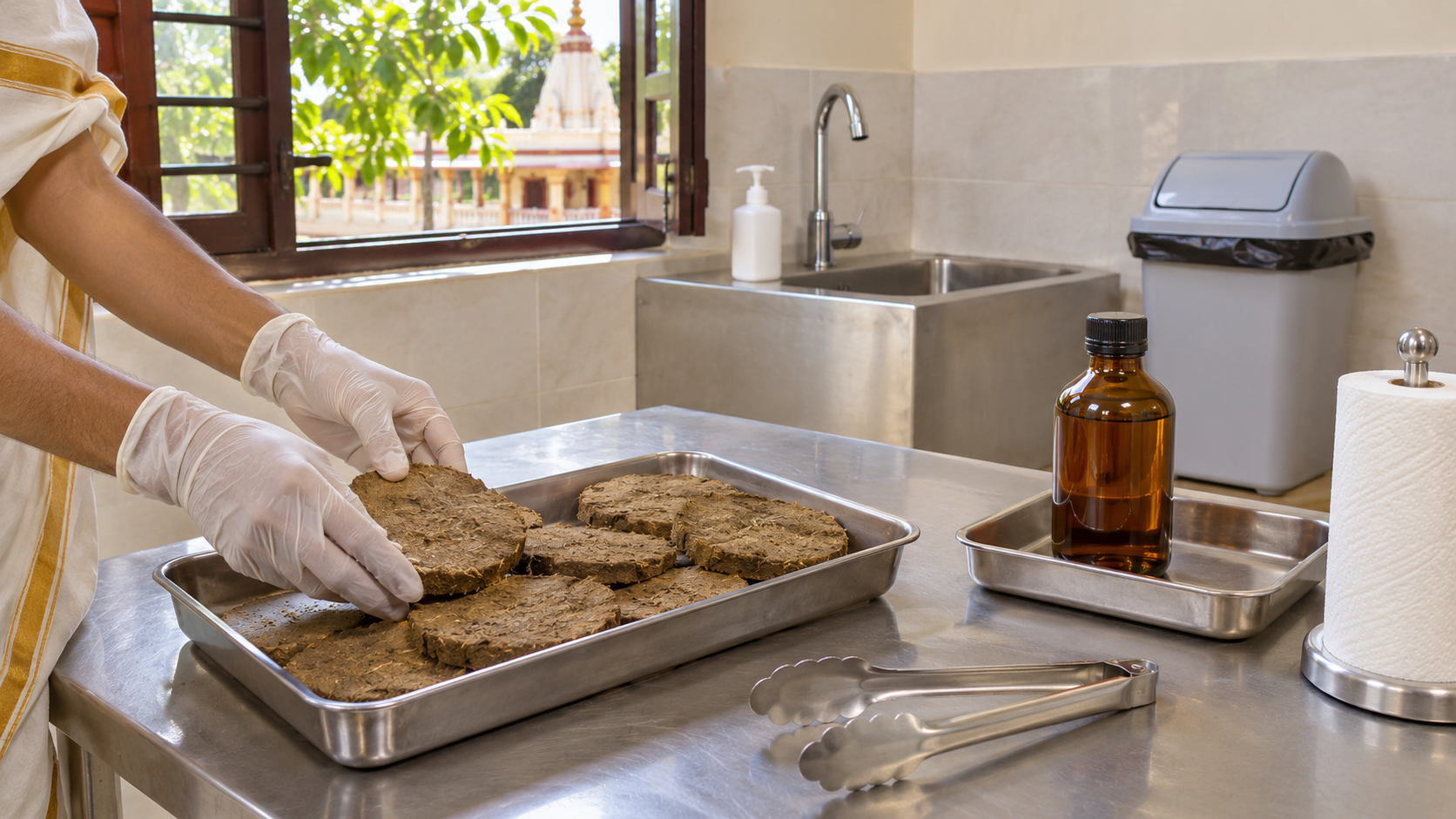
Gomaya and gomutra require a different level of handling from ordinary dairy products because they are animal waste. They may carry microorganisms even when they have devotional significance. Clean handling is therefore part of responsible seva, not a rejection of sacred meaning.
For a household or community event, use a simple handling discipline:
- Obtain the material from a known provider and confirm whether it is fresh, dried, processed or blended with other ingredients.
- Keep it in a closed, clearly labelled container. Store it away from food, drinking water, medicines and children’s belongings.
- Use dedicated utensils. If direct contact is not required by the ritual instructions, use a dedicated spoon, scoop or suitable protective gloves.
- Cover cuts before handling it and wash your hands thoroughly with soap and water afterward, even if you used gloves.
- Clean any contacted surface with a method appropriate to that surface. Do not prepare food on the same area until it has been cleaned.
- Keep children and animals from opening the container or touching unattended material.
- Ask the officiant how unused and ritually used material should be handled. Do not invent a disposal rule and present it as universal Hindu practice.
If gomaya is being used for plants, its general value as fertilizer does not establish the right amount for every soil, crop or preparation. Follow the product directions or suitable local agricultural guidance. Agricultural material should not be transferred to the altar merely because its ingredient name is the same.
Gomutra deserves an especially clear boundary. Sacred standing is not clinical proof, and a ritual product must not be treated as a medicine merely because it is associated with Gau Mata. Do not drink raw gomutra, put it in the eyes or nose, apply it to an open wound, or use it in place of medical treatment. If someone asks you to consume it, consult a licensed healthcare professional about the health risk and ask the priest whether a non-ingestive accommodation is available.
If gomutra or another animal-waste product is accidentally swallowed, reaches the eyes, or causes symptoms after exposure, contact an appropriate medical professional or local poison-control service. For eye exposure, begin rinsing with clean water while obtaining professional advice. Do not delay care in order to preserve a ritual schedule.
Commercial packaging does not settle these questions by itself. Check whether the label identifies the contents, intended use, storage instructions and producer. If the seller cannot tell you whether a preparation is meant for external ritual use, agriculture or consumption, do not guess.
Key takeaways
- Panchagavya names five cow-derived substances, but it is not a universal instruction to mix or use all five.
- Confirm the exact product, form, purpose, quantity and disposal method with the officiating priest or host before buying it.
- Sacredness, suitability and biological safety are different questions; a careful practice respects all three.
- Milk, curd and ghee intended for consumption must be food-grade and handled as food.
- Keep gomaya and gomutra in labelled containers, away from food, and use dedicated utensils followed by proper handwashing.
- Do not infer medical effectiveness from ritual importance, and never replace professional healthcare with a cow-derived product.
- When temple custom and a general online instruction differ, follow the authorised guidance for the ceremony you are actually attending, provided it does not require you to disregard health or safety.
Your next step is straightforward: send the organiser the six practical questions above before you shop. One clear reply can prevent the wrong purchase, unsafe handling and avoidable waste while allowing you to participate with informed reverence.
References

Leave a Reply
You must be logged in to post a comment.