
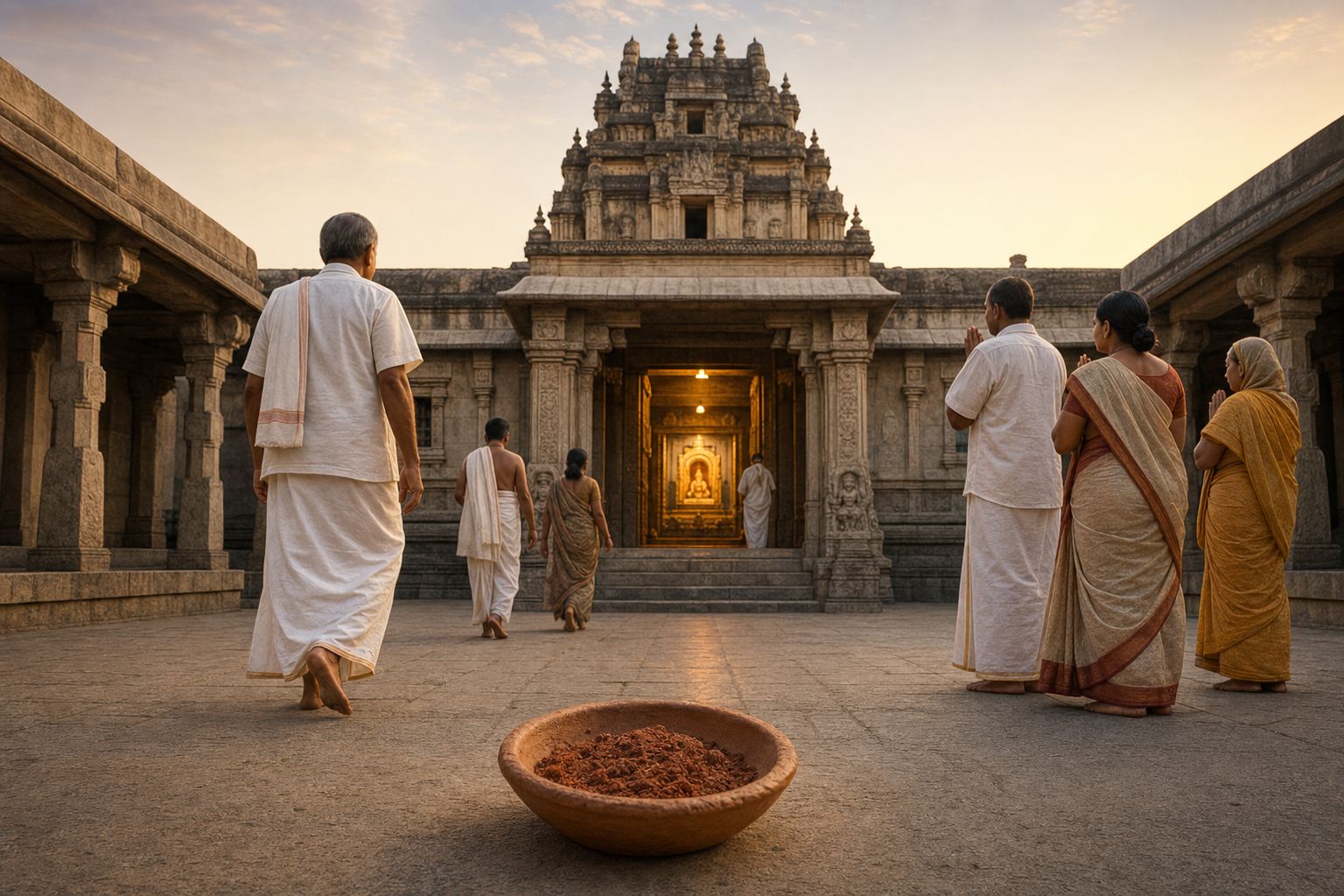
Raghavendra Mrittika appears outwardly to be a small quantity of earth. Within the devotional world of Sri Raghavendra Tirtha, however, it carries the memory of Mantralayam, the authority of the guru and the accumulated reverence of a living pilgrimage tradition.
Understanding that significance requires more than asking what the substance contains. It means examining how sacred association, Dvaita teaching, pilgrimage and hagiographical storytelling combine to make the Mrittika a sign of grace—and why the tradition connects that grace with ethical responsibility.
Why the meaning of Mrittika begins with relationship
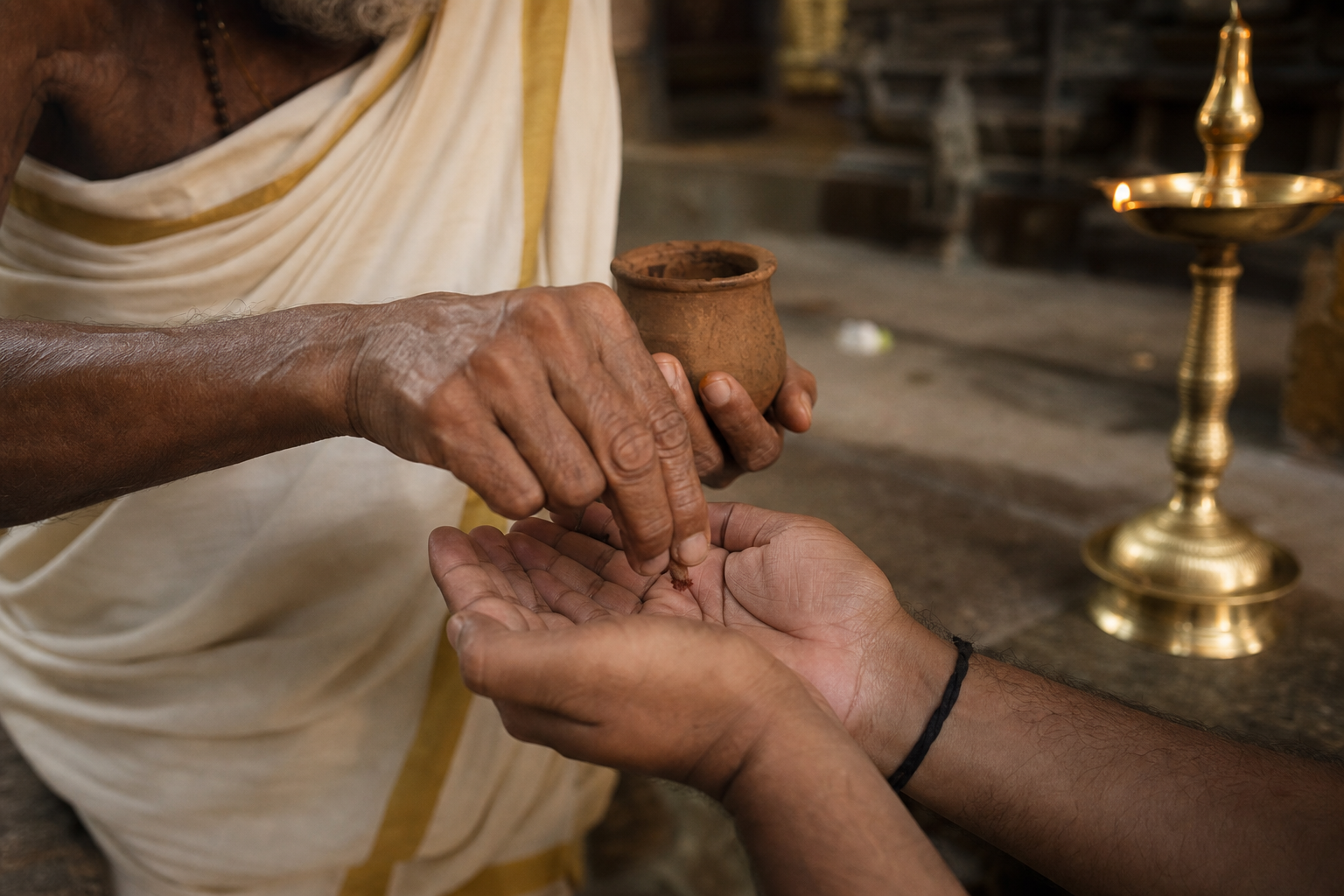
The Sanskrit word mrittika means earth, soil or clay. English-language devotional writing commonly uses the spelling “Mrittika,” while “Mritigai” occurs in some regional usage. Similarly, Mantralayam and Mantralaya refer to the same pilgrimage setting. The variations matter less than the relationship expressed by the name: this is earth associated with Sri Raghavendra Swamy, his Brindavana and the spiritual lineage represented there.
The DharmaRenaissance account explains this significance through sambandha, or sacred association. On that understanding, holiness is not simply a measurable ingredient contained within an object. It can arise through a substance’s origin, consecration, contact with a revered place, authorized transmission and continuing recognition by a community of worshippers.
This relational view helps explain why materially ordinary things can acquire distinct devotional identities. Water received as tirtha, food offered as prasada and ash worn as vibhuti remain physical substances, yet their religious meaning comes from the worship, narratives and obligations surrounding them. Raghavendra Mrittika works in a comparable way: it makes a bond with the guru and Mantralayam tangible without reducing that bond to the earth’s physical composition.
Mantralayam gives the guru tradition a sacred geography
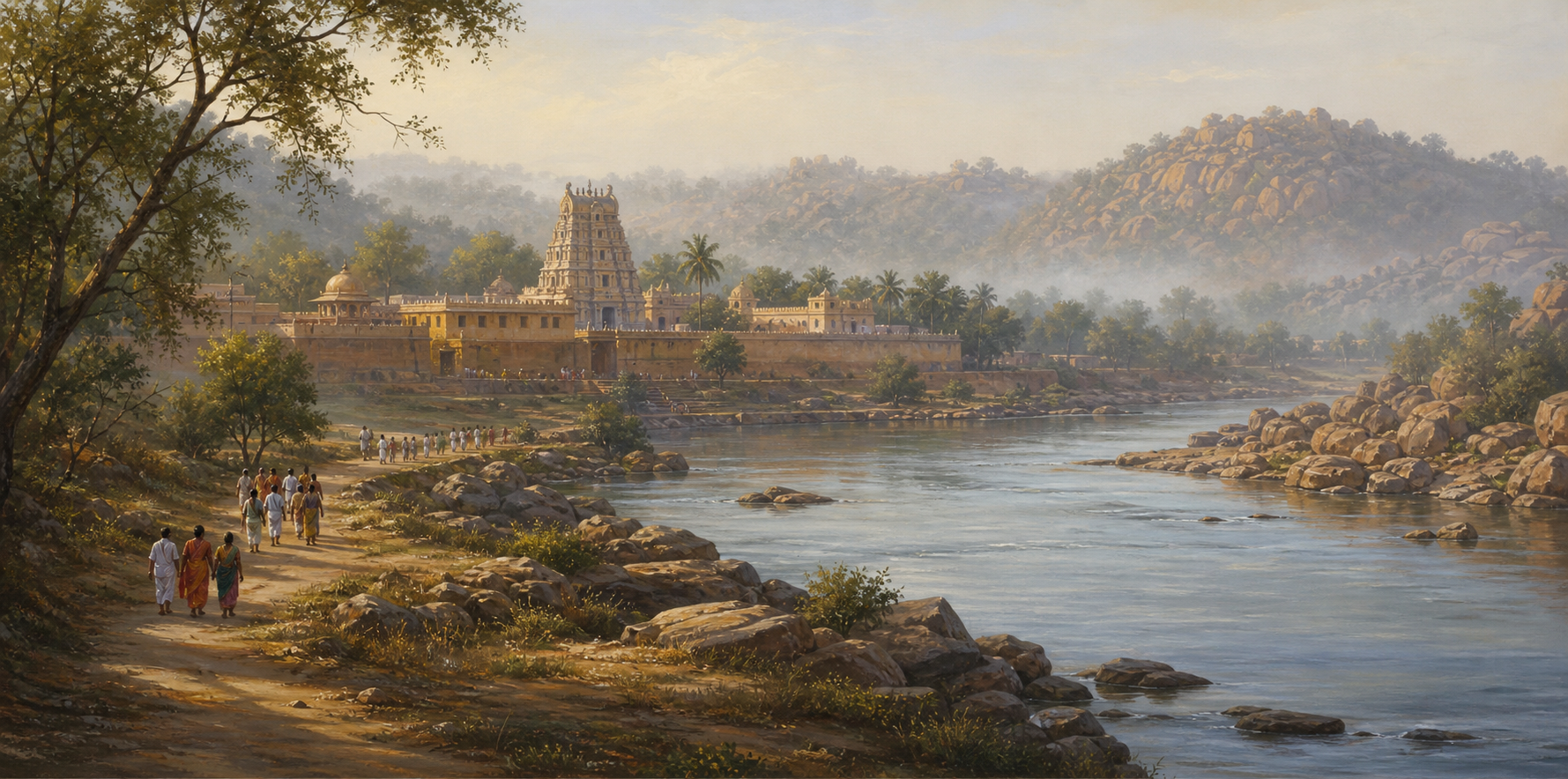
The source places Mantralayam on the banks of the Tungabhadra River and describes it as a centre of pilgrimage associated with Sri Raghavendra Tirtha. It also identifies him as a major seventeenth-century scholar, teacher and monastic leader in the lineage of Sri Madhvacharya. This setting connects the Mrittika to an institutional and philosophical tradition rather than to an isolated devotional custom.
Dvaita Vedanta affirms a real distinction among the Supreme Being, individual souls and the world, together with the soul’s dependence upon Vishnu. Within this framework, the guru guides the disciple toward sound knowledge, disciplined devotion and divine grace. Guru reverence is therefore not merely admiration for an inspiring personality; it is connected to teaching, spiritual formation and an ordered understanding of the relationship between the soul and the divine.
According to the devotional tradition reported by DharmaRenaissance, Sri Raghavendra entered the Brindavana at Mantralayam in 1671 while absorbed in contemplation, an event commonly described as Jeeva Samadhi. Devotees approach the Brindavana not merely as a historical memorial but as the sanctified seat of a realized guru whose presence and capacity to bless seekers are believed to continue.
That continuing presence is a theological claim of the tradition, not an experimentally demonstrable conclusion. Recognizing the distinction does not require treating the belief as insignificant. It clarifies why pilgrims experience travel to Mantralayam, worship, sacred recitation and the reception of prasada as encounters with a living centre of grace. Mrittika extends that sacred geography: a little earth can carry remembrance of the Brindavana into devotional life beyond the pilgrimage site.
The disciple story makes grace an ethical test
A traditional narrative reported in the source gives the Mrittika’s meaning dramatic form. In the story, a disciple asks Sri Raghavendra Swamy for a blessing before seeking a bride and receives sacred Mrittika. While travelling, he spends a night outside a village home where a threatening supernatural being intends to harm a newborn child. The being claims that the radiance and heat of the sacred earth prevent it from approaching the house.
The being offers the disciple a pot of gold if he will move the Mrittika. Although frightened, the disciple refuses to assist the threatened act. He mixes some of the earth with water and sprinkles it upon the being, which the narrative says is then released from its afflicted condition and the cycle of repeated birth. The householder learns what happened, welcomes the traveller and ultimately arranges his marriage to the householder’s daughter.
Read only as a wonder story, the episode can seem to be about a powerful substance defeating a hostile force. Its moral structure is more demanding. The disciple’s personal wish is fulfilled only after he protects strangers, resists bribery and acts despite fear. The Mrittika does not excuse him from choosing rightly; carrying the guru’s blessing places him under a sharper obligation to do so.
The setting reinforces that lesson. Night and the household threshold create a space between danger and safety, while the newborn embodies vulnerable life. The gold tests whether the disciple will exchange spiritual trust for private gain. Even the antagonistic figure is not merely destroyed: it is transformed and released. Protection, courage and compassion therefore remain joined.
The contrast between two kinds of gold gives the story additional force. The bribe offers possession, whereas the Mrittika is described as having golden radiance and purifying heat. In traditional religious symbolism, light can signify knowledge and heat can suggest tapas or purification. The false promise of wealth is answered by a grace that calls for moral action and transforms the source of danger.
Hagiography conveys truth differently from documentary history
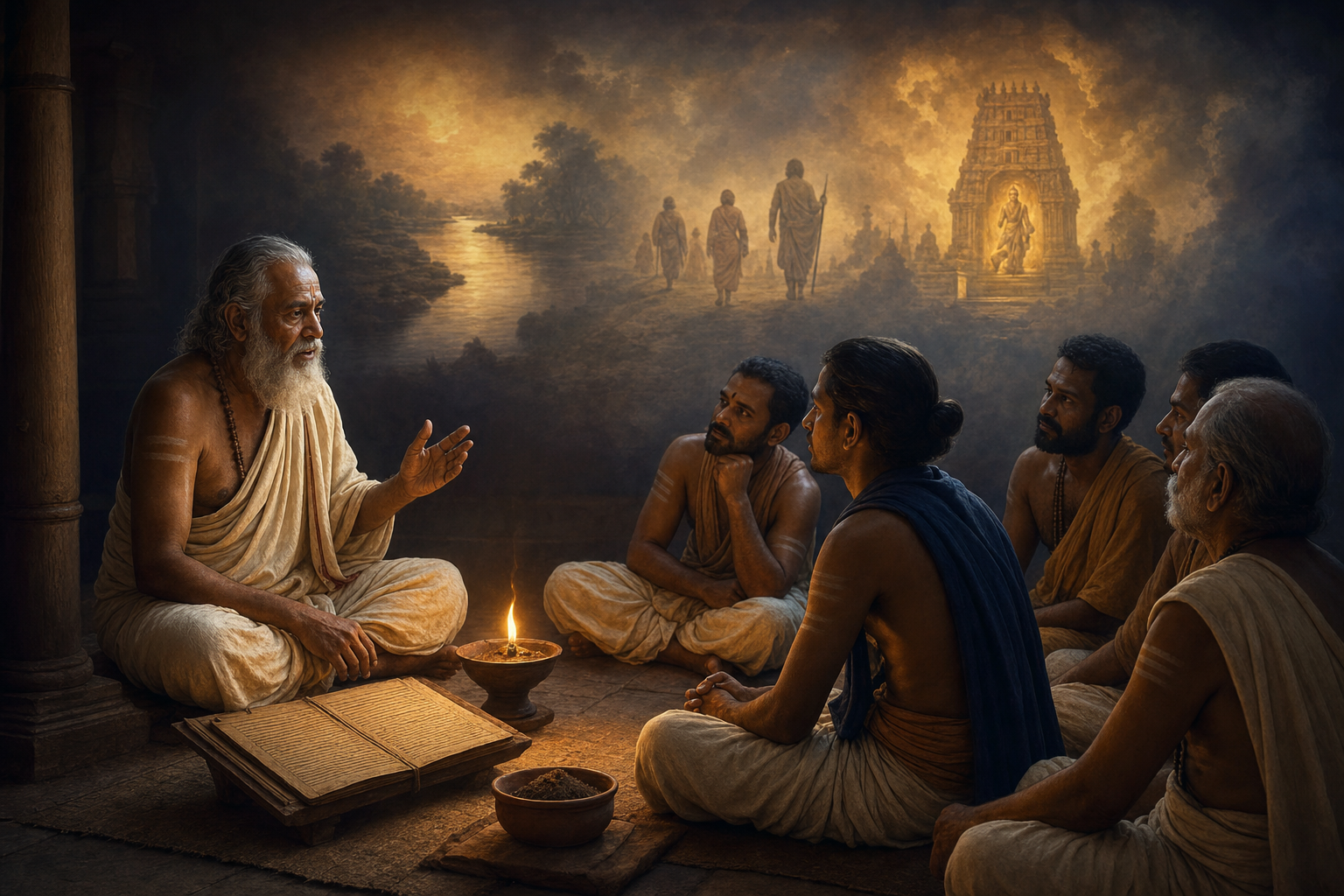
The disciple episode belongs to hagiography: the body of narratives through which a community remembers a saint’s holiness, blessings, trials and extraordinary interventions. It should not be presented as though it were independently verified documentary history or scientific evidence. At the same time, its value is not limited to whether its supernatural elements can be demonstrated by historical methods.
Hagiographical stories disclose what a tradition believes sanctity should produce. Here, the expected fruits are not wealth or invulnerability but fidelity, protection of vulnerable life, refusal of corruption and compassion that reaches even an adversary. This interpretive approach respects the story’s devotional setting while allowing readers to distinguish theological testimony from empirical claims.
The same care is useful when Raghavendra Mrittika is compared with Shaiva vibhuti. The source presents the comparison as functional rather than material: both can act as visible signs of blessing, remembrance, protection and impermanence. They nevertheless emerge from different ritual histories and should not be treated as interchangeable. Comparison is illuminating when it identifies a shared Hindu pattern of embodied remembrance without erasing the integrity of Madhva, Vaishnava or Shaiva practice.
Key takeaways for approaching the tradition
- Raghavendra Mrittika is sacred because of its association with the guru, the Brindavana, Mantralayam and an enduring community of devotion.
- Its meaning is rooted in a Dvaita setting where the guru directs disciples toward knowledge, disciplined bhakti and dependence upon Vishnu.
- The tradition’s claim that Sri Raghavendra remains spiritually present should be identified as devotional theology rather than empirical proof.
- The disciple narrative presents grace as an ethical demand: blessing accompanies courage, compassion and the rejection of corrupt advantage.
- Comparisons with other sacred substances are useful only when shared functions are distinguished from separate ritual identities.
Devotees are reported to approach Sri Raghavendra Swamy with concerns involving family welfare, health, livelihood, marriage, education and distress. The source emphasizes that such prayer concerns sincere and reasonable needs, not the automatic fulfilment of every desire. Its own narrative supplies the governing principle: prayer and sacred objects acquire their fullest meaning when joined to patience, ethical effort and responsibility for others.
As devotional practice continues beyond Mantralayam, the most durable understanding of Mrittika will be one that preserves both sides of its meaning: reverence for sacred association and the conduct expected of someone who carries the guru’s remembrance into ordinary life.