
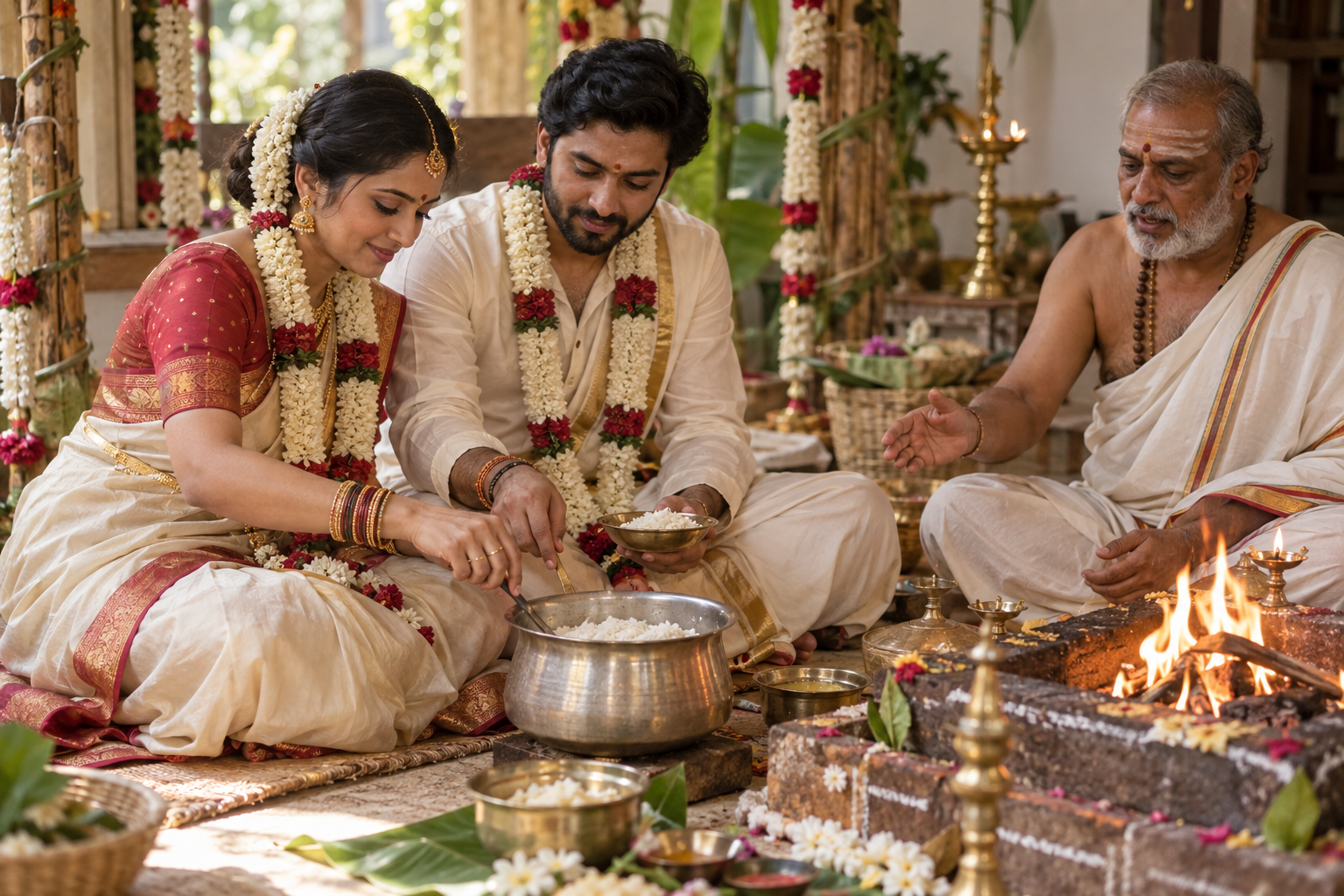
If Parvanasthalipaka has appeared on your Hindu wedding schedule, the unfamiliar name can make an intimate rite feel inaccessible. The useful question is not merely what happens, but what kind of married life the action asks you to begin.
At its heart, the rite turns an ordinary household act, preparing food, toward yajna. Once you understand that, you can plan it respectfully, follow it attentively, and keep it from becoming just another item hurried through before the reception.
The rite brings household life into the marriage
Parvanasthalipaka belongs to the Vedic world of pakayajnas, domestic fire sacrifices that sanctify the preparation and offering of food. Its importance lies in its closeness to daily life. The materials are associated with nourishment and the household, yet the ritual directs them toward sacred purpose.
In a marriage setting, that movement carries a clear lesson. A wedding does not establish only an emotional or social bond. It begins a household in which ordinary responsibilities can be approached as dharma. Preparing food, sustaining life, receiving what is available with gratitude, and offering before claiming are not matters outside spiritual life.
This is why it is misleading to describe Parvanasthalipaka as merely ceremonial cooking. A wedding feast feeds invited guests; this rite makes food preparation and offering part of worship. The visible action may look domestic, but its ritual frame changes what that action means.
The name alone, however, cannot tell you the complete sequence that will be used at your wedding. Family custom, liturgical inheritance, and the officiant’s procedure can affect the mantras, materials, roles, and placement within the larger ceremony. Treat the central meaning as your orientation and obtain the actual instructions from the acharya or priest who will conduct it.
What you should notice while the rite is performed
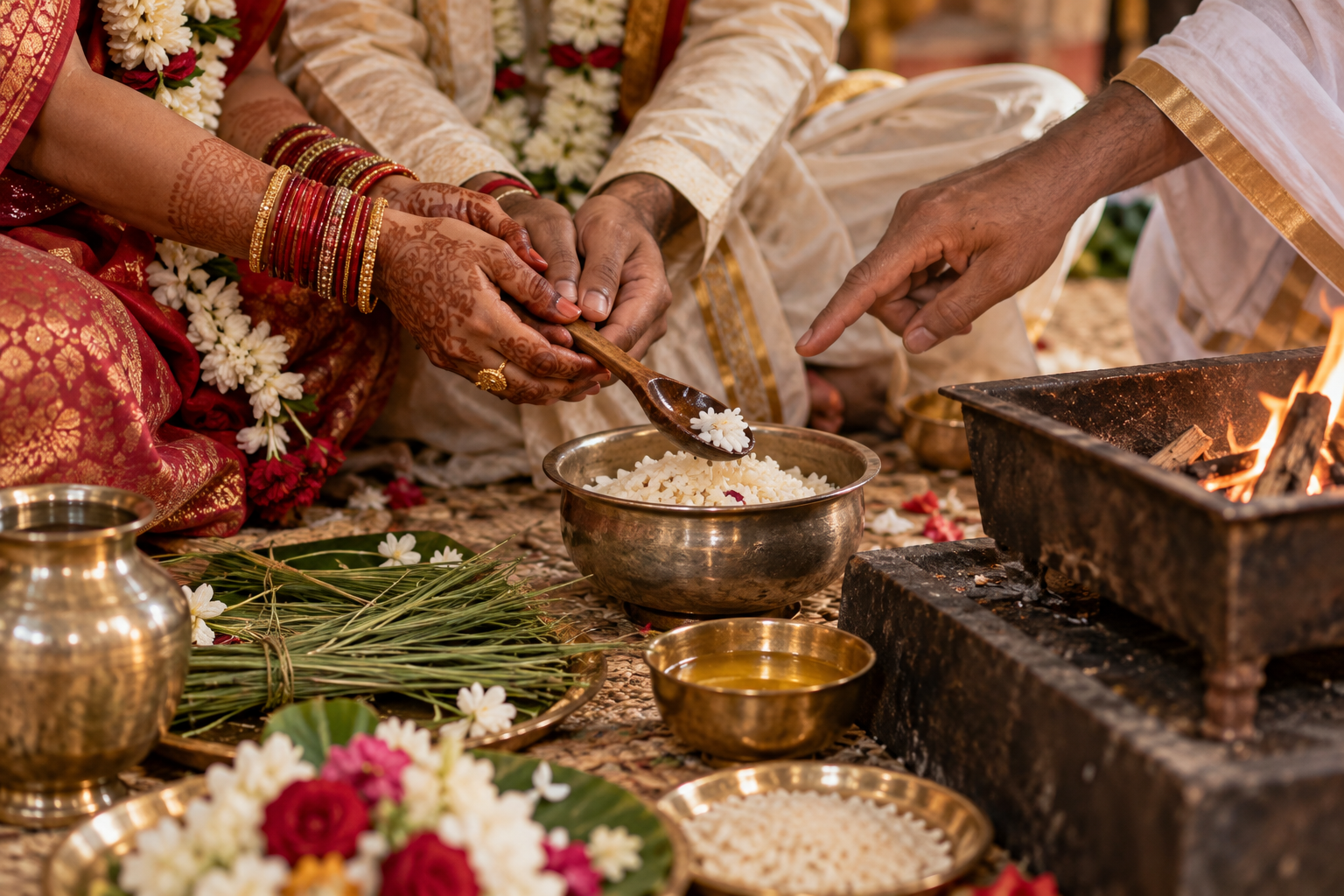
You do not need to become a ritual specialist before your wedding. You do need enough understanding to recognize what deserves your attention. Three features provide a useful way into the rite.
- The domestic fire is a ritual centre, not a stage effect. Direct your attention toward the offering rather than toward photographs, guests, or the next scheduled event.
- Food preparation carries religious significance. Do not mentally dismiss this part as practical work happening between more recognizably sacred moments. The joining of the practical and the sacred is precisely the point.
- The household is being placed under discipline. The rite invites the couple to see nourishment not only as consumption or private possession, but as something received, prepared, and offered with responsibility.
This does not mean that both spouses must perform identical physical actions. Ritual roles may be distinct, and their exact distribution should not be guessed from the general symbolism. The deeper unity lies in the household commitment expressed through those roles.
If relatives or guests ask what the ceremony means, a careful one-sentence explanation is enough: Parvanasthalipaka is a domestic fire offering that consecrates food preparation as part of married life. That description is more accurate than calling it a cooking demonstration, a prosperity ritual, or a symbolic meal unless your officiant has specifically supplied one of those additional interpretations.
Settle the actual form before the wedding day
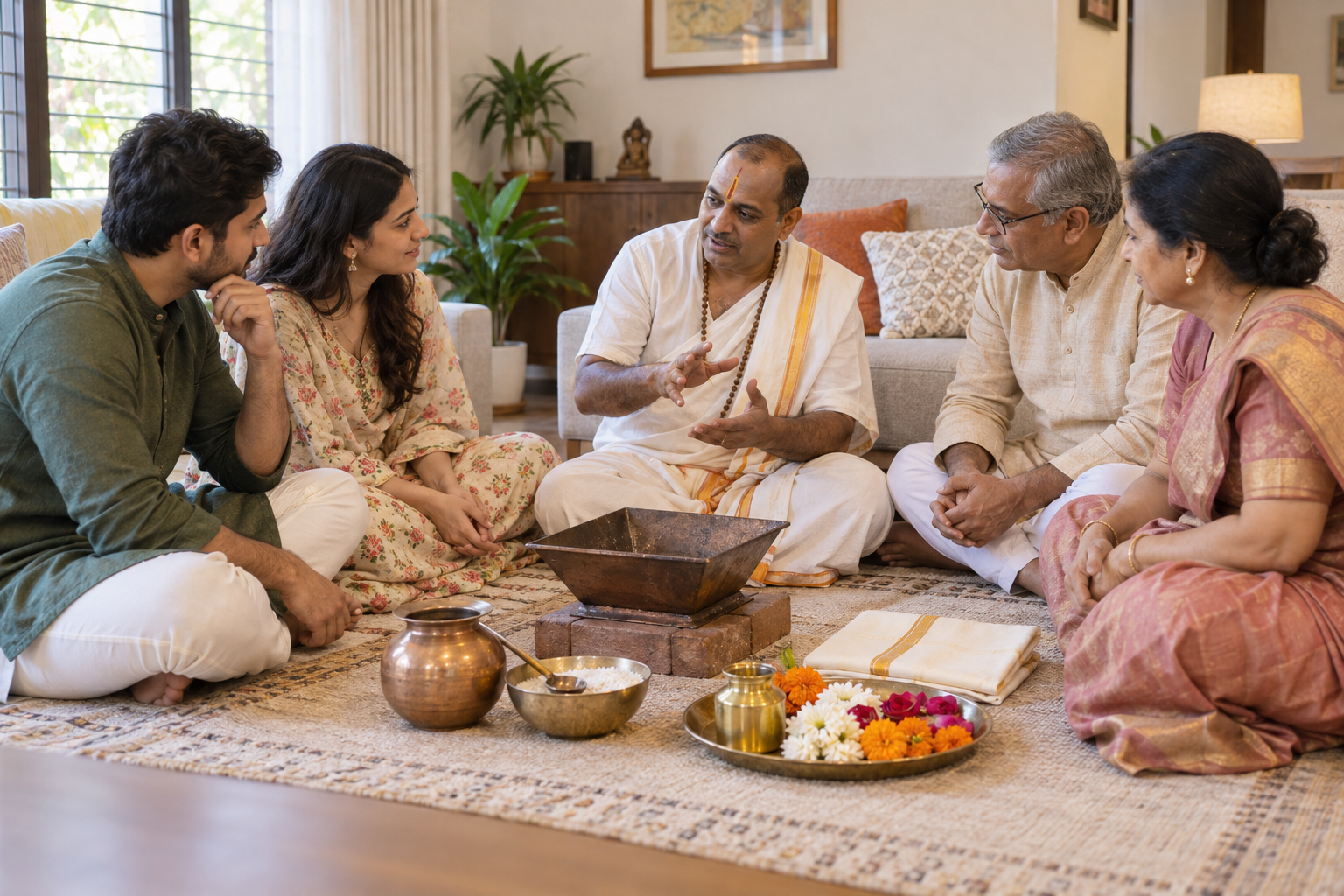
Many misunderstandings arise because the couple receives a list of ritual names but no explanation of what each item requires. Ask for a short walkthrough before finalizing the schedule. These questions will produce information you can actually use:
- Where does Parvanasthalipaka occur in our ceremony? Confirm whether it will be treated as a distinct rite, incorporated into a longer sequence, or represented by a shortened observance.
- What must each spouse do? Ask who approaches the fire, who handles the vessel or prepared food, who makes the offering, and what verbal or physical cues you should follow.
- Which materials are required? Obtain a written list covering the vessel, ingredients, fuel, utensils, and any other ritual items. Also confirm who will buy, prepare, transport, and arrange them.
- Where will the food be prepared? Do not assume that a venue kitchen, the ritual space, or advance preparation will automatically be acceptable. The officiant should specify what the chosen form requires.
- Which mantras will be used? Request a transliteration if you are expected to recite anything. If you will mainly listen, ask for a brief explanation of the intention accompanying each major action.
- How much uninterrupted time is needed? Use the officiant’s estimate rather than a generic online duration. Build the photography, music, guest movement, and venue schedule around that answer.
- What happens to the prepared or offered food afterward? Ask how it should be handled, retained, shared, or disposed of according to the practice being followed. Do not let catering staff make that decision by accident.
If you are marrying across regional or family traditions, ask both families to raise differences during this conversation, not beside the sacred fire. The aim is not to force every inherited practice into one ceremony. It is to decide, with the officiant, which form will be followed and to ensure that everyone understands it.
Protect the rite from avoidable planning failures
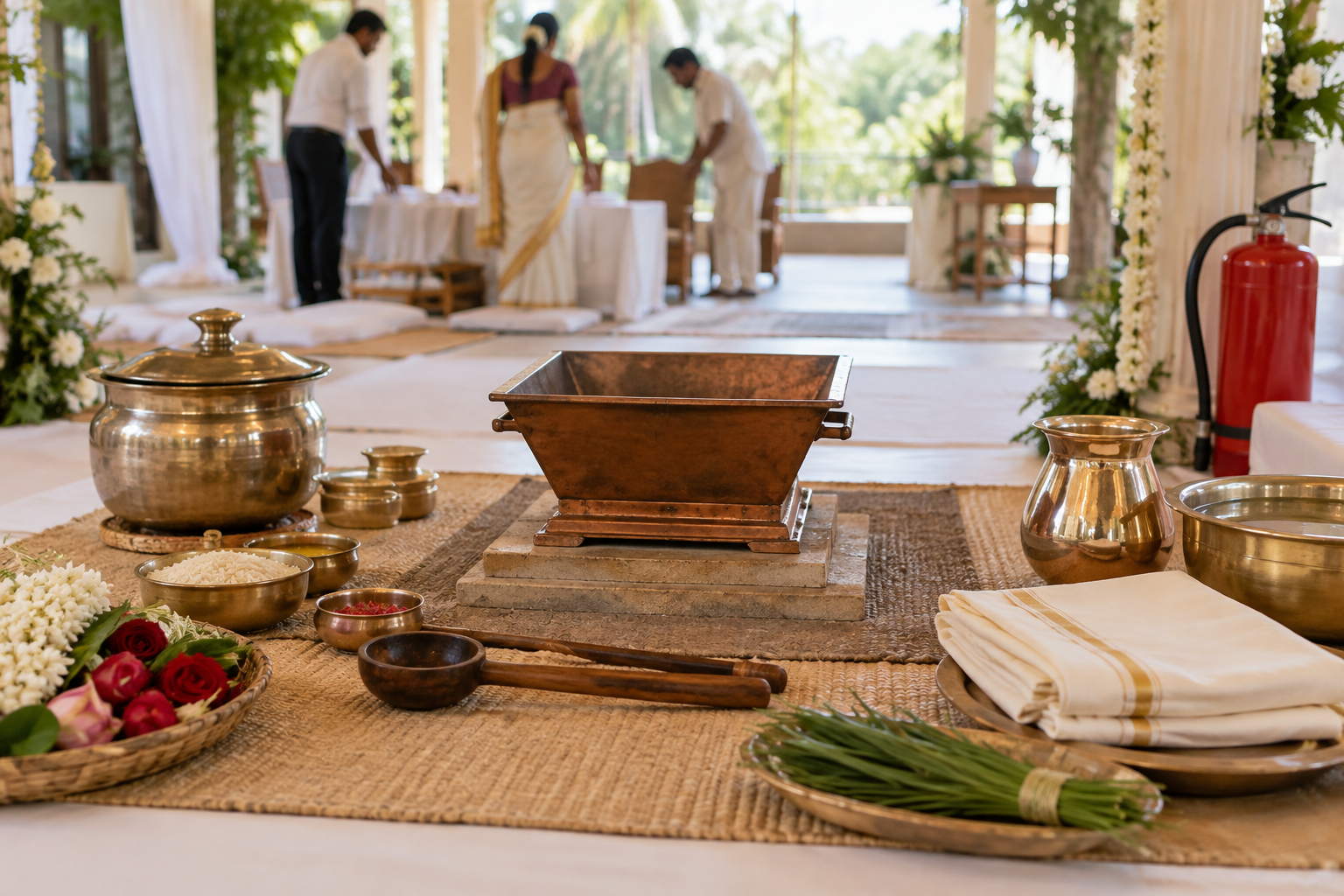
The most common practical problem is not lack of devotion. It is that the venue team, wedding planner, priest, and family are working from different assumptions. A small amount of coordination prevents the sacred action from being interrupted or improvised.
- Clear the fire arrangement with the venue. Confirm permission for an open flame, ventilation, smoke-detector procedures, the heat-resistant surface, safe clearance, and the required fire-suppression equipment. Never disable safety systems or conceal the planned fire from venue staff.
- Put one person in charge of the ritual materials. Keep the complete set labelled and separate from catering supplies. That person should check the list with the officiant and prevent substitutions made only for visual convenience.
- Rehearse cues, not sacred words. A brief practical run-through can establish where you sit, when you move, and how you receive instructions. The actual mantras and offerings should remain within the ceremony unless the officiant directs otherwise.
- Brief the photographer. Agree on positions from which images can be taken without crossing the ritual space, blocking your view, moving vessels, or asking for an offering to be repeated for the camera.
- Give guests one accurate explanation. A line in the printed or digital programme can help people remain attentive without turning the rite into a lecture.
- Protect the transition afterward. Tell the planner and catering team who has authority over the fire, vessels, and food once the rite ends. Ritual materials should not be cleared simply because the next event is scheduled to begin.
If the venue prohibits the required fire, do not quietly replace it with a decorative lamp or electronic effect and assume that the rite remains unchanged. Ask the officiant whether the arrangement can be adapted, whether another permitted space can be used, or whether the observance should be handled differently. That is a ritual decision, not an event-design decision.
Key takeaways
- Parvanasthalipaka is a pakayajna centred on the sanctification of food preparation and offering through a domestic fire sacrifice.
- Its marriage significance lies in bringing ordinary household responsibility within the sphere of dharma.
- It is not the wedding feast and should not be reduced to decorative cooking beside a fire.
- The ritual name does not determine every procedural detail; confirm your officiant’s sequence, materials, mantras, and division of roles.
- Coordinate fire safety, ritual supplies, photography, guest movement, and the handling of offered food before the wedding day.
Before approving the final wedding schedule, ask your officiant for a five-minute walkthrough of Parvanasthalipaka and write down the roles, materials, venue requirements, and meaning in plain language. That small preparation will let you enter the rite as a participant establishing a dharmic household, rather than as a spectator waiting for the next instruction.
References

Leave a Reply
You must be logged in to post a comment.