
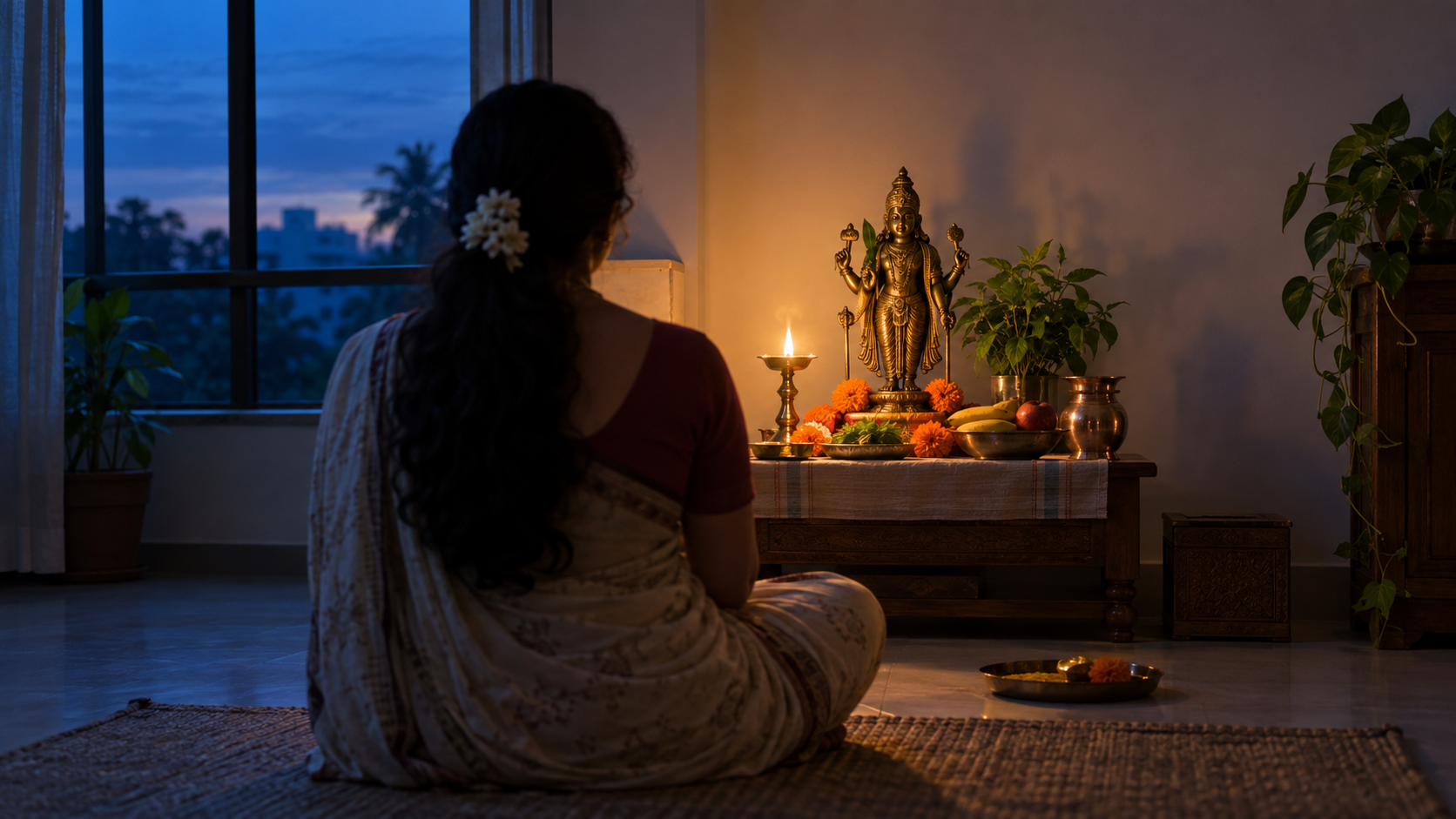
If you are arranging leave, temple worship, or a family vrata for Papankusa Ekadashi in 2026, mark 21 October in your calendar. Then add a separate reminder to verify the local tithi and parana window before the observance.
That second step matters, especially if you live outside Bharat. A festival date can tell you which day to reserve, but it cannot supply location-specific timings or decide which sampradaya’s calendar your family follows. Here is how to plan the day without turning a sacred vrata into either a scheduling mistake or a test of physical endurance.
The date to mark, and what it does not tell you

Papankusa Ekadashi, also called Padmanabha Ekadashi, is observed on Shukla Paksha Ekadashi in the lunar month of Ashwin or Ashwayuja. In 2026, it falls on 21 October.
Tithi observance is not governed by the civil clock alone. A civil date begins at midnight, while a tithi is a lunar-calendar division whose beginning and end can cross civil dates. Panchangas also apply observance rules associated with sunrise, the presence of a tithi, location, and tradition. This is why copying a temple timetable from another city can give you the wrong fasting or parana time even when the festival date looks correct.
Use 21 October as the planning date, but obtain the final schedule from a panchanga calculated for your location or from the temple or acharya whose practice you follow. If a calendar publishes separate Smarta and Vaishnava dates, do not choose between them by convenience. Follow your family’s sampradaya or ask your customary temple which listing applies.
Before the day, write down these four items in one place:
- The Ekadashi observance date for your city.
- The local beginning and ending of the Ekadashi tithi.
- The permitted parana window, meaning the period for formally breaking the fast.
- Any tradition-specific instruction given by your family, temple, or acharya.
If your calendar provides only the date and none of the other details, treat it as a reminder rather than a complete ritual timetable.
Choose a vrata you can keep with steadiness
An Ekadashi vrata is larger than a menu. Food discipline may be central to your practice, but so are worship, remembrance, restraint of speech, and control of habits. Decide the form of your observance in advance so that hunger or household pressure does not rewrite it halfway through the day.
If your lineage and health permit a complete fast, follow the method already taught to you. If your household observes Ekadashi through a restricted diet, make a clear list of what your tradition permits and excludes. Labels such as “fasting food” are unreliable because regional and family rules differ. When a strict food fast is not appropriate, you can still reserve the day for simple meals required by health, sincere worship, reduced indulgence, seva, and disciplined conduct.
Do not undertake a waterless or otherwise severe fast merely because it sounds more meritorious. Food or fluid restriction can be unsafe when it conflicts with pregnancy, illness, medication, age-related needs, recovery, or a history of disordered eating. Do not skip or reschedule medicine to fit a vrata without guidance from a qualified clinician. Children and dependent elders should not be pressured into restrictions that disregard their needs. A safe devotional discipline is preferable to preventable harm.
A useful sankalpa has three clear parts: the food discipline you will follow, the worship or study you will undertake, and the conduct you will restrain. “I will keep Ekadashi” is easy to interpret loosely. “I will follow my family’s food rule, offer worship to Bhagavan Padmanabha, set aside time for nama-japa, and abstain from angry speech” gives the day a definite form.
A practical plan for the observance
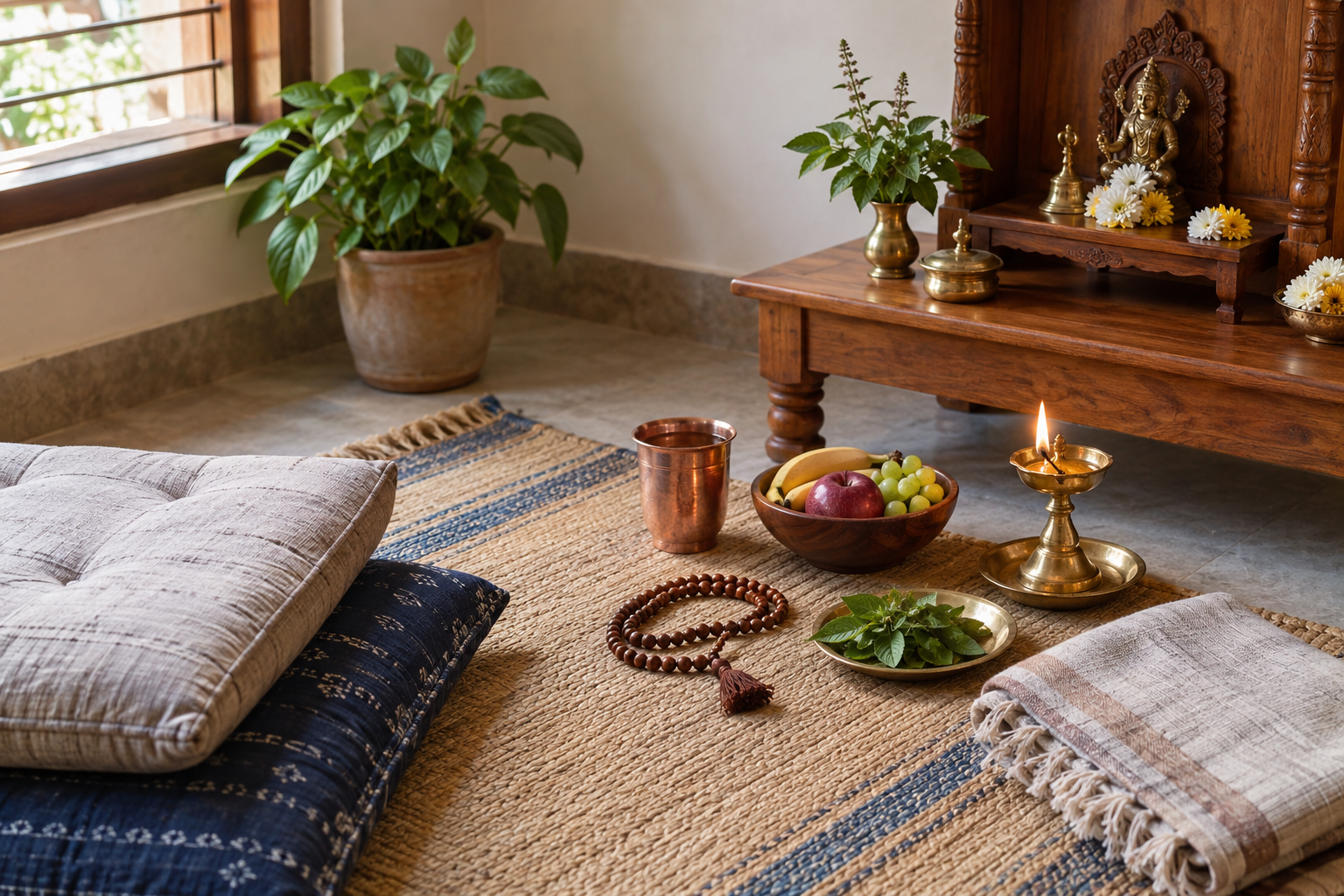
You do not need an elaborate programme, but you do need enough preparation to prevent the day from being swallowed by ordinary errands. Build the observance around the following sequence.
- Confirm the calendar. Check the local observance date and parana window through the panchanga, temple, or acharya you normally trust. Save the details where every participating family member can see them.
- Set the vrata before the day begins. Decide the food rule, devotional practice, and personal restraint. If members of the household have different health needs, agree on suitable forms of observance without treating one person’s restriction as a measure of everyone else’s devotion.
- Prepare the home. Arrange the puja space and keep the offerings customary in your family ready. Plan any permitted meal in advance. This removes the need to debate ingredients or shop impulsively during the vrata.
- Begin with a plain sankalpa. State what you are undertaking and dedicate it to Bhagavan Padmanabha. A memorised Sanskrit formula is not something to improvise from fragments found online; use the form taught in your tradition, or make a sincere resolution in a language you understand.
- Give worship a fixed place in the day. Offer your customary puja, recite the divine name or mantra taught in your lineage, and read or hear a Vishnu-centred teaching familiar to your tradition. If work or caregiving limits your time, protect one uninterrupted period rather than making several vague intentions.
- Carry the vrata into conduct. Reduce needless entertainment, gossip, harsh speech, and quarrelling. Use the attention freed by the food discipline for prayer, quiet reflection, dana, or practical seva.
- Complete parana deliberately. Break the fast within the locally verified window and according to your customary rules. Prepare what you will use beforehand, begin gently if you have fasted strictly, and do not turn the completion of the vrata into overindulgence.
Temple services can strengthen the observance, but they do not remove the need to plan your own vrata. If you will attend a temple, check whether the announced programme refers to worship on Ekadashi, parana on the following tithi, or both.
Let the restraint reach beyond food
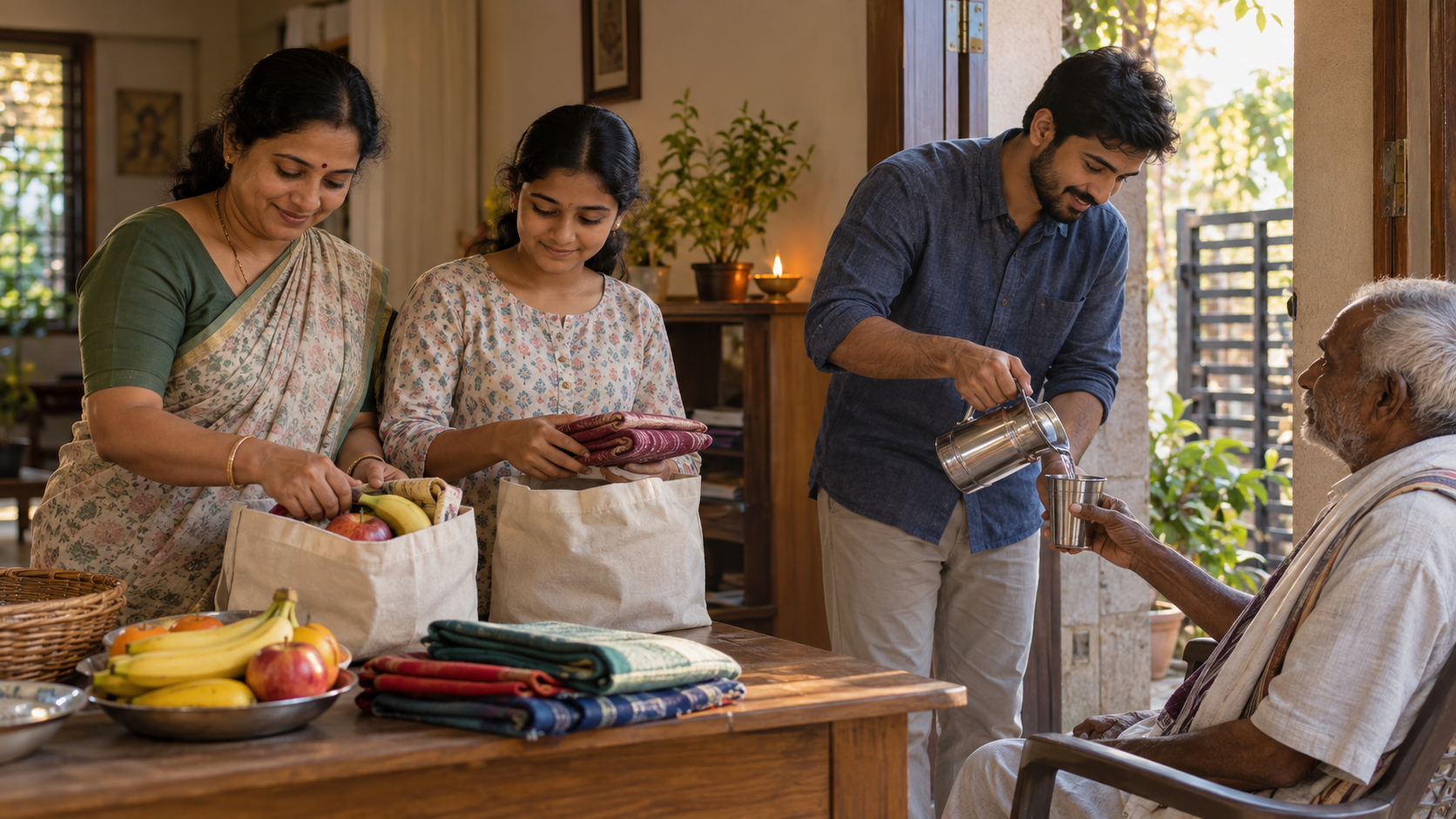
The most common way to thin out an Ekadashi is to monitor ingredients closely while leaving speech, attention, and conduct unchanged. Food rules are visible, so they are easy to count. Irritation, pride, waste, and careless words are less visible, but they may be the habits that most need restraint.
Choose one recurring pattern you already recognise as contrary to dharma. Name the trigger, decide how you will interrupt it, and choose a replacement action. If the pattern is angry speech, pause before answering and return to the divine name. If it is gossip, leave the conversation or redirect it. If it is wasteful consumption, refrain from the purchase and direct something useful toward dana. The point is not to claim instant purification; it is to practise stopping an adharma before it completes its usual course.
At the end of the observance, ask one concrete question: what restraint from this Ekadashi should continue into ordinary days? Keep the answer small enough to practise. A vrata bears fruit in daily life when its discipline does not disappear as soon as the fast ends.
Key takeaways
- Papankusa Ekadashi, also known as Padmanabha Ekadashi, falls on 21 October in 2026.
- It is Ashwin or Ashwayuja Shukla Paksha Ekadashi.
- Use a location-specific panchanga or your customary temple to confirm the tithi and parana window; a date by itself is not a complete schedule.
- Choose the form of fasting taught in your tradition and compatible with your health. Never change medication or ignore medical needs for the sake of a stricter fast.
- Define the vrata through food discipline, worship, and one clear restraint of conduct.
- Prepare for parana in advance and complete it during the locally verified period.
Put 21 October in your calendar now, with an earlier reminder to verify the local panchanga. Then decide your food discipline, protect time for Padmanabha worship, and identify the one habit you intend to restrain. That preparation will let you enter the vrata with attention instead of improvising it after the day has begun.
References

Leave a Reply
You must be logged in to post a comment.